

AG says Ovadia Yosef memorial event can be held before election if it is privately funded
In letter to Religious Affairs Ministry, Baharav-Miara proposes splitting planned ceremony for late Shas spiritual leader into two separate events to assuage electioneering concern
 Add ToI as a Preferred Source on Google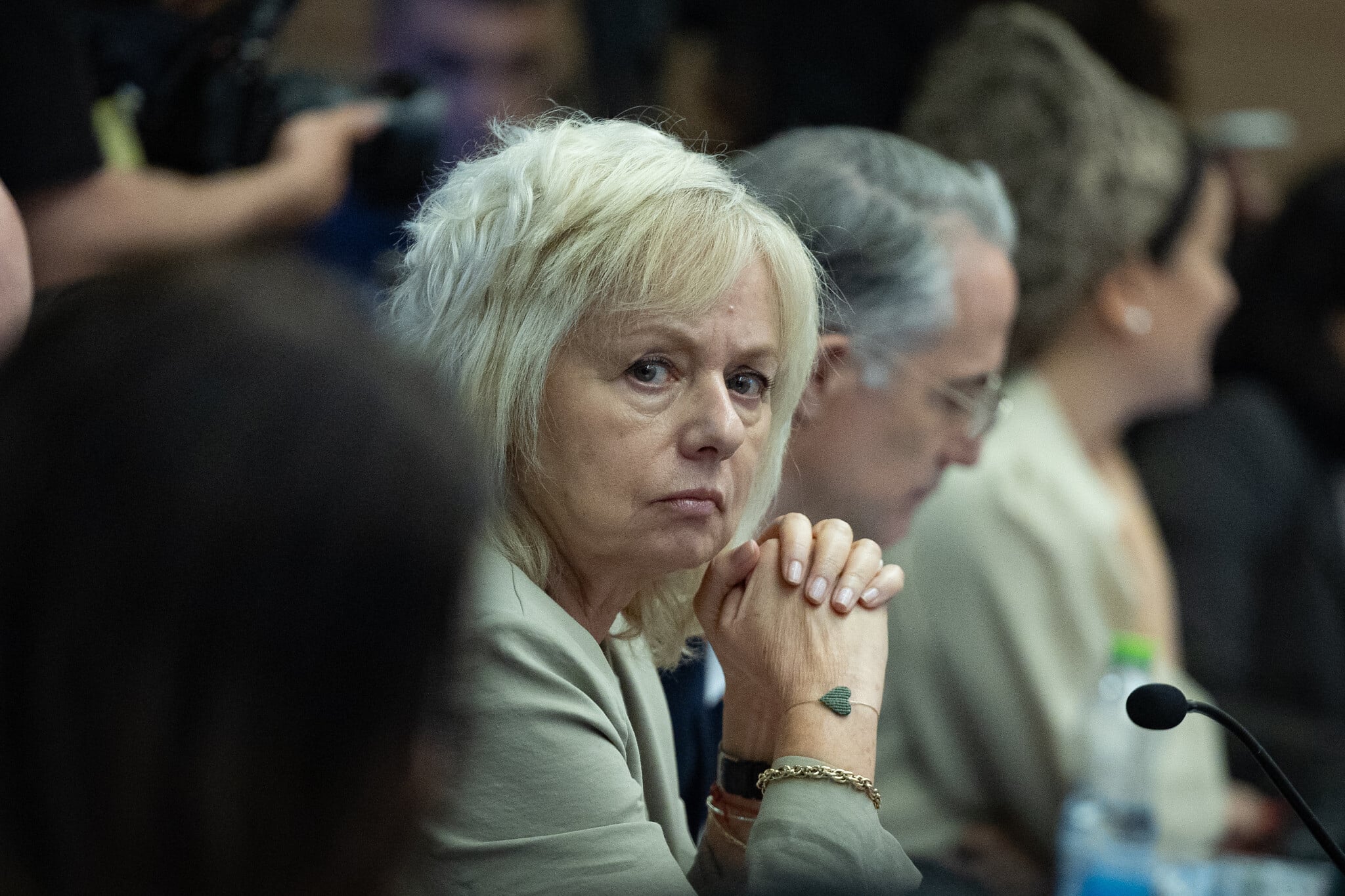
Attorney General Gali Baharav-Miara clarified on Wednesday that a memorial event for former Sephardi chief rabbi Ovadia Yosef can be held as planned ahead of the October 27 election, so long as it is a private event rather than a state-funded ceremony.
Baharav-Miara issued the clarification after Yosef’s son and the spiritual leader of the ultra-Orthodox Shas party, Rabbi Yitzhak Yosef, called for God to “finish her,” claiming that she had declared it “forbidden” to hold a memorial event for his father.
In fact, the attorney general had issued a decision stating that the planned state-funded memorial event must take place only after the October 27 election, due to electioneering concerns.
Yosef’s death, marked according to Jewish custom on the Hebrew date of his passing, falls this year on October 14, two weeks before the Knesset election.
In a letter on Wednesday to the director general of the Religious Affairs Ministry, Yehuda Avidan, Baharav-Miara suggested that rather than pushing the entire memorial event off until after October 27, it could instead be split into two parts: a privately funded memorial ceremony on October 14, followed by a second state-funded event sometime after it.
“This way, both aims can be kept — both the commemoration of the rabbi and maintaining the fairness of the elections,” she wrote.
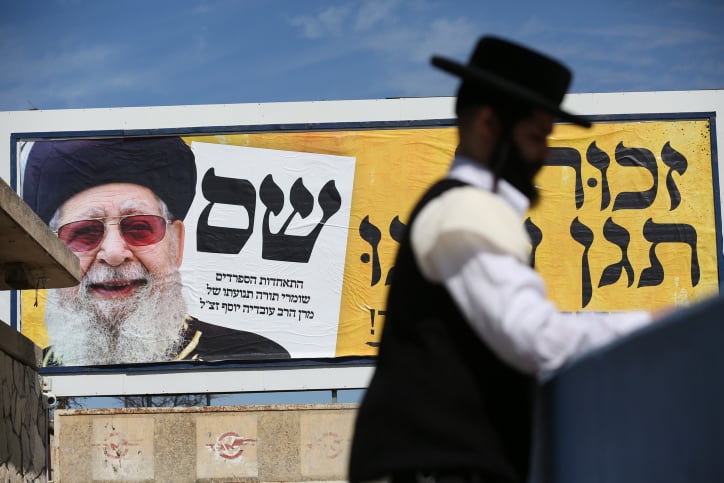
Last year, the Knesset passed a law to annually commemorate Ovadia Yosef’s death by “holding educational and value-based activities and ceremonies in state institutions,” as well as other activities “to be decided by the education minister, granting research scholarships and granting support payments to public institutions working to fulfill the purposes of the bill.”
The attorney general pointed out in her letter that although “there is no dispute about the public importance of commemorating the rabbi close to the date of his death,” the Religious Affairs Ministry had submitted a request to hold its event — described legally as a “study conference” rather than a memorial event — either on October 6, 7 or 8, not on October 14.
“By the same logic, the ‘study conference’ can be held after the elections, provided that it is a date close to the anniversary of his passing,” she wrote.
As for the anniversary of his death itself, Baharav-Miara reiterated that “any entity may hold any commemoration event it wishes to with non-governmental funding.”
Avidan, who is a member of Shas, rejected Baharav-Miara’s proposal.
“A remembrance day, as its name implies, is for remembering, not forgetting,” he wrote in a response carried by the Ynet news outlet.
According to Avidan, if the planned state-funded event doesn’t take place on the date proposed by the Religious Affairs Ministry, it will be at least another month until it can be held, although he did not explain why.
He also repeated an argument already made by Shas officials that a memorial rally for former prime minister Yitzhak Rabin hasn’t been canceled — a fact which he said pointed to “selective enforcement” of rules — even though the event at Rabin Square isn’t set to be held until November, after the election, and isn’t funded by the state.
“We reiterate that the event will not include any political or partisan content, and it will be dedicated entirely to Torah, halacha [Jewish law] and heritage,” Avidan wrote.
Yitzhak Yosef’s outburst against the attorney general on Saturday, in which he called her, among other things, an “evil person” and “that crazy Miara,” was not the first time he has lashed out at her.
In June, Yosef said an emerging US-Iran peace deal at the time – which many Israelis saw as a betrayal by US President Donald Trump — was a divine punishment for Baharav-Miara’s efforts to crack down on Haredi draft evaders.
The government has also clashed with the attorney general since its first weeks in office and has repeatedly vilified her, largely over her opposition to efforts to weaken judicial oversight and limit other checks on executive power.
The coalition voted to dismiss her last year, but the decision was frozen by the High Court since the firing procedure was a newly introduced one after attempts to oust her using the established method failed. The coalition is now advancing a pair of controversial bills that would curtail the power of the attorney general and make it harder to indict high-ranking government officials.





The Times of Israel Community.