

Ousting Edelstein, Likud elects Bismuth to head key panel, advance Haredi draft exemption law
As Knesset defense panel chair, Edelstein refused to back text enshrining non-service by Haredi males; Netanyahu backed Bismuth to replace him, hopes to mend ties with ultra-Orthodox
 Add ToI as a Preferred Source on Google
Sam Sokol is a former political correspondent at The Times of Israel. He was previously a reporter for the Jerusalem Post, Jewish Telegraphic Agency and Haaretz. He is the author of "Putin’s Hybrid War and the Jews"
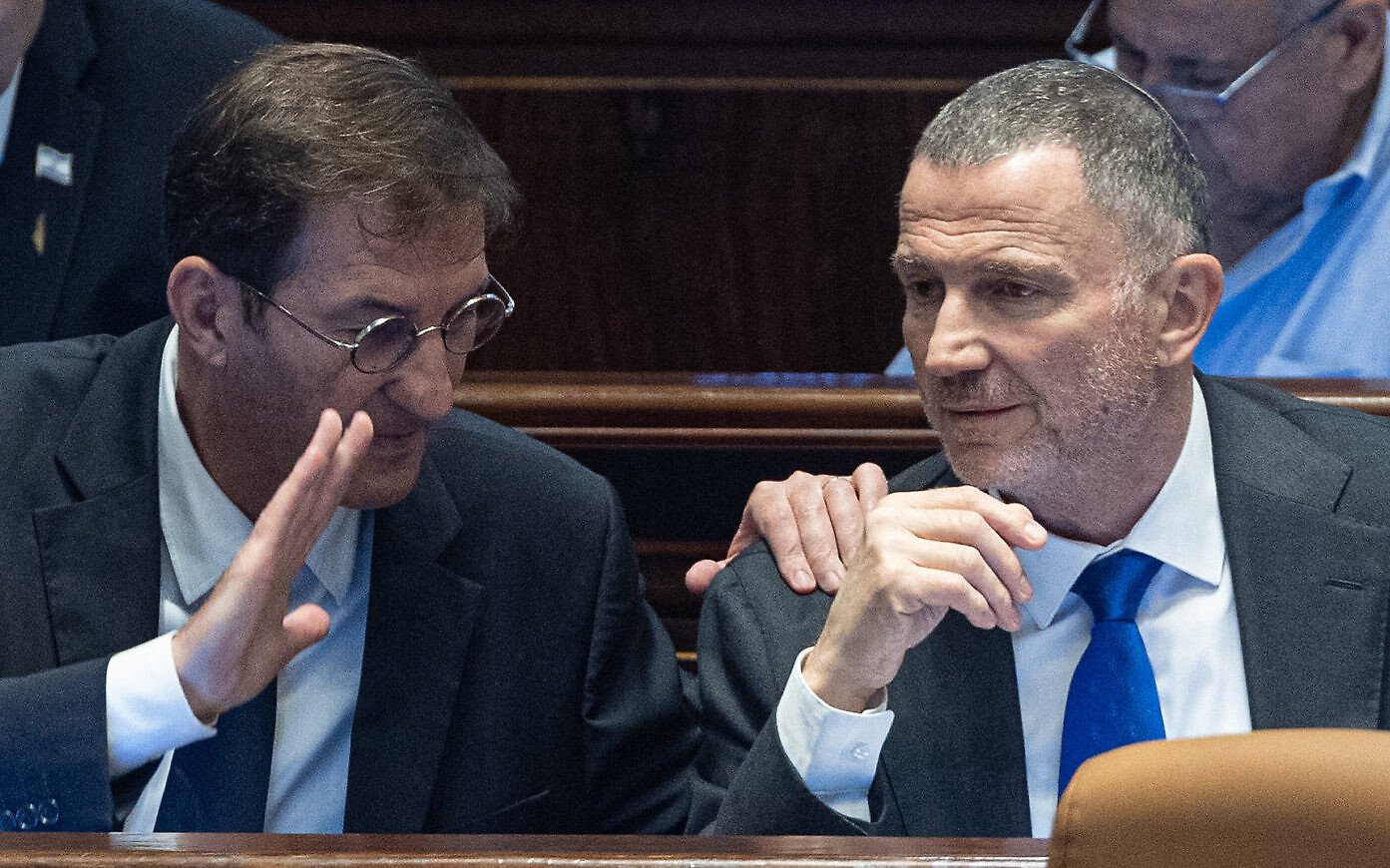
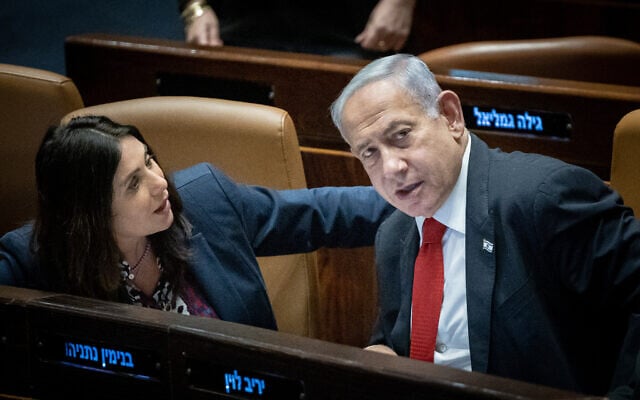
In a move widely seen as aimed at soothing troubled relations with the Knesset’s ultra-Orthodox factions and enabling the advance of a law enshrining the exemption from IDF service of most ultra-Orthodox males, lawmakers belonging to Prime Minister Benjamin Netanyahu’s Likud party voted overwhelmingly on Wednesday afternoon to replace Foreign Affairs and Defense Committee chairman Yuli Edelstein with fellow Likud MK Boaz Bismuth.
Only four MKs voted to keep Edelstein in his position, with 29 coming out in favor of Bismuth, a member of the committee and a close Netanyahu ally, who will now take over the process of legislating a bill regulating ultra-Orthodox enlistment.
The ballot was initially supposed to be secret, but this decision was overturned by the party’s legal adviser, who said that doing anything other than an open vote was “inconsistent with the law.”
Edelstein was ousted over his refusal to advance a conscription bill based on a compromise reached with the Haredi parties last month, under which most ultra-Orthodox males would continue to avoid IDF or other national service. His ouster has drawn harsh criticism from opposition lawmakers, with Opposition Leader Yair Lapid arguing that Bismuth’s selection was intended “to promote evasion.”
Edelstein’s ouster follows earlier moves to remove former defense minister Yoav Gallant and former IDF chief of staff Lt. Gen Herzi Halevi, which Netanyahu has said were aimed at enabling his coalition to advance the controversial legislation.
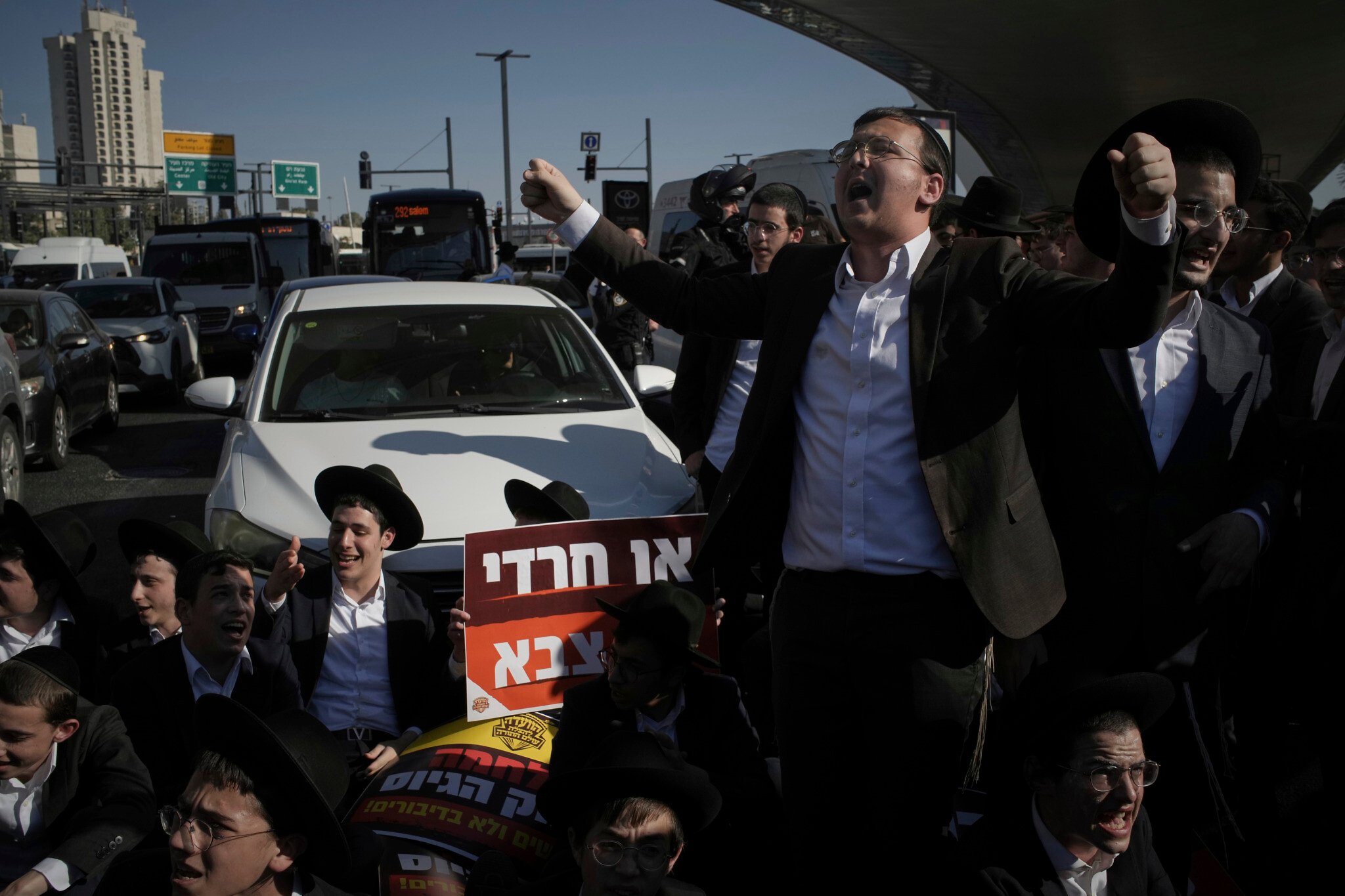
The law sought by the ultra-Orthodox parties would enable most ultra-Orthodox males to continue to avoid military or other national service, and would face petitions to the High Court, which last year ruled that the ongoing failure to draft the Haredim is illegal. The Netanyahu-led coalition, however, is also committed to advancing a package of judicial overhaul laws that would radically constrain the ability of the top court to intervene in legislation and government decisions.
The change in the leadership of the key Knesset committee still needs to clear parliament’s House Committee and the Foreign Affairs and Defense Committee itself.
Netanyahu had been under growing pressure from within Likud to oust Edelstein, after the two Haredi parties, Shas and United Torah Judaism, last week bolted the government, blaming the lawmaker for his attempts to advance a version of the bill that would guarantee significant draft quotas and sanctions for evaders.
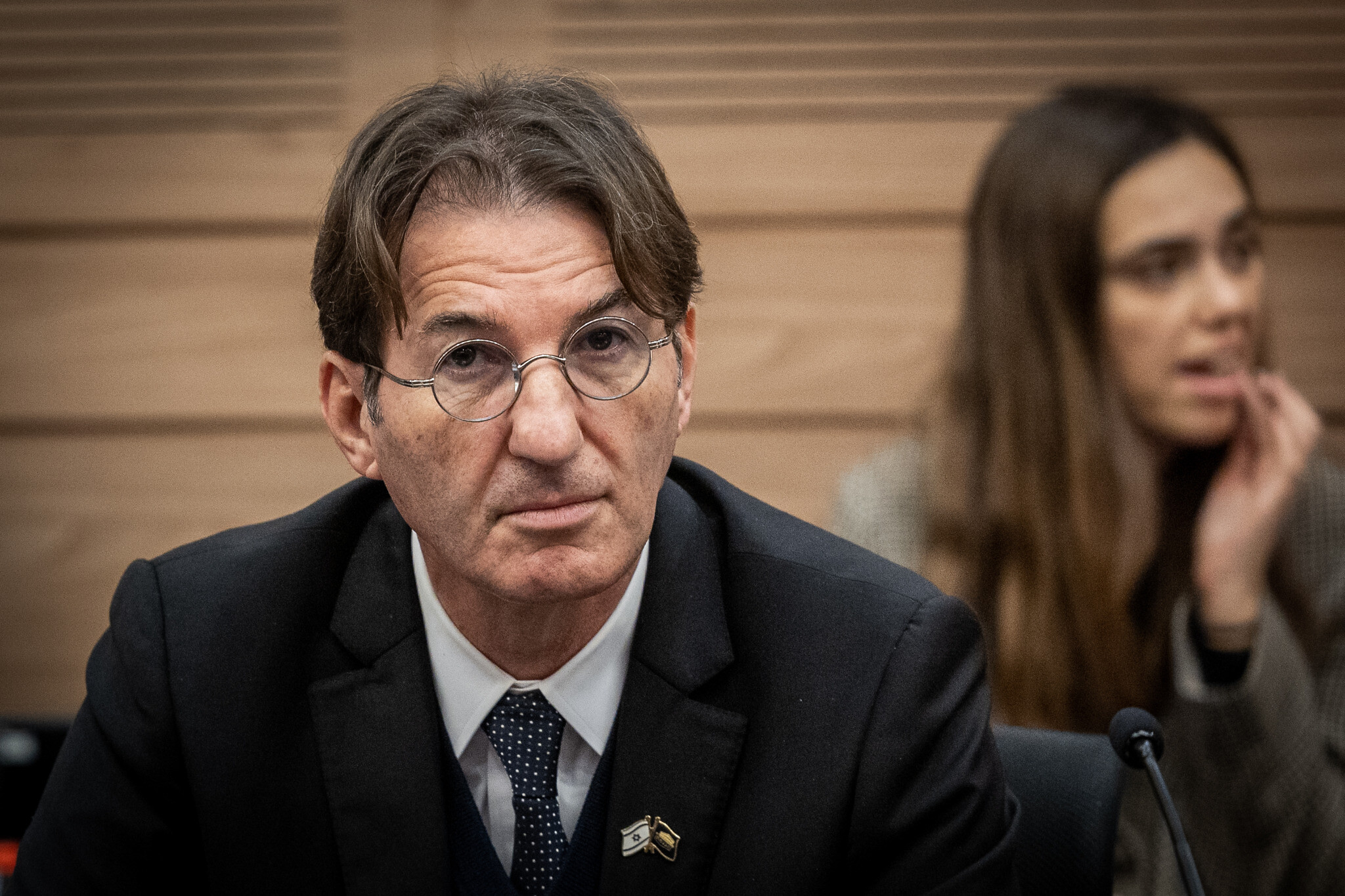
Monday’s decision to finally hold a vote to replace Edelstein, which had been mooted by those in Netanyahu’s circle for quite some time, came after Likud MK Hanoch Milwidsky, an alternate member of Edelstein’s committee, demanded that the party select a new chairman and put himself forth as a candidate.
Eyeing Edelstein’s post, Milwidsky declared in a Knesset speech last week that although he is secular, “as a Jew” he would refuse to take part in “harming the world of Torah” by imposing the draft on most Haredi males.
While Milwidsky was initially seen as Netanyahu’s preferred choice, his candidacy was opposed by many Likud MKs who argued that he was unqualified to head the committee, the Knesset’s most powerful, which exercises oversight over key national security agencies. Netanyahu subsequently backed down, declaring hours ahead of Wednesday’s vote that he wanted Milwidsky appointed as temporary chairman of the Knesset Finance Committee instead.
This was seen as a tacit endorsement of Bismuth, leading another candidate, Nissim Vaturi, to announce his withdrawal from the race and dooming any slim hopes Edelstein, who submitted his name for reelection, had of the vote against him being split.
Both Shas and UTJ’s Degel Hatorah faction denied intervening in the race to replace Edelstein, with a Shas spokesman stating that its “only demand to the prime minister is to fulfill his commitment to regulating the status of Torah scholars.”
Reaching out to the Haredim
Ahead of Wednesday’s ballot, Likud’s Communications Minister Shlomo Karhi explicitly told lawmakers that Edelstein’s pending ouster was aimed at patching up shaky relations with the Haredi parties.

Reading out the names of Haredi cabinet members who recently resigned from the government, Karhi stated that “we are acting, already today in our faction meeting, to ensure that these resignations are canceled and our coalition partners return to their roles as soon as possible.”
The coalition is “fighting here for a historic conscription law that will conscript about 17,000 young Haredi men within three years,” Karhi claimed. It would also “recognize the value of those whose Torah is their profession,” Karhi stated — using a phrase referring to those who have traditionally been exempt from military service due to their status as full-time yeshiva students. Anybody who opposes such a law “harms the security of the state,” he asserted.
Some 80,000 ultra-Orthodox men aged between 18 and 24 are currently believed to be eligible for IDF service, but have not enlisted. The IDF has said it urgently needs 12,000 recruits, due to the strain on standing and reservist forces in the ongoing war against Hamas in Gaza and other military challenges. Currently, only around 1,800 Haredim enlist annually. About 2,700 enlisted over the past year, far short of the IDF’s goal of 4,800.
Finance Minister Bezalel Smotrich, the chairman of the Religious Zionism party, also slammed Edelstein ahead of the vote, telling Army Radio that he had “retracted [the compromise bill] in an unfair and inappropriate manner.”
“The Haredim are going to raise their hands in favor of a law that sets a target of 50 percent of each draft cohort within five years — I didn’t believe they would agree,” he added — arguing that the agreement blocked by Edelstein would have led to a major rise in the conscription of Haredim.
The Haredim had hailed the compromise as one “preserving the status of yeshiva students.”
‘A betrayal of the IDF’
In contrast, Likud MK Dan Illouz slammed the decision to replace Edelstein even as he congratulated Bismuth, stating that it appeared to the public “as yet another attempt to appease the ultra-Orthodox partners” and served as “not only a blow to the national and liberal values of Likud [but] a blow to Likud itself.”
A former member of Edelstein’s committee, Illouz was removed by Likud faction chairman Ofir Katz last year over his public opposition to coalition-backed legislation aimed at guaranteeing that state-funded daycare subsidies would continue for the children of ultra-Orthodox men who are obligated to perform military service but have not done so.
Edelstein’s ouster also generated harsh criticism from the opposition, with Lapid charging that Likud has “become a branch of the Haredim and the draft dodgers.”
“This is a dark day for the State of Israel and the people of Israel. Bismuth was elected to promote evasion [of IDF service], and this is spitting in the face of the fighters, the reservists and their families,” Lapid declared.
He did not say if MKs from his Yesh Atid party or other opposition factions would bolt the Foreign Affairs and Defense Committee, as he threatened to do earlier this week in the case of Edelstein’s ouster.
Yisrael Beytenu chairman Avigdor Liberman accused Netanyahu of having “once again chosen evasion at the expense of state security.” The Democrats party chairman Yair Golan called the move “a betrayal of the IDF, its fighters and the people of Israel.”
‘Faithful to my values’
Addressing lawmakers in the plenum before the vote to replace him, Edelstein was defiant, declaring that he had always “remained faithful to my values and the principles for which I fought.”
“All along, since the days of the communist Soviet Union, I have paid a price for my ideology. For my fight for the Land of Israel, the people of Israel and the Torah of Israel,” said Edelstein, who was held as a prisoner of Zion in a Soviet jail for over three years.
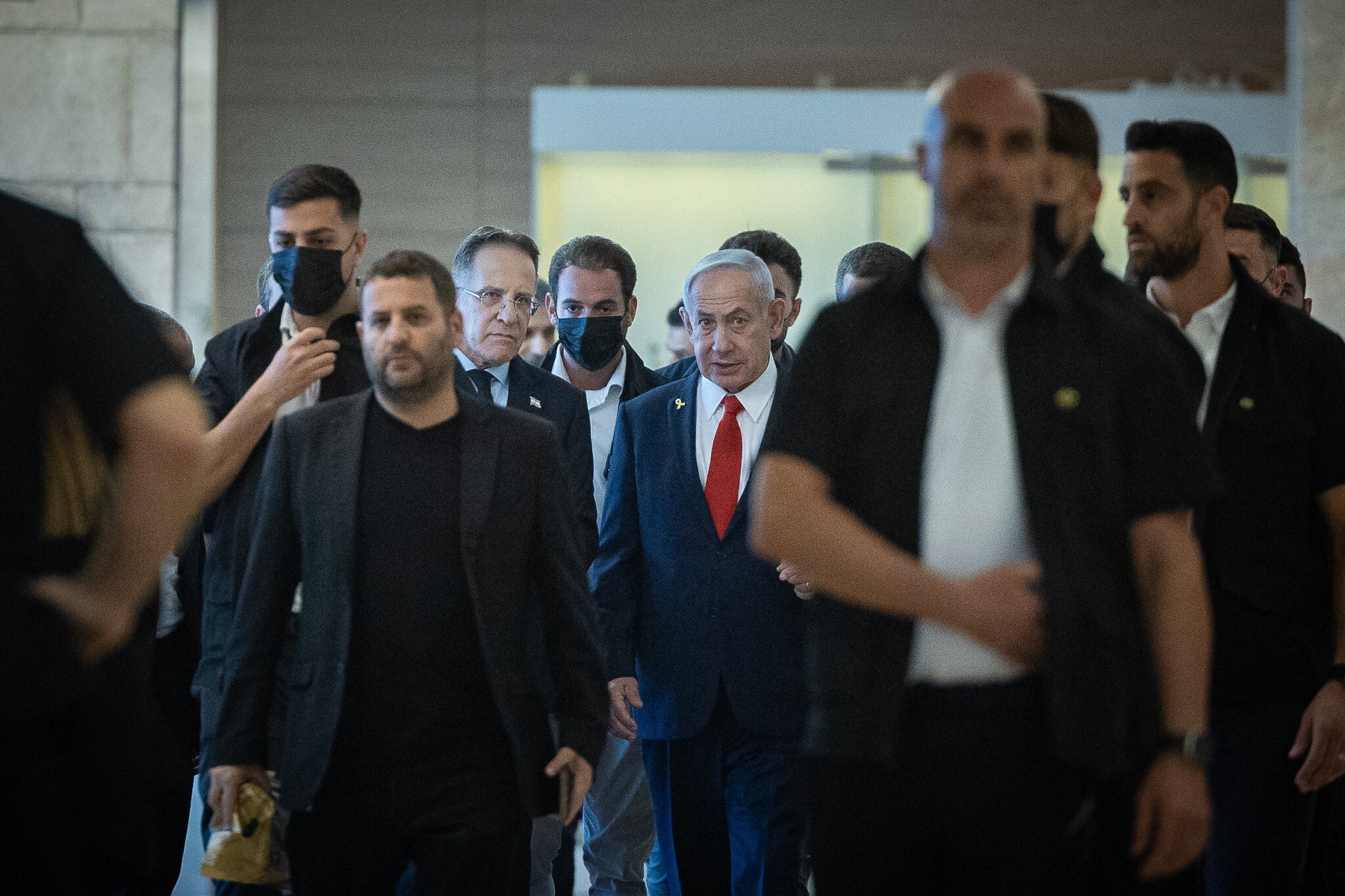
“I was not afraid then, and I am not afraid today. The same sense of mission that accompanied me then accompanies me today, when the same goal remains before my eyes – to secure the future of our children in our homeland.”
Shortly thereafter, during an internal Likud faction meeting, Edelstein doubled down on his call for sanctions on draft dodgers, describing them as the only way to make Haredim enlist in the IDF.
“The faction certainly has the right to choose any candidate, my problem is with the law. What’s happening here right now finally buries the law. So I hope the faction members will vote in favor of my continued tenure. Just know that sometimes the majority rules and the minority is right,” national broadcaster Kan quoted Edelstein as saying.
What does Bismuth stand for?
While he did not lay out a specific legislative plan, Bismuth did tweet that “the conscription law is close to my heart” and that he sees value in both Torah study and military service, which he said make a “beautiful” combination.
“It is possible to combine the two. Hand in hand. One strengthens the other,” he declared. “The conscription law is a national matter, not a political one.”
Striking a similar note, Bismuth was filmed telling Negev, Galilee and National Resilience Minister Yitzhak Wasserlauf ahead of the vote that he agreed that Israel needed both soldiers and Torah students.
Speaking with The Times of Israel, a coalition insider described Bismuth as a “serious guy” who “hasn’t said what law he wants” but is unlikely to follow in Edelstein’s path.




The Times of Israel Community.