

Analysis of footage from Nasser Hospital strike calls Israel’s account into question
AP notes IDF cited common photographers’ practice of shielding equipment from sun with a towel as ‘suspicious behavior’ that led to attack last month that killed 22, including 5 journalists
 Add ToI as a Preferred Source on Google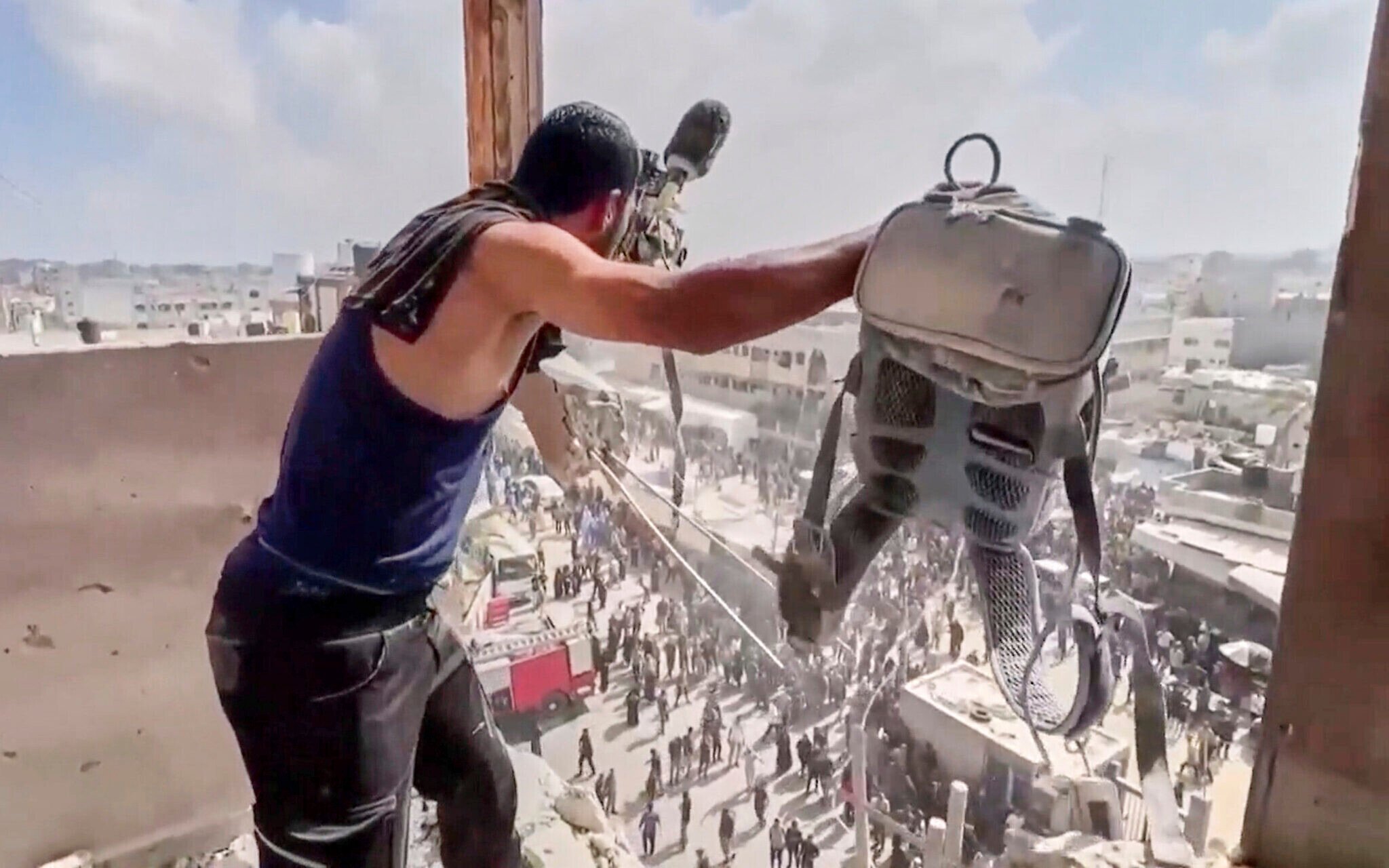
Associated Press reporting into an Israeli attack on a Gaza Strip hospital that killed 22 people, including five journalists, raises serious questions about Israel’s rationale for the strikes and the way they were carried out, the news agency said Friday. Among those killed was Mariam Dagga, who worked for AP and other news organizations.
Israeli forces struck a position well known as a journalists’ gathering point, because — a military official said — the soldiers believed a camera on the roof was being used by Hamas to observe troops. The official cited “suspicious behavior” and unspecified intelligence, but the only detail given, AP said, was that there was a towel on the camera and the person with it — which the army interpreted as an effort to avoid identification.
AP said it had gathered new evidence indicating the camera in question actually belonged to a Reuters video journalist who routinely covered his equipment with a white cloth to protect it from the scorching sun and dust. The journalist, Hussam al-Masri, was killed in the initial strike.
The evidence calls into question why Israeli forces went through with the strike, AP said. Witnesses say Israel frequently observed the position by drone, including about 40 minutes before the attack, giving an opportunity to correctly identify al-Masri.
AP said its findings also reveal other troubling decisions from the August 25 attack:
- Soon after the first strike, Israeli forces hit the same position again, after medical and emergency workers had reached the scene to treat the injured, and as journalists including Dagga had rushed to cover the news. The strike has raised accusations of a “double tap” — a type of attack intended to kill those responding to casualties and which experts in international law say is a possible war crime.
- Troops used high-explosive tank shells to strike a hospital, instead of more precise guided weapons that might have resulted in fewer casualties.
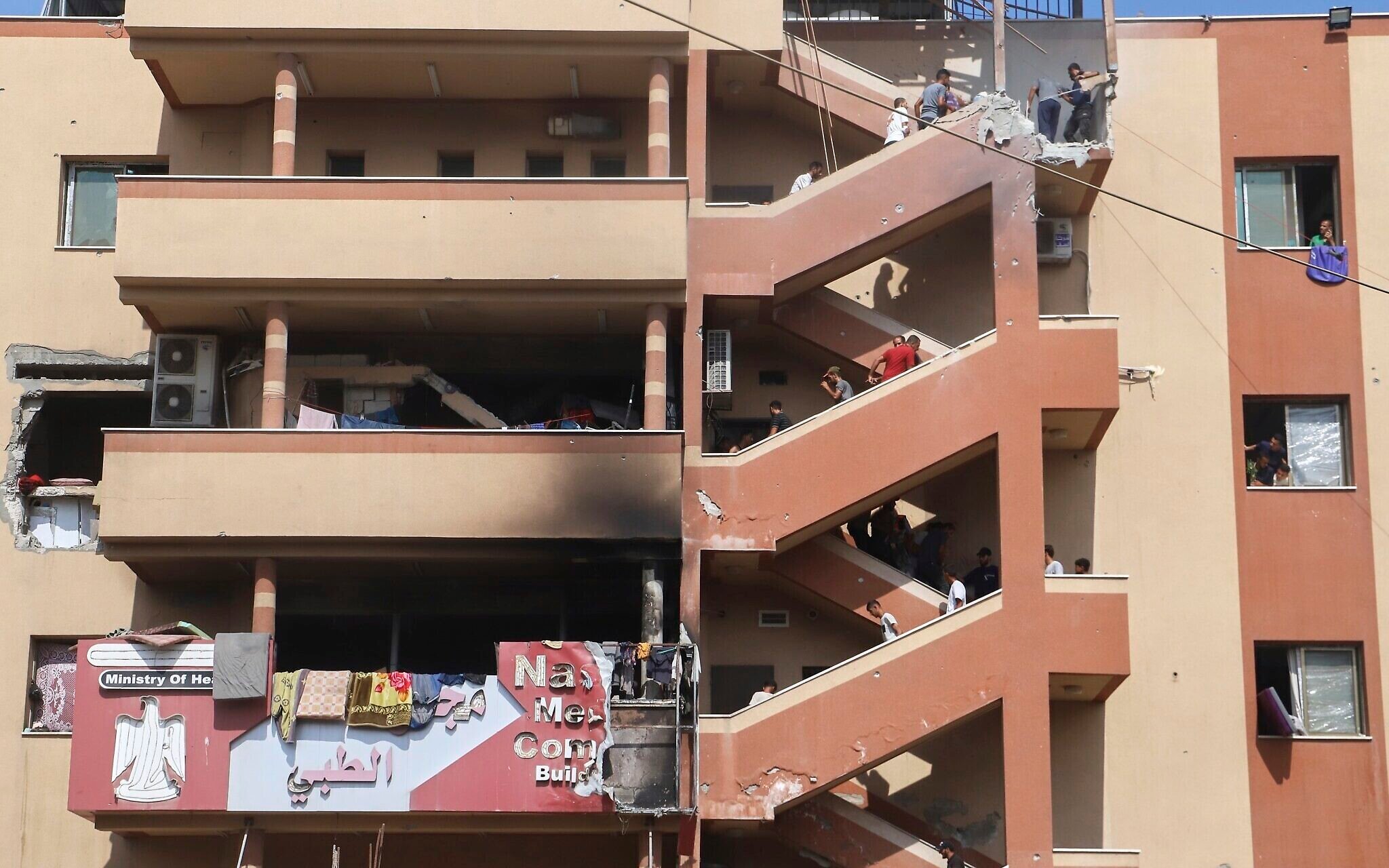
- In all, Israel struck the hospital four times, the AP found, each time without warning.
The Israel Defense Forces refused to comment when asked if it hit the wrong person and has presented no evidence for its claims. It says it is still investigating but in its initial inquiry described “gaps” in how the attack was carried out. Israel has said none of the journalists killed were intended targets, nor were they linked to Hamas.
Following the initial investigation’s findings, IDF Chief of Staff Lt. Gen. Eyal Zamir ordered the probe expanded to scrutinize the approval process for the strike, including the timing of the attack, the type of munitions used, and the chain of decision-making on the ground.
Prime Minister Benjamin Netanyahu’s office said in a statement that Israel “deeply regrets” the attack, calling it a “tragic mishap.”
The IDF said after the incident that it regrets civilian casualties and does not target journalists, while accusing Hamas of “cynically” exploiting medical facilities for military purposes. Hospitals have repeatedly become battlegrounds in the Gaza war, with Israel accusing Hamas of using them to shelter fighters, hold hostages, and conceal military infrastructure.
Hamas has in the past held hostages at Nasser Hospital, according to the IDF and testimony from numerous ex-hostages. Shifa Hospital, in the north of the Strip, was also used by Hamas to hold some hostages and as a command-and-control center early in the war, and was the site of fierce battles between Hamas fighters and IDF troops.
The ongoing IDF probe also said, without offering evidence, that six of the victims were Hamas operatives, including one who took part in the Hamas onslaught of October 7, 2023, which sparked the war in Gaza when terrorists invaded southern Israel to kill some 1,200 people and take 251 hostages.
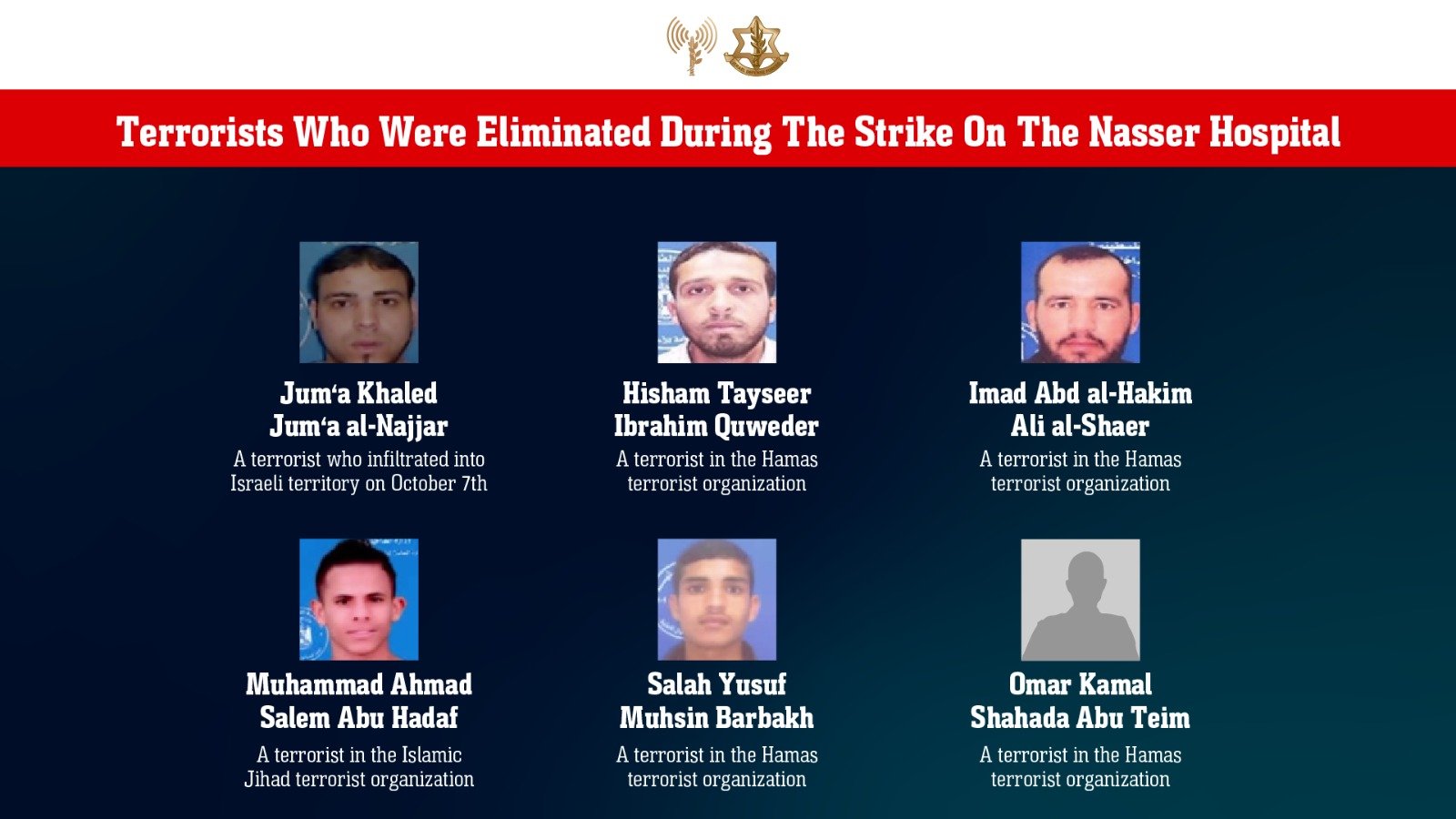
Hamas denied that any of the victims from the strike on Nasser Hospital were members of the terror group, and said two of the people Israel identified as Hamas operatives were in fact killed elsewhere.
Based on AP analysis of the footage at the time of the attack, and speaking to multiple eyewitnesses, there is no evidence that anyone killed in the strikes was armed.
The AP said its analysis of the attack is based on information from current and former Israeli military officials, other officials and weapons analysts — and accounts from nearly 20 people who were in or near the hospital at the time of the strikes.
The strike has galvanized global anger as Israeli forces push ahead with a major offensive in Gaza City.
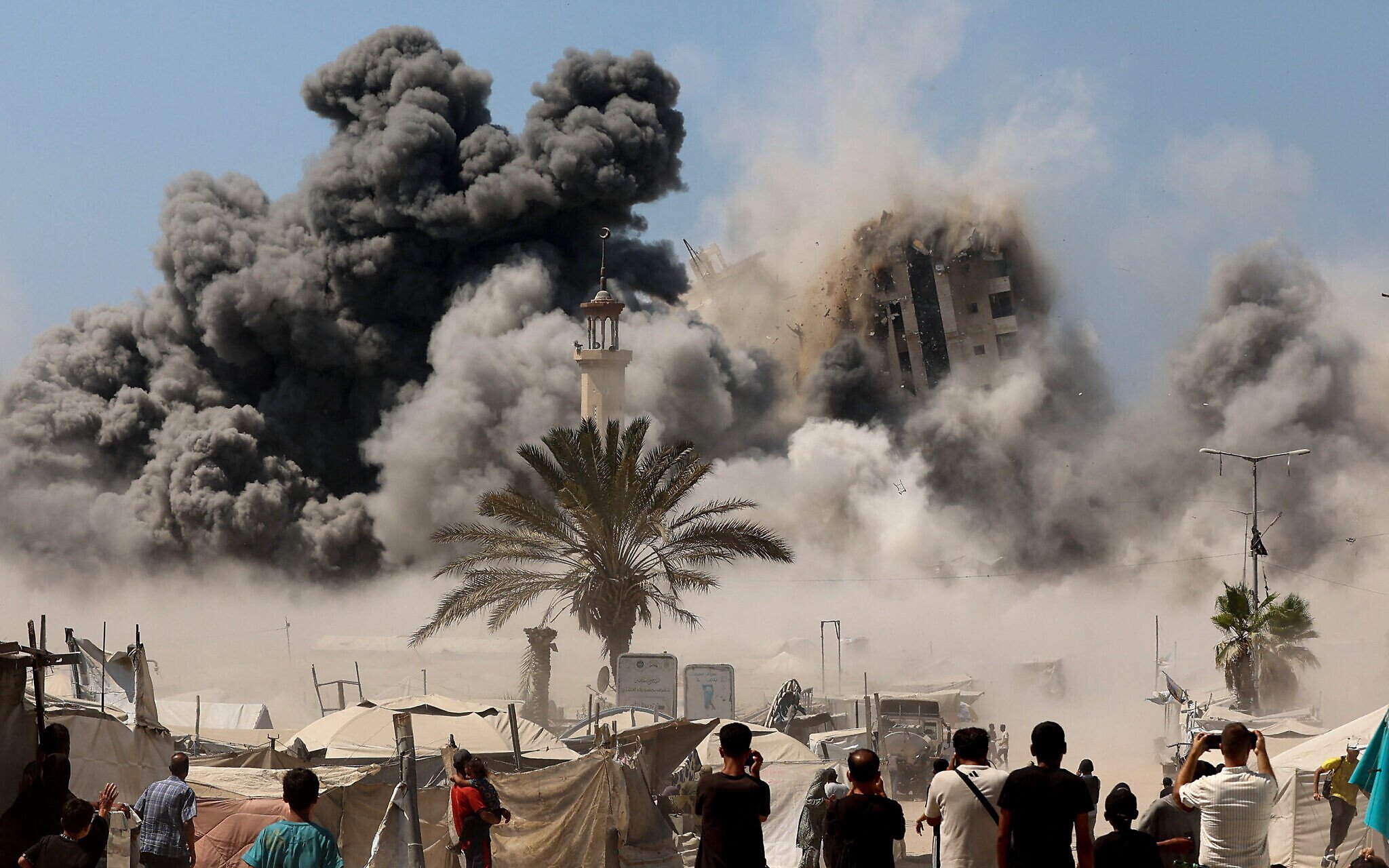
IDF fire has killed 189 Palestinian reporters in Gaza, according to the Committee to Protect Journalists. Israel has accused some of the slain journalists of having been active members of terror groups. Israel has also barred foreign journalists from entering Gaza since the start of the war, giving Palestinian journalists a critical role in covering the conflict.
Both hospitals and journalists are supposed to be protected under international law, but hospitals can lose those protections if they are used for military purposes and journalists can, too, if they are armed or take part in hostilities.
Israel has said it seeks to minimize civilian fatalities and accuses Hamas of using Gaza’s civilians as human shields and embedding itself in civilian infrastructure, including hospitals.
In Nasser Hospital, Hamas at one point held some 30 Israeli hostages, including young children, according to former captive Sharon Alony Cunio, who has said she recognized the hospital after being released in November 2023.
Covering a camera with a cloth
Before the August 28 attack, the Reuters journalist, al-Masri, was positioned with his video camera high up on an external stairwell of Nasser Hospital. A photograph taken by Dagga in mid-August shows al-Masri on the same stairwell next to his camera, with a white cloth draped over it.
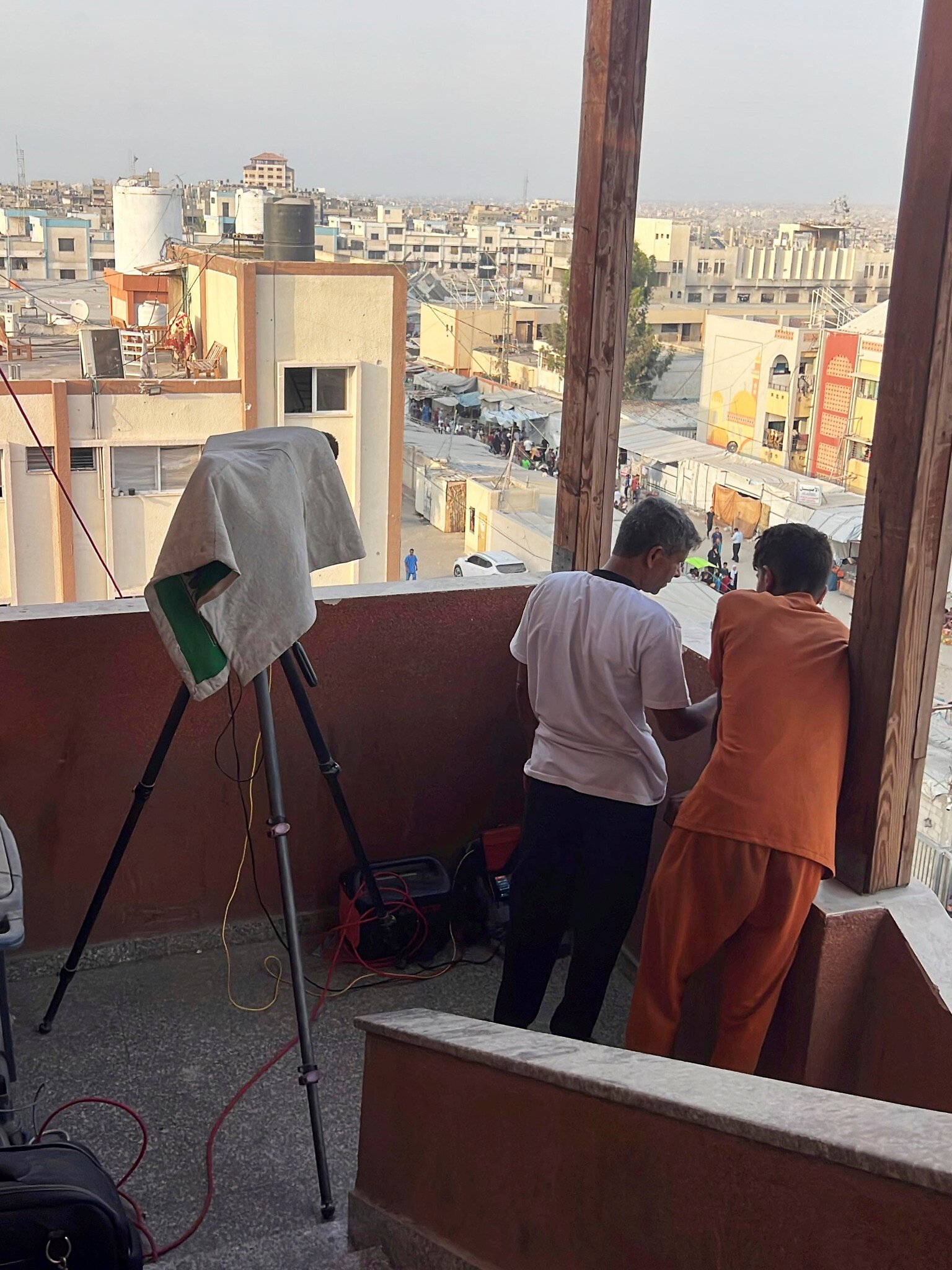
In the weeks before the strikes, al-Masri had broadcast live almost daily from the stairwell, according to other journalists who worked there and hospital officials.
Five journalists told the AP that he often used the cloth. It is common practice for video journalists around the world, including in Gaza, to use such high positions and to cover their cameras to protect them from the elements.
Nasser Hospital, one of the few functioning hospitals in Gaza, has been a vital location for Palestinian reporters, AP said.
It is a central point for reporting on dead and wounded from Israeli strikes, shootings of Palestinians seeking aid and malnourished people brought in daily. The Wi-Fi signal offered a rare reliable link to transmit news.
Photographers and videographers used the building’s external staircase for months to get a bird’s-eye view of the city of Khan Younis — and in the case of global news agencies like Reuters and AP, to supply live video footage to newsrooms around the world. The AP had repeatedly informed the army that its journalists were stationed there.
An Israeli military official said that several days before the attack, Israeli forces spotted a camera on the roof and were tracking “suspicious behavior,” which the official did not specify.
The official said the military believed Hamas was using the camera to monitor its forces and said the camera and the man operating it had what they described as a towel draped over them, suggesting an effort at concealment. The official spoke on condition of anonymity in line with regulations.
A second person was also killed in the initial strike that hit al-Masri. Hospital officials have identified all 22 dead, saying they were a mix of health and rescue workers, journalists and relatives of patients, AP said. But they said they could not be certain which of them was the other person killed in the first strike, since all the bodies were collected at the same time.
There has been no evidence of a second camera at the site where al-Masri was killed.
At about the same time as the first stairway was hit, Israel struck another part of the hospital, according to witnesses and video footage showing smoke rising from the location.
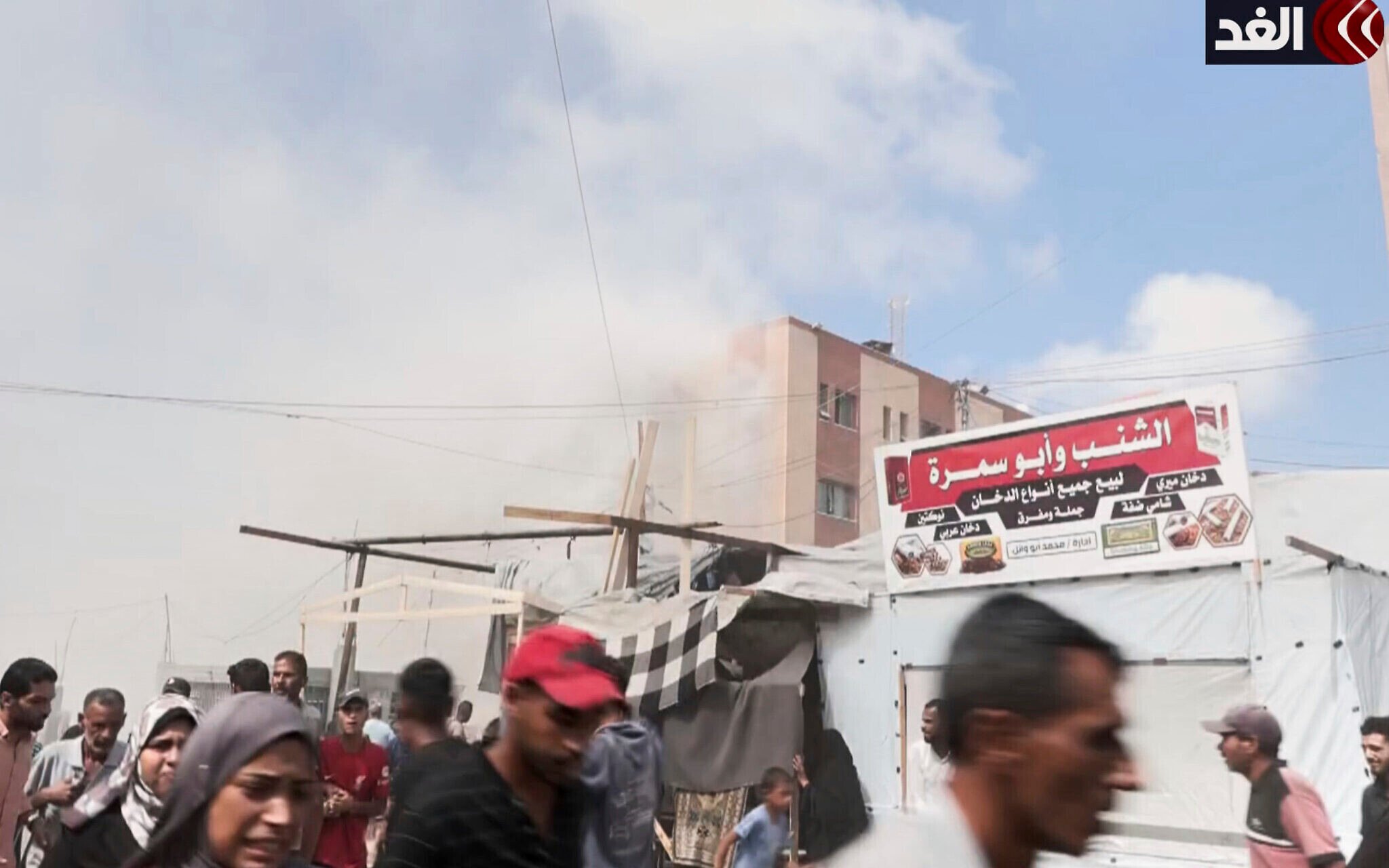
The Israeli military has given no explanation why it carried out a second round of strikes.
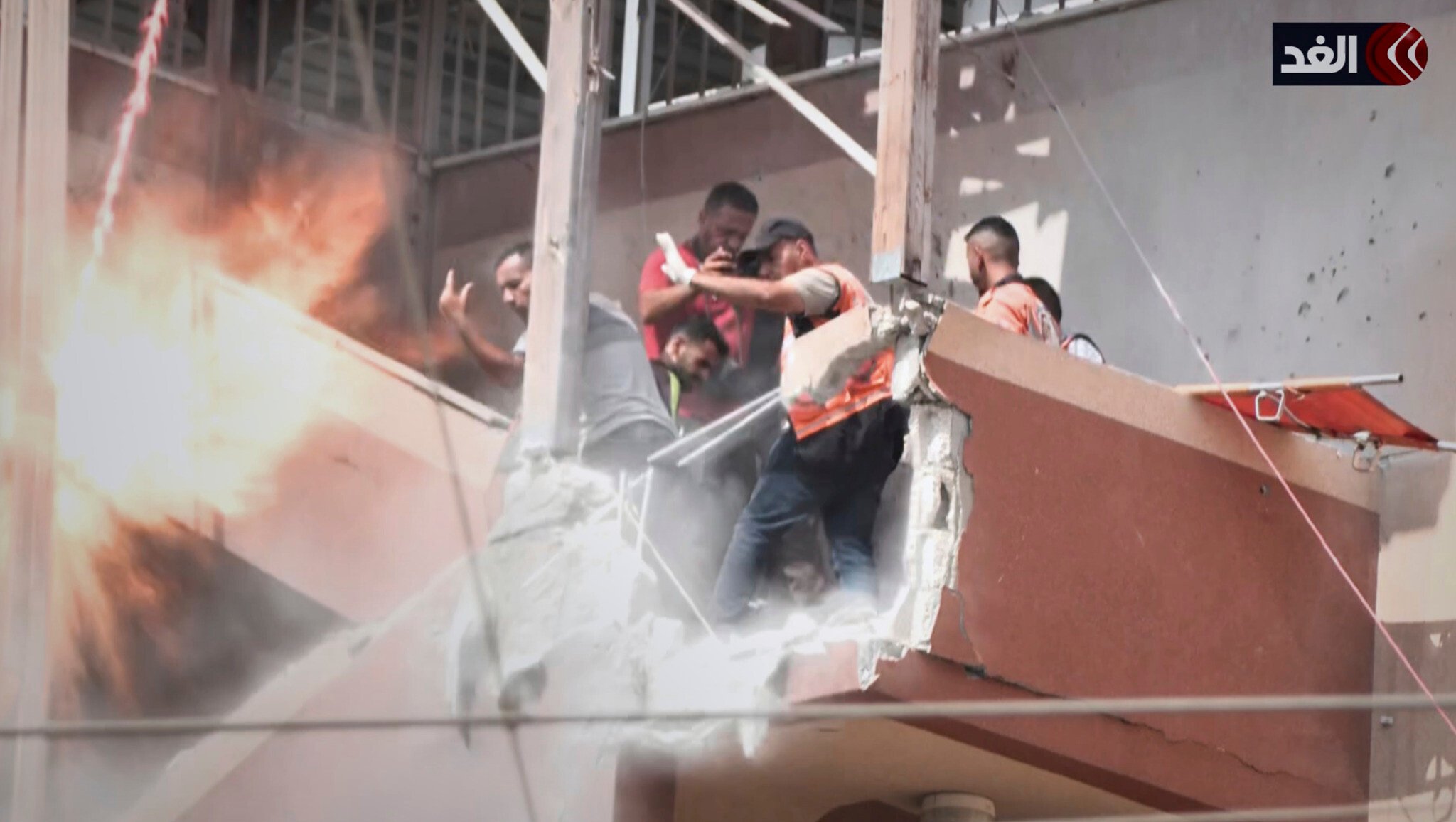
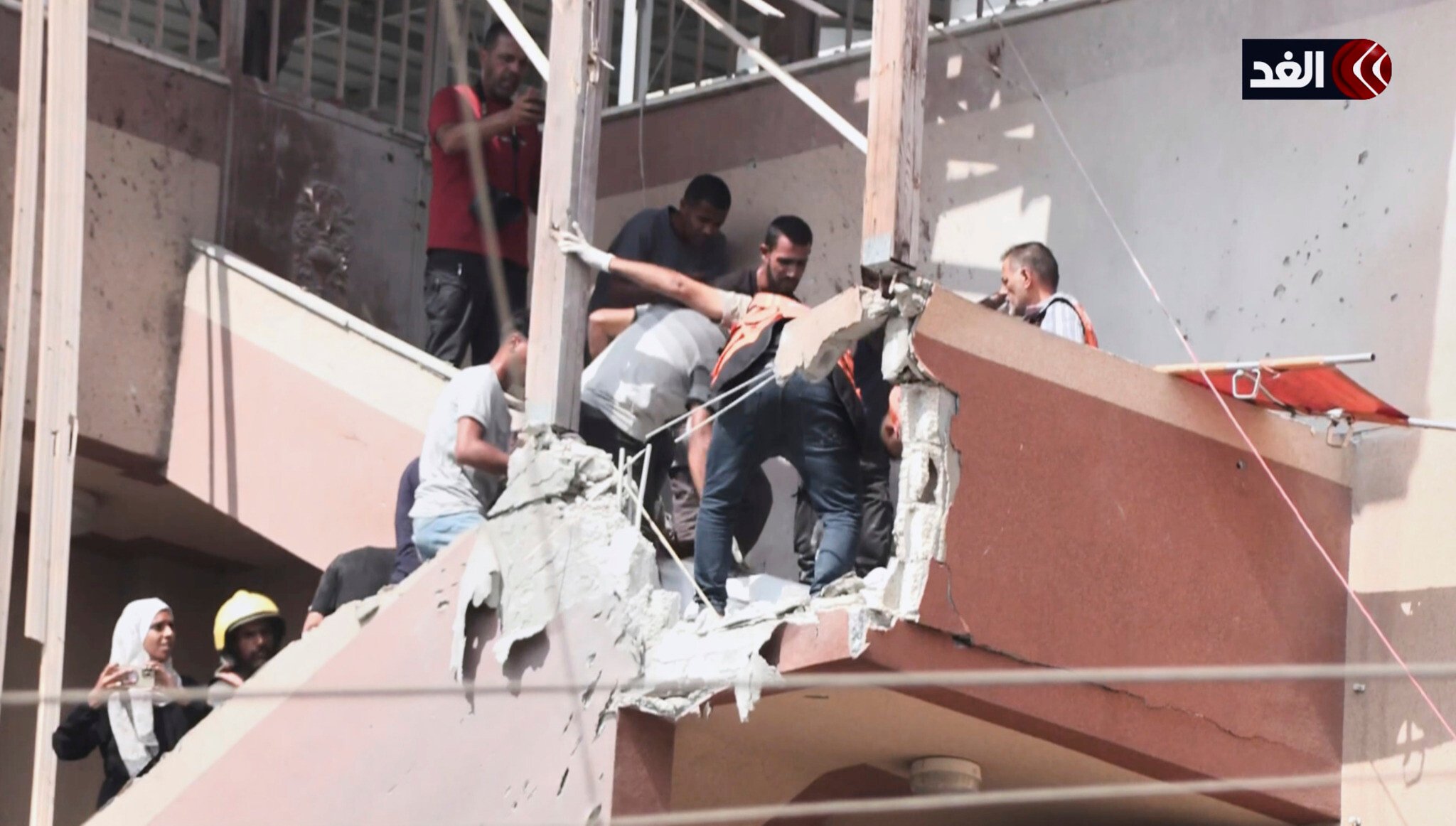
After the first attack, a crowd of medics, journalists and others made their way up the staircase, AP said. Ibrahim Qannan, a correspondent with Cairo-based Al-Ghad TV who was filming from below, said another journalist, Moaz Abu Taha, waved to him and shouted down to him, “Hussam was martyred.”
Within 10 minutes, two more loud blasts struck the staircase. Video analysis revealed the flashes of two projectiles and the booms of two explosions. Among those killed was Dagga, who had just snapped her last photos before heading up the stairs, and Abu Taha.
Dagga’s brother Sediq had spent the previous night with her and saw her filming from the stairs moments before she was killed. “I rushed upstairs and recovered her body,” he said.
Double-tap strikes, which hit crowds that move into areas to rescue victims from initial strikes, have notoriously been used by al-Qaeda and other extremist groups, as well as Russia’s military and forces loyal to former Syrian President Bashar Assad. First responders and other civilians are often harmed in such attacks.
Experts in international law say multiple aspects of this attack could point to potential war crimes, including targeting a hospital without warning, and the double-tap strategy that puts civilians in danger.
Maj. Gen. (res.) Israel Ziv, a former commander of the IDF Operations Directorate, said a double-tap strike would violate the army’s rules of engagement.
Raed al-Nims, head of the Palestinian Red Crescent’s media department in Gaza, said double tap strikes have “happened multiple times” in the war, hitting the group’s ambulances and personnel after they arrive at the scene of attacks.
Israel declined to comment, citing the ongoing investigation.
Tank fire was not supposed to have been used
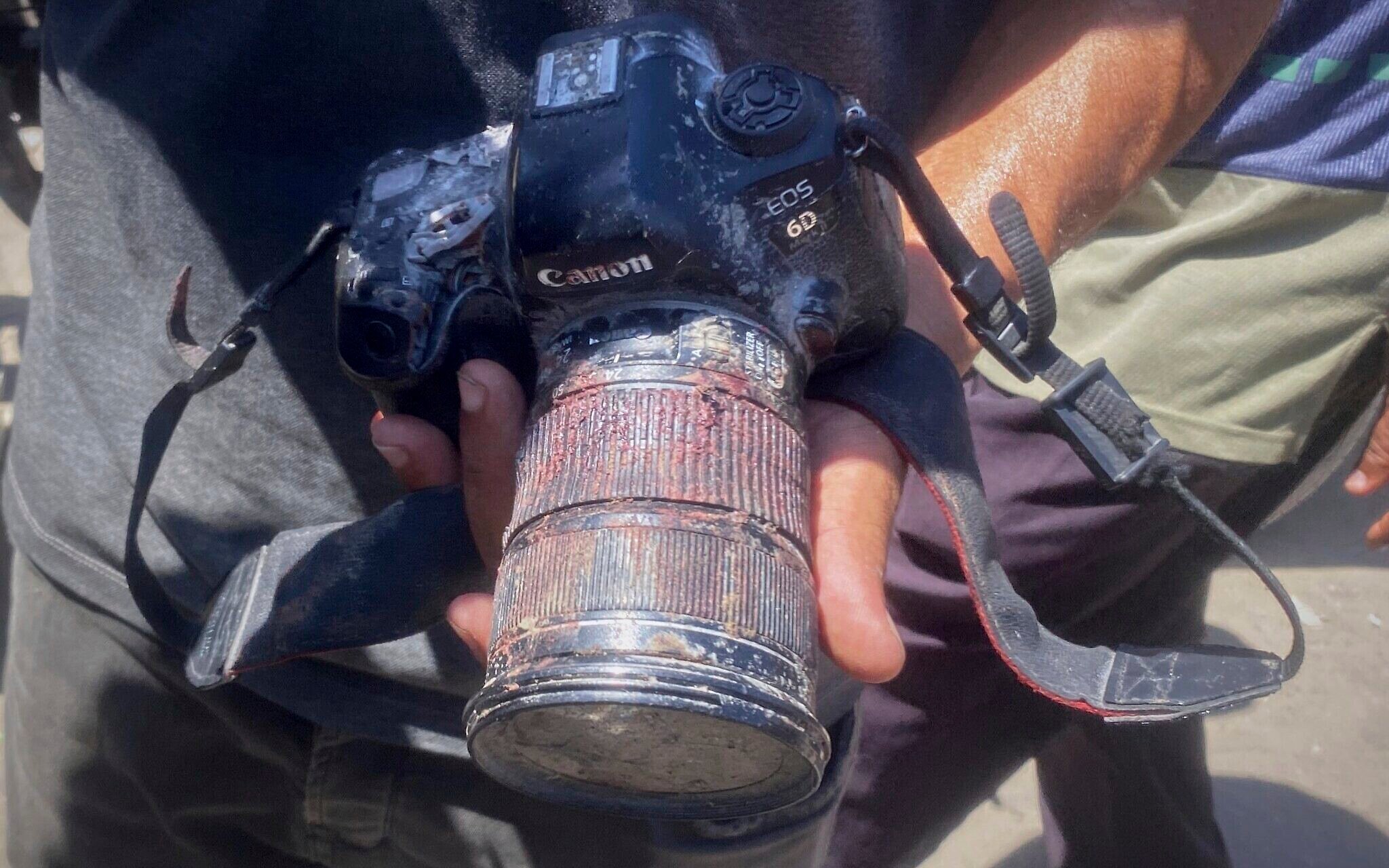
AP analyzed videos of the attack and found that Israel fired tank shells in the strikes, which the Israeli military confirmed following their initial inquiry.
Ziv said less deadly and more precise options than tank fire were available. “There is no good explanation for that,” he said.
An official with knowledge of the attack said the tank wasn’t supposed to have been used, but was unable to say what the original plans were. The official spoke to AP on condition of anonymity to discuss the ongoing investigation.
Hebrew media reported that IDF Southern Command had authorized a drone strike on the Hamas surveillance camera but did not approve the use of tank shells.
A munitions expert who analyzed photos of shrapnel from the hospital obtained by AP said it came from high-explosive shells fired by a tank.
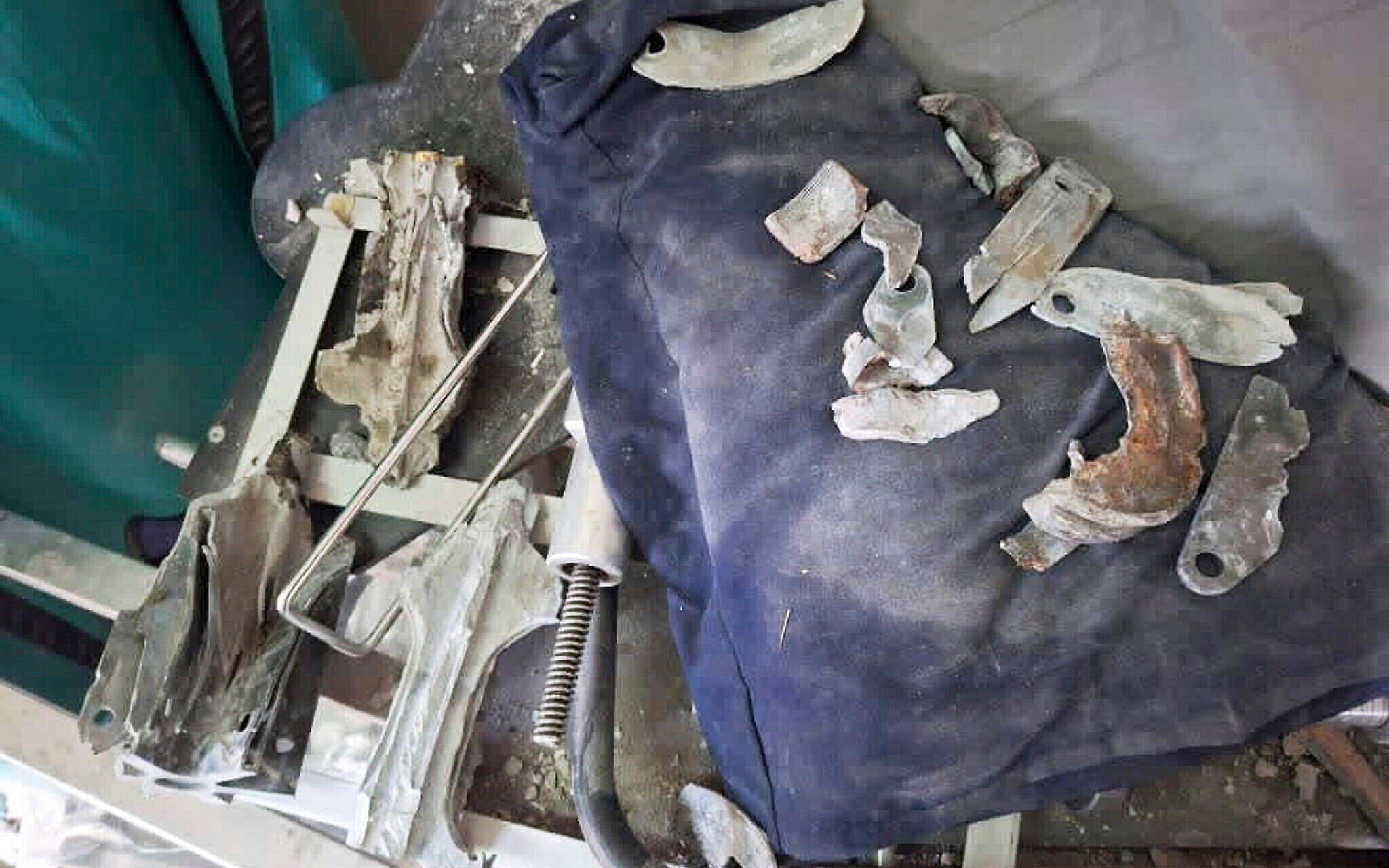
The remnants show parts of at least three fin-stabilized tank gun projectiles, consistent with those used by Israel, said N.R. Jenzen-Jones, director of Armament Research Services, an Australian consulting firm.
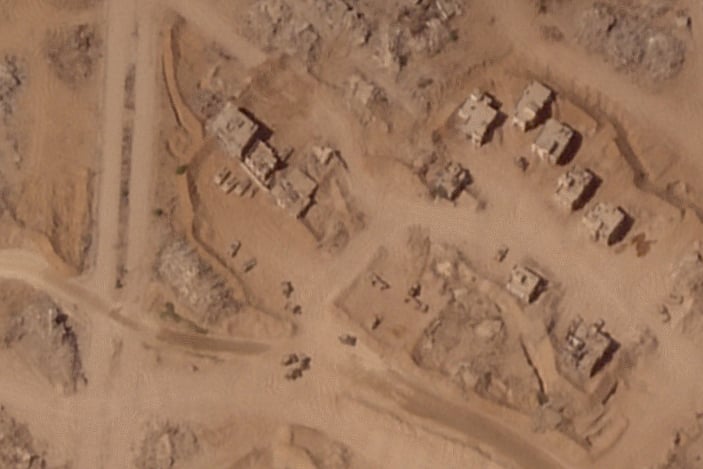
Satellite imagery from the afternoon of the day of the strike shows Israeli tanks and armored vehicles operating about 4.5 kilometers (3 miles) northeast of the hospital.
Discrepancies over Israeli claims of terror operatives
A day after the strikes, Israel gave the names of six men who it said were Hamas operatives killed in the attack. But this statement also raised troubling discrepancies.
It provided no evidence, and one man on its list, Omar Kamal Shahada Abu Teim, does not appear on the hospital’s list of casualties obtained by the AP. Doctors and morgue workers said no one by that name was killed, and unlike with the other five, Israel did not provide a picture.
Another person named, Jum’a al-Najjar, was a health care worker employed by Nasser Hospital, according to the morgue list. Another, Imad al-Shaer, was a driver for the first responders of Hamas’s civil defense agency.
The other three names appear on the casualty list, but no other details about them were immediately available.
Israel also did not say if any of the six were killed in its initial strike on the camera. Most were killed in the second round of strikes, and officials have not said whether they were identified among the crowd on the stairwell before troops struck it.
A joint letter from the AP and Reuters expressed outrage at the strikes and demanded answers.
“Unfortunately, we have found the [IDF’s] willingness and ability to investigate itself in past incidents to rarely result in clarity and action, raising serious questions including whether Israel is deliberately targeting live feeds in order to suppress information,” they said.








The Times of Israel Community.