

Coalition passes law gutting attorney general’s powers, removing key check on government
Law allows ministers to reject AG’s positions, which are currently binding, grants government effective control over appointing the AG; Netanyahu skips vote; MK Kariv, critics petition High Court
 Add ToI as a Preferred Source on Google
Ariela Karmel is a political correspondent at The Times of Israel. She previously reported for Calcalist and Haaretz. She holds an MA in Middle Eastern and African History from Tel Aviv University and a BA in Political Science from the University of British Columbia.

The Knesset voted Wednesday 65-51 to pass a law significantly weakening the powers of the attorney general — one of Israel’s few checks on executive power — after over eleven hours of filibustering by the opposition and later the coalition.
The legislation, which is currently set to enter into effect in January 2027, two months after the next elections, would effectively strip the attorney general of authority over the government by allowing ministers to reject the attorney general’s currently binding legal positions.
It would also grant the coalition effective control over appointing and dismissing the person holding the office, replacing the current system under which the cabinet acts on the recommendation of an independent public committee headed by a retired Supreme Court justice.
The bill would not affect the attorney general’s authority as head of the state prosecution, including decisions on whether to open criminal investigations into senior elected officials, as had been proposed in an earlier version of the legislation.
In an effort to speed the bill’s passage, the coalition removed those provisions but has said it will pursue them in separate legislation if reelected on October 27.
The bill passed after the coalition secured passage earlier this week of key measures demanded by its ultra-Orthodox partners under a quid pro quo agreement between Prime Minister Benjamin Netanyahu and the Haredi parties.
Netanyahu was absent from both the eleven-hour plenary discussion and the vote itself. He was similarly not present at a highly controversial vote on Tuesday to freeze the arrest of ultra-Orthodox draft evaders and at Monday’s vote to designate Torah study a foundational value of the state — two laws designed to perpetuate mass ultra-Orthodox exemption from IDF and other national service. Tuesday’s law banning the arrests of Haredi draft dodgers was frozen by the High Court earlier Wednesday, and it is to urgently hold a hearing on petitions against it.
Wednesday’s vote followed a minor coalition crisis in which United Torah Judaism MK and Degel HaTorah faction leader Moshe Gafni threatened to withhold support for the law unless the government first approved tens of millions of shekels in additional funding for daycare teachers in the Haredi school system. As a result, the bill’s sponsor MK Simcha Rothman delayed proceedings, speaking for more than 90 minutes until coalition leaders resolved the crisis.
Gafni later confirmed the funds were approved, with Hebrew-language media putting the additional funding he had obtained at NIS 39 million ($13 million). “This is another step in a process aimed at equalizing the salary conditions of Haredi kindergarten teachers with those of their colleagues in mainstream education. I will continue to work until full equality is achieved, and I will not relent until this goal is achieved,” Gafni said in a statement.

The legislation gutting the role of attorney general was spearheaded by Rothman of Religious Zionism, the head of the Knesset Constitution, Law and Justice Committee. The coalition argued that it restores authority to democratically elected officials, who, they say, have become subordinate to an unelected judiciary and legal establishment wielding powers unmatched in other democracies.
Religious Zionism chairman and Finance Minister Bezalel Smotrich congratulated Rothman on the law’s passage, declaring that “this decision has enormous significance for Jewish identity, Zionism, security and settlement,” and vowing that “together, we will devote the coming years to completing all the necessary reforms to the judicial system.”
Rothman called the law’s passage “a historic change” that “restores legal advice to its natural role” and “strengthens Israeli democracy.”
“We will pass the second part of the attorney general reform after the election, God willing, and, with the mandate the public gives us, continue reforming the judicial system,” Rothman said.
Rothman vowed to revive provisions dropped from the original version of the bill, to split the attorney general’s role and strip it of the authority to indict senior elected officials. These were shelved as the coalition raced to pass the current legislation before the Knesset dissolves on Friday.
Opposition lawmakers, legal experts, good-governance watchdogs and critics writ large say the goal of the law is to remove one of the few existing constraints on executive power, giving the elected majority carte blanche to do as it pleases, whether lawful or not, within a political system that already lacks the institutional safeguards common in other democracies.
Israel has few checks on executive power compared to many other democracies, lacking a bicameral legislature, representative constituencies, a written constitution or fixed term limits, making the role of the attorney general particularly significant.
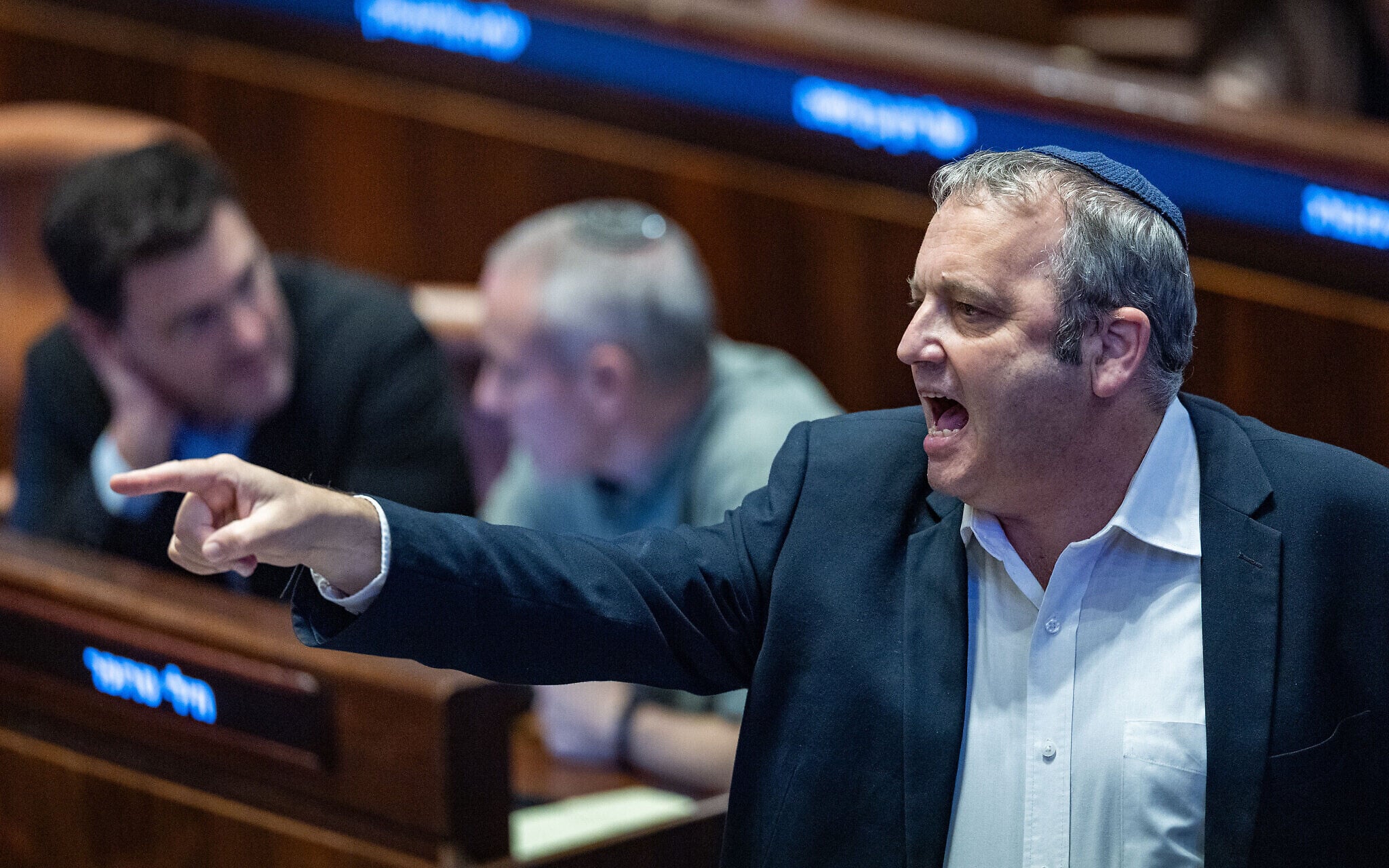
Democrats party MK Gilad Kariv said soon after the law was passed that he had petitioned the High Court of Justice against it, together with the Zulat Institute and a group of former ministers, legal experts, and public figures.
Calling the legislation “the cornerstone of the judicial overhaul,” Kariv argued that it “will place the government above the rule of law and shatter the delicate system of checks and balances in Israeli democracy.”
The petition argues that the law strips the attorney general of the role of an independent gatekeeper by allowing the government to ignore legal opinions, undermines Israel’s system of checks and balances, and creates “a real risk to the fairness of elections and preservation of democratic norms,” and asks the High Court to strike it down.
Opposition leaders roundly denounced the legislation as an assault on Israeli democracy, with Yashar chair Gadi Eisenkot, who is emerging as Netanyahu key rival in the October 27 elections, calling it “a blatant attempt to neutralize Israel’s gatekeepers and dismantle the rule of law,” and a “deliberate assault on our democratic foundations.”
Democrats chair Yair Golan accused the government of trying to “steal the election” by removing one of the few checks on its power ahead of the October 27 vote.
He argued that the attorney general legislation, together with other coalition initiatives, is intended “to weaken the gatekeepers, undermine the integrity of the election and cling to power at any cost.”

It also sparked criticism from Attorney General Gali Baharav-Miara herself, who has warned that the legislation will violate the rule of law.
The legislation will “severely undermine the rule of law in Israel,” Dr. Amir Fuchs, a senior researcher at the Israel Democracy Institute, told The Times of Israel.
He argued that it would enable “many executive actions to be carried out contrary to law, subject only to petitions to the High Court of Justice,” eliminating “a key and critical check on government power in Israel, which lacks a robust system of checks and balances.”
“Taken together, the new law removes many of the key tools that enable the attorney general to safeguard the rule of law,” Fuchs added.

The law represents the latest stage of the Netanyahu government’s larger campaign to radically weaken the judiciary, which began immediately after it assumed power in 2023.
The government has repeatedly accused Baharav-Miara of thwarting its agenda. After the High Court of Justice froze the government’s decision to dismiss her last year, lawmakers instead turned to Rothman’s legislation to dramatically curtail the powers of the office itself.









The Times of Israel Community.