

Gaza turns its rubble into power with homemade wind turbines
Former engineering student makes use of scrap metal and salvaged debris to provide electricity for charging phones and running lights, and fans for families still living in tents
 Add ToI as a Preferred Source on Google
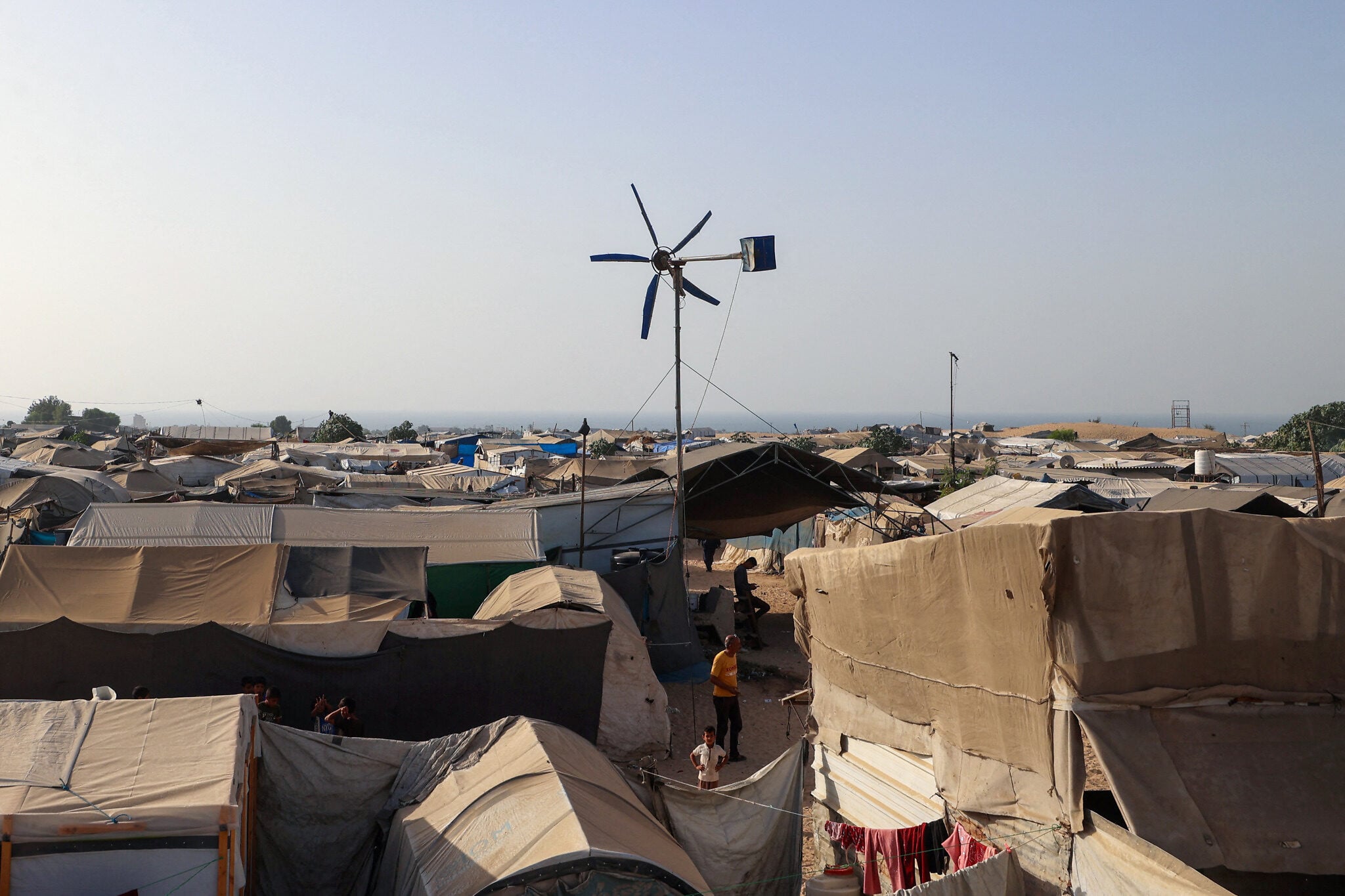
KHAN YOUNIS, Gaza Strip — Above a maze of tents in a crowded displacement camp in Gaza, homemade wind turbines made from scrap metal and salvaged debris spin in the sea breeze, bringing electricity to struggling Palestinians.
In the southern Khan Yunis camp, Kamal Al-Dabary, a former engineering student, has put his skills to work for families who, like most Gazans, live in displacement with no direct access to the tiny territory’s shattered power grid.
According to the World Bank, more than 90 percent of Gaza’s power generation and distribution capacity was destroyed in April 2026, much of it in IDF strikes that devastated homes and infrastructure in the war sparked by Hamas’s October 7, 2023, onslaught in southern Israel
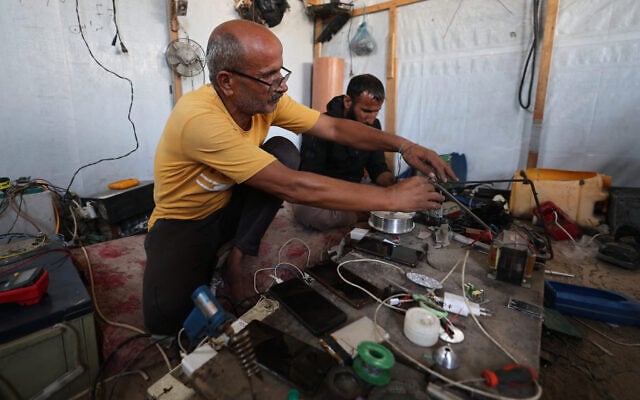
Sitting on the ground, Dabary tinkered with electrical wires, metal parts and basic tools on a plastic table.
After carefully twisting cables together and testing them with a multimeter, a small bulb flickered on, then another, signaling that the current was flowing.
“When solar panels were still relatively affordable, we bought one and kept moving it around to follow the sun,” the 60-year-old, displaced by the fighting between Israel and Hamas, told AFP.
After three years of war, prices have soared as aid and commercial supplies trickled into Gaza through crossings tightly controlled by Israel.
A single solar panel now costs at least 15,000 shekels (nearly $5,000), putting it out of reach for most Gazans, Dabary said.
‘Changed everything’
“We haven’t had work or income for three years,” he added.
“That’s when the idea of a wind turbine came to mind. Why not harness the wind? So we salvaged parts from the rubble.”
The turbines are built from scooter motors and old water tanks cut into blades.
As the wind turns the blades, they drive a motor that generates electricity. The power then passes through circuits assembled from parts recovered from destroyed homes before being stored in batteries.
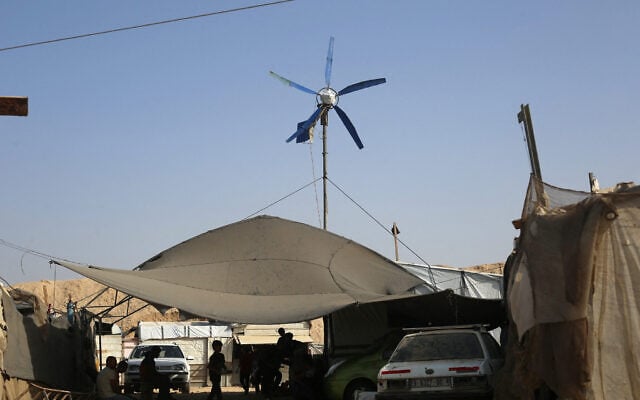
This provides enough electricity to charge phones and run lights, fans and even electric razors, small comforts that have become a luxury for families still living in tents and shelters.
Nearly all of Gaza’s residents were displaced at least once during the war, and most now live in a small area still under Hamas rule, while Israel controls more than half of the territory along its perimeter.
“They help us hold on… until God delivers us from this ordeal and we can return home,” said Dabary, known locally as Abu Ayman.
The output remains modest. But in a camp where shortages are constant, every watt counts.
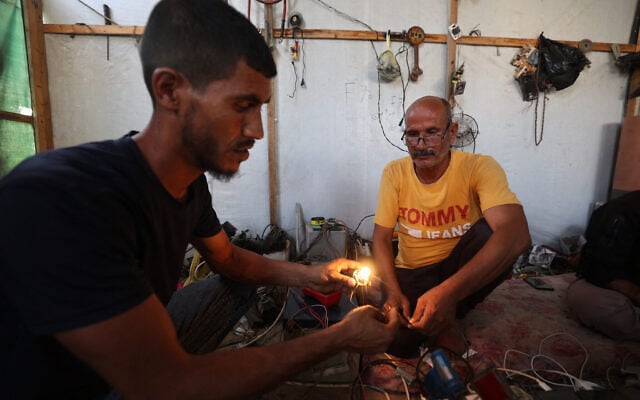
The system “has changed everything,” said 50-year-old Saleh ben Hasan.
With healthcare and medication hard to access in Gaza, the power can also help keep medical equipment running.
“If a child needs a nebulizer (a device used to inhale medicine) in the middle of the night, who else can we turn to?” he said.
“Electricity is needed… So we turn to our brother Abu Ayman.”










The Times of Israel Community.