

High Court annuls firing of attorney general; cabinet ministers urge defiance of ruling
In unanimous decision, justices says government failed to justify politicizing the process for firing an AG in effort to dismiss Baharav-Miara
 Add ToI as a Preferred Source on Google
Jeremy Sharon is The Times of Israel’s legal affairs and settlements reporter
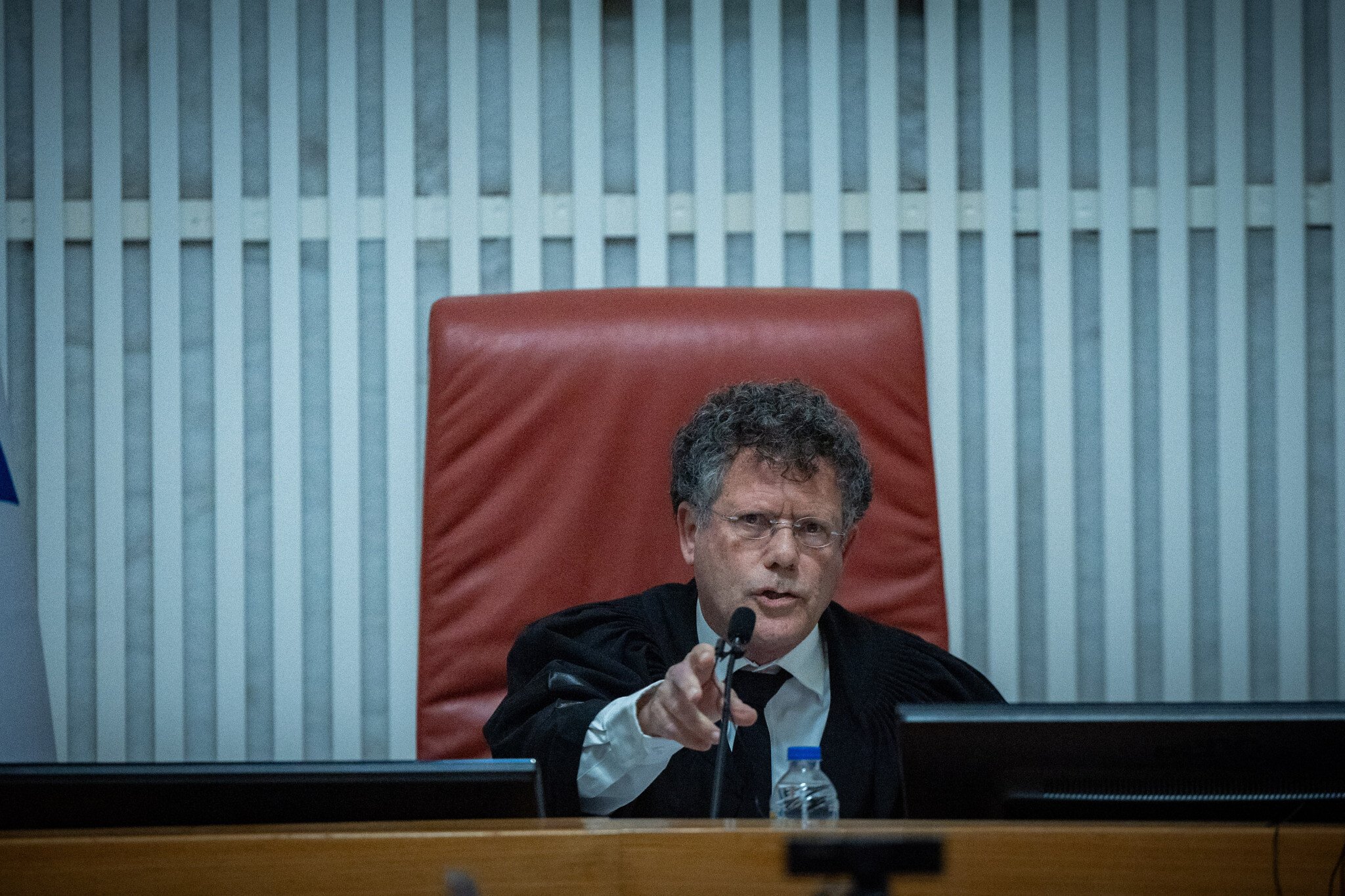
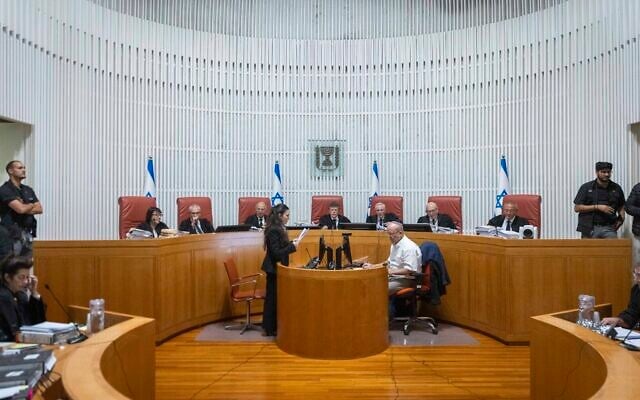
The High Court of Justice ruled unanimously 7-0 on Sunday to annul the government’s decision to fire Attorney General Gali Baharav-Miara, asserting that the government had failed to provide legal justification for its decision to change the way an AG is fired, and determining that the new system it designed was fundamentally flawed.
The government’s decision earlier this year to change the way an attorney general is fired was approved “hastily” and “without an appropriate factual or legal basis, without consulting professional bodies, and without considering other alternatives,” the court ruled.
The ruling, authored by Supreme Court President Isaac Amit, stated explicitly that Baharav-Miara remains the attorney general and retains her authority, and that any action taken to change her status or powers would violate the decision — a stipulation that anticipated threats or actions by the government and its ministers to defy the ruling.
Indeed, Justice Minister Yariv Levin and Communications Minister Shlomo Karhi swiftly called for the government to ignore the decision, a step that would precipitate a severe constitutional crisis.
Amit’s ruling was supported by the six other justices on the panel, including four conservatives, among them the court’s two most trenchant ones — Deputy Supreme Court President Noam Sohlberg and Justice David Mintz.
Opposition members welcomed the ruling as one upholding the rule of law.

The government’s decision in August to fire Baharav-Miara was hugely controversial because of how it changed the way an attorney general is fired, shifting the decision from the recommendation of a public, professional committee to the recommendation of an entirely political committee staffed only by government ministers.
Critics of the government argued that Baharav-Miara was fired simply for repeatedly pointing out that the government was acting in violation of the law, and that the government had designed a political process to facilitate her dismissal on political, not professional, grounds.
The government argued in response that it was entitled to change the way an attorney general is hired and fired, since that process is laid out only in a cabinet resolution from 2000 and not in legislation.
But the court ruled that such resolutions are still bound by the requirements of administrative law — which the government’s new method of firing the attorney general, a key official in the country’s law enforcement system and constitutional arrangement, manifestly did not adhere to.
In the ruling, Amit said that the government’s responses to the petitions against Baharav-Miara’s firing had notably failed to deal with claims regarding failures in the decision-making process, and simply repeated its assertion that it had the right to change previous government decisions.
Amit said that this in itself would have been enough to accept the petitions against Baharav-Miara’s dismissal, especially since the government had refused to send a legal representative to argue its case in a hearing at the beginning of this month.
He said the court would nevertheless address the problems with changing the dismissal process, noting that cabinet resolutions and all administrative action must be based on “a solid factual basis,” the importance of which rises in accordance with the impact of the decision itself.
“No one argues that… the government can deviate from or change previous decisions,” he wrote. But he said that authority was “subject to the rule and principles of administrative law,” requiring decisions be made in “a legitimate and orderly manner, without ulterior motives.”
Wrote Amit, “It is easy to prove that decision 3125 [changing the dismissal process] was not even close to fulfilling these requirements.”
He noted that the 2000 cabinet decision laying out the manner by which an attorney general is hired and fired was based on the recommendations of the Shamgar Committee, which had examined the issue for a year.
It recommended the use of a public, professional committee to make recommendations, in order to ensure that the role remains independent and is not subject to political whims, because of the critical nature of the attorney general’s dual role as head of the prosecution service and chief interpreter of the law for the government.
“Cabinet resolution 3125 undermines this delicate balance” and was therefore of crucial importance to the future functioning of the attorney general and the role’s relationship with the government, wrote Amit.
He pointed out that the government had allotted just two working days between the publication of the text of the cabinet resolution and the vote adopting it; did not consult with relevant professionals on the substantive change its decision would have on the nature of the attorney general’s role; and did not seek a legal position paper from the Attorney General’s Office on the highly sensitive matter.
The court president also noted that the government had already declared its desire to fire Baharav-Miara before seeking a recommendation on whether it could fire her, and that it only changed the dismissal process after it failed to fire her through the original system.
The change to the dismissal process “was born primarily as a response to the government’s dissatisfaction with potential candidates for the professional-public committee, and in an attempt to overcome this obstacle after the fact,” wrote Amit.
Since the cabinet resolution changing the dismissal process was invalid, he wrote, the decision to dismiss Baharav-Miara was by extension null and void. He said that the court would not discuss the government’s arguments justifying the dismissal itself since those claims should be put before the public, professional committee for hiring and firing the attorney general.
At the end of the ruling, Amit alluded to the possible constitutional crisis that may unfold as a result of it, noting that following interim rulings issued by the court on the matter, there had been efforts by some cabinet ministers to defy it.
He pointed in particular to Communication Minister Karhi’s instructions to ministry workers to ignore instructions from the Attorney General’s Office immediately after Baharav-Miara was fired in August.
Sohlberg ruled at the time that “everyone is obligated to respect decisions and rulings of the court,” and declared Karhi’s instructions to be invalid.
Amit wrote in Sunday’s ruling that further comment was unnecessary, other than to say that “the rule of law does not exclude anyone, including state authorities and organizations.”
Nevertheless, Levin quickly called on the government to defy the decision.
“The government must totally reject this unlawful intervention into its authority, and insist on its right to work with an attorney general it trusts to help it realize its policies,” stormed the justice minister.
Karhi also called to defy the court, claiming the justices had no right to intervene in the government’s authority and that it should “definitively and in practice dismiss the attorney general, block her entry to government offices, and immediately appoint an acting replacement.”
Opposition Leader Yair Lapid welcomes the court’s ruling.
“I commend the Supreme Court for unanimously accepting the Yesh Atid faction’s petition demanding the prevention of the illegal firing of the attorney general,” he wrote (Yesh Atid was one of the petitioners against Baharav-Miara’s dismissal).
“We’ll continue to fight for the rule of law in Israel,” Lapid posted on social media.









The Times of Israel Community.