

High Court rejects petitions against Gofman’s appointment as Mossad chief
In a two-to-one ruling, justices say conduct of PM’s military secretary during a 2022 influence campaign cannot be considered an ethical violation
Jeremy Sharon is The Times of Israel’s legal affairs and settlements reporter
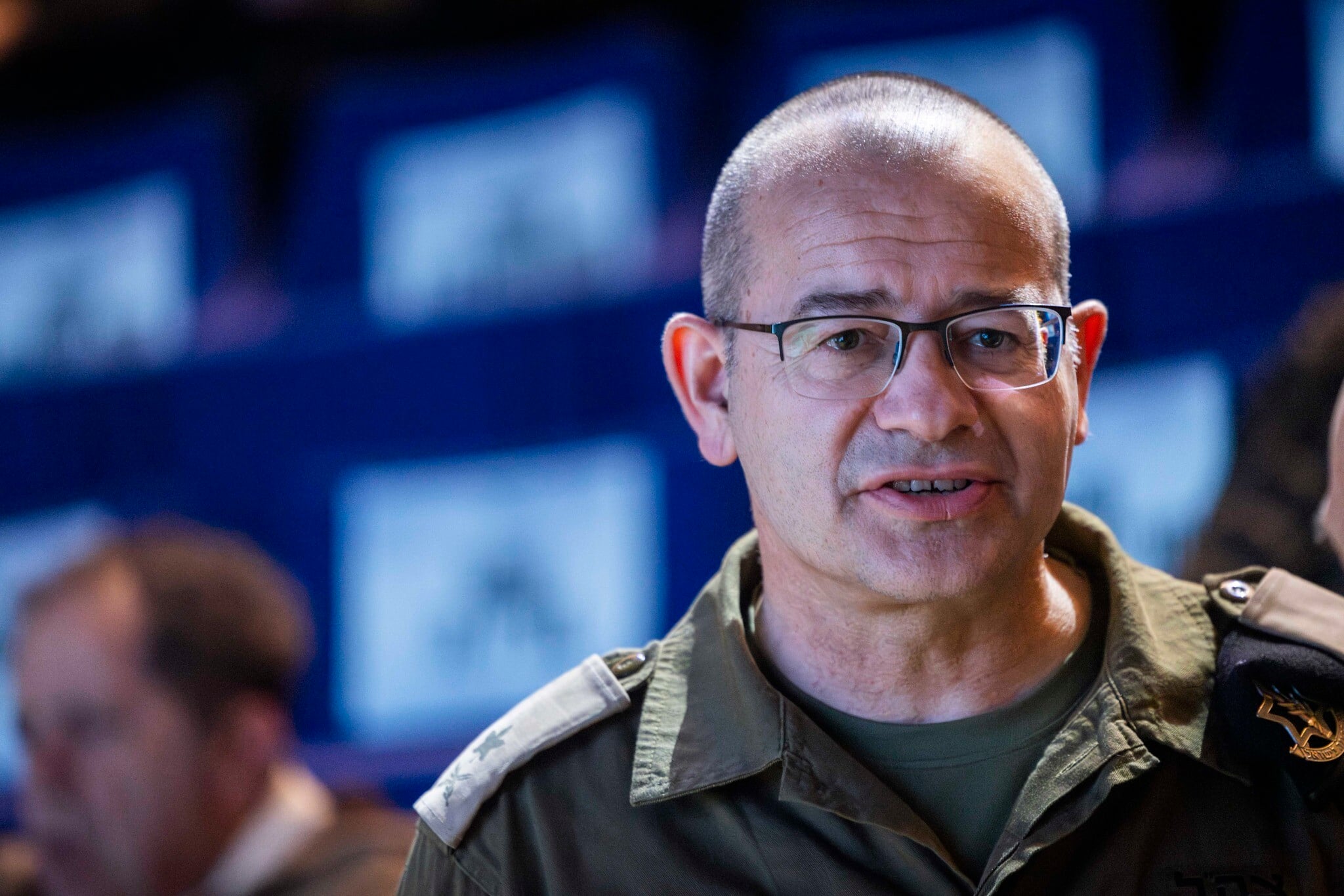
The High Court of Justice on Monday rejected petitions calling for the annulment of the government’s appointment of Roman Gofman as the new head of the Mossad, as well as the allegation that he acted in a manner that violated the required standards of ethical conduct for senior state officials.
The court determined two-to-one that although there were failures with how Gofman handled a controversial incident from 2022 at the center of the petitions against him, he did not deliberately mislead an investigation into the affair or “abandon” the individual around whom the incident revolves.
The ruling brings to an end a tempestuous legal process that saw numerous cabinet ministers and coalition MKs strongly criticize the High Court for even hearing the case.
Justice Daphne Barak Erez was in the minority in her opinion that the Senior Appointments Advisory Committee, which evaluated Gofman’s candidacy, had not fully established that there was no ethical violation in his conduct. Erez said she would have sent the matter back to the committee for further review of the problematic manner in which Gofman handled the incident in question, if her position had been accepted.ka
Notably, Justice Alex Stein for the majority was highly critical of Attorney General Gali Baharav-Miara, who supported the petitioners‘ request to annul Gofman’s appointment, and said he found it “exceedingly difficult” to understand elements of her position.
Ori Elmakayes, the individual at the center of the allegations against Gofman, said that he accepted the court’s decision not to intervene, and that he believed Gofman would act with greater restraint as a result of the legal battle he waged against his appointment.

Gofman is set to take up the position of Mossad director on Tuesday at a swearing-in ceremony in Jerusalem.
Prime Minister Benjamin Netanyahu’s decision to select Gofman, who was his military secretary, as Mossad chief was beset by allegations of wrongdoing over an incident during his time as commander of the IDF’s 210th “Bashan” Regional Division in the Golan Heights.
In 2022, Gofman approved the use of Elmakayes, then 17, for an Arabic-language influence campaign against Iran, Hezbollah and Hamas. Elmakayes was asked to publish information in his Telegram channel by his handler, referred to as Captain Tzur, since it was read by enemy elements inside Syria.
However, Elmakayes was arrested and interrogated by the Shin Bet, and, so he claims, tortured during the process. He was kept in solitary confinement for two months and under different forms of detention for some 18 months until the charges were eventually dropped, after his lawyers belatedly managed to prove that he had been working with the IDF.
An IDF investigation was conducted in May 2022 into the affair, in which Gofman said he had not known Elmakayes’s identity or the specifics of the operation. The investigation resulted in Gofman receiving a disciplinary note in his record on the grounds that he had not received authorization for the operation through Elmakayes’s Telegram channel.
Netanyahu nominated Gofman as the Mossad chief in December 2025, and the Senior Appointments Advisory Committee recommended that the cabinet approve his candidacy in April by three votes to one, with the committee’s chairman, retired Supreme Court president Asher Grunis, dissenting.
A petition was filed against the appointment by Elmakayes himself on the grounds that Gofman had failed to alert the law enforcement agencies that he had been working in cooperation with the IDF, constituting a major ethical violation leading to Elmakayes’ prolonged legal ordeal. The Movement for Quality Government also filed a petition accusing Gofman of lying to an IDF investigation over the matter, which it said was also a grave ethical violation.
The court then asked the advisory committee to review further testimony and evidence, which it did and once again voted three to one to approve Gofman’s appointment, with Grunis again dissenting.
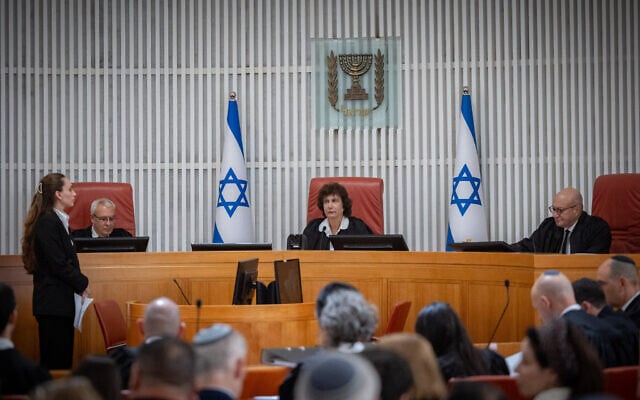
Writing for the majority on Monday, Justice Ofer Grosskopf said that the questions of whether Gofman had lied and had “abandoned” Elmakyes were key to determining whether or not he had acted in violation of ethical codes of conduct in a way that invalidated him from serving as Mossad chief.
Citing a written summary of a May 2022 phone call between Gofman and an officer in the IDF’s Information Security Department referred to as Gimmel, and an affidavit from Gimmel to the advisory committee, Grosskopf said that Gofman’s answers to questions put to him by Gimmel had not been fitting, or even correct.
But he wrote that it was too great a leap to determine that Gofman had deliberately lied and misled the investigation, saying that the evidence did not support such a conclusion.
Although Gimmel asked whether Gofman knew broadly about the influence operation with Elmakayes, which Gofman certainly did know about, he nevertheless replied that he was unaware of it.
But Grosskopf asserted that the context of the investigation and the phone call was not Elmakayes’s identity, but rather whether Gofman had authorized the transfer of classified information to the Telegram channel operator, which he had not.
“I was not convinced that Maj. Gen. Gofman’s answer was deliberately misleading, and it is certainly plausible in my opinion that it was given inadvertently, whether due to the way he understood the topic of the conversation or due to being distracted,” wrote Grosskopf.
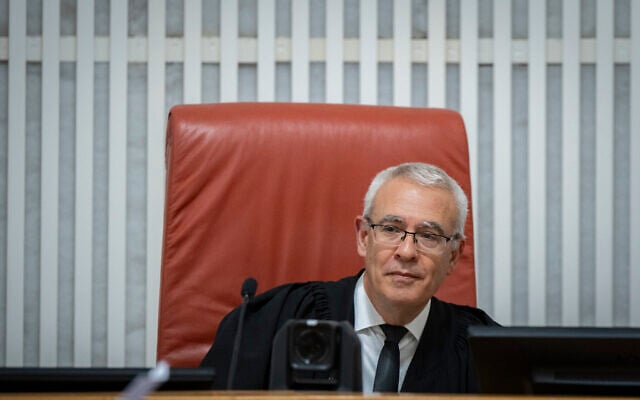
Gofman could therefore not be accused of a severe ethical violation over his answers to the IDF investigation, the justice determined.
Grosskopf also insisted that Gofman had not “abandoned” Elmakayes, because as soon as Elmakayes’s handler from the 210th Division was questioned by IDF Information Security in August 2022, he told the head of the unit’s investigations department that he had authorized the operation and Captain Tzur’s contact with Elmakayes.
This occurred two and a half months after Elmakayes was arrested. Grosskopf wrote that between Elmakayes’s arrest on May 24, 2022, and Captain Tzur’s questioning, Gofman may have reasonably assumed that the investigation against Elmakayes was based on matters other than his connection to the 210th Division, since Gofman himself never authorized the transfer of classified information to Elmakayes.
“The conclusion that emerges from this analysis is that the evidence before us does not provide support for the narrative of lies and abandonment Maj. Gen. Gofman is accused of by the petitioners, but rather aligns well with the narrative of moral integrity presented by him and adopted by the position of the majority members of the advisory committee and the prime minister,” wrote Grosskopf.
Gofman will be replacing outgoing Mossad chief David Barnea.






The Times of Israel Community.