

In first, police let Jewish visitors take printed prayers onto Temple Mount
Police confirm change to longstanding ban on non-Muslim prayer, which comes weeks after Ben Gvir confidant appointed as Jerusalem’s top officer; Jewish activists laud policy
 Add ToI as a Preferred Source on Google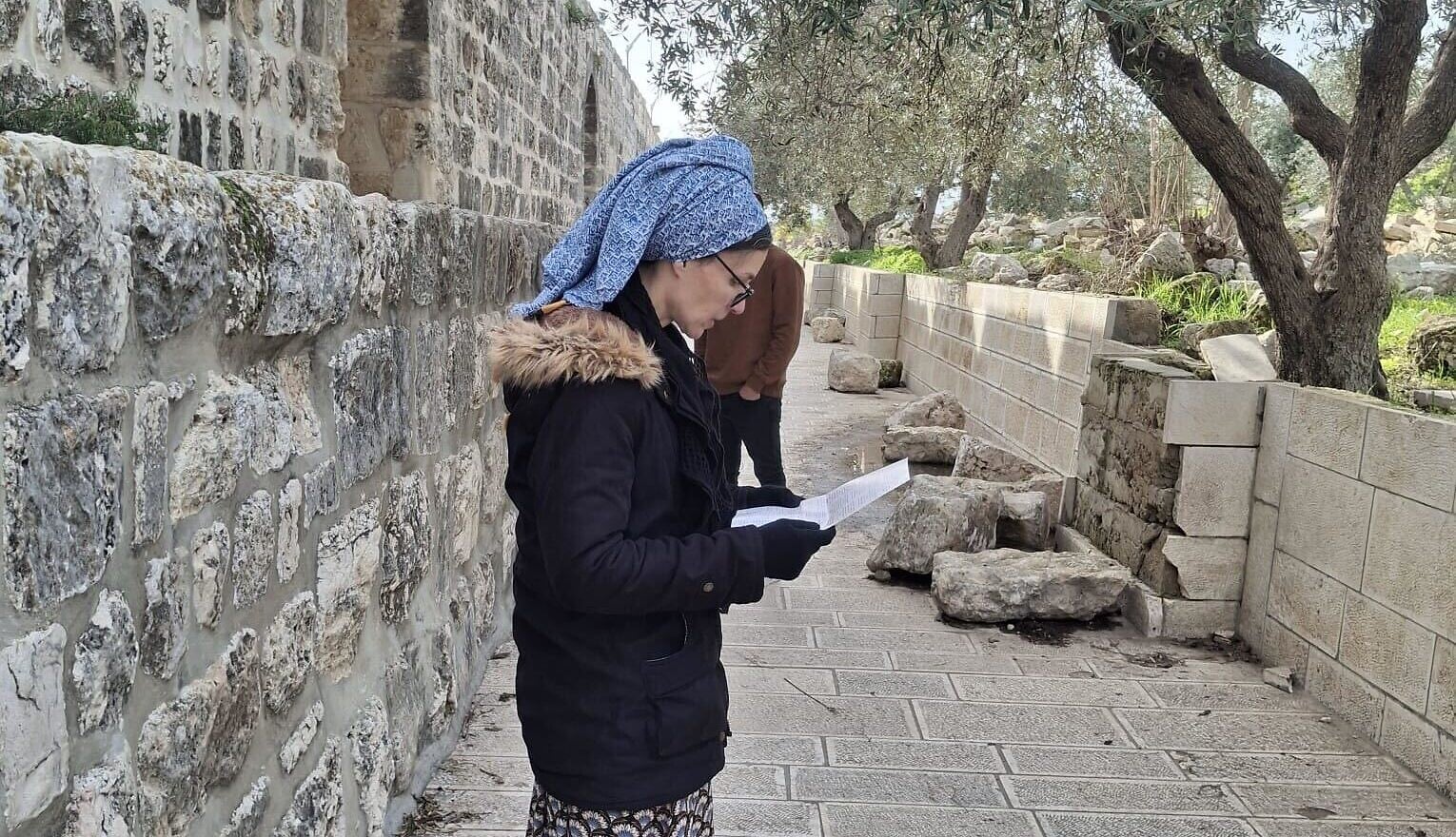
Police allowed Jewish worshipers to ascend the Temple Mount with printed prayer sheets Wednesday, in a further challenge to regulations barring non-Muslim prayer at the flashpoint Old City of Jerusalem site.
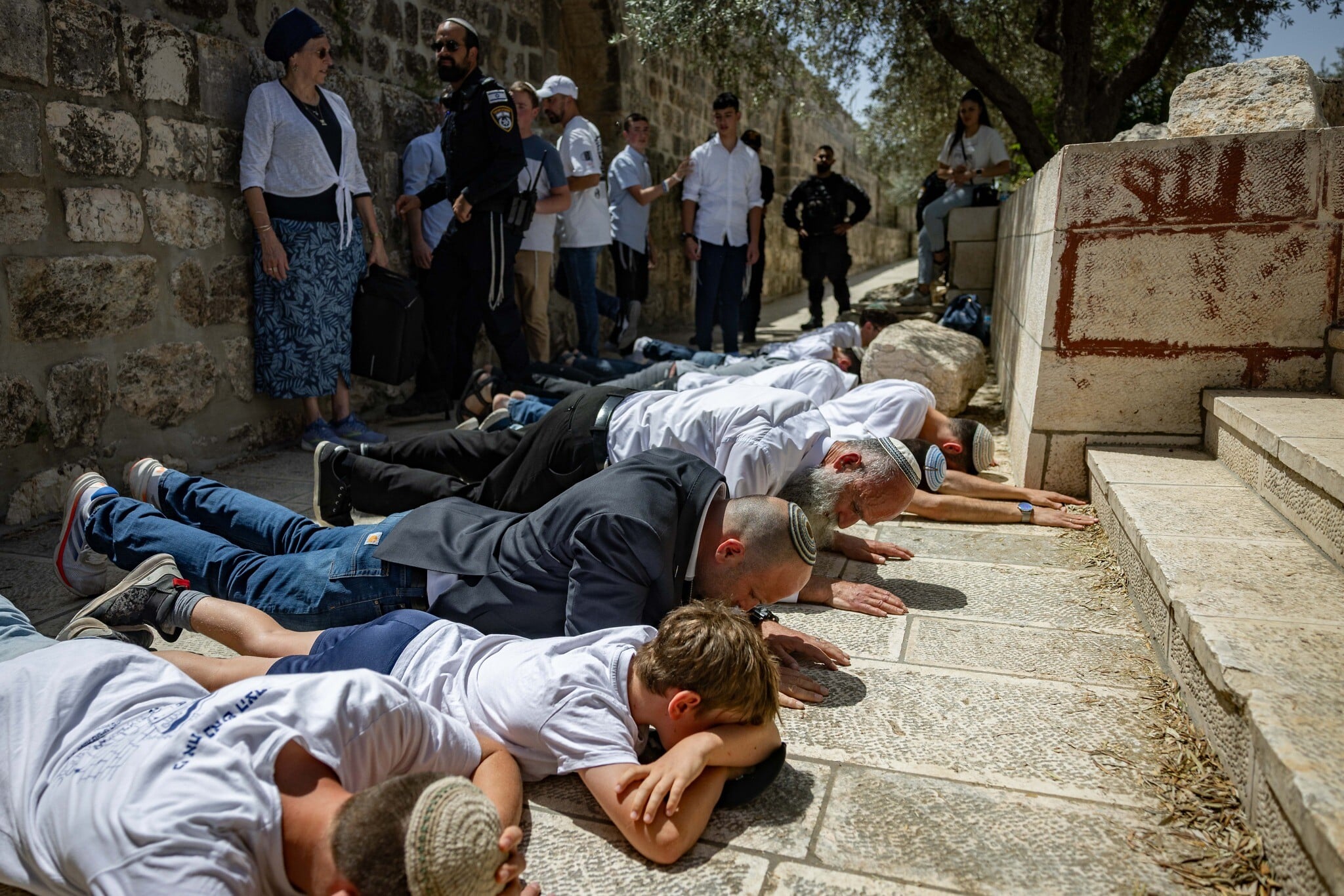
Early Wednesday, students at the Temple Mount Yeshiva handed out liturgical material printed on flyers to Jewish visitors waiting to go up to the Temple Mount. The sheets included religious guidelines for visiting the holy site, a prayer to recite before ascending and the Amidah (standing) prayer, said thrice-daily in Jewish tradition.
Police said they acceded to a request from the Temple Mount Yeshiva — which encourages Jews to ascend and pray at the site — that visitors be allowed to carry “guidance sheets” with them to the complex.
“In order to maintain the existing order, it was determined that the use of these sheets would be limited solely to specific areas defined by the police,” police added.
Non-Muslim prayer has until recently been forbidden forbidden atop the Temple Mount — known by Muslims as the Al-Aqsa Compound — due to a string of agreements known as the status quo between Israel and Jordan, which administers the site through the Jerusalem Islamic Waqf.
The hotly disputed site, the holiest site in Judaism and third-holiest in Islam, was the location of both ancient Jewish temples and, since the 7th century, has housed the Al-Aqsa Mosque and the Dome of the Rock shrine. Conflicts around the site have sparked several rounds of violence in the region.
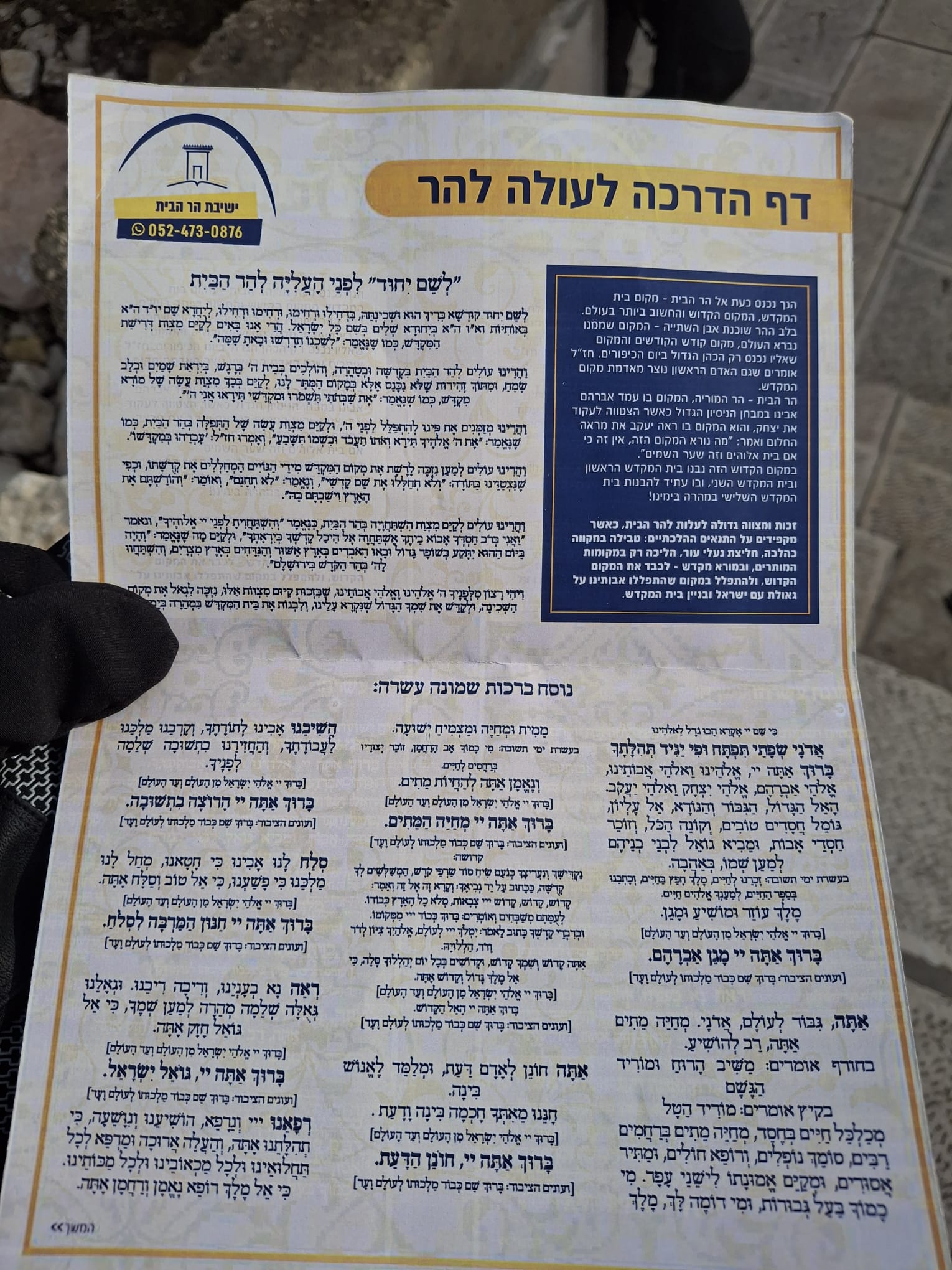
While in the past, police would eject or detain Jewish visitors caught praying on the Temple Mount, this policy has largely fallen to the wayside over the past three years under National Security Minister Itamar Ben Gvir, who has repeatedly demanded that police allow Jews to pray there.
In recent years, Jewish visitors have been permitted to pray and prostrate themselves in the eastern part of the complex, but were still barred from bringing prayer items, such as tefillin, prayer shawls and printed liturgy, to the site.
Police appeared to confirm their official sanction of non-Muslim prayer in a Wednesday statement that stressed that officers work to “enable freedom of worship and visitation at the Temple Mount for all religions and communities.”
Leading activists for Jewish prayer at the Temple Mount downplayed the gravity of the new policy, insisting it was merely a recognition of the current reality.
“Jews have been bringing prayer pages and books onto the Temple Mount for a long time, even if the police didn’t always want to see it. What happened now is simply the police officially approving what is already happening on the ground,” said Akiva Ariel, the CEO of Beyadenu, an organization dedicated to cementing a Jewish presence at the site.
“We are moving forward until prayer on the Temple Mount becomes a normal and routine reality,” he vowed.
The group’s spokesman, meanwhile, stressed the significance of the shift, telling The Times of Israel that such printed material was “something that they [Israeli security] used to check for, to make sure you were not bringing” to the site.
Two weeks ago, Deputy Commissioner Avshalom Peled, a confidant of Ben Gvir, was appointed to the sensitive position of Jerusalem District commander, replacing Deputy Commissioner Amir Arzani who went on leave. Peled formerly served as deputy police chief.
Haaretz reported that Arzani departed under duress after he pushed back against the far-right minister’s attempts to further relax restrictions on the Temple Mount.
According to Beyadenu, police only allowed for the flyer printed by the Temple Mount Yeshiva to be brought into the site. This provision may change in the near future, the group’s spokesman noted.








The Times of Israel Community.