

Iran said shoring up defenses at nuclear sites, warning it could invade neighbors if war resumes
Tehran reportedly preparing population for a return to fighting, issued warnings it could target American warships and Saudi oil facilities as it seeks to deter renewed US strikes
 Add ToI as a Preferred Source on Google
Iran is strengthening defenses around its nuclear sites and preparing for possible renewed fighting with the United States, while Iranian officials have warned of possible ground incursions into neighboring countries, The Wall Street Journal reported on Monday.
These preparations come as Tehran seeks to deter another American attack, which officials believe could come after the US November 3 midterm elections, according to the report.
Iranian officials have also warned regional counterparts that Saudi Arabia’s oil facilities could be targeted if fighting resumes, the Journal reported, citing people familiar with the warnings. This would compound woes for the Saudis, who have faced multiple attacks in recent days form the Iran-backed Houthis, including repeated strikes on Riyadh airport.
Iran’s top national security official, Mohsen Rezaei, reportedly said on Sunday that Tehran could also target the United Arab Emirates, and data centers and internet cables across the region.
At the end of September, Brig. Gen. Gholamreza Jalali, the official in charge of the country’s contingency plans, told reporters that the country was installing shelters and backup supplies to continue operating in a crisis.
Tehran has separately told mediators that it could step up attacks on American forces, including attempts to sink US warships in the region and kill their crews, according to the report.
Iran has also reportedly strengthened defenses around nuclear sites.
Last month, the IAEA reported signs of construction at the Pickaxe Mountain and Natanz nuclear sites. The Journal, citing an analysis of Vantor satellite images by the Institute for Science and International Security, said it appeared to be the construction of makeshift dirt mounds to obstruct ground raids.
Iranian authorities also have begun preparing civilians for a potential return to conflict by sending paramilitary forces to read stories about war to children in kindergartens, hosting rallies and advertising training in the use of shoulder-mounted anti-aircraft missiles, the report added.
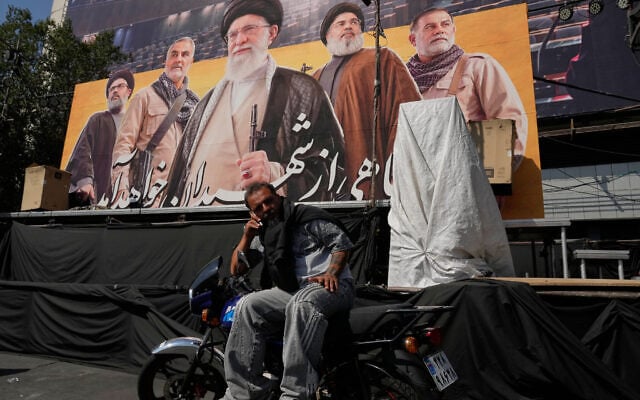
These efforts may also be an attempt to distract the Iranian population from mounting economic challenges it has been grappling with as the US tightens sanctions.
“The war footing is serving them well for now due to an impasse on many fronts—diplomatically, economically and politically,” Sanam Vakil, Middle East director at London’s Chatham House think tank, told the Journal. “With a new war, the Islamic Republic could dig itself out of the cul-de-sac it has dug for itself.”
Meanwhile, the US military has also been preparing for possible renewed fighting, with a third aircraft carrier strike group and another Marine expeditionary unit heading towards the Middle East.
While campaigning for Republican candidates last week, US President Donald Trump hinted that the war could end soon before or after the midterm elections, but left open the possibility that military operations against Iran could continue, according to the AP.
The war started on February 28, when the US and Israel attacked Iran. Tehran responded with its own strikes on Israel and Gulf states that host US bases.
The conflict has weighed on Trump’s domestic approval ratings and on fellow Republicans seeking to keep their narrow majorities in Congress in the November elections. About 60% of Americans, including one in four Republicans, disapprove of Trump’s handling of Iran, according to a recent Reuters/Ipsos poll.
The US and Iran signed a short-lived interim agreement in June that intended to establish a 60-day ceasefire and provide a framework for a permanent peace deal.
The deal collapsed with renewed military actions and disputes over control of the Strait of Hormuz, a key shipping route through which one-fifth of the world’s oil and gas flowed before the war.







The Times of Israel Community.