

Lebanese president: Security deal with Israel would be potential prelude to peace
In interview, Joseph Aoun qualifies that ‘we cannot jump directly to a peace agreement’; says disarming Hezbollah nonnegotiable, urges new force to replace UNIFIL when mandate ends
 Add ToI as a Preferred Source on Google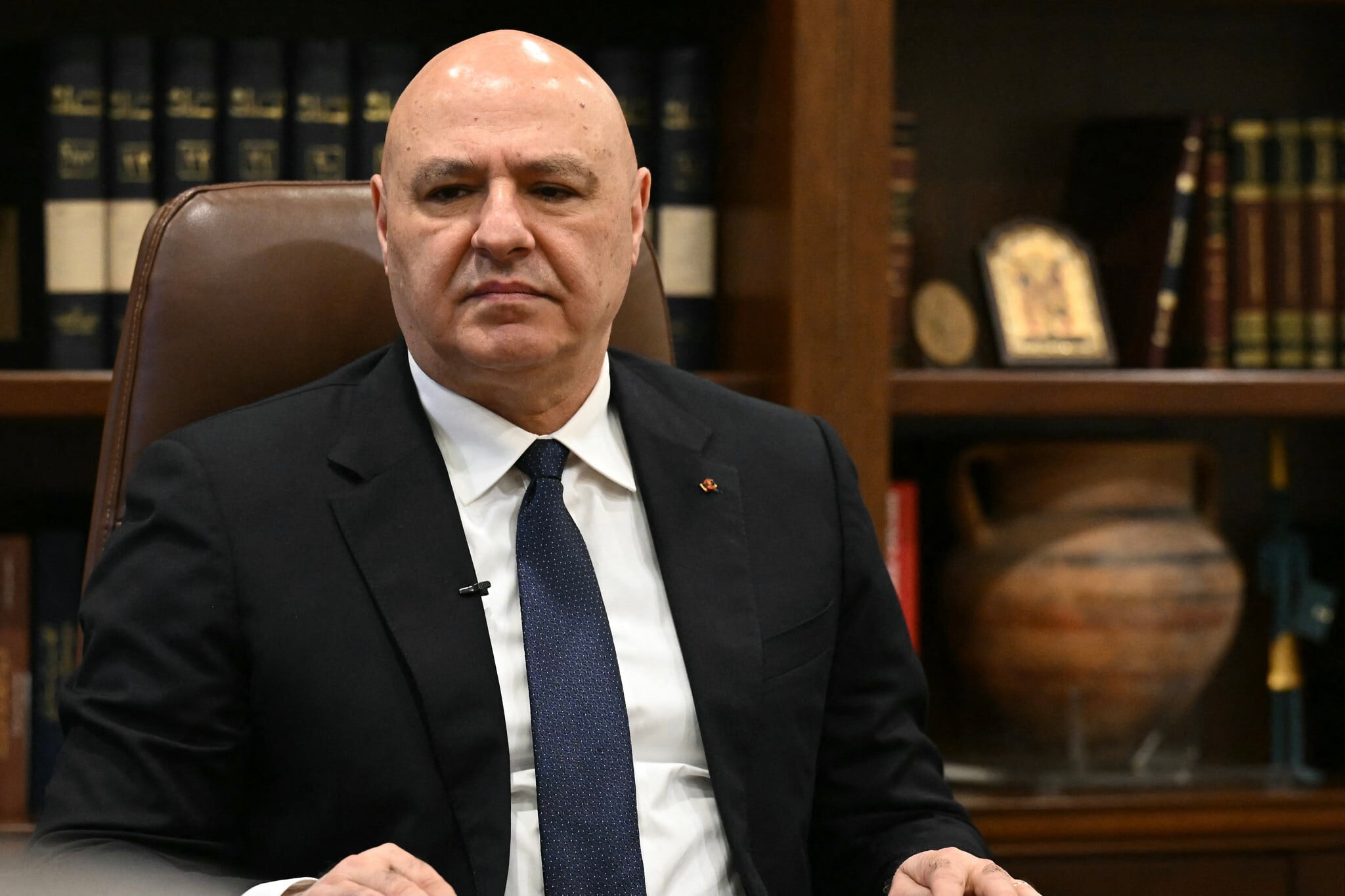
Lebanese President Joseph Aoun told AFP in an exclusive interview that he wants a security agreement with Israel once it withdraws its troops as a possible prelude to a peace deal, and is determined to disarm Hezbollah without a confrontation.
Speaking ahead of his departure to France on Wednesday, President Joseph Aoun said Lebanon wanted a new force, European or otherwise, to prevent a security vacuum after UN observers leave southern Lebanon when their mandate expires at the end of the year.
He called on the United States, European Union and Arab countries to support Lebanon’s military as it deploys across the country.
Lebanon under Aoun has committed to disarming Hezbollah, which dragged the country into the wider Middle East war by attacking Israel earlier this year. The Iran-backed terror group has refused to disarm, and Israeli officials are doubtful that Beirut will follow through on its pledges.
Aoun said he wants a security agreement with Israel “primarily to end the state of hostility and the deployment of the army on the border. This could be a prelude to a later peace agreement, but we cannot jump directly to a peace agreement.”
“We have no choice but negotiations, because the alternative is war, which would be very costly for us,” he added.
It was a rare explicit mention by a Lebanese leader of the possibility of an eventual full peace accord between the countries. Aoun made a similar remark in June, weeks before Israel and Lebanon reached a framework deal that said a peace agreement was its ultimate goal.
In Paris, Aoun will attend a meeting hosted by President Emmanuel Macron and attended by King Abdullah II of Jordan to build international support for Lebanese troops as they deploy across the country.
“Our Arab and European partners, as well as the United States and our friends, must share with us the responsibility of supporting the army and strengthening the Lebanese state,” he said.
Aoun reiterated that Lebanon was determined to disarm Hezbollah, saying the decision was “neither negotiable nor open to discussion.”
The terror group has long maintained a massive arsenal and a vast network of tunnels, including near the border, that it has used to fight repeated wars with Israel, while exerting an outsized role in Lebanese politics. Israel took over wide swaths of southern Lebanon earlier this year in order to clear the area of Hezbollah presence and infrastructure, as demanded in a 2006 Security Council resolution that the UN observer force UNIFIL never fully enforced.
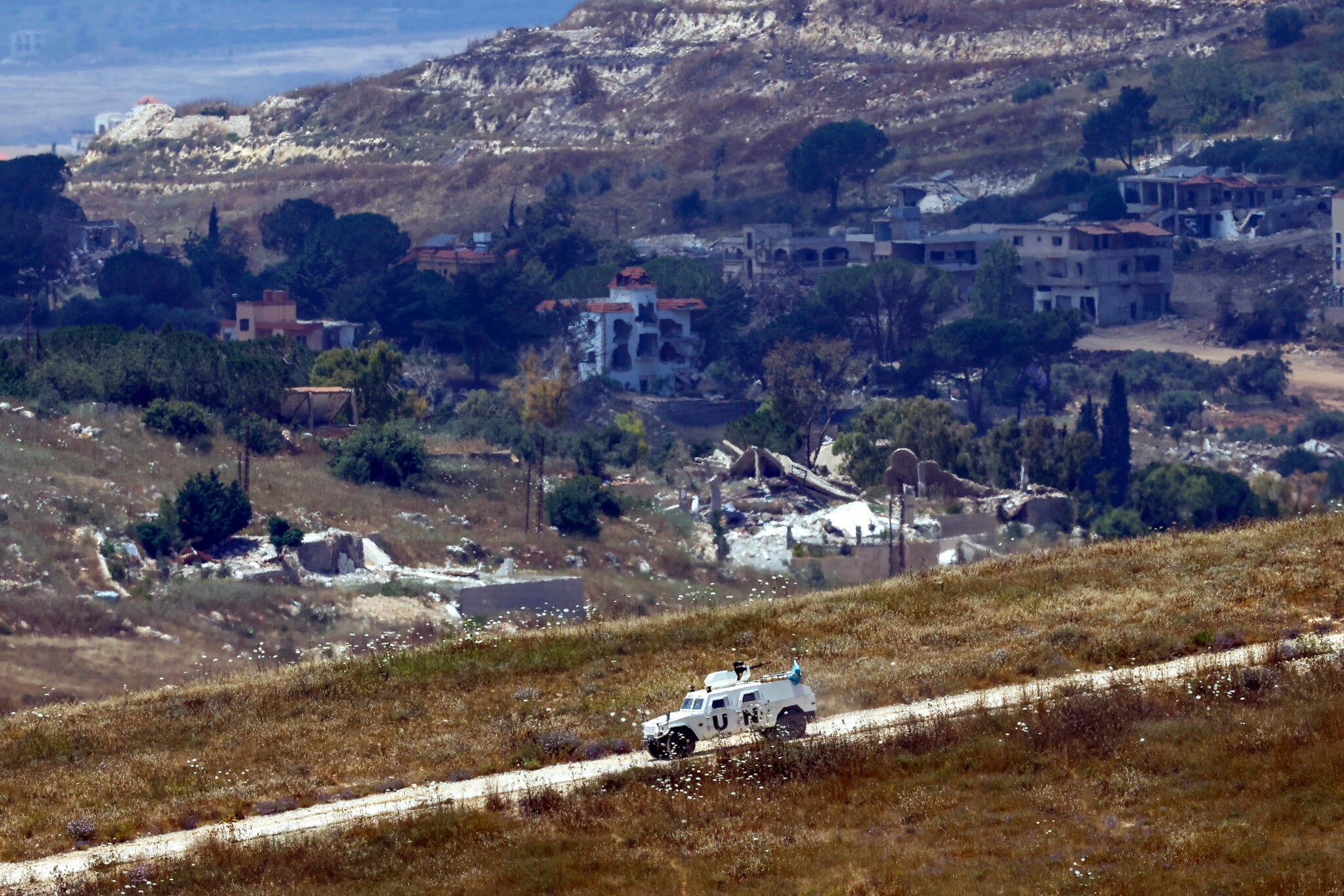
Critics have accused the Iran-backed terrorists of keeping Lebanon locked in a cycle of violence, while preventing the state from functioning fully across the country.
Speaking to AFP, Aoun struck a conciliatory tone in his remarks on Hezbollah and the push to disarm it.
“The objective is not a confrontation,” he said. “We are determined to resolve this issue peacefully. This is not about building a state at the cost of a bloody conflict… or a new civil war.”
Decades on from the end of a civil war that killed 150,000 people, Lebanon remains deeply divided and still lives under the specter of internal conflict.
‘No vacuum’
Aoun said he had told Iran that relations “must be based on mutual respect and non-interference in the internal affairs of the Lebanese people. We have no problem with having a relationship with Iran, but we do have a problem with interference in our internal affairs.”
Under US pressure, the UN Security Council voted last year to end the mandate of the UN force in southern Lebanon on December 31, 2026.
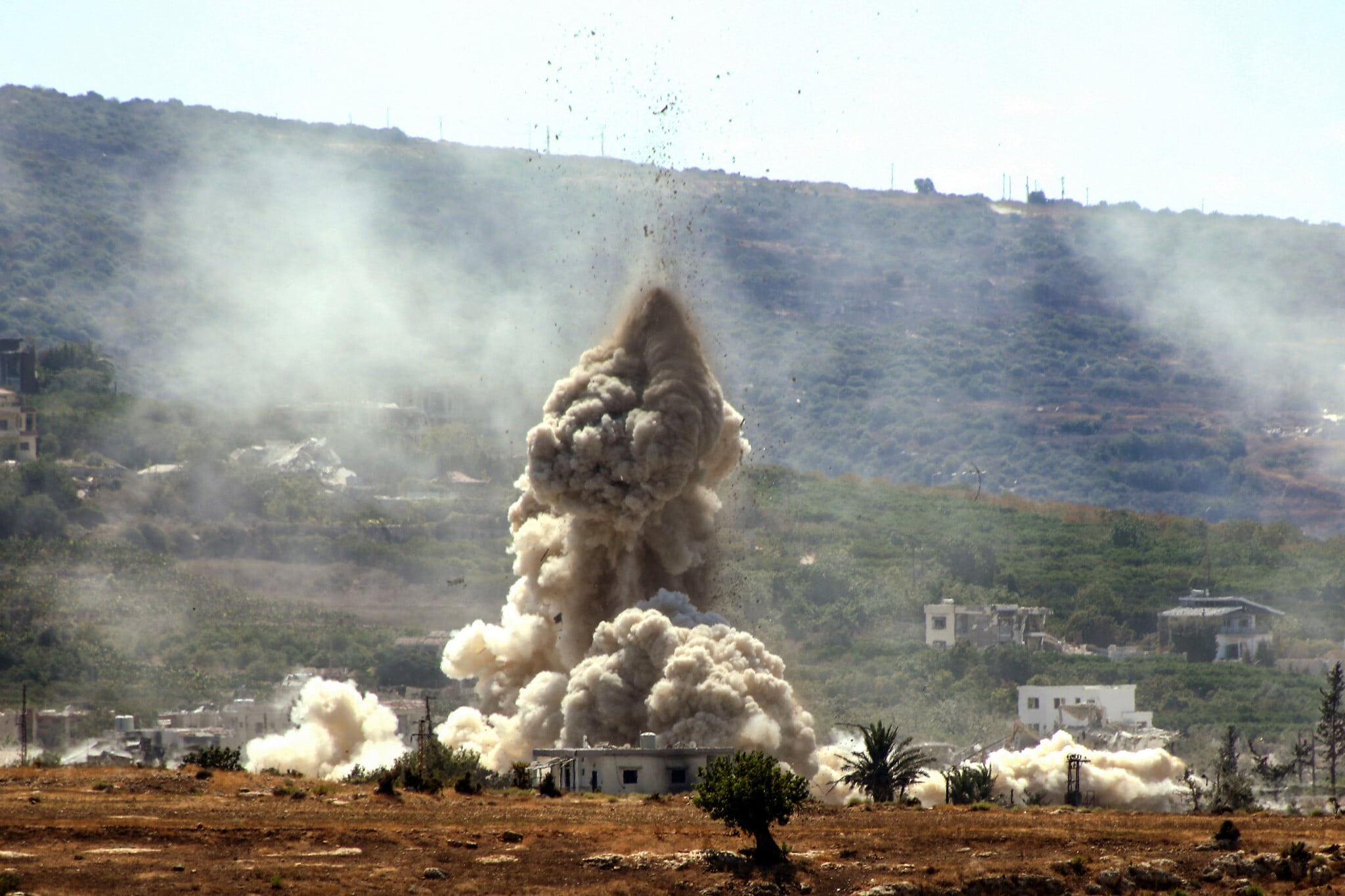
UNIFIL, currently involving around 7,500 peacekeepers from nearly 50 countries, has been deployed since 1978.
“What matters is that there is no vacuum,” Aoun told AFP on Tuesday. He added that any new force for Lebanon’s south would be “temporary until the [Lebanese] army can deploy.”
“Whatever the nature of this force, that poses no problem for me: European, non-European, American, another United Nations force, Asian, or even a mix of European, Arab and Asian forces,” Aoun said.
He has repeatedly urged the international community to extend the mandate of UNIFIL, which has witnessed war after war in south Lebanon since the mission was first deployed.
“The best and most optimal option remains extending UNIFIL’s mandate,” he added.
Asked about Israel’s upcoming election, Aoun said it was an internal matter.
“But the question we want to ask the Israeli people, the State of Israel and all future governments is the following: do they want stability, security and no wars on their border, or not?” he said.






The Times of Israel Community.