

Live updates (closed)
 Add ToI as a Preferred Source on Google

The Times of Israel liveblogged Saturday’s events as they unfolded.
US calls on PA to release results of audit that Ramallah said proved it ended ‘pay-to-slay’
The US calls on the Palestinian Authority to publicly release the results of an audit of its new welfare program, which Ramallah said Friday had determined that recipients are not incentivized for carrying out attacks against Israelis.
“The PA announced that this audit occurred. However, it hasn’t released the results of it. We call on the PA to formally release the results of this audit so it can be subjected to public scrutiny,” a State Department spokesperson tells The Times of Israel.
The State Department statement also laments that the audit by international consulting firm Alvarez & Marsal (A&M) apparently only looked into the new welfare program itself, suggesting that payments rewarding Palestinian prisoners — dubbed “pay-to-slay” by critics — could be continuing through other institutions — a common Israeli talking point dismissing the PA reform.
The State Department spokesperson notes that US President Donald Trump’s 20-point plan for ending the Gaza conflict requires the PA to undergo comprehensive reforms, “including ending all payments to terrorists and their families,” before control of Gaza can be transferred to Ramallah.
“The PA must also end its incitement, glorification of violence, support for terrorism, and refusal to recognize Israel’s right to exist in its educational curriculum and material,” the State Department spokesperson says.
Oman gave Iran proposal to manage Hormuz traffic through two separately controlled routes, source tells CNN
Oman has given Iran a proposal for the management of the Strait of Hormuz, a source with knowledge of today’s talks between the two countries tells CNN.
According to the report, Oman has proposed that traffic through the strait go via two separately controlled routes, one off Iran’s coast and one closer to Oman, which would be managed by each country. No tolls would be charged on either route, the source adds.
The agreement has yet to be finalized, the source says.
Father of Gazan truck driver killed by IDF: ‘A soldier shot him between the eyes’
Nasser Esleem, the father of Gazan truck driver Ahmad Esleem, who was shot dead by IDF troops last Wednesday, says in Hebrew in a video published by Haaretz that his son “went to bring food for the children. He had held a license for eight years. He had worked at Kerem Shalom for eight years. He was vetted by the army. He had a permit. Then a soldier came and put a bullet between his eyes.”
Last Wednesday, media outlets in Gaza reported that Esleem, a truck driver transporting aid through the Kerem Shalom Crossing, was shot dead by Israeli troops on his way back into the Strip.
Responding at the time to The Times of Israel, the IDF said that Esleem “ran toward troops, who initiated the suspect arrest procedure. During the procedure, they perceived an immediate threat and opened fire. The incident is under investigation.”
תקשיבו לנאסר סלים, אביו של אחמד סלים, נהג משאית שלפי עדי ראייה הוצא להורג על ידי חייל צה"ל בציר פילדלפי ביום רביעי. נאסר פונה לציבור הישראלי בעברית מושלמת: "אין לכם רחמים?". למטה כתבה. pic.twitter.com/UPo7bQcByg
— نير حسون Nir Hasson ניר חסון (@nirhasson) July 10, 2026
The father’s remarks were made during a protest held in Gaza today following Esleem’s death, attended by several dozen people. Among the participants were truck drivers, who carried signs in Hebrew, Arabic and English reading, “Protect the private sector” — a reference that also includes the companies transporting and trading aid — and “The world must give Gaza a chance to live.”
Jihad Esleem, deputy head of Gaza’s Private Transport Association, who participated in the protest, says that “aid truck drivers are being subjected to systematic killings and deliberate attacks while carrying out their humanitarian duty of transporting aid into the Gaza Strip.”
‘Netanyahu is a con man and liability to US-Israel alliance’: Protesters rally in Jerusalem, Tel Aviv
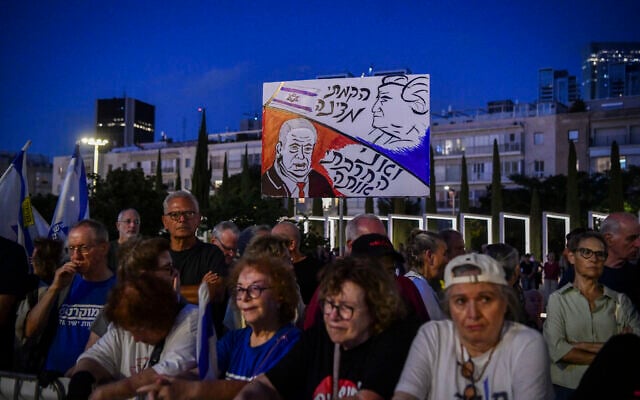
Anti-government demonstrators protest Habima Square in Tel Aviv, July 11, 2026. (Avshalom Sassoni/Flash90)
Several hundred protesters attend anti-government rallies in Jerusalem and Tel Aviv, castigating Prime Minister Benjamin Netanyahu as a “failure,” and warning that he is a “liability to the US-Israel alliance.”
Protesters also call for the establishment of a State Commission of Inquiry into the failures that allowed the October 7, 2023, Hamas-led attacks, which Netanyahu has refused to do, favoring a politically appointed probe.
Outside the Jerusalem home of billionaire Simon Falic, a friend of Netanyahu and where the prime minister often stays, dozens of protesters gathered and chanted slogans against the premier.
The Pro-Democracy Protest Movement, which organized the rallies, says in a statement that “Netanyahu is a con man and a total failure. He is despised at home and abroad. He is a liability to the US-Israel alliance, the Israeli people and the Jewish diaspora.”
“You are his very last meaningful sponsor,” the group says in the statement, ostensibly directed at Falic. “Continued support for him and his family is anti-Israeli and will be judged by history as such. Make no mistake: No amount of good patriotic intentions and philanthropic activity will mask the harsh truth.”
Marching to the nearby residence of US Ambassador Mike Huckabee, the protesters say they call on him and the Trump administration not to “back a despised con man who jeopardizes the deep friendship of our two peoples.”
“The American people and the Israeli people are strongly united by shared values and common interests,” the protest group adds.
In Tel Aviv, hundreds of people gathered at Habima Square for the weekly rally calling for a State Commission of Inquiry into October 7, with some protesters seen holding signs against settler violence in the West Bank, the war in Gaza, and the government’s efforts to weaken Israel’s judiciary.
UK Greens leader Zack Polanski rejects antisemitism claims over call to monitor British IDF soldiers
British Green Party leader Zack Polanski rejected accusations of antisemitism today after he signed an open letter last month calling for the government to track British-Israeli dual citizens returning from serving in the IDF.
Polanski, who is Jewish, told BBC Radio 4’s Today program that monitoring Brits who fought in a foreign conflict was appropriate, citing allegations that Israeli forces have committed war crimes in Gaza.
Polanski is among the signatories of an open letter sent to Home Secretary Yvette Cooper and Justice Secretary Shabana Mahmood last month calling for the government to monitor UK-Israeli nationals who have recently served in the IDF.
The Board of Deputies of British Jews condemned the initiative at the time, calling it “another attempt to demonize Israelis and promote an atmosphere of intimidation against British Jews.”
Polanski told the BBC he thought the Board of Deputies’ position was “irresponsible,” adding, “I think what’s much more controversial is the fact there’s been an ongoing genocide in Gaza for years now… and we have British citizens who could be going to that country, engaging in a genocide, and then coming back.”
“When we conflate criticism of the Israeli government with being Jewish, that makes me, as a Jewish person, feel less safe,” Polanski said. “These are two completely different conversations.”
19-year-old stabbed to death in altercation in Jerusalem apartment
A 19-year-old was stabbed to death during an argument this evening in Jerusalem’s Nachlaot neighborhood, police and medics say.
He succumbed to his wounds after being taken to a local hospital in critical condition, according to Hebrew media reports.
Police say they opened an investigation into the incident and have set up roadblocks to locate the suspected perpetrators, who fled the scene.
Eyewitnesses told Ynet that the victim was stabbed inside an apartment, which a group of young men had rented for the weekend.
“I contacted the police several times,” a neighbor tells Ynet.
“On Thursday I told them that there were drugs, prostitution and a mess in the apartment,” they say, adding that police told them they could not do anything about it, despite several warnings of criminal activity.
Coalition expects to get raft of contentious laws passed in final week before Knesset dissolution
The coalition expects to blitz multiple contentious bills through final Knesset readings and into law this coming week, the final week of legislation before parliament dissolves ahead of elections set for October 20 or 27.
It intends to pass a quasi-constitutional Basic Law establishing Torah study as a “foundational value” of the Jewish people and the State of Israel. Haredi parties have pushed to pass the law as part of their ongoing struggle aimed at ensuring ultra-Orthodox men continue to receive blanket exemptions from IDF conscription.
The latest version of the law, approved in the Knesset House Committee on Thursday, no longer explicitly places Torah study on par with military service. But maverick Likud MK Dan Illouz argued that removing the key clause “does not change the essence of the law.”
He warned that enshrining Torah study as a quasi-constitutional value without explicitly stating that it cannot be used to justify draft exemptions would still “serve in practice to legitimize draft evasion and continued funding and benefits” for yeshiva students.
Opposition MKs have claimed that since the law would make Torah study the only value explicitly enshrined in a Basic Law — not military service, caring for soldiers with PTSD, or other national values — this effectively elevates Torah study above all other values.
The government is also aiming to pass legislation banning the arrests and prosecution of young ultra-Orthodox men evading IDF service. According to the text of the bill released by the Foreign Affairs and Defense committee, the temporary order would suspend arrests, investigations and other enforcement measures for 90 days against yeshiva students, but in effect the ban would be valid for six months. A yeshiva student would be defined as someone studying at least 45 hours a week (for single men; 40 hours for married men) at a recognized institution designated by the defense minister and approved by the committee.
The IDF and the committee’s legal adviser oppose the legislation, and the opposition is seeking to block it procedurally, arguing that it is being pushed through improperly as a “new topic” grafted onto another bill without adequate substantive debate.
At the same time as preventing the arrests of eligible recruits who are dodging service, the government intends to pass a law extending mandatory military service for those who do serve from 30 months to 32 months. Earlier moves to extend mandatory service to 36 months have been deferred.
Also set for its final reading is legislation weakening the role of the attorney general — the government’s chief legal adviser and the head of the state prosecution — and enabling a process by which the government can fire him or her.
Because of the shortage of time, the bill now being advanced into law will no longer divide the role into two separate offices — an attorney general and a prosecutor general — as the coalition had sought throughout the legislative process. Instead, criminal prosecution powers will remain with the attorney general for now. The coalition apparently intends to draft a separate bill dividing the role of attorney general at a later date.
The coalition also hopes to pass media overhaul legislation prepared by Communications Minister Shlomo Karhi. It would give the government significant control over broadcast media, news sites and other media, and it has provisions designed to benefit the pro-coalition hard-right Channel 14. It has been criticized by the Knesset’s professional legal staff and by Attorney General Gali Baharav-Miara, who have warned that it undermines press freedom and allows for political interference in the media. Its potential passage has been complicated by a clause, opposed by ultra-Orthodox parties, regarding a government media app which would also broadcast on Shabbat.
As part of an agreement with the ultra-Orthodox Shas, a kosher certification bill is also set to pass, which would restore the Chief Rabbinate’s exclusive control over kosher certification.
The hugely contentious bill that would establish a coalition-appointed and coalition-mandated inquiry into the October 7 catastrophe, rather than a state commission of inquiry, passed its first reading on Monday, but it is not clear whether there is sufficient time for it to be finalized and brought for its final readings before the scheduled dissolution.
Venezuela says earthquake death toll has risen to 4,333, some 17,000 now homeless
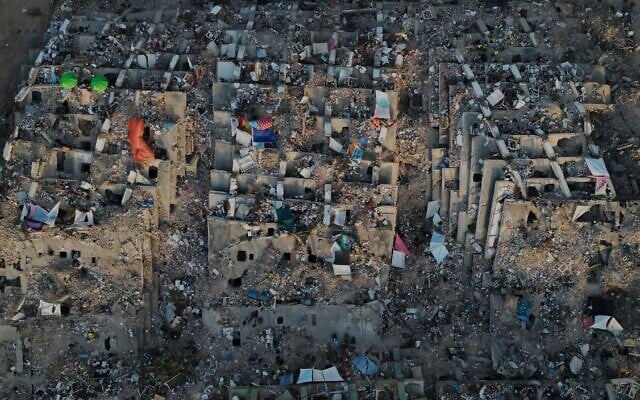
Relatives and search workers search through the rubble of buildings collapsed during the earthquakes in La Guaira, Venezuela, July 7, 2026. (AP Photo/Ariana Cubillos)
The death toll from the two earthquakes that struck Venezuela on June 24 has risen to 4,333, National Assembly President Jorge Rodriguez tells reporters, announcing that the distribution of housing to those affected will begin next week.
Meanwhile, 315 of the dead have not yet been identified, the official says.
The official tally of injured remained unchanged at 16,740, while 6,462 people have been rescued and about 17,000 have been left homeless.
Likud MK Dan Illouz, outspoken critic of Haredi draft exemption efforts, announces he is leaving party
Freshman Likud MK Dan Illouz tells Channel 12 that he is leaving Prime Minister Benjamin Netanyahu’s party and will not stand in its primary elections later this year.
Illouz is one of the most outspoken voices in the party against the government’s bill exempting Haredim from military service, and has repeatedly clashed with coalition and Likud figures over its legislation, which he has said goes against Likud’s “national, liberal values.”
Ra’am leader Mansour Abbas says he won’t join joint Arab list
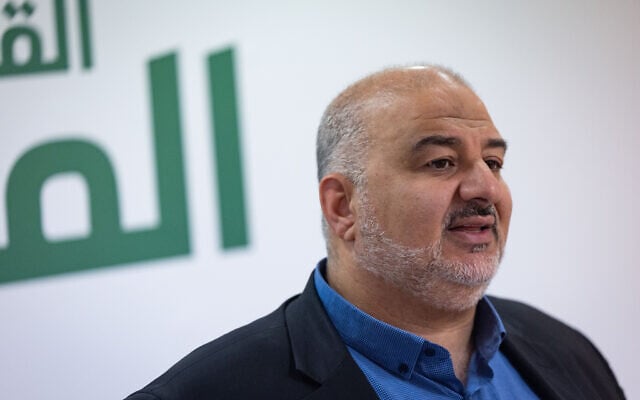
Ra'am party head MK Mansour Abbas leads a faction meeting, at the Knesset on May 11, 2026. (Yonatan Sindel/ Flash90)
Mansour Abbas, head of the Ra’am party, says he will not run jointly with the other Arab parties in the upcoming elections.
Though earlier this year Abbas indicated that he would likely run with Hadash, Ta’al and Balad, he tells Channel 12 that he will not do so.
The four Arab-majority parties signed an agreement in January committing to work together to revive the joint ticket ahead of this year’s election, but negotiations stalled for months, mainly due to Abbas’s insistence that the bloc be purely technical, to preserve Ra’am’s ability to join a governing coalition, which the other Arab parties oppose.
According to Hadash, the three parties ultimately accepted that demand. A source with knowledge of the negotiations told The Times of Israel that the main obstacle remaining in the talks was Ra’am’s demand that the other parties commit not to oppose or bring down any government that the Islamist party chooses to join.
There is no guarantee that any of the figures running to replace Netanyahu would sit with Ra’am in a coalition, however.
Ra’am joined the Naftali Bennett-Yair Lapid government in 2021, the first Arab party leader to do so in half a century.
Ra’am’s base is among the traditional Bedouin communities in the Negev desert.
For decades, Arab Israeli parties have almost always remained on the outside of the decision-making process in Israeli politics. Jewish parties shunned them as extremists, while they themselves were often skeptical of joining an Israeli government that they deem treats them as second-class citizens and oppresses Palestinians.
Under Abbas, Ra’am blazed a different path, openly working with Benjamin Netanyahu’s previous government.
Recent Zman Yisrael polls have shown both Ra’am and an alliance of Arab parties reaching the necessary 4 seats to enter the Knesset.
Ex-minister Chili Tropper says he would ‘absolutely not’ help Netanyahu form majority, also won’t join Arab parties
Former Blue and White MK and minister Chili Tropper, who is running in the upcoming Knesset elections in a slate with Yoaz Hendel’s Reservists party, says in an interview with Channel 12 that he would “absolutely not” help Prime Minister Benjamin Netanyahu form a majority.
“I have a principled, moral statement: everyone who was in a leadership position on October 7 should end their role,” he declares, referring to the Hamas-led terror invasion in 2023.
Tropper says he is aiming to win the votes of the “300,000 Israelis who say they have no political home.”
He also says he would not join a coalition with Arab parties, saying he is “in favor of a Zionist government only.”

Noting that this distinguishes him from Gadi Eisenkot, the leader of the Yashar party, who has risen in polls in recent months as the frontrunner for the opposition, Tropper says: “I really like and appreciate him and we’re on good terms, but I’m in favor of a Zionist government only.”
He clarifies that he is not questioning Eisenkot’s Zionism, “but I’m talking about my position.”
“The ultra-Orthodox and Arab parties chose not to be part of the Zionist story,” he says. “This is as far from hatred as there is, but Israel needs a Zionist government today.”
Lebanese official confirms Beirut will participate in next week’s talks with Israel in Rome
A Lebanese official tells AFP that his country will take part in planned talks with Israel next week in Rome, after Beirut had previously conditioned participation on Israel withdrawing from certain areas it occupies in the south.
The official, speaking on condition of anonymity, confirms that “Lebanon will participate” without offering further details, as a US military delegation visited the country to discuss implementing a framework agreement between Lebanon and Israel.
Ultra-Orthodox protesters target Jerusalem cafe for 2nd Shabbat in a row; dozens of patrons line up in support
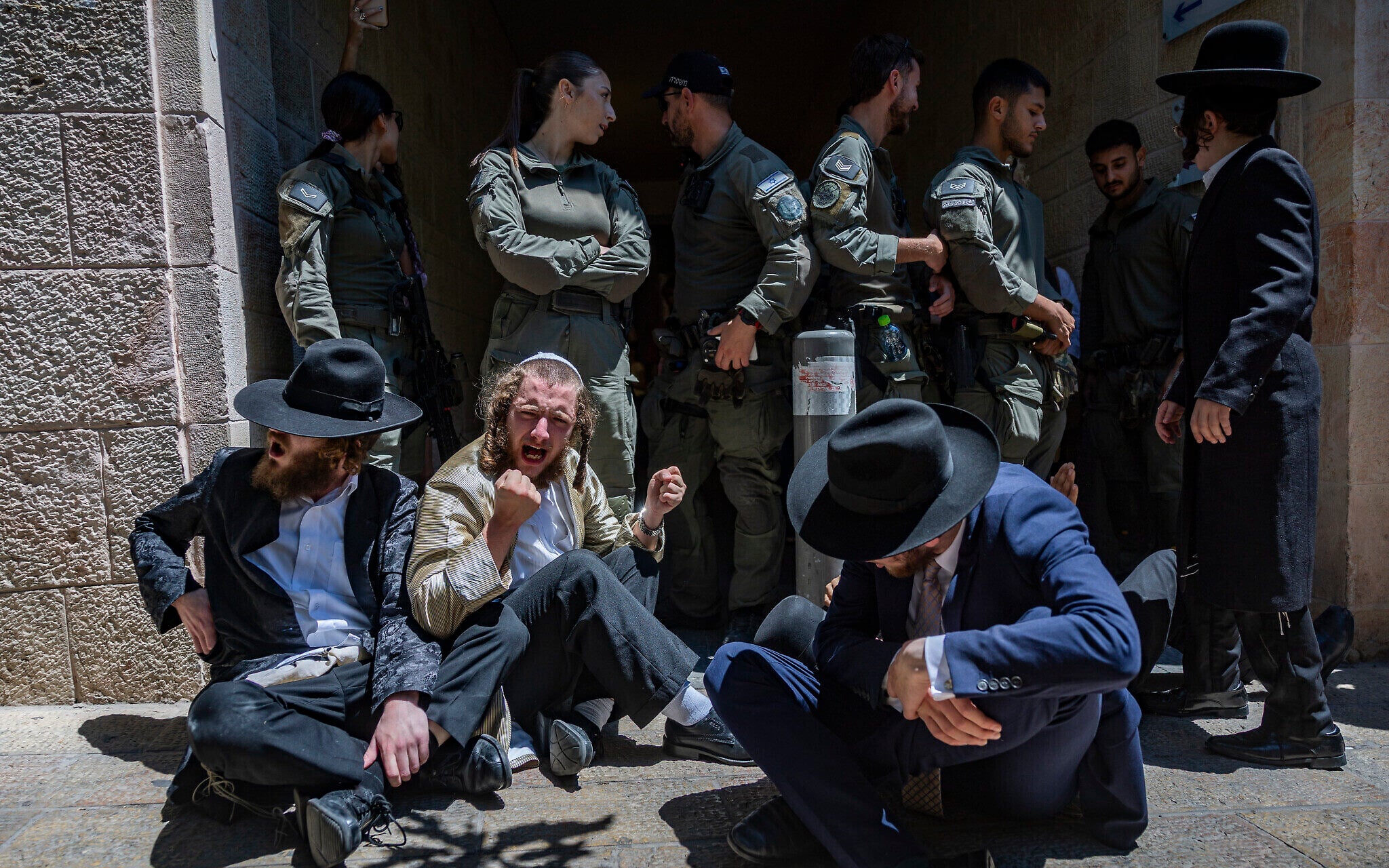
For the second Saturday in a row, ultra-Orthodox protesters clashed with patrons of a newly opened Jerusalem cafe for operating on Shabbat, the Jewish day of rest.
Footage shows ultra-Orthodox men shouting at and harassing customers of Cafe Basimta, some of whom shout back: “Enlist!”
שבת שניה ברציפות: עימותים בין מתפללים ליושבי בית הקפה ״בסמטה״ בירושלים pic.twitter.com/aRUOLZhsGQ
— Inbar Twizer ענבר טויזר (@inbartvizer) July 11, 2026
Images from this morning showed dozens of people lined up at the cafe in support after it was similarly targeted by Haredi protesters last week.
Police officers arrived in the morning and have been stationed outside the cafe all day in anticipation of friction between patrons and protesters, according to Channel 12.
אני גאה בציבור הירושלמי.
השבוע הוכחתם שלא נותנים לקיצוניים לנהל את החיים של כולנו.
אחרי שבשבוע שעבר תקפו את יושבי בית הקפה בסמטה, השבוע המוני ישראלים הגיעו למקום. לא בשביל להתעמת אלא בשביל להגן על הדרך שלנו.
על השבת הישראלית. על החופש. על הזכות לשבת עם חברים, לשתות קפה ולחיות… pic.twitter.com/3KID1Yy2zX
— Yair Golan – יאיר גולן (@YairGolan1) July 11, 2026
Sharing pictures of the line outside the cafe, Democrats party leader Yair Golan says he is “proud of the Jerusalemite public” for proving that “they won’t let extremists run all our lives.”
Israelis have a “right to sit with friends, drink coffee and live our lives without fear and without coercion,” Golan adds in a post on X.
IDF says it struck Hezbollah operatives moving arms inside Israeli-held buffer zone
The IDF says it struck Hezbollah operatives who were identified transporting weapons inside Israel’s south Lebanon buffer zone earlier today.
Lebanese media had reported several strikes in the town of Mansouri, near Tyre.
Troops of the 91st “Galilee” Regional Division spotted several Hezbollah operatives entering the IDF’s security zone in a vehicle and moving several anti-tank missiles from it into a building, the military says, attaching footage of the incident.
After several more Hezbollah operatives transported weapons into the building and entered it, the IDF carried out an airstrike against the structure “to remove the threat.”
The military says secondary explosions were identified at the building following the strike. It publishes a video showing the airstrike.
Trump says he ‘just finished’ a physical exam at Walter Reed, ‘aced’ cognitive test
US President Donald Trump says he had “just finished” a physical at Walter Reed National Military Medical Center, without specifying when the exam was conducted.
“I just finished a perfect physical at Walter Reed, I do it every six months, and I requested another Cognitive Test, the only President to do so, three times, and I aced them all — Got every question right,” Trump, who turned 80 in June, writes in a Truth Social post.
Iranian FM says he discussed ‘appropriate mechanisms’ for Hormuz with Omani counterpart
Iran’s Foreign Minister Abbas Araghchi says he and his Omani counterpart exchanged views on “appropriate mechanisms” for the safe passage of ships through the Strait of Hormuz in accordance with the US-Iran memorandum of understanding.
Araghchi is in Oman for a visit which state media said was “focused on the Strait of Hormuz and shipping safety.”
Russian drone, ballistic missile strikes kill six in Ukraine, officials say
Russian missile and drone strikes on Ukraine killed six people and wounded dozens of others, officials say.
Missiles also hit the capital Kyiv, wounding 12 people, including two children, according to the city’s mayor.
AFP journalists in Kyiv say they heard two series of explosions in the early hours, with an air alert siren sounding minutes after the first blast.
Russia launched more than 120 drones and 12 missiles overnight, half of them ballistic, Ukrainian President Volodymyr Zelensky says in a post on X.
Eleven people, including a child, have been injured in Kyiv during last night's Russian attack. Civilian infrastructure was hit even before the air raid alert was issued. Emergency crews are working at the sites of the strikes – apartment buildings, offices, and a theological… pic.twitter.com/52C74SIS2x
— Volodymyr Zelenskyy / Володимир Зеленський (@ZelenskyyUa) July 11, 2026
“Civilian infrastructure was hit even before the air raid alert was issued,” he says, adding that air defenses “managed to shoot down most of the targets — but not the ballistic ones.”
He posts videos of emergency teams working in the smoke and rubble of ruined buildings.
Apartment buildings, offices and a theological school were damaged in Kyiv, while recovery efforts were underway in other regions, he adds.
In the northern Ukrainian city of Sumy, “a guided aerial bomb” killed four people, including a young girl, the city’s mayor says. A separate missile strike on the southern city of Odesa killed two others, regional governor Oleg Kiper says.
Head of PEN America, a free expression group, quits because it’s against Israel boycott
Dinaw Mengestu, the head of the free expression group PEN America, resigns after the group said it was against cultural boycotts in an article about anti-Jewish and anti-Israel discrimination.
Mengestu tells The New York Times it is “unethical” for his free speech group to oppose cultural boycotts because it’s discriminatory to the anti-Israel Boycott, Divestment and Sanctions (BDS) movement.
He accused PEN America of “defending some rights while not defending others.”
PEN America’s Thursday article focused on Israeli and Jewish writers “facing rising isolation and exclusion.”
The article said the group believes boycotts threaten free expression, but recognizes the right to boycott.
PEN America says its mission is to “protect free expression” and the “freedom to write.”
32-year-old man in critical condition after shooting in Jaffa; police investigating suspected criminal incident

Medics at the scene of a shooting in Jaffa, July 11, 2026. (Magen David Adom)
A 32-year-old man is in critical condition after being shot in Jaffa a short time ago, according to medics and police.
The shooting occurred in front of a bicycle shop on Jerusalem Boulevard, the city’s main thoroughfare, in broad daylight, police say.
The victim was rushed in critical condition to the nearby Wolfson Medical Center in Holon for treatment, according to Magen David Adom, which says medics performed CPR at the scene.
Police say they opened an investigation into the incident, which is believed to be criminal in nature.
4 settlers detained for alleged attack on CNN crew in West Bank town of Sinjil
Four Israeli settlers were detained for allegedly attacking a CNN media crew near the West Bank town of Sinjil.
The Israel Police say that they received a report of several journalists who were driving near Sinjil when several suspects blocked their car and “caused damage.”
Israeli soldiers were dispatched to the scene, enabled the journalists to pass, and apprehended four suspects, police say.
Officers reached the area a short while later and arrested the four, seized their vehicle, and took testimony from the media crew, according to police.
“During a search of the vehicle, clubs and a knife were seized,” police say.
The four suspects were taken for questioning.
“The Israel Police and the IDF view with severity any act of violence or damage to property, particularly when it involves members of the media carrying out their work,” police add.
مستوطنون يطاردون الطواقم الصحفية في منطقة التل والباطن جنوب بلدة سنجل شمال رام الله pic.twitter.com/oDxhlxxvCg
— شبكة قدس الإخبارية (@qudsn) July 11, 2026
Several Palestinians wounded by IDF gunfire, riot control measures amid setttler attack on West Bank village – reports
Palestinian media reports several people wounded by gunfire and riot control means by the Israeli army amid a settler attack on the West Bank village of Mughayyir.
The Wafa news agency reports that settlers and Israeli troops attacked a home in the village, during which a man was shot in the thigh, two others were hit by rubber bullets, and a child was wounded by a stun grenade.
One person was also detained by the IDF, the report adds.
The IDF says that troops were dispatched to Mughayyir following a report of a “confrontation” between Palestinians and Israelis.
“During the confrontation, Palestinians threw stones at the Israelis, and the forces acted to disperse the gathering,” the military says.
The IDF says that troops spotted stones being thrown from a home in the village, and the forces then entered the building to apprehend suspects.
“Later, a violent riot broke out at another location in the village, during which masked Palestinians hurled stones at the forces using slings,” the IDF says.
The army says troops opened fire at one suspect “to remove the threat.”
مشاهد توثق محاولة جنود الاحتلال الإسرائيلي ومستوطنين اقتحام منزل عائلة أبو عطا في قرية المغير شرقي #رام_الله pic.twitter.com/w6DARsoLe5
— الجزيرة مباشر (@ajmubasher) July 11, 2026
US military delegation met with Lebanese army in Beirut on IDF withdrawal from ‘pilot zones,’ Lebanese military official says
A US military delegation has met with Lebanon’s army in Beirut to discuss the implementation of Israel’s withdrawal from one of the “pilot zones” in occupied territory, a Lebanese military official tells AFP.
Under a framework agreement reached on June 26, Israel will gradually withdraw from areas of southern Lebanon it captured this year during its campaign against Hezbollah since the terror group joined in the US-Israeli war with Iran. As part of the agreement, the long-disempowered Lebanese military will take full control of two small areas dubbed pilot zones.
“The American military delegation arrived and began meetings with the Lebanese army command to discuss the mechanisms for implementing the first pilot zone from which the Israelis will withdraw, allowing the Lebanese army to deploy,” the official says. requesting anonymity.
“This is the main objective the American military delegation is bringing to Lebanon… it is the translation and implementation of the framework agreement.”
US ambassador to Lebanon Michel Issa told President Joseph Aoun on Thursday that “an American military delegation will arrive in Beirut in the coming days to… determine the mechanism” for the deal’s implementation.
In Washington, a US official says that “we have moved to the implementation stage of the framework.”
“The first pilot zone will launch in a matter of days, and further pilot zones are being mapped out and planned,” the official says on condition of anonymity.
US Central Command will coordinate on the zones with both countries, he says.
IDF strikes reported in south Lebanon near Tyre; no comment from army
Lebanese media reports several Israeli strikes in the southern town of Mansouri, near Tyre, a short while ago.
There is no immediate comment from the IDF on the incident.
للمرة الثالثة.. غارة تستهدف بلدة المنصوري pic.twitter.com/yJAttWNU75
— bintjbeil.org (@bintjbeilnews) July 11, 2026
US Democratic Rep. Ro Khanna says he was held by armed settlers during West Bank visit
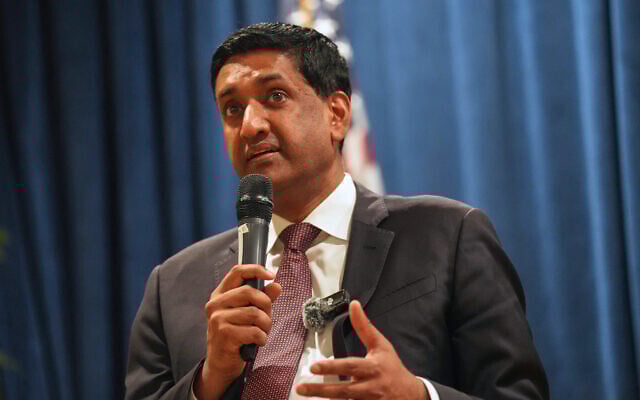
Rep. Ro Khanna speaks during an NAACP meeting, Sunday, July 20, 2025, in Columbia, South Carolina (AP Photo/Meg Kinnard)
US Democratic lawmaker Ro Khanna says he was detained by Israeli settlers armed with US-made rifles during a West Bank visit this week that he cast as an unfiltered look at the human toll of Israeli occupation as he weighs a 2028 presidential run.
Speaking with Reuters on Thursday in a Palestinian village, Khanna says his group’s van was surrounded by settlers wielding M4 rifles a day earlier while touring a part of the southern West Bank where residents face frequent settler attacks.
“We were at a village that Israeli settlers had destroyed. They had destroyed the school, they had destroyed that village, and we were just looking at it,” says Khanna, a progressive lawmaker from California in the US House of Representatives.
“And these hoodlums come in with machine guns – M4, an American-made machine gun – and they detain us. They block off the road. And then they call the IDF, and the IDF is on their side, not on the side of the Americans,” Khanna says, referring to the Israeli military.
Israeli settlers, brandishing American made M4s, detained me & other Americans on my trip to Palestine.
When the IDF arrived, they sided with the settlers & continued our detention.
They made a huge mistake.
You will be hearing more soon. https://t.co/rZw8bRAn64 pic.twitter.com/4z50Ye4I7K
— Ro Khanna (@RoKhanna) July 11, 2026
An aide to Khanna who was in the group, Cameron Kasky, says they were held for more than an hour and made appeals to the US Embassy in Jerusalem for help. A group of officers who appeared to be police eventually intervened, leading to their release, Kasky says.
The Israeli military says troops and police officers intervened after receiving a report of settlers blocking vehicles near Khirbet Zanuta, a small Palestinian hamlet whose residents were forcibly displaced by violent settler raids following the October 7, 2023, Hamas massacre on Israel.
“Upon their arrival, the troops dispersed the Israeli civilians and allowed the vehicles to continue on their way,” the military says.
Israel Police do not immediately respond to a request for comment, nor does the US Embassy in Jerusalem.
Times of Israel staff contributed to this report.
In written message, Mojtaba Khamenei vows to ‘avenge the blood’ of his father ‘soon’
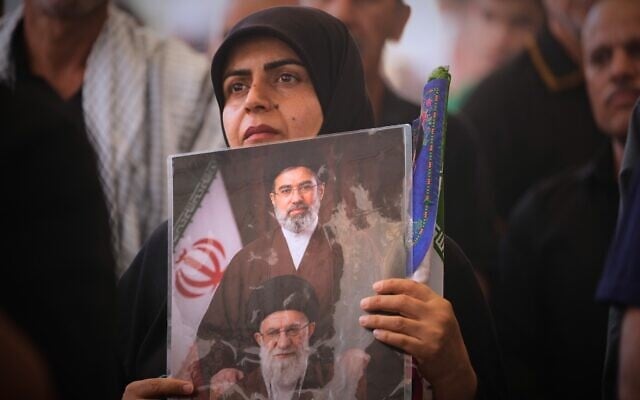
A mourner holds a portrait depicting Iran's Supreme Leader Ayatollah Mojtaba Khamenei, top, and his late father, ayatollah Ali Khamenei, during a funeral procession for the elder Khamenei inside the Imam Ali Shrine in Najaf, Iraq, July 8, 2026. (AP Photo/Hadi Mizban)
Iran’s Supreme Leader Ayatollah Mojtaba Khamenei says that avenging his slain predecessor and father is “the demand of the nation” and “must certainly” take place, according to a written message released on his Telegram account.
Khamenei issues the message on the occasion of funeral ceremonies for his father, Ayatollah Ali Khamenei, held months after he was killed in the US-Israeli airstrikes on February 28.
“We pledge to avenge the blood of the martyred leader and all the martyrs of these two wars from the criminal and disgraced killers,” Khamenei says in the message.
“Whether we are here or not, this will be achieved, and soon individuals among the freedom-seekers across the world will each carry out part of this divine mission,” he adds.
Times of Israel staff contributed to this report.
Source tells Iranian media no talks to be held until US retreats from its stances
WASHINGTON/CAIRO — Iran’s foreign minister arrives in Oman to discuss arrangements for the safe passage of ships through the Strait of Hormuz, Iranian state media says, with Washington seeking a public pledge of free, secure transit.
Iran’s semi-official Tasnim news agency says that Foreign Minister Abbas Araghchi has arrived in Oman. The country is helping to mediate an end to a war that has spread insecurity in the Gulf and raised prices around the world since the US and Israel launched airstrikes on Iran on February 28.
CBS News and its UK partner, the BBC, both report that US Vice President JD Vance, Secretary of State Marco Rubio, special envoy Steve Witkoff, and Trump’s son-in-law Jared Kushner are expected to lead negotiations on Saturday with Araghchi.
Reuters is not immediately able to confirm the reports, which did not say whether they would be in Oman or attend virtually. Iran’s Fars news agency later cites a source saying no negotiations would take place until the US retreated from its positions.
Trump administration subpoenas NYT journalists over report on Air Force One security concerns
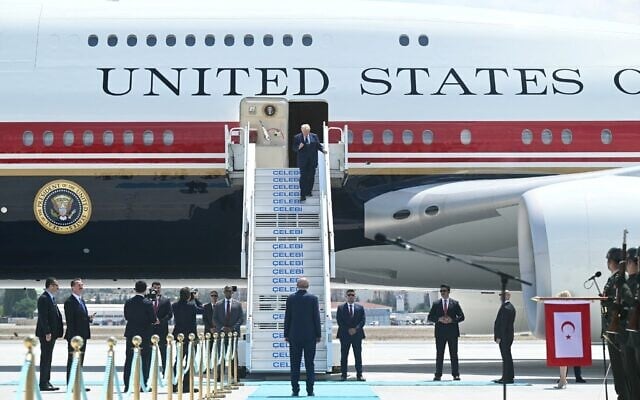
Turkish President Recep Tayyip Erdogan (C, bottom) welcomes US President Donald Trump (up) upon his arrival on Air Force One at Etimesgut Air Base near Ankara, on July 7, 2026 (SAUL LOEB / AFP)
WASHINGTON — The Trump administration issued subpoenas to several New York Times journalists after its report this week on security concerns involving the new Air Force One, according to the paper.
The new jet, which US President Donald Trump received as a gift from Qatar, just entered service last week.
The subpoenas seek to force the reporters to testify before a federal grand jury in Manhattan on Wednesday, the paper says, adding that federal agents delivered some subpoenas to the reporters at their homes.
The NYT report cannot be independently confirmed, and there is no immediate response from the White House or the Department of Justice.
“The appearance of federal law enforcement agents on the doorstep of news reporters should shock the conscience of any American who believes in the Constitution and the press freedom it protects,” says the paper’s lawyer, David McCraw, in a statement.
The developments come after Trump flew the new Air Force One to a NATO summit in Turkey. But he departed Wednesday on one of the older-model Air Force One jets for a trip to Mildenhall, a Royal Air Force base in Suffolk, England. The two jets both flew to Mildenhall. Trump then switched to the newer plane for the flight home to Joint Base Andrews.
The abrupt plane swap came as a shaky cease-fire with Iran had collapsed, with the US launching airstrikes on Iran and Tehran attacking three Gulf Arab states. Iran and Turkey share a border, sparking speculation that the Qatari-gifted jet — which underwent a $400 million retrofit — lacked certain sophisticated security and countermeasure systems.
The paper reported Wednesday that the switch had come at the urging of the Secret Service. On Thursday, the paper said the newer plane lacked some of the advanced security features of the older aircraft, including antimissile capabilities. Both articles cited anonymous sources.
Trump, at the time, denied any security concerns, posting on social media that the stop in Mildenhall was so that service members there could view the new jet. During the flight, Trump denied to the reporters accompanying him that security concerns involving Iran were a factor in flying two planes home. Asked if he was aware of any credible threats against Air Force One by Iran, Trump brushed off the question.
Off-duty IDF soldier, two Israeli women extracted from West Bank’s Jericho
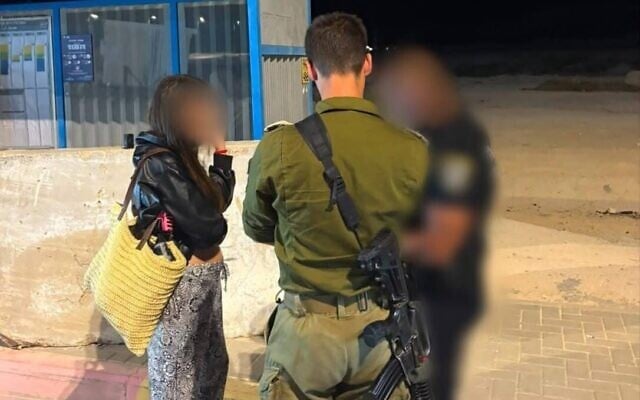
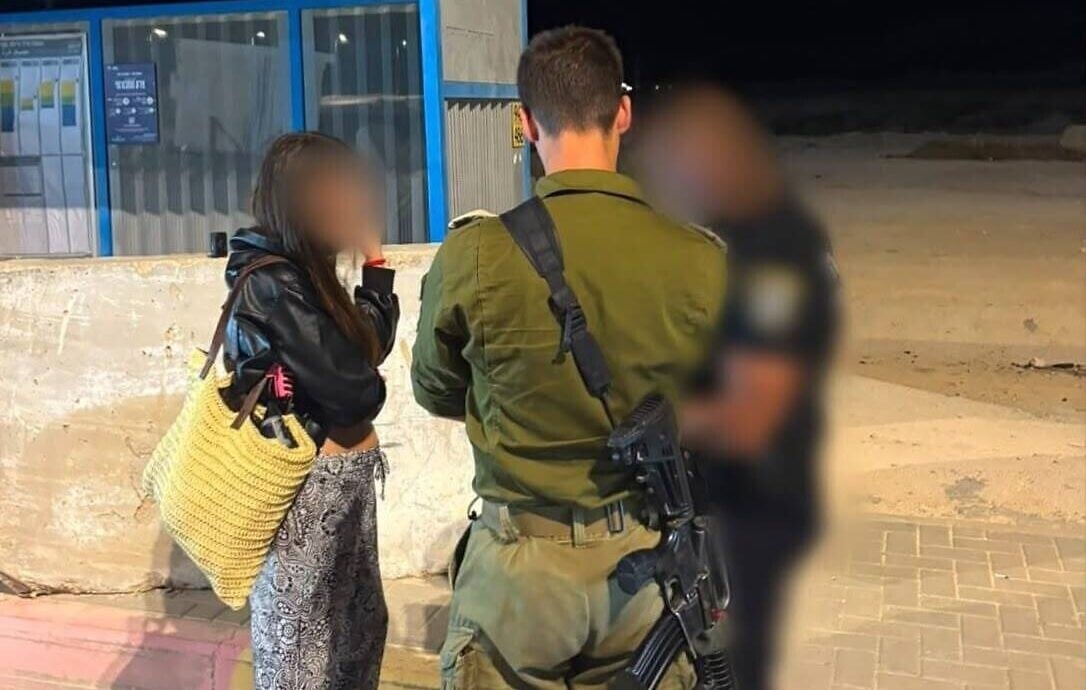
An off-duty IDF servicewoman speaks with Israeli security forces after being extracted from the West Bank city of Jericho, July 10, 2026. (Civil Administration)
An off-duty IDF servicewoman and two other Jewish Israeli women were extracted from the West Bank city of Jericho in separate incidents last night and early this morning.
The Civil Administration, a branch of the Defense Ministry’s Coordinator for Government Affairs in the Territories (COGAT), says that last night it received a report of an Israeli woman wandering around Jericho “while endangering her well-being.”
“Upon receiving the report, officers from the Jordan Valley District Coordination and Liaison office acted to provide immediate protection to the Israeli and at the same time, to transfer her to the security forces through coordination channels,” the Civil Administration says, referring to the Palestinian Authority.
The Civil Administration says that, according to a preliminary investigation, the woman is a soldier in her mandatory service, who had entered Jericho with an Arab Israeli friend to celebrate a birthday in the Palestinian city.
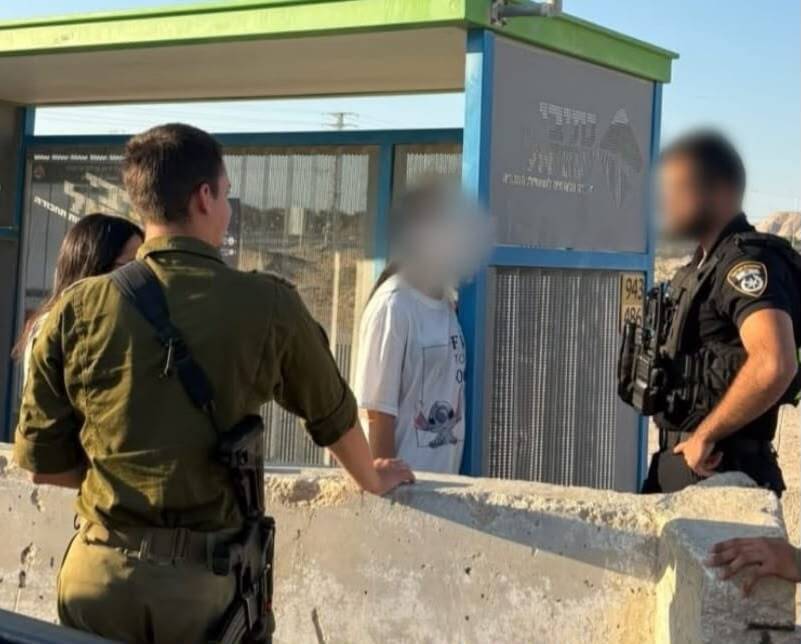
Several hours later, in the early hours of Saturday, the Civil Administration says it received another report of two Israeli women speaking Hebrew in an upscale neighborhood of Jericho.
“The security establishment worked to extract them immediately, and hand them over to the security forces,” the Civil Administration says, adding that the pair told Israeli forces that they had entered Jericho to meet with friends that they had made during a trip to the Sinai Peninsula.
The two women are set to be questioned by the police, and the soldier will be questioned by the Military Police, as Israelis are barred from entering West Bank areas controlled by the Palestinian Authority.
Deadly Spain wildfire appears to ease, official says
A wildfire that has killed at least 12 people in southern Spain is showing signs of easing, allowing firefighters to directly attack the flames for the first time, officials say.
The fire has burned around 6,600 hectares (16,300 acres) since erupting on Thursday in the southeastern Los Gallardos area of Andalusia, mobilizing hundreds of firefighters and soldiers, backed by aircraft.
Nearly 1,500 people have been evacuated from the affected area as a result of one of Spain’s deadliest wildfires in recent years.
Antonio Sanz, the Andalusian regional government’s emergency chief, says weather conditions have improved with higher air humidity levels and nearly no wind.
“The overnight evolution has been favorable and the weather conditions allow us to face the day with better prospects than yesterday,” he tells reporters.
Explosion in eastern Tehran province was controlled ammunition disposal — Iranian media
An explosion heard in the eastern part of Tehran province was caused by the controlled disposal of ammunition remaining from the war, Iranian state media says, citing a local official.
The official says the operation posed no threat to citizens and that no incident occurred.
Earlier, Iranian state media reported that an explosion was heard in the eastern part of Tehran province, with residents of Pakdasht and Qiyamdasht reporting the blast while its source and exact location were not immediately known.
Iran state media reports explosion heard in eastern part of Tehran province
Iranian state media reports that an explosion was heard in the eastern part of Tehran province, without providing a reason.
Residents of Pakdasht and Qiyamdasht reported hearing the explosion, while its source and exact location are not immediately known, state media says.
Trump says US will ‘completely decimate and destroy’ Iran if it attempts to kill him
US President Donald Trump says he has ordered the military to be prepared to launch strikes against Iran if the Iranian government carries out or attempts an assassination of the president.
“1000 Missiles are Locked and Loaded and aimed at the Islamic Republic of Iran, with thousands of more to immediately follow, should the Iranian Government act on its threat, pronounced in many corners of the Globe, to assassinate, or attempt to assassinate, the sitting President of the United States of America, in this case, ME!,” he says in a Truth Social post.
“Orders have already been given, and the US Military is ready, willing, and able, for a one year period of time, subject to extension, to completely decimate and destroy all areas of Iran — PRAISE BE TO ALLAH!”
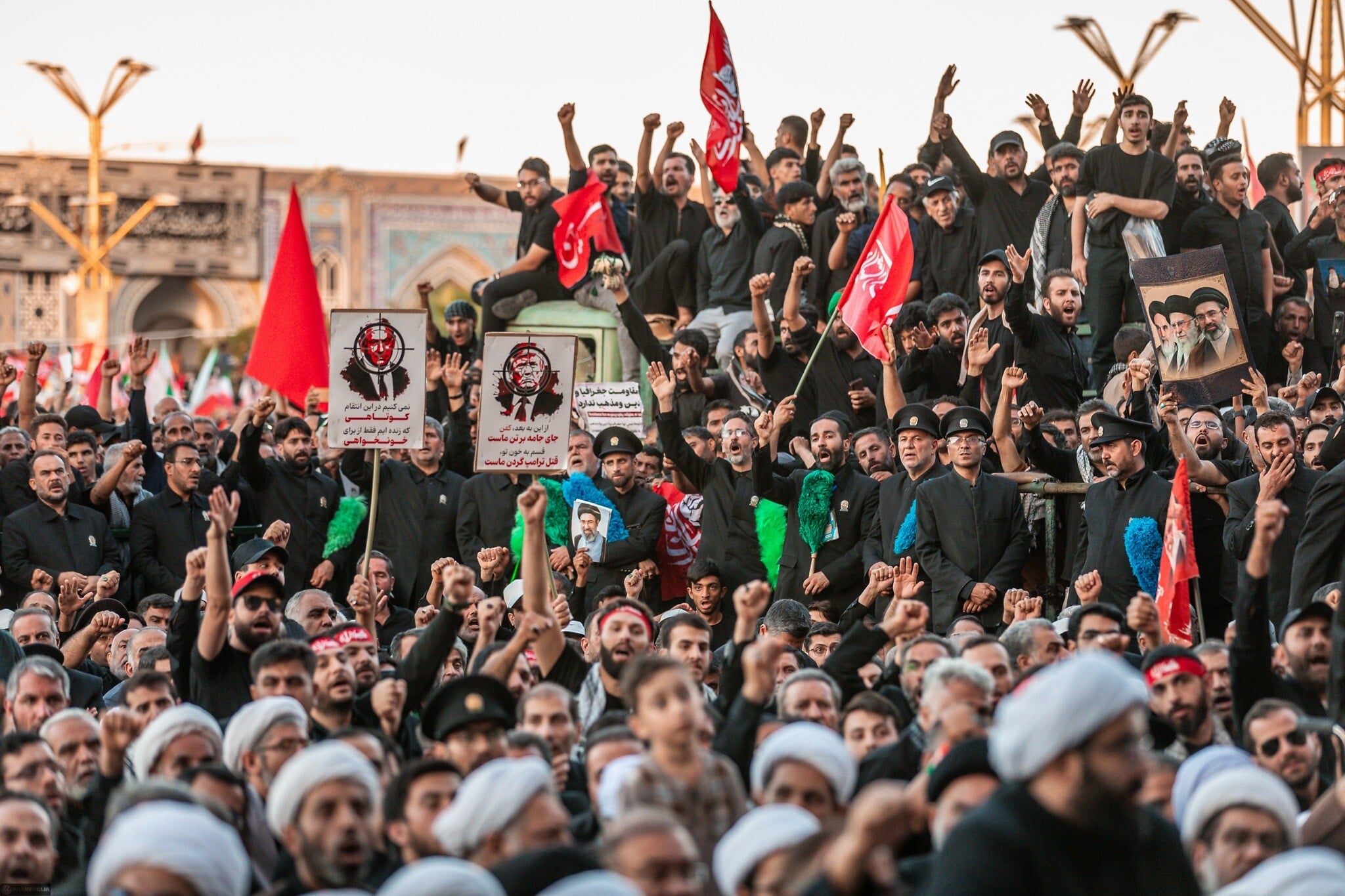
The remarks come after the funeral of supreme leader ayatollah Ali Khamenei saw open calls for Trump’s killing.
Iran insists it has ‘kept its word’ on ceasefire with US
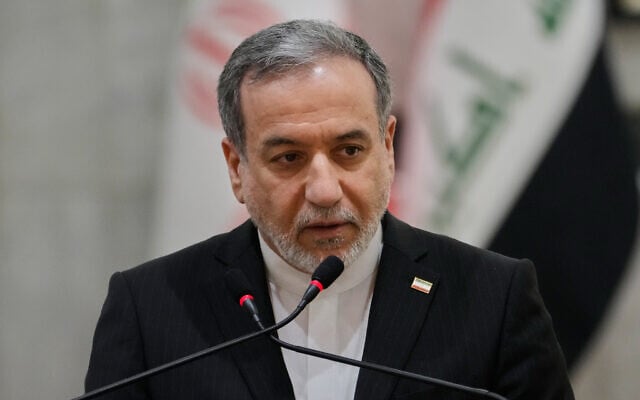
Iranian Foreign Minister Abbas Araghchi speaks during a news conference with his Iraqi counterpart Fouad Hussein after their meeting at the foreign ministry in Baghdad, Iraq, June 28, 2026. (AP Photo/Hadi Mizban)
Iranian Foreign Minister Abbas Araghchi says Tehran has “kept its word” on a ceasefire with the United States, after Donald Trump insisted the truce was over but that he had agreed to further negotiations with the Islamic Republic.
“Iran has so far kept its word, unlike the so-called US Treasury Secretary who is violating Para 9 of the MoU,” Araghchi posts on X, referring to part of the memorandum of understanding about the United States not deploying additional forces in the region.
Turkey’s FM says ‘no reason to have open conflict’ with Israel, in apparent bid to calm tensions
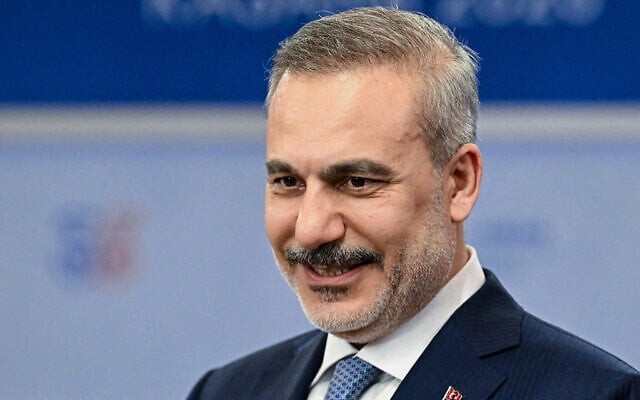
Turkish Foreign Minister Hakan Fidan arrives to meet Russian President Vladimir Putin on the sidelines of the Russia-ASEAN summit in Kazan, Russia, June 17, 2026. (Sergei Bobylev, Sputnik, Government Pool Photo via AP)
Turkish Foreign Minister Hakan Fidan says Turkey and Israel aren’t destined for conflict, in remarks apparently aimed at pulling Ankara back from an increasingly heated rhetorical war with Jerusalem.
“I think there is no reason to have an open conflict,” Fidan says in an interview with the National.
“I’ve been telling, whenever I hear this rhetoric (against Turkey coming from the Israeli politicians, especially as they get closer to the upcoming elections, from both coalition and opposition figures — not all the opposition figures. Thank God, there are still very sane and good people with wisdom and strategic mind in Israel.”
“Not all of them are like Netanyahu and some people, but Netanyahu and some people, as they get closer to the elections, they need an enemy. They were at war Hamas, Hezbollah, and Iran, and now they need another enemy,” Fidan adds, saying the enemy has become Turkey for many Israeli politicians.
Venezuela raises earthquake death toll to over 4,000 as thousands more still missing
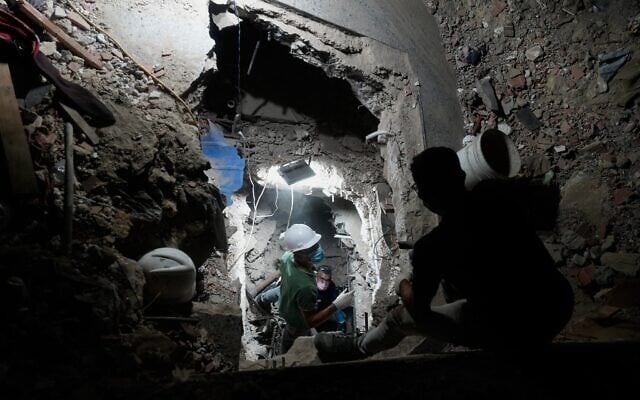
Relatives and rescue workers search through a collapsed building by the earthquakes for their love ones in La Guaira, Venezuela, July 9, 2026. (AP Photo/Ariana Cubillos)
The death toll in Venezuela’s devastating twin earthquakes has increased to more than 4,000, the government says.
At least 4,118 people were killed and 16,740 injured in the back-to-back June 24 quakes, which flattened entire districts in the coastal state of La Guaira, Venezuelan parliament chief Jorge Rodriguez writes on Telegram.
Thousands more are listed as missing.
US demanding Iran publicly vow to stop attacks in Hormuz, say it won’t impose tolls
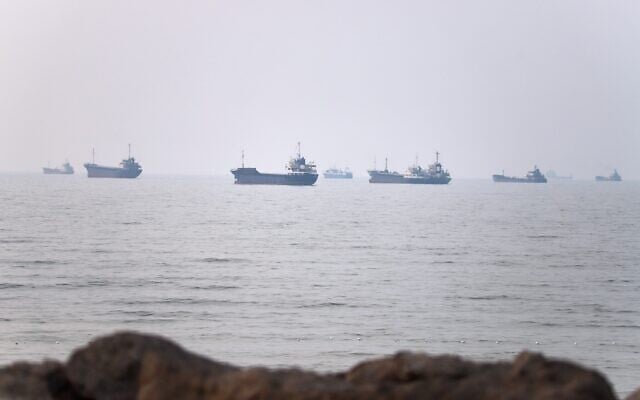
Commercial vessels are seen in the Strait of Hormuz off Bandar Abbas, Iran, June 30, 2026. (Amirhosein Khorgooi/ISNA via AP)
The United States is demanding that Iran publicly state it will stop attacks on ships in the Strait of Hormuz and that all lanes in the strait will be open to shipping with no tolls, senior US officials say.
Iran has adamantly refused to give up control of the strait, the strategic waterway through which a fifth of the world’s oil supply typically flows.
The US officials say conversations between the two countries have been productive in recent days. They make the comments to a small group of reporters in a conference call.
“What we’re demanding is that the Iranians issue a public statement that acknowledges all channels of the Strait of Hormuz are open and they’re not shooting at ships anymore. They’re either going to give us that statement or we’re not having a good outcome for them,” one official says.
Iran has told Washington that recent attacks on shipping in the strait were from “an errant part of their system,” one senior official says.
There appears to be a power struggle unfolding in real time between hardliners in Iran and pragmatists, an official says.
“We are hoping to get to a place where they publicly say that they will stop shooting at ships and sort of explicitly or at least implicitly acknowledging that they screwed up. We are working on that now,” one official says.
“The president has directed us to talk but as he’s shown a willingness to do, if they keep on shooting at ships or they engage on any other hostile acts, then we’re going to hit ’em back,” the official says.
The fundamental demand from the US side is that Iran turn over its nuclear materials. Tehran is believed to possess more than 900 pounds of highly enriched uranium, which Trump and other US officials call “nuclear dust.”
The nuclear issue is supposed to be dealt with under a 60-day period for negotiations based on a memorandum of understanding that was signed in June by the two countries.
“I just want to be clear here that if we don’t get the dust, we do not have a deal with Iran,” one official says.
The official says “we have a lot of options” if Iran refuses, including military and economic options.
Satellite imagery shows Iran may be trying to rebuild nuclear facilities — CNN
Satellite imagery obtained by CNN shows Iran may be trying to rebuild its nuclear facilities during the fragile ceasefire in the war with the US and Israel.
The images from several nuclear and missile sites suggest that Iran may have violated the memorandum of understanding it signed with the US last month, in which it committed to maintaining the status quo in its nuclear program.
At one nuclear facility, in Parchin, where explosive material for nuclear bombs is thought to be held, images from June and this month show efforts to repair holes made by bunker-busting bombs during the recent war.
CNN Exclusive: New satellite imagery reveals Iran may be rebuilding suspected nuclear facilities. https://t.co/TW9aorqbHa pic.twitter.com/SVtd5GziX6
— CNN (@CNN) July 10, 2026
The images were analyzed in conjunction with the Institute for Science and International Security, which has published previous reports on Iranian efforts to build out nuclear facilities.
Images also show trucks going in and out of the facility at Pickaxe Mountain, another suspected nuclear site. Images also show construction activity at missile sites.
Significant Activity at Taleghan 2 Identified in New Imagery
High resolution Airbus satellite imagery obtained by the Institute and @vantortech imagery provided to the Institute by @CNN from June and early July of the Taleghan 2 site, located within the Parchin Military Complex,… pic.twitter.com/YC1nVqPn7s
— Inst for Science (@TheGoodISIS) July 10, 2026


read more: