

Live updates (closed)
 Add ToI as a Preferred Source on Google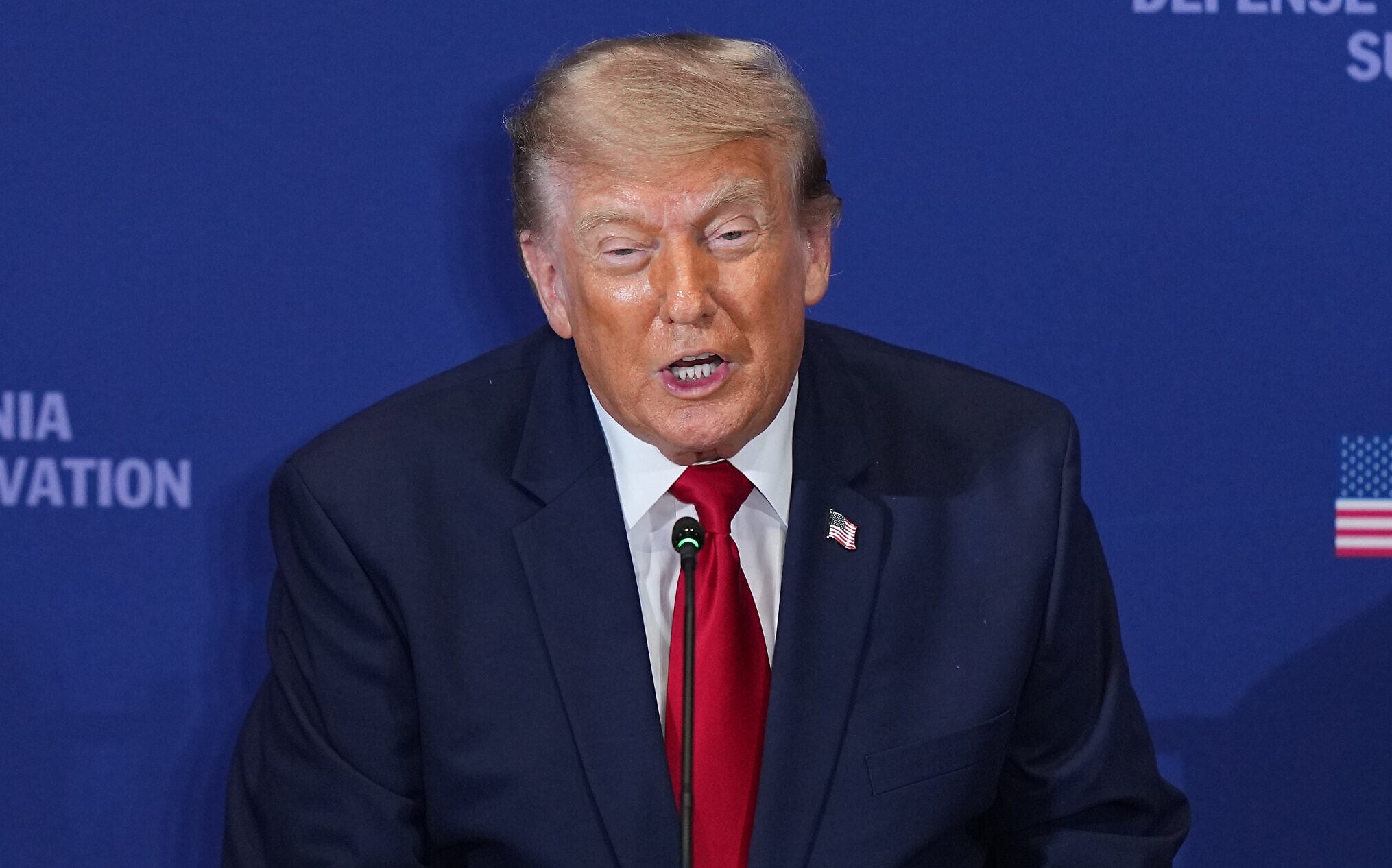


The Times of Israel liveblogged Wednesday’s events as they unfolded.
Iran news agency says air defenses have been activated near Bushehr nuclear plant
Iran’s semi-official Mehr news agency says that air defenses around the Bushehr nuclear power plant in southern Iran have been activated.
Mehr news agency says there has been no official comment so far.
Trump threatens ‘to knock out’ all Iranian bridges ‘unless they negotiate,’ says he’s ‘saving energy targets for last’
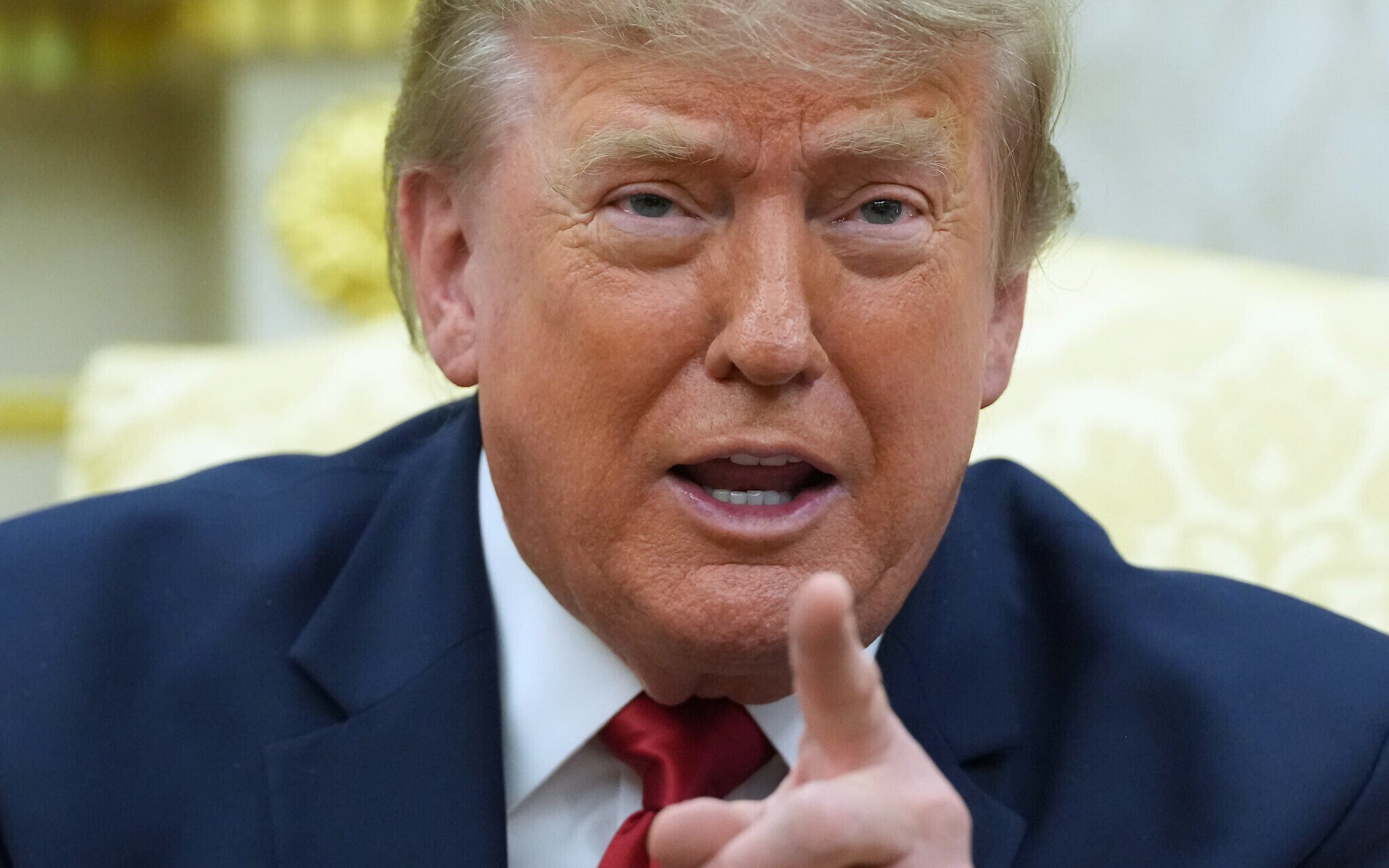
US President Donald Trump speaks as he meets with Iraq’s Prime Minister Ali al-Zaidi in the Oval Office of the White House, July 14, 2026, in Washington. (AP/Julia Demaree Nikhinson)
US President Donald Trump says he will authorize the bombing of Iran’s bridges and power bridges next week if Iran doesn’t come to the table and negotiate with the US.
“We’re going to hit them very hard tonight. We’re going to hit them very hard tomorrow night. We’re going to hit them very hard the night after, and then next week it gets really bad for them because next week comes the power plants. Next week comes the bridges. We’re going to knock out all their power plants. We’re going to knock out all their bridges unless they get to the table and negotiate,” Trump says in an interview with Fox News.
“I’ll save the energy targets for last, but ultimately we’ll hit energy targets,” he adds.
Trump has threatened numerous times to bomb Iranian energy sites only to hold off in the end, apparently due to concerns that doing so would result in Iran becoming a failed state — a scenario the US is looking to avoid.
Listing Trump’s war aims as preventing Iran from obtaining a nuclear weapon, keeping the Strait of Hormuz open and to degrade Iran’s military capabilities, the Fox interviewer asks if they can be accomplished through an air campaign alone.
Trump claims his war aims have actually already been achieved even though he has not secured Iran’s stockpiles of enriched uranium and traffic through Hormuz is only at 10% of prewar levels.
“It’s open if people want to go through it,” Trump says.
As for Iran’s stockpile of highly enriched uranium, Trump again downplays the importance of securing it, saying the US is surveilling Iran’s nuclear sites.
Asked whether the US is capable of striking the nuclear site deep underground at Pickaxe Mountain, Trump responds, “Nobody knows about Pickaxe,” before insisting the US is watching that site too and could act if needed.
Trump gives a similar answer regarding the Taleghan facility outside Tehran, which satellite imagery suggests Iran has started repairing since it was struck during the war. “We can hit that one very easily,” the president claims.
Asked if he’s negotiating with the right people in Iran, Trump says he doesn’t want to negotiate anymore because Iran purportedly reneged on a deal over the weekend.
But seconds later, he says his aides have been talking to Iranian negotiators in just the past hour.
Asked what message the US passed along to Iran, Trump says, “You better make a deal. You’re not going to have anybody left. We’re being very careful with the civilian population, but you better make a deal [or] you’re not going to have anything left.”
Kuwait says fire sparked by Iranian attack brought under control, no injuries
A fire has been brought under control at a site targeted in Iranian hostile attacks, Kuwaiti state news agency KUNA reports citing the fire service.
It says six teams, backed by the army and National Guard, responded, with no injuries reported and damage limited to material losses.
US official says no meeting scheduled between Trump and Netanyahu, as PM said seeking to visit DC next week
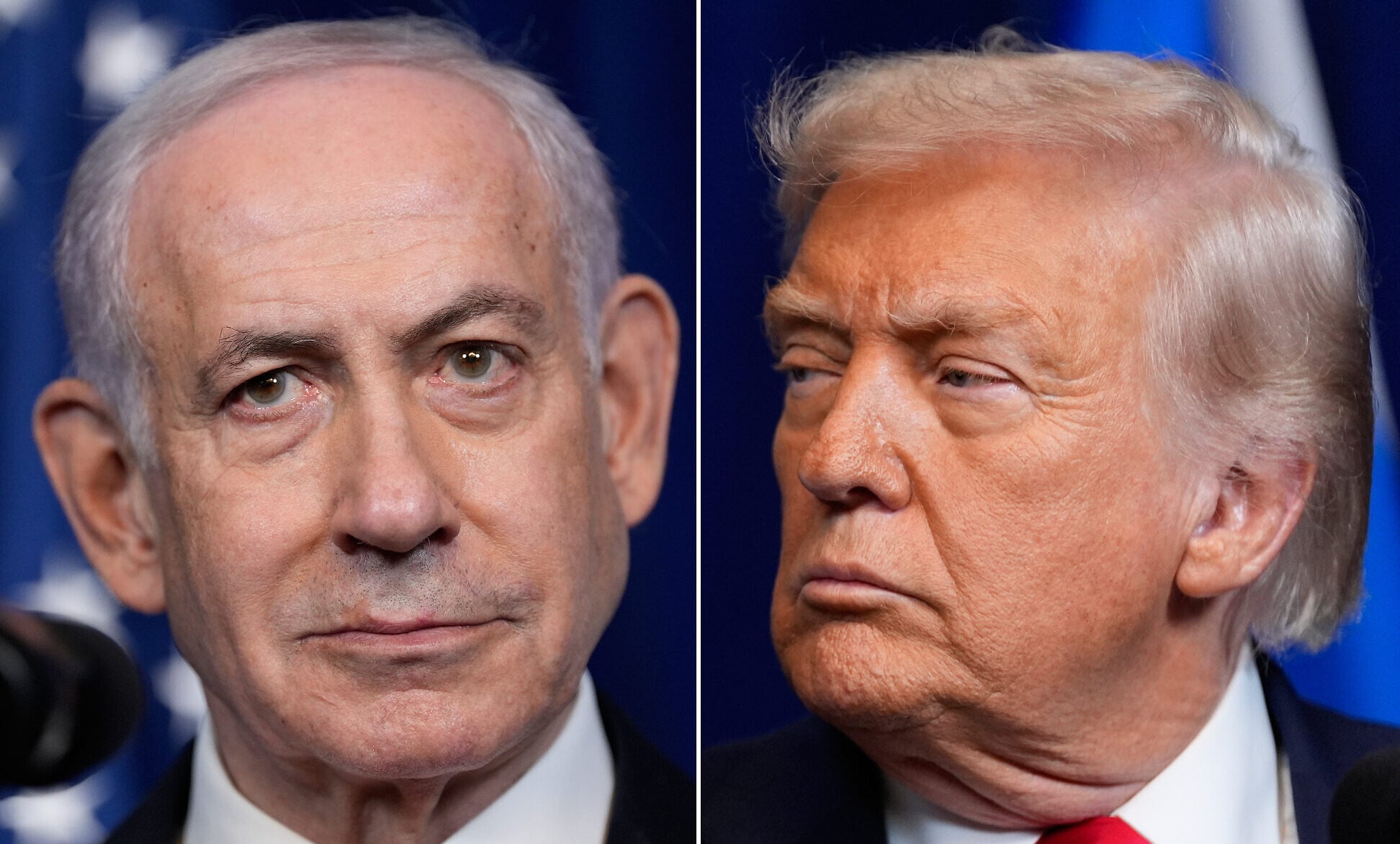
(L) Prime Minister Benjamin Netanyahu and US President Donald Trump during a news conference at Mar-a-Lago, December 29, 2025, in Palm Beach, Florida. (AP Photo/Alex Brandon)
A US official says no meeting between US President Donald Trump and Prime Minister Benjamin Netanyahu has been scheduled, amid Hebrew media reports saying the premier is planning to visit Washington, DC, early next week.
Knesset passes law restoring Chief Rabbinate’s monopoly over kosher certification

Ultra-Orthodox representatives of the Chief Rabbinate cross Jaffa Road in Jerusalem as they deliver a kosher certificate to a local restaurant, on December 31, 2019. (Hadas Parush/Flash90)
The Knesset votes 46-41 to give final approval to legislation restoring the Chief Rabbinate’s exclusive control over kosher certification, one of a series of laws that the ultra-Orthodox parties demanded be passed in exchange for support on key coalition bills.
The law, which was championed by the Shas party, will reverse reforms from the previous coalition that allowed private Orthodox organizations to issue kosher certificates in their own name, provided they meet the state’s standards.
Top US commander in Mideast says Iran has attacked 7 commercial ships in past week
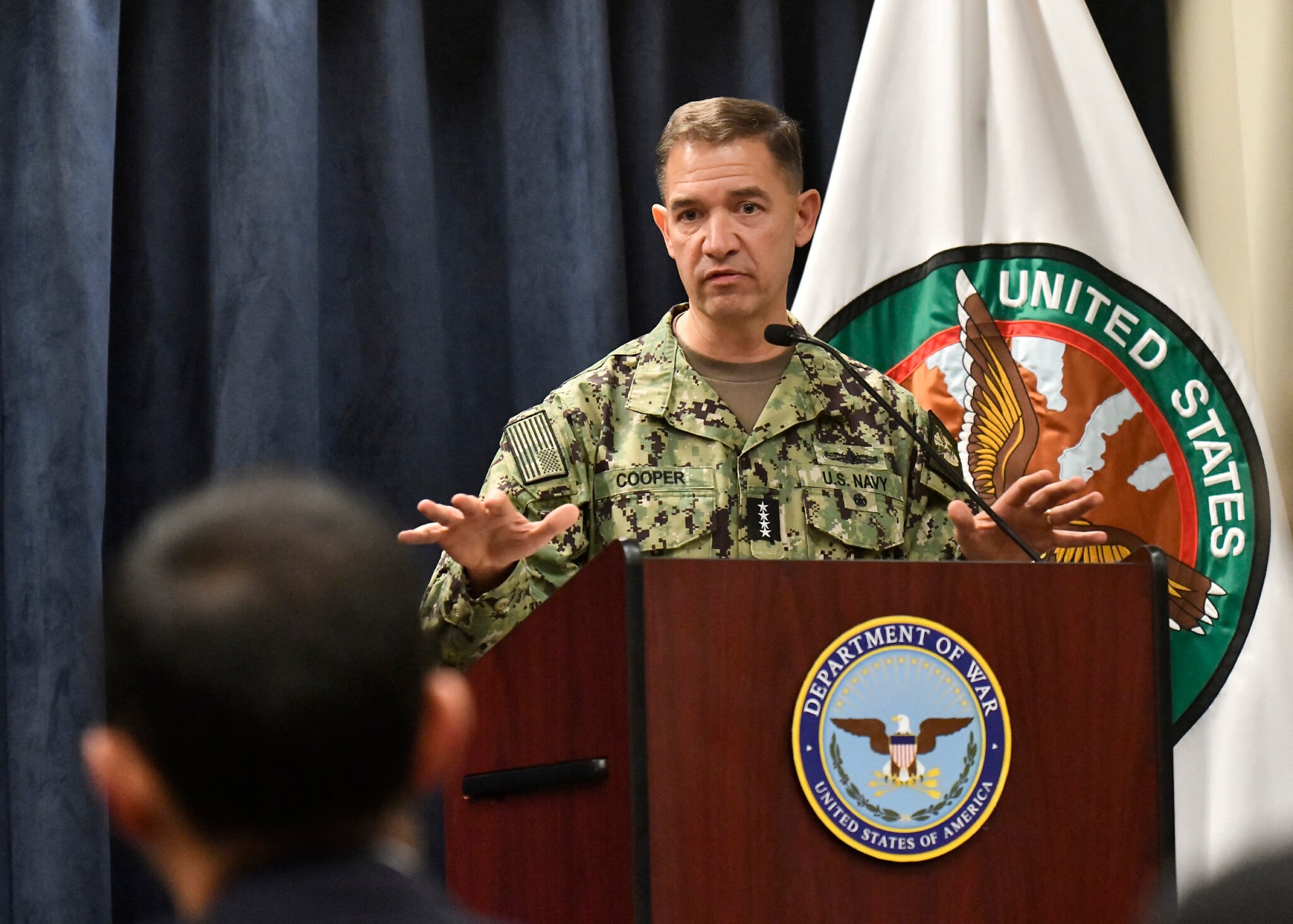
Admiral Charles Bradford 'Brad' Cooper II, commander of US Central Command speaks during a joint press conference at MacDill Air Force Base in Tampa, Florida, on March 5, 2026. (Octavio JONES / AFP)
The head of US Central Command says that Iran intentionally attacked seven commercial ships over the past seven days resulting in “nearly a dozen” civilian crew members being killed, injured or going missing.
“Iranian forces have also launched dozens of missiles and drones toward neighboring Gulf countries,” Admiral Brad Cooper says in a statement posted on social media.
“US forces are holding Iran accountable for unwarranted aggression that continues to endanger innocent lives,” he adds.
Bahrain activates air raid sirens as Kuwait confronts ‘hostile’ Iranian drones
Bahrain has sounded an air raid siren, the interior ministry says, after the United States carried out strikes against Iran and reimposed its naval blockade.
“The siren has been sounded,” the interior ministry says on X. “Citizens and residents are urged to remain calm and head to the nearest safe place.”
At the same time, Kuwait reports that its military is confronting “hostile” Iranian attack drones.
Likud judge resigns to protest party’s support for law barring arrest of Haredi draft dodgers
Emanuel Weiser, a judge on Likud’s internal court, announces he is quitting the party after decrying it for supporting a law shielding ultra-Orthodox draft dodgers from arrest.
“I hope, and will act, so that in the coming elections Likud is weakened and forced to ally with right-wing parties that have a moral backbone, who will not surrender to Haredi extortion,” Weiser writes in his resignation letter, according to a copy published by Hebrew media outlets.
US military says it hit dozens of Iranian targets during 7-hour wave of strikes
US Central Command says it hit dozens of Iranian targets during the latest overnight airstrikes against the Islamic Republic, as it reimposes a naval blockade on Iran.
According to CENTCOM, US military forces hit “missile and drone sites, naval capabilities and coastal defense systems during the seven-hour wave to further degrade Iran’s ability to threaten commercial shipping and civilian crews.”
Iran’s Revolutionary Guards warn Hormuz will stay closed ‘until US ends its acts of aggression’
Iranian state television reports that Iran’s army and the Islamic Revolutionary Guard Corps carried out separate attacks on US targets in Jordan and Kuwait after US forces struck the Islamic Republic.
The army says it targeted the Al-Azraq base in Jordan with drones, state TV IRIB reports. Separately, the IRGC says it fired cruise missiles at a US military logistics center at Mina Abdullah in Kuwait, stressing that the Hormuz strait will remain closed “until the United States ends its acts of aggression.”
The IRGC also says it struck facilities used by the US Fifth Fleet in Bahrain, state television reports.
“The NSI Management Center, Command and Control Center, Major Military Parts and Equipment Warehouses, and Fuel Storage Facilities of the US Fifth Fleet in Bahrain Were Crushed,” the IRGC says in a statement carried by state television IRIB.
Jordan says it downed 3 Iranian missiles fired at the kingdom
Jordan says it shot down three missiles launched by Iran targeting the kingdom.
The Iranian attack, earlier claimed by Tehran, comes as the US reimposes a naval blockade on the Islamic Republic over its attacks on ships trying to travel through the Strait of Hormuz.
Jordan’s military makes the statement on the kingdom’s state-run Petra news agency.
Another branch of sushi chain targeted in grenade attack amid escalating turf war
Another branch of the Japanika sushi chain was targeted in a grenade attack last night, reports say, amid an escalating conflict between the Jarushi and Musli crime families.
There were no injuries in the overnight attack on the restaurant in Rosh Pina.
There have been around 15 grenade and shooting attacks over the past week, many of them targeting Japanika, with one person lightly injured on Monday in south Tel Aviv in one of the explosions.
The chain is owned by Barak Abramov, who also owns the Beitar Jerusalem soccer team.
According to Walla, Abramov was initially seen as being close to the Musli family but is now thought to be tied to the Jarushi family.
Muslim man stabbed in Utah over his religion, police say; victim in critical condition
A man was arrested in Utah for stabbing a Muslim man multiple times and stated that he targeted the victim because of the victim’s religion, police say in court records.
Police say the suspect told them he “intends to kill Muslims” and that he constituted “a substantial danger to the public if released based on his violent actions … ideologies and pre-planned mass casualty events.”
The incident took place inside the Valley Fair Mall in Utah’s West Valley City on Monday. The male victim had “multiple stab wounds all over his body and was bleeding profusely,” police say in an affidavit.
Authorities say the suspect was pinned to the ground by bystanders before officers arrived on the scene.
The suspect, Peter Michael Larsen, 48, was booked into the Salt Lake County jail for a probe over attempted murder and prohibited dangerous weapon conduct, jail records show. The victim was a male Muslim kiosk worker.
The suspect said “he had targeted the victim with intent to kill him because of his religion (Muslim),” according to the police booking affidavit.
The suspect approached the Muslim man, asked for his name, asked about his religion and indicated he wanted a bottle of water, the Salt Lake Tribune reports, citing comments from Imam Shuaib Din, who leads the Utah Islamic Center and has been in contact with the victim’s family.
As the victim turned to get the water, the attacker began stabbing him, according to Din.
The victim was hospitalized and in critical condition. A friend set up a GoFundMe page for him, which said the Muslim man was stabbed 15 times and needed surgeries.
The attacker was also hospitalized because of wounds sustained while he was subdued by bystanders, before being booked into the Salt Lake County jail.
Reports: 3 Palestinians injured in apparent settler attack in southern West Bank
Three Palestinians were injured in an attack after settlers arrived at a family’s home in Wadi Rahim, in the southern South Hebron Hills area of the southern West Bank, and assaulted them, Palestinian media outlets report.
According to the reports, the three were taken to a hospital for medical treatment. There are no details on the conditions of the victims.
Wadi Rahim has seen multiple attacks by settlers.
There is no immediate comment from law enforcement.
إصابات جراء هجوم مليشيات المستوطنين على منازل عائلة شناران في واد الرخيم جنوب يطا جنوب الخليل. pic.twitter.com/qyzy6QMzKZ
— شبكة قدس الإخبارية (@qudsn) July 15, 2026
Israeli woman lightly injured after Palestinians threw stones at car in West Bank, IDF says

The scene where an Israeli woman was lightly injured after Palestinians hurled stones at her car on Route 60 Highway, near Sinjil in the West Bank on July 15, 2026. (Magen David Adom)
An Israeli woman was lightly injured after Palestinians hurled stones at her car in the West Bank this morning, the military and medics say.
The Magen David Adom ambulance service says it treated a 62-year-old woman who was injured by the stone-throwing on the Route 60 Highway, near the Palestinian village of Sinjil.
The IDF says two other cars were damaged in the area by the stones.
“Forces began searches for suspects,” the military says, adding that troops have also encircled Sinjil amid that effort.
US Senate to hold hearing today for Trump’s pick to head intelligence agencies after weekslong delay
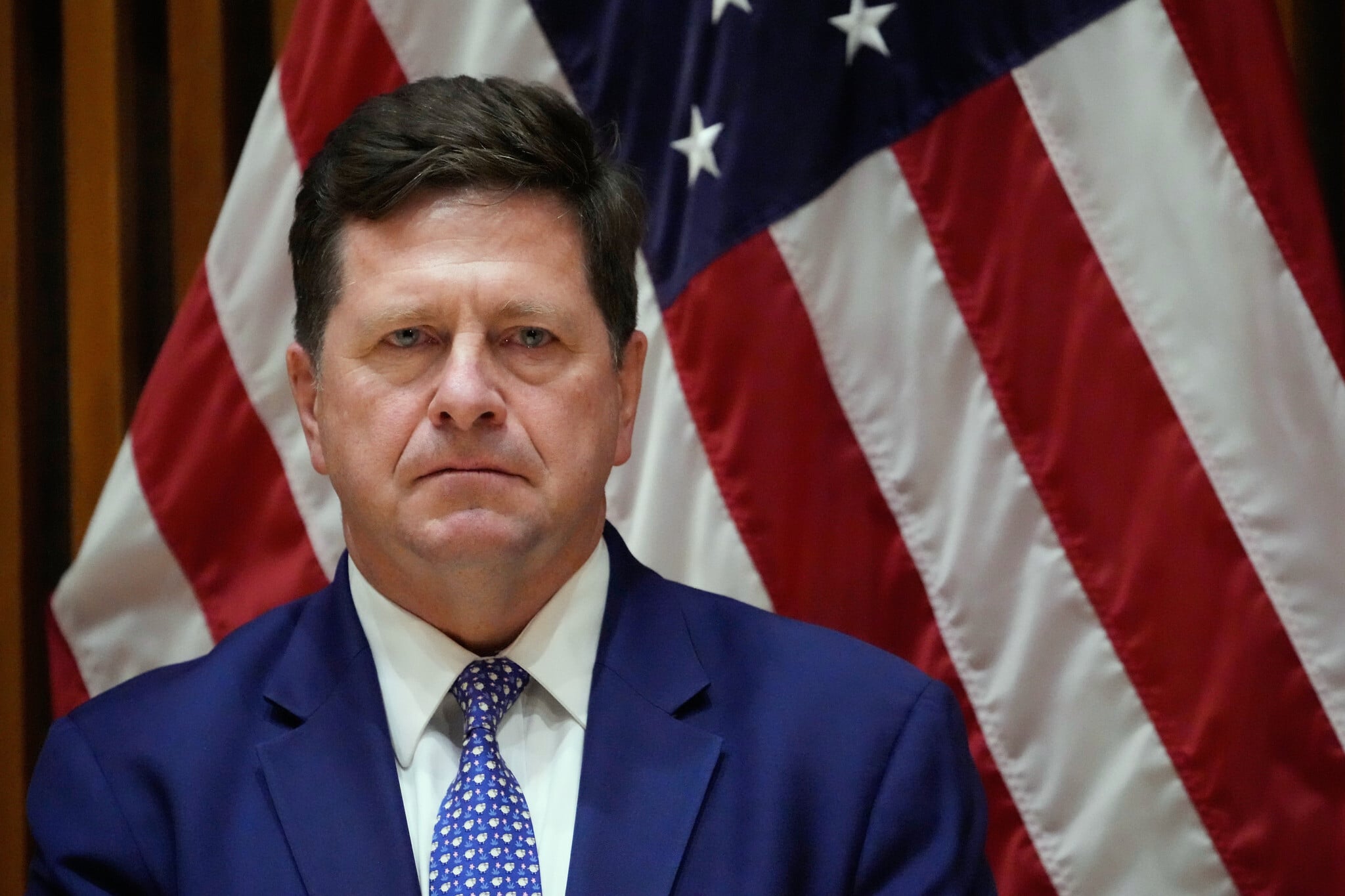
Jay Clayton, US Attorney for the Southern District of New York, listens during a news conference in New York, March 9, 2026. (AP/Seth Wenig)
Jay Clayton, US President Donald Trump’s pick to head the nation’s intelligence agencies, will testify before the Senate Intelligence Committee today, weeks after Trump abruptly delayed his nomination.
Republicans and even some Democrats have been eager to quickly confirm Clayton, the US attorney for the Southern District of New York and a former Securities and Exchange Commission chairman, as they have expressed concerns about Trump’s interim appointee for the intelligence post, Bill Pulte. Pulte, who has been in the job since June 19, is a former housing official with no known intelligence experience and who used his previous administration perch to target perceived adversaries of the president.
Senate Intelligence Committee Chairman Tom Cotton expressed frustration when Trump delayed Clayton’s nomination in a social media post last month, allowing Pulte to take office. Cotton said then that Clayton had been instructed not to appear at a scheduled confirmation hearing, but he rescheduled the hearing three weeks later, with apparent approval from the White House.
While Clayton has received some bipartisan praise, Democrats are expected to aggressively question him on how he would approach the issue of election interference, especially as Trump has said he will deliver a primetime address on Thursday with a focus on elections, suggesting he could revisit long-debunked conspiracy theories about his 2020 defeat to Democrat Joe Biden.
Democrats are also certain to press Clayton on his role in recent subpoenas of four New York Times journalists after they reported on security concerns involving the new, Qatari-gifted Air Force One.
IDF detains 2 Palestinians who were allegedly producing explosives in West Bank, military says
Two Palestinians who were allegedly manufacturing explosive devices were nabbed by Israeli commandos in the West Bank last night, the military says.
The IDF says troops of the Duvdevan Commando Unit carried out a raid in the Ramallah area and captured two wanted Palestinians “who produced explosives intended to harm IDF troops operating in the area.”
The commandos also apprehended a “weapons dealer who was in the possession of numerous weapons,” the army adds.
צפו בתיעוד מחטיבת בנימין: לוחמי יחידת דובדבן עצרו שני מבוקשים שייצרו מטענים שנועדו לפגוע בכוחות צה"ל
בפעילות לילית בחטיבת בנימין אתמול, לוחמי יחידת דובדבן עצרו בהכוונת שב"כ שני מבוקשים שייצרו מטענים שנועדו לפגוע בכוחות צה"ל הפועלים במרחב.
כמו כן, הכוחות עצרו סוחר אמצעי לחימה… pic.twitter.com/v32dCfOXpK
— צבא ההגנה לישראל (@idfonline) July 15, 2026
82-year-old man dies of wounds sustained in Iranian missile attack on Haifa in April

Michael Katz, 82, who died on July 15, 2026, of wounds sustained in an Iranian missile attack on April 5, 2026. (Courtesy)
Michael Katz, 82, who was critically wounded in an Iranian missile strike on his home in Haifa in April, has died from his injuries, the municipality says.
Katz sustained his injuries in the same attack that killed four members of the Gershovitz family. He died at Haifa’s Rambam Hospital.
Katz worked for decades at Rafael and “contributed to the security of the country,” according to the Haifa municiplaity.
His wife Nina, who was lightly injured in the attack, mourns his loss: “From today on I will live my new life as half a human being, after 55 years of marriage.”
“Michael was a great person to be around, a man who loved life and knew how to enjoy it. Everyone who met him fell in love with him immediately,” she says. “He will be missed not only by us, but also by everyone who knew him.”
Katz is survived by Nina, his sons Itamar and Yoav, and six grandchildren.
An Israeli Air Force probe found that the ballistic missile that was fired at Haifa on April 5 was not intercepted because it broke up in the air and its expected trajectory changed.
Twenty-two Israeli civilians and foreign nationals were killed by Iranian ballistic missile attacks during Operation Roaring Lion, along with four Palestinians in the West Bank.
Iran executes man convicted of arson during January protests
Iran executed a man who was convicted of setting fire to a governor’s office and attacking a police station during unrest in the central city of Dehaqan in January, the judiciary’s Mizan news agency reports.
Mizan identifies the man as Mohammad Amini Dehaghani and says the Supreme Court had upheld his death sentence.
Reports: Couple and daughter, 6, killed in Gaza strike; military official says Hamas operative targeted
Media outlets in Gaza affiliated with Hamas report that three people were killed overnight in an Israeli strike on a house in Deir al-Balah.
According to the reports, the three were a married couple — Omar Abu Qasem and Asma Abu Qasem — and their six-year-old daughter, Habiba.
Habiba’s sibling reportedly survived.
A military official tells The Times of Israel that the strike targeted a Hamas operative. There is no comment from the Israel Defense Forces.
???? صورة | الشهيد عمر سامي أبو قاسم (33 عامًا) وطفلته حبيبة، اللذين ارتقيا مع زوجته في قصف إسرائيلي استهدف شقة سكنية لعائلة أبو قاسم قرب دوار البركة بمدينة دير البلح. pic.twitter.com/8H3PntKAYx
— وكالة شهاب للأنباء (@ShehabAgency) July 15, 2026
Indian crew member missing after Iranian attack on ship off Oman coast is dead, family says
An Indian national who went missing after an attack on commercial vessel GFS Galaxy off the coast of Oman is dead, his father-in-law says.
Heramb Karmarkar, 30, was a marine engineer on the Cyprus-flagged container ship that was attacked off the coast of Oman on Sunday.
The vessel, with 11 Indians in its 24-member crew, was struck by an “unidentified projectile,” Cyprus authorities had said.
Iran said it had struck the ship after it attempted to transit through an unauthorized route despite warnings to correct its course.
Karmarkar’s father-in-law, Vivek Tandon, says the company operating the vessel had informed him of his son-in-law’s death.
India’s foreign ministry does not immediately respond to a request for comment.
IDF soldier sentenced to 5 years for spying on behalf of Iran during June 2025 war
An Israeli soldier performing mandatory service has been sentenced to five years in prison for carrying out espionage tasks on behalf of Iran, the military announces.
The soldier had been convicted of contact with a foreign agent and delivering information liable to benefit the enemy, following a joint investigation by the Military Police, the Israel Police, and Shin Bet.
The IDF says that in 2025, the soldier received messages on Telegram from various individuals, some of whom were identified with Iran, containing various job offers. One Iranian handler offered the soldier money in exchange for “various photography tasks.”
The soldier sent the Iranian handler two videos showing missile interceptions that he had filmed at civilian locations — not army bases — during the June 2025 war with Iran, according to the investigation. He received payment for one of the videos.
Additionally, the soldier sent the Iranian handler several videos from civilian sites, including one showing a missile impact, that he had found online.
“Ultimately, after feeling pressured, the defendant informed a member of his unit that he had been in contact with a foreign agent, and the following day he was arrested by the Shin Bet,” the military says.
Military prosecutors sought to sentence the soldier to seven years with additional penalties, “emphasizing the severity and risk inherent in the defendant’s actions and the need to deter both the defendant and others.”
In its ruling, the military court took into account that the soldier did not provide military information or any other information obtained through his role in the IDF, as well as the fact that he cut off contact with the Iranian handler and reported the incident to his commanders.
The court therefore sentenced him to five years in prison, along with a suspended sentence, a fine of NIS 1,000, and the demotion to the rank of private — the lowest rank in the IDF.
The soldier’s identity and the unit he served in remain barred from publication.
Iran vows ‘decisive response’ after 7 said killed in US strikes on military base
At least seven personnel were killed in US strikes on an Iranian military base in Bampur overnight, Iran’s army says, according to the semi-official Tasnim news agency.
The Iranian army says the strikes were intended to cause maximum casualties, with 13 missiles hitting a guesthouse, guard posts and accommodation facilities at the base near the southeastern city of Iranshahr.
It adds that a number of personnel were also wounded and promised a “decisive response” to the attack.
Port city of Bushehr again targeted by US strikes, Iranian state media says
Fresh US strikes hit Iran’s southern port city of Bushehr, home to the country’s only civilian nuclear plant, state news agency IRNA reports.
“The American enemy attacked three locations in Bushehr today,” the city governor, Mohammad Mozafari tells IRNA, the day after another attack, as Washington and Tehran stepped up their military confrontation.
Knesset begins debate on bill to gut powers of attorney general

Attorney General Gali Baharav-Miara attends a committee meeting at the Knesset in Jerusalem on June 9, 2026. (Yonatan Sindel/Flash90)
The Knesset begins debating legislation to significantly weaken the power of the attorney general — one of Israel’s few checks on executive power — ahead of a final vote expected later today.
The legislation would effectively strip the attorney general of authority over the government by allowing ministers to disregard the currently binding legal opinions and decide for themselves whether their actions are lawful.
Additionally it would grant the coalition effective control over appointing and dismissing the person holding the office, replacing the current system under which the cabinet acts on the recommendation of an independent public committee headed by a retired Supreme Court justice.
The bill represents the latest stage of Prime Minister Benjamin Netanyahu’s government’s campaign to weaken the judiciary, which began shortly after the government assumed power in 2023 — including Attorney General Gali Baharav-Miara, whom coalition leaders have repeatedly accused of thwarting their agenda.
The measure has been fiercely opposed by opposition lawmakers, good-governance watchdogs and Baharav-Miara herself, with critics arguing that the government is seeking to remove one of the few remaining checks on executive power to advance legislation and policies that would otherwise be blocked as unlawful, without proposing any alternative safeguards.
Israel has few institutional checks on executive power compared to many other democracies, lacking a bicameral legislature, representative constituencies, a written constitution, or fixed term limits, making the role of the attorney general particularly significant.
The bill is advancing after the coalition secured passage earlier this week of the key measures demanded by its ultra-Orthodox partners under an agreement between Netanyahu and the Haredi parties, including legislation freezing the arrest and prosecution of ultra-Orthodox draft evaders, a Basic Law declaring Torah study a foundational value, and a repeal of the previous government’s kosher certification reform.
The coalition has now turned to advancing other legislative priorities before the Knesset dissolves on Friday, ahead of the October 27 election, including a bill expanding gender segregation in academia and Communications Minister Shlomo Karhi’s media overhaul bill.
Bank of Israel chief: Government needs to hike taxes in 2027 to pay for defense, reduce debt
Bank of Israel Governor Amir Yaron cautions that the government will need to hike taxes next year to finance the country’s growing defense needs, and return to a downward debt trajectory after more than two and a half years of hostilities on multiple fronts.
“The economy shows impressive resilience and strength, but looking ahead, there are clear challenges for any government that will come in next,” Yaron says at a conference in Tel Aviv. “We need to reduce debt, defense expenditure is expected to be higher than before October 7, 2023, in light of Israel’s threat map, and at the same time it is necessary to invest in growth engines, including education, infrastructure, transportation and housing.”
“I have called this the fiscal trilemma and in order to achieve all of its three objectives the government will have to increase its sources of income and raise taxes,” Yaron says. “Nobody likes to pay taxes but as the government acts to encourage more population groups to join the labor market, the burden will be spread over a wider population.”
Yaron reiterates that the government also needs to cut expenses, including coalition funds, that do not support growth, and become more efficient.
Israeli official: Netanyahu to travel to US on Saturday, but unclear if he will meet Trump
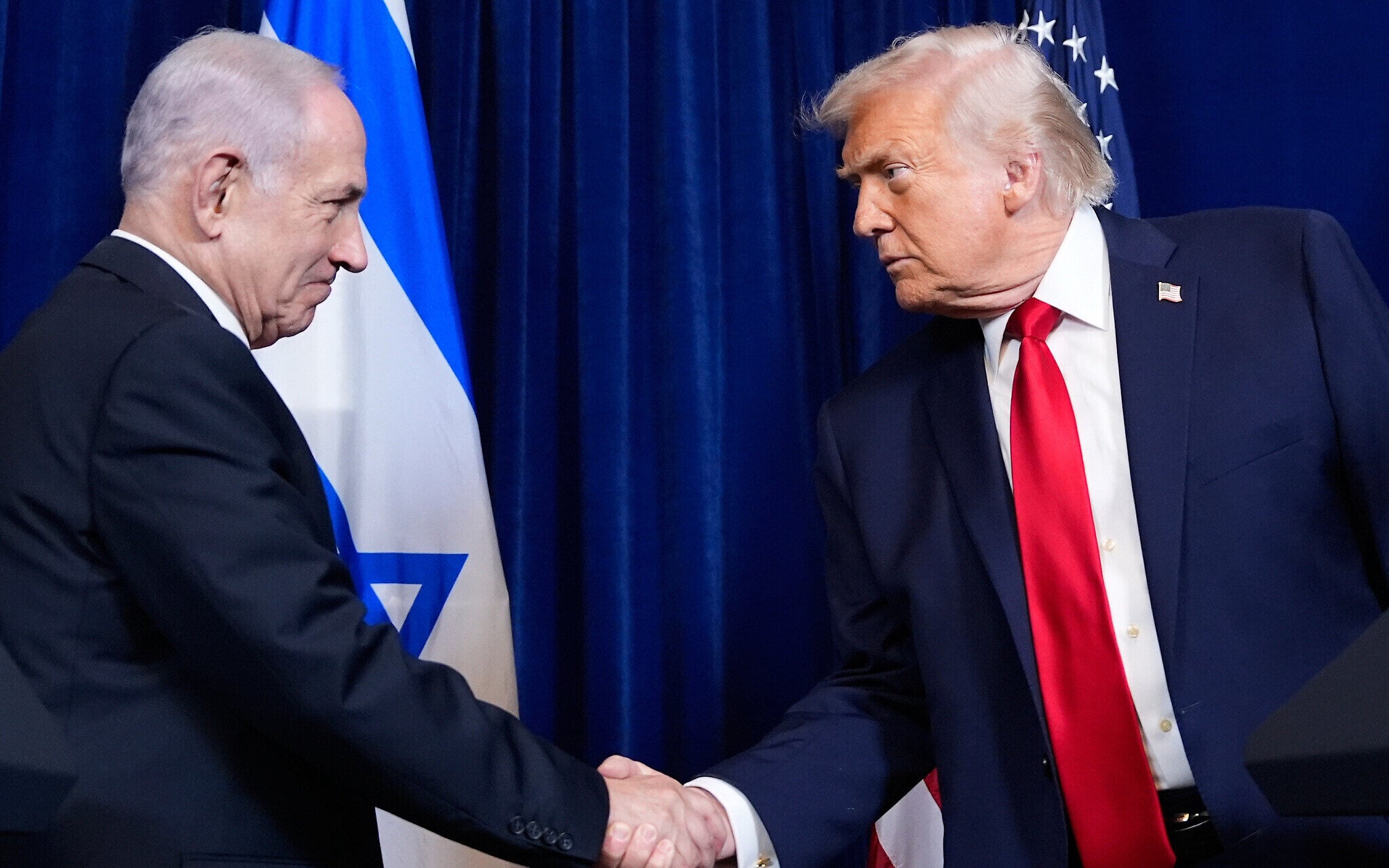
US President Donald Trump, right, shakes hands with Prime Minister Benjamin Netanyahu during a news conference at Mar-a-Lago, in Palm Beach, Florida, December 29, 2025. (Alex Brandon/AP)
Prime Minister Benjamin Netanyahu will travel to the United States on Saturday, a senior Israeli official tells Reuters.
Netanyahu wants to meet US President Donald Trump, but it is not clear if he will, the official adds.
According to Hebrew-language media reports, Netanyahu is to attend memorial events for US Senator Lindsey Graham, a leader supporter of Israel who died on Saturday. A date for the funeral has not been publicly announced.
A US official said yesterday that no meeting between Netanyhau and Trump has been scheduled.
Netanyahu present in court as Elkin testifies in PM’s corruption trial
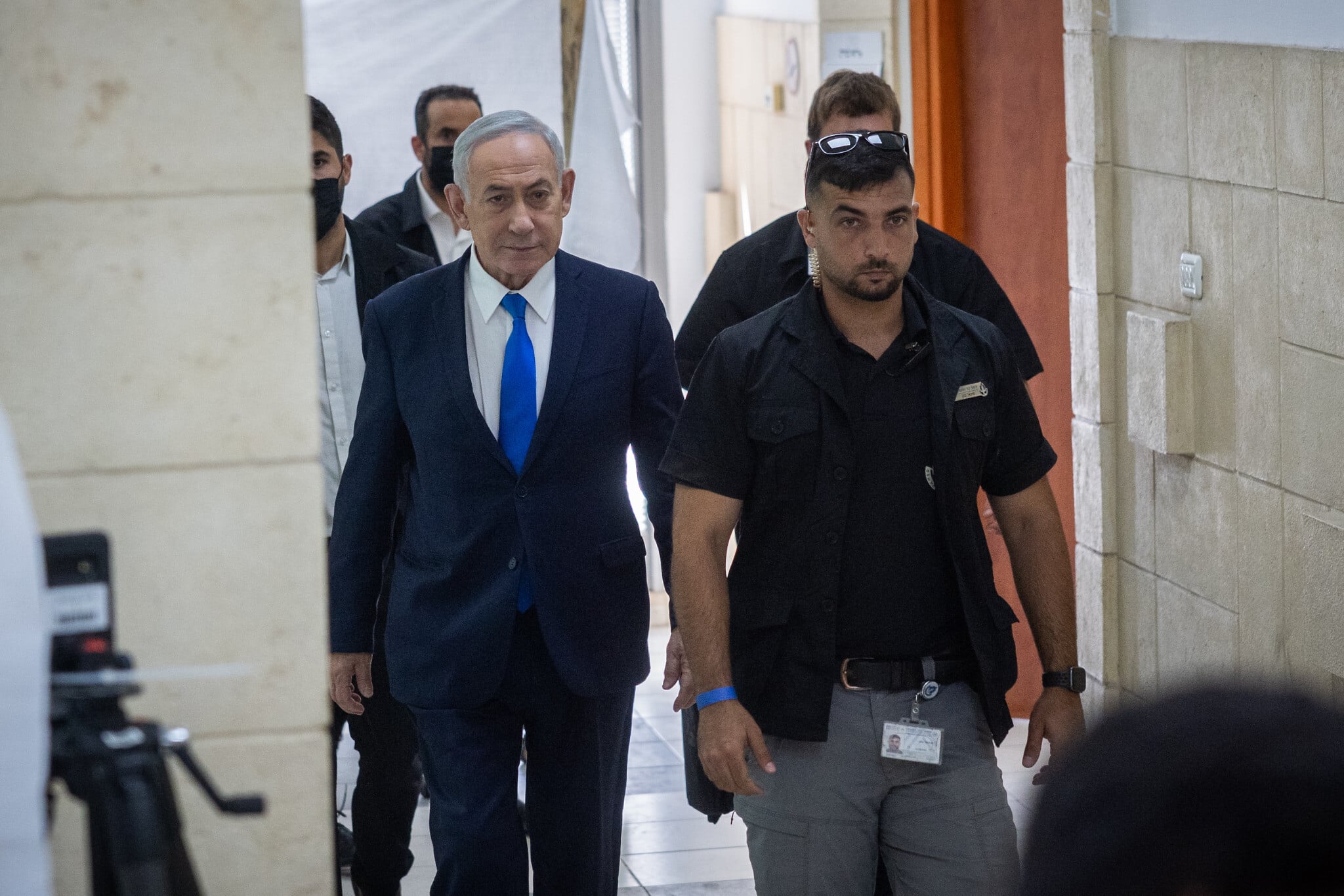
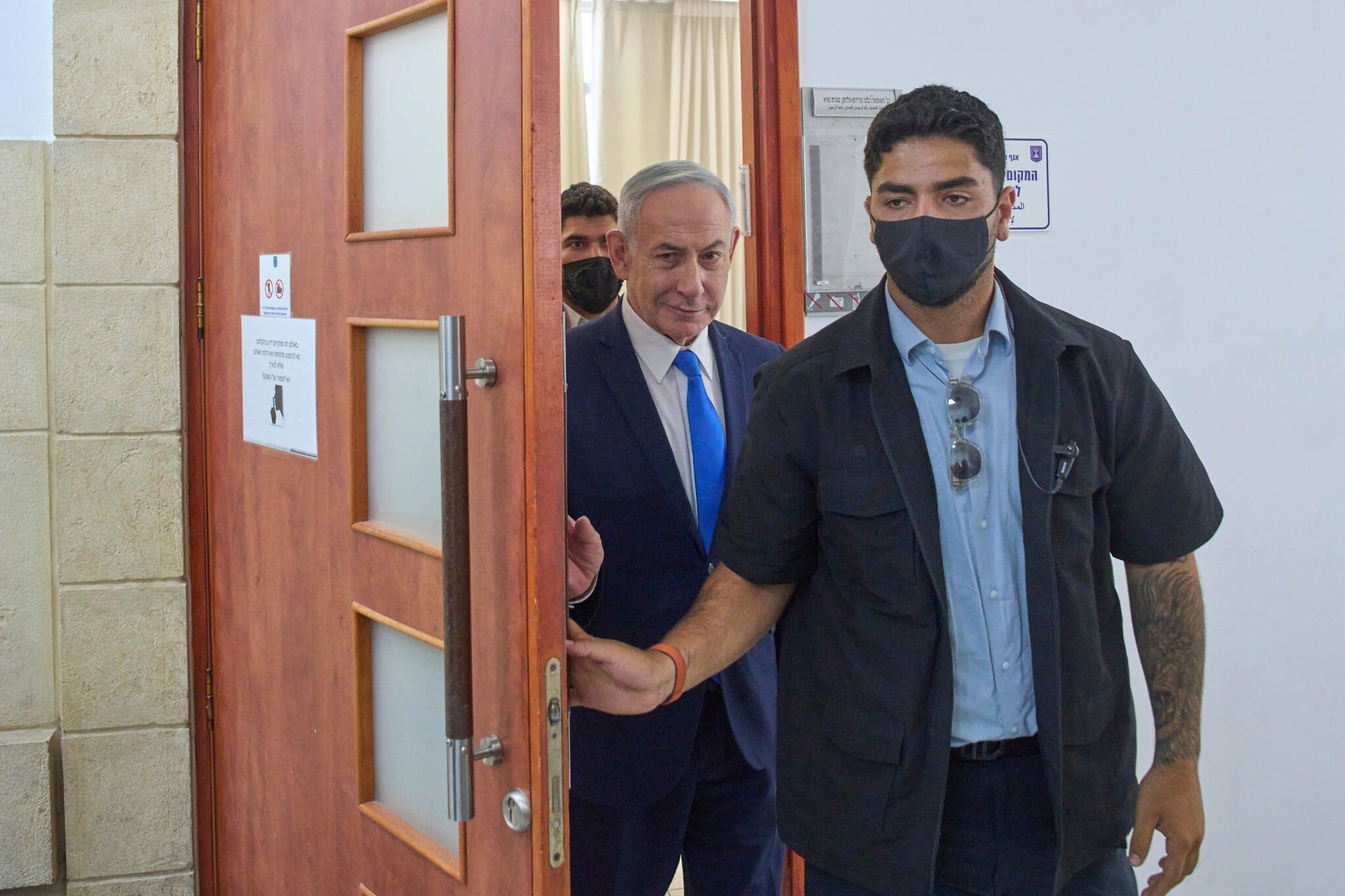
Prime Minister Benjamin Netanyahu for a court hearing in his trial, at the Jerusalem District Court on July 15, 2026. (Yonatan Sindel/Flash90)
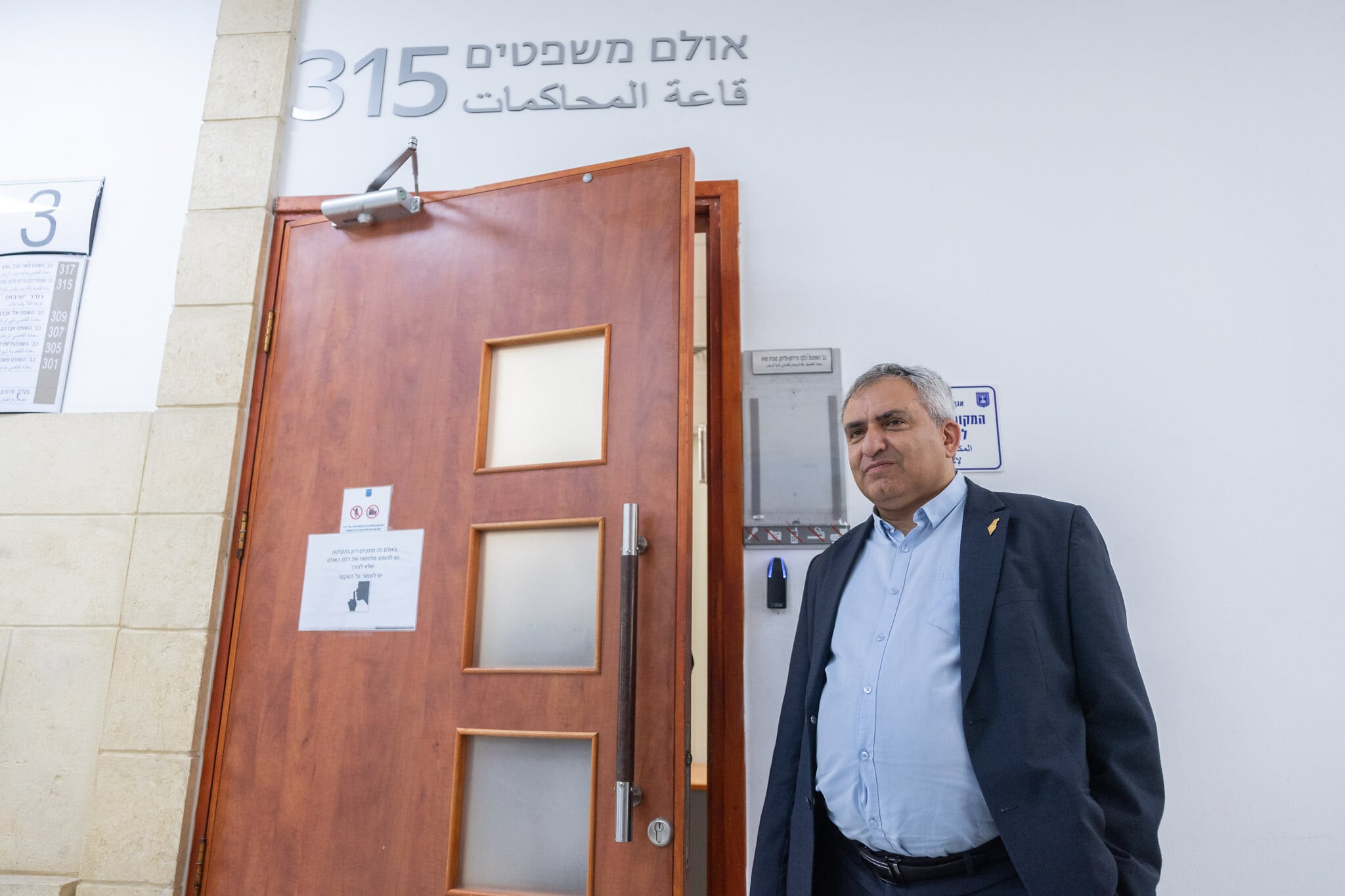
Prime Minister Benjamin Netanyahu attends a hearing in his corruption trial at the Jerusalem District Court in which Minister Ze’ev Elkin, a member of Netanyahu’s government, is testifying in Case 2000.
Netanyahu rarely attends court hearings other than when he gave testimony, and frequently requested that hearings for his testimony be cancelled due to tight time pressures on his schedule relating to ongoing conflicts Israel is involved in.
Elkin has been summoned to testify over his knowledge of conversations between Netanyahu and Yedioht Ahronoth newspaper publisher Arnon Mozes, since Elkin was a central figure in Netanyahu’s Likud party at the time and coalition whip.
Netanyahu is accused of fraud and breach of trust in Case 2000, over allegations he advanced legislation to weaken Yedioth’s main rival Israel Hayom in return for more favorable coverage in Yedioth.
Bahrain says it intercepted ‘treacherous’ Iranian early-morning attacks
Bahrain’s military says it intercepted aerial attacks from Iran after warning sirens sounded in the early hours in the tiny Gulf nation.
“The General Command of the Bahrain Defence Force announces that Iran continues its systematic hostile approach through its criminal attacks that target civilians,” it says in a statement adding the military “succeeded in intercepting and destroying a number of the treacherous Iranian aerial attacks this morning.”
Briton jailed in Iran given additional 2-year sentence for talking to media, family says

A undated handout picture released by the family of Craig and Lindsay Foreman through Britain's Foreign, Commonwealth and Development Office (FCDO) in London on February 15, 2025, shows Craig and Lindsay Foreman posing for a selfie photograph at an unknown location. (Photo by Foreign, Commonwealth & Development Office/AFP)
The family of British couple Craig and Lindsay Foreman, who are serving a 10-year prison sentence in Iran on espionage charges that they deny, say that a judge has extended Craig Foreman’s sentence by two years for speaking to the media.
The couple were arrested in 2025 while traveling through Iran by motorcycle as part of a round-the-world journey. Britain has described their original sentences as “totally unjustifiable.”
Joe Bennett, Lindsay Foreman’s son and the family’s spokesperson, says they received reports that Craig Foreman had been taken before a judge and informed that his sentence had been extended because he had spoken to the media.
“We understand he was told he was being taken to see his lawyer, but was instead brought before a judge and informed of the additional sentence,” Bennett says in a statement.
He says Craig Foreman had been denied access to a lawyer and a translator and was given no opportunity to defend himself.
Just 20 US refueling planes to remain at Ben Gurion Airport by July 21 in move to avert summer travel disruptions
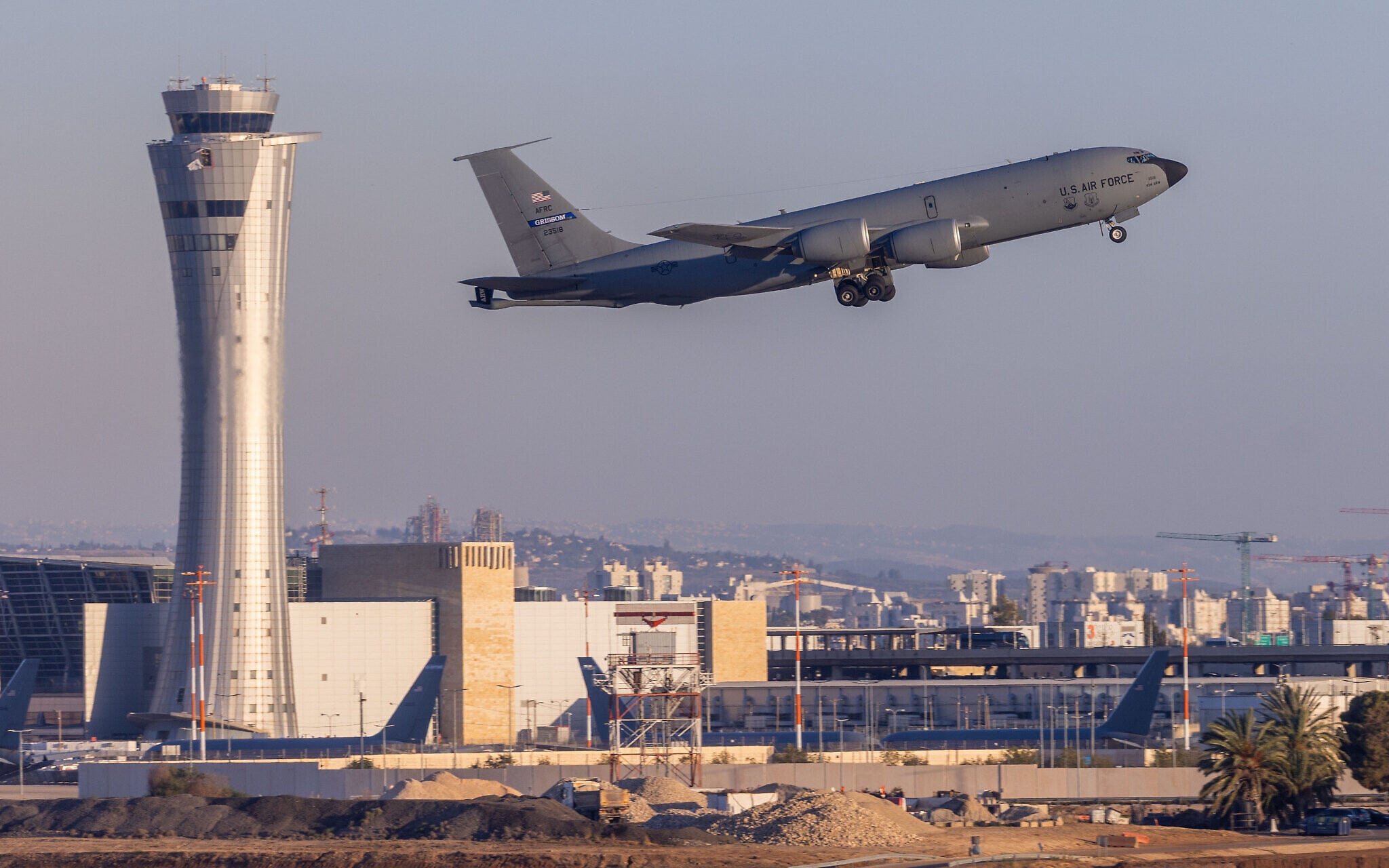
A US Air Force aircraft takes off from the Ben Gurion International Airport, outside of Tel Aviv, on May 24, 2026. (Yossi Aloni/Flash90)
Transportation Minister Miri Regev announces that by July 21, the number of US refueling aircraft stationed at Tel Aviv’s Ben Gurion Airport will be reduced to 20, to avert disruptions of commercial flight operations during the peak summer months.
Currently there are 33 US aerial refueling tankers parked at the country’s main airport, crowding out civilian planes and creating a parking shortage. Following a cabinet decision, the number of US military planes will be capped at 20 as previously agreed, the Transportation Ministry says in a statement.
Additional US aircraft will be relocated and stationed at IDF bases designated by the Defense Ministry.
“This move is intended to enable continued operational activity while maintaining civil aviation operations and minimizing flight cancellations as much as possible,” the ministry says.
Earlier this week, the Israel Airports Authority warned that unless US aircraft continue to be removed from Ben Gurion Airport during the busy summer months, as many as 50,000 flight tickets could be at risk of cancellation.
As Israel and Serbia draw closer, Herzog and Sa’ar to address Belgrade conference by videolink
President Isaac Herzog, Foreign Minister Gideon Sa’ar, and Knesset Speaker Amir Ohana are addressing by video today a Belgrade conference held by the Serbian-American Friendship Congress and the Serbian parliament.
The conference — called “Partners in a changing world: Central & Eastern Europe, America, Israel and the new Middle East” — will also feature remote addresses by US Senator Ted Cruz and congressmen Tracey Mann, Robert Aderholt, and Josh Gotheimer.
Serbia has become one of Israel’s closest allies in Europe, though it is not in the European Union or NATO. In April, Serbia’s populist President Aleksandar Vucic announced plans to jointly produce combat drones with Israel, in a bid to strengthen his country’s defenses and bolster exports of weapons and military equipment.
The same month, Sa’ar and Serbian Foreign Minister Marko Đurić announced during a meeting in Jerusalem steps toward a free trade agreement and the launch of a new strategic dialogue.
2 Hamas Nukhba commanders killed in Tuesday strike in north Gaza — IDF
Two Hamas commanders in the terror group’s Nukhba Force were killed in an Israeli strike in the northern Gaza Strip last night, the military announces.
The IDF says the strike killed Ali Shamlakh, a deputy Nukhba company commander, who was advancing attacks on troops and Israeli civilians, and Nasser Louh, a Nukhba cell commander in Hamas’s Sabra Battalion.
“The terrorists posed an immediate threat to our forces operating in the area and were eliminated in a precise aerial strike,” the military adds.
US says it has launched fresh strikes on Iran
The American military says it has launched fresh strikes on Iran a short while ago.
In a short statement, the US Central Command says it “began launching a wave of strikes against Iran.”
“The strikes are designed to further degrade military capabilities Iranian forces have used to attack commercial shipping in the Strait of Hormuz,” CENTCOM adds.
Updated Knesset agenda drops final votes on coalition’s politically appointed October 7 probe
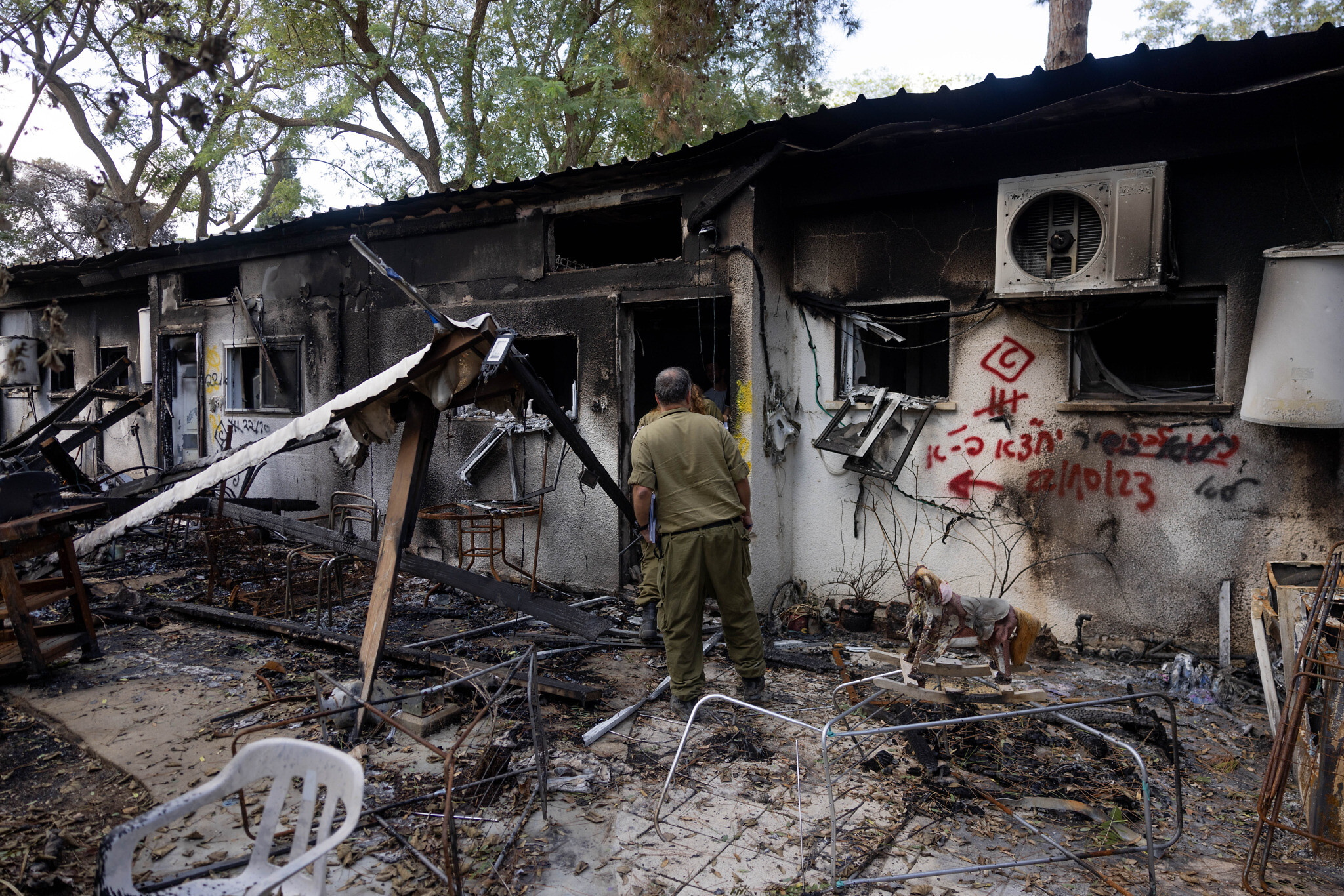
Soldiers walking next to the destruction by Hamas terrorists in Kibbutz Nir Oz on October 7, 2023, in southern Israel, November 21, 2023. (Chaim Goldberg/Flash90)
The government’s bill to establish a political probe into the failures surrounding the October 7, 2023, Hamas attack has been removed from an updated Knesset plenum agenda distributed overnight, despite having been expected until yesterday to pass as part of the coalition’s legislative blitz before the Knesset dissolves on Friday ahead of the October 27 election.
No explanation has been given for the bill’s removal, and it remains unclear whether the coalition intends to revive it before the Knesset adjourns.
The highly controversial bill would give the government, which was in power when the attacks took place, the authority to unilaterally appoint the body investigating its own conduct.
The bill passed its first reading last week. Opposition lawmakers boycotted the vote, arguing that it is intended to shield the government from accountability.
The proposal has drawn fierce criticism from legal experts and bereaved and hostage families, who are demanding instead a state commission of inquiry, Israel’s highest investigative authority, which polls have shown is backed by a majority of the public.
Prime Minister Benjamin Netanyahu has rejected a state commission of inquiry because its members are selected by the judiciary, which he claims is biased against him.
Critics accuse the prime minister — who has never accepted explicit responsibility for the Hamas-led invasion attack and has instead deflected responsibility onto security forces, the judiciary, and political opponents — of seeking the politically appointed probe to shield himself and his government from responsibility.
Israel asks Austrian chancellor to postpone trip as Netanyahu will be at Lindsey Graham’s funeral
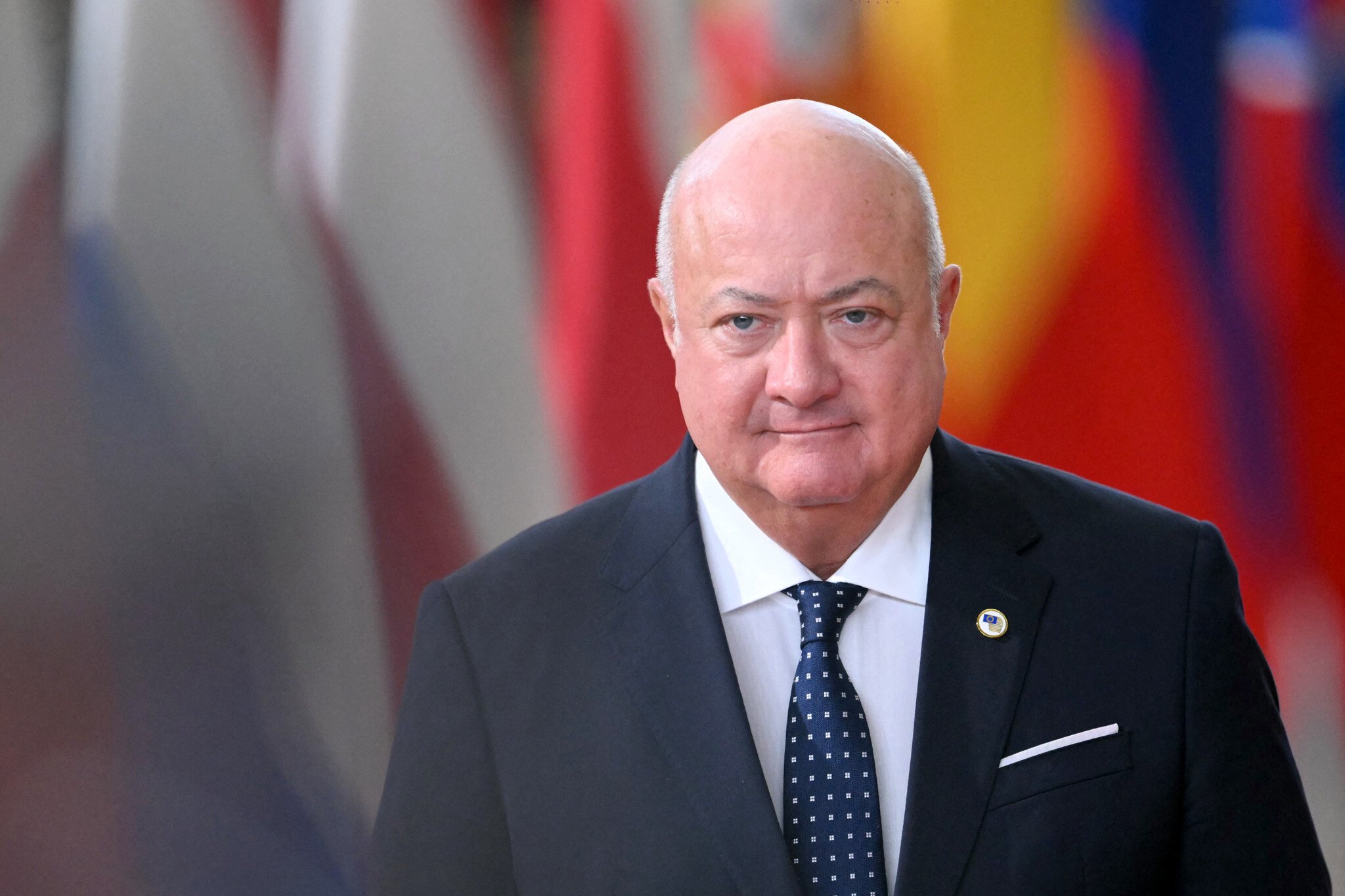
Austria's Chancellor Christian Stocker arrives for a European Council meeting in Brussels on October 23, 2025. (NICOLAS TUCAT / AFP)
Prime Minister Benjamin Netanyahu’s office asked Austrian Chancellor Christian Stocker to postpone his scheduled visit next week, informing Vienna that Netanyahu will be at the funeral service of South Carolina senator Lindsey Graham, The Times of Israel has learned.
Stocker was slated to visit on Tuesday and Wednesday.
Netanyahu’s office is expected to release details of his US trip today.
There has been no formal announcement of the date for Graham’s funeral.
Tzohar says it will continue to supervise kosher food businesses despite new law blocking private certifications
The passage of a law last night restoring the Chief Rabbinate’s exclusive control over kosher certification was a setback for the Tzohar Rabbinical Organization, which had just received authorization to issue its own kashrut certificates.
Despite Tzohar not being legally recognized by the government, hundreds of food businesses currently rely on the group’s certification, which, per the law, doesn’t state that the food is kosher but asserts that the business is being supervised.
The Modern Orthodox organization says it will continue to work to ensure “quality, transparency and halachically based kashrut supervision for the good of the people of Israel,” it says in a statement.
Ever since Israel’s 2021 kashrut reform opened the door for private Orthodox organizations to issue kosher certificates in their own name, Tzohar has worked to get the approvals needed to do so. Earlier this month, the Israeli Chief Rabbinate finally gave its authorization for the first time following a High Court of Justice ruling in June.
But elements within the Rabbinate, the Religious Affairs Ministry, and in Haredi parties have been seeking to defuse the threat to the rabbinate’s monopoly. The law passed yesterday reversed the 2021 ruling that opened the market, giving back to the Rabbinate sole control over what businesses can call themselves kosher.
Following the passage of the law, “Tzohar will continue to strengthen our services, to operate within the full guidelines of the law and halacha and provide certification and supervision services with an uncompromising attention to professional, transparent and trustworthy kashrut,” the organization says in a statement.
Tzohar says it watched the passage of the law “with a sense of deep sadness,” saying it is “detrimental to the very interests of the public and serve only to deepen divisions within our society.”
“There is no doubt that the passage of this kashrut bill by the Knesset is a step in the wrong direction,” Tzohar says. “[But] we continue to reach out to business owners, the rabbinical community and to the people of Israel to join us in this critical effort – to further spread halachic observance and the message that a new path forward will be proven not by words, but through action.”
Lebanon’s Aoun: ‘Washington has started to listen to us’ in Israel talks
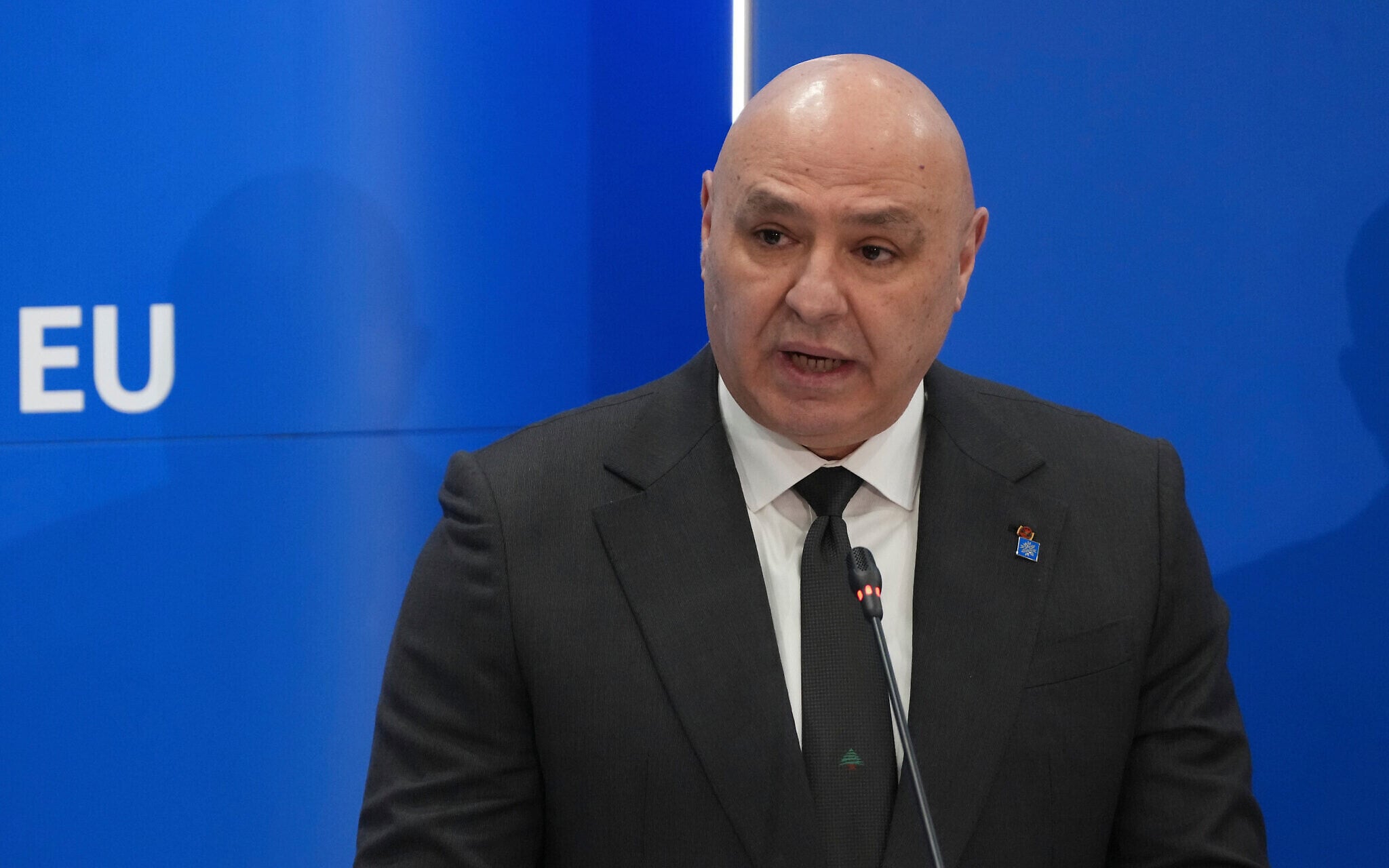
Lebanon's President Joseph Aoun speaks during a press conference after the EU Summit in Nicosia, Cyprus, April 24, 2026. (AP/Petros Karadjias)
US President Donald Trump is listening to Lebanon’s position in talks with Israel, Lebanese President Joseph Aoun tells visiting Christian lawmakers, according to his office.
“The framework formula is the best possible and has begun to yield its effects, and Washington has started to listen to us, with the Lebanese file now on the US president’s table,” says Aoun, according to the readout.
“Our goals are clear, and we will not compromise on matters concerning Lebanon’s rights,” he continues.
Aoun’s comments come as Israeli and Lebanese teams meet for a second day in Rome. The two sides disagree over the pace of the IDF’s withdrawal from two “pilot zones” in which the Lebanese army will assume control and verify the area is clear of Hezbollah weapons, and over the standards with which to measure success.
Hundreds of Haredi men protest at IDF recruitment centers, hours after passage of contentious bill

A protest against Haredi men being drafted into the Israel Defense Forces, in Jerusalem, July 15, 2026. (Chaim Goldberg/Flash90)
Hundreds of Haredi demonstrators are protesting outside army recruitment centers in Tel Hashomer and Jerusalem, where a wave of new ultra-Orthodox IDF recruits have shown up for enlistment today.
In footage of the protest near Tel Hashomer, at least a hundred young men in ultra-Orthodox garb are seen gathered outside the center, some sitting cross-legged on the road as cars honk at them.
Over a dozen demonstrators attempted to break into the recruitment center in Tel Hashomer, the Israel Hayom outlet reports.
According to the daily, some 140 ultra-Orthodox young men are expected to conscript into combat support roles today, sparking anger among extremist anti-draft groups.
In Jerusalem, police officers at the scene have declared the gathering unlawful and are working to disperse the demonstrators, who are chanting against IDF enlistment.
No arrests are reported so far at either protest.
The demonstrations are held a day after the Knesset passed a controversial piece of legislation banning the arrest and prosecution of Haredi draft-dodgers, reinforcing the current reality of mass non-enlistment among the ultra-Orthodox population.
ההפגנה מחוץ ללשכת הגיוס תל השומר בגלל יום גיוס למסלולים החרדים בצה"ל pic.twitter.com/WvPVsmvoaI
— מרדכי הלפרין (@MHlpryn) July 15, 2026
חרדים קיצוניים מפגינים מול לשכת הגיוס בירושלים. (צילום: חנוך פוגל) pic.twitter.com/d3JMSoBtjX
— זירת החדשות (@ZiratNews) July 15, 2026
Report: Lebanon-Israel talks focused on mechanism to verify pilot zones are Hezbollah-free
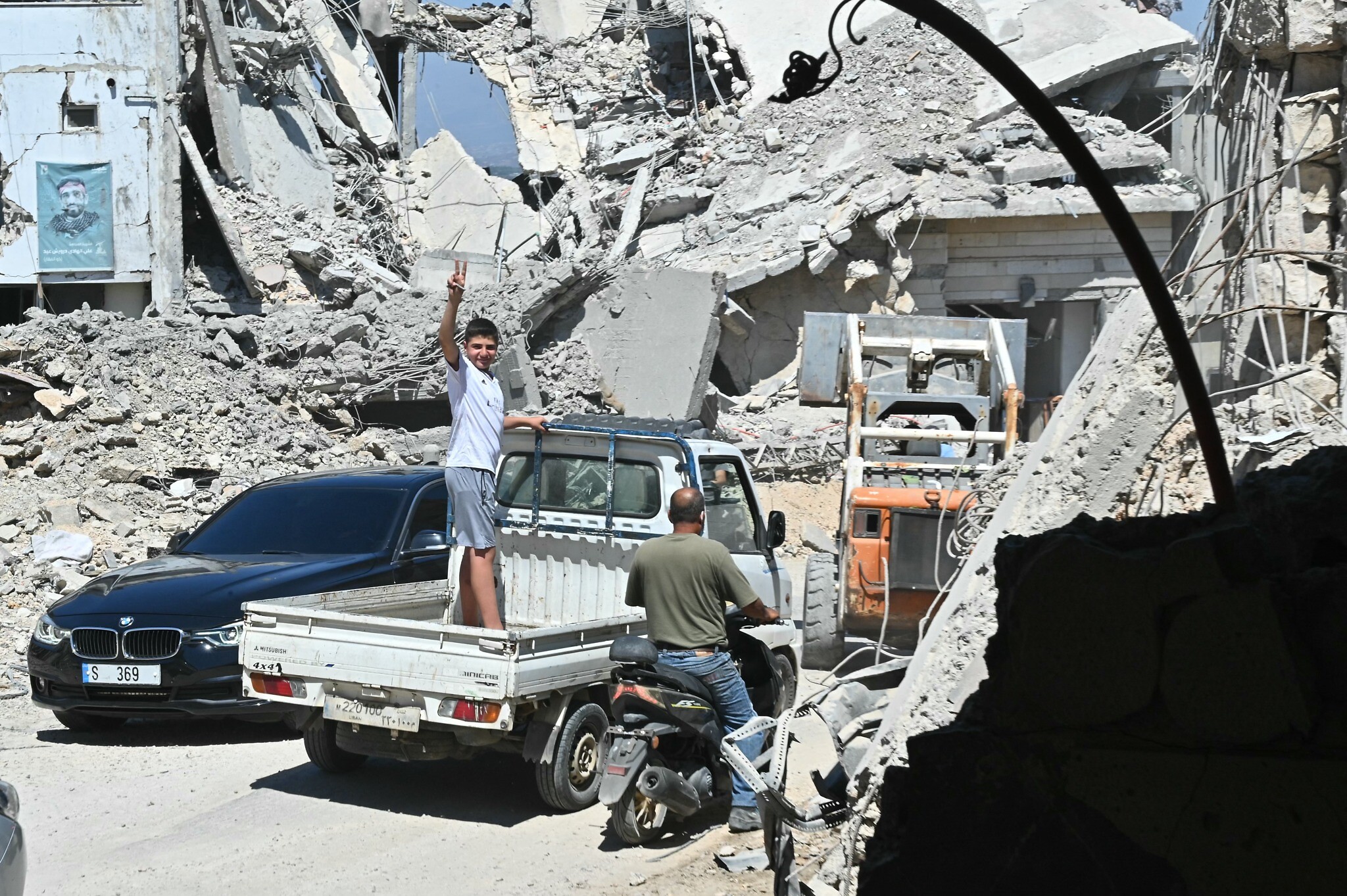
A Lebanese boy flashes the victory sign as he stands in the back of a truck driving past the rubble of destroyed homes and businesses following Israeli military strikes. in the southern Lebanese village of Srifa on June 24, 2026. (FADEL itani / AFP) /
According to Lebanon’s Al Jadeed TV channel, Israel and Lebanon discussed during their meeting in Rome today how to verify that pilot zones under Lebanese army control are free of Hezbollah weapons and fighters.
A third party will verify disarmament, according to the report. No final decision has been reached, though United Nations forces have been brought up as a possibility.
The two sides did not discuss house searches, Lebanese officials tell the outlet.
Lebanon is pushing to start the implementation of the pilot project “as soon as possible,” within a week at the very latest, say the Lebanese sources.
The first pilot zone will include the villages Zatar El-Gharbiyeh, Zatar El-Sharqiya, Ghandouriyeh, Froun, Srifa, and Burj Qalaouiyah, which sit on both the northern and southern banks of the Litani River.
High Court freezes implementation of contentious law banning arrests of Haredi draft-dodgers
A protest against Haredi men being drafted into the Israel Defense Forces, in Jerusalem, July 15, 2026. (Chaim Goldberg/Flash90)
In a dramatic intervention, the High Court of Justice freezes the implementation of a law passed by the Knesset yesterday banning the arrest of ultra-Orthodox draft dodgers.
In response to petitions against the law, the court orders that a hearing on the legislation be held as soon as possible and issues a temporary order preventing the law from coming into effect pending a further decision.
Justice Ofer Grosskopf, who issues the temporary order, also issues a conditional order demanding the government explain why the law should not be struck down, based on previous High Court rulings on the issue and the arguments of petitioners, which he says, have “significant weight.”
Several petitions were filed against the law immediately after its passage, arguing that the legislation was discriminatory since it bans arrests for ultra-Orthodox yeshiva students who have failed to obey conscription orders while allowing arrests for non-Haredi draft-dodgers to continue.
The law — part of a last-minute legislative blitz by the government that addresses, among other things, Haredi demands to ensure blanket draft exemptions for yeshiva students — grants tens of thousands of Haredi draft evaders immunity from arrest until late January 2027, and extends that protection to those who become eligible for military service after it takes effect, effectively eliminating the threat of arrest and making it easier to refuse to enlist during that period. It also suspends ongoing criminal proceedings against those already facing enforcement measures.
On Monday, IDF Chief of Staff Lt. Gen. Eyal Zamir called the proposal “inconceivable,” saying it was “clearly and unequivocally inconsistent with the IDF’s needs” and amounted to “providing mass exemptions from prosecution.”
Some 72,000 ultra-Orthodox men aged 18 to 24 are currently believed to be eligible for military service, but have not enlisted. The IDF has said repeatedly in recent months that it urgently needs 12,000 new recruits amid the ongoing multifront conflict. The law has drawn fierce opposition from reservists, Knesset legal advisers and much of the public.
IDF says it killed Hamas terrorist who abducted bodies of brigade commander, 2 soldiers on Oct. 7
A Hamas terrorist who took part in the abduction of Col. Asaf Hamami, the commander of the Gaza Division’s Southern Brigade, and two of his soldiers, Staff Sgt. Tomer Ahimas and Sgt. Kiril Brodski, during the October 7, 2023, onslaught, was killed in a strike in the Gaza Strip yesterday, the IDF announces.
The strike in southern Gaza killed Hassam Shafai, a member of Hamas’s East Khan Younis Battalion, according to the military.
On October 7, Shafai raided Kibbutz Nirim, where Hamami and his team were killed battling the Hamas invasion, and took part in abducting their bodies.
The military says that Shafai, during the war and recently, advanced attacks and therefore he “posed a threat to our forces operating in the Gaza Strip.”
Hamas returned the body of Hamami in November 2025 as part of a hostage deal. The bodies of Ahimas and Brodski were recovered in military operations in Gaza in 2024.
US completes wave of strikes aimed at curbing Iran’s ability to control Strait of Hormuz
The United States completed a round of strikes targeting coastal defense systems and cruise missile storage and launch sites on Iran’s Greater Tunb Island, Central Command says in a statement.
The 90-minute wave of strikes were aimed at curbing Iran’s ability to attack commercial shipping in the Strait of Hormuz.
PA, Board of Peace officials meet in Brussels, welcome EU initiative for $1 billion Gaza fund
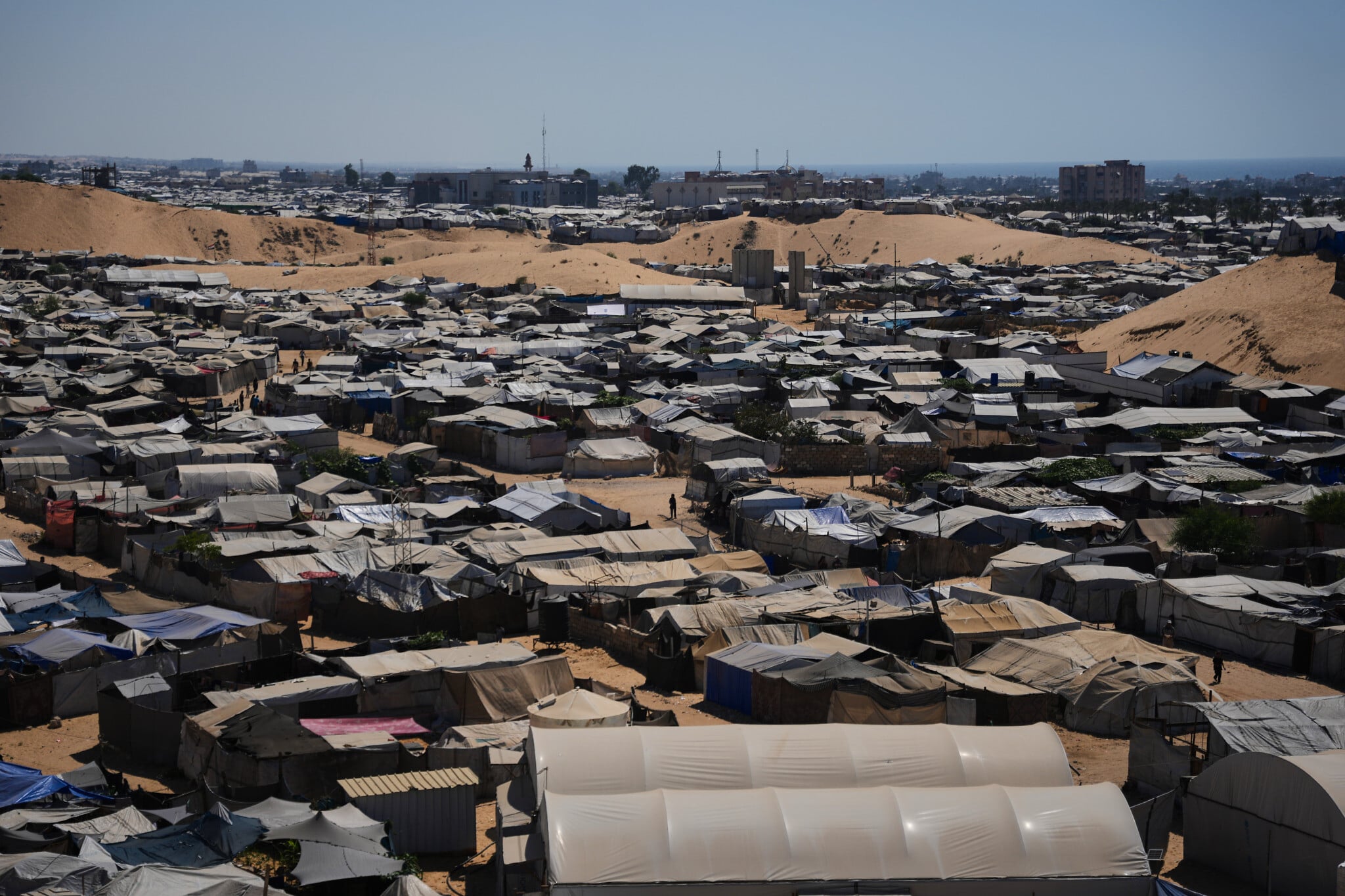
Displaced Palestinians walk between tents where they are taking shelter at a makeshift camp in Khan Younis, southern Gaza Strip, July 1, 2026. (AP Photo/Abdel Kareem Hana)
Senior Palestinian Authority and Board of Peace officials met on the sidelines of a donor gathering in Brussels this week to discuss coordination on Gaza’s recovery and reconstruction, according to a statement from the Board’s technocratic National Committee for the Administration of Gaza.
Palestinian Authority Prime Minister Mohammad Mustafa, Finance Minister Istifan Salameh, and Mustafa’s adviser Omar Awadallah met with Board of Peace High Representative for Gaza Nikolay Mladenov, NCAG head Ali Shaath, and NCAG Finance Commissioner Bashir Al-Rayes and discussed coordinating efforts aimed at “improving humanitarian conditions and preparing the necessary circumstances to initiate the recovery and reconstruction process in the Gaza Strip,” according to the statement.
The committee also welcomes a newly launched European Union initiative expected to provide some $1 billion to support Gaza’s recovery efforts, announced on Monday ahead of the donor meeting, which included over 12 donor nations alongside the European Investment Bank and the World Bank.
Shaath hails the advancement of the “Gaza Team” initiative, which is meant to support the NCAG’s recovery plans for Gaza under US President Donald Trump’s 20-point plan for the Strip.
Board of Peace officials have said that they intend to advance the plan — which has stalled in recent months amid dragged-out talks on Hamas disarmament and continued fighting between Israel and the terror group — even without Hamas agreeing to disarm, by beginning reconstruction only in areas under IDF control.
The United Nations estimates reconstruction in the Strip will take years and require tens of billions of dollars.
Official Press Release
The National Committee for Administration of Gaza (NCAG) Unveils Comprehensive Recovery Programme to Donors at Brussels Conference, Reiterates Unwavering Readiness to Steward the Next Phase
Brussels – Dr. Ali Shaath, Chief Commissioner of NCAG, took part… pic.twitter.com/sWNPowiKYy
— اللجنة الوطنية لإدارة غزة – NCAG (@NCAG) July 15, 2026
Former British PM Johnson visits London Nova exhibition, urges public to go before it closes tonight

Former British prime minister Boris Johnson with released hostage Bar Kuperstein and Nova survivor May Hayat at the Nova Exhibition London, July 14, 2026. (Nova Exhibition London)
Former British prime minister Boris Johnson is urging the public to visit the Nova Exhibition in London before it closes tonight, describing the immersive memorial to victims of the Oct. 7, 2023, Hamas-led attack on the Nova music festival as a necessary reminder of the violence.
Johnson toured the exhibition in Shoreditch with released hostage Bar Kuperstein, Nova survivor May Hayat, and Michael Marlowe, whose son Jake Marlowe, a British citizen, was killed in the attack.
“People should come and see this,” Johnson said. “It’s the bucket of cold water that people need… to understand what happened on October 7th.”
The exhibition has attracted more than 40,000 visitors since opening on May 20, organizers said. It recreates the festival site using original staging, burned vehicles and personal belongings recovered after the attack, in which Hamas-led terrorists killed hundreds of festival-goers and abducted dozens.
London Mayor Sadiq Khan visited the site last week.
Johnson described the attack as “entirely calculated” and “sickening and evil,” saying the exhibition helps visitors grasp “the sheer naked cruelty” of the assault.
Reflecting on the rise in antisemitism since the attack, Johnson called anti-Jewish sentiment “a virus in the human bloodstream” that had reemerged and said people needed to understand “the madness that’s going on in the West right now.”
As White House remains mum, Israeli official says PM likely to meet Trump on Monday
Prime Minister Benjamin Netanyahu will take off on Saturday night for his US trip, an Israeli official tells The Times of Israel.
He will likely meet US President Donald Trump at the White House on Monday, July 20, according to the official, but that has not been finalized and the White House has not announced any meeting.
Netanyahu will then attend a memorial service for the late senator Lindsey Graham on Tuesday, the Israeli official says.
Graham’s family has not yet announced a date for his funeral or any memorial services.
According to Walla, Netanyahu is eager to meet with Trump before Lebanese President Joseph Aoun, who will be at the White House on Tuesday.
Aoun has refused to engage with Netanyahu as long as Israeli troops are still in Lebanon.
Knesset panel advances bill recognizing combat PTSD to plenum for final votes
The Knesset House Committee unanimously approves legislation formally recognizing combat-related PTSD in law and establishing a statutory committee to provide exceptional assistance to disabled veterans and, in certain cases, their family members, paving the way for a final vote in the plenum.
Sponsored by coalition and opposition lawmakers, the bill passed its first reading unanimously, 61-0, in the plenum last night and has been fast-tracked with broad bipartisan backing.
“This law achieves historic justice by defining the term ‘combat PTSD’ in legislation for the first time,” says Otzma Yehudit MK Yitzhak Kroizer, who co-sponsored the legislation. He adds that the newly established committee “will provide a humanitarian, life-saving safety net for even the most complex combat PTSD cases and for their families.”
Knesset legal adviser Sagit Afik stresses that the measure is not merely declarative, saying it creates an operative obligation to provide care.
The legislation would define those with “combat-related PTSD” in the Disabled Veterans Law for the first time, require the Defense Ministry’s Rehabilitation Department to provide treatment specifically tailored to them, and place the committee for exceptional assistance on a statutory footing.
According to the Defense Ministry, implementing the legislation is expected to cost NIS 44 million (about $13.1 million) and require 37 additional staff positions. The committee approved the funding package, earmarking NIS 12 million (about $3.6 million) specifically for the new committee, along with two additional staff positions.
While combat veterans in attendance express thanks, they also note that there is more to do, with one named Uriah saying the bill amounts to “a tiny fraction of what these people deserve.”
The coalition has simultaneously passed in recent days a series of controversial laws shielding ultra-Orthodox men from military service, including halting the arrests of draft dodgers, and a Basic Law declaring Torah study a foundational value, even as Israel remains engaged in a prolonged multifront war during which the IDF has repeatedly warned of severe manpower shortages and the number of soldiers suffering physical and psychological injuries, including PTSD, has skyrocketed.
Jewish school enrollment in Diaspora said to rise amid uptick in antisemitism
In the face of rising antisemitism, enrollment in Jewish schools is growing across much of the Diaspora, according to new data released by the Yael Foundation.
Of the 145 Jewish educational institutions the organizations supports in more than 45 countries, 52% have seen enrollment numbers rise, while 26% maintained stable student numbers, the report says.
The findings indicate that many Jewish families are responding to the challenges that followed the Hamas attack of October 7, 2023 by placing greater emphasis on Jewish education and identity, the foundation says.
“The story of Jewish education today is far more hopeful than many people realize,” says Yael Foundation CEO Chaya Yosovich.
Growth is reported in major Jewish population centers like France, Germany and Brazil, as well as in smaller and often overlooked Jewish communities including Estonia, Georgia, Kyrgyzstan, Norway, and Portugal, the report noted.
In France, none of the 23 schools in Yael’s network reported declining enrollment, and several have waiting lists. And more than half of the schools it considers at risk, including several in wartime Ukraine, maintained or increased enrollment, the foundation said.
“Parents are making a conscious decision to invest more deeply in their children’s Jewish identity through education,” Yosovich says. “That tells us Jewish education has become a source of confidence, resilience and continuity.”
Coalition politicians call on police to disobey High Court freeze on Haredi arrest ban
Communications Minister Shlomo Karhi calls for the government and the police to ignore the High Court of Justice order freezing implementation of a law banning the arrest of ultra-Orthodox draft dodgers.
“An order that cancels or ‘suspends’ a law has no legal validity. There is no legal source of authority for such an action. One must not obey lawbreakers,” says Karhi, seemingly denying entirely the authority of the High Court to conduct judicial review on legislation.
“Law enforcement authorities in the State of Israel must obey the law,” he adds, in an apparent call for the police not to conduct arrests of Haredi draft-dodgers in line with the legislation.
MK Meir Porush of the Haredi United Torah Judaism party makes similar comments, saying that the court ruling is “not legal” and adding that “any policeman or soldier who arrests or cooperates with the arrest of Torah students is breaking the law.”
Shas chairman MK Aryeh Deri also denounces the court, saying the justices were “drunk with the power of judicial activism.” He also claimed that the law was designed to provide time for “agreement within Israeli society” over ultra-Orthodox enlistment.
Deri and other Haredi political leaders have, however, repeatedly insisted in recent months and years that yeshiva students should not be obligated to perform military service, and have worked to pass legislation to that effect.
Religious Zionism minister announces he won’t run in upcoming election
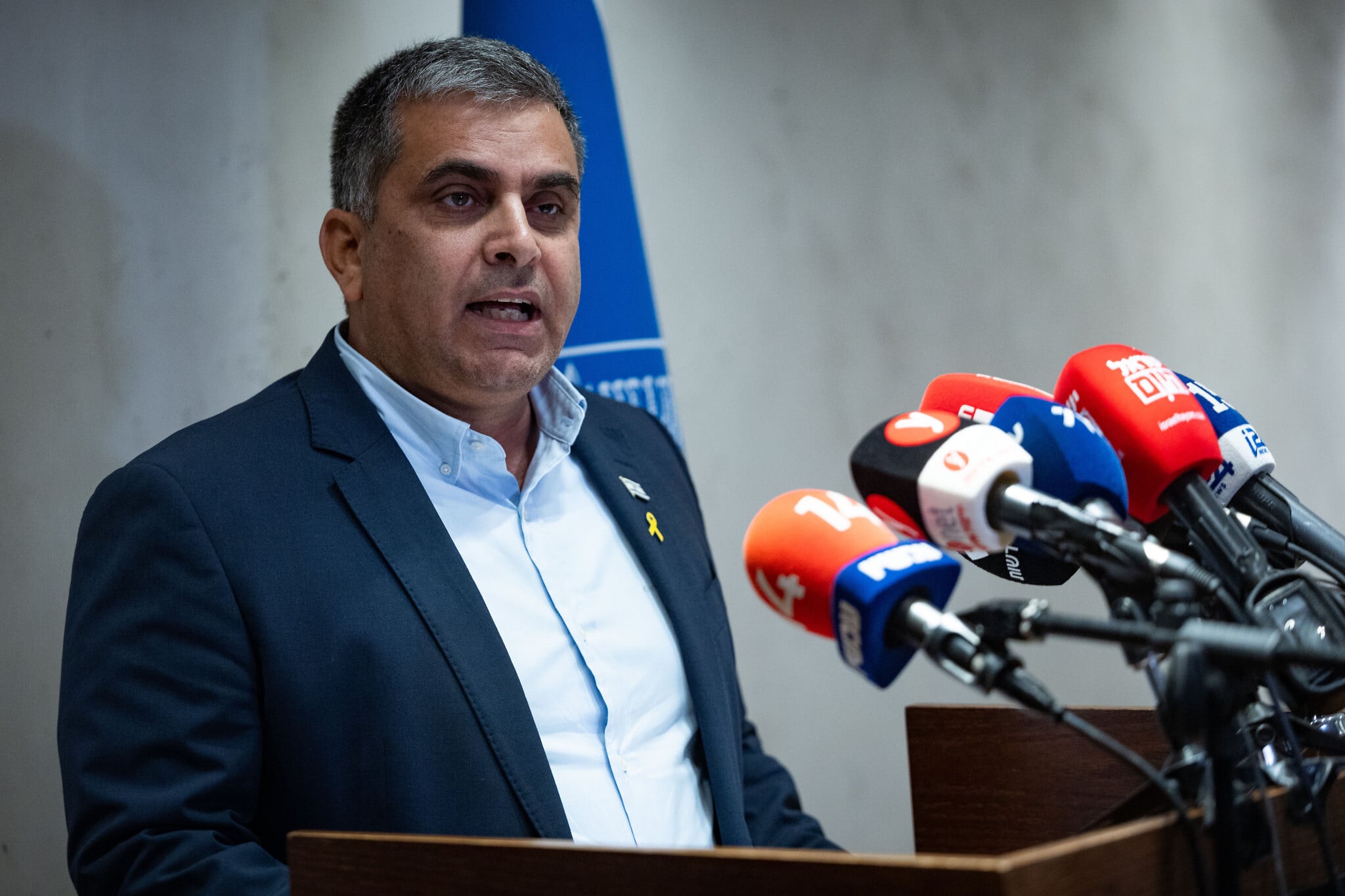
Immigration and Absorption Minister Ofir Sofer holds a press conference at the Knesset in Jerusalem, December 1, 2025. (Yonatan Sindel/Flash90)
Immigration and Absorption Minister Ofir Sofer from the far-right Religious Zionism party announces that he will not run in the upcoming parliamentary election.
“The State of Israel must continue to fortify its security, and erect a solid, cast-iron wall, but also one that is based on values and unity,” he says in a statement, appearing to knock the coalition’s recent efforts to exempt ultra-Orthodox yeshiva students from military service.
Lebanon talks in Rome wrap up without specific timeline on implementation of pledged IDF withdrawals
US-brokered talks between Israel and Lebanon have wrapped up in Rome, with a State Department spokesperson calling this round’s two days of discussions “productive and positive.”
However, an exact timeline for when Israel will fulfill its pledges to withdraw from two small pilot zones in south Lebanon has still not been offered.
“We agreed on the structure and guidelines for the pilot zone process, to be finalized and implemented in the coming days,” the State Department spokesperson says.
Israel agreed to withdraw from two pilot zones as part of the framework deal inked with Lebanon three weeks ago. Jerusalem described the withdrawals as a very minor concession given that the pilot zones are located in areas beyond the original buffer zone that the IDF had established in southern Lebanon.
IDF officials have said that while they are ready to implement the withdrawal, they have yet to receive a directive from the political leadership. Lebanese officials accused Israel of dragging its feet and threatened not to attend the talks in Rome this week.
However, the US convinced Beirut to back down from the threat, pledging progress on the Israeli withdrawals.
The Israeli readout on this week’s talks in Rome addresses the issue generally, saying: “The two pilot zones in question were agreed upon. Any further implementation of pilot zones is contingent on the successful implementation of the initial pilot program.”
“The pilot zones will serve to test the successful expression of Lebanese sovereignty through the implementation of agreed upon conditions by the Lebanese armed forces and verification by a third party,” states the readout attributed to an Israeli official, who adds that the United Nations Interim Force in Lebanon (UNIFIL) and the UN Truce Supervision Organization (UNTSO) “were not discussed and will not be part of any verification model.”
“With respect to private property, discussions continue to be underway for a solution which will facilitate the removal of contraband weapons while Lebanese law is respected,” the Israeli official says.
The Israeli official also calls this week’s talks “positive,” saying that they “further reinforced that Israel and Lebanon are in agreement on the need to dismantle and disarm Hezbollah and to continue in the process to implement the trilateral framework agreement.”
The State Department spokesperson says that the sides will “now move to expanded technical talks, which will focus on implementing all areas of the trilateral framework with the aim of reaching a comprehensive agreement between Israel and Lebanon.”
Lebanese President Joseph Aoun is slated to meet US President Donald Trump on Tuesday. The White House has in the past pushed Aoun to meet with Prime Minister Benjamin Netanyahu, who is also slated to be in the US next week.
But Aoun has rebuffed those offers due to the IDF’s continued presence in his country, with the dragged-out implementation of pledged withdrawals from two small pilot zones deep in south Lebanon unlikely to shift his position.
Transportation Ministry said discussing ways to thwart arrival of anti-Netanyahu voters ahead of Oct. election
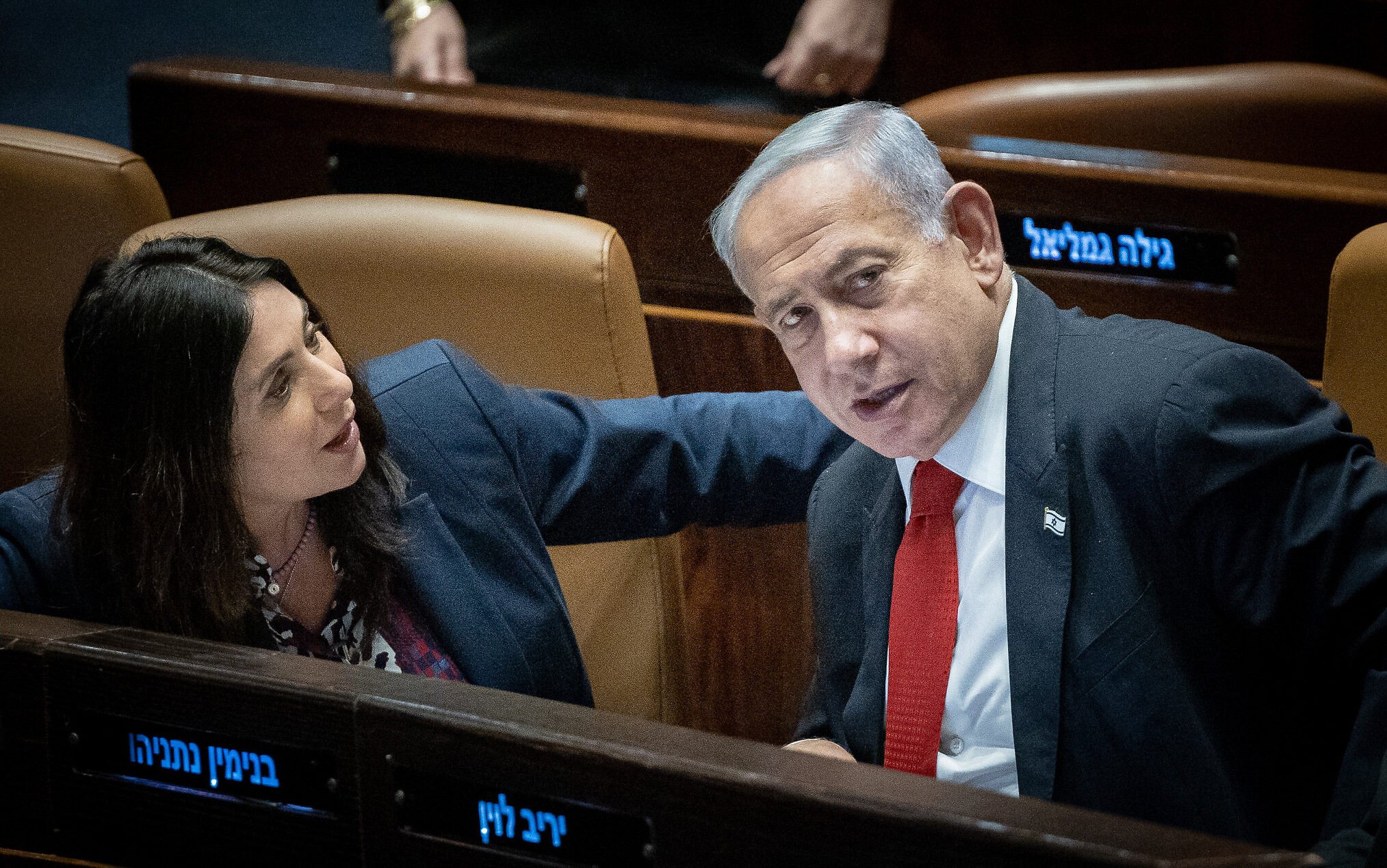
Prime Minister Benjamin Netanyahu (right) and Transportation Minister Miri Regev at the Knesset on February 20, 2023. (Yonatan Sindel/Flash90)
Senior officials in Likud Transportation Minister Miri Regev’s office are reportedly discussing ways to limit the number of flights coming into Ben Gurion Airport in the days leading up to the October 27 elections in order to thwart the arrival of voters for parties opposed to Prime Minister Benjamin Netanyahu.
The effort comes against the backdrop of several initiatives working to help fly Israelis in for the election. The initiatives are nonpartisan, but Regev’s associates believe that those seeking to take advantage of the opportunity are overwhelmingly opposed to Netanyahu and could number in the tens of thousands.
The politically motivated conversations have disturbed Transportation Ministry bureaucrats, a source closely familiar with the matter tells Haaretz.
Ideas discussed have included preventing charter flights from landing at Ben Gurion — or at least limited the number of them, two senior sources say.
Regev’s associates have also noted the continued presence of US military refueling planes at Ben Gurion Airport, which have taken parking spots away from other planes.
While Israel has managed to limit the number of planes to 20, they may well still be parked at Ben Gurion Airport in October, given that US President Donald Trump could decide to wait to authorize a major strike against Iran until after the November 3 midterms.
Parking spots are prioritized for Israeli airlines, followed by foreign airlines and only then charter flights, which are expected to be the main method of transportation used by those seeking to help Israelis fly back for the election. Those flights are not slated to be free, though.
The Transportation Ministry did not respond to Haaretz’s request for comment on the matter.
US says it issued sanctions to disrupt Iran’s weapon procurement
The US government has issued sanctions targeting individuals and entities that it said were a part of an international network helping Iran procure weapons.
The sanction targets include Iranian and Russian nationals, as well as entities bases in Iran, Russia and Nigeria, the US Treasury Department said in a statement.
The move comes amid heightened tensions between Washington and Tehran, including recent hostilities over control of the Strait of Hormuz, and as the Trump administration ramps up pressure on Iran through a series of sanctions measures.
Wednesday’s sanctions targets “exemplify Iran’s use of foreign aviation and transport firms, financial conduits, and travel coordinators to obscure the IRGC’s role in illicit procurement and to move material and personnel globally,” the Treasury says in a statement.
They add to US actions in May against individuals and companies, including several in China and Hong Kong, over accusations of aiding Iran’s weapons sector. In June, the US imposed sanctions against 11 people and entities for helping weapons procurement by Iran’s Islamic Revolutionary Guard Corps (IRGC) and the Iranian military.
Morocco signs agreement advancing eventual deployment of troops in Gaza
Morocco has signed an agreement to participate in the International Stabilization Force (ISF) for Gaza, state media reports.
The agreement was signed in Rabat at a meeting attended by Moroccan Foreign Minister Nasser Bourita, senior defense officials and Board of Peace envoy for Gaza Nickolay Mladenov, and with a delegation including the commander of the ISF, the state news agency MAP says.
The agreement “reflects the shared determination to contribute, through concrete humanitarian and security actions, to the establishment of a climate of peace and security in the region,” MAP quoted a statement from the Moroccan defense administration as saying.
The Board of Peace and ISF leadership welcomed Morocco’s decision to join the initiative, citing its planned deployment of senior military officers, gendarmerie and police personnel, as well as the creation of a military field hospital, MAP says.
Morocco has been listed among ISF contributing countries since January, so today’s agreement appears to be more of a formality.
Morocco today formally signed its Participating Country Agreement with the International Stabilization Force. Moroccan forces will support humanitarian aid delivery to Gaza and help train the Palestinian Police Force. The Board of Peace and the #ISF thank His Majesty King… pic.twitter.com/FKE1ILWKCY
— Board of Peace (@BoardOfPeace) July 15, 2026
While three other countries — Albania, Kazakhstan and Kosovo — have also agreed to contribute troops to the ISF — Morocco is slated to be the first of them to actually deploy troops in Gaza, officials familiar with the Board of Peace’s plans have told The Times of Israel.
The Board of Peace envisions Moroccan troops will be tasked with securing the borders of a humanitarian pilot zone that the Board of Peace aims to establish in the area of the flattened southern Gaza city of Rafah, the officials said.
But there is no timeline for when construction of that humanitarian zone will actually begin, with a senior Arab official familiar with the matter saying no major progress is expected until after the October Israeli elections, since Prime Minister Benjamin Netanyahu’s government has become increasingly reticent to cooperate with any Gaza relief projects as the vote approaches.
Among the steps that Israel has dragged its feet on advancing has been the signing of Status of Forces Agreement (SOFA) with each ISF contributing country in order to establish the legal guardrails of foreign military personnel stationed abroad. ISF troops can’t deploy without those agreements being signed.
Another source familiar with the matter said ground is unlikely to break on the humanitarian pilot zone until early 2027, meaning the ISF won’t deploy before then regardless.
In the meantime, small delegations from ISF contributing countries are arriving to Israel and operating out of a base in the country’s south.
Reuters contributed to this report.
Peace Now: Netanyahu, Smotrich shackling next gov’t with commitments to further expand settlements
The Peace Now settlement watchdog blasts a new government plan to invest around $2.7 billion in infrastructure and thousands of new residential units across several settlements in the West Bank.
Peace Now accuses the government of squandering public funds and entrenching Israel’s control over Palestinians in the West Bank.
“Umbrella agreements are used for the rapid development of large-scale projects,” Peace Now’s Hagit Ofran tells AFP.
“From the government’s perspective, it is a double win: unbridled construction in the settlements, along with shackling the next government to commitments that will make it difficult to roll back this terrible government’s reckless policy.”
Earlier this week, Netanyahu and far-right Finance Minister Bezalel Smotrich signed an umbrella agreement to invest in settlements in the norther West Bank.
“This is another significant step in the settlement revolution we are leading in Judea and Samaria,” Smotrich said on X, using the biblical name for the West Bank.
“As part of the agreement, approximately 12,000 new housing units will be established, alongside an investment of more than eight billion ILS (approximately $ 2.7 billion) in infrastructure, public institutions and settlement development.”
Netanyahu hailed the agreement.
“Not only do we defend this place, we elevate it,” he said.
Israel’s annual inflation drops to five-year low — statistics bureau
Israel’s annual inflation retreated to a five-year low, led by seasonal declines in the costs of fresh fruit and vegetables, clothing, and petrol prices, data released by the Central Bureau of Statistics shows.
Annual inflation over the past 12 months decelerated to 1.6% from 1.9% in May. The rate is the lowest since May 2021 and is hovering around the middle of the government’s annual target range of between 1% to 3%.
On a monthly basis, the consumer price index (CPI), a measure of inflation that tracks the average cost of household goods, in June was little changed, compared to analysts’ expectations for a decline of 0.1% or no change.
In June, reductions were seen in the prices of fresh fruit and vegetables, which fell 5.2%, petrol dropped 3.1%, clothing and footwear were down 2.7%, and transportation costs retreated 0.7%. Expenses for travel abroad slipped 1.6%.
These were offset by increases in the cost of culture and entertainment, which rose by 1%, housing increased by 0.7%, and health by 0.6%.
Rents on renewal of real estate contracts jumped 2.6% in June, and rents on contracts for new tenants surged 6.6%.
Neo-Nazi provocateur extradited from Czech Republic to Germany

Marla-Svenja Liebich (C), a convicted German far-right extremist and neo-Nazi formerly known as Sven Liebich, is escorted by Czech prison service to the Regional court on May 18, 2026 in Pilsen, Czech Republic, where Liebich was waiting for a court decision to decide on extradition to Germany. (Michal Cizek/AFP)
A neo-Nazi provocateur has been extradited from the Czech Republic to Germany and sent to a women’s prison, despite being suspected of abusing German gender self-identification laws.
Marla-Svenja Liebich — who used to go by the name of Sven before registering a new identity as a woman — was transferred to a women’s prison in the eastern city of Chemnitz, Benedikt Bernzen from the local prosecutors’ office told AFP.
Liebich had been “co-operative,” Bernzen says, adding that the management of the prison was now “considering how to implement the sentence”.
Liebich, 55, has been a high-profile figure in eastern Germany’s right-wing extremist scene for decades.
Liebich disappeared last August after failing to show up at a women’s prison in Germany to serve a sentence of one and a half years for offenses including incitement to racial hatred and slander.
In early April, Liebich was arrested in the western Czech Republic under a European arrest warrant.
The Czech courts threw out Liebich’s attempts to stop the extradition.
In late 2024, Liebich registered as a woman, following a reform that made it easier for people to change their legal gender.
The move was widely seen as intended to mock Germany’s Self-Determination Act, introduced in November 2024, and sparked debate over the potential for the new law’s abuse.
In 2022, Liebich disrupted an LGBTQ pride parade in the German city of Halle, calling the participants “parasites on society,” according to activists.
After coming to office last year, Germany’s current government of conservative Chancellor Friedrich Merz said that it would review the Self-Determination Act.
Some ships refusing US-military guided Hormuz transits after attacks, sources say
Shipping companies are avoiding using a US military-guided transit scheme through the Strait of Hormuz after a wave of Iranian attacks on vessels sparked safety concerns, seven maritime security and shipping industry sources say.
For decades, ships sailed into and out of the Gulf using a safe set of lanes down the middle of the strait established by the UN’s shipping agency in 1968, dubbed the Traffic Separation Scheme.
Since the Iran war began on February 28, Iranian forces have reportedly mined this area, forcing vessels to use one of two makeshift routes close to either the Iranian or Omani coast.
In June, Reuters reported that the US military had helped vessels through as part of an operation involving scores of secretive ship-to-ship oil transfers to keep Gulf energy exports flowing, using aerial and water drones as well as helicopters to guide tankers.
The US-assisted initiative enabled the export of tens of millions of barrels of oil, helping dampen the impact on energy prices of the largest-ever disruption in oil and gas supplies.
Yet shippers are evaluating the route on the Omani side of the strait as increasingly dangerous after a wave of attacks on ships.
Some five ships have been attacked since July 7 – three crude supertankers, one LNG tanker and one container ship – in Omani waters that fell under the US scheme, according to analysis of incidents based on data from the UN’s shipping agency.
It is unclear if all the ships were sailing under the US scheme, the sources say.
“The US doesn’t seem to have any control over the situation,” one shipping source says, adding that their company had opted not to sail through the strait due to crew safety concerns and the deteriorating security situation.
“Iran’s continued ability to target ships sailing through the Omani route means the Trump administration’s proposed solution to keep ships moving is unlikely to work,” says Torbjorn Solvedt, principal Middle East analyst with risk intelligence company Verisk Maplecroft.
White House weighs extending sanctions waivers as Iran conflict raises price concerns
The White House is weighing another extension of waivers allowing foreign ships to transport goods between US ports as renewed conflict with Iran raises concerns about energy prices and supply disruptions, according to two sources familiar with the discussions.
The Trump administration is considering whether to extend the waivers with geographic restrictions, limiting where foreign-flagged vessels can transport goods between US ports, as officials seek to preserve a tool they say has helped ease supply pressures while addressing criticism from maritime industry groups and Republican allies.
The White House, along with the Energy, Transportation and Interior departments, met earlier this week to weigh options ahead of a potential decision before the end of July, sources say.
A White House official says that no decision has been made on whether to issue a third waiver extension, noting the current waiver doesn’t expire until August 16.
“President Trump’s decisive action to waive the Jones Act has helped prevent supply chain shortages across the country. The Administration is regularly monitoring how the waiver is being used,” the official says.
Sa’ar taps New Hope MK Michel Buskila as deputy FM after Haskel’s resignation
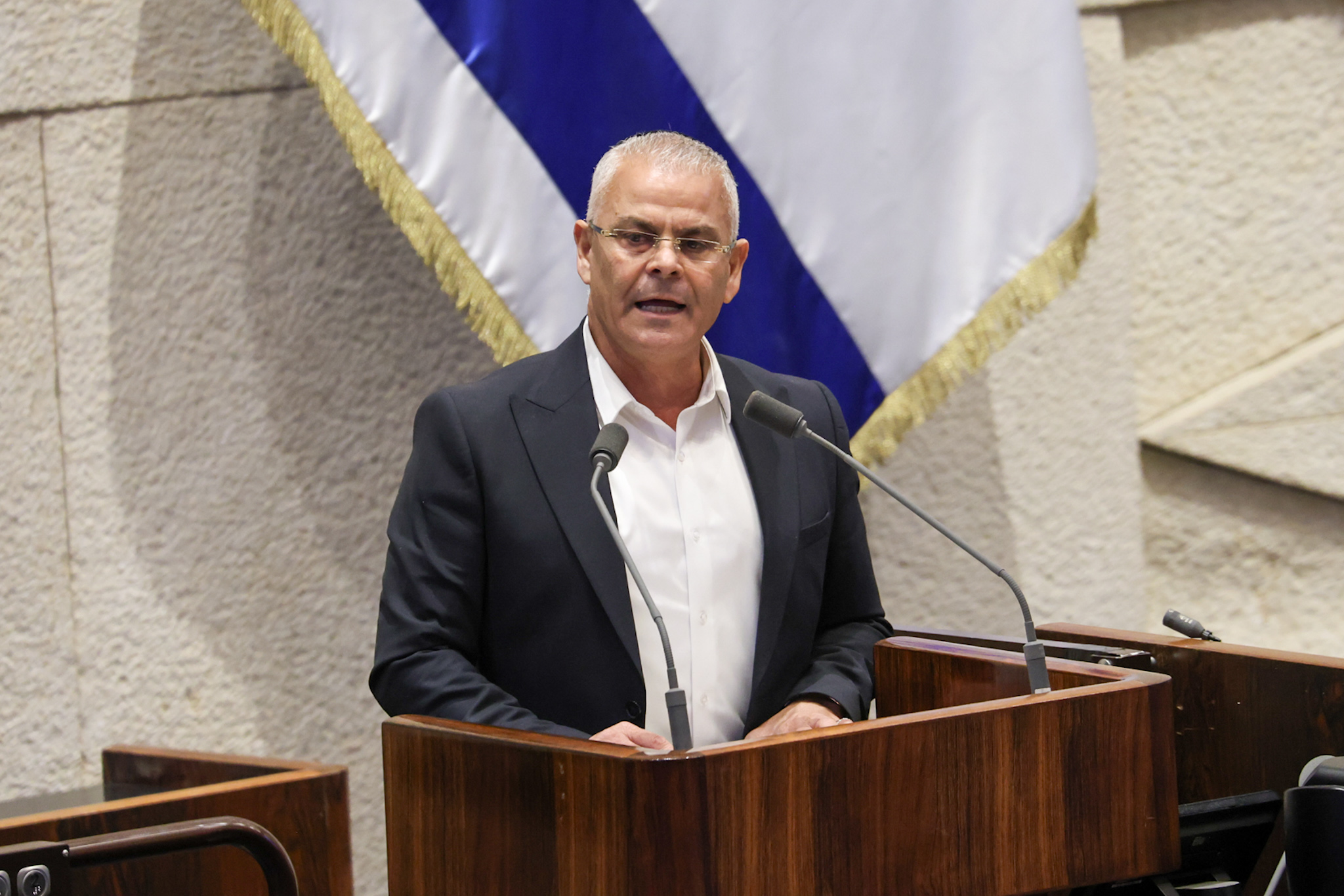
New Hope MK Michel Buskila in the Knesset, October 29, 2025. (Dani Shem-Tov/ Office of the Knesset Spokesperson)
Foreign Minister Gideon Sa’ar nominates MK Michel Buskila as the new deputy foreign minister, after Sharren Haskel announced her resignation from the post in protest of the Knesset passing a law banning the arrest and prosecution of Haredi draft dodgers.
Buskila, like Haskel, is a member of Sa’ar’s center-right New Hope party, which reunited with Likud last year. He currently serves as deputy Knesset speaker, a member of the Knesset Foreign Affairs and Defense Committee, and chair of its Subcommittee on Foreign Policy and Public Diplomacy.
According to a statement from Sa’ar’s office, the nomination will be brought before the government for approval in a telephone vote this evening and, if approved, will take effect tomorrow evening following the completion of a mandatory 48-hour waiting period after Haskel’s resignation.
Under Israeli law, Buskila will formally assume office once his appointment is announced in the Knesset.
Gafni threatens to pull support for AG bill at last minute, possibly tanking its passage
United Torah Judaism MK and Degel HaTorah faction leader Moshe Gafni is reportedly threatening to withhold support for the coalition’s bill weakening the role of the attorney general unless the government first approves tens of millions of shekels in additional funding for daycare teachers in the Haredi school system.
The bill is currently being debated in the Knesset and is expected to come to a final vote shortly. If Gafni follows through on his threat, the coalition may not have a majority to pass the legislation.
The ultimatum comes despite the coalition having already passed the ultra-Orthodox parties’ key demands this week – including laws halting the arrest of Haredi draft dodgers and a Basic Law for Torah study – under a coalition deal in exchange for Haredi support for the government’s legislation, including the current bill.
In a blistering response, Finance Minister Bezalel Smotrich’s Religious Zionism party, which is promoting the legislation, accuses Gafni of effectively siding with Attorney General Gali Baharav-Miara, declaring that she “should send a bouquet of flowers to Moshe Gafni” because he is “granting her immunity” and preserving her “judicial dictatorship.”
The party warns that if Gafni and his colleagues sink the bill, “they won’t be able to show their faces in the Haredi street,” adding: “They shouldn’t make threats.”
The legislation would effectively strip the attorney general of authority over the government by allowing ministers to disregard the currently binding legal opinions and decide for themselves whether their actions are lawful.
It has been fiercely opposed by opposition lawmakers, good-governance watchdogs and Baharav-Miara herself, with critics arguing that the government is seeking to remove one of the few remaining checks on executive power to advance legislation and policies that would otherwise be blocked as unlawful, without proposing any alternative safeguards.
Israeli reportedly carries out strike inside of its buffer zone in southern Lebanon
Lebanese media reports an Israeli strike between the towns of Kounine and Beit Yahoun in southern Lebanon.
Both towns are located inside Israel’s south Lebanon buffer zone.
There is no immediate comment from the IDF.
مراسل الميادين:
⭕غارة إسرائيلية معادية تستهدف حرج بلدة كونين في قضاء بنت جبيل جنوبي لبنان.#الميادين_لبنان pic.twitter.com/a8YhVZXc0E
— الميادين لبنان (@mayadeenlebanon) July 15, 2026
Trump indicates he initially thought regime change was possible in Iran before he changed his tune
US President Donald Trump indicates that he initially thought regime change was possible in Iran.
In his February 28 speech announcing the launch of the US-Israeli war against Iran, Trump called on Iranians to take over their government when the bombing subsides.
Trump is asked in a Fox News interview whether he thought regime change was possible at the time.
“Yeah I did. If they had guns, if they had weapons…I had no idea that they’d be willing to kill 52,000 or even any people,” Trump claims.
That speech was given after Iran had already mowed down thousands of protesters in the weeks leading up to the war.
Fox News: "When you made those remarks, did you believe regime change was possible at that time?"
President Trump: "Yeah I did. If they had guns, if they had weapons…I had no idea that they'd be willing to kill 52,000 or even any people." pic.twitter.com/fV0sYHnr0x
— Trey Yingst (@TreyYingst) July 15, 2026
Trump has separately blamed Kurdish fighters in Iraq for holding on to the weapons that had reportedly been supplied to them by Israel for use in a cross-border attack against Iranian regime forces.
Israel also reportedly sought to recruit former Iranian president Mahmoud Ahmadinejad as part of its regime change plan that went badly awry.
Trump backed away from his encouragement of anti-government protests in Iran within days of the war’s launching, asserting that dissidents are outmatched given that they don’t have weapons.
He instead has taken to claiming that he has actually achieved regime change in Iran by taking out many of the countries leaders in the war, even though the regime itself is still standing and in some accounts has been strengthened.
US military denies striking civilian wheat storage facility in Iran
The US military denies that its forces struck a civilian wheat storage facility in Iran on Tuesday and said Iranian military targets were struck to degrade Tehran’s ability to attack commercial shipping in the Strait of Hormuz.
Signs for gender-segregated streets in Bnei Brak reportedly removed after uproar
Signs in Bnei Brak dividing passages in certain streets by gender have been removed following pushback over the initiative, Hebrew media say.
The signs had gone up earlier this week after reports that the Bnei Brak municipality is working to establish gender-segregated sidewalks inside the largely ultra-Orthodox city.
אחרי סערת שלטי ההפרדה בבני ברק: הוסרו השלטים שהורו על הפרדה מגדרית | @aronkalman1
צילום: דוד קשת / ידיעות בני ברק pic.twitter.com/k67yDQpyXq— i24NEWS (@i24NEWS_HE) July 15, 2026
Coalition advances bill to remove ballot boxes from assisted-living facilities where voters lean against PM
The Knesset Constitution, Law and Justice Committee approves for second and third readings legislation governing October’s Knesset election after voting to end the placement of polling booths in elderly living facilities, a move the opposition has denounced as naked partisan politics.
The measure would affect between 35,000 and 37,000 people – about one Knesset seat’s worth – committee member Oded Forer, whose hawkish-secularist Yisrael Beytenu party is seen as likely to suffer from the removal of the polling booths.
It refers to people living in retirement or assisted-living facilities – not in nursing homes, where mobile booths have long been stationed like those in hospitals.
“This is a jarring final note for this Knesset term. For years, election laws were passed with broad agreement. Unfortunately, we are forced to vote against this bill because you refused to ensure accessible and fair elections for every citizen,” says Yesh Atid MK and committee member Karin Elharrar.
The push to do away with the polling booths that were stationed in old-age homes in the last two elections came even as the coalition sought to expand voting for an estimated 200 people who are performing national service abroad and seen as more likely to support the coalition, which was ultimately omitted from the final draft of the legislation.
The bill, which could receive its final readings in the plenum as early as tonight, also includes a new transparency requirement for campaign materials created or substantially altered using artificial intelligence in a way that could mislead voters to be clearly labeled, in an effort to combat AI-generated political disinformation ahead of the October 27 election.
Dozens arrested in Egypt for joining opposition group’s online platform
Egyptian authorities have arrested about 60 people for joining a political opposition group on the online platform Discord, a lawyer with a rights group handling some of the cases tells AFP.
Detainees have over the past two months been charged with joining a terrorist group, spreading false news and misusing social media platforms, says Shorouk Sallam, the head of the legal unit at the Egyptian Front for Human Rights.
“Arrests began at the end of last year, but starting mid-May, the pace has picked up, and now 60 people have been arrested,” she says.
Those arrested had joined a Discord server known as GenZ002, which was “founded by an Egyptian dissident living abroad, Anas Habib, as part of a campaign in which he calls on Egyptians to express their opposition through methods such as graffiti or distributing pamphlets.”
He has also launched an online poll to “remove (President Abdel-Fattah) el-Sissi.”
The Netherlands-based Habib was arrested twice last year, first in Amsterdam for an alleged assault on the Egyptian embassy, and then in Brussels for an alleged threat against Sissi during a visit.
Discord, popular among young internet users, was temporarily blocked in Egypt earlier this year.
It played a pivotal role in Gen Z protests that swept Nepal and Morocco last year, and according to its website has been banned in Iran, the United Arab Emirates, Oman, North Korea and China.
Cairo is frequently criticized over human rights violations and threats to freedom of expression, including a sweeping crackdown on online content creators that has landed young women influencers and comedians behind bars.
Human rights groups say Egypt is holding large numbers of politicians, activists, journalists, and opposition figures behind bars.
Trump reportedly being swayed by Arab leaders telling him PM obstacle to regional peace
Arab leaders have been telling US President Donald Trump that Prime Minister Benjamin Netanyahu poses an obstacle to regional peace, the Kan public broadcaster reports, citing an Arab diplomat familiar with the matter.
The message has been stressed in multiple conversations that Trump has had recently with Arab leaders, and it has begun to influence the US president’s thinking, the diplomat claims.
Notably, Trump has refrained from endorsing Netanyahu when asked about it in recent interviews, though the US president has still touted the Israeli premier as a “strong wartime prime minister.”
Report: Shin Bet chief to back extending security detail for Sara Netanyahu, sons after pressure from PM, wife
Shin Bet chief David Zini has decided to support extending the security detail for Prime Minister Benjamin Netanyahu’s wife, Sara Netanyahu, and the couple’s two sons for at least five years, despite opposition from professional officials in the agency, Channel 12 reports.
The reported decision follows Hebrew media reports yesterday that Netanyahu and his wife were exerting heavy pressure on officials in the Shin Bet and the National Security Council to approve the request, arguing that the war with Iran and other security developments justified the extended protection.
Netanyahu, who is himself guaranteed protection for the next 20 years, was reportedly seeking the extension to go into effect immediately, regardless of the results of the upcoming elections.
However, officials in the NSC and the Shin Bet were reportedly hesitant about the move, with sources saying that while they recognize the seriousness of potential threats, they saw no reason to decide now on security arrangements for the next five years.
The PMO denied yesterday’s reports, while the NSC and the Shin Bet refused to comment.
Channel 12 now reports that Zini has chosen not to adopt the position of the agency’s professional staff and will instead submit a recommendation approving the request to the Ministerial Committee for Shin Bet Affairs, where it is expected to be approved.
The report says Zini is expected to request extended protection for at least five years, and possibly longer. According to Channel 12, Sara Netanyahu had requested lifetime security coverage.
Coalition passes law gutting powers of attorney general, removing key check on government power; Netanyahu skips the vote
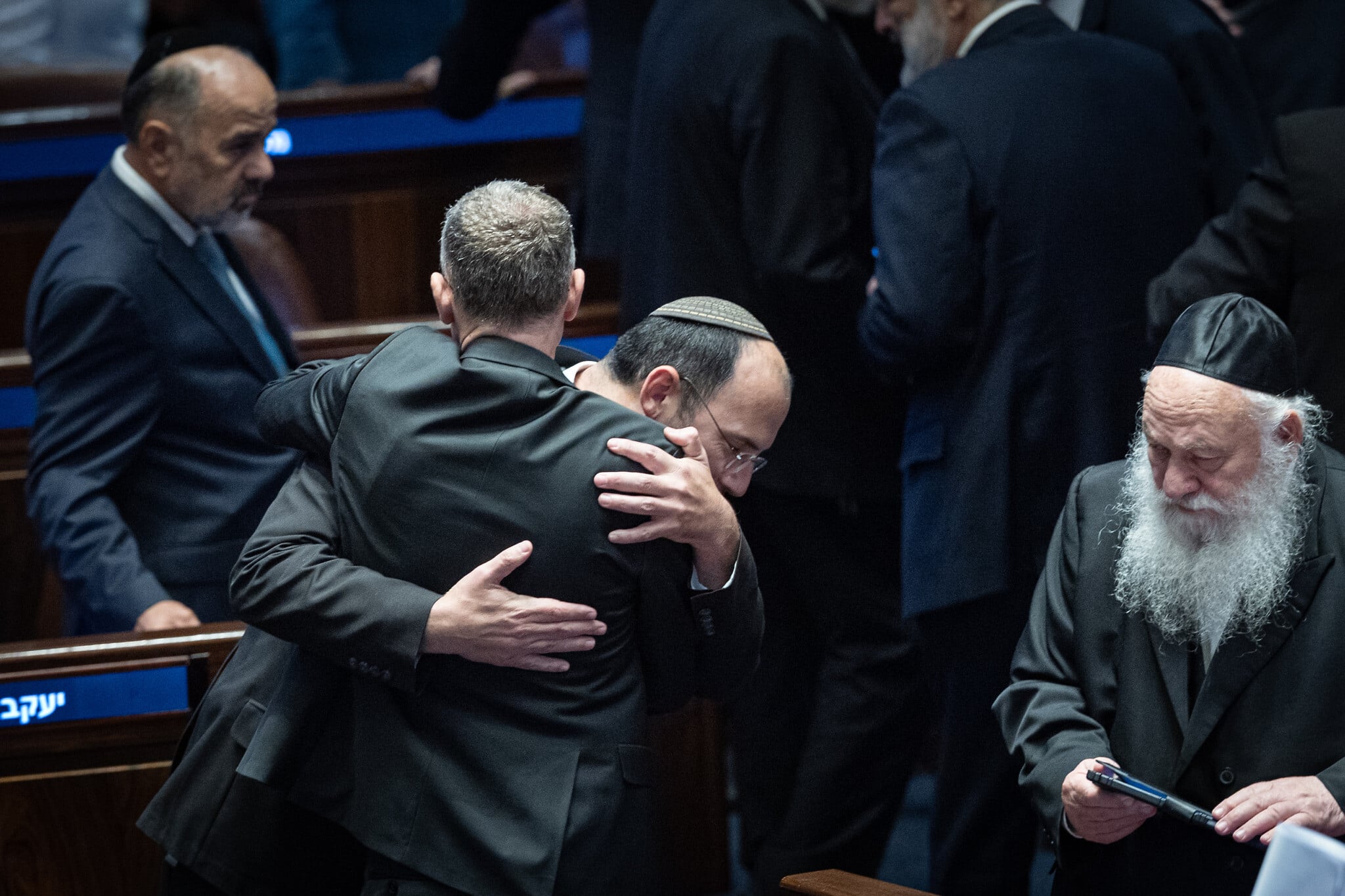
Religious Zionism MK Simcha Rothman celebrates with Justice Minister Yariv Levin (back to camera) following the passage of a law to weaken the powers of the attorney general, at the Knesset plenum in Jerusalem on July 15, 2026. (Yonatan Sindel/Flash90)
The Knesset votes 65-51 to pass a law significantly weakening the power of the attorney general – one of Israel’s few checks on executive power – after over eleven hours of opposition and later coalition filibustering.
The legislation effectively strips the attorney general of authority over the government by allowing ministers to disregard the attorney general’s currently binding legal opinions and decide for themselves whether their actions are lawful. It also grants the coalition effective control over appointing and dismissing the person holding the office, replacing the current system under which the cabinet acts on the recommendation of an independent public committee headed by a retired Supreme Court justice.
Prime Minister Benjamin Netanyahu was absent from both the eleven-hour plenary discussion and the vote itself. He similarly was not present at a vote yesterday to freeze the arrest of ultra-Orthodox draft evaders and Monday’s vote to designate Torah study a foundational value of Israel.
Knesset Constitution, Law and Justice Committee chairman and Religious Zionism MK Simcha Rothman, who spearheaded today’s legislation, celebrates the law’s passage, calling it “a historic change” that “restores legal advice to its natural role” and “strengthens Israeli democracy.”
Rothman also vows to revive provisions dropped from the original bill to split the attorney general’s role and strip it of the authority to indict senior elected officials, which were shelved as the coalition raced to pass the current legislation before the Knesset dissolves on Friday.
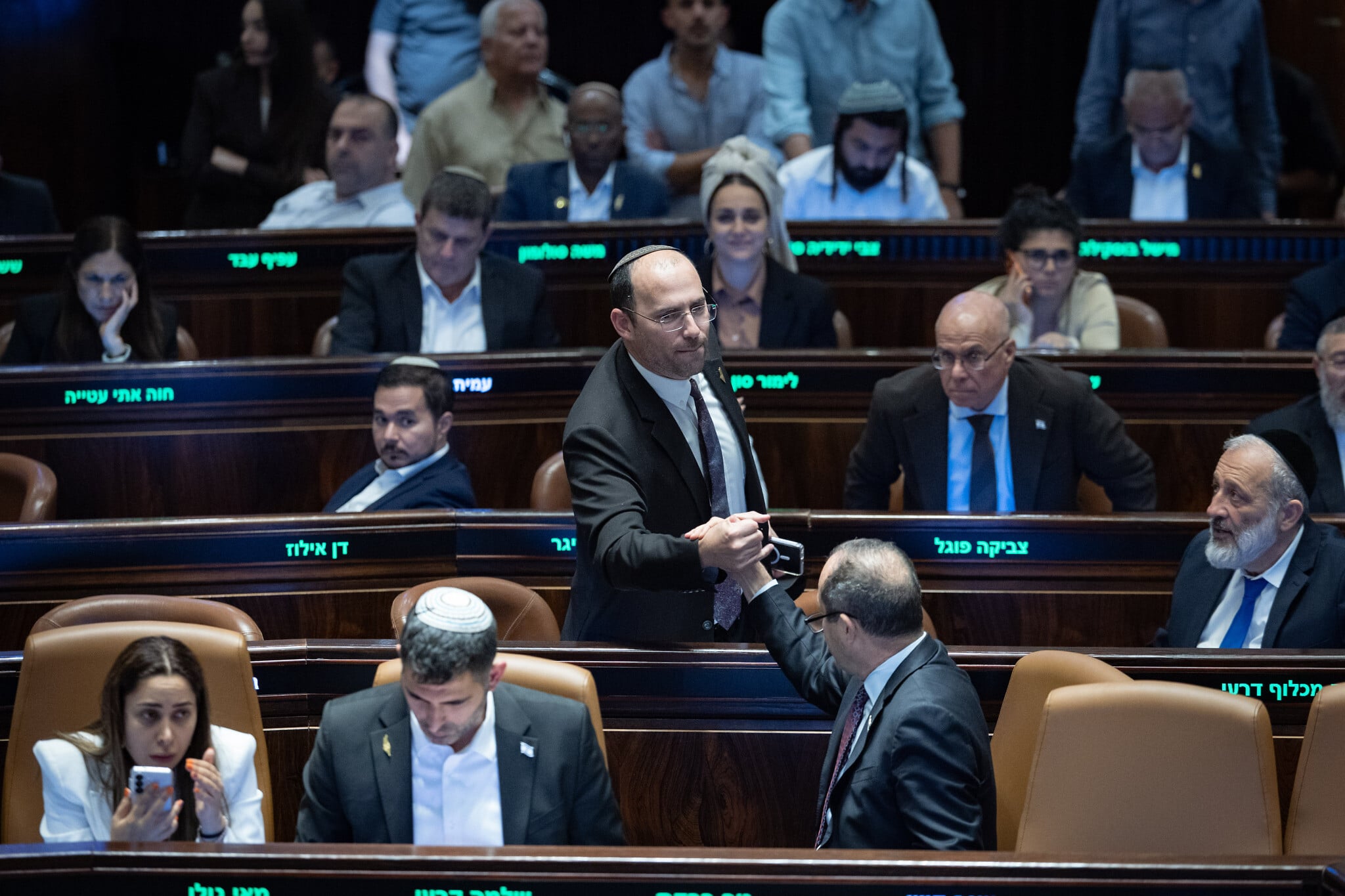
“We will pass the second part of the attorney general reform after the election, God willing, and, with the mandate the public gives us, continue reforming the judicial system,” Rothman says.
The vote followed a small coalition crisis in which United Torah Judaism MK and Degel HaTorah faction leader Moshe Gafni threatened to withhold support for the law unless the government first approved tens of millions of shekels in additional funding for daycare teachers in the Haredi school system. As a result, Rothman delayed proceedings by speaking for more than an hour and a half until coalition leaders resolved the crisis.
The attorney general law has been championed by the coalition, whose members argue that it restores power to elected officials from an overly powerful attorney general. But opposition lawmakers, good-governance watchdogs and Attorney General Gali Baharav-Miara herself argue that the bill is intended to eliminate one of the government’s sole checks on its power, allowing it to advance legislation and policies that would otherwise be blocked as unlawful, without establishing any alternative safeguards.
Unlike most other democracies, Israel has few checks on executive power, lacking a bicameral legislature, representative constituencies, a written constitution or fixed term limits, making the role of the attorney general particularly significant.
Colombia’s incoming foreign minister says country will be 9th to open embassy in Jerusalem

Colombia's incoming foreign minister Omar Bola Escobar (left) meets with Foreign Minister Gideon Sa'ar in Washington on July 14, 2026. (Shmulik Almany/Foreign Ministry)
Colombia’s incoming foreign minister tells Foreign Minister Gideon Sa’ar that his country will open an embassy in Jerusalem, according to Sa’ar’s office.
Colombia will be the ninth country to open an embassy in Israel’s capital.
The United States, Guatemala, Honduras, Kosovo, Papua New Guinea, Paraguay, Fiji and Somaliland also have embassies in Jerusalem, while other countries — including Hungary, the Czech Republic, and Slovakia — have embassy branches in the capital.
During their Washington, DC meeting, Sa’ar and Omar Bola Escobar also agreed to restore full diplomatic relations and remove visa requirements.
Colombia recalled its ambassador in June 2024, and Israel responded by not replacing its outgoing envoy.
Colombia’s right-wing president-elect Abelardo de la Espriella said that his country and Israel will share a relationship “like never before” once he takes office in August.
Bogota’s relations with Jerusalem nosedived under Colombia’s first-ever leftist government led by President Gustavo Petro, an ardent critic of Israel’s war against Hamas in Gaza, which he has cast as a genocide — a charge vehemently denied by Israel.
Petro severed diplomatic ties and suspended the purchase of weaponry from Israel — formerly one of Colombia’s main military partners.
De la Espriella has said he will reverse these decisions, and one of his main campaign pledges was to “renew a strategic alliance with the State of Israel,” open an embassy in Jerusalem, and “defend the Judeo-Christian principles that form the foundation of Western civilization.”
Iran’s Ghalibaf says Tehran has no reason to honor MOU without benefits
Iran’s top negotiator Mohammad Bagher Ghalibaf says that if Iran does not benefit from its memorandum of understanding with the US, “we have no reason to adhere to such an understanding.”
Iran’s national security depends on maintaining “Iranian arrangements” in the Strait of Hormuz, Ghalibaf adds in a statement posted on Telegram.
He says Iran’s approach to its war with the US and negotiations to end it should be based on national interests, national security and a long-term perspective, adding that Tehran had no choice but to rely on its own strength.
IDF says it killed 3 Hezbollah gunmen in south Lebanon buffer zone
The IDF confirms carrying out strikes in southern Lebanon earlier this evening, saying it killed three armed Hezbollah operatives in the military’s buffer zone.
Soldiers of the 869th Combat Intelligence Collection Unit identified the Hezbollah gunman near the Lebanese town of Beit Yahoun, and a short while later, forces of the 401st Armored Brigade struck and killed the trio “to remove a threat,” the military says.
The military publishes footage showing the identification of the armed operatives and the subsequent strikes.
במרחב הביטחוני בדרום לבנון: צה"ל חיסל שלושה מחבלי חיזבאללה חמושים בבית יאהון
גדוד האיסוף האוגדתי 869 בפיקוד אוגדה 91 זיהו מוקדם יותר היום שלושה מחבלים חמושים מארגון הטרור חיזבאללה במרחב בית יאהון, בתוך המרחב הביטחוני בדרום לבנון.
מיד לאחר הזיהוי, כוחות חטיבה 401 חיסלו את… pic.twitter.com/Q78YmHWi0N
— צבא ההגנה לישראל (@idfonline) July 15, 2026
Report: Trump weighing major expansion of Iran campaign following Situation Room meeting
US President Donald Trump convened senior national security officials in the White House Situation Room last night to discuss a massive offensive in Iran that could be carried out in the coming days, according to an Axios report.
The attack under consideration would be wider in scope than the recent US strikes around the Strait of Hormuz, with military officials having presented a series of options against strategic targets inside Iran that Washington has not previously attacked, the report says, citing three sources with knowledge.
Officials in attendance included US Vice President JD Vance, Defense Secretary Pete Hegseth, Secretary of State Marco Rubio, Chairman of the Joint Chiefs of Staff Dan Caine, CIA Director John Ratcliffe, and special envoy Steve Witkoff, the report says.
In the hours before the meeting, Trump told Fox News that the US may strike bridges and power stations next week, adding that he would “save the energy targets for last,” but would “ultimately” hit them.
No final decision has yet been made, Axios reports, but the military options are expected to be seriously considered by Trump if there is no diplomatic breakthrough with Tehran in the coming days.
Opposition MK petitions High Court against law gutting power of attorney general
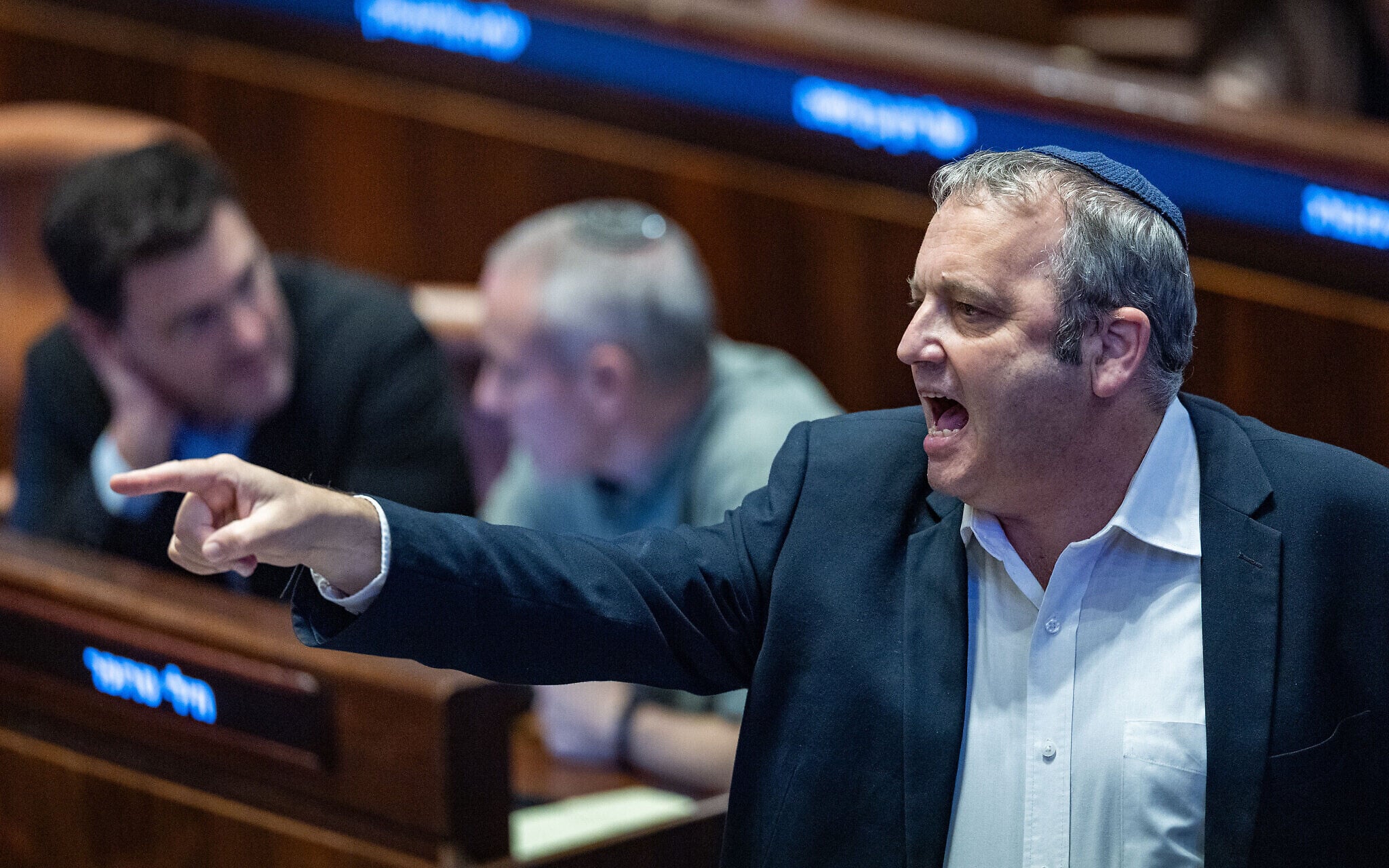
Democrats MK Gilad Kariv reacts during a plenum session on a law to weaken the powers of the attorney general, in the Knesset in Jerusalem, July 15, 2026. (Yonatan Sindel/Flash90)
Democrats MK Gilad Kariv says that he has petitioned the High Court of Justice against the coalition’s newly passed law weakening the role of the attorney general, together with the Zulat Institute and a group of former ministers, legal experts and public figures.
Calling the legislation “the cornerstone of the judicial overhaul,” Kariv argues that it “will place the government above the rule of law and shatter the delicate system of checks and balances in Israeli democracy.”
The petition argues that the law effectively strips the attorney general of the role of an independent gatekeeper by allowing the government to ignore legal opinions, undermines Israel’s system of checks and balances, and creates “a real risk to the fairness of elections and preservation of democratic norms,” and asks the High Court to strike it down.
Opposition leaders roundly denounce the legislation as an assault on Israeli democracy, with Yashar chair Gadi Eisenkot calling it “a blatant attempt to neutralize Israel’s gatekeepers and dismantle the rule of law,” and yet another “intentional assault on our democratic foundations.”
Democrats chair Yair Golan accuses the government of trying to “steal the election,” by removing one of the few checks on its power ahead of the October 27 vote.
He argues that the attorney general legislation, together with other coalition initiatives, is intended “to weaken the gatekeepers, undermine the integrity of the election and cling to power at any cost.”
Religious Zionism chairman and Finance Minister Bezalel Smotrich, meanwhile, congratulates Knesset Constitution Committee chairman and Religious Zionism MK Simcha Rothman, who spearheaded the law, on its passage, declaring that “this decision has enormous significance for Jewish identity, Zionism, security and settlement,” and vowing that “together, we will devote the coming years to completing all the necessary reforms to the judicial system.”
Asked whether he’s given Iran deadline before bridge bombing begins, Trump responds, ‘They know the story’
Asked whether he’s giving Iran a deadline to respond before he starts bombing bridges in the country, US President Donald Trump tells reporters, “I don’t like giving deadlines, but they pretty much know the story.”
“They better behave,” Trump adds.
Eisenkot says Netanyahu made inappropriate request of him as IDF chief of staff regarding son in military
Yashar leader Gadi Eisenkot, interviewed on Channel 12 news, July 15, 2026. (Channel 12 screenshot)
Head of the Yashar party Gadi Eisenkot says that while he was serving as IDF chief of staff, Prime Minister Benjamin Netanyahu called him urgently to his residence, where he asked him to have IDF personnel in a specific sector in the Golan Heights enter into underground bunkers.
Eisenkot, whose Yashar party has pulled ahead of Netanyahu’s Likud in some polls, says that only after looking into the issue did he understand that one of Netanyahu’s sons was serving in the IDF in that sector and that this was the reason for the request.
Eisenkot was chief of staff from 2015 to 2019, and Netanyahu’s son Avner served in a battlefield intelligence gathering unit in the IDF from 2014 to 2017.
“This seemed like a strange demand to me,” says Eisenkot, adding that he told Netanyahu, “There is a constant risk to civilians, to soldiers, but it is not the right thing to do.”
The former chief of staff says when Netanyahu tried to insist on the request, he understood there was “some family issue that was stressing him,” and that “there’s something completely crazy happening around him.”
He says, however, that he refused the request, to the prime minister’s displeasure, as Netanyahu’s concerns weren’t grounded.
Eisenkot says that this incident sheds light on current events in which Netanyahu’s wife, Sara, called the head of the Shin Bet, David Zini, to request lifetime security protection for herself and the prime minister, which Zini has reportedly now backed.
Eisenkot says that he was “very troubled” by reports that Zini took the phone call from Sara Netanyahu, described the incident as “very grave,” and added, “The attempts to influence the head of the Shin Bet through family members, through people close to his family, commentators, or media mouthpieces — this is a completely insane situation.”
Eisenkot also slams recent comments by Zini that his loyalty lies with elected officials and not the state, and said such a person should be fired.
“If there’s a head of a security agency who feels that he owes personal loyalty, and acts accordingly, he should hand in his keys and leave… Anyone whose loyalty is not to the state, and whose actions were not in accordance with the law, will be required to hand in their keys and go home. And if they don’t, we’ll send them home.”
After coalition advances controversial legislation, MK leaving Likud says party has been ‘hijacked’

Likud MK Dan Ilouz at the Knesset in Jerusalem, July 22, 2025. (Chaim Goldberg/Flash90)
Likud MK Dan Ilouz repeats that he doesn’t plan to stick with Prime Minister Benjamin Netanyahu’s party in the next election.
“I simply cannot call on you to vote for a party that I myself am no longer able to vote for,” he writes on Facebook after the latest batch of controversial legislation is advanced by Netanyahu’s coalition.
“From evading responsibility for October 7, to promoting schemes (exempting ultra-Orthodox yeshiva students from military service) while our voters are collapsing in the reserves, to surrendering to interest groups that are raising the cost of living for all of us. This is no longer the Likud Party. This is a party that has been hijacked,” he adds.
Ilouz likely would have had a hard time being reelected anyway, as he was able to enter the Knesset through the Likud spot reserved for new immigrants — a benefit that would not have been available to him in the upcoming election.
US forces launch new wave of strikes against Iran
The United States has launched a new wave of strikes against Iran in a bid to curb Tehran’s ability to threaten the Strait of Hormuz, the US military says.
The strikes — which started at 1900 GMT — “are targeting Iranian military capabilities used to threaten vessels freely transiting through the Strait of Hormuz,” US Central Command says in a post on X.
At 3 p.m. ET, U.S. forces launched operations for a second wave of strikes today against Iran. The strikes are targeting Iranian military capabilities used to threaten vessels freely transiting through the Strait of Hormuz, an international waterway vital to global commerce. The…
— U.S. Central Command (@CENTCOM) July 15, 2026
U.S. sailors conduct nighttime flight operations aboard USS George H.W. Bush (CVN 77) while transiting the Arabian Sea. pic.twitter.com/uzJcrfGFXO
— U.S. Central Command (@CENTCOM) July 15, 2026
Knesset passes law recognizing combat-related PTSD, expanding aid for disabled veterans
The Knesset votes 70-0 to unanimously pass a law formally recognizing combat-related PTSD as its own legal designation and establishing a statutory committee to provide exceptional assistance to disabled veterans and, in certain cases, their family members.
The law defines those with “combat-related PTSD” in the Disabled Veterans Law for the first time, requires the Defense Ministry’s Rehabilitation Department to provide treatment specifically tailored to them, and places the committee for exceptional assistance on a statutory footing.
Sponsored by coalition and opposition lawmakers, the bill passed its first reading unanimously last night and was fast-tracked through committee today with broad bipartisan backing.
The law’s explanatory notes state that “in recent years, and in light of the most recent military campaigns, soldiers and members of the security forces have increasingly faced complex physical and psychological injuries.”
“This bill is intended to recognize the unique nature of combat-related PTSD and to establish a committee to consider requests for exceptional assistance beyond the letter of the law,” it continues.
The law comes just one day after the coalition passed a series of controversial laws shielding ultra-Orthodox men from military service, including halting the arrests of draft dodgers and therefore freezing Haredi enlistment, and a Basic Law declaring Torah study a foundational value, even as Israel remains engaged in a prolonged multi-front war, during which the IDF has repeatedly warned of severe manpower shortages and the number of soldiers suffering physical and psychological injuries, including PTSD, has skyrocketed.
Iran summons UK ambassador to protest Revolutionary Guards ban
Iran’s foreign ministry has summoned Britain’s ambassador to Tehran to protest the ban this week on the Islamic Revolutionary Guard Corps, vowing that the move would “not go unanswered.”
“Following the unjustified action of the British government in placing the name of the Islamic Revolutionary Guard Corps under the ‘State Threats Prevention Act’, Hugo Shorter, the British ambassador to Tehran, was summoned today, Wednesday… at the Ministry of Foreign Affairs,” state news agency IRNA says.
It added that the move would be “met with a reciprocal and decisive response from Iran.”
The UK government on Monday announced plans to ban Iran’s Islamic Revolutionary Guard Corps (IRGC) as a threat to national security, alongside an Iran-linked group accused of a series of attacks against the Jewish community.
British Prime Minister Keir Starmer had said on Monday that “anyone found supporting or assisting these groups will now face up to 14 years in prison”.
The proposed law is to be presented to parliament this week.
The banned groups would also include proxies and volunteers of Russia’s GRU military intelligence agency, and the Islamic Movement of Companions of the Right, an Iran-linked group which has claimed attacks on Jewish properties in London.
The new legislation gives the British government “proscription-like” powers to designate foreign state proxies deemed a threat to Britain’s national security.
“The move will step up the government’s ability to counter state threats linked to foreign powers, including espionage, foreign interference in our democracy, sabotage and physical attacks,” the Home Office interior ministry said in a statement.
The announcement comes after several antisemitic attacks struck the British capital earlier this year, including a spate of arson attacks on synagogues, community ambulances and other Jewish sites.
Trump claims Iran has just called asking for a meeting
US President Donald Trump claims Iran has expressed interest in holding a meeting with the US.
“We received a call just as I was coming here, and they want to meet,” Trump says on an interview with Fox News.
There is no corroboration of Trump’s claim.
Trump said yesterday that his negotiators have been in touch with their Iranian counterparts regularly, including in the last hour.
Asked if he has decided to wipe out the leadership of Iran’s Islamic Revolutionary Guard Corps, Trump responds that he has before appearing to backtrack.
“They’re nasty people, but they want to make a deal,” he says.
Q: You came to the conclusion that you couldn't negotiate with the IRGC, does that mean that you might wipe them out like you did ISIS.
TRUMP: Yeah. It does. We received a call just as I was coming here and they want to meet. pic.twitter.com/wS43Si724g
— Acyn (@Acyn) July 15, 2026
Speaking at an event in Pennsylvania shortly after the Fox interview, Trump claims Iran wants “to settle so badly” amid the ongoing US bombing campaign.
“They don’t like what we’re doing, and they do want to settle. We’ll find out whether or not we settle with them, or we just finish it off,” Trump says.
However, he spoke about “finishing off” Iran throughout the war and was apparently unable to do so.
Report: Trump leaning toward expanding military campaign against Iran, with Pickaxe bombing in the cards
US President Trump is leaning toward further expanding US military operations in Iran after huddling with top aides in the Situation Room last night, the Wall Street Journal reports.
Options discussed include intensified airstrikes, deploying ground troops to seize Iranian near the Strait of Hormuz or bombing the Pickaxe mountain nuclear site, WSJ reports.
Trump hasn’t made a final decision on the matter, but some US officials tell WSJ that he is reluctant to deploy ground troops after walking back previous threats to seize Kharg Island.
Kuwait says it intercepted four missiles, 21 drones from Iran, no casualties reported
A spokesperson for Kuwait’s ministry of defense says that its armed forces intercepted four cruise missiles and 21 drones coming from Iran, adding that the Iranian attack targeted a number of vital facilities resulting in material damage, but no casualties were reported.
Meanwhile, sirens have been triggered in Bahrain for an incoming projectile.
‘Go to hell’: Vance lashes out at reported Israeli-backed online campaign smearing Iran MOU
US Vice President JD Vance fumes at a reported Israeli government-funded influence campaign aimed at criticizing the Trump administration’s efforts to negotiate an end to the Iran war.
“You have seen this very discreet, extremely well-funded campaign to try to derail the negotiations and try to derail the deal,” Vance says during an interview with conservative podcaster Joe Rogan.
There was this Time article that came out yesterday… It lists a bunch of people who have been paid by a former Trump campaign person who was himself paid by certain elements within the Israeli government, and those people are attacking me viciously for trying to accomplish the negotiation objective that the president set for the country,” Vance says.
“It’s social media posts, it’s leaking to reporters — they’re attacking me obsessively, saying that we should not be negotiating with Iran. We should just keep the military campaign going indefinitely,” Vance continues.
Quite the listen pic.twitter.com/U9TpsTa1Yt
— Curt Mills (@CurtMills) July 15, 2026
“People have come after me and said I’m influenced by Qatar, that I’m influenced by foreign governments, that I take my marching orders from Tucker Carlson, and there’s just so much bullshit out there,” he says.
“Let’s say certain elements of the Israeli government want to criticize the deal or have disagreements about the deal. I don’t even mind an effort to try to influence. Foreign governments try to influence the United States all the time. Israel does it. Other countries do it… What bothers me is when American leadership allows that influence to affect their judgment and to affect what they are advocating for,” Vance adds.
“When I open up the pages of Time magazine and I see that there’s a literal foreign influence campaign being funded to tank the very deal that I was pursuing, and many of the people who were receiving that money were attacking me in completely dishonest ways, my response to that is, Go to hell. I’m going to do what I have to do for the American people. I represent Americans first,” he asserts.
“There are some people within (the Israeli) system we know beyond a shadow of a doubt who are manipulating and trying to change American public opinion to keep the war going on indefinitely,” Vance adds.
Vance claims general trajectory of Iran talks is still positive, despite escalating strikes
US Vice President JD Vance insists that the general trajectory of the memorandum of understanding with Iran remains positive, despite the apparently escalating tensions between the sides.
Asked on Joe Rogan’s podcast about the status of Iran negotiations, Vance claims that there is a divide in Iran’s leadership between pragmatists who want to make a deal with the US and hardliners who don’t.
He says the hardliners “freaked out” after the deal was made because they saw how much oil the US was able to get out of the Strait of Hormuz and began targeting ships there as a result.
“They’ve basically said, ‘We’re going to try to shut this thing down. We’re scared about losing our leverage.’ The pragmatists in their system are saying, ‘This was a mistake. Let’s keep on talking,'” Vance claims.
Joe Rogan asks JD Vance why President Trump keeps saying a deal has been made with Iran and then starts bombing them again.
Vance: “We are on the right trajectory, it’s just going to be really messy. There’s going to be a lot of starts and stops.” pic.twitter.com/FimEZHfGJK
— The American Conservative (@amconmag) July 15, 2026
“Do I know how this is ultimately going to shake out? Of course I don’t. But what we’re doing is a delicate diplomatic dance where we’re using economic leverage points, we’re using carrots and sticks, we’re trying to talk to the pragmatists, and then of course when they commit acts of violence, we’re responding to it,” Vance says.
“All of those things are happening simultaneously to get us on a better trajectory. Yes, they’re shooting right now, but with all that said, is their nuclear program still destroyed? Yes. In the context of the broader negotiation… things are happening simultaneously to get us on a better trajectory,” he claims.
While the US has claimed Iran’s nuclear program has been destroyed, Tehran still has stockpiles of highly enriched uranium and other nuclear enrichment sites that have not been targeted by the US.
For his part, Vance also says more oil is now getting out of Hormuz than during the war.
He goes on to blast conservative hawks in the US whose only solution is to “bomb Iran into oblivion.”
He says they want to try and topple the regime, even though US experience with trying to do that has not been positive and requires a massive deployment of ground troops.
Argentina defeats England 2-1 to reach its second consecutive World Cup final

Lautaro Martinez (22) scores Argentina’s second goal during the World Cup semifinal soccer match between England and Argentina in Atlanta, July 15, 2026. Argentina came from one goal down to berat England 2-1. (AP/Chris Carlson)
Reigning champions Argentina come from behind to beat England 2-1 on reach their second World Cup final in a row, where they will face Spain.
Anthony Gordon put England ahead in the 55th minute but Enzo Fernandez equalized 30 minutes later and Lautaro Martinez headed in the winner in stoppage time from Lionel Messi’s cross.


read more: