

Live updates (closed)
 Add ToI as a Preferred Source on Google
The Times of Israel liveblogged Sunday’s events as they unfolded.
Trump reportedly updates Netanyahu over phone that Iran deal may be signed tonight
US President Donald Trump told Prime Minister Benjamin Netanyahu that an agreement with Iran may be signed tonight during a phone call, Channel 12 news reports, citing a senior official with knowledge of the details of the conversation.
Netanyahu left an ongoing cabinet meeting to hold the phone conversation, in which he was updated on progress for an agreement, the report says.
Defense Minister Israel Katz speaks with Secretary of War Pete Hegseth, too, Channel 12 news reports.
Tonight’s phone call comes hours after Trump told the Axios news site he thought the Israeli premier has “no fucking judgement,” after Israel launched airstrikes on Beirut, drawing threats of retaliation by Iran.
Trump says Hormuz ‘will be opening up for business very shortly’

People gather on paddleboards in shallow water as cargo and service vessels are anchored in the Strait of Hormuz off Bandar Abbas, Iran, June 1, 2026. (Amirhosein Khorgooi/ISNA via AP)
US President Donald Trump says, “The Strait of Hormuz will be opening up for business very shortly,” but stops short of saying a deal has actually been reached with Iran.
Trump makes the declaration about Hormuz somewhat tangentially in a Truth Social post praising one of his supporters for praising his Iran policy.
Trump had said he was aiming to sign a deal with Iran on Sunday, but that Israel’s strike in Beirut may have pushed things off, as Iran has pledged to retaliate.
Iran’s soccer team lands in LA ahead of first World Cup match
LOS ANGELES/TIJUANA — Iran’s soccer team arrives at Los Angeles International Airport after a short flight from Tijuana, Mexico, where they left their World Cup base camp earlier, to a rousing sendoff ahead of their opening match against New Zealand.
The A320 aircraft touched down on runway 25L at 4:11 p.m. ET (2011 GMT) under sunny skies at the airport, which is about a 15-minute drive from the Los Angeles Stadium that will host Iran’s World Cup opener tomorrow.
The team is expected to head to their hotel, where a police security presence was already in place.
Coach Amir Ghalenoei and striker Mehdi Taremi are scheduled to take part in a press conference at Los Angeles Stadium at 6:45 p.m. ET (2245 GMT).
The squad’s Group G fixture against New Zealand will be played against the backdrop of the US-Israeli war with Iran, adding a charged atmosphere to a contest between two nations that have never met at the World Cup.
Iran moved their World Cup base camp from a sports complex in Arizona to Mexico late last month, after the US and Israel conducted joint strikes on Iran beginning in late February.
Netanyahu hoping to meet Trump after G7 — report
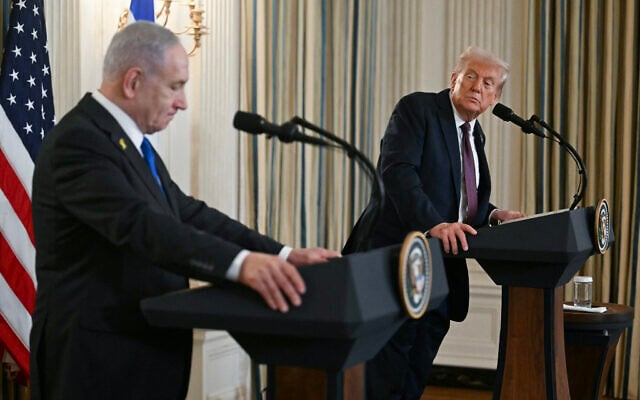
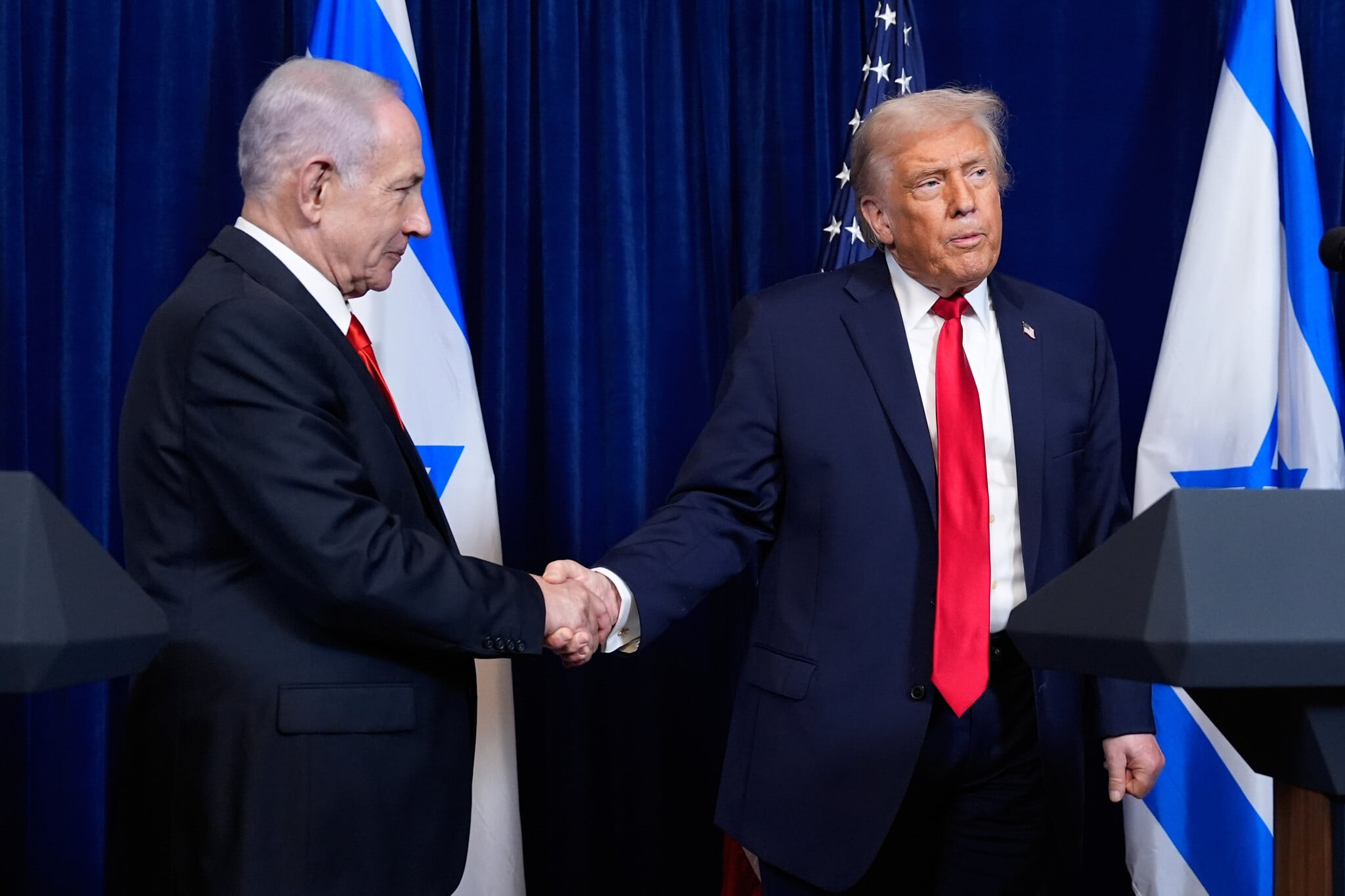
US President Donald Trump, right, and Prime Minister Benjamin Netanyahu participate in a press conference in the State Dining Room of the White House in Washington, DC on September 29, 2025. (Jim WATSON / AFP)
Amid growing disagreement over a US deal with Iran, and IDF freedom of action in Lebanon, Prime Minister Benjamin Netanyahu is pushing for a meeting with US President Donald Trump after the G7 summit this week, CNN reports.
Trump will be back in Washington after the three-day summit in France ends on Wednesday.
The Prime Minister’s Office did not respond to requests for comment.
Netanyahu and Trump met approximately every two months in the president’s first year back in office, but have not met in person since the start of the US-Israel campaign against Iran in February.
Report: Settlers try to burn down mosque in West Bank village while worshipers inside; no injuries
Settlers attempted this evening to set fire to a mosque in the village of Burqa, in the Ramallah area, while worshipers were inside, Palestinian media outlets report.
Footage from the scene appears to show extensive damage to the mosque. However, no injuries have been reported so far, and it appears that the worshipers managed to escape.
It is also reported that settlers set vehicles on fire in the village.
PA’s Abbas says presidential elections to be held in 2027
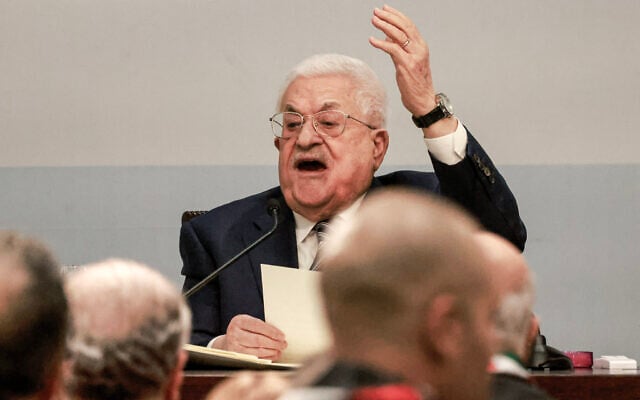
Palestinian Authority President Mahmoud Abbas addresses the eighth Fatah conference in the West Bank city of Ramallah on May 14, 2026. (Jaafar ASHTIYEH / AFP)
Palestinian Authority President Mahmoud Abbas says that Palestinian presidential elections will be held in 2027, according to the official Palestinian news agency WAFA.
In a presidential decree issued by Abbas, no specific date for the elections was provided other than the year. The decree also stated that elections for the Palestinian National Council, the parliament of the PLO, will be held in November 2026.
Abbas previously said that Palestinian elections would be held one year after the end of the war in Gaza, meaning in October 2026, but since then had not set a specific date for the presidential vote, and now it seems that the timeline has changed.
It is worth noting that Abbas has canceled elections several times in the past that he had previously announced, and has now remained in power for 20 years, 15 years beyond the original date on which he was due to seek re-election as PA president.
Over the past year, reports have indicated that the United States has been pressuring the Palestinian Authority to implement reforms, including holding elections.
Haredi protesters rally outside chief justice’s home to protest arrest of draft dodger
Dozens of extremist ultra-Orthodox demonstrators are rallying outside the home of Supreme Court President Isaac Amit in Mevasseret Zion to protest the arrest of a military draft dodger in the community.
Earlier this month, ultra-Orthodox rioters attacked the home of Deputy Supreme Court President Noam Sohlberg, smashing windows and causing property damage, while trying to break into the residence in the West Bank settlement of Alon Shvut.
Report: Settlers set fire to and vandalize 4 vehicles near Ramallah
Settlers set fire to two vehicles and vandalize two others in the West Bank village of Deir Dibwan, near Ramallah, according to the official Palestinian news agency WAFA.
No injuries have been reported in the attack.
مستوطنون يشعلون النيران في منازل ومركبات وأراضٍ عند أطراف قرية دير دبوان شرق رام الله#فيديو pic.twitter.com/tSBvg1V4O8
— الجزيرة فلسطين (@AJA_Palestine) June 14, 2026
Two soldiers hurt by Hezbollah rocket fire in southern Lebanon
An IDF soldier was moderately wounded and another was lightly hurt by rockets launched by Hezbollah at troops in southern Lebanon earlier today, the military says.
The IDF says the two troops were taken to a hospital and their families were notified.
Flights in western Iran canceled after Tehran threatens to attack Israel
TEHRAN, Iran — Iran’s state broadcaster says that flights at airports in the west of the country were canceled, after Tehran warned it would respond to an Israeli attack on Beirut.
“Flights from airports in the western part of the country have been cancelled until further notice,” state television reports following the warning from Iran’s top security body.
Maps show the airspace over Iran almost completely clear of traffic.
תיעוד: המרחב האווירי של איראן סגור לחלוטין@ndvori pic.twitter.com/kJ3pHjwHrK
— החדשות – N12 (@N12News) June 14, 2026
Iran reportedly still mulling incentives offered by US not to attack Israel
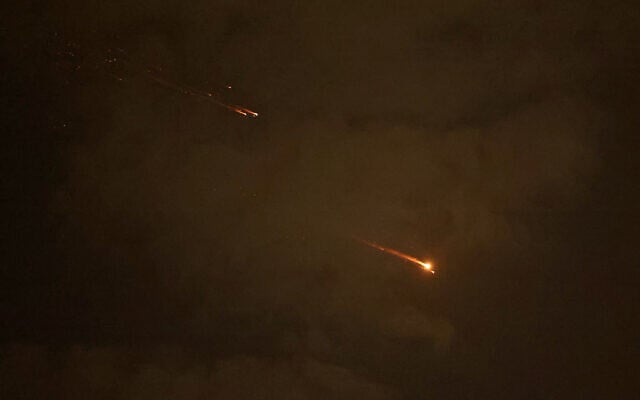
A trail left by Iranian ballistic missiles are seen in the sky above the coastal city of Netanya on April 6, 2026. (JACK GUEZ / AFP) /
Iran is still considering the incentives offered by the United States to not attack Israel in response to its strike on Beirut earlier, two Western sources tell Channel 12 news.
The sources say intensive negotiations are underway between the US and Iran in order to prevent Tehran from firing missiles at Israel.
Several minutes earlier, Channel 12 reported that Tehran had rejected the offer by Washington.
UN chief slams Israel’s strikes on Beirut amid efforts to reach deal
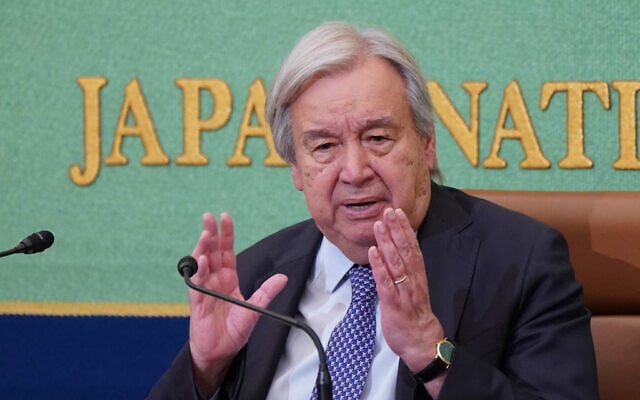
Secretary General of the United Nations Antonio Guterres speaks during a press conference at the Japan National Press Club in Tokyo on May 20, 2026. (Kazuhiro NOGI / AFP)
UNITED NATIONS — UN Secretary-General Antonio Guterres criticizes Israel’s strikes on Beirut that threatened US plans for Washington and Tehran to sign a framework peace deal later in the day.
“The strikes took place despite the ceasefire and at a time when the United States and the Islamic Republic of Iran are expected to reach an agreement that will pave the way to a peaceful resolution of this conflict,” he says in a statement.
“I urge all parties to show maximum restraint at this crucial moment.”
Iran reportedly rejects US incentives not to attack Israel, will respond soon to Beirut strikes
Iran has rejected a United States offer for unspecified financial benefits and intends to respond to Israel’s strike on Beirut soon, Channel 12 news reports.
US President Donald Trump’s administration is reportedly making intensive efforts to prevent a potential attack, as it seeks to sign an agreement with Iran in the coming hours.
Trump expected to offer Iran incentive to hold fire on Israel — report
Israeli officials communicating with Washington assess that US President Donald Trump may soon announce that he is offering Iran something in return for Tehran agreeing not to retaliate against Israel for its strike against Hezbollah in Beirut, Channel 12 reports.
The officials add that it is not yet clear what that concession or incentive would be, but describe it as the focus of intensive efforts currently underway by the Trump administration, as it seeks to sign an agreement with Iran in the coming hours.
Channel 12 later quotes reports from Iran indicating that the US was offering Iran’s World Cup soccer team regular visas that would allow them to stay in the US.
Currently the Iranian team, which is based in Mexico, need to enter and leave the US on the same day as their games.
Iran’s top national security body warns of ‘imminent’ response to Israeli strike in Beirut
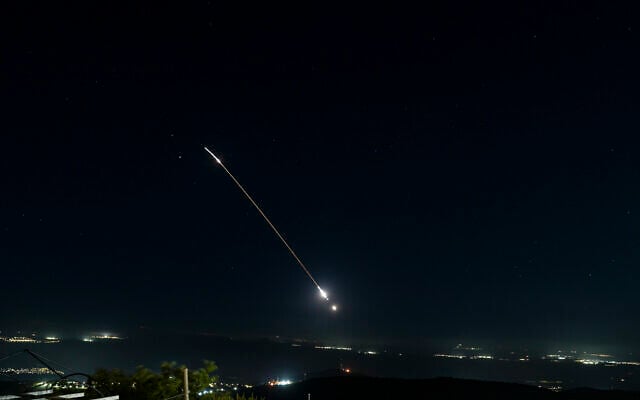
Israeli air defense system fires to intercept incoming ballistic missiles launched from Iran, as seen over northern Israel, June 7, 2026. (Ayal Margolin/Flash90)
TEHRAN, Iran — Iran’s highest national security body warns that a response was “imminent,” following an Israeli strike targeting Tehran’s ally Hezbollah in Beirut’s southern suburbs.
“The response of the fighters of Islam is imminent,” the Supreme National Security Council says in a statement on X. “Lebanon is our life and violation of the red lines of the Islamic Republic will not be tolerated.”
Top Iranian military commander says forces have ‘finger on the trigger’
A top Iranian military commander says Tehran’s forces have their “finger on the trigger,” threatening to attack Israel if it makes “the slightest slip.”
“Our combat, defensive, missile, naval, drone, and air defense capabilities are more powerful than ever before and, under the command of the Supreme Commander-in-Chief, His Eminence Ayatollah Seyyed Mojtaba Hosseini Khamenei, may his sublimity endure, have been elevated—and the sons of the nation in the armed forces are ‘finger on the trigger,’ ready to fire into the heart of the enemy,” Major General Ali Abdollahi, commander of Iran’s top joint military command, Khatam al-Anbiya Central Headquarters, writes on X
“The sacred aspiration to conquer Jerusalem and avenge the blood of the martyred Imam will never be forgotten; we are awaiting the slightest slip from the aggressor enemy to deliver an unforgettable and conclusive lesson to them,” he adds.
Report: Israeli officials ‘stunned’ by Trump’s criticism of Netanyahu; president floated Lebanon pullout as part of Iran deal
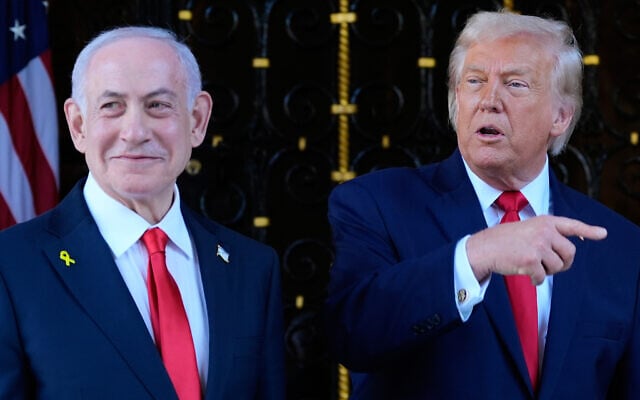
US President Donald Trump, right, speaks to reporters as he greets Prime Minister Benjamin Netanyahu at the president's Mar-a-Lago club in Palm Beach, Florida, on December 29, 2025. (AP/Alex Brandon)
Israeli officials were left “stunned” by US President Donald Trump’s public criticism of Prime Minister Benjamin Netanyahu and Israel’s decision to strike Hezbollah targets in Beirut. They are increasingly concerned that a prospective US-Iran agreement could sharply restrict Israel’s military freedom of action in Lebanon, Channel 12 reports.
A senior Israeli official close to Netanyahu tells the Hebrew network that officials in Jerusalem were taken aback by Trump’s remarks, which included accusing the premier of having “no fucking judgement,” saying: “Trump’s statement is a resounding slap in the face. The restrictions [on Israel] have been taken to another level. The expectation that we will not strike anywhere in Lebanon is incompatible with the behavior of a strategic ally.”
The report adds that, during one of his recent conversations with Netanyahu, Trump proposed that Israel withdraw physically from southern Lebanon as part of the broader understandings being discussed with Iran. Netanyahu reportedly rejected the idea outright, arguing that it would serve neither Israeli nor American interests.
The report says that the primary concern within the political and security establishment is currently that Israel’s freedom of action in Lebanon could be significantly curtailed by Washington if the Iran agreement includes a complete halt to Israeli military activity throughout Lebanon, not just in Beirut, as Tehran insists it will.
According to the Hebrew network, officials in Washington have spent recent hours pressing Israel not to escalate tensions with Iran, while promising to do everything possible to prevent Iranian attacks on Israel. The American message, according to the report, is that even if Iran does strike, Israel should avoid any response that could jeopardize the memorandum of understanding being negotiated between Washington and Tehran, which Trump says he expects to be signed in the coming hours.
Israel’s political leadership has been briefed on a the “credible possibility” of upcoming missile fire from Iran, perhaps before midnight, according to the report.
Hezbollah rocket hit near northern community, IDF says
A rocket launched by Hezbollah from Lebanon struck near the northern community of Neot Mordechai, close to Kiryat Shmona, a short while ago, the IDF says.
The military says several more rockets launched in the barrage impacted near troops in southern Lebanon.
Additionally, several apparent Hezbollah drones struck Israeli territory, near the border with Lebanon, a short while ago, the IDF adds.
Senior Iranian MP says ‘strong response is coming’ to Israel’s Beirut strike
The head of the Iranian parliament’s national security committee says “a strong response is coming” to Israel’s airstrike on Beirut today.
“Today’s crime by the Zionist regime in Dahieh, Beirut once again proved the U.S. is weak without credibility, as it is not even capable of controlling this illegitimate regime. A strong response is coming,” Ebrahim Azizi writes on X.
Trump on Beirut strike: Netanyahu ‘has no f**king judgment’
US President Donald Trump says he told Prime Minister Benjamin Netanyahu that “he has no fucking judgment” after an Israeli strike in Beirut as he tries to wrap up a deal with Iran.
“Why did Bibi have to do a fucking attack?” Trump says in a call with Axios. “I was so pissed off. I let him know. He has no fucking judgement. I let him know that.”
Trump also tells Axios and Fox News that he still expects a Memorandum of Understanding to be signed with Iran later today.
Trump tells Axios that the deal would have been signed by now were it not for the strike.
“It shook it up,” he says. “It delayed the signing by a few hours. It was supposed to be now. Now it is scheduled for a few hours from now.”
“It is so bad,” Trump continues. “I couldn’t believe it. An hour before we are supposed to sign the deal.”
Iran’s Pezeshkian says top security body backs ‘path of dialogue’ after hardliners rebuked negotiators
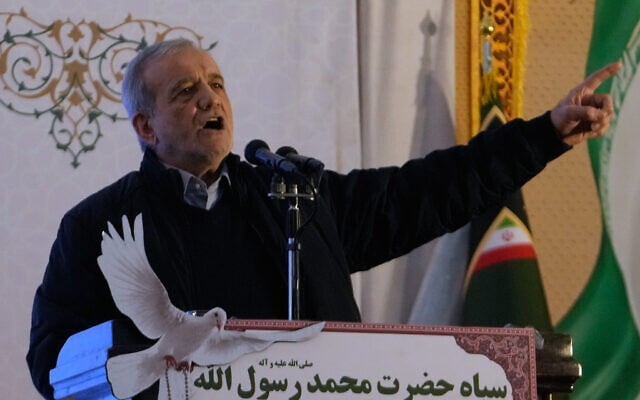
Iranian President Masoud Pezeshkian speaks during a ceremony at the Imam Khomeini grand mosque in Tehran, Iran, on January 1, 2026. (Vahid Salemi/AP)
TEHRAN, Iran — Iranian President Masoud Pezeshkian says the country’s highest security authority supports the “path of dialogue,” after hardliners criticized Tehran’s negotiating team in talks with the United States.
“The Supreme National Security Council has concluded that the path of dialogue should be pursued,” Pezeshkian says in a meeting with media executives, according to the presidency’s website.
He adds that the council was in charge of “decisions regarding war and negotiations.”
Goldknopf says UTJ won’t back Karhi media bill without Shabbat, content bans
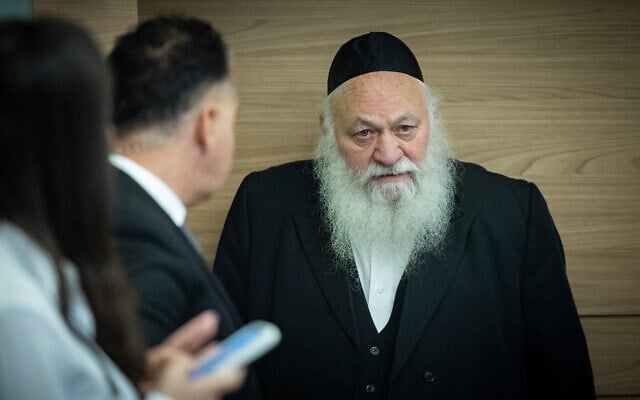
United Torah Judaism chair Yitzhak Goldknopf attends a House Committee meeting at the Knesset, in Jerusalem, June 9, 2026. (Yonatan Sindel/Flash90)
United Torah Judaism chair Yitzhak Goldknopf announces that the ultra-Orthodox party will oppose Communications Minister Shlomo Karhi’s controversial media overhaul unless a proposed state-funded app created under the legislation is barred from operating on Shabbat and the law fully bans sexual or “harmful” content, potentially depriving the coalition of the votes needed to advance the legislation.
“It is inconceivable that the State of Israel would establish, fund, and operate with public money a government broadcasting app active on the holy Sabbath,” he says, addressing the Knesset panel established to deliberate the legislation today.
The controversial legislation, which would give the government significant control over broadcast media, news sites, and other media, includes an initiative for a state-funded app to distribute content, including news, with the stated goal of making it more widely accessible.
Goldknopf says that his party will not support the legislation unless there is a complete prohibition on content distributed by the app on Shabbat or Jewish holidays, arguing that “partial measures aren’t enough. Any shift in this direction is a violation of the status quo that has been in place since the founding of the state.”
He also demands that the law fully prohibit broadcasting of sexual, pornographic, violent, or proselytizing content on the app to “protect our children and preserve the Jewish character of the state.”
The party leader calls on committee members to support his reservations to “ensure that the law does not become a tool for expanding Sabbath desecration or a government platform that exposes children and teenagers to content that should not reach them.”
The legislation already contains prohibitions on sexual and violent content, but the committee has moved to restore an exemption for content with artistic, scientific, educational, or informational value. Karhi last week removed the exemption at the request of the Haredi parties, but opposition lawmakers and the committee’s legal advisers warned that the broader ban could infringe on freedom of expression.
The bill passed its first reading in the Knesset in January and was split into separate bills earlier this month to accelerate its passage, a move that nearly failed due to opposition from the Haredi parties. It requires two more votes before it can become law.
IDF confirms it killed senior Hezbollah commander responsible for 2007 attack on US troops
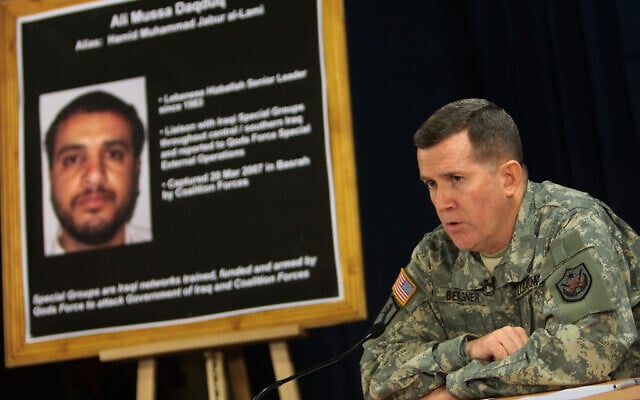
US military spokesman Brig. Gen. Kevin J. Bergner speaks during a press conference in Baghdad, Iraq, next to a poster of senior Hezbollah operative Ali Mussa Daqduq, on July 2, 2007. (AP Photo/Wathiq Khuzaie, Pool)
Senior Hezbollah commander Ali Mussa Daqduq was killed in an Israeli strike in southern Lebanon over the weekend, the IDF announces.
Daqduq was targeted in a strike on Friday in an area south of the Litani River, according to the military.
The IDF says Daqduq held a series of senior positions in Hezbollah, “served as a source of knowledge with extensive operational experience,” and in recent years “played a central role in advancing terrorist attacks and combat operations against the State of Israel and IDF soldiers.”
According to the IDF, among his roles were head of former Hezbollah chief Hassan Nasrallah’s security unit; a commander in the elite Radwan Force; a commander in the operations unit of Hezbollah’s Nasr Unit; head of infantry in Hezbollah; and the commander of the “Golan File,” Hezbollah’s entrenchment efforts in southern Syria.
“Over the past several years, Daqduq led much of Hezbollah’s operational planning against IDF soldiers along the Lebanon border,” the military says.
Daqduq was also imprisoned by US forces in 2007 for orchestrating the kidnapping and murder of five American soldiers in Iraq.
The US extradited Daqduq to Iraq, which assured Washington he would be prosecuted. NBC said he was the last prisoner the US handed over to Iraq before withdrawing from the country in December 2011 after eight years of war there. Iraq, in turn, acquitted Daqduq and released him in late 2012, to Washington’s outrage.
Daqduq was reported to have been killed in an Israeli strike in Syria in November 2024, although it appears he survived the attack. Daqduq’s son, Hassan Ali Daqduq, was killed on December 8, 2023, in an Israeli drone strike in southern Syria.
Netanyahu to convene security cabinet as Israel prepares for possible Iran attack
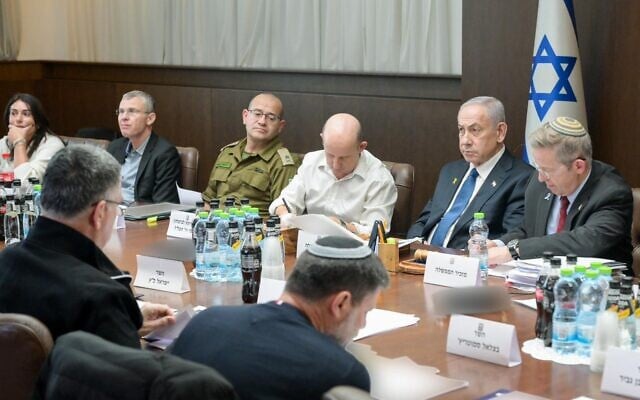
Prime Minister Benjamin Netanyahu holds a security cabinet meeting in Jerusalem on December 11, 2025. (Ma’ayan Toaf/GPO)
Amid serious disagreements with the Trump administration over a potential deal with Iran, Prime Minister Benjamin Netanyahu will convene his security cabinet this evening at 7:30 p.m., according to the office of one of the ministers.
Though the forum usually meets in Netanyahu’s office in Jerusalem, the location of the meeting is not being shared.
The IDF has introduced some restrictions this evening in the expectation that Iran might strike Israel in response to an IDF attack in Beirut earlier today.
Israeli envoy in US says Israel killed senior Hezbollah chief responsible for deadly 2007 attack on US troops
Israel’s Ambassador to the US Yechiel Leiter says Ali Mussa Daqduq, a senior Hezbollah commander, is dead. He was previously reported to have been killed in November 2024 in an Israeli airstrike in Syria.
Leiter’s post comes as notices of Daqduq’s death circulate on Hezbollah-linked social media, including the large pro-Iran Iraqi Telegram channel Sabereen News, suggesting that 2024 reports of Daqduq’s death were greatly exaggerated.
However, it remains unconfirmed and unclear, even with Leiter’s post, when or where the Israeli strike occurred.
He is described by Sabereen as a “brother of the Islamic Resistance in Iraq” who fought against the US military and Islamic State.
“Today, after a long period in the various realms of Jihad, he ascends to his lord while engaged in battle… in south Lebanon,” the notice says.
As the death notices circulate, Leiter says, without elaborating, that Daqduq “was eliminated by the IDF as he led the fighting for Hezbollah in south Lebanon.”
Leiter notes that Daqduq was responsible for a 2007 attack that killed five US troops. He says Daqduq also “managed the ‘Golan Portfolio’ — Hezbollah’s plan to invade and take over northern Israel.”
This is Ali Moussa Dakdouk, a senior Hezbollah commander.
– He is personally responsible for a terror attack in 2007 targeting U.S. troops.
– He was imprisoned by the U.S. and had a bounty of $5M on his head.
– He also managed the “Golan Portfolio” – Hezbollah’s plan to… pic.twitter.com/FR63USyHjz
— Ambassador Yechiel (Michael) Leiter (@yechielleiter) June 14, 2026
IDF says several suspected drones hit inside Israel near Lebanon’s border
The IDF says several suspected drones struck Israeli territory, close to the border with Lebanon, a short while ago.
No injuries were caused in the incident, which the IDF says is under further investigation.
The “suspicious aerial targets” did not trigger sirens in any towns.
Trump: Israeli strike on Beirut shouldn’t have happened; none of Lebanon should be struck in future
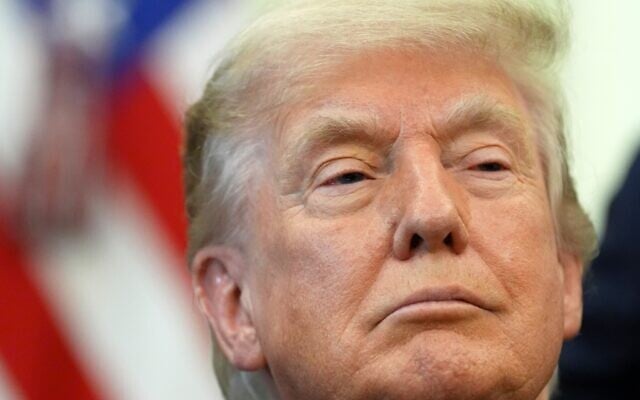
US President Donald Trump is pictured during an event in the Oval Office of the White House, June 11, 2026, in Washington. (AP Photo/Jacquelyn Martin)
US President Donald Trump knocks Israel for attacking Beirut today and says the IDF should not carry out any more attacks on any part of Lebanon moving forward.
“This morning’s attack on Beirut should not have happened, particularly on a special day when we are so close to a peace deal with Iran,” Trump writes on Truth Social, stopping short of definitively declaring that an memorandum of understanding between the US and Iran will actually be signed today.
“Israel has the right to defend itself against threats, but the attack it was responding to was very small and meaningless, nobody was hurt, injured or killed and should not disrupt this important process,” Trump says, suggesting that Israel overreacted by targeting Beirut in response to a Hezbollah attack on northern Israel.
“We are very close to a deal that will bring peace to the region, including to Lebanon, and all sides should stand down,” Trump says.
“There should be no more attacks by Israel anywhere in Lebanon, but there should also be no more attacks by any other party, including Hezbollah, against Israel,” he adds.
Trump notably suggests that the MOU with Iran will cover all of Lebanon and not just Beirut, after Israeli officials signaled they would only comply with refraining from targeting the capital but would continue operations deep into southern Lebanon.
“This could be the beginning of a long and beautiful peace — Let’s not blow it!” Trump adds.
Gatherings nationwide restricted to 5,000 people as Israel prepares for Iranian missile fire
Following a fresh assessment, the IDF Home Front Command says it is restricting gatherings nationwide to 5,000 people.
In communities on the northern border, there are no changes to the current guidelines, which restrict gatherings to 100 people outdoors and 400 indoors.
Schools are still permitted to operate across the country.
The change in the guidelines comes following assessments in the IDF that Iran will launch missiles at Israel following an airstrike on Hezbollah in Beirut.
US envoy to United Nations: Trump ‘has every intent’ to sign deal with Iran today
US Ambassador to the UN Mike Waltz says President Donald Trump “has every intent” to sign an memorandum of understanding with Iran today.
“The president has every intent for it to happen. I’ll leave the actual details and timing to the White House. The Iranians are incredibly difficult negotiators, coupled with the fact that they’re having a very hard time getting guidance from their supreme leader, and they’re not always on the same page within their team,” Waltz tells ABS’s “This Week.”
“They have every intent of getting this done today,” he adds.
U.S. Ambassador to the U.N. Mike Waltz says President Trump “has every intention” of signing a U.S.-Iran peace deal today. https://t.co/iWJxMKRWjA pic.twitter.com/YlC0DCE9Ru
— This Week (@ThisWeekABC) June 14, 2026
IDF bracing for Iranian missile fire on Israel after Israeli strike on Beirut
The IDF says it is prepared for Iranian missile fire on Israel in the coming hours following the strike on Hezbollah in Beirut earlier.
The military says IDF Chief of Staff Lt. Gen. Eyal Zamir is conducting an assessment “with all relevant commanders” following the strike, and the current assessment is that Iran will fire missiles at Israel.
“The IDF continues to maintain readiness and alertness for a variety of defensive and offensive scenarios,” it says, adding that “the IDF will not tolerate fire toward the territory of the State of Israel.”
As of now, there are no changes to the Home Front Command’s guidelines for civilians.
Smotrich signs deal to advance 6,000 apartments in settlement, calls for West Bank annexation before election
Finance Minister Bezalel Smotrich signs a NIS 2 billion ($685 million) umbrella agreement to advance the construction of 6,000 apartments and investment in the West Bank settlement of Karnei Shomron.
In remarks at the signing ceremony, Smotrich calls on Prime Minister Benjamin Netanyahu to apply Israeli sovereignty to the West Bank.
“Prime minister, the time has come for victory and to apply sovereignty here in Judea and Samaria before the elections,” he says. “Judea and Samaria are a security and national issue for the country.”
In a post on X, Smotrich insists that “on my watch, there will not be a Palestinian state. Full stop.”
Smotrich, who chairs the far-right Religious Zionism party and is in charge of civilian affairs in the West Bank, supports annexation of the West Bank and Gaza, and is an adamant opponent of Palestinian statehood. He has taken several steps to entrench Israel’s control of the West Bank during his time in office.
בזמן שיש מי שמדברים על מדינה פלסטינית – אנחנו בונים את מדינת ישראל. קרני שומרון בדרך להפוך לעיר ואם בישראל.
היום, חתמתי על הסכם גג בקרני שומרון, שיקדם אלפי יחידות דיור חדשות ויהפוך אותה בעתיד לעיר. ההסכם יחזק את האחיזה הישראלית בשטח ואת ביטחון אזרחי ישראל.
במשמרת שלי לא תקום… pic.twitter.com/89x9yuUmcA
— בצלאל סמוטריץ' (@bezalelsm) June 14, 2026
IDF chief says military prepared on all fronts after Beirut strike
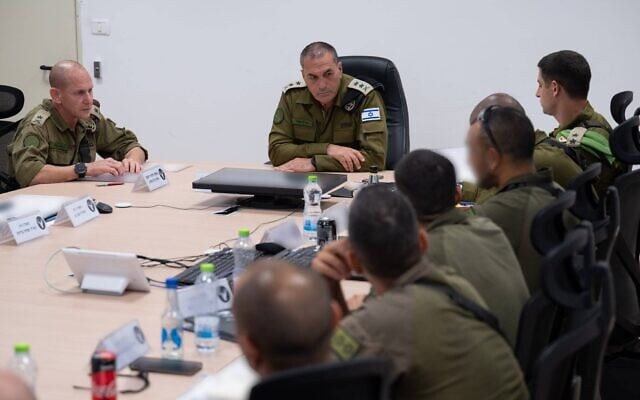
IDF Chief of Staff Lt. Gen Eyal Zamir meets with officers at the Northern Command, June 14, 2026. (Israel Defense Forces)
After Israel’s strike on Hezbollah in Beirut today, IDF Chief of Staff Lt. Gen Eyal Zamir says the military is “closely monitoring developments” across the region.
“We are closely monitoring developments while maintaining vigilance and a high level of readiness across all arenas. The current reality is sensitive and complex. The entire IDF is determined, alert, prepared, and operating at varying intensities across all sectors,” he says during a meeting with commanders at the Northern Command.
“Lebanon is our main center of gravity, but we are also preparing for developments in other arenas,” Zamir says.
He also says that “every additional operational achievement we achieve will lead to the continued erosion and disintegration of Hezbollah’s southern front and to the improvement of the security arrangements that will be determined as part of the negotiations mediated by the United States between the political leadership and the Lebanese government.”
At the meeting with the division and brigade commanders, Zamir approved new battle plans for Lebanon, according to the military.
Hezbollah drone over south Lebanon triggered sirens in Misgav Am — IDF
Sirens that sounded a short while ago in the border community of Misgav Am were triggered by a suspected Hezbollah drone identified over an area of southern Lebanon where troops are operating.
The IDF says the “incident has concluded,” and no injuries were caused.
Top Iranian official says Israel’s Dahiyeh strikes show US can’t or won’t live up to deal
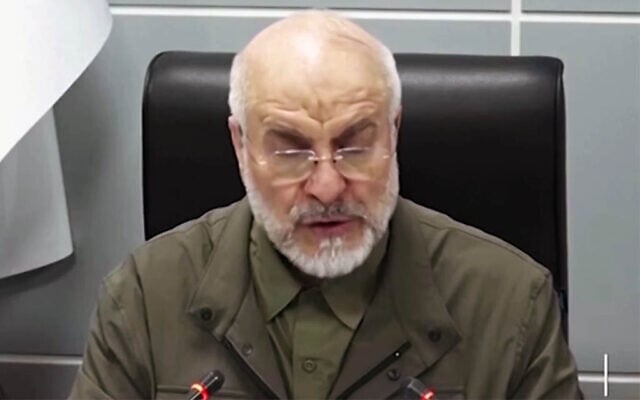
Mohammad Bagher Ghalibaf, pictured on Iranian state TV, May 31, 2026. (Screenshot)
After Israel strikes Hezbollah targets in Beirut’s Dahiyeh neighborhood, Iran seeks to paint the attacks as a threat to an emerging deal between Tehran and Washington.
“The Zionists’ incursion into Dahiyeh has once again shown that America either lacks the will to fulfill its commitments or the ability to do so,” writes Iran’s top negotiator and parliament speaker, Mohammad Ghalibaf, on X.
“By giving the green light to the regime, you cannot gain concessions. The game of bad cop and good cop is outdated,” he says.
“If you lack the will and ability to fulfill your commitments, speaking of continuing the path is not possible,” he threatens.
Iran is trying to ensure that any deal with the US ties Israel’s hands in Lebanon, thus protecting its powerful ally, Hezbollah. Israeli leaders insist they will not let that happen.
Meanwhile, Gen. Mohammad-Jafar Asadi, deputy chief of the Khatam al-Anbiya operational headquarters of Iran’s Armed Forces, tells local media that the Dahiyeh strike “will not go unanswered.”
Israel informed CENTCOM shortly before Beirut strike – report
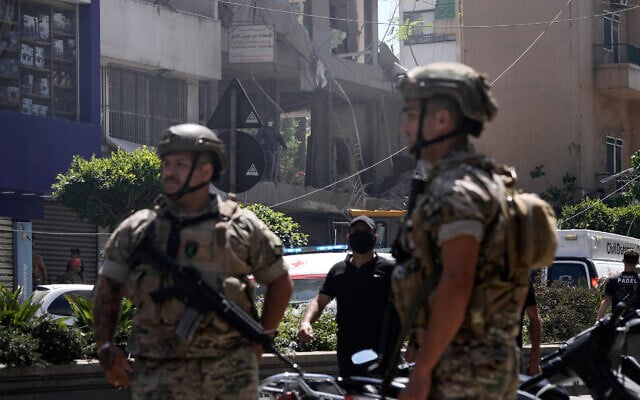
Lebanese soldiers stand guard at the site of an Israeli airstrike that struck an apartment in Dahiyeh, Beirut's southern suburbs, Lebanon, June 14, 2026. (AP Photo/Bilal Hussein)
The IDF notified CENTCOM about its strike on Hezbollah targets in Beirut’s Dahiyeh district shortly before the attack took place, Israeli and US officials tell Axios.
The strike came after three Hezbollah drones hit northern Israel today, as Tehran continues to insist that any Israeli attack on Beirut would be a violation of the ceasefire with the US and threaten negotiations on a deal with Washington.
IDF says sirens in Adamit and Hanita were false alarms
The IDF says the sirens that sounded in the northern border communities of Adamit and Hanita a short while ago were false alarms.
The alert was triggered by a “false identification,” according to the IDF.
Stressing ‘peace through strength,’ Netanyahu wishes Trump happy 80th birthday
US President Donald Trump, right, speaks to reporters as he greets Prime Minister Benjamin Netanyahu at the president's Mar-a-Lago club in Palm Beach, Florida, on December 29, 2025. (AP/Alex Brandon)
Amid deep disagreements over a possible US-Iran deal, Prime Minister Benjamin Netanyahu wishes US President Donald Trump a happy 80th birthday.
“Happy birthday Donald,” writes Netanyahu on X, noting that Trump’s birthday comes at an “auspicious time” this year.
“America celebrates 250 years of freedom – a great nation built on liberty and faith,” writes Netanyahu.
Netanyahu also reminds Trump that peace comes through strength, a possible commentary on an emerging MOU with Iran that is widely seen in Israel as a capitulation to the Islamic Republic.
“I wish you continued strength and vigor as you lead America towards a bright future of peace through strength,” writes Netanyahu, “and as we continue to bring the US-Israel alliance to ever greater heights.”
Death toll rises to 3 in Israeli strike targeting Hezbollah in Beirut apartment block
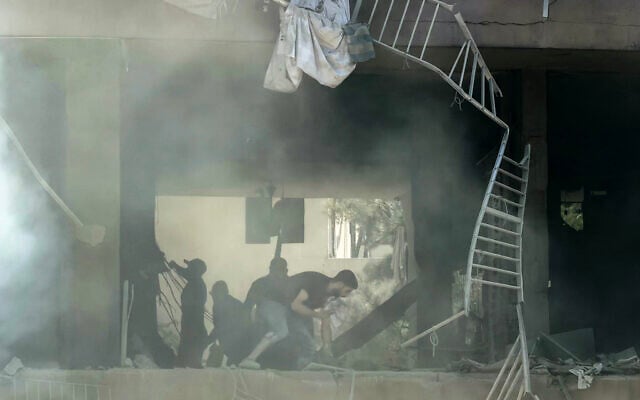
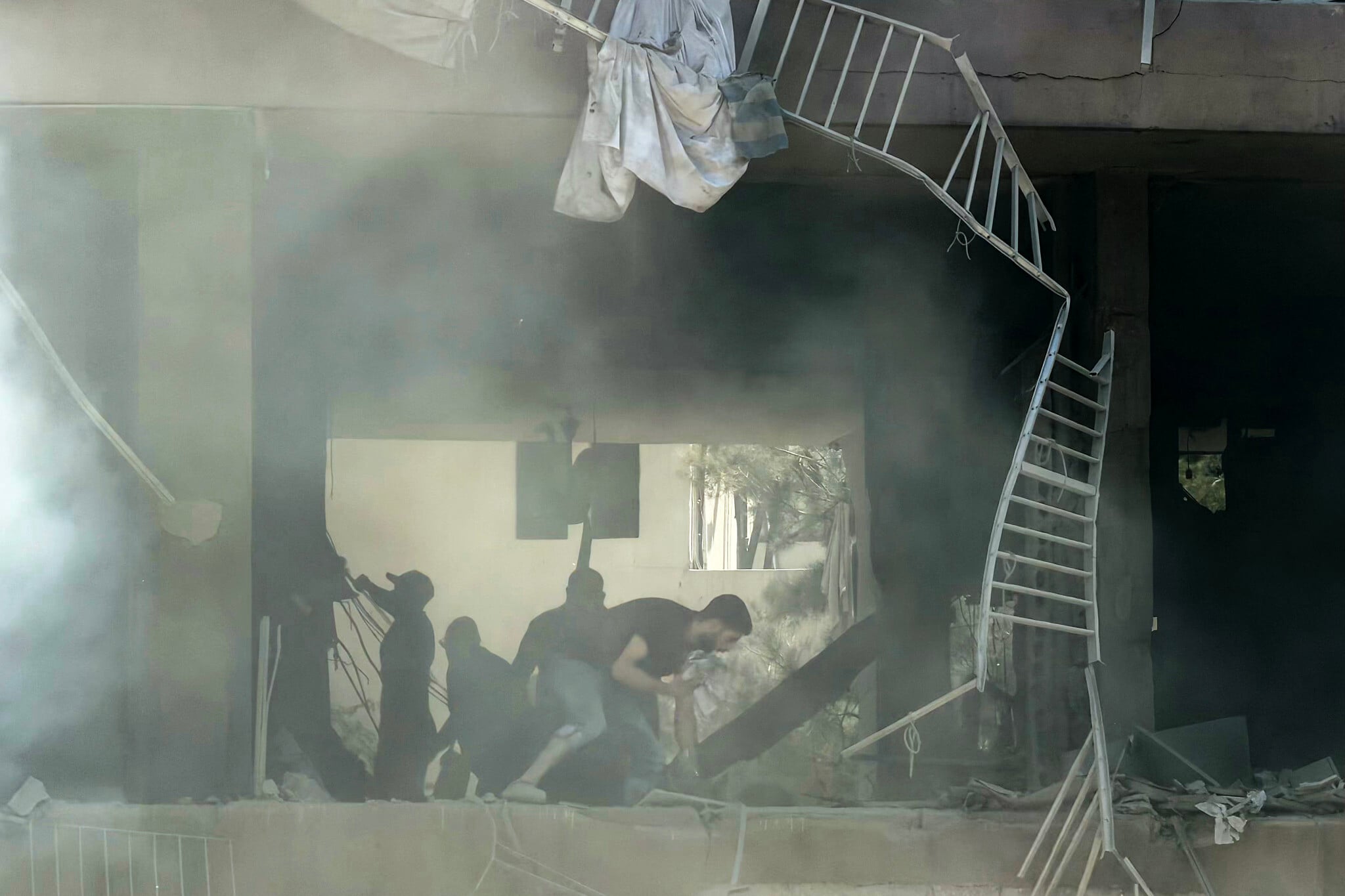
People look for survivors at the site of an Israeli airstrike that targeted Hezbollah at a building in Beirut's southern suburbs on June 14, 2026 (Ibrahim AMRO / AFP)
The death toll in the Israeli strike in Beirut has risen to three, according to Lebanon’s National News Agency.
“The initial updated toll is three martyrs and 15 wounded, in addition to significant damage to neighboring buildings and shops,” NNA reports.
The strike targeted an apartment that the IDF said served as a Hezbollah command center.
Sirens sound in north shortly after IDF strike on Hezbollah command center in Beirut
Sirens sound near the northern border warning of a suspected drone attack.
It is the first apparent attack from Lebanon since the Israel Defense Forces targeted a Hezbollah command center in Beirut.
Senior Iranian MP after Beirut strike: ‘Rabid dog’ Israel must be controlled if deal is to be reached
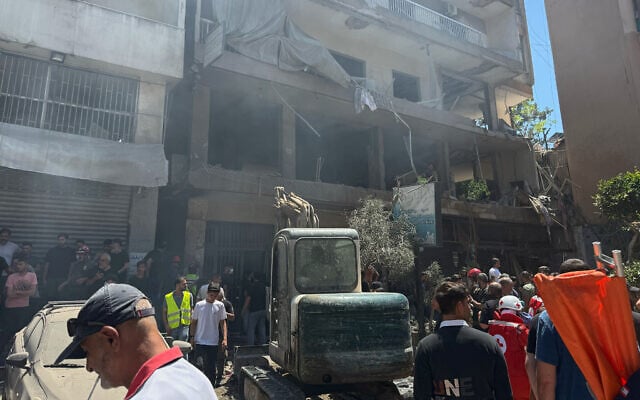
People gather at the site of an Israeli airstrike that struck what the IDF said was a Hezbollah command center in Dahiyeh, Beirut's southern suburbs, Lebanon, June 14, 2026. (AP Photo/Bilal Hussein)
A senior Iranian parliament member sends an apparent message to the United States after Israel carried out a strike targeting a Hezbollah command center in Beirut.
“If you seek an agreement or understanding, you must discipline the Zionist regime. If this rabid dog is not controlled, it will bite your leg before the ink is dry on the agreement,” Ebrahim Rezaei, spokesperson for parliament’s foreign policy and national security committee, writes on X.
The Israel Defense Forces carried out the strike after three Hezbollah drones hit northern Israel today.
Tehran has said that any Israeli attack on Beirut would be a violation of the ceasefire with the US and elicit a response from Iran.
Last week Rezaei warned Israelis to “watch the sky,” hours before the Islamic Republic fired missiles at Israel in response to strikes in Beirut.
Somaliland does not take Israel’s recognition and hospitality lightly, says country’s president in Jerusalem
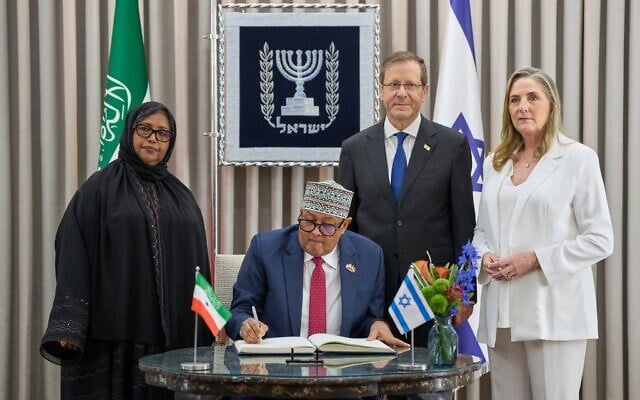
Somaliland's president Abdirahman Mohamed Abdullahi signs the guestbook with his wife first lady Fardowsa Mohamed Roble and President Isaac Herzog and First Lady Michal Herzog at the President's Residence in Jerusalem, Jun 14, 2026. (AP Photo/Ohad Zwigenberg)
Somaliland will remember Israel’s recognition of the country and its willingness to host the first-ever state visit abroad by its leader, says Somaliland’s President Abdirahman Mohamed Abdillahi at the President’s Residence in Jerusalem.
“Israel has taken part in a moment that will be remembered in the diplomatic history of our nation, and we do not take that gesture lightly,” says Abdillahi alongside President Isaac Herzog.
“Somaliland has been talking, has been reaching out to the world leaders for the last 35 years,” he continues. “They were asking only one question: to see us. Only one country desired to see us and recognize Somaliland, and that’s the government of Israel and its people.”
Herzog says the bilateral relationships now must move “from declarations to people-to-people cooperation in a range of fields — and we had a very interesting discussion on that — of so many topics of common interest, and we both also face strategic challenges, which are important to both nations.”
“We both face the threat of radical extremism,” says Herzog. “We both seek security and stability in the region and in the Horn of Africa. We both see the importance of protecting maritime freedom.”
At least 1 killed, 4 injured in IDF strike targeting Hezbollah command center in Beirut – report
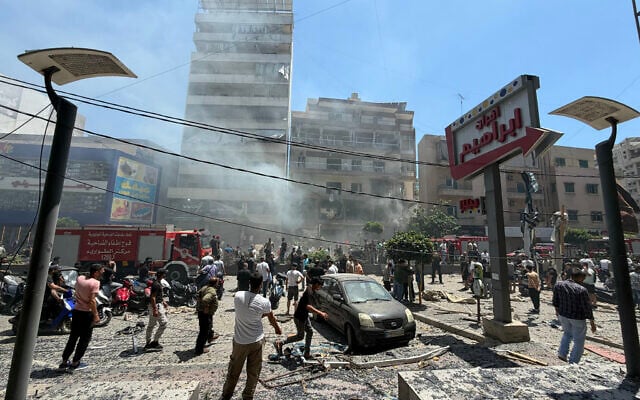
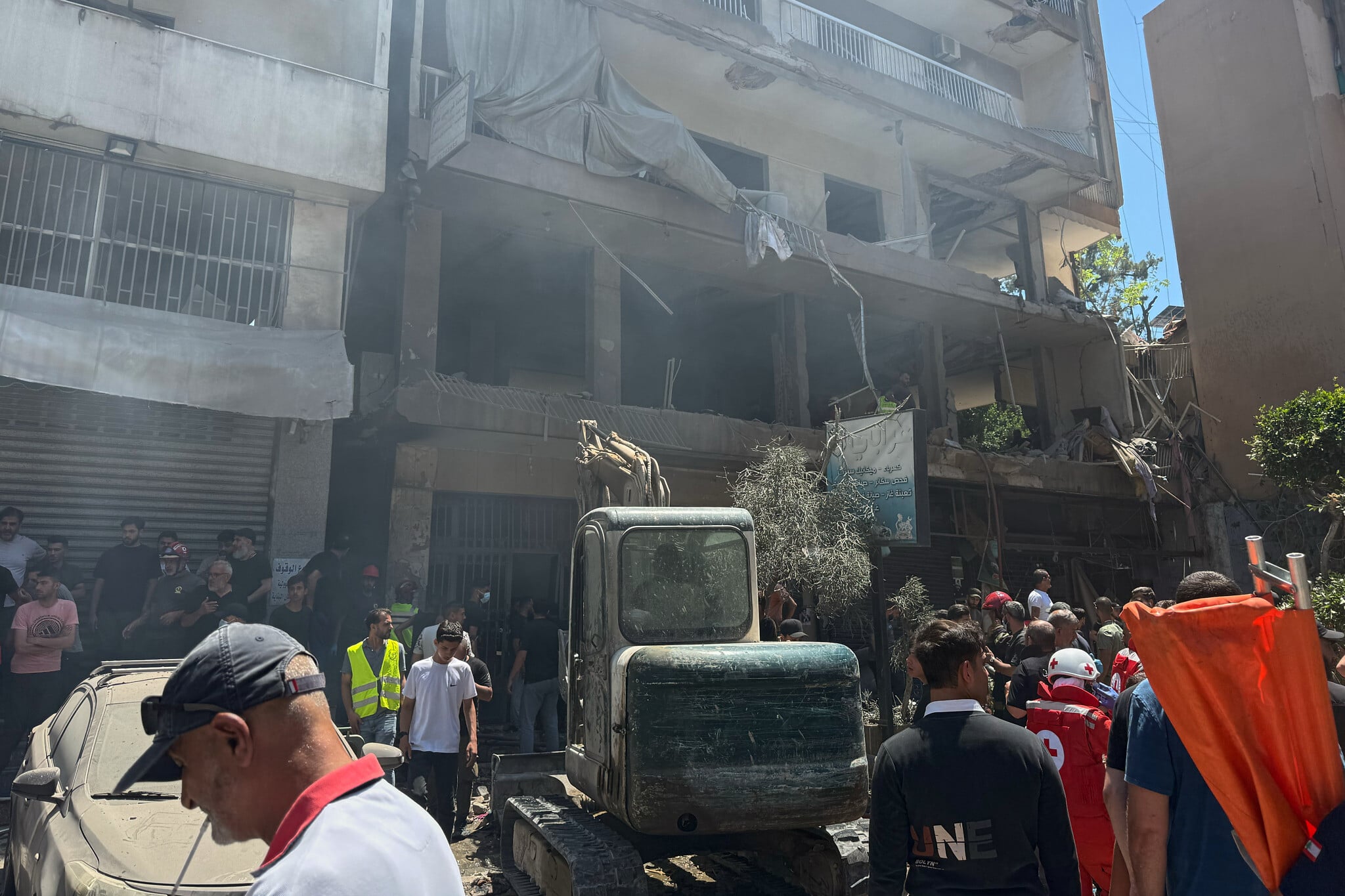
The aftermath of an Israeli airstrike that targeted Hezbollah at a building in Beirut's southern suburbs on June 14, 2026 (Ibrahim AMRO / AFP)
At least one person was killed and four were injured in the Israeli strike on Beirut, Lebanon’s National News Agency reports.
The strike targeted an apartment that the IDF said served as a Hezbollah command center.
IDF publishes footage of its airstrike on a Hezbollah command center in Beirut
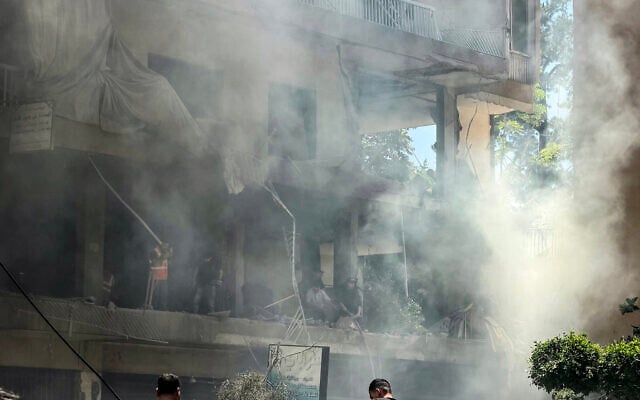
People look for survivors at the site of an Israeli airstrike that targeted Hezbollah at a building in Beirut's southern suburbs on June 14, 2026 (Ibrahim AMRO / AFP)
The IDF publishes footage of its airstrike on a Hezbollah command center in Beirut a short while ago.
The military says the site was used by Hezbollah to advance attacks on Israeli civilians and IDF troops operating in southern Lebanon.
“The strike was carried out after the Hezbollah terror organization launched aerial targets at the territory of the State of Israel earlier today,” the IDF says, referring to three drones that exploded in military zones in northern Israel.
בתקיפה מדויקת בדאחייה שבביירות: צה"ל תקף מפקדה של ארגון הטרור חיזבאללה
צה"ל תקף לפני זמן קצר מפקדה של ארגון הטרור חיזבאללה בביירות.
המפקדה שהותקפה שימשה את מחבלי ארגון הטרור חיזבאללה לקידום מתווי טרור נגד אזרחי מדינת ישראל וכוחות צה"ל הפועלים בדרום לבנון.
התקיפה בוצעה לאחר… pic.twitter.com/aErd5THKL9
— צבא ההגנה לישראל (@idfonline) June 14, 2026
Footage shows Israel’s airstrikes on Hezbollah hit Beirut apartment building
Footage from Beirut shows that Israel’s airstrikes on Hezbollah a short while ago hit an apartment building.
One apartment is seen heavily damaged in the strike.
The IDF said it had carried out a “precise” strike on Hezbollah infrastructure.
????????المبنى المستهدف بالغارة الإسرائيلية على الغبيري pic.twitter.com/n8SXAig0Gn
— bintjbeil.org (@bintjbeilnews) June 14, 2026
IDF strikes Hezbollah targets in Beirut’s southern suburbs after 3 drones hit northern Israel
The Israeli Air Force struck Hezbollah targets in Beirut’s southern suburbs a short while ago, Prime Minister Benjamin Netanyahu and Defense Minister Israel Katz say.
“The IDF has just struck Hezbollah terror targets in the Dahiyeh district of Beirut, in response to Hezbollah’s firing at Israeli territory,” they say in a joint statement.
“Israel will not tolerate fire directed at its territory,” they add.
The IDF in its own statement says it carried out “precise” strikes on Hezbollah infrastructure in southern Beirut, with further details to be provided later.
This morning, three Hezbollah drones exploded in Israeli territory.
غارة اسرائيلية تستهدف الضاحية الجنوبية pic.twitter.com/9NyyWszWU5
— هنا لبنان (@thisislebnews) June 14, 2026
Senior Iranian official: Deal draft says Tehran won’t produce or acquire nuclear weapons, will dilute uranium stockpile
A senior Iranian official tells Reuters a final draft of the memorandum of understanding with the US covers a range of issues from Tehran’s nuclear work to reopening the Strait of Hormuz and US waivers on oil sanctions, with a final deal to be discussed in the 60 days following agreement by the two sides.
The Iranian official says the draft memorandum included the following:
• Iran immediately reopens the Strait of Hormuz to all commercial vessels, while the US lifts its naval blockade on Iranian ports
• The US agrees not to impose any new sanctions on Iran until a final deal is reached
• The US will waive oil sanctions on Iran for a specified period, allowing Tehran to sell oil and receive revenue
• The US agrees to release $25 billion of Iran’s frozen assets, including via direct cash transfers, cooperation among regional countries, and financial credit lines
• Tehran agrees that it will neither produce nor acquire nuclear weapons
* Tehran agrees to maintain the nuclear status quo until a final deal is reached, including by not enriching uranium and not expanding nuclear facilities
• The US agrees Tehran will dilute its highly enriched uranium stockpile inside Iran, with a mechanism for doing so to be discussed within 60 days
It is unclear from the report what that means.
Iran has repeatedly denied seeking nuclear weapons, but has enriched and stockpiled uranium to near weapons-grade levels while openly seeking to destroy Israel.
The Reuters report makes no mention of Lebanon.
Lebanese media reports Israeli strike in Beirut’s southern suburbs
Lebanese media reports an Israeli strike in Beirut’s southern suburbs.
There is no immediate comment from the IDF.
The reported strike comes after three Hezbollah drones struck Israeli territory today.
4 men indicted over riot by Haredi mob at home of deputy Supreme Court chief

Smashed windows are seen at the home of Supreme Court Deputy Chief Justice Noam Sohlberg in the settlement of Alon Shvut following a riot by Haredi demonstrators, June 3, 2026. (Chaim Goldberg/Flash90); inset: Supreme Court Deputy President Noam Sohlberg at a court hearing, February 2, 2026. (Yonatan Sindel/Flash90)
Four men accused of rioting at Supreme Court Justice Noam Sohlberg’s house earlier this month become the first to be indicted in the incident at the Jerusalem Magistrate’s Court.
The defendants, all residents of Beit Shemesh, are accused of joining a mob of more than a hundred Haredi extremists who rampaged at the judge’s home in the West Bank settlement of Alon Shvut on June 3, causing extensive property damage in a riot against ultra-Orthodox conscription.
They are indicted solely on charges of rioting, with state prosecutors declining to accuse them of property damage or assault.
Two of the defendants, suspected of entering the garage where Sohlberg’s car was parked, are charged with trespassing.
Rioters smashed the windows of Sohlberg’s house, damaged his car and additional property, threw rocks and blocked the road leading to his house.
One of the judge’s neighbors was also attacked by some of the rioters, prosecutors say, after he and other residents went outside to try to stop the riots. The neighbor was beaten and one of the participants snatched the kippah off his head.
A police car that arrived at the scene “was forced to distance itself after participants in the incident ran towards it while shouting various slogans,” prosecutors add.
Prosecutors disclose in the indictment that two buses and one minibus transported the defendants and other rioters to Sohlberg’s home that night.
The identity of the person or organization who arranged the transportation remains unknown to law enforcement.
Police initially arrested 65 suspects who had boarded a bus to flee the scene of the riot, and brought 62 for remand hearings in court. Daniel Shimshilashvili, a lawyer representing the suspects, claims that all those arrested that day, save for the defendants, have been released from police custody.
IDF says sirens in Gaza border communities were false alarm
The military says the sirens that sounded in several Gaza border communities a short while ago were false alarms.
The alert was triggered by a “false identification,” according to the IDF.
Sirens warning of rocket fire from Gaza sound in several border communities
Sirens warning of rocket fire from the Gaza Strip sound in several border communities.
The alerts are activated in Kfar Aza, Zimrat, Shuva, and Saad.
The IDF says the details are under review.
Herzog hosts Somaliland’s president in Jerusalem
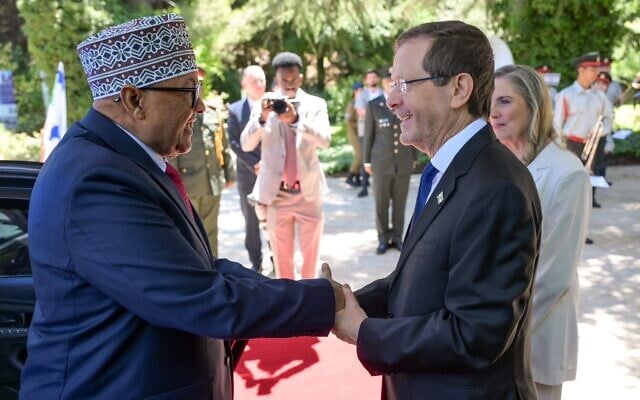
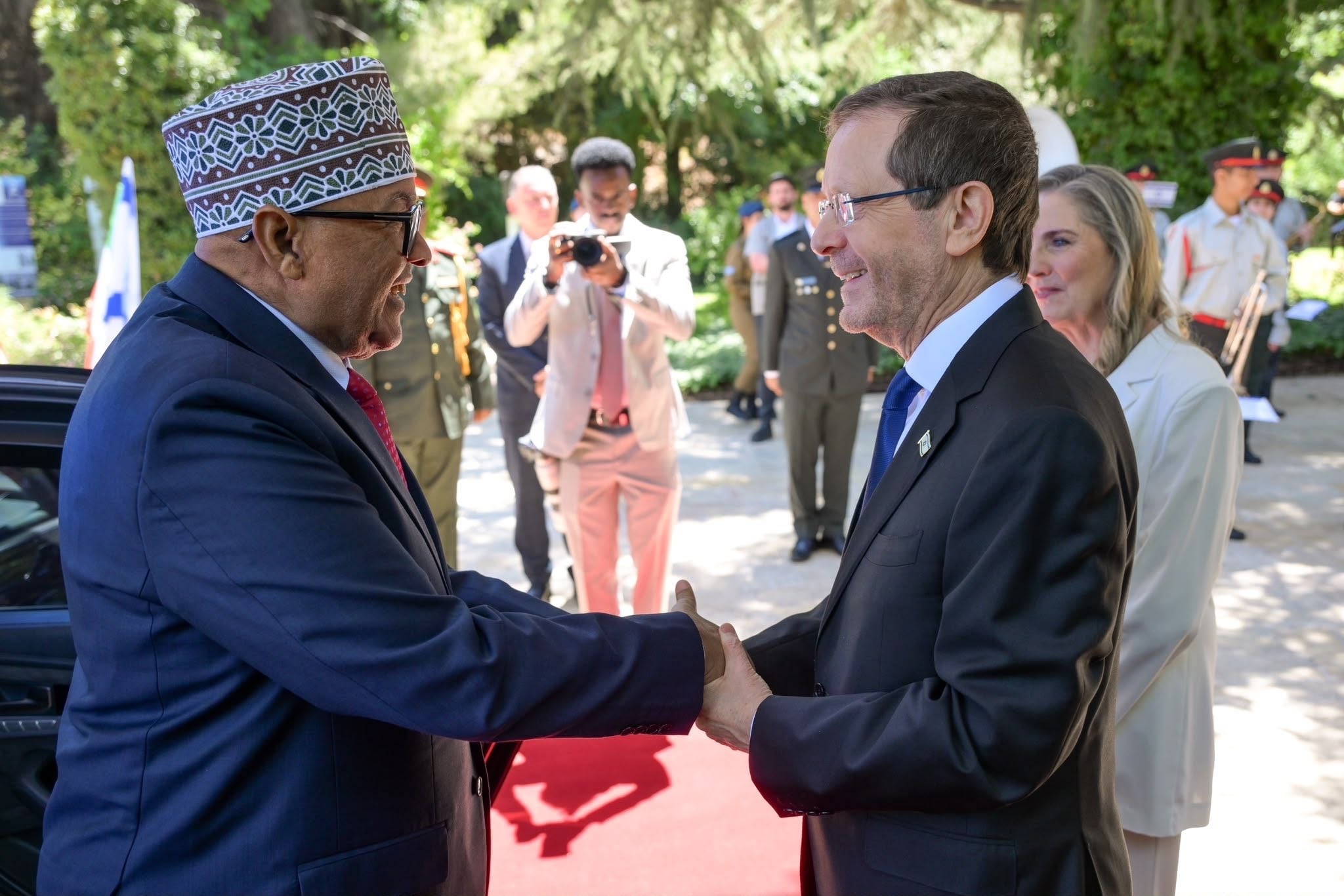
Somaliland President Abdirahman Mohamed Abdullahi is greeted by President Isaac Herzog at the President's Residence in Jerusalem, June 14, 2026 (Ma'ayan Toaf/GPO)
President Isaac Herzog hosts Somaliland President Abdirahman Mohamed Abdullahi at his official residence in Jerusalem.
In December, Israel became the first country in the world to recognize Somaliland, which broke away from Somalia in 1991.
Somaliland said it would open its embassy in Jerusalem.
Hezbollah drone hits military zone in northern Israel for 3rd time today; no injuries
Another suspected Hezbollah drone struck an Israeli military zone in northern Israel, close to the border with Lebanon, a short while ago, the IDF says.
No injuries were caused in the third such incident today, which the IDF says is under further investigation.
Sirens had sounded in several communities in the Upper Galilee.
Senior Israeli doctor: Boycott call published in The Lancet against Israeli Medical Association is ‘wrong on all counts’
After the British journal The Lancet published a call to boycott the Israel Medical Association and suspend it from the World Medical Association, Prof. Hagai Levine, the head of the Israeli Association of Public Health Physicians, tells The Times of Israel that the call “is wrong on all counts.”
The petition, initiated by organizations Global Health BDS, Health Workers for Palestine, and Doctors for Gaza, says that the IMA “failed to condemn the genocide of Palestinians and the destruction of Gaza’s health system.”
Some 1,150 health professionals and health organizations have already signed the petition, which seeks to raise the issue of suspending the Israel Medical Association at the general assembly of the World Medical Association in October.
“A boycott of any kind undermines the universal values that form the very foundation of healthcare,” says Levine.
In its published reply, the Israel Medical Association says its expulsion from the WMA “would not promote peace, healthcare, or human rights. Instead, it would establish a precedent whereby political pressure campaigns may be used to isolate healthcare professionals based on nationality.”
The WMA tells The Lancet that “it deeply values inclusion and believes engagement with its 117 constituent national medical association members is vital to the medical ethics globally.”
Sirens warn of suspected Hezbollah drone attack in north
Sirens warning of a suspected Hezbollah drone attack from Lebanon sound in several communities in the Upper Galilee.
The IDF says the details are under review.
Civil Administration demolishes buildings in Palestinian Bedouin hamlet targeted by settlers
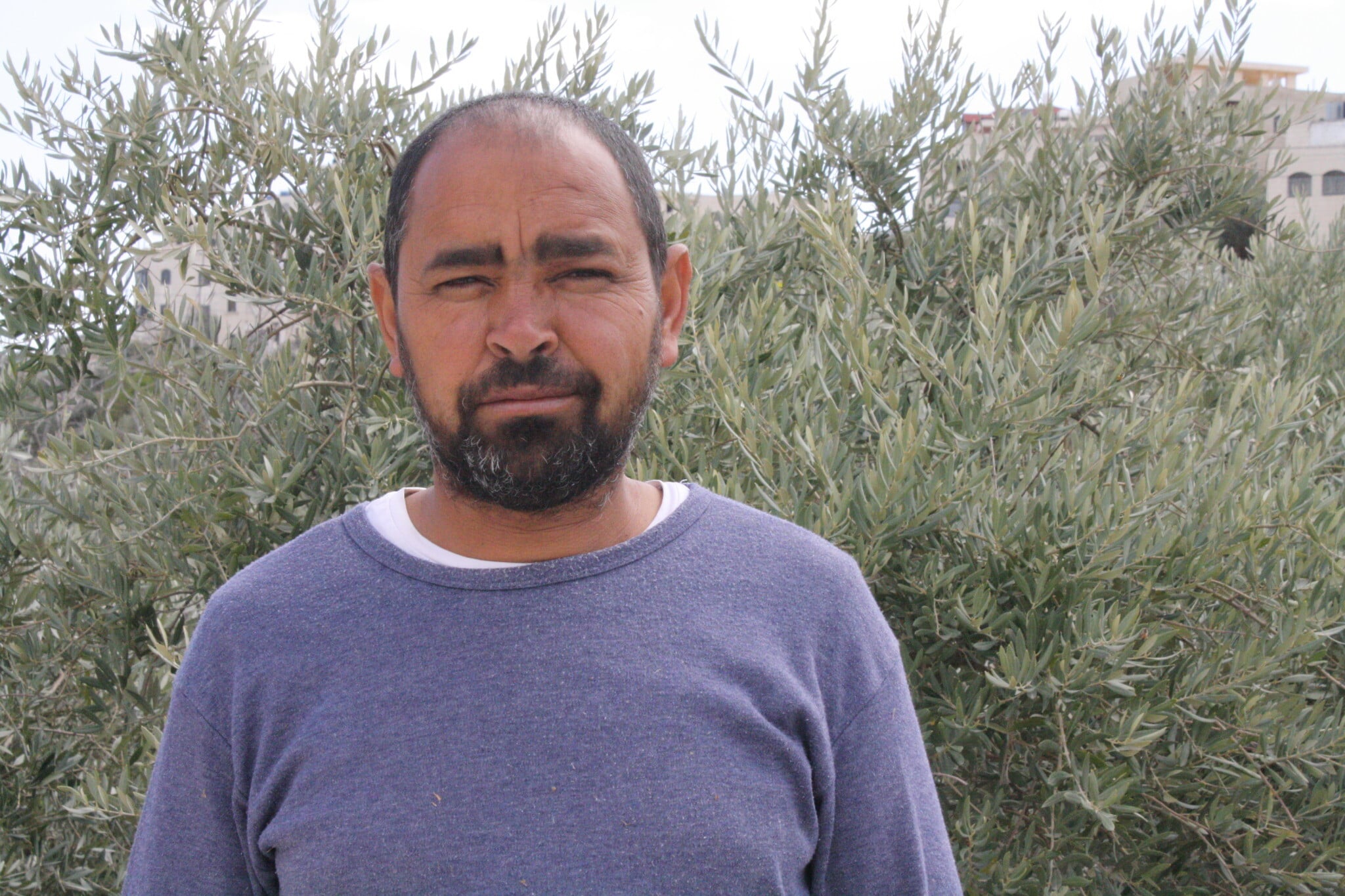
The Civil Administration, a department of the Defense Ministry, demolishes four buildings in the Palestinian Bedouin hamlet of Khallet a-Sidra, which was largely abandoned after being raided by extremist settlers violently raided in January this year.
According to Youssef Zawahreh, a former resident of the hamlet, all four buildings in Khallet a-Sidra, which lies just northeast of Jerusalem, belonged to him.
“All my buildings are gone. This was the work of 20 years; all my life was there, I have nothing left,” Zawahreh tells The Times of Israel by telephone.
The Civil Administration confirms that an “enforcement” operation was carried out on the structures, which it said were illegal.
Zawahreh says, however, that he had built the structures many years ago, and insists that the timing of the destruction and the targeting of his buildings was designed to prevent him specifically from returning to Khallet a-Sidra since, he says, he is the only former resident who is still trying to preserve the existence of the hamlet.
Zawahreh and his wife were severely beaten in the January settler attack, and now live in makeshift accommodation in Mukhmas.
Following the January attack, all 15 families abandoned Khallet a-Sidra, and the IDF then placed roadblocks on the road leading from the hamlet to Mukhmas, which meant it would be extremely difficult for residents to conduct their everyday affairs if they should decide to return home.
The IDF and Civil Administration has also refused to let any of the residents rebuild homes that were burned down by the settlers in the January attack.
Read more: Settlers drove an entire village into exile. Palestinians say the state is keeping them away
Herzog wishes Trump happy 80th birthday, hails his ‘steadfast commitment’ to Israel’s security
President Isaac Herzog wishes US President Donald Trump a happy 80th birthday, hailing the American leader’s fight against Iran and “steadfast commitment” to Israel’s security.
“The people of Israel are grateful for your leadership in confronting Iran’s empire of evil and for your steadfast commitment to the security of Israel,” Herzog writes on X, as Trump prepares to sign a deal with Tehran as early as today — one that Israeli officials have expressed grave concern over.
“We will never forget your tireless efforts in securing the release of our beloved hostages” from Hamas captivity in Gaza, Herzog says, adding, “May you lead the Middle East and the world toward peace and security and continue to strengthen the unique US-Israel partnership.”
Tehran has not yet made final decision on US-Iran agreement, source tells Fars news
Iran’s Fars news agency citing an informed source says that Tehran has not yet made a final decision on the US-Iran framework agreement, with reviews of its political, legal and technical aspects still ongoing at expert and decision-making levels.
Qatari negotiators flew to Tehran this morning as part of an effort to finalize the agreement, a source with knowledge of the situation told Reuters.
Arab Israeli man dies in jail after a quarter century behind bars for planning terror attacks
Imad Sarhan, an Arab Israeli security prisoner behind bars for planning terror attacks, has died in jail.
The Israel Prison Service announces the death of the 47-year-old without disclosing the circumstances.
The deceased inmate was arrested when he was 23 years old in October 2001 alongside six other Arab Israelis on suspicion of plotting a string of nationalistically motivated kidnappings and murders.
The terror cell came up with numerous plans to kidnap soldiers and armed civilians and then steal the weapons so they could carry out further violence, according to a Haaretz report from the time.
Sarhan was also convicted of stealing a harvesting knife from a banana plantation on a northern kibbutz, with the intention of using it in attacks.
He was held in Gilboa Prison in northern Israel at the time of his death.
Senior Druze officer Brig. Gen. Hisham Ibrahim tapped by Katz as next military secretary
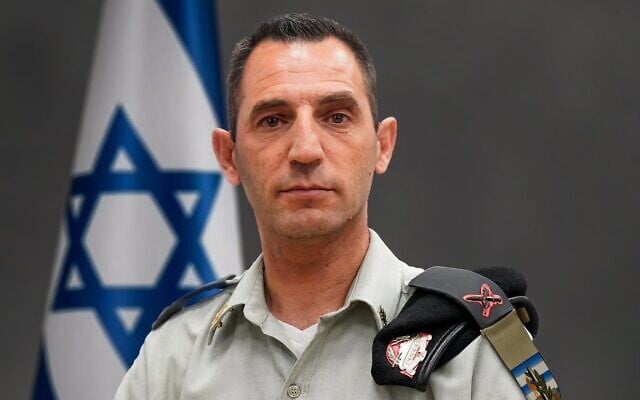
Brig. Gen. Hisham Ibrahim is seen in a portrait published May 8, 2024. (COGAT)
Brig. Gen. Hisham Ibrahim has been appointed by Defense Minister Israel Katz as his next military secretary.
Ibrahim, who currently serves as head of the Civil Administration, replaces Maj. Gen. Guy Markizeno, who is now military secretary to the prime minister.
Ibrahim is one of the most senior Druze officers in the IDF. He previously served as chief of the Armored Corps.
In a statement, Katz says he updated IDF Chief of Staff Lt. Gen. Eyal Zamir of his decision, and Ibrahim will enter the role immediately.
Katz says he is “convinced he will fulfill the important role with great success during a challenging and significant security period for the State of Israel.”
The defense minister interviewed several candidates for the role and ultimately selected Ibrahim at the recommendation of Zamir.
Qatari mediators fly to Tehran amid efforts to finalize US-Iran deal
Qatari negotiators flew to Tehran this morning as part of effort to finalize an agreement to end US-Iran war, a source with knowledge of the situation tells Reuters.
US and Pakistani leaders forecast a signing today of a framework agreement to end the more than three-month-long war, but Tehran cast doubt over the timing as hardline protesters in Iran voiced opposition.
IDF warns 29 villages, towns in south Lebanon to evacuate ahead of strikes on Hezbollah
The IDF warns 29 villages and towns in southern Lebanon to evacuate ahead of strikes on the Hezbollah terror group.
Residents of 16 locales are instructed to evacuate at least one kilometer away, and those of 13 other towns are ordered to head to the north of the Zahrani River.
“In light of Hezbollah’s violation of the ceasefire agreement, the IDF is compelled to act against it with force,” warns army spokesman Col. Avichay Adraee.
Cyberattack disrupted services at 4 Iranian banks, state media says
A cyberattack disrupted services at four major Iranian banks, though no customer data was compromised, the country’s banking coordination council says, according to state media.
The council says the attack targeted a shared communications infrastructure used by Bank Melli, Bank Tejarat, Bank Saderat and the Export Development Bank of Iran, prompting technical teams to implement protective measures and temporarily affecting some banking services.
It says no unauthorized access to customer information had occurred and no data had been deleted, adding that recovery efforts were underway to restore normal operations.
UK forces intercept Russian shadow fleet oil tanker attempting to cross English Channel
British armed forces have intercepted a Russian shadow fleet oil tanker attempting to pass through the English Channel.
The vessel SMYRTOS was boarded by Royal Marine Commandos and specially trained law enforcement officers from the National Crime Agency, Britain’s Ministry of Defence says in a statement.
The vessel will be held and monitored off the south coast as investigations continue, the statement says, adding that enforcement action in Britain’s territorial waters was carried out in accordance with domestic and international law.
British Prime Minister Kier Starmer says that he directed the interception.
“This successful operation delivers yet another blow to Russia and reminds those fueling Putin’s war in Ukraine that we will not let them hide,” Starmer says in a post on X.
Israel Police arrest pro soccer player on suspicion of fixing games, financial crimes
Police arrest a professional soccer player on suspicion of gambling, fixing games and other financial crimes as part of his alleged ties to a gang in northern Israel.
His arrest is part of a larger investigation into a violent gang based in Migdal HaEmek, whose members are suspected of taking orders from a mob boss currently behind bars. The probe is being conducted by investigators in the Lahav 433 major crimes unit.
“The arrest this morning joins arrests that were carried out last week, in full cooperation with the Israel Football Association,” police say.
The detained suspect plays in the National League, Israel’s second division.
Law enforcement suspects the athlete of “gambling in a systemic, illegal manner that does not suit his being an active soccer player in a senior league.”
Officers plan to interrogate other individuals suspected of involvement in the gang’s activity, police say.
Artillery shelling in Lebanon’s Majdal Zoun, al-Mansouri amid IDF advance – reports
Lebanese media reports Israeli artillery shelling in the southern towns of Majdal Zoun and al-Mansouri this morning as Israeli troops advance in the area.
“The outskirts of the towns of Majdal Zoun and al-Mansouri were subjected to intermittent artillery shelling,” reports Lebanon’s National News Agency.
Last night, Lebanese media reported that the IDF had advanced toward Majdal Zoun, located to the north of Israel’s “forward defense line.”
Also yesterday, the IDF published footage of recent airstrikes on Hezbollah in Lebanon, some of which were identified as being carried out in Majdal Zoun.
On Friday, Hezbollah published a statement claiming to have thwarted an Israeli advance on Majdal Zoun after ambushing troops.
Reports: Palestinian man killed by IDF fire in southern Gaza
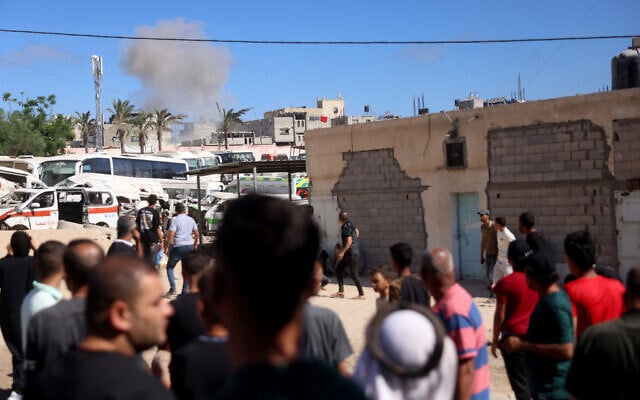
Palestinians look on as smoke rises following an Israeli military strike in Khan Younis, southern Gaza Strip on June 14, 2026 (Bashar Taleb/AFP)
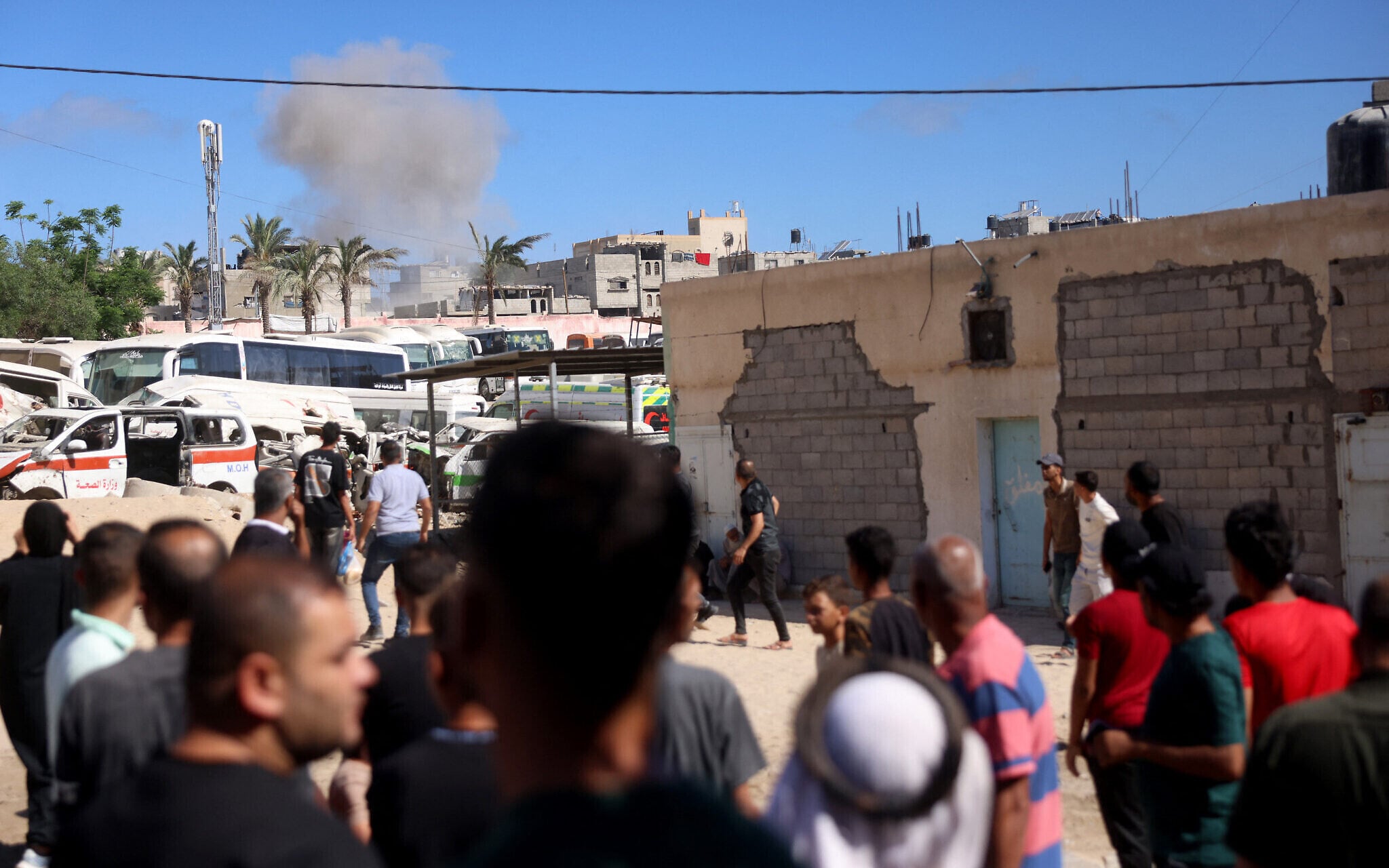
A man was killed by Israel Defense Forces fire east of Khan Younis in the southern Gaza Strip, according to Palestinian media outlets affiliated with Hamas.
He is named as 30-year-old Zaki al-Qara.
There is no comment from the IDF.
Trump set to celebrate turning 80 with cage-fighting show on White House’s South Lawn
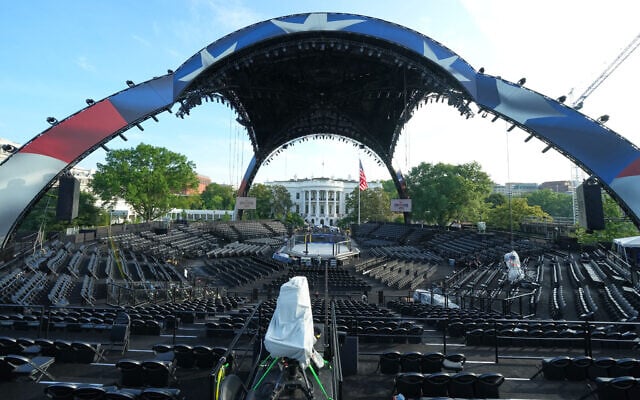
The arena for the UFC Freedom 250 fights on the South Lawn of the White House is photographed June 11, 2026, in Washington. (AP Photo/Alex Brandon)
US President Donald Trump will celebrate turning 80 today with a showstopping birthday spectacle that once would have seemed unfathomable: a cage-fighting show on the storied South Lawn of the White House.
This week, the realities of the office have threatened to overshadow the ostentatious UFC mixed martial arts extravaganza, where combatants sealed inside a wire-mesh octagon try to punch, kick, chop and pummel each other into submission.
Trump has found himself boxed into an unpopular and costly war in Iran. An agreement to end the conflict could be close, but the crucial details are still to be negotiated. Meanwhile, about a mile from Trump’s birthday bash, crews pried the president’s name off the Kennedy Center after a judge ruled naming it after Trump had gone too far.
Regardless, the US president will walk out of the White House and be surrounded by Cabinet leaders, top administration officials, Republican lawmakers and 4,000-plus spectators screaming themselves hoarse in a temporary arena under “The Claw,” a spaceship-like metal arch fitted with lighting, sound equipment and large screens. Thousands more will be watching on big screens from the nearby Ellipse.
The US president has sought to tie the event — which features seven fights running past midnight — to larger, months-long celebrations of the 250th anniversary of the signing of the Declaration of Independence.
2 suspected Hezbollah drones hit military zone in northern Israel; no injuries
Two suspected Hezbollah drones struck an Israeli military zone in northern Israel, close to the border with Lebanon, a short while ago, the IDF says.
The military says no injuries were caused in the incident, which is under further investigation.
The “suspicious aerial targets” had triggered sirens in several communities in the Western Galilee.
Footage shows one of two Hezbollah drones striking an Israeli military zone on the border with Lebanon in the Western Galilee this morning. pic.twitter.com/IyG09f7ILc
— Emanuel (Mannie) Fabian (@manniefabian) June 14, 2026
Sirens in northern border towns warn of suspected drone attack from Lebanon
Sirens sound in a number of communities close to the northern border, warning of a suspected drone attack from Lebanon.
Rail services temporarily paused in Haifa area after objects fall onto tracks from freight train
Israel Railways announced services have been temporarily suspended between a number of stations in the Haifa area, reports say.
Rail services are paused after metal objects from a freight train fell on the tracks, the Walla news site reports.
The suspension comes at the start of the rush hour on the first day of the week in Israel.
New York Knicks win first NBA title in 53 years, beating the San Antonio Spurs 94-90

The New York Knicks celebrate with the Larry O'Brien Championship Trophy after defeating the San Antonio Spurs in Game 5 of the NBA Finals basketball series, June 13, 2026, in San Antonio. (AP Photo/Darren Abate)
The New York Knicks defeat the San Antonio Spurs 94-90 to claim their first NBA championship since 1973.
Jalen Brunson scores a game-high 45 points as the Knicks closed out the best-of-seven NBA Finals in five games, just days after completing the greatest comeback seen in the championship round.
Brunson is named Finals MVP after his relentless performance helped New York come from behind to clinch the title on the road in front of a strong contingent of traveling Knicks fans.
The Spurs started strong once again and held several double-digit leads all night, but the Knicks crawled back and finally took their first lead with 3:40 left to play.
The Spurs were unable to come back and the Knicks cap off a dominant championship run that saw them lose just three games in the postseason.
IDF says suspected drone fell in southern Lebanon, no injuries; Eilat sirens were false identification
The IDF says that suspected drone infiltration sirens that sounded a short while ago in the Lebanon border towns of Metula and Ghajar were triggered by a suspicious aerial target that fell in an area of southern Lebanon where Israeli troops are operating.
It says the incident is over and there were no injuries.
Regarding aerial infiltration sirens that sounded in Eilat, the IDF says they were triggered by a false identification.
Suspected drone alerts sound in Eilat area in south
Suspected drone infiltration alarms sound in the southern city of Eilat and the surrounding areas.
The IDF says it is looking into the details.
Suspected drone sirens sound in Lebanon border towns
Suspected drone infiltration alerts sound in the Lebanon border towns of Ghajar and Metula.
The IDF says it is looking into the details.
The Home Front Command later says the incident is over and residents can leave bomb shelters.
Opposition chief Lapid says US-Iran deal ‘doesn’t achieve any of Israel’s war goals’
Opposition Leader Yair Lapid slams the emerging US-Iran deal, tweeting that it “doesn’t achieve any of Israel’s war goals — the regime survives, the missile program is intact, and Iran can rebuild the nuclear program.”
Lapid claims this is a “total failure” by Prime Minister Benjamin Netanyahu that turns Israel into a “protectorate that receives instructions regarding its national security,” criticizing the premier’s “inability to turn military achievements into strategic successes.”
Dozens protest deal with US outside Iran foreign ministry office — local media
Dozens protested Saturday outside a foreign ministry office in Iran’s northeastern city of Mashhad, chanting slogans against top diplomat Abbas Araghchi after a televised interview in which he discussed signing a deal with the US to end the war.
In a video shared by Fars news agency, women in black chadors chant “death to dishonorable Araghchi, the infiltrator” in front of the building, while waving red and black flags.
A Mashhad resident tells Reuters in Dubai that some protesters chanted: “Death to the compromiser,” in an apparent reference to Araghchi. “Compromiser, resign, resign.”
The protest comes as the deal touted by US President Donald Trump and mediator Pakistan faces opposition from hardline Iranian figures.
They argue that it does not serve Iran’s interests and would deprive Tehran of leverage over the Strait of Hormuz. They also accuse Iranian negotiators of having made too many concessions to secure the deal.
In an interview with state television Friday, Araghchi said the deal on the table calls for the lifting of the US naval blockade on Iranian ports, imposed in response to Iran’s own blockade in the Strait of Hormuz.
“The administration of Strait of Hormuz will no longer be the same as before,” he added, calling the waterway one of Iran’s “main instruments of deterrence.”
Other videos on social media that AFP cannot independently verify show people in front of the foreign ministry building in Tehran chanting “Araghchi, resign” and “Ghalibaf, resign,” in reference to parliament speaker and chief negotiator Mohammad Bagher Ghalibaf.
Trump and Pakistan have said the deal to end the war may be signed as early as Sunday, though Tehran is more circumspect regarding the timing.
A video released by IRGC-affiliated media appears to show a gathering outside the Foreign Ministry’s representative office in Mashhad on Saturday evening where protesters chant, “Death to Araghchi, the dishonorable compromiser and infiltrator.”
The hardliners have been… pic.twitter.com/VlhvUiCFmA— Iran International English (@IranIntl_En) June 13, 2026


read more: