

Live updates (closed)
 Add ToI as a Preferred Source on Google

The Times of Israel liveblogged Tuesday’s events as they unfolded.
UAE lifts war-related ban on travel to Lebanon
The UAE has said its nationals can travel to Lebanon, effective today, lifting a weeks-long ban in place because of the Middle East war and concerns about Iran’s influence.
The foreign ministry announces that “it will allow UAE citizens to travel to the sisterly Lebanese Republic, starting from Monday, June 29, 2026,” the official WAM news agency reports.
The ministry asks citizens to register with its consular services platform before traveling to Lebanon.
The United Arab Emirates banned travel for Emirati nationals to Lebanon in April as well as to Iraq and Iran, citing regional developments including the Middle East war.
During the war, halted by an April ceasefire, Gulf states bore the brunt of Iran’s retaliatory aerial campaign following US and Israeli strikes on the Islamic Republic beginning on February 28.
Earlier on Monday flights resumed between Tehran and Dubai, Iranian state TV and other media reported, for the first time since the war.
Israel to send official delegation of experts to assist quake-stricken Venezuela tomorrow
Israel will send a joint delegation from the Foreign Ministry and the IDF to Venezuela tomorrow to assist in the aftermath of the powerful earthquakes that struck the country, the ministry announces in a statement.
Ambassador Yoed Magen, who grew up in Venezuela, will lead the Foreign Ministry’s activities in the delegation, while the military delegation will be headed by Home Front Command Chief of Staff Brig. Gen. Elad Edri, the statement adds.
The delegation includes engineering professionals and other experts from the Home Front Command, as well as Foreign Ministry representatives, while experts from the National Emergency Management Authority are expected to join the group at a later stage.
The move was decided following an assessment led by the National Security Council, the ministry adds.
Lebanon state media says Israeli strike hits south
Lebanese state media says an Israeli strike hit the country’s south.
“Israeli warplanes carried out an airstrike targeting the area between the southern Lebanese towns of Qantara and Deir Seryan,” the state-run National News Agency says.
There is no immediate word on the target of the strike.
New TV poll shows Eisenkot gaining strength
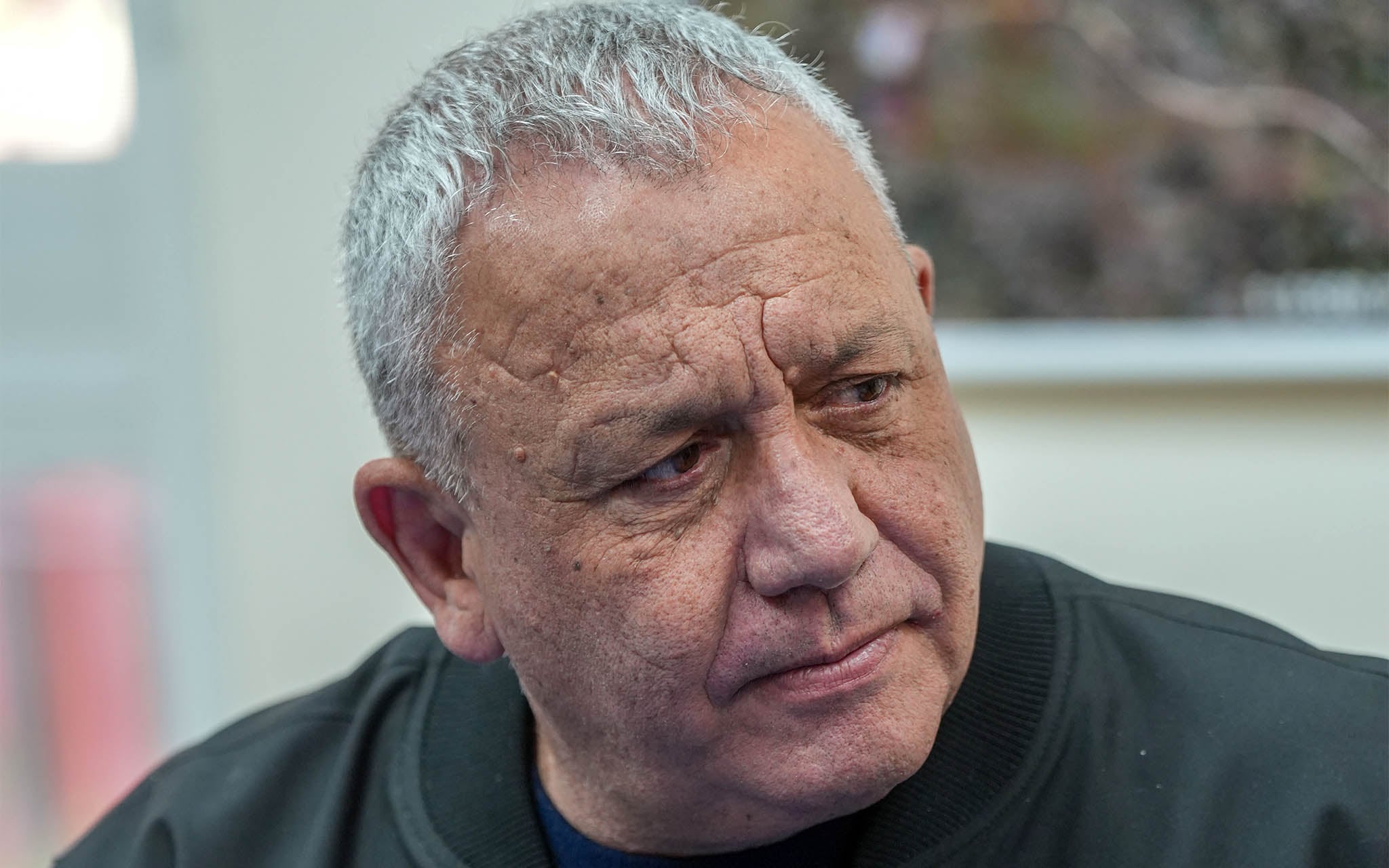
Former IDF chief of staff Gadi Eisenkot during a visit to Kibbutz Yiftah near the Israeli border with Lebanon, March 9, 2026. (Ayal Margolin/Flash90)
Former IDF chief Gadi Eisenkot’s centrist Yashar party would pull ahead of Naftali Bennett’s center-right Together alliance with Yesh Atid if elections were held today, a Channel 12 News poll finds.
Prime Minister Benjamin Netanyahu’s Likud party remains the largest faction with 24 seats in the poll, while Eisenkot trails behind the premier with 22.
Bennett, allied with his former partner in government Yair Lapid, is polling at 17 seats.
Overall, the survey aired tonight puts the Zionist anti-Netanyahu bloc at 58 seats total, beating out the current coalition’s projected 52 seats.
Both Arab parties are projected to make it into the Knesset, Hadash-Ta’al and Ra’am, coming to 10 seats in total.
Neither the Zionist opposition or coalition are projected to win the 61 seats needed to form a government.
The next-largest party in tonight’s Channel 12 poll is The Democrats, led by Yair Golan, which would rake in 10 seats.
Yisrael Beytenu, the secularist opposition party run by former defense minister Avigdor Liberman, and the Sephardic ultra-Orthodox Shas party are projected to win nine seats each.
Itamar Ben Gvir’s ultranationalist Otzma Yehudit party is projected to win eight seats, while the Haredi United Torah Judaism would win seven.
Both Ra’am, a moderate Islamist party, and the predominantly Arab Hadash-Ta’al alliance receive five seats apiece. Finance Minister Bezalel Smotrich’s Religious Zionism party barely passes the threshold with four seats.
The Arab nationalist Balad party, Benny Gantz’s Blue and White, and The Reservists all fail to cross the threshold needed to make it into the Knesset.
When polled about who they would prefer as prime minister, the most popular contender against Netanyahu is Eisenkot, as opposed to Bennett or Liberman.
When up against Eisenkot, Netanyahu polls at 37% support against Eisenkot’s 36%. Netanyahu is preferred by 40% of those surveyed when placed against either Bennett or Liberman, who poll at 32% and 23%, respectively.
Russia says it downed 419 Ukrainian drones
Russia shot down 419 Ukrainian drones across the country overnight, the defense ministry says.
Kyiv has stepped up its long-range drone strike campaign against Russia in recent months, particularly against energy infrastructure to target a vital source of the Kremlin’s revenue to fund its war effort, now in its fifth year.
Air defense systems “intercepted and destroyed 419 Ukrainian fixed-wing unmanned aerial vehicles” around the country, the defense ministry posts on the state-run Max platform.
It does not say if there were any deaths or injuries.
The swarm came days after Russia shot down 660 Ukrainian drones between Thursday and Friday, one of the highest figures since the start of the conflict.
A Ukrainian attack also caused a fire last week at a refinery in the southeast of Moscow.
‘Journalist or terrorist’: Israeli envoy accuses UN of amplifying Hamas ‘lies’ on world stage
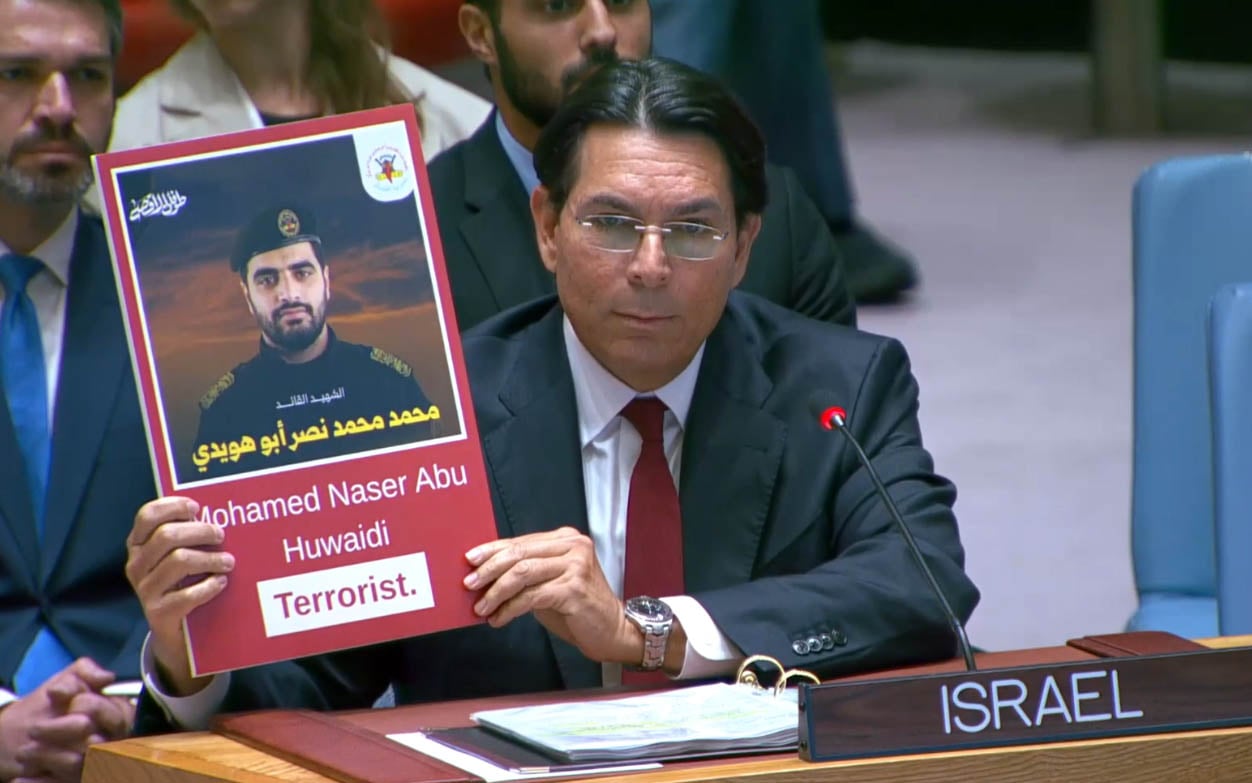
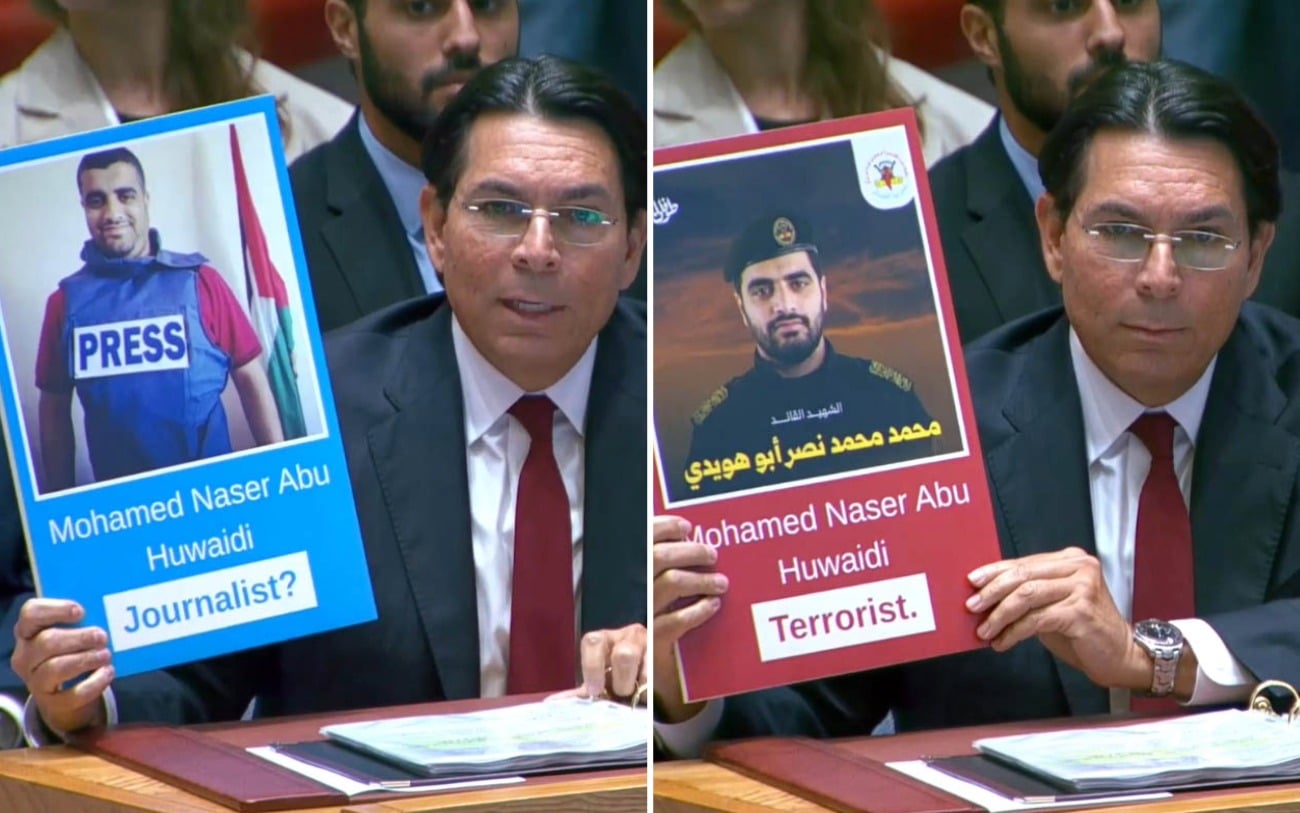
Israel's UN Ambassador Danny Danon at the UN Security Council, June 29, 2026 (Screenshot/UN WebTV)
After Palestinian terror groups’ acknowledgement that multiple supposed journalists killed in the Gaza war were among their ranks, Israel’s UN Ambassador Danny Danon uses his time at the UN Security Council for a quiz of “Journalist or terrorist?”
“Israel is condemned again and again and again,” Danon tells the council. “A claim is made against Israel. The UN repeats it and then the world condemns it. Then when the truth comes out — it takes time, sometimes weeks, months, years — no apology, no correction, no retraction. They move on. We will not move on.”
Danon holds up several photos of ostensible members of the press killed in Gaza, before flipping them to reveal their role as combatants.
עיתונאי או מחבל?
אתם תקבעו. pic.twitter.com/xZ2d7j3lYR— Danny Danon ???????? דני דנון (@dannydanon) June 30, 2026
“The same propaganda campaign was repeated here by New York City’s mayor. Mr. [Zohran] Mamdani stood before a crowd… He said Israel killed an Al Jazeera journalist, Ahmed Wishah,” Danon said.
“Mr. Mamdani, we have the video, we have the evidence. This is Ahmed Wishah, the one that you condemned us for eliminating,” he said, flipping the photo to show Wishah sporting a jihadist headband and a rifle. “A Hamas terrorist, a sniper in Hamas’s military wing.”
The envoy went on: “This is the machine. Hamas makes a claim, the NGO ecosystem, rapporteurs, briefers, all repeat the lies. Then a UN report rubberstamps it, the world’s media broadcasts it, and Israel is condemned before the facts are even checked.”
DHS secretary celebrates Iran’s exit from World Cup with ‘happy dance’
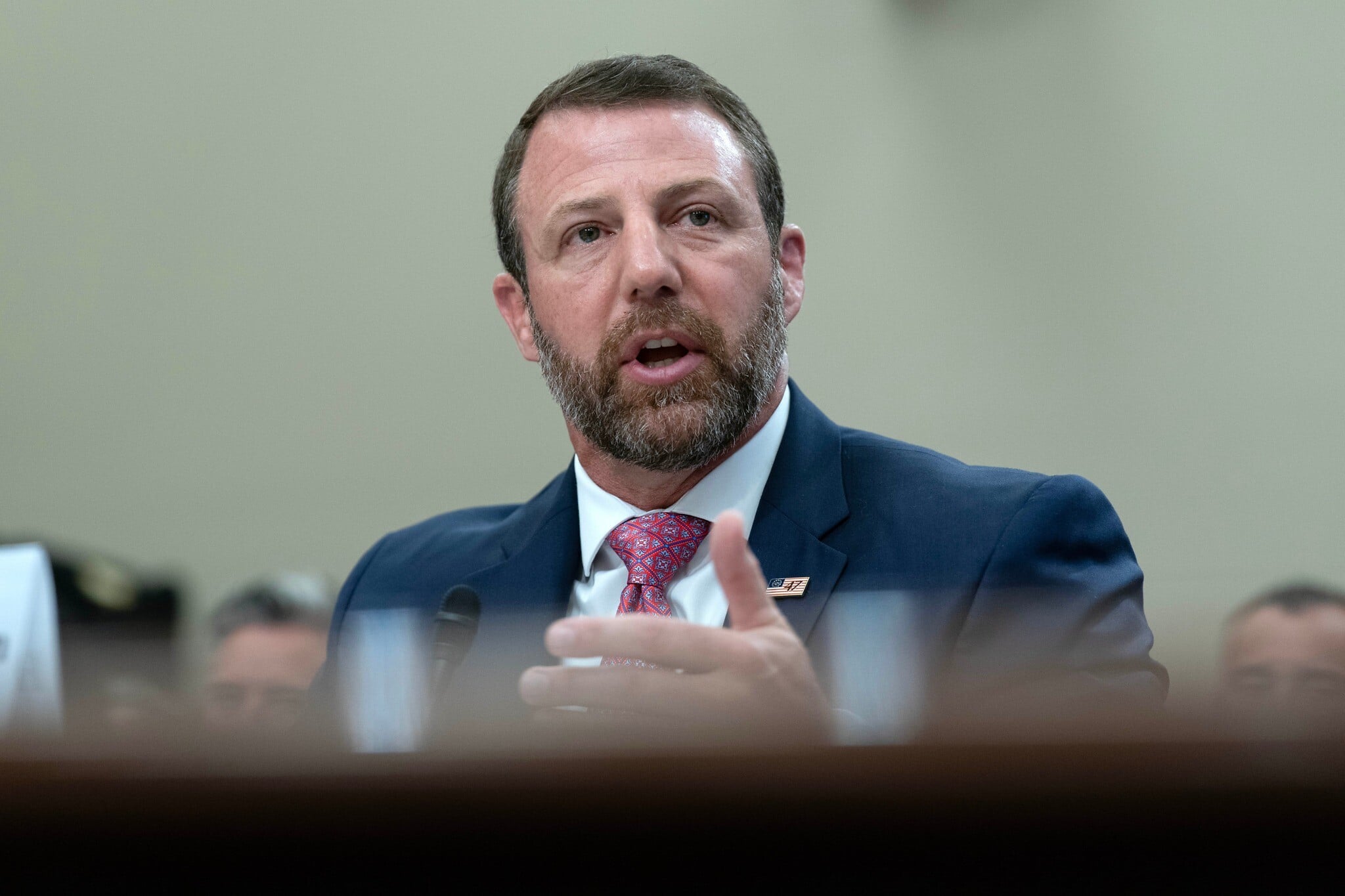
US Homeland Security Secretary Markwayne Mullin testifies before the House Committee on Appropriations subcommittee on Homeland Security hearing on Capitol Hill, Thursday, June 25, 2026, in Washington. (AP Photo/Jose Luis Magana)
US Homeland Security Secretary Markwayne Mullin has celebrated Iran’s elimination from the World Cup, saying he did a “happy dance,” Sports Business Journal reports.
The Iranian team barely missed out on reaching the knockout rounds of the tournament. They drew all three of their matches in Group G and finished as the ninth-best third-place team after Austria scored a last-minute goal against Algeria in the final group-stage match. The top eight third-place teams earned spots in the round of 32.
Mullin didn’t hide his overjoyed reaction to the news that Iran was eliminated. He spoke at a World Cup security briefing in Washington, per SBJ, saying he was “so glad they’re gone” and that he was “very happy they’re going back because there wasn’t a single team that we dealt with more than them.
Mullin told reporters following the Monday briefing, according to SBJ, “I’m just glad they’re done, and they’re not coming back. I was so happy when we were able to pull their visas and said they could leave the US soil, and I might’ve sung a song or two or maybe even danced a happy dance.”
Young man shot dead overnight in East Jerusalem
A 22-year-old was shot and killed overnight in Silwan, a Palestinian neighborhood in East Jerusalem, police say.
The young man was brought to the hospital along with his brother, who was injured lightly by the gunfire. The former was pronounced dead by medical staff.
The victim is identified as Silwan resident Hussein Issa by local Arabic outlets.
Police say its forces are currently operating in the neighborhood, searching for suspects after launching an investigation into the fatal shooting.
Israeli military cellphone found in Syria border area
A military cellphone belonging to an IDF soldier was dropped in southern Syria in recent days, according to footage.
Footage published yesterday by the official SANA news agency and other Syrian media outlets shows a Samsung XCover Pro 6 model — a rugged version of Samsung’s Galaxy devices — that was left behind at the Tal al-Maghar hill, near the border village of Abidin.
The device bears stickers identifying it as belonging to the Israeli army, including a serial number.
In response to the footage, the IDF says “the incident is known and is under review.”
“The incident is being handled through the relevant channels,” the army adds.
????|#Suriye'nin #Dera kırsalındaki Abidin köyü ekseninde dün yaşanan çatışmaların ardından işgalci #İsrail Ordusu'na ait Samsung XCover 6 Pro model askeri telefon ele geçirildi.
Telefon üzerindeki etiketlerde cihazın askeri haberleşme projesine kayıtlı olduğu görülüyor. pic.twitter.com/cUAN8o6xG2
— Külliyat (@kulliyatX) June 29, 2026
Outcry as Haredi rabbi rants against ‘accursed’ IDF chief, ‘may his name and memory be erased’

Rabbi Aryeh Yazdi curses the IDF chief of staff at a Bnei Brak event against the arrest of Haredi draft dodgers, June 29, 2026 (Video screenshot)
An ultra-Orthodox rabbi is being widely condemned and facing accusations of incitement after denouncing the IDF chief of staff in highly inflammatory terms, speaking out against “the accursed” Eyal Zamir and saying, “May his name and memory be erased.”
Rabbi Aryeh Yazdi, speaking at a Bnei Brak event protesting the arrest of Haredi draft dodgers, noted recent punitive actions against soldiers who wore “Messiah” badges on their uniforms, breaking regulations.
“The accursed IDF chief of staff — may his name and memory be erased — sent [such a soldier] to prison for a month. Why? Because he yearned for the Messiah,” Yazdi said. “This entire army wants to root out the Torah, to root out belief, to root out the Messiah.”
He also said: “In the army they are educating people toward the most severe transgressions in the Torah, in this impure country. This whole army desires to uproot the name of God.”
“Don’t fall into that. Don’t go to the army,” he said.
הרב משה יזדי בבני ברק בעצרת המחאה של מפלגת ש"ס נגד המעצרים בבני ברק: "הרמטכ"ל ימח שמו וזיכרו שולח חייל לכלא כי הוא שם פתק משיח, בצבא מחנכים לעבירות החמורות ביותר" pic.twitter.com/bP5Cwz0wIF
— יואלי ברים yoeli brim (@yoeli_brim) June 29, 2026
Hebrew media reports noted that at the same rally, some chanted “traitor” against Haredi leader and Shas party chairman Aryeh Deri.
Several Shas MKs were in attendance but did not speak out against the comments.
Ynet notes that the Torah and Life Yeshiva in Bnei Brak, where Yazdi teaches, receives hundreds of thousands of shekels in state support annually.
In a statement, Defense Minister Israel Katz says he “strongly condemn[s] the grave inciting remarks made against the chief of staff… Even when there are public disagreements, it is forbidden to cross red lines of incitement and harm against those who bear the heavy responsibility for the country’s security.”
President Isaac Herzog denounces the “shocking statement” by Yazdi. “Even in times of deep disagreement, there is no place for curses, insults, or derogatory language — certainly not toward the commander of the IDF and of our soldiers, our sons and daughters. Public leaders are required to maintain responsible and respectful discourse.”
Together party chair Naftali Bennett promises to “put an end” to state funding for figures such as Yazdi. “The rule is simple: anyone who teaches against Zionism and against the State of Israel will not receive a shekel from the state. Anyone who chooses not to work does not receive money. Anyone who chooses not to serve does not receive money. That’s it. This is the new deal between the state and its citizens.”
Yashar party chair Gadi Eisenkot responds: “The wild incitement against the chief of staff at the rally in Bnei Brak last night, in the shameful presence of Netanyahu’s coalition partners, recklessly crosses red lines while effectively permitting the blood of IDF commanders and soldiers [to be spilled]. This low point is a direct result of the culture of hatred and division that Netanyahu has been driving the country into for years in order to stay in power.”
Netanyahu joins condemnations of Haredi rabbi’s ‘shameful’ remarks against Zamir
Prime Minister Benjamin joins a chorus of condemnations against inflammatory remarks made against IDF Chief of Staff Eyal Zamir by an ultra-Orthodox rabbi during a protest in Bnei Brak against the arrest of Haredi draft evaders.
“I strongly condemn the shameful remarks made against the chief of staff yesterday in Bnei Brak,” Netanyahu says in a statement.
“Even when there are disagreements among us, there is absolutely no place for severe incitement against the IDF and its commanders, who protect us all,” adds the premier, who has faced increasing tension with the ultra-Orthodox members of his coalition in recent months over efforts to advance legislation regulating military service for Haredi men and largely exempting them.
Rabbi Aryeh Yazdi is being widely condemned and facing accusations of incitement for speaking about Zamir in highly inflammatory terms yesterday, including calling him “the accursed” Eyal Zamir and saying, “May his name and memory be erased.”
Shas says rabbi’s cursing of IDF chief is ‘contrary to our path’
The Haredi Shas party speaks out against Rabbi Aryeh Yazdi’s tirade against IDF chief Eyal Zamir.
“The extreme statements heard last night against the IDF chief of staff at the Bnei Brak protest rally in honor of the Torah do not reflect the views of our rabbis, the Council of Torah Sages, and are contrary to the path of the Shas movement,” the party says in a statement.
Several Shas officials including a number of MKs were in attendance at the rally, and did not speak out against Yazdi’s words.
‘Terrorists’ shoot dead two Guards members in Iran — state media
Attackers shot dead two members of Iran’s Revolutionary Guards at their home in the western city of Paveh, near the border with Iraq’s Kurdistan region, state media reports.
It is not immediately clear who was behind the shooting but Tehran has frequently blamed Kurdish separatist groups in the area for previous violence, accusing them of links to the United States and Israel.
The two IRGC members were killed in “a terrorist and cowardly act,” state television says, while two other Guards members were wounded.
State television says “exact details of this incident and the measures being taken to identify those responsible are under review.”
Over 95 million people in Europe face temperatures above 35°C amid heatwave

Passengers stand on the platform waiting for trains delayed due to the heatwave at Warsaw Central railway station in Warsaw on June 28, 2026 (Sergei GAPON / AFP)
More than 95 million people in Europe, mainly located in the eastern and southern parts of the continent, are set to face temperatures of at least 35°C today, according to AFP calculations.
This is down from more than 130 million forecast to experience such temperatures on Monday, although 2 in 5 people in Europe (excluding Turkey) are still expected to face temperatures above 30°C today as the continent’s most severe heatwave on record spreads east after smothering Western Europe last week.
Octogenarian drowns in the Dead Sea

Salt formations and sinkholes at the Dead Sea, southern Israel, May 2, 2023. (Mendy Hechtman/Flash90)
A man aged around 80 has drowned in the Dead Sea.
Rescue forces pulled the man out of the water. Paramedics could not resuscitate him and he was declared dead at the scene.
Knesset debates enshrining Torah study as Basic Law, freeze on arrests of draft evaders
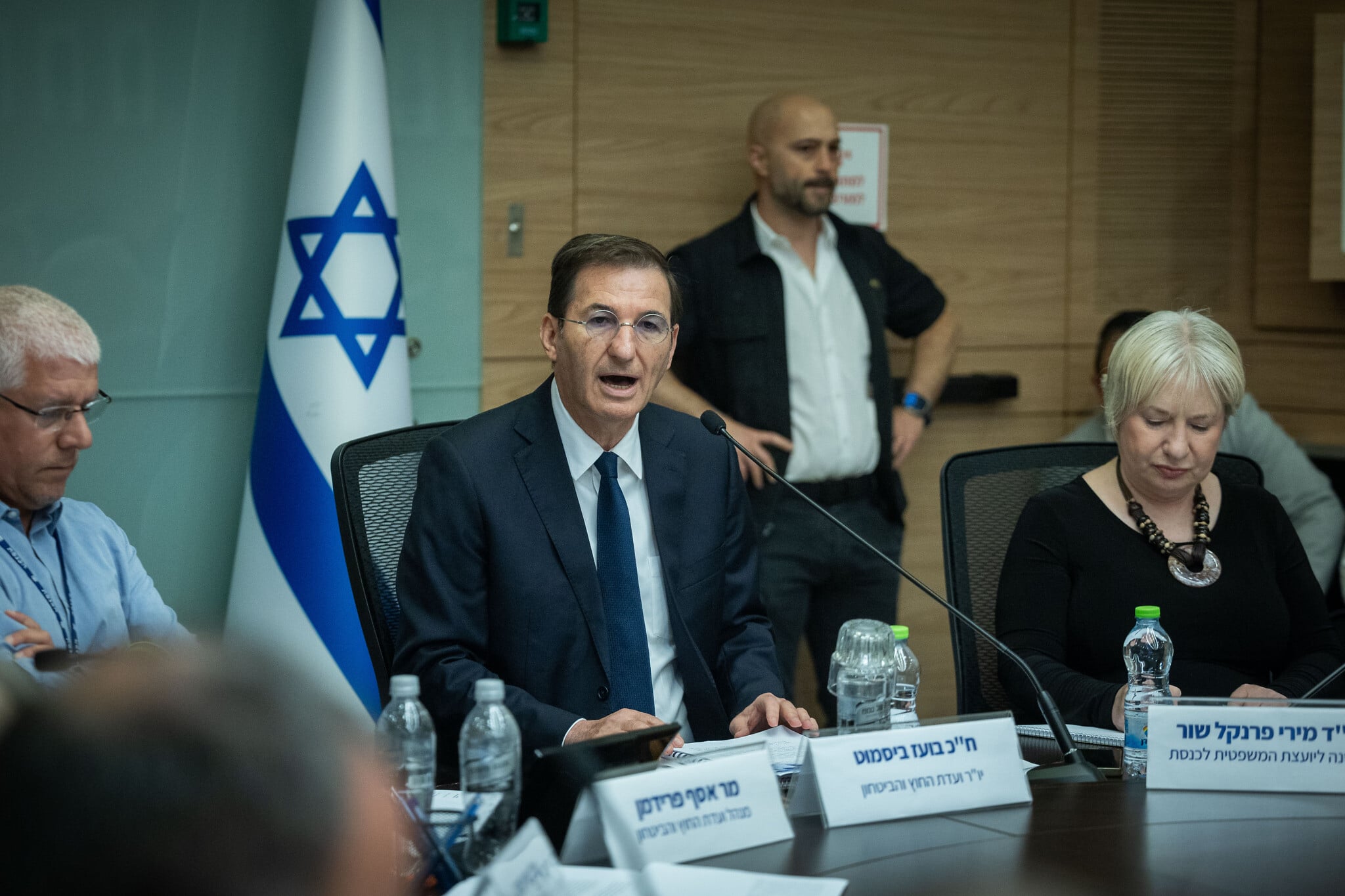
MK Boaz Bismuth leads a Foreign Affairs and Defense Committee meeting at the Knesset in Jerusalem, June 30, 2026 (Yonatan Sindel/Flash90)
The Knesset is debating two contentious bills today promoted by ultra-Orthodox parties: a proposed Basic Law declaring Torah study a foundational value of the State of Israel, and a temporary order freezing arrests and other enforcement measures against Haredi draft evaders.
The measures form part of the Haredi parties’ broader push to preserve mass exemptions for yeshiva students from military service by elevating the status of Torah study, while shielding current draft evaders from criminal enforcement.
The House Committee will begin voting today on elements of the Basic Law for Torah Study ahead of an expected vote in its first reading in the plenum tomorrow. Absent a constitution, Basic Laws in Israel have the highest legal status in the country.
Meanwhile, the Foreign Affairs and Defense Committee will begin debating the temporary order to freeze for 90 days arrests, investigations, and other enforcement measures against full-time yeshiva students eligible for military service.
Both bills have drawn widespread criticism from the opposition, from the coalition itself and from Knesset legal advisers, who have argued that it is impossible to properly deliberate a Basic Law of such significance before the Knesset recesses in the coming weeks ahead of upcoming October elections.
In a legal opinion submitted to lawmakers yesterday, the Foreign Affairs and Defense Committee’s legal adviser warned that the temporary order goes far beyond freezing arrests, arguing that the proposal amounts to a “mini draft law,” serves as an “amnesty clause” for both current and future yeshiva students in place of comprehensive enlistment legislation, and creates broad exemptions without a functioning oversight mechanism.
The legislative push comes amid reports that Prime Minister Benjamin Netanyahu reached an agreement with Shas and United Torah Judaism to advance key Haredi legislative priorities in exchange for supporting coalition initiatives, although both parties have denied such a deal exists.
The coalition is racing to pass legislation before the Knesset enters its pre-election recess on July 16, after a Haredi boycott effectively froze coalition legislation for the last several weeks.
US envoys Witkoff and Kushner will be in Qatar, but no meeting with Iran, Qatari official says
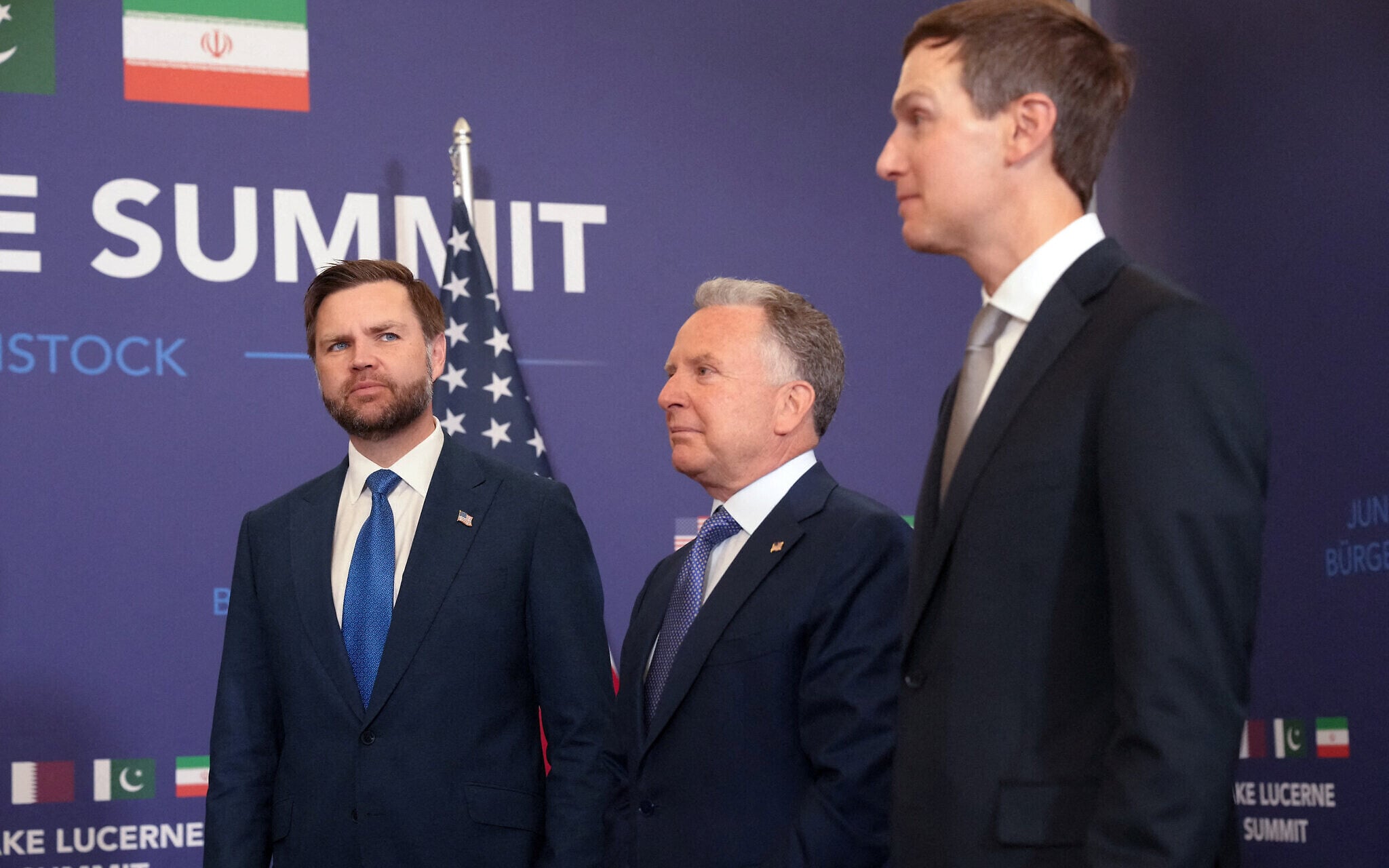
US Vice President JD Vance (L) waits, alongside US President Donald Trump's special envoy Steve Witkoff (C) and Jared Kushner, to meet with Pakistan's Prime Minister Shehbaz Sharif (not seen), at the Burgenstock luxury hotel complex overlooking Lake Lucerne, Switzerland, on June 21, 2026. (Nathan Howard / POOL / AFP)
US envoy Steve Witkoff and President Donald Trump’s son-in-law Jared Kushner will be in Doha today to meet Qatari mediators to discuss US-Iran negotiations, but there will not be a high-level meeting between Washington and Tehran, Qatar’s foreign ministry spokesperson says.
“Mr. Steve Witfoff and Mr. Jared Kushner are here in Doha to meet with mediators, with Qatari officials, and the talks will be around all regional issues… including, of course, negotiations with Iran, but also including Lebanon,” foreign ministry spokesman Majed Al Ansari says.
“They are not here for their negotiations with the Iranians,” he adds.
US President Donald Trump said yesterday that his country’s next meeting with Iran would take place in Qatar today, amid conflicting reports as to whether American and Iranian negotiators would meet in the coming days to continue talks toward a final accord.
“Iran has requested a meeting. It will take place tomorrow in Doha!” Trump said in a post on Truth Social.
By contrast, Iran’s Foreign Ministry spokesperson Esmaeil Baghaei said yesterday that no talks were scheduled between the two sides. “We will not have any negotiation meetings at any level with the American side in the coming days,” Baghaei said.
Iran, he said, is sending a technical delegation to Qatar this week but this has “no relation” to the Americans’ visit.
A senior Iranian official said a meeting in Doha would be limited to discussions on managing the Strait of Hormuz and reducing tension.
The standoff follows exchanges of fire over the weekend that tested the June 17 interim accord between the United States and Iran. The 14-point pact allowed 60 days for the two sides to negotiate a permanent truce in the conflict that began with U.S. and Israeli strikes on Iran on February 28 and to resolve thorny issues including the future of Iran’s nuclear programme.
IDF says Oct. 7 terrorist who held hostages killed in Gaza strike
A Palestinian Islamic Jihad terrorist who held hostages in the Gaza Strip and commanded members of the terror group as they invaded Israel during the October 7, 2023, onslaught, was killed in a strike this week, the military and Shin Bet announce.
The IDF says the strike on Sunday in southern Gaza killed Talal al-Aal, who held several roles in Islamic Jihad.
“Al-Aal commanded a cell of terrorists that invaded Israel and took part in the October 7 massacre,” the military says.
During the war, al-Aal held hostages who were in captivity of Islamic Jihad in southern Gaza, the IDF adds.
The IDF in recent months has been ramping up strikes on terror operatives in Gaza, including several October 7 terrorists, saying they posed a threat to Israeli forces.
Hamas delegation arrives in Cairo to discuss Gaza ceasefire
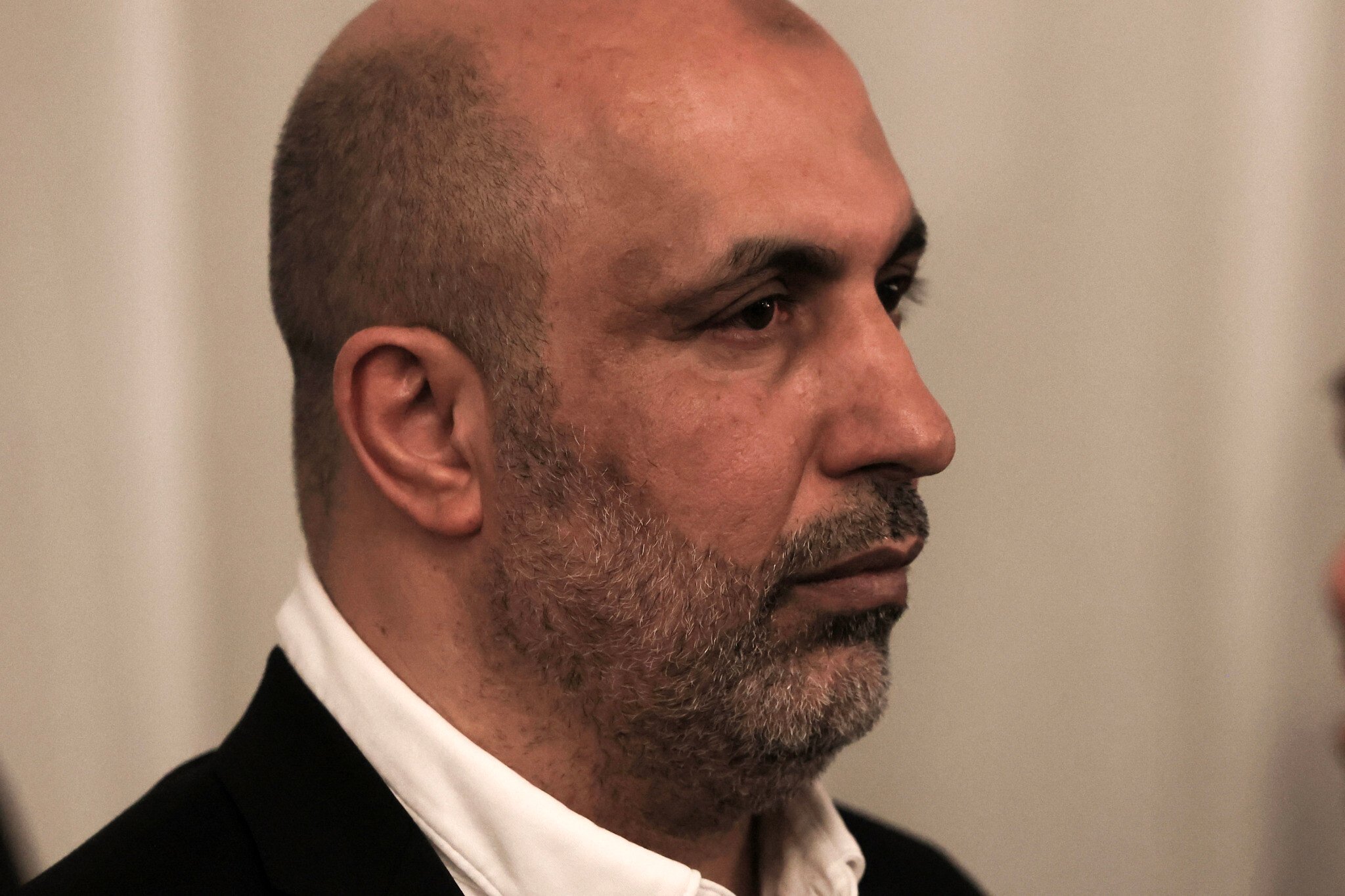
Senior Hamas official Zaher Jabarin attends the funeral of the movement's political leader Ismail Haniyeh in the Qatari capital Doha on August 2, 2024. (Mahmud Hams / AFP)
Senior Hamas official Taher al-Nunu says in a written statement that a delegation of senior Hamas officials headed by Zaher Jabarin, Hamas’s leader in the West Bank, arrived in Cairo this morning to hold talks with Egyptian officials and other mediators regarding the Gaza ceasefire.
According to al-Nunu, the delegation’s top priorities are “stopping Israeli violations” of the ceasefire in the Gaza Strip, rebuilding hospitals, bakeries, and infrastructure, and completing discussions on the roadmap for the second phase of the ceasefire agreement.
That phase should include, according to Trump’s plan, Hamas’s disarmament and the transfer of governance in the Gaza Strip to the National Committee for the Administration of Gaza.
In recent months, the Board of Peace’s Gaza envoy, Nickolay Mladenov, has insisted that the main obstacle preventing the NCAG from entering Gaza is Hamas’s refusal to give up its weapons.
Diplomats from each of the Middle Eastern mediating countries — Egypt, Qatar, and Turkey — told The Times of Israel that Hamas has sought to drag out negotiations on the issue. They also argued that Israel’s refusal to adhere to the terms of the first phase of the October 2025 Gaza ceasefire has posed a major obstacle as well.
Romanian arrested for planning to overthrow government and install Nazi-like regime
A Romanian was arrested in Germany today on suspicion of plotting to overthrow his country’s government and install a Nazi-inspired regime, prosecutors say.
The suspect, named only as Nichita P., is accused of “having attempted, as a ringleader, to establish a foreign terrorist organization,” the prosecutors say in a statement.
“From early 2023, Nichita P. sought to establish a right-wing extremist group that was to unleash a ‘war of terror’ in Romania and contribute to the downfall of the Romanian state and the creation of a new state modeled on National Socialism,” they say.
In order to recruit members, Nichita P. allegedly operated two channels on a messenger service from Germany, aimed in particular at young Romanians.
Through these, he urged followers to kill people he considered “subhumans,” carry out arson attacks on buildings used by migrants or persons from the LGBTQ community, and spray graffiti with right-wing extremist symbols.
He also allegedly published instructions on how to produce poisons and explosives as well as how to make Molotov cocktails and car bombs. He allegedly also urged others to induce young girls to self-harm.
Nichita P. is believed to have been a minor at the time of the alleged offenses, the prosecutors say.
Former hostage on killing of his Gaza captor: ‘Have fun in hell’

Ex-hostage Rom Braslavski speaks to Channel 13's "Hazinor" program in an undated interview broadcast on November 6, 2025. (Screenshot, Channel 13)
Former hostage Rom Braslavski reacts to the killing of Palestinian Islamic Jihad terrorist Talal al-Aal in the Gaza Strip this week, telling him to “have fun in hell.”
The IDF and Shin Bet announced earlier that a strike on Sunday killed al-Aal, who had held hostages in Gaza during the war.
“This is Talal Abd al-Aal. Or as I know him — Abu Yusuf. This is the man who weighed 100 kilograms and jumped on my neck while I was malnourished,” Braslavski writes on Instagram, in a post that includes a video of him being informed of the terrorist’s killing.
“This is the man who forced me, while my hands and feet were tied and my body was covered in bruises, very close to death, to open my mouth and spat into it,” he says.
“This is the commander who was in charge of me and led the terrorist cell that held me captive for an entire year. This is the commander who gave the order: Tie up Abu Salem (me) and abuse him,” the post continues.
“This is the man who, under his orders and with his own hands, abused me and almost killed me several times. This is him,” Braslavski writes.
“Remember when you told me to pass a message to the Shin Bet? That you give a middle finger to the UAV and that you weren’t afraid of them? The message has been delivered. Have fun in hell, you son of a ****,” he adds.
Iran to hold talks with Qatar on frozen assets — foreign ministry
Iran will hold talks with mediator Qatar tomorrow regarding its frozen assets, the Iranian foreign ministry says, denying that any meeting with the United States is planned in the Gulf state, where delegations from both sides are expected.
“What is expected to take place in Doha, probably tomorrow, will be discussions regarding the implementation of provisions of the memorandum of understanding, including the provision concerning the release of Iran’s restricted assets, and these discussions will be held with the Qatari side,” foreign ministry spokesman Esmaeil Baghaei tells reporters at a weekly press conference.
Israel says Iron Dome air defense system upgraded to better tackle threats
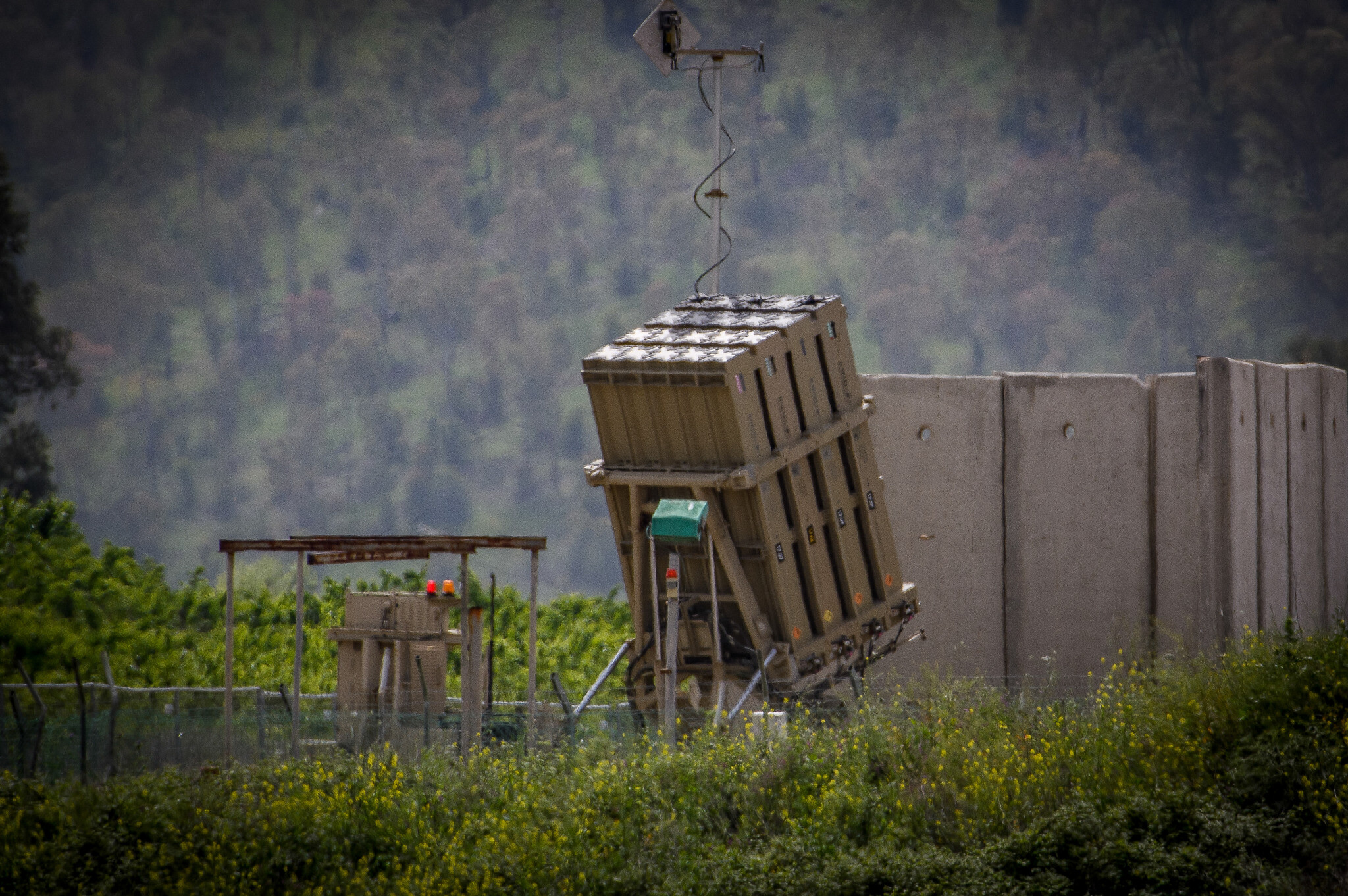
Illustrative: An Iron Dome anti-missile system near the border with Lebanon, in northern Israel, April 7, 2023. (Ayal Margolin/Flash90)
Israel’s Iron Dome short-range air defense system has been upgraded following an “extensive series of tests,” the Defense Ministry announces.
The tests — carried out by the ministry’s Directorate of Defense Research & Development (DDR&D) and the Rafael defense firm — were conducted against a “range of advanced threats, while incorporating operational lessons learned during the war and operations against Iran,” the ministry says.
During the tests, “several upgrades introduced to the system were tested to further improve its ability to deal with scenarios simulating existing and future threats, including rockets, cruise missiles, and UAVs,” the statement says.
Additionally, the high-powered laser interception system Iron Beam — developed as a complementary system to Iron Dome — was tested alongside the Iron Dome in “joint operation scenarios,” from the Iron Dome’s command center.
“The new capabilities demonstrated in the tests constitute a significant step in improving the ability to contend with a wide range of attack scenarios and are another component of the Defense Ministry’s strategy to enhance readiness for an intensive security decade while preserving the IDF’s qualitative and strategic advantage in defense and offense in future conflicts,” the statement adds.
This video published by the Defense Ministry on June 30, 2026, shows recent tests conducted with the Iron Dome and Iron Beam air defense systems. (Defense Ministry)
Knesset panel advances Basic Law on Torah study despite legal objections
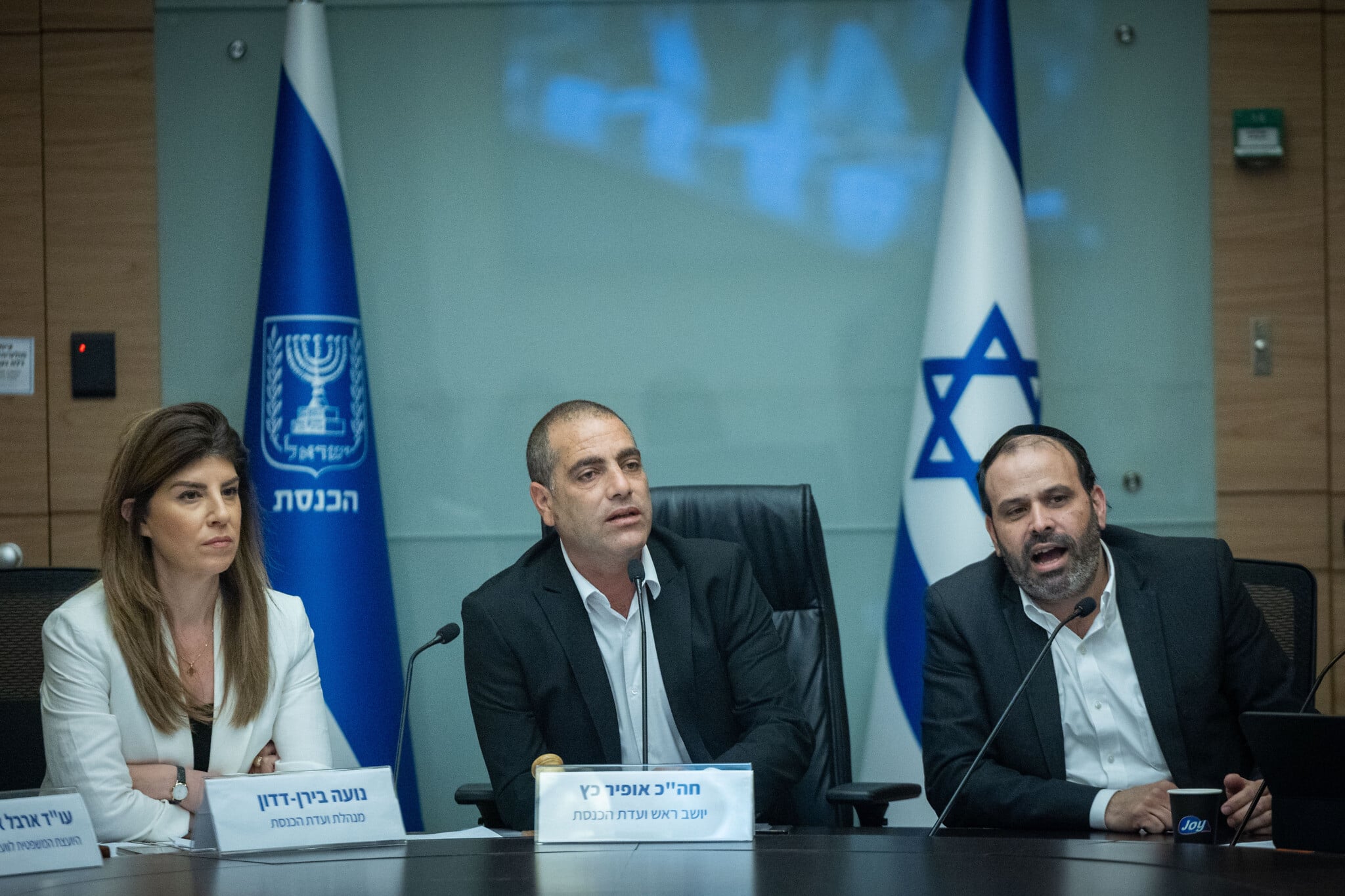
MK Ofir Katz chairs a House Committee meeting at the Knesset in Jerusalem, June 30, 2026 (Yonatan Sindel/Flash90)
The Knesset House Committee votes 10-4 to advance for its first Knesset reading a proposed Basic Law declaring Torah study a foundational value of the State of Israel, subject to a vote on several revisions, following a heated debate.
The bill is expected to have its first plenum vote tomorrow, with the coalition aiming to pass it into law before the Knesset begins its pre-election recess on July 16.
Promoted by the ultra-Orthodox parties, the legislation is intended to shield draft evaders from sanctions and prosecution. Absent a constitution, Basic Laws in Israel have the highest legal status in the country.
“Torah study is what has preserved us throughout the entire history of the Jewish people, and now, in the Jewish state as well, Torah study will receive the status it deserves,” says United Torah Judaism MK Moshe Gafni, a co-sponsor of the legislation, celebrating its advancement.
UTJ chair Yitzhak Goldknopf says during the committee meeting that the bill is needed because “Jews are arresting Jews for studying Torah” and claims that yeshiva students are being treated like “thieves” and “Hamas terrorists.”
Deputy Attorney General Avital Sompolinsky sharply criticizes the measure, arguing that it contains too many unresolved constitutional questions to proceed to a first reading, after the coalition rushed it through several marathon committee sessions this week.
“It’s impossible to move to a first reading before answering the question of what the purpose of the law is,” she says.
Sompolinsky argues that if, as the bill’s sponsors have indicated, it is intended to address the status of the ultra-Orthodox in Israeli society, then it requires a broader discussion of “rights and obligations,” but that “the bill as currently drafted does not answer” these fundamental questions.
Opposition lawmakers roundly denounce the legislation as a political maneuver to circumvent High Court rulings invalidating blanket exemptions from military service.
“This is a cynical attempt to rush through a Basic Law that would grant Torah scholars a special status,” says Yesh Atid MK Moshe Turpaz, who was ejected from the committee discussion by committee chair Likud MK Ofir Katz.
Calling it “the most dangerous” bill currently before the Knesset, Turpaz accuses its sponsors of “distorting justice” and “diminishing the status of combat soldiers and all other citizens of Israel.”
Yisrael Beytenu chairman Avigdor Liberman calls the proposal “Basic Law: Desecration of God’s Name,” pledging to “repeal all of these illegitimate laws” if a new government is formed after the October election.
Iran says it will respond ‘decisively’ to any US violation of memorandum of understanding
Iran will respond to any US violation of the memorandum of understanding aimed at ending the war in the Middle East, its foreign ministry spokesperson says, as delegations from both sides are expected in Qatar for indirect talks on the deal.
“We will not leave any action unanswered. As Iran’s powerful armed forces have demonstrated, any act of aggression against the objectives of the Islamic Republic of Iran will be met with an immediate and decisive response,” Esmaeil Baghaei tells reporters at a weekly press conference.
“Such actions would constitute a violation of Article 1 of the memorandum of understanding. Naturally, if such violations are repeated and continue, the continuation of this process will encounter difficulties.”
IDF says another PIJ commander who invaded Israel on Oct 7 killed in strike
A Palestinian Islamic Jihad commander who invaded Israel during the October 7, 2023, onslaught was killed in a strike yesterday, the military announces.
The strike in the central Gaza Strip killed Ali Qaid Mohammed Stitan, identified by the IDF as a platoon commander in Islamic Jihad’s elite forces.
“Ali Qaid infiltrated Israeli territory during the October 7 massacre,” the IDF says, adding that during the war and recently, he attempted to advance attacks on troops and Israeli civilians.
“The terrorist posed a threat to our troops operating in the Gaza Strip and was eliminated in a precise aerial strike,” the military adds.
He is the second Oct. 7 terrorist whose death in a strike the IDF announced today.
The IDF in recent months has been ramping up strikes on terror operatives in Gaza, including many October 7 terrorists, saying they posed a threat to Israeli forces.
Man killed by car blast in Haifa

The scene of a car blast that left a man dead in the Haifa neighborhood of Kiryat Haim, June 30, 2026. (Magen David Adom)
A man has been killed in a car explosion in the Haifa neighborhood of Kiryat Haim, first responders say.
Medics pronounced him dead at the scene.
Police say officers are at the scene and investigating whether the explosion was an accident or a targeted bombing.
IDF scrambles fighter jets after contact lost with arriving flight from Warsaw; incident resolved
A pair of Israeli Air Force fighter jets was scrambled to escort a commercial flight from Warsaw to Tel Aviv a short while ago, after the military received a report of “lack of contact with the aircraft,” the IDF says.
The LOT Polish Airlines flight, operated by Electra Airways, returned on its path over the Mediterranean Sea, according to flight tracking data.
The IDF says that “contact with the aircraft has been restored” and the incident has concluded.
“There is no fear of a security incident,” the military adds.
German intelligence reports rise in extremist potential of far-right AfD members
The number of Alternative for Germany members who could potentially become far-right extremists has risen by 40%, the domestic intelligence service BfV and the interior ministry say in a report published today.
The report, covering 2025, finds that the far-right AfD has shown no signs of moderating positions that draw scrutiny from the intelligence services. Some 28,000 of the AfD’s about 70,000 members are considered to have the potential for right-wing extremism, up from 20,000 the year before, it says.
The AfD has pulled ahead of German Chancellor Friedrich Merz’s conservatives in national opinion polls and is far ahead of any other party in the eastern state of Saxony-Anhalt, where it could win power for the first time in a September election.
The AfD rejects the accusations that its views are extremist and has said the intelligence service’s assessments are politically motivated.
The BfV, which monitors extremist threats primarily through analysis of public statements and activities, defines extremism as efforts directed against Germany’s free democratic constitutional order.
The new report finds no indications that the party has over the past year distanced itself from the positions that concern the BfV’s authorities.
Those positions include the party’s espousal of an ethnic ancestry-based conception of the German people that courts have determined is incompatible with the constitution, it says.
The report cites comments by Bjoern Hoecke, the party’s leader in the eastern state of Thuringia, who referred to a UN resettlement program as “population replacement.”
Such comments are part of a process of “ideological homogenization,” with liberal-conservative positions in the party scarcely expressed in public, it says.
Right-wing extremism remains the greatest threat to democracy in Germany, the report says.
The authors highlighted an increasing number of younger people being attracted to right-wing extremism, especially online, as well as better networking and an increased shift towards violence among extremists as particularly alarming.
“From within, we face pressure from extremism of all stripes – in the digital space just as much as on the streets,” says Interior Minister Alexander Dobrindt.
Outside threats include sabotage and espionage, particularly from Russia, says BfV Vice President Sinan Selen.
Rothman ejects deputy attorney general from stormy hearing on legislation to split up AG’s role
Knesset Constitution Committee chairman Simcha Rothman ejects Deputy Attorney General Gil Limon from a stormy hearing on a pair of controversial bills to curtail the power of the attorney general, after Limon attempted to intervene as Rothman repeatedly prevented the attorney general’s deputies from speaking.
The bills would split the attorney general’s role into two positions and make it significantly harder to indict senior officials, including the prime minister. The coalition is seeking to pass the legislation before the Knesset enters its summer recess, expected to be called in July.
The clash erupts as Rothman argues that there is no need for all five of the attorney general’s deputies — who make a rare joint appearance before the committee — to speak because they all represent the same legal position.
One by one, he silences and cuts off the officials, including Limon, before inviting Deputy Attorney General Avital Sompolinsky, the deputy for constitutional law, to present her opinion. She also manages to get only a few words in before Rothman cuts her off.
As Sompolinsky argues that the committee is attempting “to prevent us from presenting our professional position to the committee,” Rothman interrupts, declaring, “No, excuse me, no, I won’t let you.”
“Did I ever tell you not to come to the committee?” he demands, raising his voice and accusing Sompolinsky of telling “blatant lies.”
The exchange prompts outrage from opposition lawmakers, with Democrats MK Gilad Kariv shouting, “Enough! What is this disgrace? What a disaster for the Constitution Committee.”
Limon again attempts to intervene as Rothman shouts over Sompolinsky, but the chair orders him removed from the hearing.
As Limon is escorted out, Kariv shouts that Rothman is “revolting.”
Multinational software firm and 2 execs charged with smuggling, money laundering
The State Attorney’s Office files charges against a multinational software company and two of its executives for smuggling and money laundering, following an investigation into the firm.
The company, Ability Computer and Software Industries Ltd, is indicted in the Rishon Lezion Magistrate’s Court after reaching a plea agreement with state prosecutors.
The charges come after investigators in the Defense Ministry and Lahav 433 police major crimes unit conducted a probe into the company.
The firm is accused of smuggling some NIS 35 million ($12 million) worth of goods in violation of Israel’s Defense Export Control Law, as well as engaging in defense marketing without a license to do so.
One of the company executives suspected in the case is also charged with tax offenses, the State Attorney’s Office adds.
The details of the investigation and indictment are subject to a gag order.
US citizen living in Jerusalem area to be charged with spying for Iran
A 20-year-old US citizen residing in the Jerusalem area will be accused in court of security offenses for allegedly spying on Iran’s behalf.
The young man was arrested June 9 on suspicion of maintaining contact with an Iran-linked agent, police say in a statement announcing his forthcoming indictment.
The suspect over the past several months allegedly took photos and videos of “sensitive sites.” For each task, he received dozens to hundreds of dollars, police say.
A prosecutor’s declaration is filed against the suspect today, signaling he will be formally charged in the near future.
Police have requested that the court keep the young man in custody until the end of legal proceedings against him.
‘Zionist rats’: Vandals slash tires, leave antisemitic note on NYC car
Vandals slashed the tires and left an antisemitic note on a Jewish woman’s car in New York City last week, PIX11 reports.
The woman is from New Jersey and was visiting her brother in Harlem last week when the incident occurred, the report says.
The note said, “Zionist rats aren’t welcome anywhere but Antarctica or hell.”
The woman says that, before finding the vandalism, a passerby shouted “Free Palestine” at her and her brother.
It wasn’t clear how the pair or the car were identified as Jewish.
The NYPD’s Hate Crimes Task Force is investigating, the report says.
Last week, vandals scratched a swastika into a car on the Upper East Side.
Jews are targeted in hate crimes in the city far more than any other group.
IDF general says pausing arrests of Haredi draft dodgers won’t encourage enlistment, while government claims otherwise
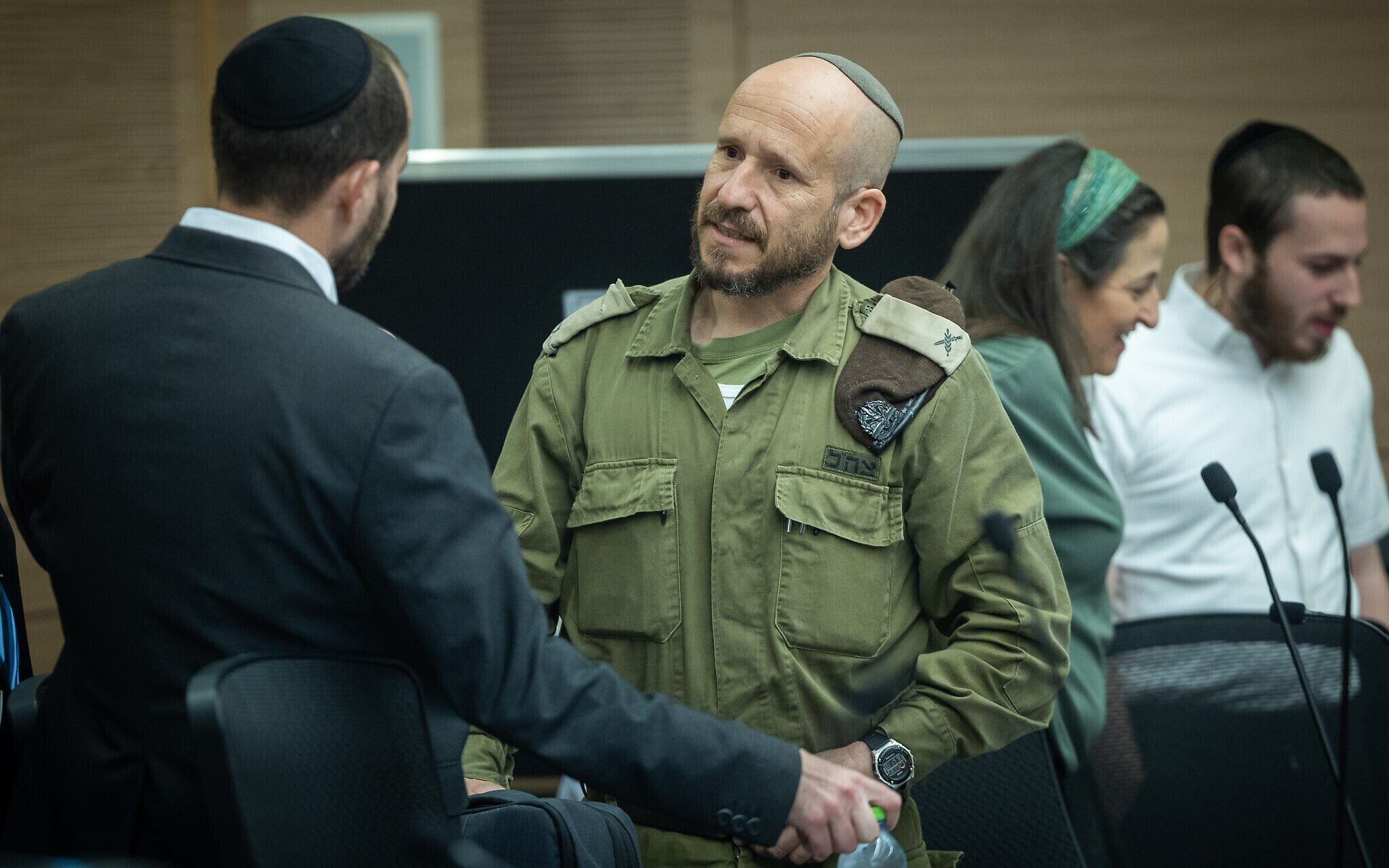
Brig. Gen. Shay Tayeb, head of the IDF Personnel Directorate's Planning and Personnel Management Division, attends a Foreign Affairs and Defense Committee hearing at the Knesset in Jerusalem, June 30, 2026. (Yonatan Sindel/Flash90)
Brig. Gen. Shay Tayeb, head of the IDF Personnel Directorate’s Planning and Personnel Management Division, issues a strong rebuke of coalition legislation that would temporarily freeze the arrest and criminal prosecution of ultra-Orthodox draft evaders, directly contradicting the government’s claim that enforcement discourages Haredi enlistment.
“The temporary order, in and of itself, will not help me,” Tayeb says, arguing that the measure “doesn’t fulfill its purpose and also endangers some of the things we have achieved.”
Presenting the government’s position, Knesset Foreign Affairs and Defense Committee chairman Boaz Bismuth and cabinet secretary Yossi Fuchs have said that the measure is needed to ease tensions with the ultra-Orthodox community, contending that arrests and other enforcement measures are counterproductive to recruitment. The committee is debating a temporary order that would suspend arrests, investigations and other enforcement measures against full-time yeshiva students eligible for military service for 90 days.
Appearing before the committee, he tells lawmakers that enforcement measures, “including arrests,” are “part of our ability to implement the Security Service Law” and have contributed to a steady increase in Haredi enlistment since the war began.
According to Tayeb, the number of Haredi recruits has risen from roughly 1,800 in 2024 to an estimated 3,500 this past year. He attributes the increase partly to accessible service tracks that allow Haredi soldiers to “maintain an ultra-Orthodox lifestyle,” such as the Hasmonean Brigade, but also to enforcement measures.
Citing IDF research, he says around 60% of those arrested ultimately report for military service, while the prospect of enforcement has prompted many others to voluntarily regularize their status before facing sanctions.
He warns that “the scale of draft evasion and non-cooperation is unprecedented. The numbers are rising dramatically. We are on our way to reaching 90,000 draft evaders.”
The IDF has repeatedly said it urgently needs 12,000 recruits, while some 80,000 ultra-Orthodox men aged between 18 and 24 are currently believed to be eligible for military service, but have not enlisted.
IDF says it killed commander of Hamas battalion in Rafah who was a major arms smuggler
The commander of the Yabna Battalion in Hamas’s Rafah Brigade was killed in an Israeli strike yesterday, the IDF and Shin Bet announce.
Mohammad Fathi Abd al-Hay Abu Fakher had recently been working to recruit new terrorists to the battalion, along with “attempting to restore the battalion’s capabilities in order to attack IDF troops,” the military says.
Abu Fakher was a veteran commander in Hamas, previously serving as a senior officer in the terror group’s supply department. The military says that for two decades he was “a central figure in the terrorist organization’s smuggling network,” leading efforts to bring weapons into the Gaza Strip.
Restoration work begins on main Jewish cemetery in Damascus
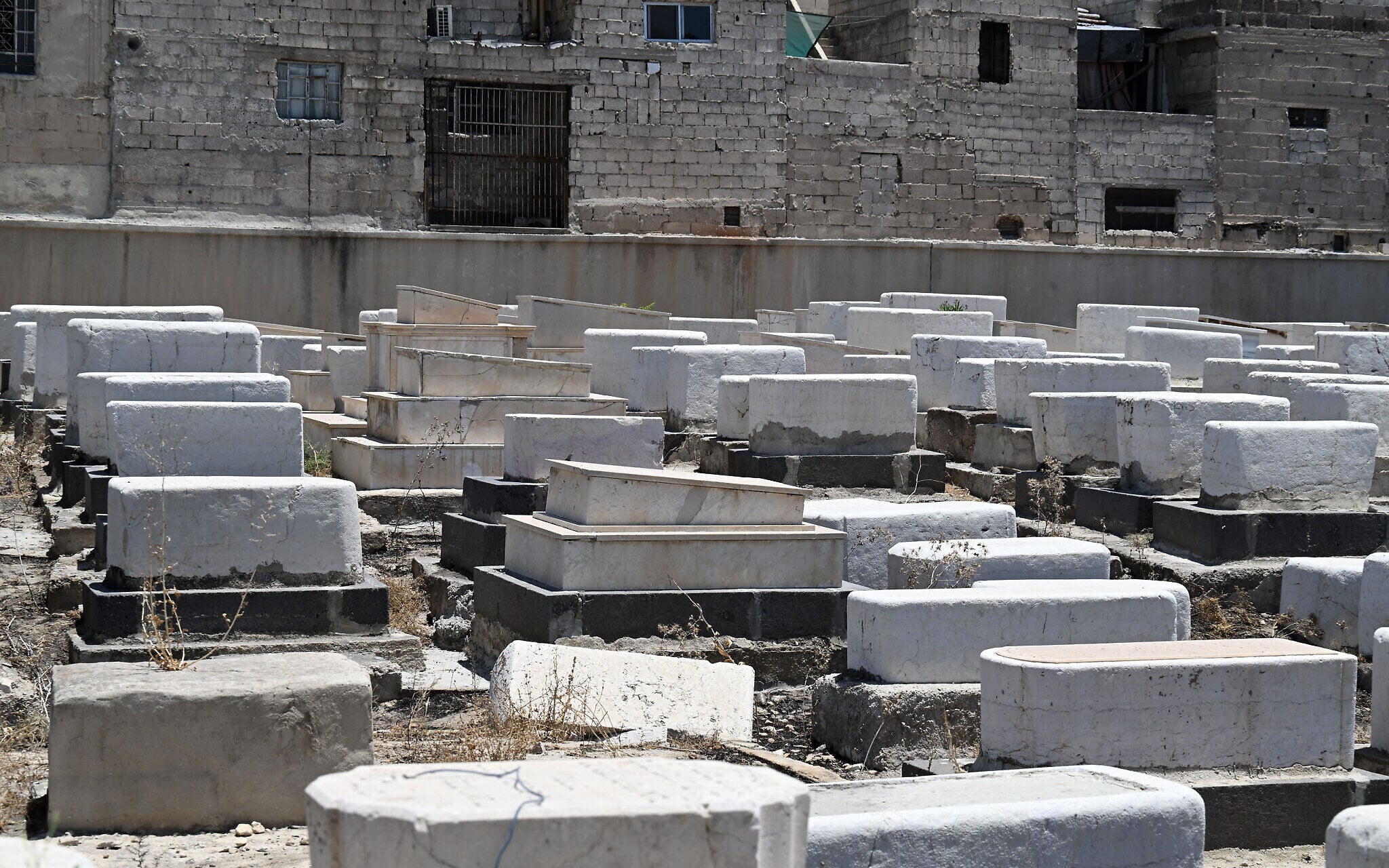
This picture shows a view of the Jewish cemetery in Damascus on June 30, 2026. (Louai Beshara/AFP)
An organization has begun restoring Damascus’s main Jewish cemetery, the group’s founder tells AFP, as members of Syria’s dwindling community seek to revive their heritage after ex-ruler Bashar al-Assad’s ouster.
At the cemetery located along the airport road near the capital, an AFP correspondent saw rows of stone graves bearing inscriptions in Hebrew, as workers inspected the site.
Syrian-American Joe Jajati, founder of the Syrian Mosaic Foundation that is overseeing the restoration, says the cemetery contains hundreds of tombs.
The businessman, whose grandfather was a Syrian rabbi, says work has begun to clean up the cemetery and shore up some dilapidated graves, while “restoration work on the outer walls and the installation of lighting and surveillance cameras” will be completed next month.
“The cemetery wasn’t damaged during the war,” he says, referring to Syria’s civil war that began in 2011, adding that “the last burial was around a year and a half ago.”
Senior US official says Witkoff, Kushner to meet Qatari PM ‘to continue regional dialogue on MOU’ with Iran
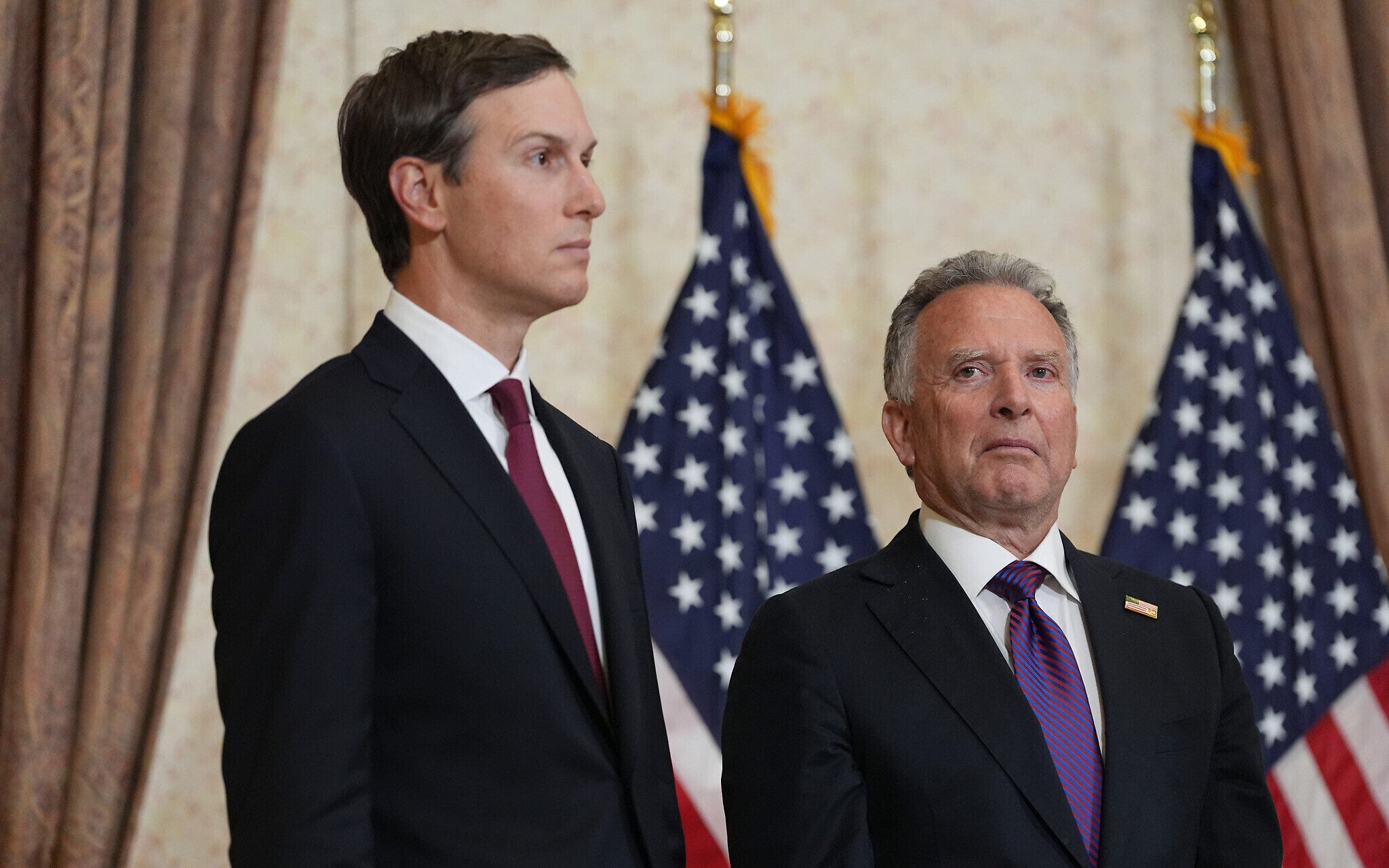
White House envoys Jared Kushner, left, and Steve Witkoff, listen as US Vice President JD Vance (not in picture) speaks during a news conference after meeting with representatives from Pakistan and Iran, in Islamabad, Pakistan, April 12, 2026. (AP/Jacquelyn Martin, Pool)
A senior Trump administration official confirms that top US negotiators Steve Witkoff and Jared Kushner will meet with Qatari Prime Minister Mohammed Abdulrahman Al Thani and other mediators in Doha today “to continue regional dialogue on the MOU.”
“On Wednesday, US and Iran delegations are expected to participate separately in technical talks with mediators from Qatar and Pakistan,” the senior US official says in a statement to querying reporters.
There is no mention of any meetings scheduled between US and Iranian negotiators amid Tehran’s apparent ongoing frustration with US actions in the Strait of Hormuz.
Visiting troops in south Lebanon, Netanyahu maintains IDF won’t withdraw ‘as long as Hezbollah remains here’
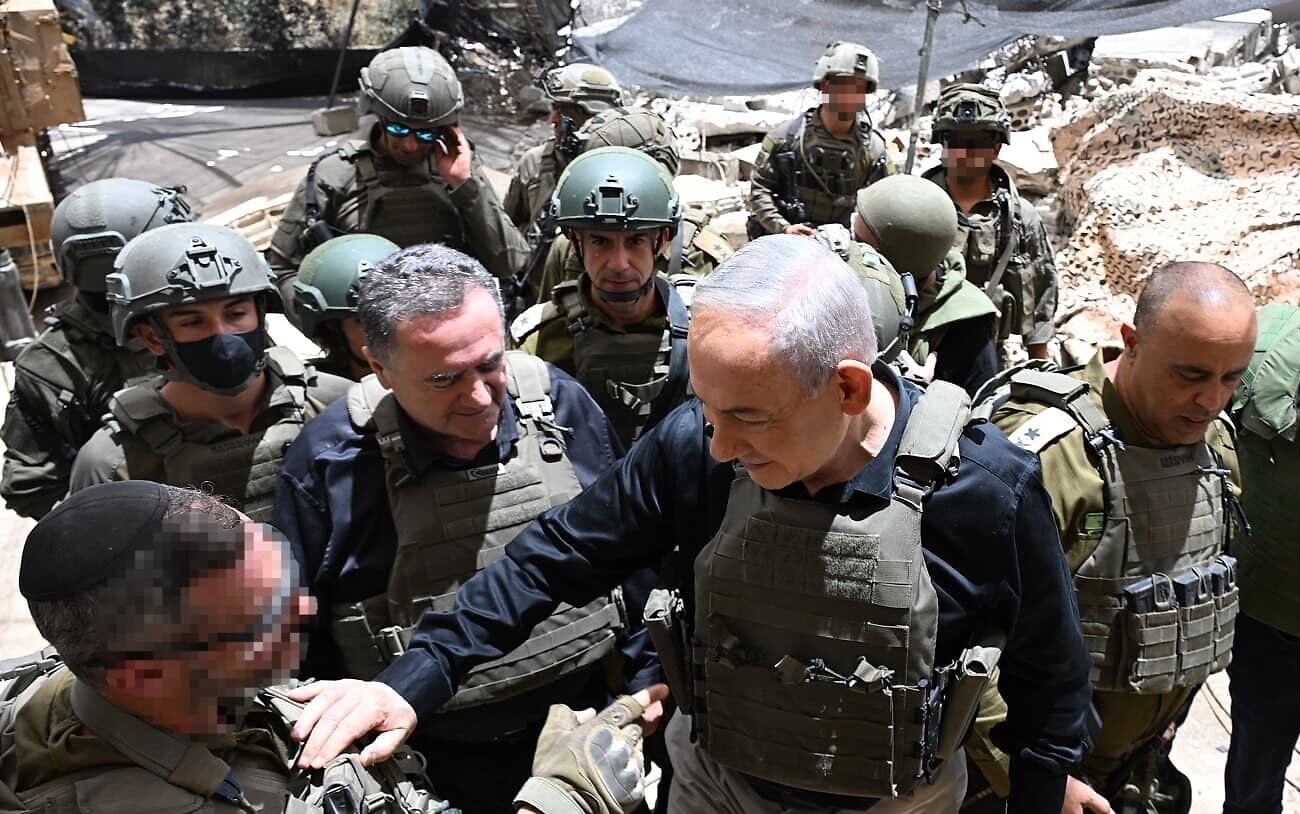
This handout photo shows Prime Minister Benjamin Netanyahu greeting IDF troops in southern Lebanon, June 30, 2026. (Haim Zach/GPO)
Prime Minister Benjamin Netanyahu urges troops to react to any threats against them in the southern Lebanon security zone during a visit to the zone, days after Israel and Lebanon agreed to a US-brokered framework envisioning a gradual Israeli withdrawal tied to verified Hezbollah disarmament in the area, according to a statement from the premier’s office.
“If you identify a threat to your security, to your lives, or to the lives of your soldiers — act. Do not wait. Act. That is an ironclad directive,” Netanyahu tells troops during the visit, also attended by Defense Minister Israel Katz and Deputy IDF Chief of Staff Tamir Yadai.
Netanyahu says Israel’s recent military operations against Iran-backed Hezbollah led to the agreement, telling soldiers that, “as a result of your actions here, Lebanon recognizes Israel, Israel recognizes Lebanon, and we are telling both Iran and Hezbollah: leave this place. You have no business being here… This is a slap in the face, a punch in the face of the Iranian axis.”
He reiterates that “we will not leave southern Lebanon until the threat has been eliminated. And as long as Hezbollah remains here, armed and threatening us, we will remain here as well.”
Netanyahu hails military achievements against Hezbollah, calling the terror group “the most important link in the Iranian axis,” and saying that after recent rounds of fighting, only 8% of its previous stock of 150,000 missiles and rockets remains, while 9,000 Hezbollah terrorists have been killed.
Netanyahu and Katz are briefed on operations in the zone by Northern Command chief Rafi Milo, the commander of the 91st Division, and brigade commanders operating in the field, and “were presented with a demonstration of innovative munitions and weapons systems” designed to counter the growing drone threat from Hezbollah, the statement says.
Netanyahu was also accompanied by two recently appointed officials, National Security Council Director Shmuel Ben Ezra and his military secretary, Guy Markizeno.
FM says Israel’s dispatchment of rescue mission to Venezuela is ‘humanitarian act’
Foreign Minister Gideon Sa’ar describes Israel’s dispatchment of a delegation to Venezuela to assist with the rescue efforts following the devastating earthquakes here as “a humanitarian act,” noting Jerusalem and Caracas don’t have official diplomatic ties.
“Aid to the people themselves in these difficult moments is not related to politics – this is a humanitarian act,” Sa’ar tells visiting Latin American evangelical leaders, according to a statement from his office.
Bulgaria blames glitch for hijacking false alarm on Tel Aviv-bound flight
A technical error caused a Tel Aviv-bound flight to report a hijacking that led to Israeli and Bulgarian jets scrambling to intercept the aircraft, Bulgaria’s transport ministry says.
An airport official earlier told AFP that the Bulgarian company operating the Airbus A320 blamed pilot error.
Bulgaria’s transport ministry says, however, in a statement: “The reason for the diversion is a technical failure of the aircraft’s transponder, which transmitted a false signal of unlawful interference/hijacking.”
“After confirmation that there was no real threat on board, the aircraft left the country’s airspace via Turkey,” the ministry adds.
The ministry says the jet, headed to Tel Aviv, was redirected to Bulgaria at the operator’s request, where it was “intercepted and escorted” by Bulgarian jets.
The Israeli military, however, says it scrambled two fighters to intercept a civilian aircraft over the Eastern Mediterranean after “a report of lost communication.”
LOT Polish Airlines says the crew of the flight, which was operated by Bulgaria’s Electra Airways on its behalf, “reported an emergency situation.”
“This report was cancelled in the course of subsequent communications with air traffic control,” airline spokesman Krzysztof Moczulski tells AFP.
Bulgaria’s defense ministry says in a statement that the aircraft broadcast transponder code 7500, an emergency message signaling unlawful interference or a hijacking.
The flight was rerouted to Burgas in Bulgaria, where Electra Airways is based, Moczulski says, “due to limitations related to the authorized working time for the crew.”
UN pressing to maintain force of 5,000 peacekeepers in Lebanon — report

A convoy of vehicles of the United Nations Interim Force in Lebanon (UNIFIL) moves along a road at the entrance of the city of Tyre in southern Lebanon on June 23, 2026. (Photo by Joseph EID / AFP)
Despite Israeli opposition, the United Nations is pushing to maintain a military presence in southern Lebanon after the mandate of the United Nations Interim Force in Lebanon (UNIFIL) expires at the end of the year, Channel 12 news reports.
According to the report, UN Secretary-General António Guterres, with backing from France, is pressing the United States and the UN Security Council to approve a successor force comprising some 5,000 troops and 500 observers to monitor southern Lebanon. The proposal comes amid French concerns over the dominant US role in overseeing the Israel-Lebanon ceasefire, with Paris sidelined in the negotiations.
Israel, however, opposes any continued UN military presence, arguing that UNIFIL failed to prevent Hezbollah’s military buildup and did not fulfill its mandate, with an official telling the network that the peacekeeping force is “incapable of creating deterrence or reducing escalation during the war.”
Eisenkot officially launches Yashar’s election campaign, vows to be ‘PM for all Israelis’
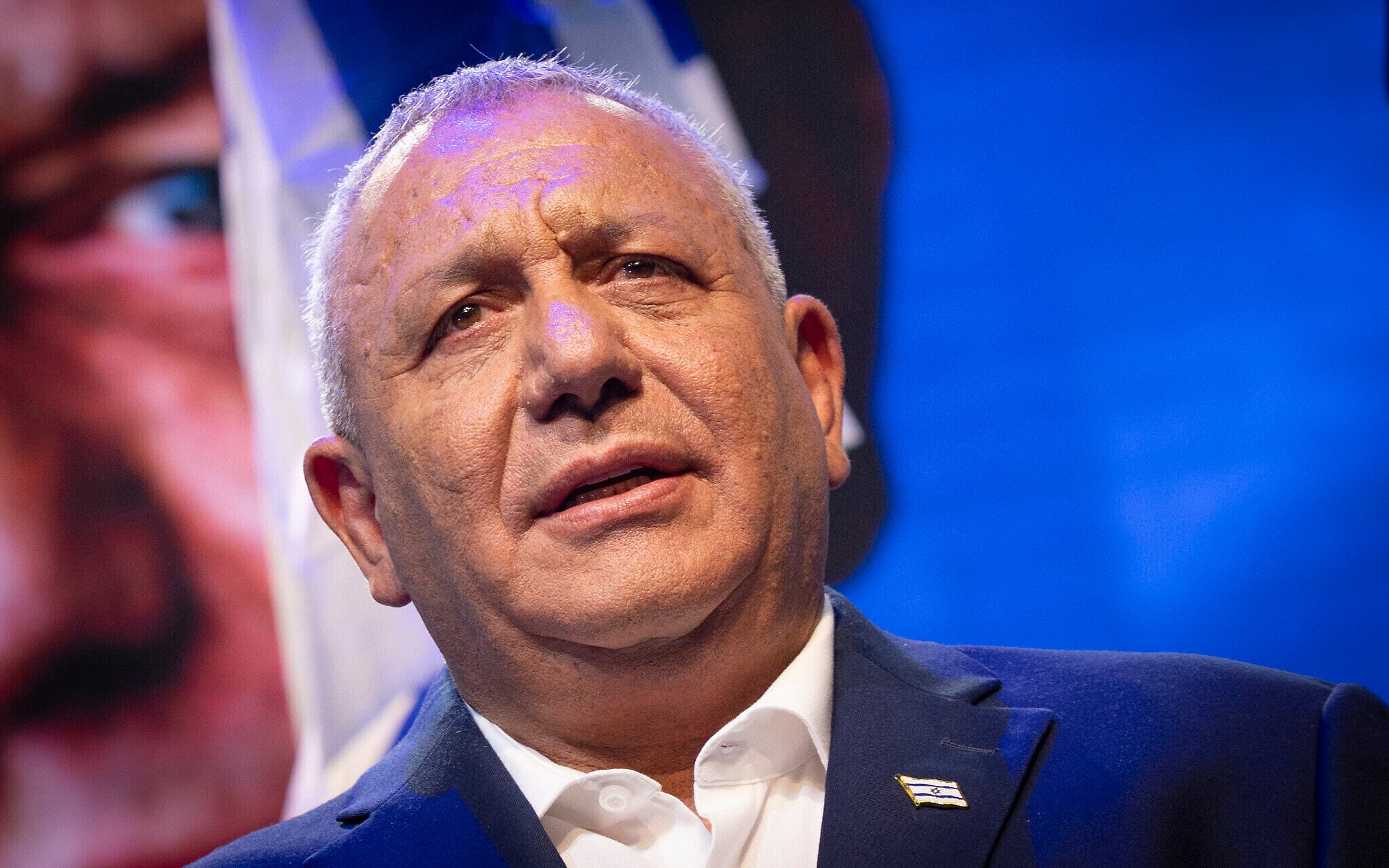
Yashar chairman Gadi Eisenkot speaks at the launch of his party's election campaign in Hod Hasharon, June 30, 2026. (Chaim Goldberg/Flash90)
Former IDF chief of staff Gadi Eisenkot officially launches his Yashar party’s election campaign, which he says will “open a new and much better page” for the country.
Eisenkot vows to the crowd in Hod Hasharon he will be a “unifying” leader rooted in “the tradition of Israel, its heritage and Torah,” and “to be a prime minister for all Israeli citizens,” suggesting he doesn’t intend to form an alliance with any other factions that he wouldn’t head.
He calls the upcoming elections “fateful for the security, unity and soul of Israel,” listing as some of his key goals “the rehabilitation of the north and south… growing the ranks of the military to make it significantly easier for conscripts and reservists — without compromising on security” and forming a state commission of inquiry into the October 7, 2023, Hamas-led massacres.
While he doesn’t mention Prime Minister Benjamin Netanyahu by name, Eisenkot says there are “those” who sow division and “advance steps that go against the national interest and are a slap in the face of the Israelis who work, serve and are willing to sacrifice their lives for this homeland” — a reference to the government’s attempts to pass legislation reinstating blanket military exemptions for ultra-Orthodox men and to cancel sanctions for draft evasion.
He also dismisses Netanyahu’s calls for a “broad national unity government” after the elections, saying, “the leadership is using the term ‘national unity’ as a cynical election campaign. I will do everything to unify the nation.”
“This is a leadership in which the words ‘accountability’ and ‘personal example’ are foreign. It is a leadership that lies. As if there is no other way besides the chaos in which we live, which fuels division as if it has no cost; whose only way of governing is to pull us apart,” Eisenkot charges.
“We have a duty to put an end to this madness… because the State of Israel doesn’t have the privilege of getting it wrong again,” he adds. “We will replace a leadership devoid of any vision and strategy.”
“Will we accept the continuation of social divisions and go full throttle toward the next disaster,” he asks, “or will we heal and rebuild?”
Responding to Israeli recognition of Armenian genocide, Yerevan knocks Israel for ‘weaponizing’ the issue
Turkish President Recep Tayyip Erdogan condemns Israel’s recognition of the Armenian genocide, accusing Jerusalem of using the issue to deflect attention from the war with Hamas in Gaza.
“We pay no heed to the slanders directed at our country by the murder network that has the blood of 75,000 innocent people in Gaza, mostly children and women, on its hands,” Erdogan says in remarks to the media following a cabinet meeting in Ankara, according to the state‑run Anadolu news agency.
Erdogan pointed to refuge he says Turkey provided to people fleeing Nazi persecution during World War II, saying, “those who slander Turkey to cover up their barbarity in Gaza know it best.”
Yesterday, Armenian Prime Minister Nikol Pashinyan responded coldly to Israel’s recognition, telling reporters that he sees “no need” to comment on it as he wanted to avoid “weaponization” of the genocide, according to Armenian state news agency Armenpress.
“We see no need to respond because we believe that refraining from entering into the issue of the weaponization of the Armenian Genocide is in the interests of the Republic of Armenia,” Pashinyan said.
Netanyahu: Israel’s battles ‘never over,’ ‘more work’ to be done against Iran-led axis
Prime Minister Benjamin Netanyahu hails Israel’s military achievements in recent years but says that Israel’s battles are “never over” and that there is still “work to do” against the “Iranian axis,” during an interview with the pro-Netanyahu Channel 14.
Asked by the interviewer if Israel’s wars against Iran, Hamas, and Hezbollah in recent years can be considered over or won, Netanyahu hails “tremendous successes” on those fronts, but then adds when pressed again: “It’s never over. If you want to live in the Middle East – and in the world — you must be very strong.”
“Israel is stronger than ever, and we have pushed back these threats. We have greatly weakened them. We still have work to do… We need to deal with the remnants of the Iranian axis and seize opportunities for peace agreements,” he says, amid ongoing fighting with Iran-backed Hezbollah and a recently signed framework with Lebanon aimed at gradual Israeli withdrawal and eventual normalization of ties.
Asked to specify which countries he expects to reach peace agreements with, and if they include Saudi Arabia, Netanyahu declines to name them but insists several countries are in contention, including Lebanon: “I’m not naming names because I want to deliver results. But everyone will see them….there are understandings with Lebanon that nobody foresaw. There are contacts with other countries as well. I can’t elaborate.”
“When you’re strong, people form alliances with you, and they make peace with you as well,” he says.
IDF says it killed Hezbollah operative spotted near troops in southern Lebanon
A Hezbollah operative identified near Israeli forces in southern Lebanon earlier today was killed in a strike, the military says.
The IDF says the operative was spotted near the village of Manzleh, close to Israel’s security zone.
“The terrorist’s activities posed a threat to the forces,” the IDF says, adding that he was targeted and killed in a strike to “remove the threat.”
Top Iran negotiator: MOU with US unfulfilled, no talks on other matters until it is
Current meetings held by Iran are aimed at fulfilling memorandum of understanding commitments and Tehran won’t enter further negotiations until the conditions of the MOU signed between Iran and the United States are met, Iran’s top negotiator Mohammad Bagher Ghalibaf said in an interview with state TV on Tuesday.
Iran has sovereignty in the Strait of Hormuz along with Oman and it will never compromise on its rights in the Strait of Hormuz, Ghalibaf says, adding that passage without cost in the strait is only for 60 days per MOU.
In an interview with state television, he also says, “We are pursuing dialogue, but if the dialogue is not implemented, we are also prepared for war and will respond accordingly.”
PM repeats call for ‘broad national government’ while saying he won’t break with Haredim or far-right, vows to continue judicial overhaul
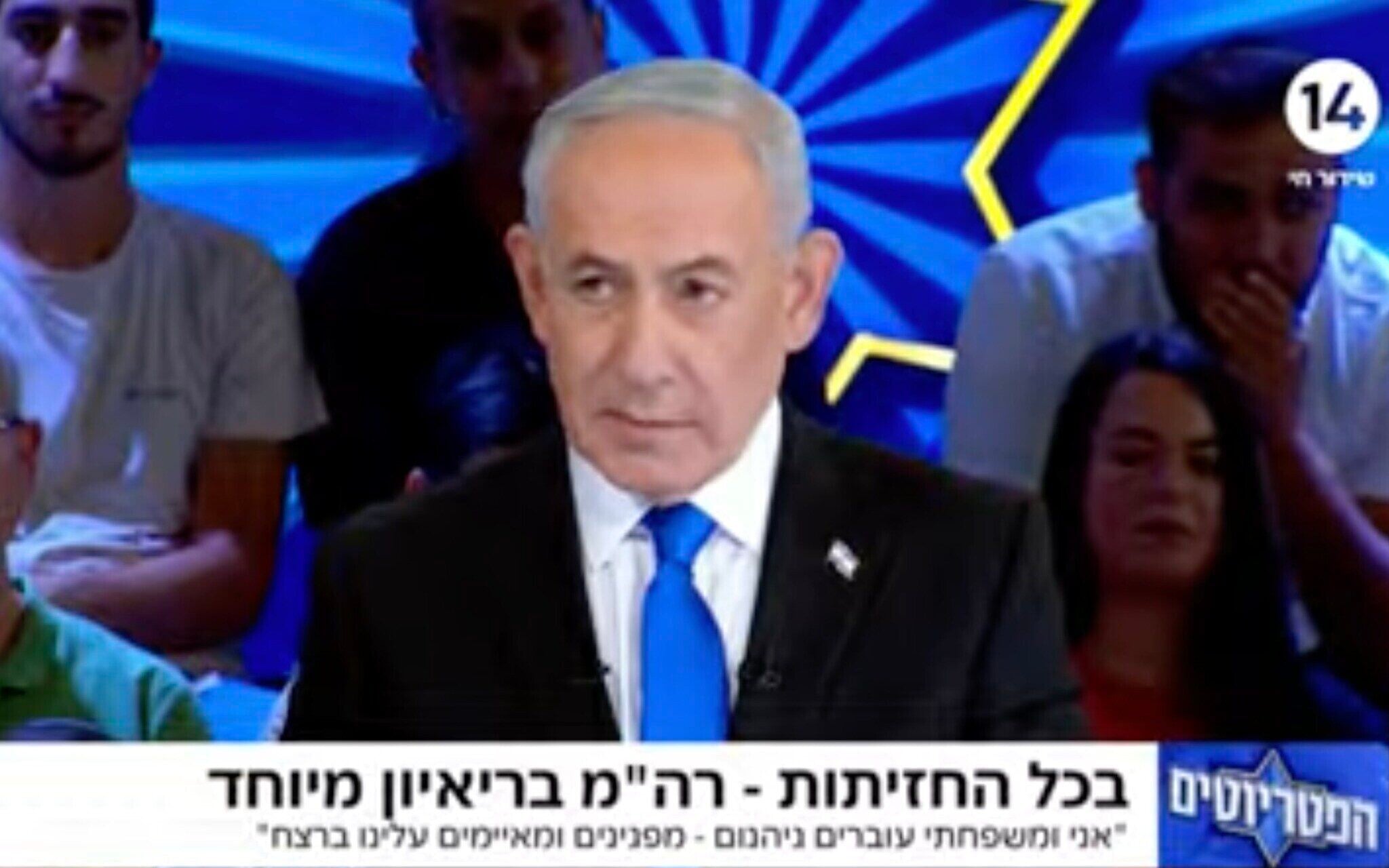
Prime Minister Benjamin Netanyahu is interviewed on the Channel 14 program "The Patriots" on June 30, 2026. (YouTube screenshot)
Prime Minister Benjamin Netanyahu defends his call earlier this week for a “broad national government” after the next election, saying he is “against boycotts,” while suggesting that any coalition by his political opponents would amount to a narrow left-wing government dependent on Arab parties, during his interview with Channel 14.
“I want a broad national government… We are facing major challenges and major opportunities. In a situation like this, you want the broadest possible consensus you can achieve. Incidentally, that doesn’t mean unity, because you won’t achieve complete unity. Not the entire country will line up behind you. But you can broaden the base,” the premier says, in response to a panelist asking why he would consider allowing political opponents to join his coalition.
“The government I intend to form will be based on clear principles. Whoever accepts those principles can join,” he says, outlining them as: “Israel is the nation-state of the Jewish people; There will not be a Palestinian state here; We have a proactive security policy — we do not wait, and we do not hide behind closed doors.”
He adds that “we will also continue judicial reforms,” an issue that sparked deep divisions in Israeli society before the war in Gaza, though he does not specify what elements of the overhaul he intends to pursue.
Netanyahu rejects suggestions that his unity-government pitch is merely election messaging because he invited opposition parties to join an emergency wartime government after Hamas’s October 7, 2023, attack.
“I was very pleased” that Benny Gantz and rising election rival Gadi Eisenkot joined, he says, before accusing Eisenkot of eventually persuading Gantz to exit the government along with him. “I was sorry that Eisenkot persuaded [Gantz] to leave. But I wanted it, because when you are facing major challenges and major opportunities, you broaden your base and lean on a wider foundation.”
In his resignation letter from the wartime government, Eisenkot harshly criticized how the war cabinet handled itself, saying, “outside considerations and politics infiltrated into the discussions.”
Asked whether a broader coalition would come at the expense of his current governing bloc – including the ultra-Orthodox parties and far-right ministers Itamar Ben Gvir and Bezalel Smotrich — Netanyahu rejects that notion.
“That’s not the question at all. I am taking the national camp and I want to expand it, just as I did at the beginning of the war, and as I did on other occasions. We have major national missions ahead of us. And I think it is possible to reach much broader agreement than you think.”
He says he believes the Israeli public is far less divided than the political system: “I think that what exists in the Knesset, what exists in politics, includes people who want division. They want incitement. They want discord. They want fragmentation.”
Still, while arguing that political boycotts should end, Netanyahu portrays the coming election as a choice between his leadership and and a left-wing alternative: “In these elections, the choice is a broad national government under my leadership, or a narrow left-wing government led by Eisenkot, together with Yair Lapid, Yair Golan, and dependent as well on the Arab parties. They don’t have another option… There is no other option.”
Asked specifically whether he would like to see figures such as Eisenkot, Naftali Bennett, Avigdor Liberman or Golan join such a coalition, Netanyahu replies: “Anyone who accepts our principles,” apparently referring to the aforementioned list.
“I am against boycotts. We have spent ten years dealing with boycotts, over judicial matters, over a fictitious political witch hunt,” he says, the latter referring to his ongoing corruption trial, after he concluded lengthy testimony in three cases against him this week.
Board of Peace parts ways with deradicalization director after 3 months, official tells ToI
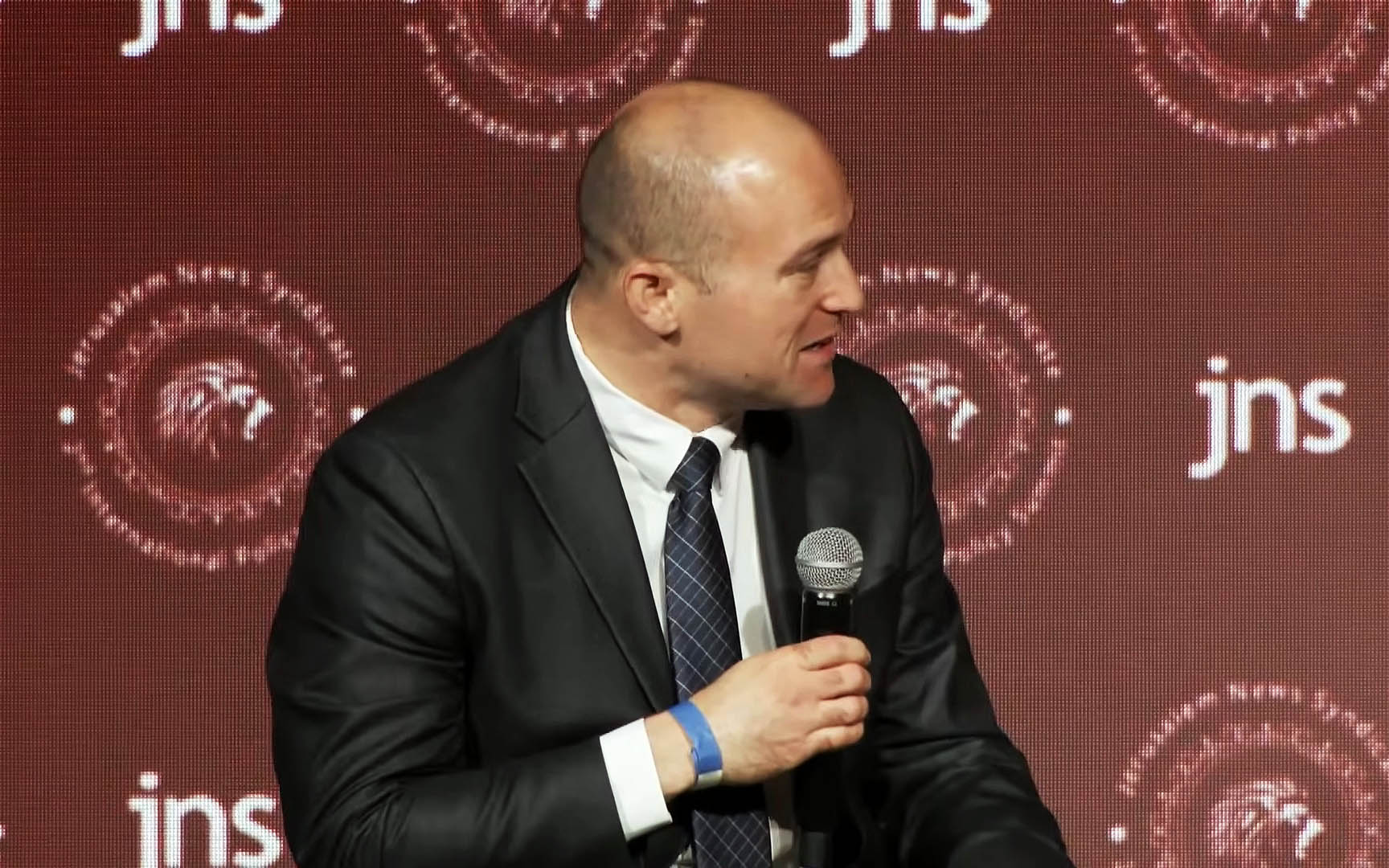
Board of Peace director of deradicalization Jason Olson speaks at the JNS conference in Jerusalem on June 23, 2026. (Screen capture/YouTube)
The Board of Peace has parted ways with its director of deradicalization after roughly three months, an official from the US-led body overseeing the postwar management of Gaza told The Times of Israel on Tuesday.
“Jason Olson’s recent detail in support of the Board of Peace mission has concluded. We thank him for his capacity-building contributions,” the official said in a statement.
Olson joined the Board of Peace from the Department of Defense, with the creation of the position offering a sign of the panel’s priorities as it works to rebuild Gaza.
Israeli officials have repeatedly insisted that true peace in Gaza requires the “deradicalization” of Gaza’s population following the Hamas-led October 7 onslaught.
Olson appeared at a conference in Jerusalem last week, during which he touted the importance of the US-Israel relationship and stressed the need for Hamas to disarm in order to make way for Gaza to be rebuilt.
No reason was given for Olson’s departure, and he did not respond to a request for comment.
The personnel change came as much of the the Board of Peace’s professional staff were meeting in Cyprus in order to ready a committee of Palestinian technocrats for entering Gaza in place of Hamas.
That handover has been held up, with the Board of Peace faulting Hamas for refusing to hand over its weapons, while the terror group argues that Israel must first adhere to the terms of a ceasefire inked last year.
Iran was unable to export any oil during US blockade, has since exported 40M barrels — Ghalibaf
Chief negotiator Mohammad Bagher Ghalibaf says Iran is unable to export any oil during the US blockade on its ports, noting that exports have since surged.
“From the day the blockade was lifted until today, we have exported more than 40 million barrels of oil,” he says in an interview on state television. “By contrast, during the previous 50 to nearly 60 days, we were genuinely unable to export even a single barrel of oil.”
Eisenkot slams Netanyahu for joking ‘I’ve lost a little weight’ when asked what has changed since Oct. 7
Yashar party leader Gadi Eisenkot bashes Prime Minister Benjamin Netanyahu for joking, “I’ve lost a little weight,” upon being asked what has changed since the Hamas-led October 7, 2023, atrocities in southern Israel.
“He is out of touch, unfit and unworthy of this nation,” Eisenkot writes on X, while repeating his vow to establish a state commission of inquiry to investigate the October 7 massacre — which Netanyahu has been steadfastly opposed to.


read more: