

Live updates (closed)
 Add ToI as a Preferred Source on Google


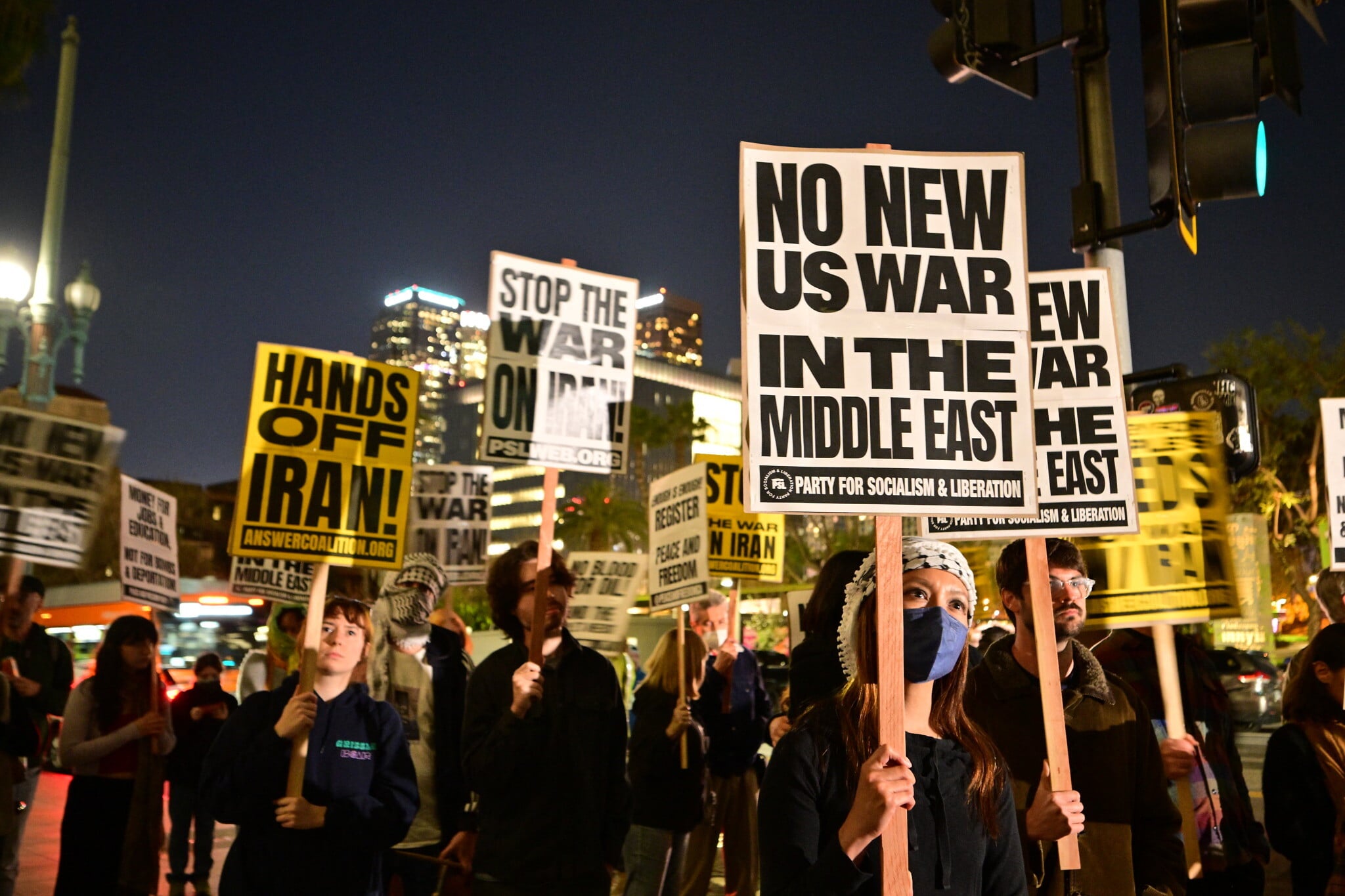
The Times of Israel liveblogged Tuesday’s events as they unfolded.
IDF says people can leave bomb shelters after latest Iranian barrages
The IDF says people in bomb shelters throughout the country can leave them, after a lengthy Iranian missile attack that consisted of many successive barrages and targeted widespread parts of Israel.
No injuries have been reported in the attack.
US intelligence assessment warns of Iranian attacks on US following Khamenei’s death
Iran and its proxies could target the US with attacks in response to the Saturday killing of Iranian Supreme Leader Ali Khamenei in Israeli and US strikes, according to a recent US intelligence assessment reviewed by Reuters.
The February 28 threat assessment produced by the Office of Intelligence and Analysis at the Department of Homeland Security said Iran and its proxies “probably” pose a threat of targeted attacks on the United States, although a large-scale physical attack is unlikely.
The report added that in the short term, the main concern was that Iran-aligned “hacktivists” would conduct low-level cyber attacks against US networks, such as website defacements and distributed denial-of-service attacks.
“Although a large-scale physical attack is unlikely, Iran and its proxies probably pose a persistent threat of targeted attacks in the Homeland, and will almost certainly escalate retaliatory actions — or calls to action – if reports of the Ayatollah’s death are confirmed,” the DHS report reviewed by Reuters says.
DHS does not immediately respond to a request for comment.
Iran on Sunday confirmed reports of Khamenei’s death in a strike on Saturday that was initially announced by Israel and US President Donald Trump.
The DHS assessment also said Iran would probably continue its attacks against US and allied targets in the Middle East and would almost certainly blame senior US government officials for any protests that begin because of Trump’s statement calling for regime change.
Suspected drone infiltration alert sounds in Golan
A suspected drone infiltration alert sounds in Eliad in the southern Golan Heights.
The IDF Home Front Command says later that the incident is “over,” without elaborating.
Australia says its Mideast military HQ was hit by Iranian drone attack over weekend
Australia says its military headquarters in the Middle East was hit by an Iranian drone attack over the weekend and that all staff are safe.
Speaking on morning TV, Defense Minister Richard Marles says he can confirm reports that the Al Minhad Air Base — just 24 kilometers (15 miles) south of Dubai in the United Arab Emirates — was hit over the weekend.
“There was some drones which did attack that base on the first night,” Marles, also deputy prime minister, says.
“We have a number of Australians who operate from a headquarters that we’ve had at Al Minhad now for many, many years,” he says. “They are all safe and accounted for.”
Australia has said it has 115,000 nationals in the Middle East who are unable to fly out because of airspace closures caused by the conflict.
Al Minhad Air Base has hosted Australian forces since 2003 and serves as the primary hub for the country’s operations in the Middle East.
Up to 80 Australians are on base at any given time, according to the Australian military.
Loud explosions heard, clouds of smoke seen in Riyadh’s diplomatic quarter — witnesses
Loud explosions have been heard and clouds of smoke seen in Riyadh’s diplomatic quarter, home to foreign embassies in the Saudi capital and residences of foreign diplomats, four witnesses tell AFP.
“I heard two explosions followed by smoke rising over the quarter,” says a resident who prefers to remain anonymous due to the sensitivity of the matter.
The blasts are heard as Iran pressed its campaign targeting Gulf states, including Saudi Arabia, with waves of missile and drone attacks in response to US and Israeli airstrikes.
Qatar says it intercepted two ballistic missiles
Qatar’s military has intercepted two ballistic missiles, the country’s defense ministry says, after loud explosions were heard across Doha, presumably due to projectiles launched by Iran.
Qatar was able to “intercept and neutralize two ballistic missiles that targeted several areas within the country,” the ministry says in a statement, adding the “threat was dealt with immediately upon detection.”
US House speaker: Israel’s determination to strike Iran left Trump with a ‘very difficult’ decision
A classified briefing at the US Capitol leaves lawmakers with little clarity about the purpose, cost and next steps in the US operation against Iran.
Republican Speaker Mike Johnson describes the US attack as a “defensive operation” because he says Israel was determined to act on its own against Iran, “with or without American support.”
Johnson says US President Donald Trump had a “very difficult decision” to make, and determined that Iran would immediately retaliate against US personnel and assets.
But Senator Mark Warner, the top Democrat on the Intelligence Committee, says that “there was no imminent threat to the United States of America by the Iranians. There was a threat to Israel.”
Rubio, Hegseth and others briefed the lawmakers, but Senate Democratic Leader Chuck Schumer says he found their answers “completely and totally insufficient.”
The Trump administration will likely seek supplemental funds from Congress to pay for the operation, they say.
US says it wouldn’t deliberately target a school, after Iran claims over 160 killed in strike
US Secretary of State Marco Rubio says American forces “would not deliberately target a school,” after Iranian state media claimed that over 160 were killed in a strike on a girls’ school on the first day of the US and Israeli attacks on Iran.
The reported strike took place on a girls’ elementary school in the town of Minab in southern Iran on Saturday, marking the deadliest incident so far amid the war between the US and Israel and Iran. There has been no word on who was responsible.
The incident has been condemned by the UN culture and education agency UNESCO and Nobel Peace Prize-winning education activist Malala Yousafzai. Deliberately attacking an educational institution or hospital or any other civilian structure is a war crime under international humanitarian law.
“The Department of War would be investigating that if that was our strike, and I would refer your question to them,” Rubio tells reporters when asked about the incident. “The United States would not deliberately target a school.”
“It will be very tragic, but I can’t speak to the details behind it because I just don’t have it. It will be a tragic outcome if it’s happened. I don’t have the details as to what led to it but what is clear is that the United States will not deliberately target a school,” Rubio says.
The Pentagon and the US Central Command do not respond to a request for comment. Over the weekend, the US Central Command told media outlets it was “looking into” reports of “civilian harm resulting from ongoing military operations.”
Israel’s ambassador to the UN, Danny Danon, is also asked about the strike that Iranian state media has blamed on Israel and the US. Danon says he has seen different reports, including that the Islamic Revolutionary Guard Corps targeted the school.
Reuters cannot independently confirm the reports.
Suspected drone infiltration sirens sound in series of northern communities; IDF: incident over
A series of suspected drone infiltration alerts sound in a series of communities in northern Israel.
A short while later, the IDF Home Front Command declares the incident “over,” meaning people can leave bomb shelters.
Trump: You’ll soon find out response to Riyadh embassy attack; no boots on ground needed in Iran
US President Donald Trump tells NewsNation that people will find out soon what the retaliation will be to an attack on the US embassy in Riyadh and over the deaths of US military personnel during the Iran conflict, a reporter at the media outlet posts on X, citing an interview with him.
The US embassy in Saudi Arabia was hit by two drones, resulting in a limited fire and some material damage, the kingdom’s defense ministry has said in a post on X, citing an initial assessment.
Trump adds that he doesn’t think American boots on the ground will be necessary in Iran, the outlet says.
Netanyahu: Iran had been building bunkers that would’ve made nuclear, missile programs immune within months
Prime Minister Benjamin Netanyahu says an attack against Iran was urgently necessary because Iran was building new underground sites to shield its missile and nuclear programs from attacks.
“The reason that we had to act now is because after we hit their nuclear sites and their ballistic missile program… they started building new sites… underground bunkers that would make their ballistic missile program and their atomic bomb program immune within months,” Netanyahu claims in an interview with Fox News.
“If no action was taken now, no action could be taken in the future,” Netanyahu says in a snippet aired by the US outlet.
The full interview will be aired shortly.
Saudis say attack using multiple drones on US embassy in Riyadh sparked ‘limited’ fire
An attack using at least two drones on the US embassy in Riyadh sparked a small fire, a Saudi defense ministry spokesman says in a statement, as Iran presses on with its campaign of retaliatory strikes across the Gulf.
“The US Embassy in Riyadh was attacked by two drones, according to initial assessments. The attack resulted in a limited fire and minor material damage to the building,” the statement says after witnesses told AFP they had seen smoke over the building housing the US diplomatic mission.
A source close to the Saudi army tells AFP, speaking on condition of anonymity to discuss the sensitive issue, that Saudi air defense intercepted four drones targeting Riyadh’s diplomatic quarter in the attack.
In the aftermath, the US embassy issued shelter in place notification for citizens in Jeddah, Riyadh and Dhahran.
New explosions heard in Riyadh, after attack on US embassy
New explosions are heard in Riyadh, an AFP journalist and residents say, as Iran presses on with its campaign of retaliatory strikes across the Gulf.
The explosions are heard in the center of the Saudi capital, with one resident saying they “heard a bang and the house shook.”
Earlier, Saudi’s defense ministry confirmed multiple drones had struck the US embassy in Riyadh, starting a small fire.
Iran’s FM: Rubio admitted US ‘entered a war of choice on behalf of Israel,’ blood is ‘on Israel Firsters’
Iran’s foreign minister reacts to US Secretary of State Marco Rubio’s remark that Washington attacked Iran over the weekend because it received intelligence that its assets in the region would be targeted in response to an Israeli attack.
“Mr. Rubio admitted what we all knew: US has entered a war of choice on behalf of Israel. There was never any so-called Iranian ‘threat,'” Abbas Araghchi posts on X.
“Shedding of both American and Iranian blood is thus on Israel Firsters,” he claims. “American people deserve better and should take back their country.”
Laughing off notion that he’s dragging Trump into war, Netanyahu insists that it’ll be quick
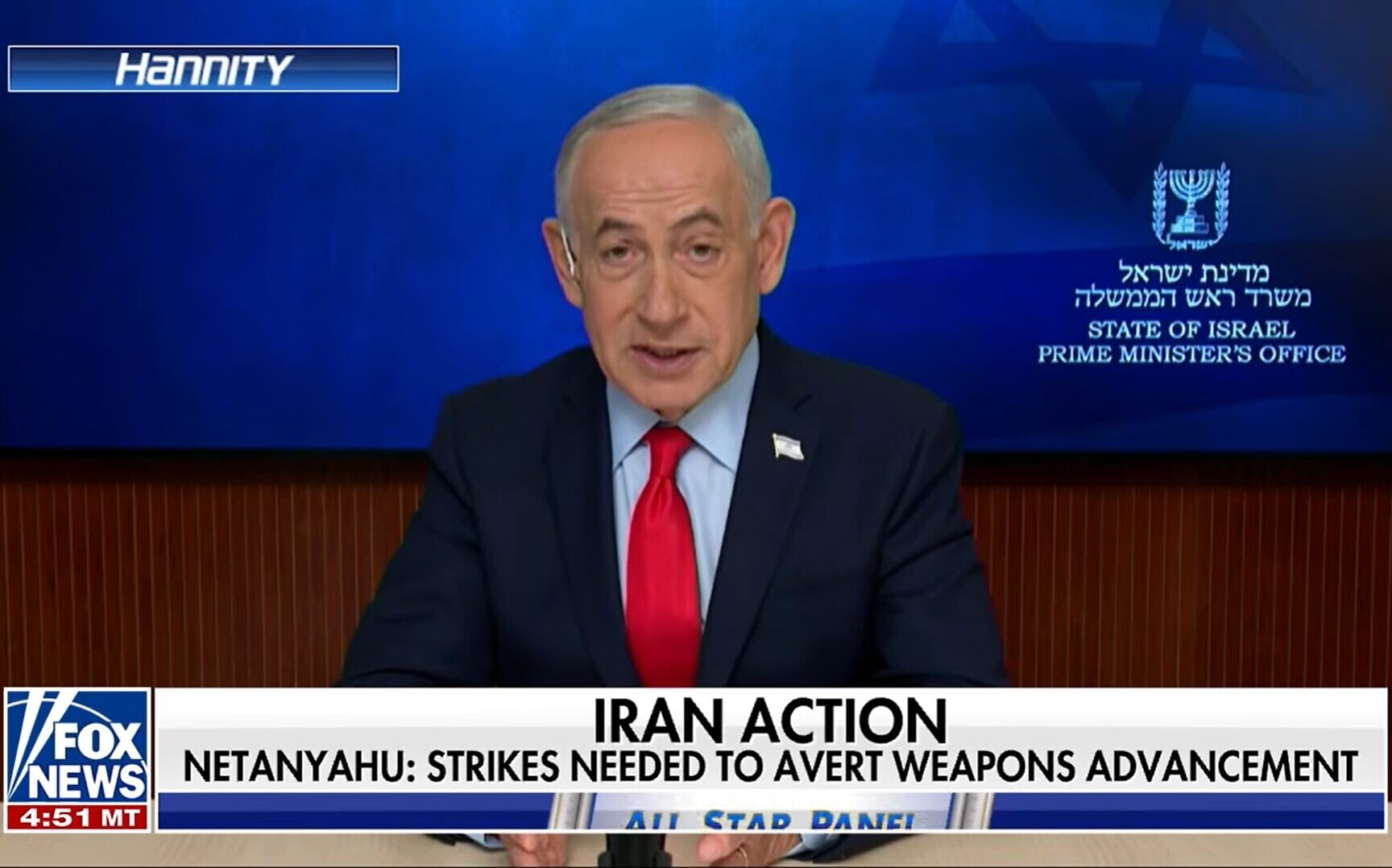
Prime Minister Benjamin Netanyahu gives an interview to Fox News, March 3, 2026. (Screenshot: Fox News/YouTube)
Prime Minister Benjamin Netanyahu denies that the US and Israel are engaging in an “endless war” against Iran, insisting that the operation will end quickly.
“I hear people are telling you that you’re going to have an endless war here — You’re not going to have an endless war because… this terror regime in Iran is at its weakest point” since its founding, Netanyahu tells Fox News in an interview.
“This is going to be a quick and decisive action,” he asserts.
Netanyahu says that the US and Israeli strikes will create the conditions for regime change in Iran.
US officials have given mixed messages regarding whether regime change is the goal, though. Defense Secretary Pete Hegseth said earlier that it isn’t and that neutralizing the Iranian missile, navy and nuclear threats is.
Netanyahu says 95% of the problems in the Middle East are generated by Iran and that the fall of the regime would lead to a flood of peace deals between Israel and its Arab and Muslim neighbors.
He maintains that the joint US-Israeli operations will “usher in an era of peace that we haven’t even dreamed of.”
Earlier, US Secretary of State Marco Rubio declared that the US launched Operation Epic Fury because Israel was going to carry out a preemptive strike against Iran and US intelligence indicated that Tehran would respond by targeting American assets in the region.
The remark further intensified criticism of the administration that Israel has dragged the US into a war with Iran.
Asked to respond to the claim, Netanyahu laughed it off.
“That’s ridiculous. Donald Trump is the strongest leader in the world. He does what he thinks is right for America. He does also what he thinks is right for future generations,” Netanyahu says, arguing that the US president understands on his own the threats posed by Iran.
Netanyahu spends much of his time in the interview praising Trump, who urged his followers to tune in to Fox News ahead of time and was ostensibly watching himself.
Additional suspected drone alerts blare in northern towns
More suspected drone infiltration sirrens sound in several northern towns near the Lebanon border.
IDF says it downed 2 drones launched from Lebanon
The IDF says it downed two drones launched from Lebanon that crossed into Israeli territory.
Earlier, suspected drone infiltration sirens sounded in several northern towns near the Lebanon border. The IDF Home Front Command later declared the incident “over.”
Witkoff: Iran negotiators boasted of having enough enriched uranium to build 11 nuclear bombs
US special envoy Steve Witkoff says Iran’s top negotiators boasted in the first round of negotiations earlier this year of having enough highly enriched uranium to build 11 nuclear bombs.
“In that first meeting, both the Iranian negotiators said to us directly — with no shame — that they controlled 460 kilograms of 60% [enriched uranium] and that they’re aware that could make 11 nuclear bombs,” Witkoff recalls in an interview with Fox News.
However, the US also asserts that it obliterated Iran’s nuclear facilities, so it shouldn’t have the ability to turn that enriched uranium into a bomb.
Still, Witkoff says the Iranian negotiators “were proud that they had evaded all sorts of oversight protocols to get to a place where they could deliver 11 nuclear bombs.”
He says that during that first meeting, the Iranian negotiators also boasted having “an inalienable right” to enrich their nuclear fuel.
“We responded that the president feels we have the inalienable right to stop you dead in your tracks,” Witkoff recalls.
“Jared and I just sort of looked at ourselves flummoxed, and said, ‘We’re really in for it now,'” he adds.
He reiterates his claim that the highly enriched uranium that Iran has stockpiled could be turned into weapons-grade within a week or ten days, though this would again require the nuclear facilities that the US says it destroyed in strikes last year.
Witkoff says US President Donald Trump dispatched himself and Jared Kushner to hold talks with Iran to reach a deal in which Tehran would agree to eliminate its missile program, cease its support for proxies, eliminate its navy “so we can have freedom of the seas,” and cease its nuclear enrichment.
“We went in there and tried to make a fair deal with them, and it was very, very clear that it was going to be impossible — probably by the end of the second meeting, but we then went back for the third meeting just to give it the last college try,” he continues.
“They wanted us to report positivity. It was not positive that meeting,” Witkoff says.
Vance: War aimed at changing Iran’s ‘mindset’ so that they abandon pursuit of nukes
After US officials offered a series of aims for Operation Epic Fury over the last 72 hours, Vice President JD Vance focuses largely on the nuclear threat posed by Iran in an interview with Fox News.
He says the goal of the operation is to change the Iranian “mindset” so that they agree never to pursue a nuclear weapon.
Vance says US President Donald Trump succeeded in preventing Iran from having the ability to build a nuclear weapon until at least the end of his second term through Operation Midnight Hammer targeting Tehran’s three main nuclear facilities last year.
“We set them back substantially, but I think the president was looking for the long haul. He was looking for Iran to make a significant long-term commitment that they would never build a nuclear weapon,” the vice president says.
The US then spent nearly a year trying to negotiate with Iran, but Tehran wouldn’t budge, Vance says.
Trump then realized that achieving his aim “would require, fundamentally, a change in mindset from the Iranian regime,” Vance says.
“He saw that the Iranian regime was weakened, he knew that they were committed to getting on that brink of a nuclear weapon, and he decided to take action because he felt that was necessary in order to protect the nation’s security,” Vance says.
Vance insists that Operation Epic Fury won’t drag out for years because the US has a clear goal.
But US officials have listed a series of goals, including ones related to Iran’s nuclear program, its missile program, its drone program, its support for proxies and the need for regime change.
“There’s just no way that Donald Trump is going to allow this country to get into a multi-year conflict with no clear end in sight and no clear objective,” Vance asserts.
“He’s defined the objective as Iran cannot have a nuclear weapon and has to commit long-term to never trying to rebuild their nuclear capability,” he adds.
Saudi defense ministry says 8 drones intercepted near Riyadh, Al-Kharj
Saudi Arabia’s defense ministry says more than half a dozen drones have been intercepted near the capital Riyadh and the city of Al-Kharj.
“Eight drones were intercepted and destroyed near the cities of Riyadh and Al-Kharj,” says defense ministry spokesman Major General Turki al-Malki on X.
IDF issues new evacuation warnings in Lebanon ahead of strikes
The IDF issues new evacuation orders for dozens of locations in Lebanon, including a warning for residents in two southern Beirut neighborhoods to stay away from several buildings ahead of imminent military action.
“Urgent warning to the residents of Lebanon, specifically in the villages whose names are shown. For your safety, you must evacuate your homes immediately,” says a statement by the military’s Arabic-language spokesman Avichay Adraee on Telegram, which lists 50 locations.
“You are located near Hezbollah facilities and interests, against which the IDF will operate in the near future,” he tells the residents of the southern Beirut neighborhoods Ghobeiry and Haret Hreik in another evacuation warning.
#عاجل ‼️انذار عاجل إلى سكان #لبنان وتحديدًا في القرى المعروضة أسمائها:
????كفر رمان ???? حبوش ????حاروف ????جبشيت ????ميدون ????الخيام ???? دبين ????طيبة ???? مرجعيون ????يحمر الشقيف ????كفر تبنيت ????النبطية الفوقا ????دير سريان ???? بليدا ????ميفدون ???? عدشيت القصير ????دير الزهراني ????تولين ????تول????عنقون… pic.twitter.com/oADbm0VmFl
— افيخاي ادرعي (@AvichayAdraee) March 3, 2026
#عاجل ‼️ انذار إلى جميع السكان المتواجدين في منطقة الضاحية الجنوبية وتحديدًا في المبنييْن المحدديْن في الخريطتيْن المرفقتيْن والمباني المجاورة لهما في المناطق التالية:
????الغبيري
????حارة حريك⭕️أنتم تتواجدون بالقرب من منشآت ومصالح تابعة لحزب الله حيث سيعمل ضدها جيش الدفاع على… pic.twitter.com/naXCpht7mb
— افيخاي ادرعي (@AvichayAdraee) March 3, 2026
Fresh suspected drone infiltration alerts sound in Golan, after Hezbollah confirms sending earlier UAVs
Suspected drone infiltration alerts sound in several communities in the Golan.
The IDF said earlier that it downed two drones launched from Lebanon. Hezbollah has confirmed it launched two drones.
At least two strikes reported in Beirut; Hezbollah-owned radio station said hit
Lebanese media reports at least two Israeli airstrikes a short while ago in Beirut’s southern Dahiyeh district, a stronghold of Iran-backed group Hezbollah.
The IDF does not immediately comment.
Footage published by Arabic media shows a plume of smoke rising from amid buildings in the distance after a flash and a loud bomb.
لبنان.. إسرائيل تشن غارات جوية على الضاحية الجنوبية في بيروت pic.twitter.com/th3w9810Nc
— Asharq News الشرق للأخبار (@AsharqNews) March 3, 2026
Arabic media reports that Hezbollah-owned radio station Al-Nour was targeted in the strike. Hezbollah-owned TV news channel Al-Manar was also reportedly targeted by the IDF overnight.
CENTCOM: US forces ‘destroyed’ command facilities of Iran’s IRGC
US military officials say they have destroyed command posts of Iran’s Revolutionary Guards as well as Iranian air defense and missile launch sites since the start of the joint Israeli-US offensive on Saturday.
“US forces have destroyed Islamic Revolutionary Guard Corps command and control facilities, Iranian air defense capabilities, missile and drone launch sites, and military airfields during sustained operations,” US Central Command writes in an X post.
Amazon confirms its UAE data centers were ‘directly struck’ by Iranian drones on Sunday
Tech giant Amazon says that two of its data centers in the United Arab Emirates were “directly struck” by drones, disrupting cloud services in parts of the Middle East.
A facility in Bahrain was also damaged by “a drone strike in close proximity,” the provider says in an update to its service updates dashboard.
A number of Gulf cities have been dealt collateral damage, hit by strikes and stray weaponry since the United States and Israel launched attacks on Iran, killing Iran’s supreme leader and other top officials.
“Due to the ongoing conflict in the Middle East, both affected regions have experienced physical impacts to infrastructure as a result of drone strikes,” Amazon says in the update.
“These strikes have caused structural damage, disrupted power delivery to our infrastructure, and in some cases required fire suppression activities that resulted in additional water damage.”
The company does not specify if any of its employees were injured in the drone strikes, and says they are working closely with local authorities while “prioritizing the safety of our personnel throughout our recovery efforts.”
Amazon Web Services is the world’s leading cloud computing provider, competing with rivals including Microsoft Azure and Google Cloud to offer infrastructure that underpins popular apps and websites, as well as powering generative AI.
It advises affected users to back up any critical data and switch to Amazon’s servers in other parts of the world.
On Sunday, Amazon reported one of its UAE data centers was struck by “objects,” without further specification, and warned users of unpredictable challenges.
Trump says US munition stockpiles ‘never been higher,’ enough weapons to fight ‘forever’
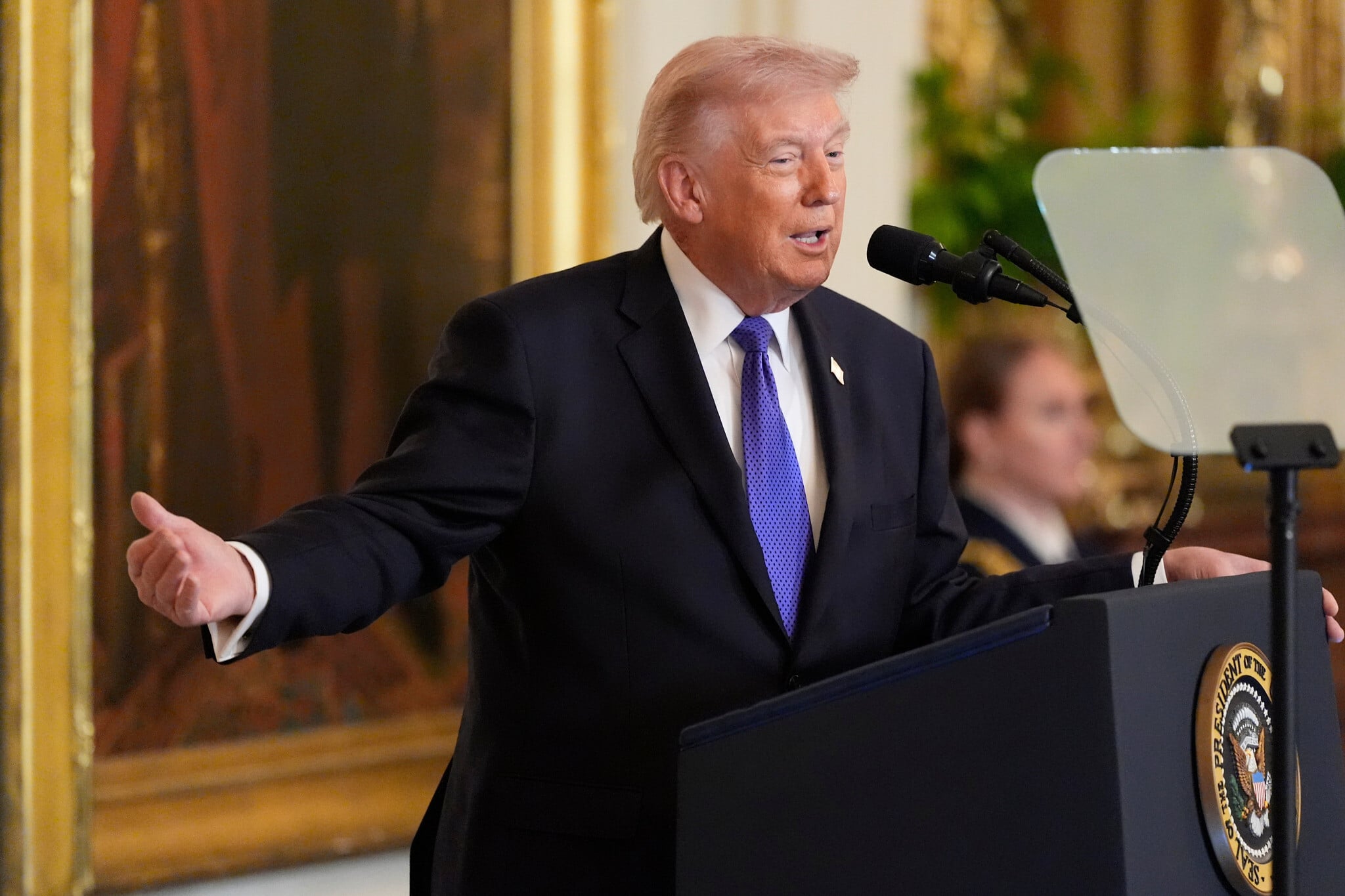
President Donald Trump speaks about the new ballroom construction before a Medal of Honor ceremony in the East Room of the White House, March 2, 2026, in Washington.(AP Photo/Mark Schiefelbein)
US President Donald Trump says his country’s munition stockpiles have “never been higher or better,” a day after the Wall Street Journal reported that the US is racing to destroy Iran’s missile and drone force before running out of interceptors.
“As was stated to me today, we have a virtually unlimited supply of these weapons. Wars can be fought ‘forever,’ and very successfully, using just these supplies,” Trump writes on Truth Social, openly flirting with the notion of an indefinite conflict with Iran — something he campaigned against embarking on.
“At the highest end, we have a good supply, but are not where we want to be,” he acknowledges.
“Much additional high grade weaponry is stored for us in outlying countries,” he adds.
“The United States is stocked, and ready to WIN, BIG!” Trump writes.
Israeli Air Force currently striking targets in both Iran and Lebanon, IDF says
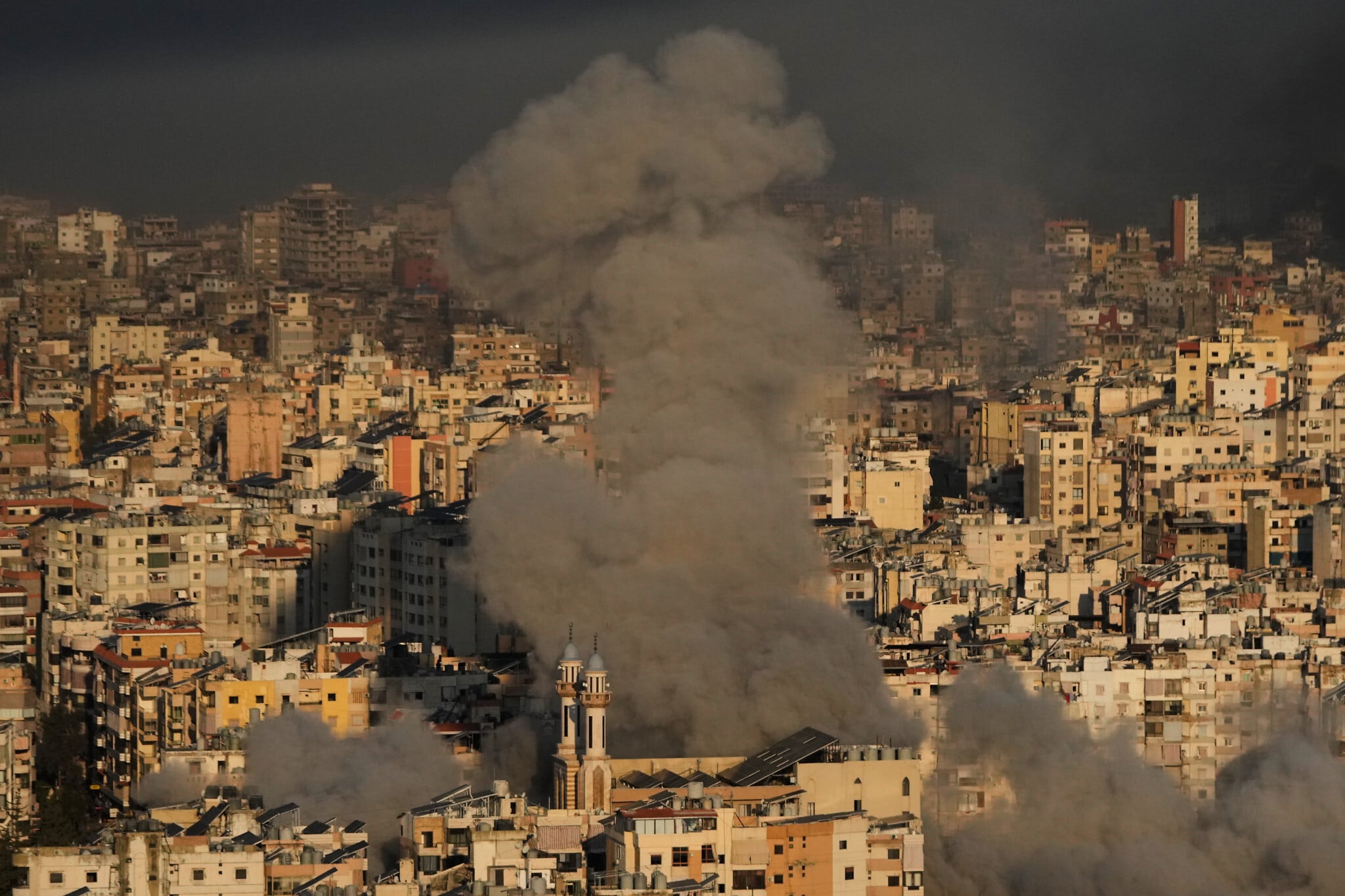
Smoke rises from Israeli airstrikes in Dahiyeh, a southern suburb of Beirut, Tuesday, March 3, 2026. (AP Photo/Hussein Malla)
The Israeli Air Force has launched new waves of “extensive” airstrikes against targets in both Iran and in Lebanon’s capital, Beirut, the military says.
It says the IAF has “begun an extensive wave of strikes against the Iranian terror regime and the Hezbollah terrorist organization.”
IDF publishes footage of strike on Iranian air defense soldiers
The IDF publishes footage showing a drone strike targeting Iranian air defense soldiers in Iran.
The military says the Iranian soldiers sought to target Israeli Air Force aircraft.
תיעוד: חיל-האוויר חיסל חיילים ממערך ההגנה של משטר הטרור האיראני שמטרתם לפגוע בכוחותינו
כלי טיס של חיל-האוויר תקפו וסיכלו חוליית חיילים ממערך ההגנה של משטר הטרור האיראני שמטרתם לפגוע בכוחותינו באמצעות מערכות הגנה אוויריות.
בנוסף, כלי טיס של חיל-האוויר ממשיכים לתקוף באופן שוטף… pic.twitter.com/jV2flxyG71
— Israeli Air Force (@IAFsite) March 3, 2026
US State Department orders non-emergency staff to leave Jordan, Bahrain, Iraq
The US State Department says it has ordered non-emergency personnel and their families to leave Bahrain and Jordan, as well as announcing it had ordered staff in Iraq to leave a day earlier, as Iran retaliates to US-Israeli strikes.
The department, in a post on X, says it has updated travel advisories for Bahrain and Jordan “to reflect the ordered departure of non-emergency US government personnel and family members of government personnel.”
In an updated Iraq travel advisory, the department says it had “ordered non-emergency US government employees to leave Iraq due to security concerns” the day before.
The State Department order comes after the US urged its citizens yesterday to leave the Middle East from Egypt eastward amid plans to intensify strikes on Iran.
Times of Israel staff contributed to this report.
Five rockets launched from Lebanon at northern Israel; no reports of injuries
Five rockets were launched from Lebanon at northern Israel a short while ago, setting off sirens in the Galilee Panhandle, according to the military.
Some of the rockets were intercepted by air defenses, and others were allowed to hit open areas, “according to protocol,” the IDF says.
There are no reports of injuries.
US confirms its Riyadh embassy was attacked by drones overnight
The United States embassy in Riyadh confirms it was attacked overnight and urges people to stay away, saying it will be closed today.
“Avoid the embassy until further notice due to an attack on the facility,” a statement says, urging American citizens to “shelter in place.”
The Saudi defense ministry had said that an attack by two drones on the US embassy in the early hours of Tuesday had sparked a small fire and “caused minor material damage to the building.”
Witnesses say they saw smoke over the building housing the US mission and heard loud explosions in the diplomatic quarter, home to foreign embassies in the Saudi capital.
Hezbollah claims responsibility for drones launched at Israel overnight
Hezbollah takes responsibility for launching drones at Israel overnight.
According to the IDF, two drones from Lebanon were intercepted. There were no reports of impacts in Israel.
Hezbollah claims to have targeted an Israeli air traffic control base on Mount Meron and the Ramat David Airbase.
The terror group also claims to have fired rockets at an IDF base in the Golan Heights at 6:30 a.m.
Drone sirens sound in Jerusalem
Suspected drone infiltration sirens sound in Jerusalem and the surrounding area.
The IDF says it is looking into the details.
Sirens also sound in the Golan Heights following fresh rocket fire from Lebanon.
Drone sirens in Jerusalem, central Israel were false alarms
The IDF says the sirens that sounded across the Jerusalem area and some parts of central Israel, warning of a suspected drone infiltration, were false alarms.
Satellite images appear to show fresh damage to Iran’s Natanz nuclear facility complex
Several buildings within the Natanz nuclear facility complex in Isfahan, Iran, appear to have sustained fresh damage, in new satellite photos of the facility taken by Vantor on March 1 and March 2.
In the bottom photo, taken on March 2, at least two small buildings inside the facility appear to have sustained significant damage, after appearing unharmed in images captured the day before.
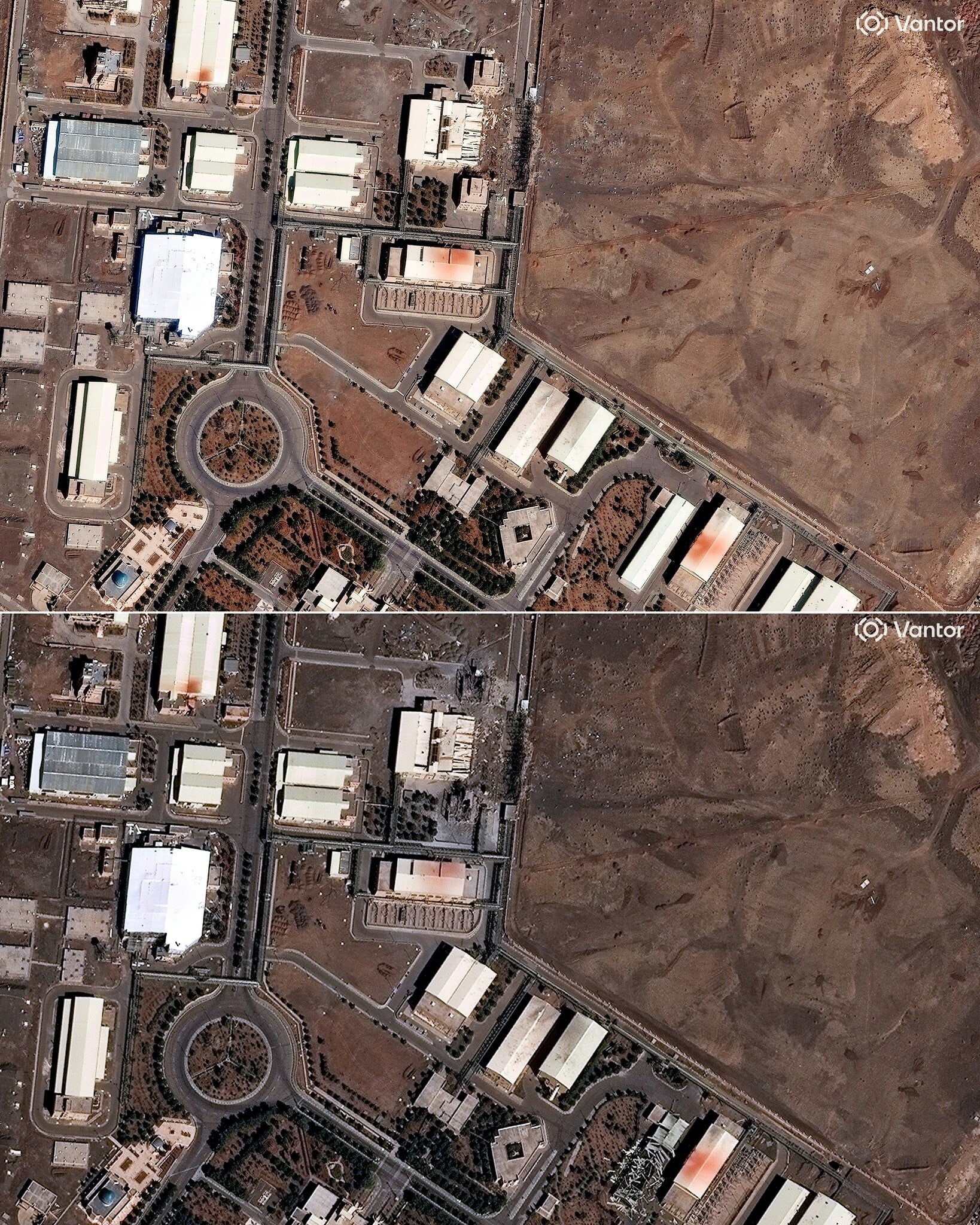
The Natanz facility was one of the main targets in the previous 12-day war between Israel and Iran in June, which the US briefly joined.
Iran accused Israel and the United States yesterday of having again attacked the facility.
“The criminal regimes of the United States and Israel, pursuing their aggression, again targeted the Natanz nuclear site on Sunday afternoon in two brutal attacks,” Iran’s atomic energy chief Mohammad Eslami said in a letter to the UN’s nuclear watchdog, quoted by the IRNA news agency.
The UN agency’s head had said that there was “no indication” any nuclear installations had been hit.
IDF deploys troops deeper into southern Lebanon as ‘additional layer of security’ amid Hezbollah attacks
The IDF says it had deployed troops deeper within southern Lebanon, beyond the five posts currently held by Israel, “as part of an enhanced forward defense posture.”
Soldiers of the 91st “Galilee” Regional Division are “positioned at several points near the border area as part of an enhanced forward defense posture,” the army says.
The IDF says it is “working to create an additional layer of security for residents of northern Israel.”
“The IDF is conducting targeted strikes against Hezbollah terror infrastructure in order to remove threats and prevent infiltration attempts into Israeli territory,” it adds.
This comes after Hezbollah launched rockets and drones at northern Israel early Monday in response to Israel’s killing of Iran’s supreme leader. The terror group fired more rockets and drones overnight and this morning.
US embassy in Kuwait closes until further notice due to Iran attacks
The US embassy in Kuwait says it is closed until further notice, a day after an AFP correspondent saw smoke rising from the mission following Iranian attacks on the country.
“Due to ongoing regional tensions, the US Embassy in Kuwait will be closed until further notice. We have cancelled all regular and emergency consular appointments,” the embassy says in a statement on X.
Suspected drone infiltration sets off sirens across Western Galilee
Sirens warning of a suspected drone infiltration sound across the Western Galilee.
The IDF says it is looking into the details.
Earlier, Hezbollah launched several drones from Lebanon at northern Israel.
Katz: Deployment into southern Lebanon intended to prevent ‘direct fire’ on Israeli communities
Defense Minister Israel Katz says the IDF’s move to advance in southern Lebanon is intended to prevent “direct fire” on Israeli communities.
“To prevent the possibility of direct fire at Israeli communities, Prime Minister Benjamin Netanyahu and I have authorized the IDF to advance and hold additional dominant terrain in Lebanon and defend the border communities from there,” Katz says in a statement.
“The IDF continues to operate forcefully against Hezbollah targets in Lebanon. The terrorist organization is paying and will pay a heavy price for the fire toward Israel,” he adds.
Health Ministry says 289 people treated at hospitals over past 24 hours of Iran fighting
The Health Ministry reports that in the past 24 hours, 289 injured people have been taken to hospitals as a result of the conflict with Iran.
Among those treated in hospitals, 19 are in moderate condition and 258 are in good condition. Eight people have been treated for anxiety and four have undergone or are undergoing medical evaluation.
A total of 1,050 people have been evacuated to hospitals since the fighting began on Saturday. Of that number, 120 are still currently hospitalized or in the ER, while the remainder have been treated and released.
Four of the people still currently hospitalized are in moderate condition, although two of them were not directly wounded by missile strikes.
Another 21 people still currently hospitalized are in moderate condition and 75 others are in good condition. Two others remain in the hospital for medical evaluations.
Top member of Iran’s Quds Force killed in Navy strike in Beirut yesterday, IDF says
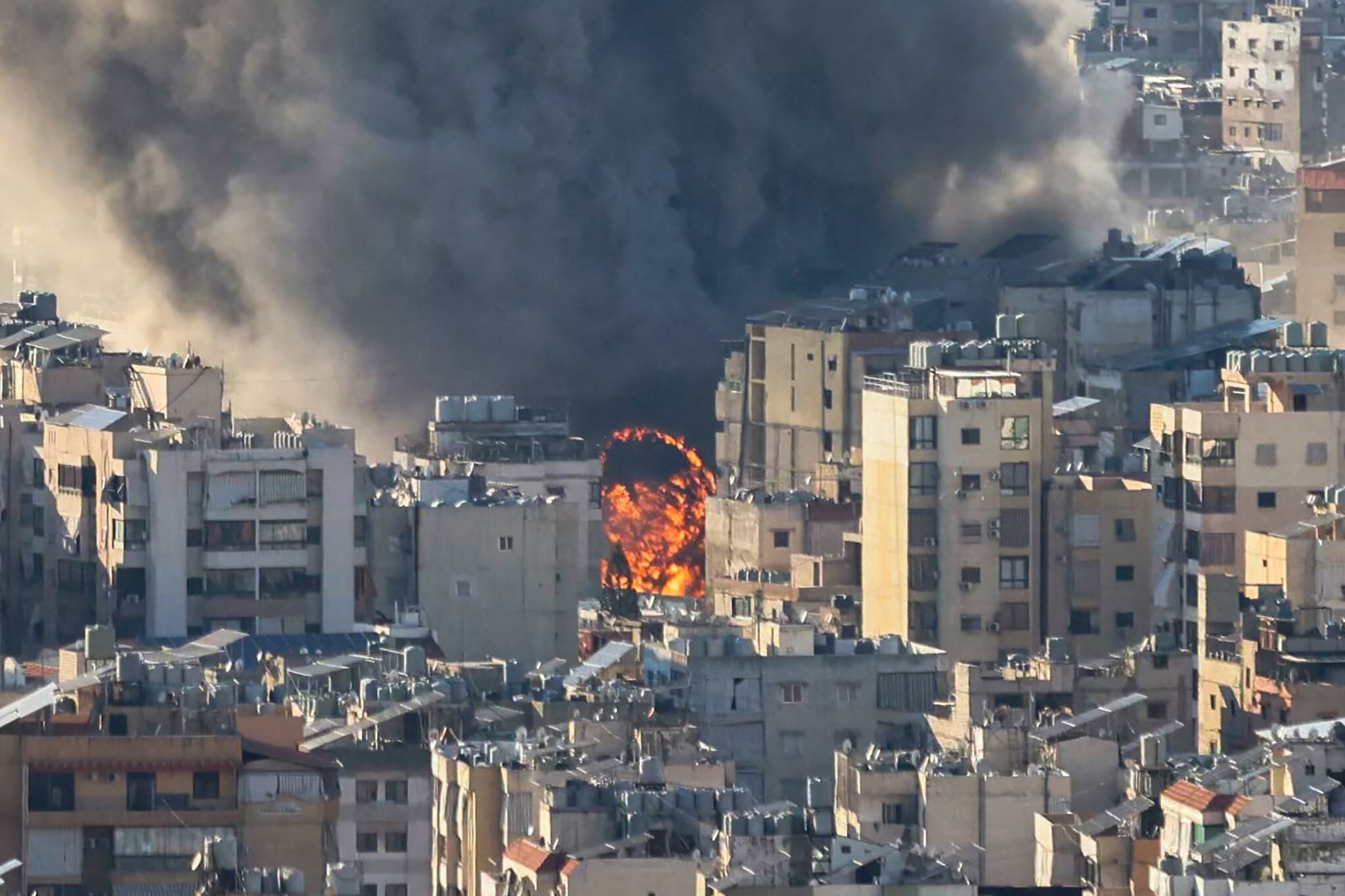
Smoke plumes billow following Israeli bombardment on Beirut's southern suburbs on March 2, 2026. (IBRAHIM AMRO / AFP)
A top member of Iran’s Islamic Revolutionary Guard Corps’ Quds Force who worked with Hezbollah was killed in an Israeli Navy strike in Beirut yesterday, the IDF announces.
The military says the strike in the Lebanese capital killed Reza Khazaei, who headed the IRGC Quds Force’s efforts to assist Hezbollah with rebuilding its capabilities. Khazaei also served as chief of staff at the Quds Force’s Lebanon Corps, according to the IDF.
“As part of his role, Khazaei served as the right-hand man of the corps commander and was considered a key figure in Hezbollah’s force buildup,” the IDF says.
The military says he was responsible for liaising between Hezbollah and Iran, “particularly for bridging between the needs of the Hezbollah terror organization and the resources provided by Iran.”
“Khazaei led extensive processes within the Lebanon Corps and the Hezbollah terror organization,” the IDF says, including “force buildup processes involving Iranian weapons and equipment” and rehabilitation of the terror group’s offensive capabilities following the 2023-2024 war with Israel.
According to the IDF, Khazaei worked to transfer weapons from Iran to Hezbollah and oversaw Hezbollah’s weapon production programs in Lebanon.
Unsourced Saudi report claims Israeli special forces operated on the ground in Iran overnight
An unsourced report from the Saudi al-Arabiya news outlet claims that Israeli special forces, including Mossad operatives, were active on the ground in Iran overnight.
The report does not provide any details about the purported operation.
Suspected car thief arrested in West Bank settlement after false terrorist infiltration alert
Police and army forces arrest a suspected car thief in the West Bank settlement of Nili, after residents received a false warning about a terrorist infiltration.
The IDF Home Front Command sent an alert to the town’s residents at 9:45 a.m. telling them to lock their doors and hide in a protected area.
Police now clarify that the incident is not terror-related and instead concerns a suspected car thief who had entered the settlement.
Officers from the Modi’in Illit police station and IDF troops arrested the suspect following a manhunt and transferred him for interrogation, police say.
Latest Beirut strikes hit Hezbollah weapons depots, command centers, and intelligence equipment, IDF says
The Israeli Air Force completed a wave of airstrikes against Hezbollah military assets in Beirut a short while ago, the IDF announces.
According to the IDF, the strikes hit weapon depots, command centers, and “satellite communications” equipment belonging to Hezbollah’s intelligence division.
“Communication sites used by the Hezbollah terror organization as terror infrastructure were struck, which the organization used to carry out terror activities, collect intelligence, and also for propaganda purposes,” the IDF says, after Lebanese media reported that the studios of Hezbollah-owned TV news channel Al-Manar were targeted.
Ahead of the strikes, the IDF issued evacuation warnings, “to mitigate harm to civilians,” it says.
צה"ל השלים גל תקיפה במרכזי הכובד בביירות
הותקפו רכיבי תקשורת במתקני תעמולה ששימשו את מטה המודיעין של חיזבאללה
צה"ל השלים לפני זמן קצר, גל תקיפות לעבר מפקדות, מחסני אמצעי לחימה, ורכיבי תקשורת לווינית של מטה המודיעין של ארגון הטרור חיזבאללה במרחב ביירות ששומשו בכסות אזרחית.… pic.twitter.com/2tzRL1CJRY
— צבא ההגנה לישראל (@idfonline) March 3, 2026
Rocket fire from Lebanon sets off sirens in northern Israel
Sirens sound in the Galilee Panhandle following rocket fire from Lebanon.
Hezbollah has fired more than a dozen rockets and several drones at Israel today, according to the IDF.
Medics, security forces responding to reported rocket impact in Galilee Panhandle
Medics and security forces are responding to reports of a rocket impact in a community in the Galilee Panhandle.
There are no immediate reports of injuries.
Several rockets were launched from Lebanon in the attack.
Sirens expected in central Israel as Iran renews ballistic missile fire
After a lull of some 10 hours, a new launch of ballistic missiles from Iran has been detected by the IDF.
Sirens are expected to sound in central Israel in the coming minutes.
Meanwhile, sirens warning of a suspected drone infiltration sound in Israel’s southernmost city of Eilat.
Iranian missile attack sets off sirens across central Israel after 10-hour lull
Sirens sound across central Israel amid an Iranian ballistic missile attack, the first in some 10 hours.
The IDF says it is working to shoot down the projectiles.
The military also says that the suspected drone infiltration siren in Eilat was a false alarm.
One person lightly injured by rocket impact in Galilee Panhandle
One person is lightly injured by a rocket impact in a community in the Galilee Panhandle, medics say.
Magen David Adom says it is taking a 64-year-old man to a hospital after he was hit by glass shards. Three others are also treated for acute anxiety, MDA adds.
The projectile launched from Lebanon struck a home in the community.
No injuries reported in latest missile attack; fragments said to cause damage in central Israel
There are no reports of injuries following Iran’s latest ballistic missile fire on central Israel, medics say.
Missile fragments reportedly impacted in central Israel, causing damage.
The IDF Home Front Command says civilians in areas where sirens sounded can now leave bomb shelters, but should still remain close to them.
Iranian Red Crescent says more than 780 people killed in US, Israeli strikes since Saturday
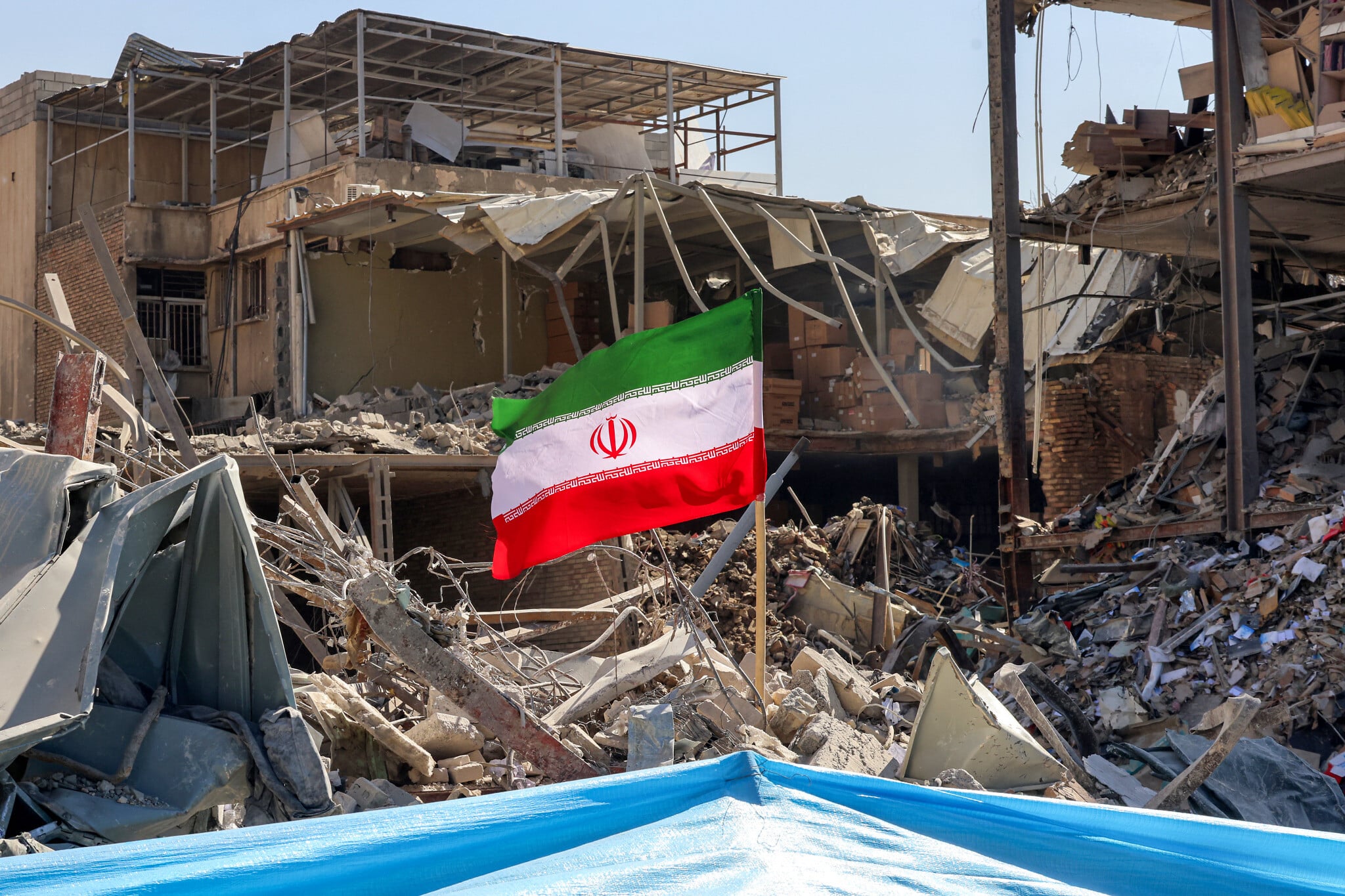
An Iranian flag is placed amids rubble and debris next to a destroyed residential building near Ferdowsi Square in Tehran on March 3, 2026. (Atta Kenare/AFP)
The Iranian Red Crescent says that more than 780 people have been killed nationwide since the United States and Israel started striking Iran.
AFP is not in a position to verify the toll given by the organization.
“According to field reports from operational teams, unfortunately, 787 compatriots have been martyred in these attacks,” the Red Crescent says on its website.
It says strikes since Saturday have hit 153 cities and more than 500 locations across Iran in more than 1,000 attacks.
Loud explosions were heard in Tehran this morning, according to AFP journalists, while Iranian media reported blasts in Karaj, west of the capital, and in the central city of Isfahan.
IDF: Air Force struck Iran’s ‘leadership complex,’ including presidential bureau, in Tehran overnight
Overnight, the Israeli Air Force struck Iran’s “leadership complex” in Tehran, the military says.
The IDF says around 100 fighter jets dropped over 250 bombs on the complex.
The buildings targeted in the complex included Iran’s presidential bureau, the headquarters of Iran’s Supreme National Security Council, a compound used by Iran’s “most senior forum” for meetings, as well as an “institution for training Iranian army officers,” according to the IDF.
“The leadership complex of the terror regime is one of the most secured assets in Iran and spans many streets in the heart of Tehran,” the military says, describing it as the “most important and central headquarters for the Iranian terror regime.”
“The leadership and security officials of the terror regime convened in the compound frequently, and from there conducted, among other things, situation assessments regarding the Iranian nuclear program and the advancement of the plan to destroy the State of Israel,” the IDF adds.
UN nuclear watchdog confirms new damage to Iran’s Natanz nuclear facility complex
The International Atomic Energy Agency confirms that entrance buildings in Iran’s Natanz nuclear facility have sustained partial damage, after satellite photos from the past two days apparently showed damage inflicted during the ongoing US-Israeli bombing campaign.
“Based on the latest available satellite imagery, IAEA can now confirm some recent damage to entrance buildings of Iran’s underground Natanz Fuel Enrichment Plant (FEP),” the agency writes on X, adding, “No radiological consequence expected and no additional impact detected at FEP itself, which was severely damaged in the June conflict.”
The Natanz facility was one of the main targets in the previous 12-day war between Israel and Iran in June, which the US eventually joined.
US embassy in Oman instructs staff to shelter in place
The US Embassy in Oman says it has instructed staff to shelter in place, and recommends that US citizens do the same.
The shelter-in-place order will remain “until further notice,” the embassy says.
Earlier, Iranian drones were reported to have targeted an Omani port, hitting a fuel tank. State media said the damage had been contained “without any human casualties.”
UN human rights chief ‘deeply shocked’ by impact of Middle East fighting on civilians
UN human rights chief Volker Turk says he is “deeply shocked” by how the war in the Middle East is affecting civilians, with fear, panic and anxiety palpable across the region.
Turk “is deeply shocked by the impacts of the widespread hostilities on civilians and civilian infrastructure since the conflict erupted on Saturday with Israel and the United States of America’s attacks on Iran, Iran’s response against states across the region, as well as Hezbollah’s subsequent entry into the conflict,” his spokeswoman Ravina Shamdasani tells a press conference in Geneva.
IDF says over 160 Hezbollah targets struck across south Lebanon over the past day
In the past day, the IDF says it has struck over 160 Hezbollah targets, including members of the terror group, in southern Lebanon.
The targets in south Lebanon included Hezbollah operatives and members of the group’s elite Radwan Force, as well as command centers used to advance attacks on Israel, the military says.
Meanwhile, fresh strikes are reported by Lebanese media in south Lebanon, as the IDF reiterates its warning to dozens of villages in the area to evacuate.
The south Lebanon strikes are in addition to a wave of attacks the IDF carried out in the capital, Beirut, overnight and this morning.
Sirens expected in central Israel due to new Iranian missile fire
A new launch of ballistic missiles from Iran has been detected by the IDF.
Sirens are expected to sound in central Israel shortly.
Lebanese president says ban on Hezbollah military activity is ‘sovereign and final’
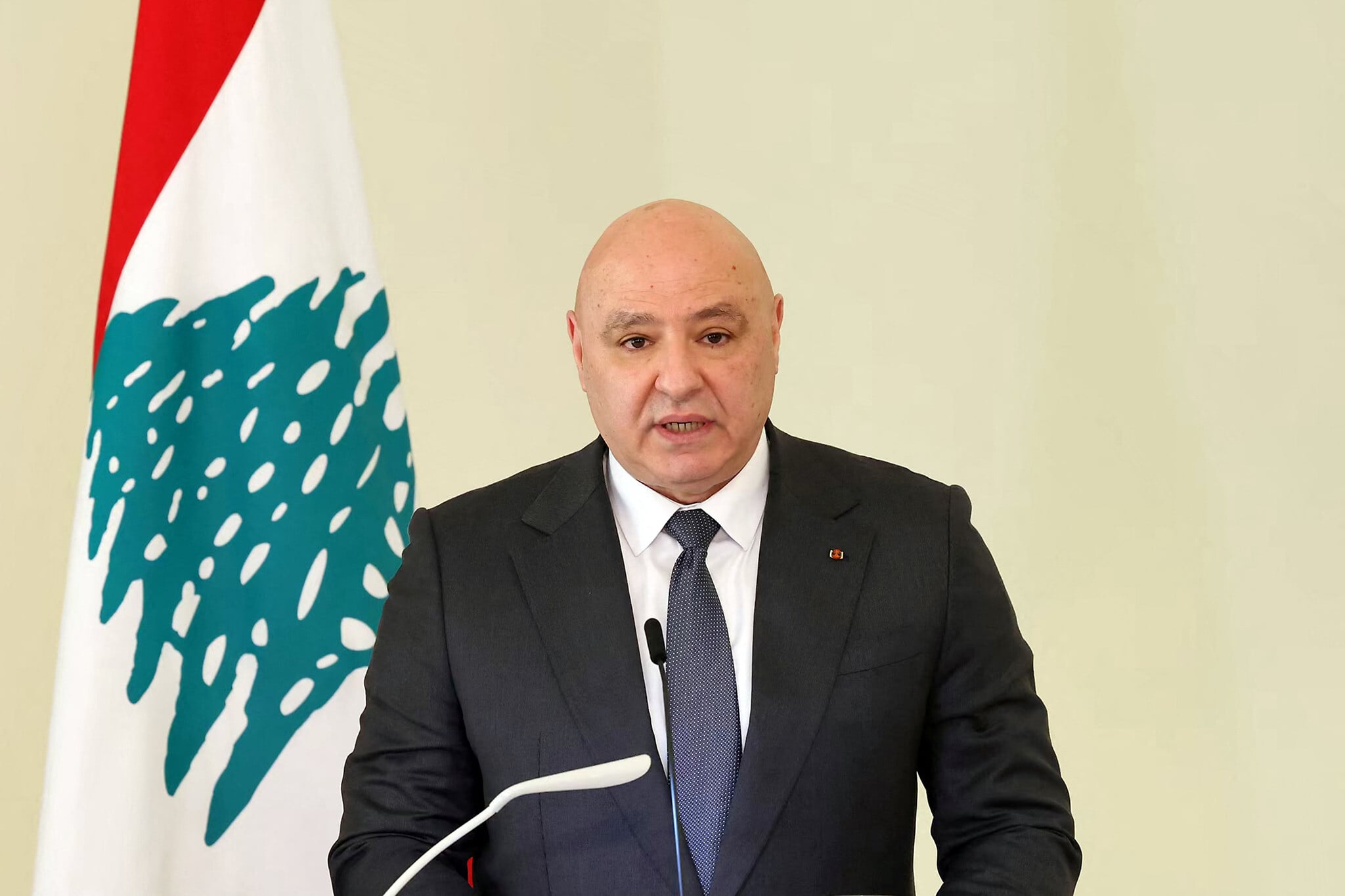
Lebanon's President Joseph Aoun at the Presidential Palace in Baabda, east of Beirut, on February 16, 2026. (Lebanese Presidency Press Office/AFP)
Lebanese President Joseph Aoun stresses that Beirut’s decision to ban Hezbollah’s military activity is “a sovereign and final decision,” a day after Prime Minister Nawaf Salam declared the group’s military operations “illegal acts” following its attacks on Israel, which prompted Israeli strikes on Lebanon.
“The decision taken by the Council of Ministers yesterday, preserving the Lebanese state’s sole right to control decisions of war and peace and banning military and security activities outside the law, is a sovereign and final decision from which there is no turning back,” Aoun tells the Quintet Committee, made of representatives from the United States, France, Saudi Arabia, Qatar and Egypt, according to the MTV Lebanese news site.
“The Council of Ministers has entrusted the army and security forces with implementing the decision across all Lebanese regions,” Aoun adds.
Sirens sound in central Israel; early warning for Jerusalem as another missile launch detected
Sirens sound in central Israel amid an Iranian ballistic missile attack, the second salvo today.
The IDF says it is working to shoot down the projectiles.
Meanwhile, an early warning is also issued by the IDF in Jerusalem as more projectiles from Iran are detected.
Iran warns European countries against joining Israel-US offensive: ‘It would be an act of war’
Iran’s foreign ministry warns European countries not to take any part in the US-Israeli campaign against the Islamic Republic, saying it “would be an act of war.”
“It would be an act of war,” ministry spokesman Esmaeil Baqaei tells reporters. “Any such act against Iran would be regarded as complicity with the aggressors. It would be regarded as an act of war against Iran.”
Germany, France, and the UK said on Sunday that they could take “proportionate defensive action to destroy Iran’s capability to fire missiles and drones at their source.”
Sirens sound in Jerusalem and surrounding area amid Iran’s latest ballistic missile salvo
Sirens sound in Jerusalem and the surrounding area amid Iran’s latest ballistic missile salvo.
Civilians in areas where sirens are sounding are instructed to enter bomb shelters until further notice, as the IDF says it is working to shoot down the projectiles.
Sirens also sound in Tel Aviv and across central Israel; civilians told to stay in shelters
Sirens sound in Tel Aviv and across central Israel amid Iran’s latest ballistic missile salvo.
Alerts were activated a short while earlier in Jerusalem and the surrounding area.
Civilians in areas where sirens are sounding are instructed to enter bomb shelters until further notice, as the IDF says it is working to shoot down the projectiles.
No reports of injuries in latest Iranian missile attack as IDF gives the all-clear
There are no reports of injuries following Iran’s latest ballistic missile fire on Israel, medics say.
The IDF Home Front Command says civilians in areas where sirens sounded can now leave bomb shelters, but should still remain close to them.
Putin to convey Arab concerns to Iran about attacks on oil infrastructure — Kremlin
Russian President Vladimir Putin will convey to Iran concerns among Arab leaders about Tehran’s strikes on oil infrastructure in the region, the Kremlin says, as the Iran conflict continues to widen.
Putin held a flurry of phone calls yesterday with four Arab Gulf state leaders, offering to use Moscow’s ties to Tehran — with which it has a strategic partnership — to try and defuse tensions in the region.
“Putin will certainly make every effort to contribute to at least a slight easing of tensions,” Kremlin spokesman Dmitry Peskov tells reporters.
“Yesterday’s discussions with virtually all of his interlocutors focused on Putin conveying his deep concern about the strikes on their infrastructure to our colleagues in Iran, taking advantage of the dialogue we maintain with the Iranian leadership.”
Oil prices have risen for a third day as Iran responded to US and Israeli attacks with strikes against energy infrastructure in Gulf countries and against tankers in the Strait of Hormuz.
Putin has not spoken with US President Donald Trump since the US and Israel launched the campaign against Iran, and Peskov says there are no plans for such a conversation at this time.
NYT: Trump had planned to hit Iran on Friday night, delayed because of intel enabling Khamenei killing; war decision was ‘victory for Netanyahu’; Vance stance also important
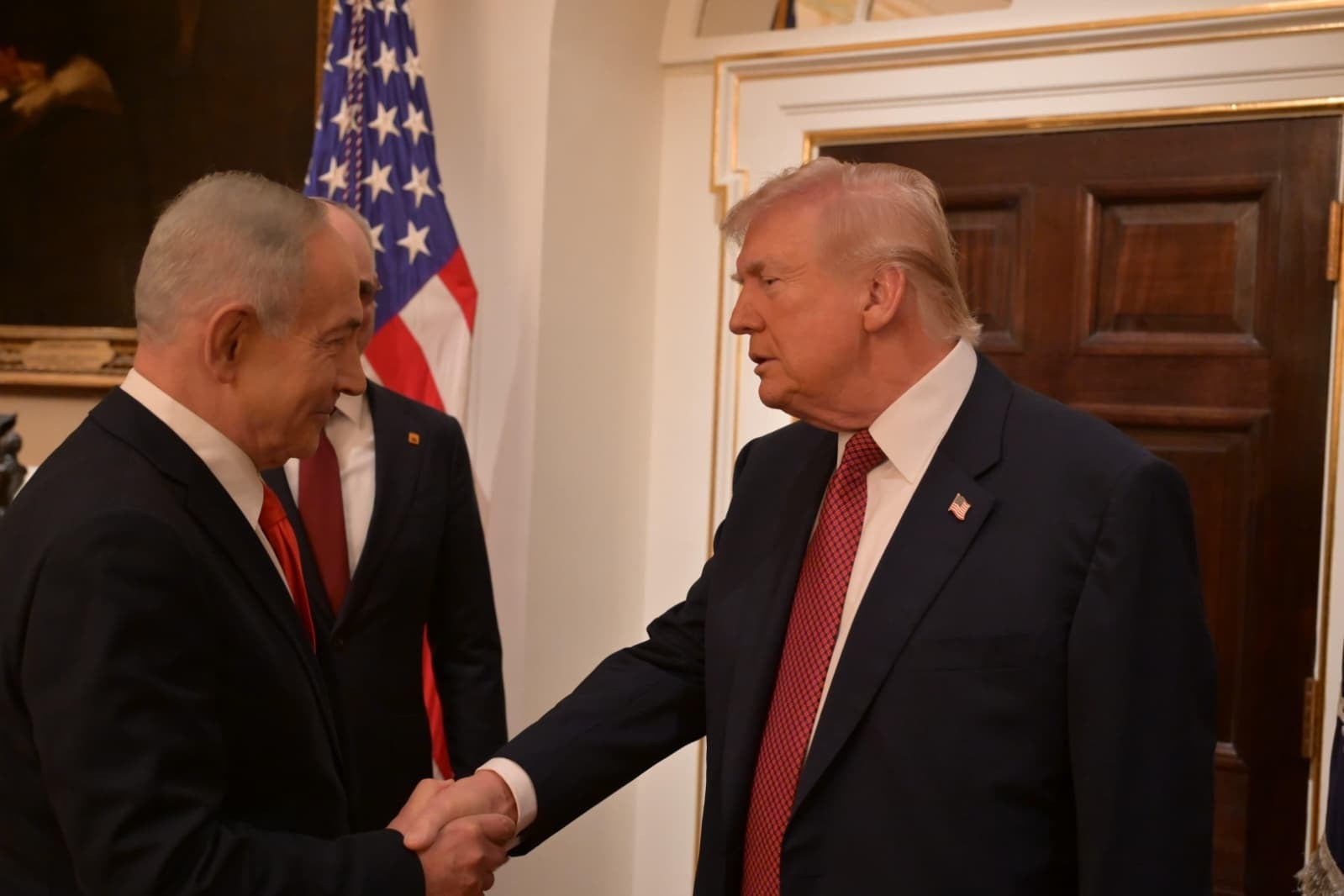
Prime Minister Benjamin Netanyahu (L) meets US President Donald Trump at the White House, February 11, 2026. (Avi Ohayon/ GPO)
The US and Israel were intending to open the current war against Iran on Friday night, hitting Tehran under the cover of darkness, but delayed the first strikes until Saturday morning because of intelligence that enabled the elimination of supreme leader Ali Khamenei, the New York Times reports.
“The timing was ultimately determined by a remarkable intelligence coup,” says the newspaper, in an extensive report that chronicles US President Donald Trump’s decision to go to war. “The CIA, which had been closely tracking Ayatollah Khamenei’s movements, learned that the supreme leader was planning to be at his residential compound in central Tehran on Saturday morning. Senior Iranian civilian and military leaders were also set to convene at the same location, at the same time. The CIA passed the intelligence to the Israelis, and leaders of both countries decided to kick off the war with a bold ‘decapitation’ strike in daylight.”
It says Trump gave “the official go order” as he flew to Corpus Christi on Friday afternoon to deliver a speech about energy.
The report tracks the final, failed efforts to negotiate a deal on Iran’s nuclear program, culminating in talks in Geneva on Thursday at which Iran presented US envoys Steve Witkoff and Jared Kushner “with a seven-page plan with proposed levels of future nuclear enrichment, numbers that alarmed Mr. Witkoff and Mr. Kushner.” When those talks concluded, Witkoff and Kushner reported to Trump that “they did not think a deal could be reached.”
The article highlights the impact on the president’s thinking of Prime Minister Benjamin Netanyahu’s meeting with Trump in the Oval Office on February 11, at which the two leaders spent three hours discussing “the prospects of war and even possible dates for an attack, as well as the possibility — however unlikely — that President Trump might be able to reach a deal with Iran.”
Netanyahu had been “determined to keep the American president on the path to war,” the report states. Days after the meeting, Trump “made clear publicly that he was skeptical of the diplomatic route, dismissing the history of negotiating with Iran as merely years of ‘talking and talking and talking.'”
“The US decision to strike Iran was a victory for Mr. Netanyahu,” the Times asserts.
The account also highlights the significance of Vice President JD Vance’s evolving stance: Describing Vance as “a longtime skeptic of American military interventions in the Middle East,” the Times report, citing informed sources, says Vance, in a White House Situation Room meeting in February, argued “that if the United States was going to hit Iran, it should ‘go big and go fast.'”
Far-right pundit Tucker Carlson, says the Times, was one of the “few voices lobbying against military action.” Carlson met three times with Trump in the past month, and “told the president that he should not be boxed in by Israel, arguing that its desire to attack Iran was the only reason the United States was even considering a strike.” Carlson urged Trump to “restrain” Netanyahu.
Lebanese media reports new strike in Beirut’s southern suburbs
Lebanese media reports a new Israeli airstrike in Beirut’s southern suburbs, a known Hezbollah stronghold.
The IDF has not yet commented.
الدخان يتصاعد من موقع الغارة في الضاحية pic.twitter.com/DPHtH4xP28
— هنا لبنان (@thisislebnews) March 3, 2026
Sirens in northern Israel as rockets fired from Lebanon
Sirens sound in northern Israel amid a rocket attack from Lebanon.
The alerts are activated in several communities in the Galilee Panhandle and Golan Heights.
Hezbollah has fired several rockets and drones at northern Israel today.
UK to send warship to defend base attacked by Iran in Cyprus — report
The United Kingdom will send a warship to defend the RAF Akrotiri British sovereign base in Cyprus, after it was targeted by Iranian drones yesterday, according to a report by The Times newspaper.
“HMS Duncan is ‘likely’ to be deployed to defend RAF Akrotiri as Middle East conflict escalates,” the report reads.
The Times report, citing three sources, says British defense minister John Healey had a meeting yesterday with senior military figures, in which they discussed sending HMS Duncan to the region.
France is planning to send anti-missile and anti-drone systems to Cyprus following the Iranian attacks, according to an earlier Cypriot media report.
IDF confirms Beirut strike, saying target was Hezbollah commanders
The IDF confirms carrying out an airstrike in Beirut a short while ago, saying it targeted “commanders of the Hezbollah terror group.”
It says further details on the strike in the Lebanese capital will be provided.
S&P says Israeli economy shows resilience, warns of security spending fallout

An exterior view of the S&P Global headquarters building on March 18, 2025 in New York City. (Angela Weiss/AFP)
Global credit rating agency S&P says Israel’s “wealthy” economy has historically shown resilience during military conflicts but warns about the impact of increased spending on public finances as the US-Israeli war with Iran enters its fourth day.
“Israel’s wealthy economy has historically been resilient not least due its sizable high‑tech services sector (some 20% of GDP and over 50% of exports), with a high percentage of employees able to work from home,” says S&P. “This should somewhat cushion the impact of security disruptions.”
The rating agency says the “development of offshore gas fields transformed Israel into a net exporter of natural gas in recent years,” while “tourism accounts for just 2%‑3% of total exports.”
At the same time though, the rating agency cautions that “the elevated security spending weighs on public finances.”
“Israel’s small size and high population density suggest the socioeconomic and fiscal fallout from physical damage to infrastructure could be sizable,” says S&P.
Qatar: We are not in contact with Iran; its attempts to pressure Gulf states to end war will fail
There is currently no communication between Qatar and Iran, Qatari Foreign Ministry spokesman Majed al-Ansari says in a press conference, and the Islamic Republic did not notify Qatar ahead of missile and drone strikes.
Ansari says that attempts to force a return to negotiations by pressuring Gulf countries will fail. Experts believe that Iran’s strategy is to hammer US allies in the region so that they push US President Donald Trump to return to talks with Iran.
Iran has tried but failed to target Hamad International Airport in Doha, says Ansari, and all attempts were intercepted.
He says that the two Iranian planes shot down by Qatar yesterday were flying toward Doha and were warned before being shot down. Qatar is searching for the pilots, he says.
US ambassador Huckabee advises US citizens in Israel to evacuate via Egypt, noting ‘limited options’
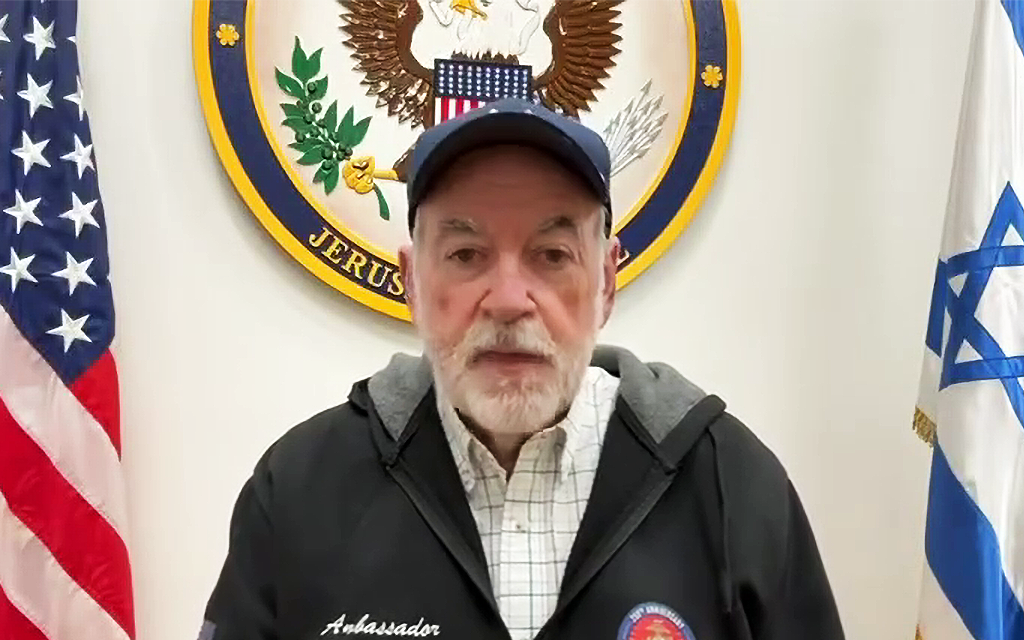
US Ambassador to Israel Mike Huckabee delivers a video message for US citizens wishing to evacuate Israel amid fighting with Iran, March 3, 2026. (Screenshot/US Embassy Jerusalem)
US Ambassador to Israel Mike Huckabee advises US citizens in Israel wishing to leave the country to do so via Egypt, hours after the US urged all of its citizens in the Middle East to immediately evacuate the region amid fighting with Iran.
Watch my message to American citizens in Israel and be sure to register with the Smart Traveler Enrollment Program (STEP) to receive important security updates directly. >> https://t.co/8fk1kydTB2 pic.twitter.com/r4IV0WQFEk
— Ambassador Mike Huckabee (@USAmbIsrael) March 3, 2026
Huckabee explains in a video shared on social media that the Tourism Ministry is providing bus services from Herzliya, Tel Aviv, Haifa, and Jerusalem to Taba, just across the border in Egypt. From there, he says, “limited” flights could be available from the Taba International Airport, or ground transportation can be taken to Cairo, “where the airport is operating normally and efficiently,” except for flights to Middle East destinations.
“The options are fairly limited,” Huckabee acknowledges. “The airport is closed, of course, and we don’t know when it will be open or how many flights [will be available.]”
The embassy does not recommend travel through Jordan, “because of some challenges that are being faced there, the sporadic ability of the airport to be open, and the limited hours of the Allenby Crossing to get into Jordan,” Huckabee adds.
He reiterates the US directive for all citizens to register with the State Department’s Smart Traveler Enrollment Program (STEP) via step.state.gov to get updates.
Estimates suggest there are at least 200,000 American citizens in Israel.
“We hope that all of this will be over soon,” Huckabee adds, “But how grateful we are for an amazing country and a great president who has decided that after 47 years of the hostile actions against the United States from Iran, that we are joining together, not just with Israel, but now it appears the rest of the Middle East, in saying, ‘enough is enough.'”
The US has not organized its own evacuation flights, and commercial flights have been disrupted across the region. Israel, Qatar, Syria, Iran, Iraq, Kuwait and Bahrain have shuttered their airspace. Israel is not expected to reopen its airspace before next week, and the country’s main international Hub, Ben Gurion Airport, is closed.
IDF: Israeli Air Force struck senior Iranian commander in Tehran
The Israeli Air Force struck a “senior commander of the Iranian terror regime” in Tehran a short while ago, the IDF announces.
The military says further details on the strike in Iran’s capital will be provided.
Two Turkish CNN journalists arrested while broadcasting live outside IDF headquarters
Police have detained two Turkish CNN journalists in Tel Aviv who had been broadcasting live outside the IDF’s Kirya military headquarters.
The pair, a reporter and cameraman working for the outlet’s Turkish-language news channel, had been filming near the site today, after Iran launched another missile barrage at Tel Aviv and other areas of central Israel.
During the live broadcast, two men who appear to be soldiers approach the men and seize the reporter’s phone.
Police say they received a report about two suspects equipped with cameras, recording in real time to a foreign media channel.
עיתונאים של CNN טורקיה נעצרו לאחר שצילמו את בסיס הקרייה@NoamIhmels pic.twitter.com/t8a5P9yXfw
— גלצ (@GLZRadio) March 3, 2026
When officers ordered them to identify themselves, the reporters presented expired press ID cards and were detained for interrogation, the agency adds.
Burhanettin Duran, who heads the Turkish government’s Directorate of Communications, calls the arrests an attack on the press and says that efforts are underway to secure the journalists’ release.
Iran’s Ahmad Vahidi, wanted for bombings of Jewish center, Israeli embassy in Buenos Aires, appointed IRGC chief
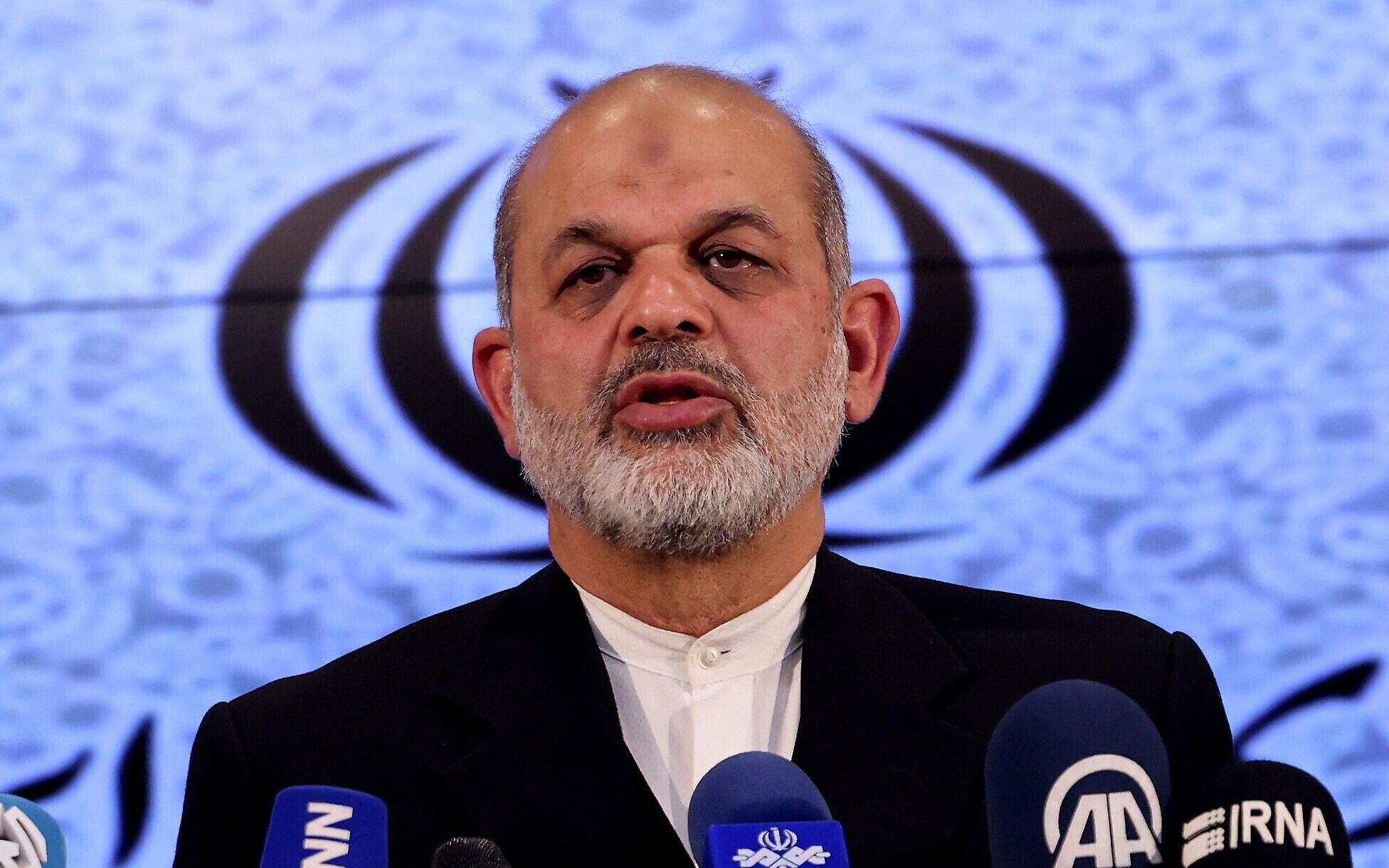
Then-Iranian interior minister and current Islamic Revolutionary Guard Corps Gen. Ahmad Vahidi speaks during a press conference in Tehran on March 4, 2024. (Atta Kenare/AFP)
Senior Iranian military officer Ahmad Vahidi has been appointed the new chief of the Islamic Revolutionary Guard Corps, after the previous commander, Mohammad Pakpour, was killed by Israel and the US on Saturday.
Vahidi, who formerly served as the head of the IRGC’s extraterritorial Quds Force, is suspected of being behind the bombings of the Israeli embassy and AMIA Jewish community center in Argentina in the 1990s.
In 1992, a bomb attack on the Israeli embassy left 29 dead. Two years later, a truck loaded with explosives drove into the AMIA Jewish center and detonated, leaving 85 dead and 300 injured.
Argentina and Israel have long suspected Hezbollah carried out the AMIA attack at Iran’s request, and in 2024, over three decades after the deadly attacks, an Argentine court definitively blamed Iran for the attack, declaring it a “terrorist state.”
Vahidi has been wanted by Interpol since 2007 for his role in the bombings, to little effect, but following the court ruling, Argentina reupped its request for Interpol to arrest him.
Sirens expected in northern Israel due to new Iranian missile launch
A new launch of ballistic missiles from Iran has been detected by the IDF.
Sirens are expected to sound in northern Israel shortly.
Sirens sound in northern Israel during third Iranian missile attack of the day
Sirens sound in northern Israel amid an Iranian ballistic missile attack, the third salvo today.
The IDF says it is working to shoot down the projectiles.
Sirens expected in central Israel after Iranian missile launch detected
A new launch of ballistic missiles from Iran has been detected by the IDF.
Sirens are expected to sound in central Israel in the coming minutes.
Top IRGC commander targeted in Tehran strike — defense sources
The target of the Israeli airstrike in Tehran a short while ago is Daoud Alizadeh, the commander of the Lebanon Corps in Iran’s Islamic Revolutionary Guard Corps’ Quds Force, according to defense sources.
The IDF said it struck a “senior commander of the Iranian terror regime,” and said further details would be provided.
Sirens in Tel Aviv and across central Israel amid latest Iranian missile attack
Sirens sound in Tel Aviv and across central Israel amid Iran’s latest ballistic missile attack.
Civilians in areas where sirens are sounding are instructed to enter bomb shelters until further notice, as the IDF says it is working to shoot down the projectiles.
Trump: Iranians want to talk, I said it’s too late!
US President Donald Trump says Iran’s military assets and leadership are “gone” and that it’s “too late” to hold talks with Iran, in a brief post on his Truth Social account.
“Their air defense, Air Force, Navy, and Leadership is gone. They want to talk. I said ‘Too Late!’,” writes the president, in response to a Washington Post op-ed hailing his decision to attack Iran.
On Sunday, Trump said he would “be talking” with Iran’s leaders at their request, even as he continued with the US-Israeli bombing campaign and urged Iranians to topple the regime.
‘Back up, I’m American’: Downed US pilot mistaken for Iranian by Kuwaiti locals
Video footage has emerged of a tense moment between a US fighter pilot and Kuwaiti locals who approached him, apparently thinking he was an Iranian, after his F-15 fighter jet was shot down along with two others in a so-called friendly fire incident over the Gulf country.
In the video, two men are seen approaching the pilot — who had just parachuted out of his downed plane — while others are heard shouting at them in Arabic out of frame.
One of the men is brandishing what appears to be a metal pipe above his head, while the other appears to be filming.
The pilot can be heard repeatedly urging them to “back up, back up,” as he slowly kneels to the ground with his palms out toward the men.
“Back up, I’m American,” he finally says, prompting the man brandishing the pipe to immediately walk away from him.
???????????????????? Meanwhile in Kuwait
US pilot ejected from his fighter jet, lands in Kuwait, is approached by hostile locals, until they realise he’s an American. pic.twitter.com/bkyRckudCr
— Concerned Citizen (@BGatesIsaPyscho) March 3, 2026
UAE says 172 Iranian missiles have been shot down, only one direct impact recorded
The United Arab Emirates’ air defenses have faced 186 ballistic missiles launched towards the country from Iran since the start of the US-Israeli conflict with the Iranian regime, a defense ministry spokesperson says, according to an Arabic-language post on X.
Of those, 172 have been destroyed, while 13 fell into the sea and one landed on UAE territory, according to the spokesperson.
The defense ministry said on Sunday that a total of “541 Iranian drones were detected, 506 of which were intercepted and destroyed.”
Emirati authorities have said that three people, all foreigners, were killed and 58 were injured in the UAE since Iran began its retaliatory campaign in the Gulf. Some buildings have sustained damage, including Dubai International Airport and Abu Dhabi’s Zayed International Airport.
Three lightly hurt in latest ballistic missile attack on central Israel
Three people are lightly wounded in central Israel following Iran’s latest ballistic missile attack, medics say.
The IDF says it has dispatched search and rescue forces to the sites where intercepted missile fragments or possible sub-munitions from cluster bomb warheads impacted, causing the injuries and damage.
The circumstances of the impacts are under further investigation, the military adds.
The Home Front Command says civilians in areas where sirens sounded can now leave bomb shelters, but should still remain close to them.
Italy summons Iranian ambassador over Cyprus drone attack
Italy has summoned the Iranian ambassador to protest a drone attack on a UK base in Cyprus, the Italian foreign ministry tells AFP.
A British Royal Air Force base in Cyprus — which, like Italy, is a member of the EU — was attacked early Monday by Iranian-made drones, one of which hit the runway.
A Cypriot government source told AFP the same day that the drones had been launched from nearby Lebanon, probably by Iran-backed terror group Hezbollah.
Medics say seven injured in three locations as result of Iranian missile attack
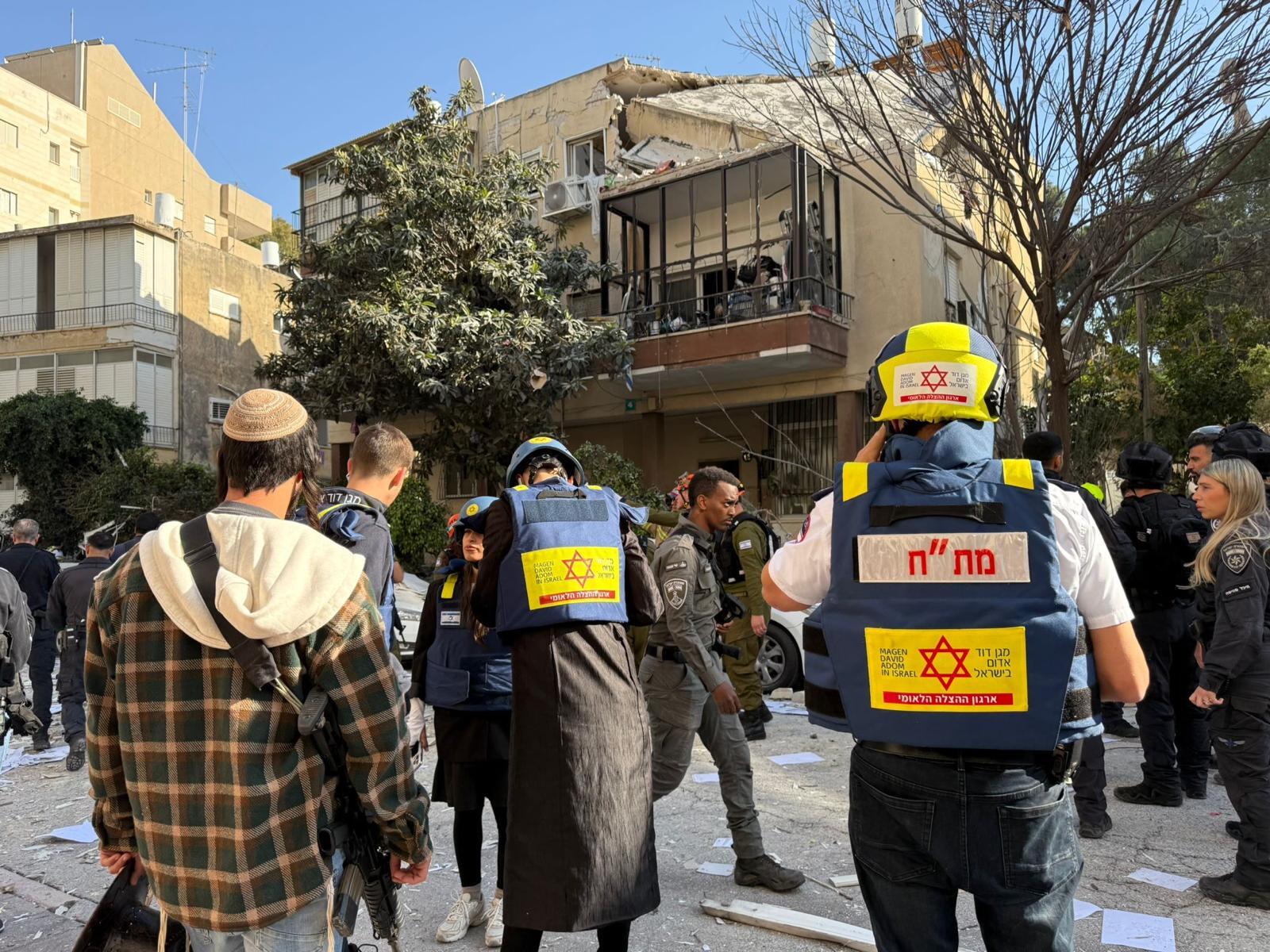
Medics and security forces are seen next to damage caused by an Iranian missile strike in central Israel, on March 3, 2026. (Magen David Adom)
Seven people are wounded at three locations in central Israel following Iran’s latest ballistic missile attack, medics say.
Intercepted missile fragments or sub-munitions from cluster bomb warheads hit several locations. The IDF says it is investigating the impact sites.
Magen David Adom says it treated a woman in her 40s in moderate condition who was injured by a blast, and six others in good condition after they were hit by glass shards and blasts.
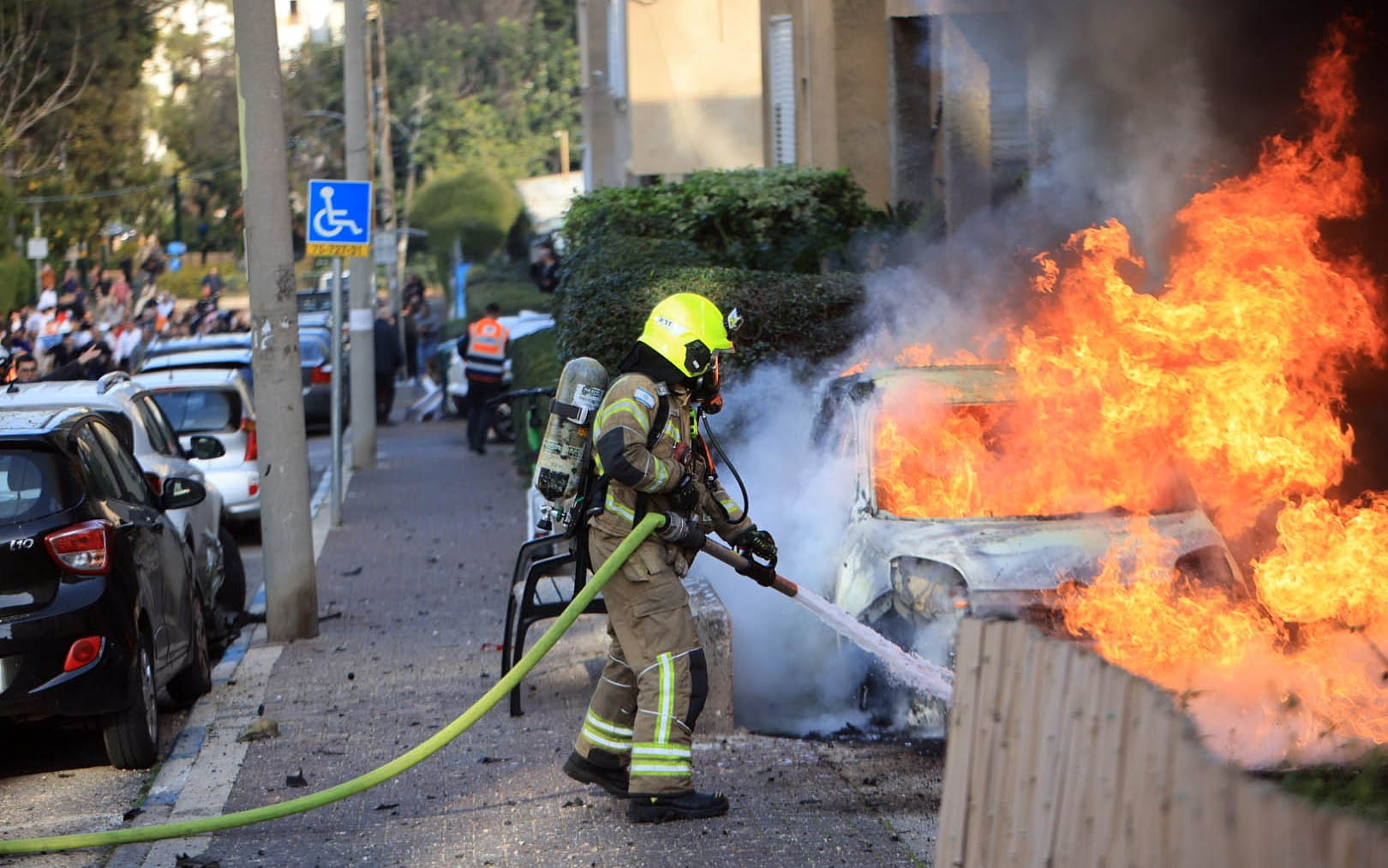
Sirens set to sound in south as new Iranian missile launch detected
A new launch of ballistic missiles from Iran has been detected by the IDF.
Sirens are expected to sound in southern Israel in the coming minutes.
IDF says Air Force completes another wave of strikes in Iran targeting launchers, drones
The Israeli Air Force completed another wave of airstrikes in western Iran today, targeting Iranian military assets, the IDF says.
According to the IDF, the strikes hit dozens of Iranian ballistic missile launchers, air defense systems, drones, and other targets.
The military says the strikes are aimed at reducing the fire from Iran on Israel.
It publishes footage showing some of the strikes.
יותר מ-60 גלי תקיפה: חיל האוויר ממשיך לפעול נגד מערכי הטילים של איראן המאיימים על אזרחי מדינת ישראל
חיל האוויר, בהכוונת אמ״ן, השלים מוקדם יותר היום, גלי תקיפה נוספים במערב איראן לפגיעה במערכי האש של משטר הטרור האיראני והעמקת השליטה האווירית של צה"ל במרחב.
במסגרת גלי התקיפות,… pic.twitter.com/XJWanLz91h
— צבא ההגנה לישראל (@idfonline) March 3, 2026
US CENTCOM publishes footage of strikes on Iranian missile launchers
The US Central Command publishes footage of American airstrikes on Iranian ballistic missile launchers in Iran.
“The Iranian regime is using mobile launchers to indiscriminately fire missiles in an attempt to inflict maximum harm across the region. US forces are hunting these threats down and without apology or hesitation, we are taking them out,” CENTCOM says.
The Iranian regime is using mobile launchers to indiscriminately fire missiles in an attempt to inflict maximum harm across the region. U.S. forces are hunting these threats down and without apology or hesitation, we are taking them out. pic.twitter.com/gv1SfKCrk4
— U.S. Central Command (@CENTCOM) March 3, 2026
Sirens sound in southern Israel amid Iranian ballistic missile attack
Sirens sound in southern Israel amid an Iranian ballistic missile attack, the fourth salvo today.
The IDF says it is working to shoot down the projectiles.
IDF says Air Force is carrying out ‘extensive’ wave of strikes in Tehran
The Israeli Air Force is carrying out an “extensive” wave of airstrikes against Iranian regime targets in Tehran, the IDF announces.
It says further details on the strikes in Iran’s capital will be provided.
Iran doubtful about usefulness of negotiations with the US, says ambassador to UN
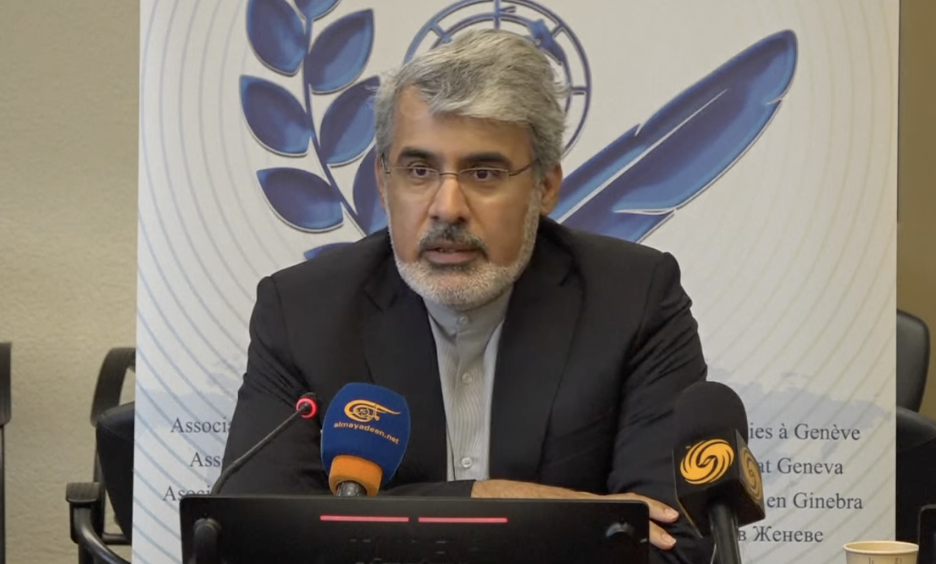
Iranian Ambassador to the UN Ali Bahreini delivers remarks at a press conference in Geneva, Switzerland on June 18, 2025. (Screen capture via Associated Press on YouTube)
Iran’s ambassador to the United Nations in Geneva casts doubt on the prospect of negotiations with the US, three days after the US and Israel launched joint strikes on the country.
“For the time being we are very doubtful about the usefulness of negotiation,” Ali Bahreini, ambassador of the Iranian mission to the UN in Geneva, tells reporters.
US President Donald Trump has sent mixed signals about how open he is to talking with the Iranians, days after Iran’s supreme leader, Ali Khamenei, was killed in the strikes.
Police say Iran shot cluster bomb in recent impact in central Israel
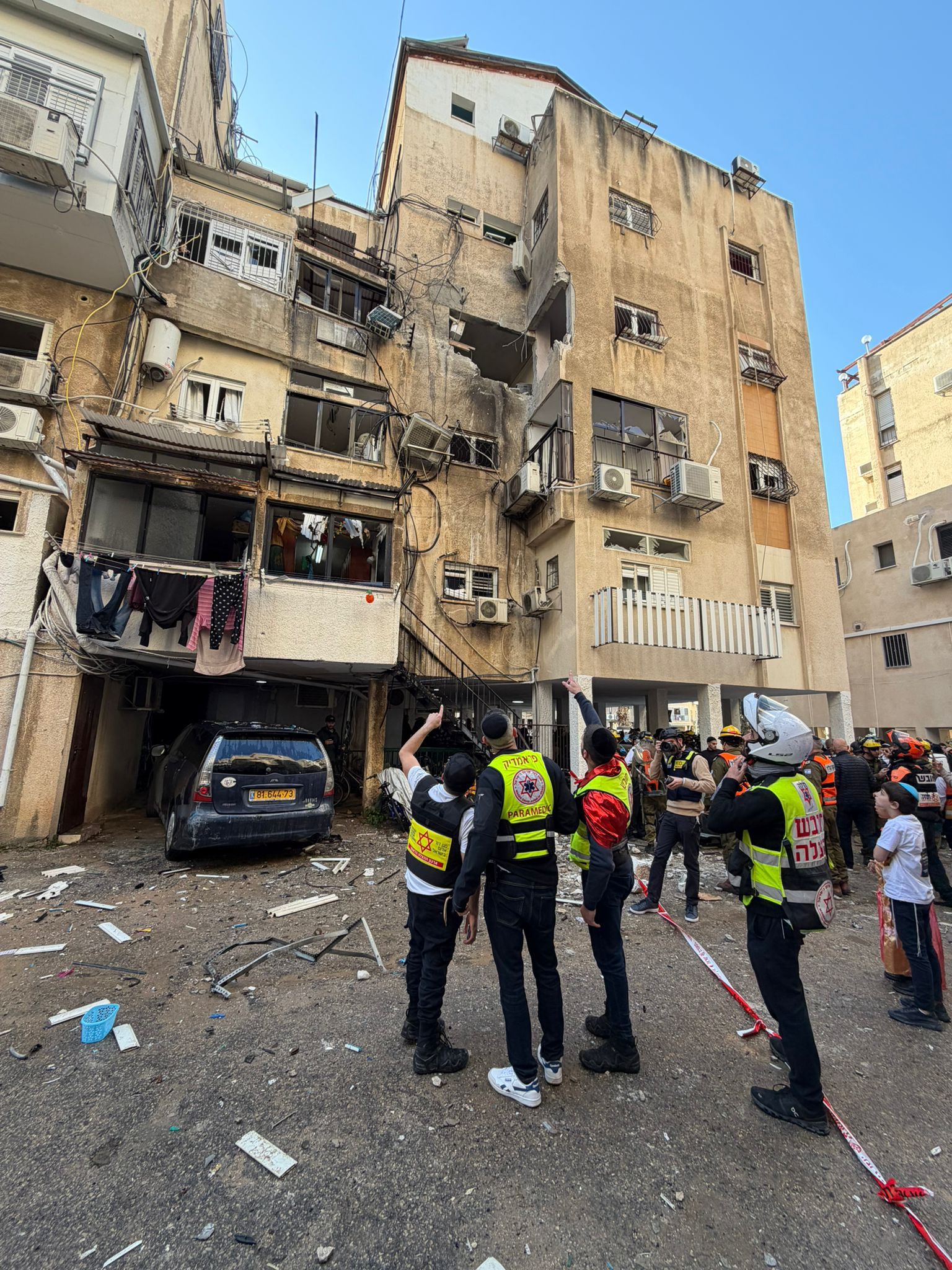
Medics and security forces are seen next to damage caused by an Iranian missile strike in central Israel, on March 3, 2026. (Magen David Adom)
In the latest Iranian missile attack, some of the impacts in central Israel were submunitions from a cluster bomb warhead, according to police officials.
Tel Aviv District commander Haim Sargaroff tells reporters at the scene that impacts were reported at multiple locations in the center of the country, causing damage and injuries.
The IDF has previously confirmed that Iran launched ballistic missiles carrying cluster bomb warheads at Israel, both in the current conflict and in June 2025’s war.
The warhead of such missiles opens up while descending and spreads around 20 smaller munitions with around 2.5 kilograms (5.5 pounds) of explosives, in a radius of around 8 kilometers (5 miles).
The IDF reiterates that there is no change to the Home Front Command’s guidelines for civilians when it comes to cluster bomb attacks.
Transportation Ministry will run buses for Israelis returning home from Egypt’s Taba
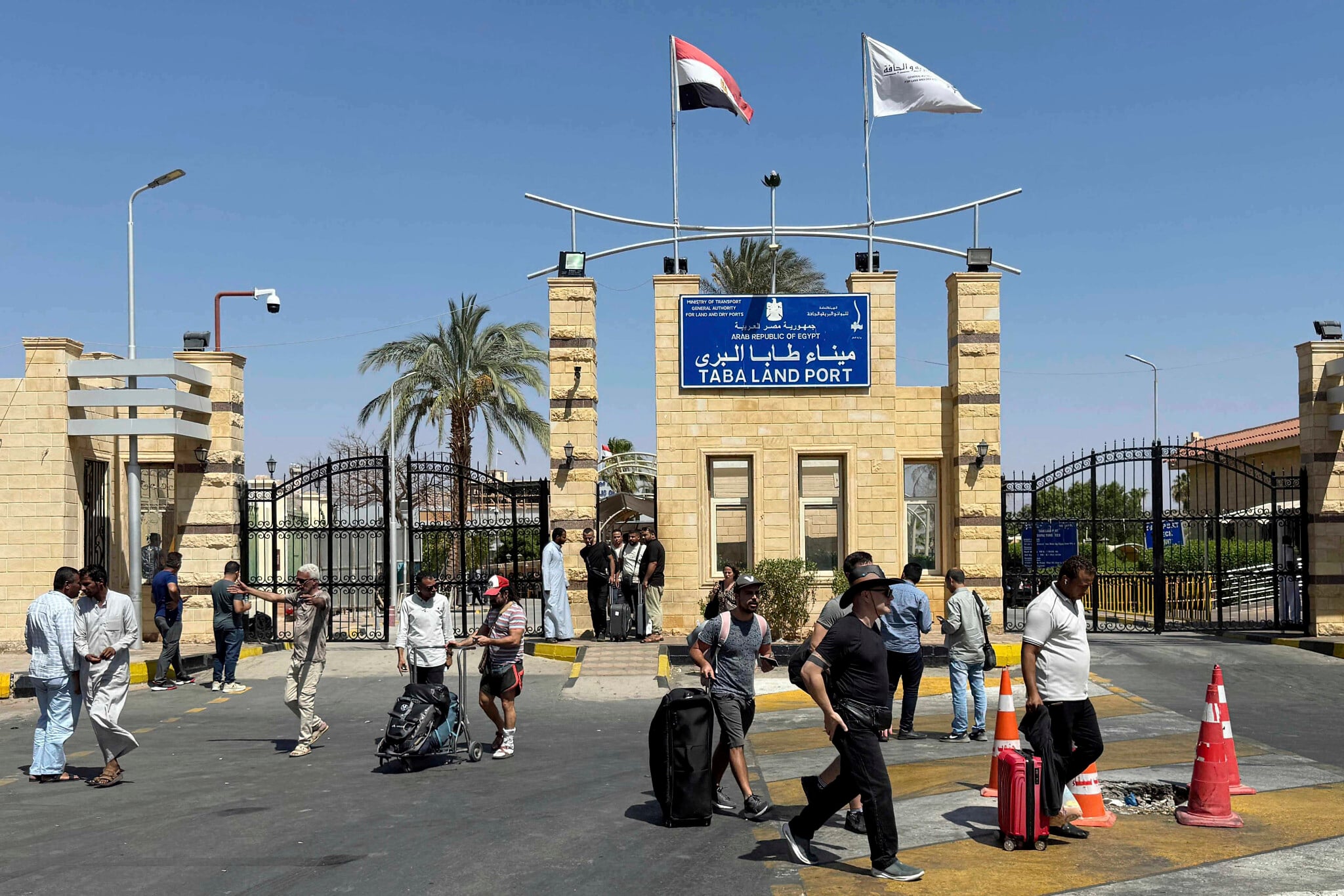
Illustrative: People cross the border from Israel into Egypt via the Taba Land Port, June 19, 2025. (AP)
The Transportation Ministry says it is organizing buses starting immediately for Israelis returning to the country via Egypt’s Taba crossing on Israel’s southern border .
Buses will be available for passengers arriving at Taba International Airport and crossing the border with Egypt into Israel, the ministry says. Buses will be waiting at the exit of the border terminal in Israeli territory, timed to the landings of the repatriation flights at the Egyptian airport.
Buses outside the terminal will depart for Eilat Central Bus Station, Beersheba Central Bus Station, Ben Gurion Airport (long-term parking), and Tel Aviv Savidor Center train station.
IDF issues ‘urgent warning’ ahead of strikes at airport, Tehran industrial zone
The IDF issues an “urgent warning” to Iranians at an industrial zone in Tehran and and airport in Karaj, ahead of planned airstrikes.
“Urgent warning to all individuals located in the Hakimiyeh industrial area in Tehran and at Payam Airport in Karaj. In the coming hours the IDF will operate in the area, as it has in recent days across Tehran, to strike military infrastructure of the Iranian regime,” says the IDF’s Persian-language spokesman, Lt. Col. (res.) Kamal Penhasi, in a statement.
“For your safety and well-being, we ask that you immediately evacuate the marked area in accordance with the map,” he adds.
‼️هشدار فوری به کلیه افراد مستقر در ناحیه صنعتی حکیمیه در تهران و فرودگاه پیام کرج بر اساس نواحی مشخص شده قرمز رنگ بر روی نقشه های ضمیمه.
⭕️ارتش اسرائیل همچنان که در روزهای اخیر در منطقه تهران برای حمله به زیرساخت های نظامی رژیم ایران اقدام کرده است، طی ساعات آینده در این نواحی… pic.twitter.com/oFsImCsJ30
— ارتش دفاعی اسرائیل | IDF Farsi (@IDFFarsi) March 3, 2026
Number of injured in missile attack in central Israel rises to 12
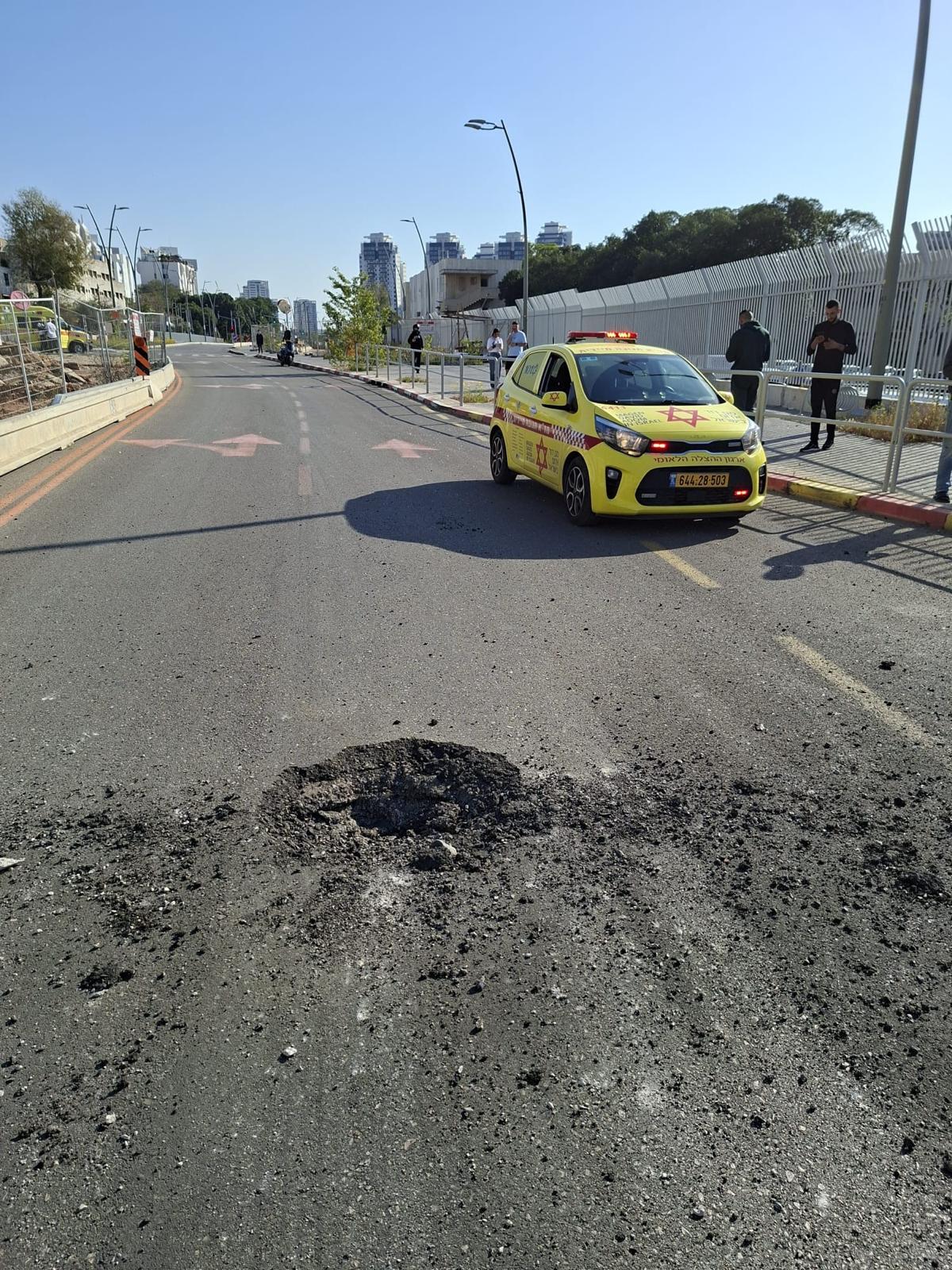
A Magen David Adom vehicle is seen next to damage caused by an Iranian missile strike in central Israel, on March 3, 2026. (Magen David Adom)
Magen David Adom raises the toll of those wounded in the Iranian missile attack on central Israel to 12.
MDA says it treated a woman in her 40s in moderate condition who was injured by a blast, and 11 others in good condition after they were hit by glass shards and blasts.
Israel uses cargo ships to repatriate doctors stranded abroad by war, bringing back 40 so far
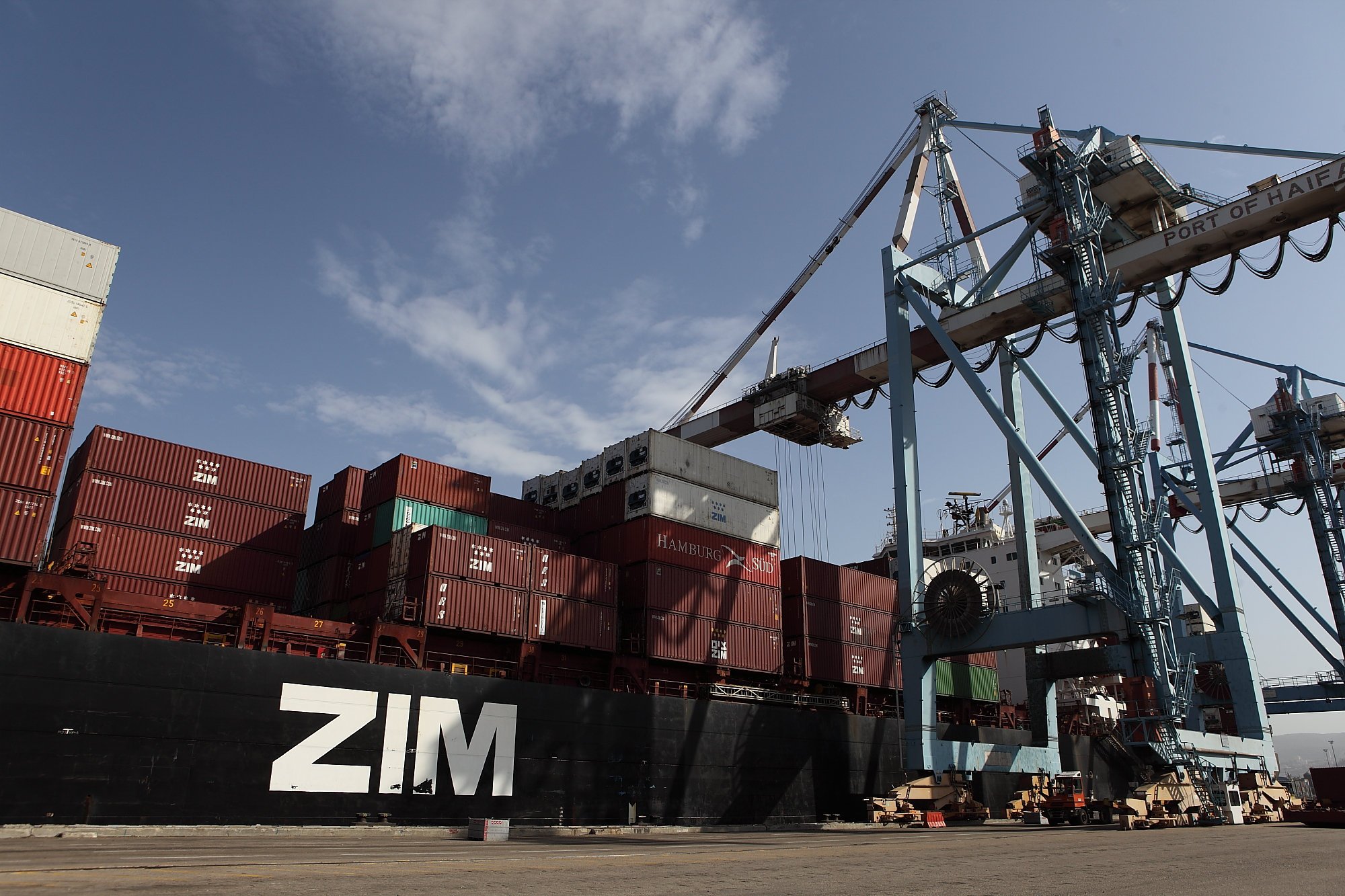
Illustrative: A ZIM container ship at the Haifa port, November 14, 2011. (Yaakov Naumi/Flash90)
Israeli authorities are using container ships to bring back dozens of essential medical staff stuck abroad due to the war with Iran, according to Israel’s cargo firm ZIM Shipping.
A ZIM official tells Reuters that its cargo ships are shuttling between Limassol in Cyprus and Haifa, in an operation coordinated between the Transportation Ministry, major Israeli hospitals and the company.
So far, 40 doctors have returned in two sailings — including one today — and more shuttles are planned this week to repatriate what could be hundreds of doctors, to deal with Israelis injured by Iranian missiles.
“It’s the easiest way to get them home when there are no flights,” says the official, who asked not to be named.
The doctors were away either at conventions or on holidays and now seek to “go back as fast as possible to their jobs in case of emergencies,” he adds.
ZIM is rerouting ships from usual shipping routes between Israel and Mediterranean ports such as those in Greece and Italy, and making makeshift arrangements on the cargo vessels to keep the doctors safe and comfortable during the 15-hour voyage from Cyprus.
Israeli airlines have begun repatriation flights via Taba in Egypt, which borders Eilat in southern Israel. However, passengers must then travel north to major cities, which takes hours by car or bus.
“This (cargo ship option) is far more efficient and easy,” the official says.
Israel, US strikes hit building where regime clerics were gathering to elect new Iran supreme leader — Iranian reports
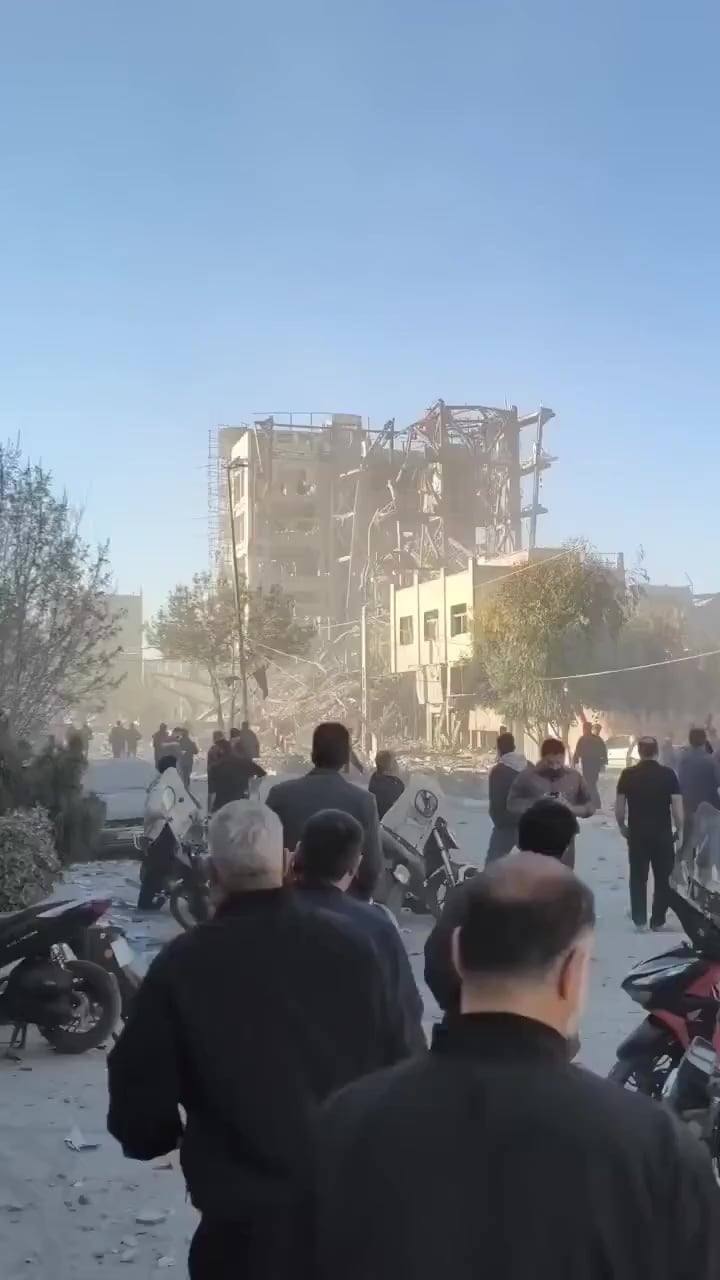
Footage of the Israeli strike on a building in the Iranian city of Qom where a body was set to choose Iran's new supreme leader on March 3, 2026. (Screenshot: X; used in accordance with Clause 27a of the Copyright Law)
Israeli and US strikes hit the building of a body tasked with electing Iran’s new supreme leader, local media reports.
“The American-Zionist criminals attacked the Assembly of Experts building in Qom,” south of Tehran, says the Tasnim news agency.
Local media shows footage of the building severely damaged in the strikes. Iran’s supreme leader ayatollah Ali Khamenei was killed in US and Israeli strikes on Saturday.
It is not immediately clear who was inside at the time.
Israel conducted the strike on regime clerics gathering to elect new Iranian supreme leader — defense source
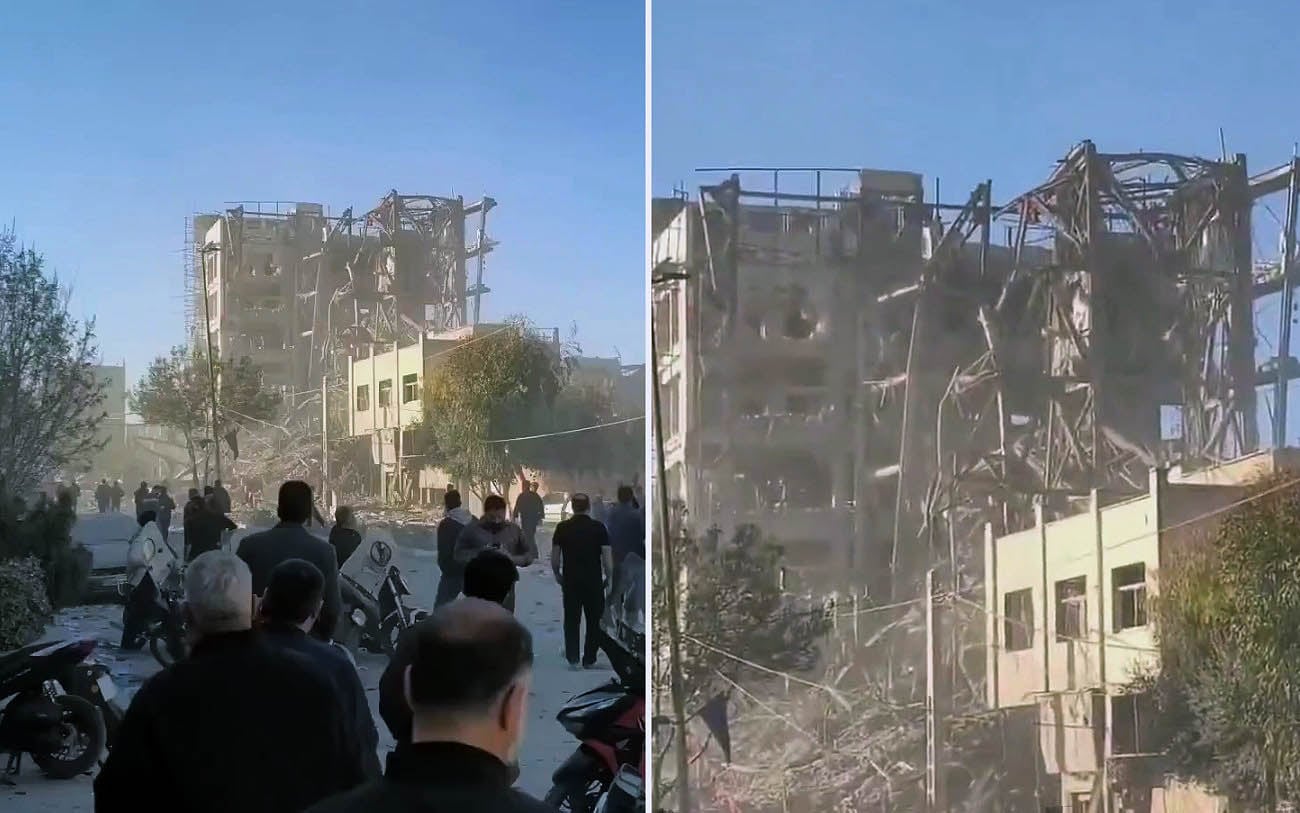
Footage of the Israeli strike on a building in the Iranian city of Qom where a body was set to choose Iran's new supreme leader on March 3, 2026. (Screenshot: X; used in accordance with Clause 27a of the Copyright Law)
An Israeli defense source confirms that the Israeli Air Force struck a building in the Iranian city of Qom where senior clerics had gathered to elect Iran’s new supreme leader.
The Assembly of Experts has 88 members, though it is unclear how many of them were at the building at the time of the strike, according to the official.
Geolocation of the building struck today in this video in the Iranian city of Qom. 34.62534, 50.87639
The building belongs to the "Assembly of Religious Experts" who select the next Islamic Revolutions' Supreme Leader.https://t.co/nH9hNR5Tou pic.twitter.com/TgUGCYmmhv— Mehdi H. (@mhmiranusa) March 3, 2026
IDF issues warning to Iranians in Tehran industrial zone ahead of strike
The IDF issues another “urgent warning” to Iranians in an industrial zone in Tehran ahead of planned airstrikes.
“Urgent warning to all individuals located in the Esteghlal industrial area in Tehran. In the coming hours, the IDF will operate in the area, as it has in recent days across Tehran, to strike military infrastructure of the Iranian regime,” says the IDF’s Persian-language spokesman, Lt. Col. (res.) Kamal Penhasi, in a statement.
“For your safety and well-being, we ask that you immediately evacuate the marked area in accordance with the map,” he adds.
‼️هشدار فوری به کلیه افراد مستقر در ناحیه صنعتی استقلال در تهران بر اساس ناحیه مشخص شده قرمز رنگ بر روی نقشه ضمیمه.
⭕️ارتش اسرائیل همچنان که در روزهای اخیر در منطقه تهران برای حمله به زیرساخت های نظامی رژیم ایران اقدام کرده است، طی ساعات آینده در این ناحیه فعالیت خواهد نمود.… pic.twitter.com/SMHyGyjHbt
— ارتش دفاعی اسرائیل | IDF Farsi (@IDFFarsi) March 3, 2026
Qatar denies Israeli media report that it’s carrying out retaliatory strikes in Iran
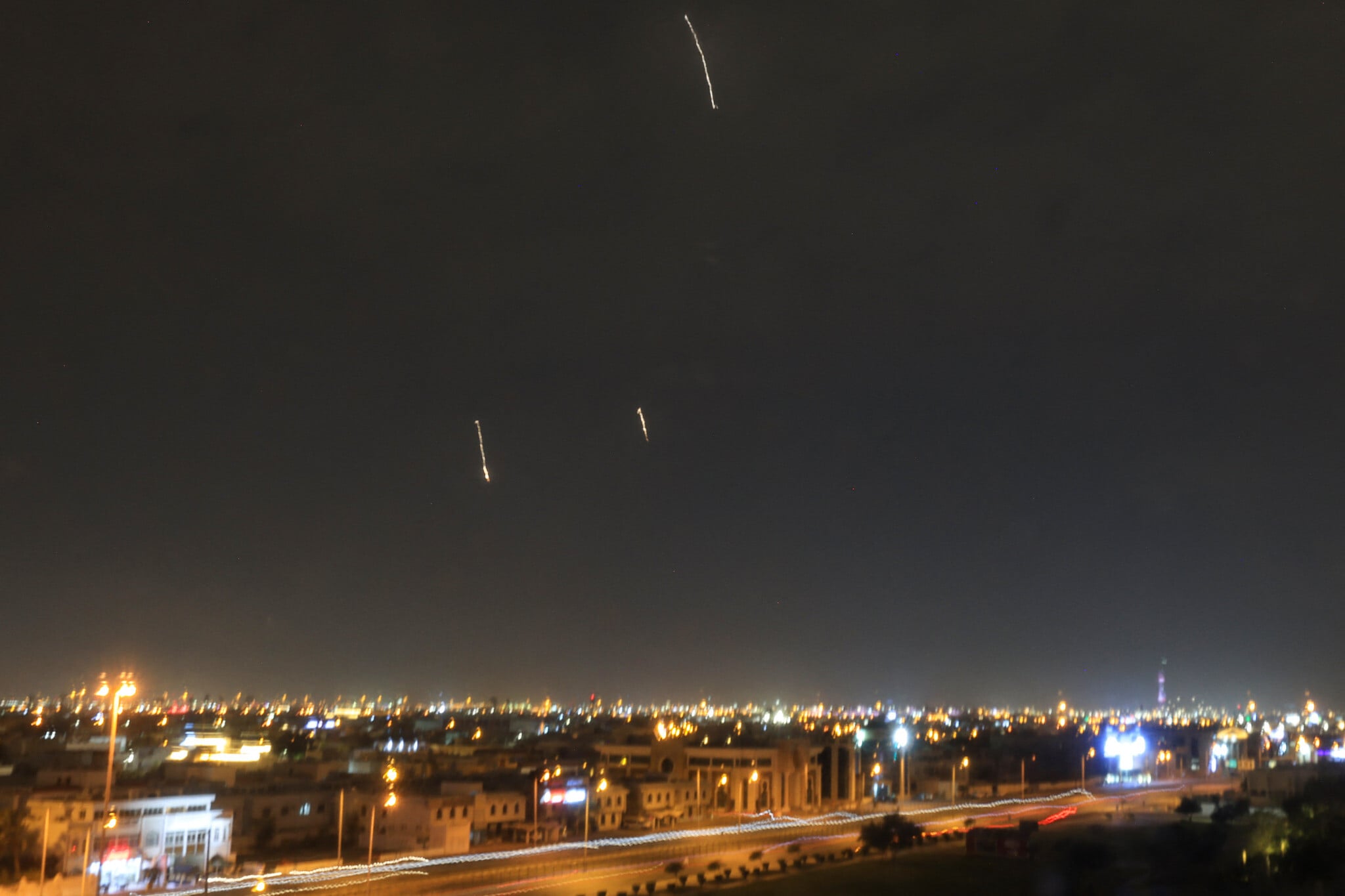
Iranian missiles are seen in the skies over Doha on March 3, 2026. (MAHMUD HAMS / AFP)
Qatar denies carrying out strikes in Iran after Israeli media reported that it had, citing only Western sources familiar with the matter.
“Qatar has not been part of the campaign targeting Iran. We are exercising our right in self-defense and deterring Iranian attacks against our country,” Qatari Foreign Ministry spokesman Majed Al Ansari.
“We urge media outlets to use credible Qataris sources when reporting on Qatar,” he adds.
Earlier today, Channel 12 reported that Qatar had carried out strikes in Iran over the past day in response to Tehran’s retaliatory strikes across the Gulf.
In addition, a senior Israeli official tells the Kan public broadcaster that Israel assesses that Saudi Arabia will strike Iran soon, after it was attacked yesterday by the country.
The Gulf states have yet to publicly confirm having taken any offensive measures in the ongoing US-Israeli bombing campaign, though some have intercepted Iranian attacks.
Airstrikes hit Mehrabad Airport in Tehran — Iranian reports
Airstrikes hit Mehrabad Airport in Tehran, according to Iranian media.
Photos shared by the Mehr news agency show smoke rising from the area.
The IDF earlier said it was carrying out an “extensive” wave of airstrikes against Iranian regime targets in Tehran.
תיעוד: לפי דיווחים באיראן, נמל התעופה הבין-לאומי מהראבאד שבטהראן הותקף@ishayb2003 pic.twitter.com/ZHgKQTzwmw
— כאן חדשות (@kann_news) March 3, 2026
Russian grain sales to Iran stalled after US attacks, sources say
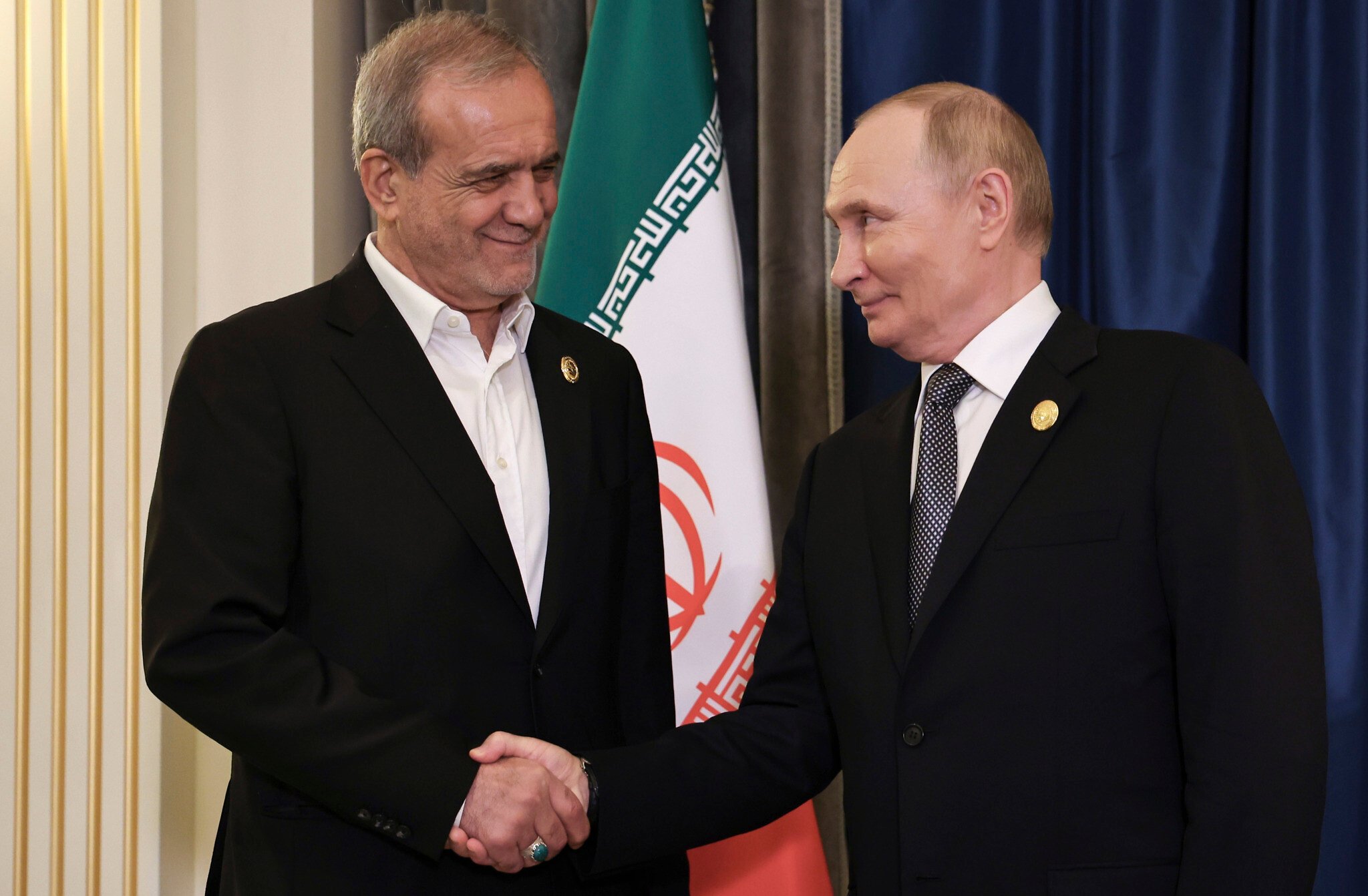
Iranian President Masoud Pezeshkian, left, and Russian President Vladimir Putin, right, shake hands during their meeting on the sidelines of the Shanghai Cooperation Organisation summit in Tianjin, China, September 1, 2025. (Alexander Kazakov, Sputnik, Kremlin Pool Photo via AP)
Russia’s grain exports to Iran have stalled amid the war in the country, sources tell Reuters, though Iran — Russia’s No. 3 grain buyer — has already bought and moved up to 95 percent of its expected Russian wheat purchases this season.
Two sources at Russian exporting companies, who decline to be identified, say shipments of grain bound for Iran from the Black Sea and the Caspian Sea have halted, although exporters are still trying to fulfill existing contracts.
“There is a need for supplies, but for now they have been suspended,” one of the sources says.
“I think they will be resumed at the first opportunity for both feed and food product categories. Iran has had a poor harvest this year and difficult, dry weather,” the source adds.
Middle Eastern buyers such as Israel, Egypt, Turkey, Saudi Arabia and Iran are key markets for Russian grain, though Russia is looking to diversify shipments to Asia, Africa and Latin America.
The sources say exports to other buyers continued without interruption, but the recent attacks had pushed up freight costs, insurance premiums and created payment difficulties involving banks in the Gulf.
Analysts at grain rail carrier Rusagrotrans say Iran imported almost 6 million tons of grain from Russia from July to February, compared with 3 million tons in the same period a year earlier.
IDF says it completed wave of strikes on Iranian military targets
The IDF says it completed another wave of airstrikes against Iranian military targets in Tehran and Isfahan.
According to the military, the strikes in Tehran hit “infrastructure and sites used by the regime for the production of weapons, with an emphasis on ballistic missile production sites.”
In Isfahan, the military says, it struck dozens of Iranian ballistic missile launchers and missile storage sites.
Pahlavi, son of late shah, urges unity among Iran’s ethnic minorities
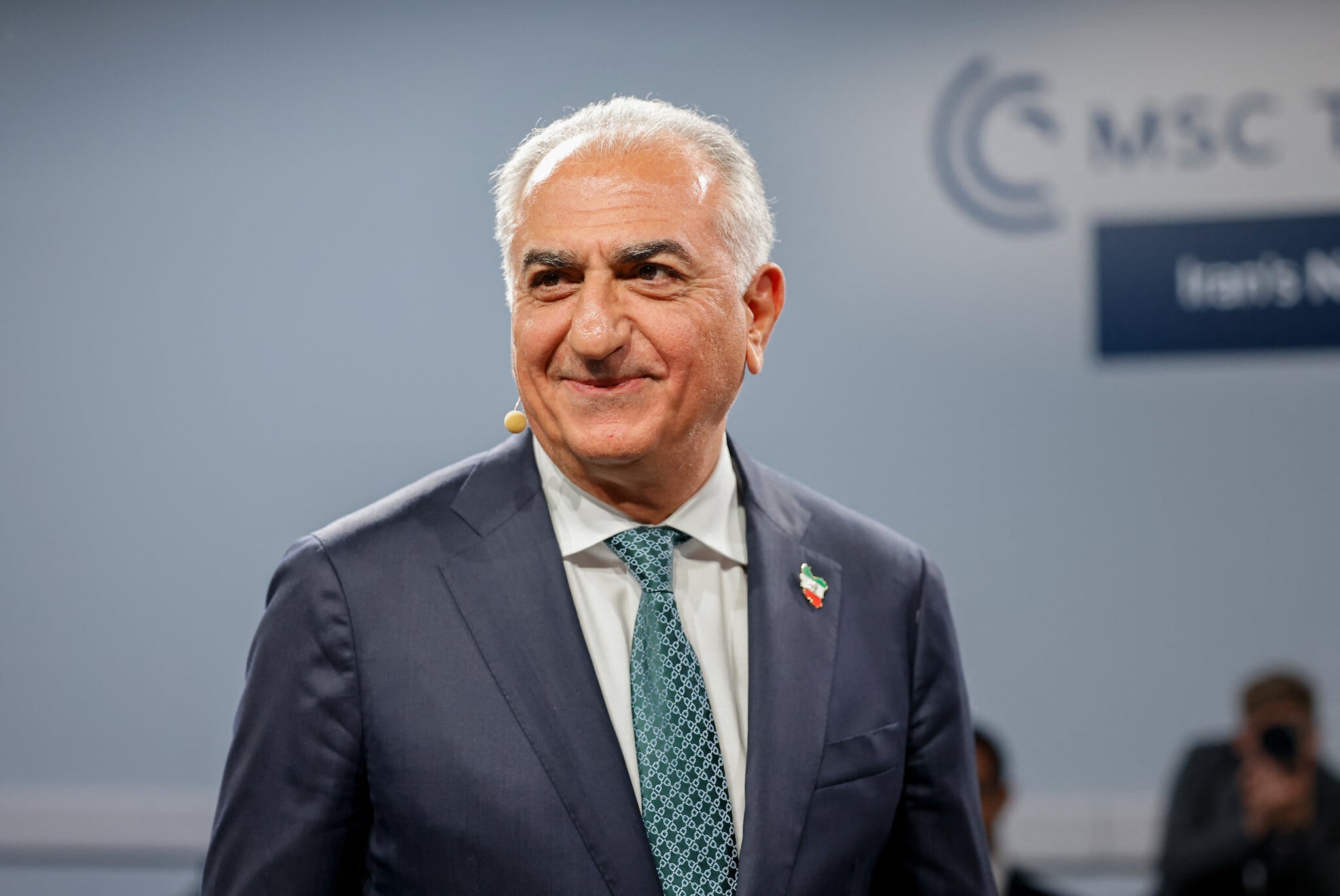
Iran's former crown prince and now key opposition figure Reza Pahlavi attends a discussion during the 62nd Munich Security Conference (MSC) on February 13, 2026 in Munich, southern Germany. (Alexandra BEIER / AFP)
The son of Iran’s last shah Reza Pahlavi, who has positioned himself as an alternative if the Islamic Republic falls, calls for national unity from Iranian ethnic minorities as the US and Israel strike the country and Iran fires at Israel and countries across the region.
Iran’s population of more than 85 million is ethnically diverse, with large Azeri, Lur, Kurdish, Arab, Baloch and Turkmen minorities.
The Islamic Republic has long been accused of discriminating against ethnic minorities, with many groups supporting successive waves of anti-government protests in the country and some — particularly the Kurds and Balochis — waging insurgencies seeking self-determination.
Pahlavi in an X post looks to assure ethnic minorities they will not be discriminated against if he leads the country, and appears to urge them not to use the current conflict to press for separation.
“We stand at the threshold of this regime’s fall. Yet we must remain vigilant and prepared, and deny opportunistic forces — those who have long cast covetous eyes on Iran’s soil — the chance to exploit this moment,” he says.
“You are an inseparable part of Iran’s historical and cultural fabric… I am confident that you will remain steadfast in this covenant,” he adds. “I firmly believe that through national unity and shared resolve, a bright future awaits you and every Iranian.”
The Iranian opposition remains fractured, and ethnic minority groups have long clashed with Pahlavi supporters.
Hezbollah claims to down Israeli drone, fire at IDF tanks
The Hezbollah terror group claims to have downed an Israeli drone and fired at IDF tanks in Lebanon today.
“In response to the criminal Israeli aggression… the Islamic Resistance shot down an Israeli drone in the skies of Nabatiyeh… using appropriate weapons,” the terror group says in a statement.
In separate statements, Hezbollah claims to have fired on Israeli Merkava tanks near the Lebanese villages of Kfar Shouba and Kfarkela.
The IDF has not commented on the claims.
Hezbollah earlier took responsibility for launching dozens of rockets and several drones at northern Israel today amid US and Israeli strikes on Iran, which backs the Lebanese terror group.
Ben Gurion Airport may open this week to allow repatriation flights
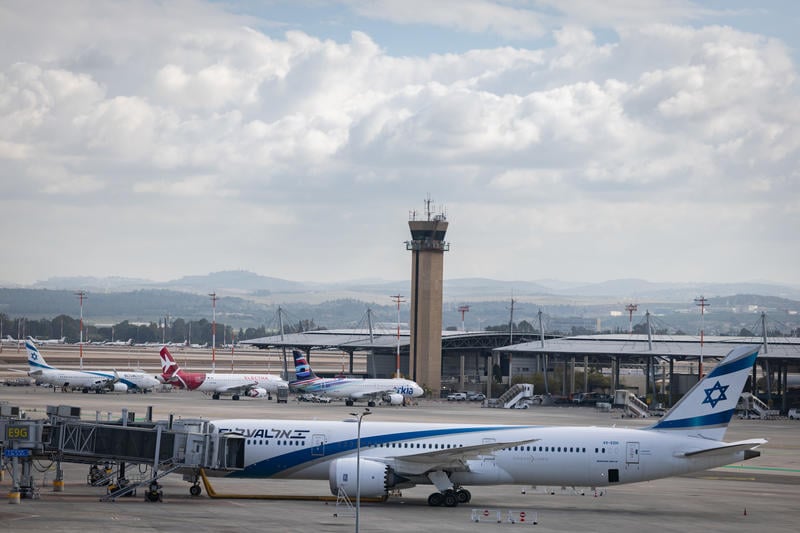
Illustrative: An El Al aircraft is seen at Ben Gurion International Airport near Tel Aviv on February 25, 2026 (Chaim Goldberg/Flash90)
Israel is considering a gradual reopening of its airspace earlier than the start of next week, depending on security developments.
While no decision has been made, the Transportation Ministry is considering a plan for a phased reopening of Israel’s airspace to allow local airlines to start flying Israelis home before the weekend. The plan is still subject to approval by the defense establishment and aviation authorities. As of now, Israel’s Ben Gurion Airport remains closed through at least Friday.
Yesterday, Transportation Minister Miri Regev announced preparations to gradually start opening the country’s airspace as early as Sunday. Israel’s skies have been closed since the start of the joint US-Israel attack on Iran, which began on Saturday morning.
EU foreign ministers to talk to Gulf colleagues on Thursday, source says
European Union foreign ministers will hold a videoconference with their counterparts from the Gulf Cooperation Council on Thursday morning, an EU official told Reuters.
Gulf countries have faced fire from Iran amid the US-Israeli strikes on the Islamic Republic.
Israel will increase attacks in Lebanon, Iran, PM says on 4th day of campaign
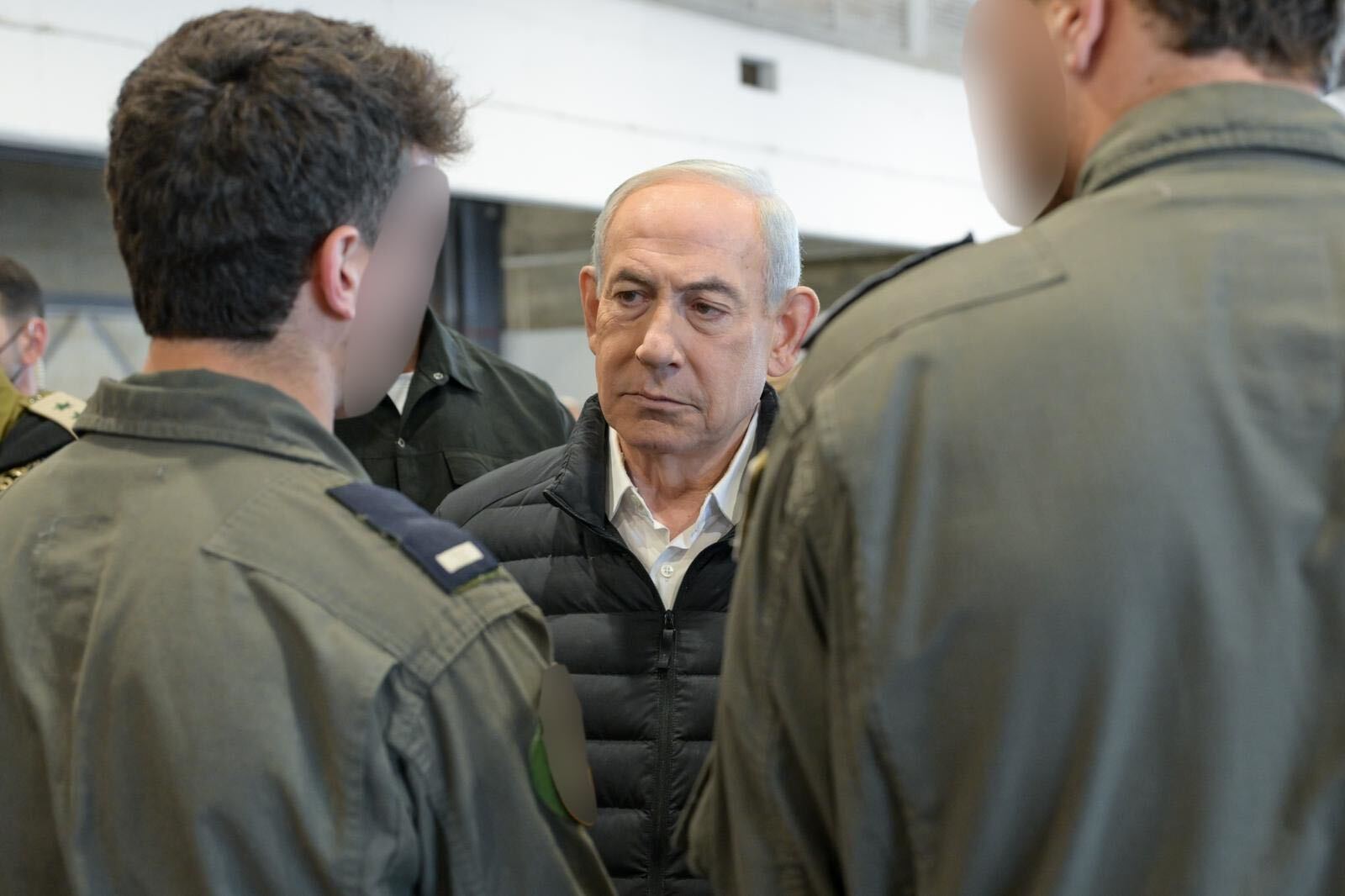
Prime Minister Benjamin Netanyahu at Palmachim Air Base on March 3, 2026. (Ma’ayan Toaf/GPO)
Israel will step up its attacks on Hezbollah and Iran, says Prime Minister Benjamin Netanyahu during a visit to the Palmachim Airbase with Defense Minister Israel Katz and IDF Chief of Staff Lt. Gen. Eyal Zamir.
“Hezbollah made a very big mistake when it attacked us,” says Netanyahu of Hezbollah missile attacks on northern Israel in recent days. “We have already responded forcefully, and we will respond with even greater and additional force.”
Hezbollah is dragging Lebanon into a war, he says, “solely because of the death of that mass murderer with whom they have no connection,” referring to Iran’s slain Supreme Leader Ali Khamenei. Iran is Hezbollah’s main backer.
“They need to look out for themselves, and they would do well to do so quickly. We will continue to do what is necessary for our defense,” the premier says.
Netanyahu also promises that Israel will “continue to strike Iran with force.”
“Our pilots are over the skies of Iran and Tehran, and also over the skies of Lebanon,” he says.
Sirens warn of suspected drone infiltration in Western Galilee
Sirens warning of a suspected drone infiltration sound in the Western Galilee.
The alerts are activated in several communities near the Lebanon border.
Hezbollah has launched several drones at northern Israel today, according to the IDF.
Turkey says making ‘intense’ efforts to end Mideast war
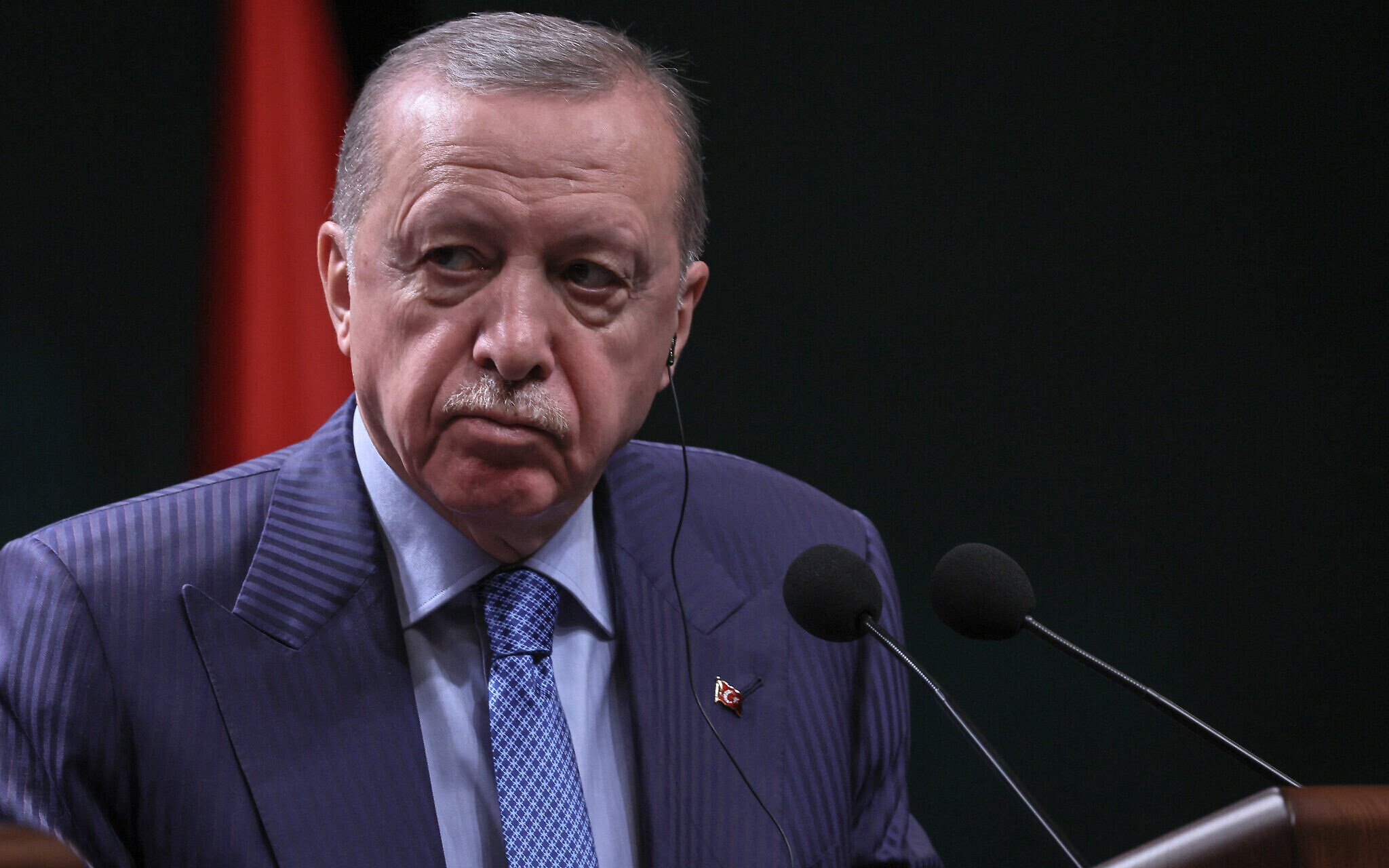
Turkey's President Recep Tayyip Erdogan (R) attends a joint press conference with the German chancellor at the Presidential Complex in Ankara, on October 30, 2025. (Adem Altan/AFP)
Turkish President Recep Tayyip Erdogan says the country is making “intense” diplomatic efforts to end the conflict roiling the Middle East, sparked by the Israeli-US strikes on Iran.
“Attacks on Iran, and missile and kamikaze drone attacks [by Iran] on neighboring countries in the Gulf have fueled instability,” he says in a televised address.
“Through peace-oriented diplomacy, we are making intense efforts to resolve issues at the negotiating table,” he adds.
Earlier, Turkish Foreign Minister Hakan Fidan met Washington’s Syria envoy Tom Barrack, ministry sources say.
He also spoke with his UK counterpart Yvette Cooper to discuss “the current security environment in the region,” evaluating “in detail” the “diplomatic efforts that could be undertaken to end the hostilities and establish stability.”
He also discussed regional developments with Qatar’s Prime Minister Sheikh Mohammed bin Abdulrahman Al Thani, with his Greek counterpart Giorgos Gerapetritis and Nechirvan Barzani, president of Iraq’s autonomous Kurdistan region.
Turkey is a member of the NATO alliance alongside the US. Its relations with Israel collapsed during the war in Gaza.
IDF says it struck Hezbollah rocket launcher used in barrage earlier today
The IDF says it struck a Hezbollah rocket launcher in Lebanon used in a barrage on the Golan Heights earlier today.
According to the military, the launcher was hit in a drone strike within minutes of the barrage.
Some 15 rockets were launched in the attack, with some being intercepted by air defenses and others hitting open areas. There were no reports of injuries.
בסגירת מעגל מהירה תוך מספר דקות, כלי-טיס של חיל-האוויר תקף את המשגר ממנו בוצעו השיגורים לעבר הגולן.
צה״ל ממשיך לפעול בעוצמה נגד ארגון הטרור חיזבאללה שהחליט להצטרף למערכה ולפעול בחסות המשטר האיראני. pic.twitter.com/2Jh5Lupmxm
— Israeli Air Force (@IAFsite) March 3, 2026
China’s foreign minister tells Sa’ar that attacks on Iran must end

Chinese Foreign Minister Wang Yi during his bilateral meeting with Indonesian Foreign Minister Retno Marsudi in Jakarta, Indonesia, Thursday, April 18, 2024. (Yasuyoshi Chiba/Pool Photo via AP)
China opposes the military strikes launched by Israel and the US against Iran and demands an immediate cessation of hostilities, Chinese Foreign Minister Wang Yi tells Foreign Minister Gideon Sa’ar, according to his ministry.
“Force cannot truly solve problems; instead, it often creates new ones and leaves serious long-term consequences. The real value of military power lies not on the battlefield but in preventing war,” it quotes Wang as telling Sa’ar in a call.
Wang tells Sa’ar that China believes in resolving international and regional issues through dialogue and negotiation and will continue to play a constructive role in easing the situation.
Tuesday’s call follows three calls the top Chinese diplomat held yesterday with the foreign ministers of Iran, Oman and France, in which he urged Gulf countries to unite to oppose external interference.
Wang also spoke with Russian Foreign Minister Sergei Lavrov on Sunday about the Iran conflict.
However, Wang has not spoken to US Secretary of State Marco Rubio since the launch of the US and Israeli strikes on Iran on Saturday.
Russian, Omani foreign ministers discuss Iran in phone call
Russian Foreign Minister Sergei Lavrov holds a phone call with his Omani counterpart Badr Albusaidi to discuss the Iran conflict, the Russian Foreign Ministry says.
The ministers urge the earliest possible halt to hostilities and a return to political and diplomatic efforts to resolve the crisis.
Both sides say they are ready, including at the United Nations, to support peaceful, compromise solutions based on international law.
IDF issues evacuation order for building in Lebanon’s Sidon ahead of strike on Hezbollah
The IDF issues an evacuation warning for a building in the coastal Lebanese city of Sidon, ahead of an airstrike against Hezbollah infrastructure.
“The IDF will, in the near future, strike Hezbollah military infrastructure in light of its prohibited attempts to rebuild its activities in the area,” says spokesman Col. Avichay Adraee.
Civilians in the area are instructed to distance themselves at least 300 meters (328 yards) from the building.
#عاجل ‼️ انذار عاجل لسكان لبنان وتحديدًا سكان مدينة صيدا
????سيهاجم جيش الدفاع على المدى الزمني القريب بنية تحتية عسكرية لحزب الله في ضوء محاولاته المحظورة لاعادة اعمار أنشطته في المنطقة
????نحث سكان المبنى المحدد بالأحمر في الخريطة المرفقة والمباني المجاورة له: انتم تتواجدون… pic.twitter.com/u4fGtU0VA7— افيخاي ادرعي (@AvichayAdraee) March 3, 2026
Democrats slam US State Dept. over lack of help for Americans stuck in Mideast
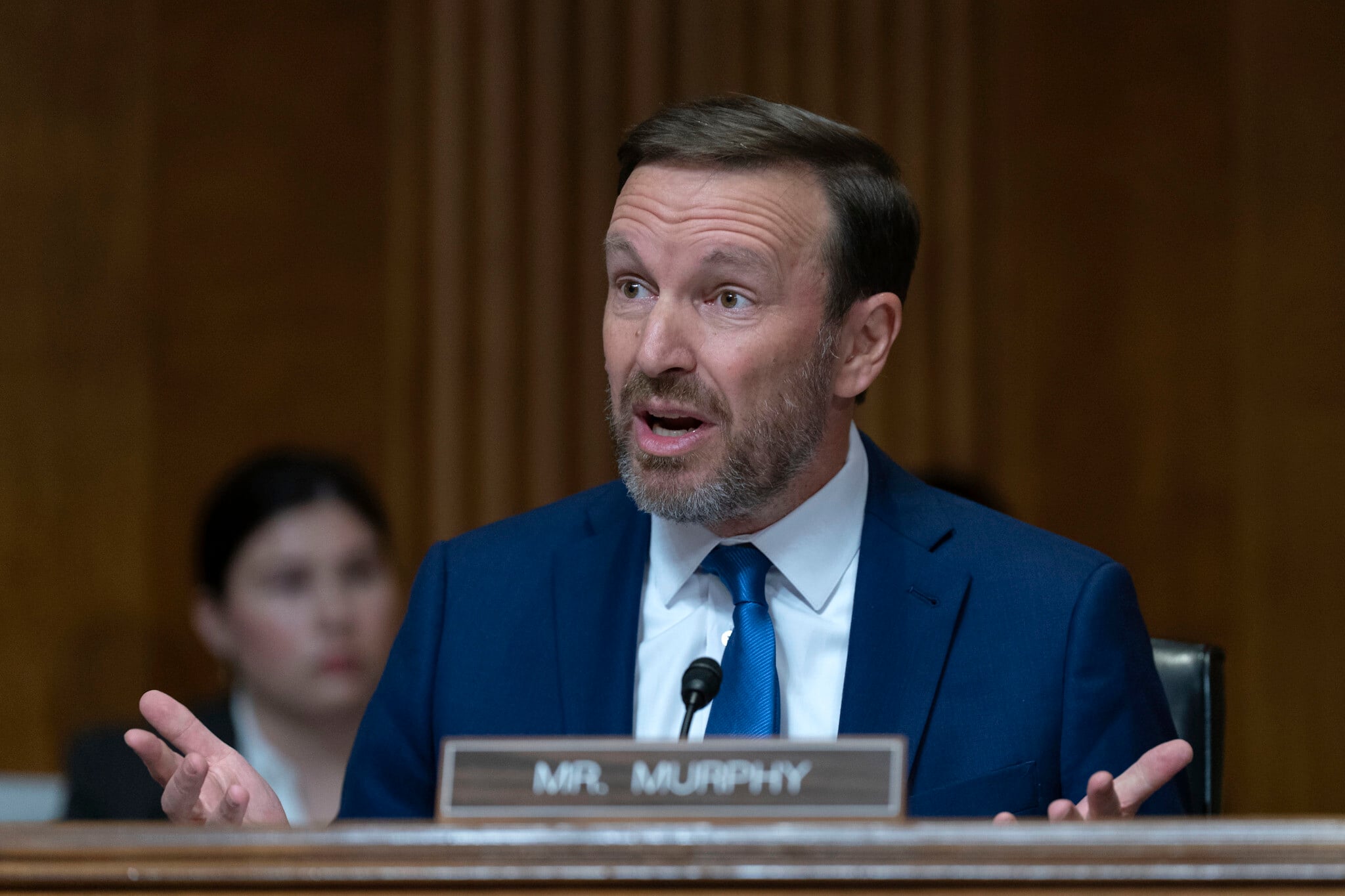
Sen. Chris Murphy, Democrat-Connecticut, questions Secretary of State Marco Rubio as he testifies before a Senate Committee on Foreign Relations hearing to examine the president's proposed budget request for fiscal year 2026 for the Department of State on Capitol Hill in Washington, May 20, 2025. (Jose Luis Magana/AP)
US Democratic lawmakers slam the country’s State Department for urging US citizens in the Middle East to evacuate three days after the US-Israeli airstrikes against Iran began, and as air travel is severely disrupted, saying it is a sign of a lack of proper planning.
On Monday, the Department urged Americans across 16 countries in the Middle East to immediately depart the region using “available commercial transportation” without offering any US-government-vouched means. The US embassy in Jerusalem, in a statement, said it was unable to offer assistance to Americans trying to leave.
“Warnings to citizens to evacuate 3 days into this war, when airspace is closed, is a clear sign of ZERO strategy and planning by the Trump admin,” Democratic Senator Andy Kim says in a post on X.
“Now Americans have limited options to evacuate at an extremely dangerous moment with no government assistance. This administration is failing its citizens,” Kim adds
Major Gulf aviation hubs, including the world’s busiest international airport in Dubai – which normally handles over 1,000 flights a day – remain closed for a fourth day, leaving tens of thousands of passengers stranded. Ticket prices have soared.
The State Department does not immediately respond to questions on how exactly Americans should be departing in the absence of available commercial flights or whether Washington is planning evacuation flights.
Yesterday, a US official said the department activated an inter-agency task force to manage the situation and had launched a dedicated WhatsApp channel, which it said has amassed 15,000 followers. It did not mention any government assistance for the evacuation of citizens.
“So the State Department is forcing everyone to immediately leave the region but is also refusing to help people leave the region,” Democratic Senator Chris Murphy says in an X post. “Incompetence everywhere,” he adds.
Democratic Congressman Ted Lieu from California urges the administration to schedule US government evacuation flights for the stranded Americans.
Macron speaks to several Middle East leaders amid Iran conflict
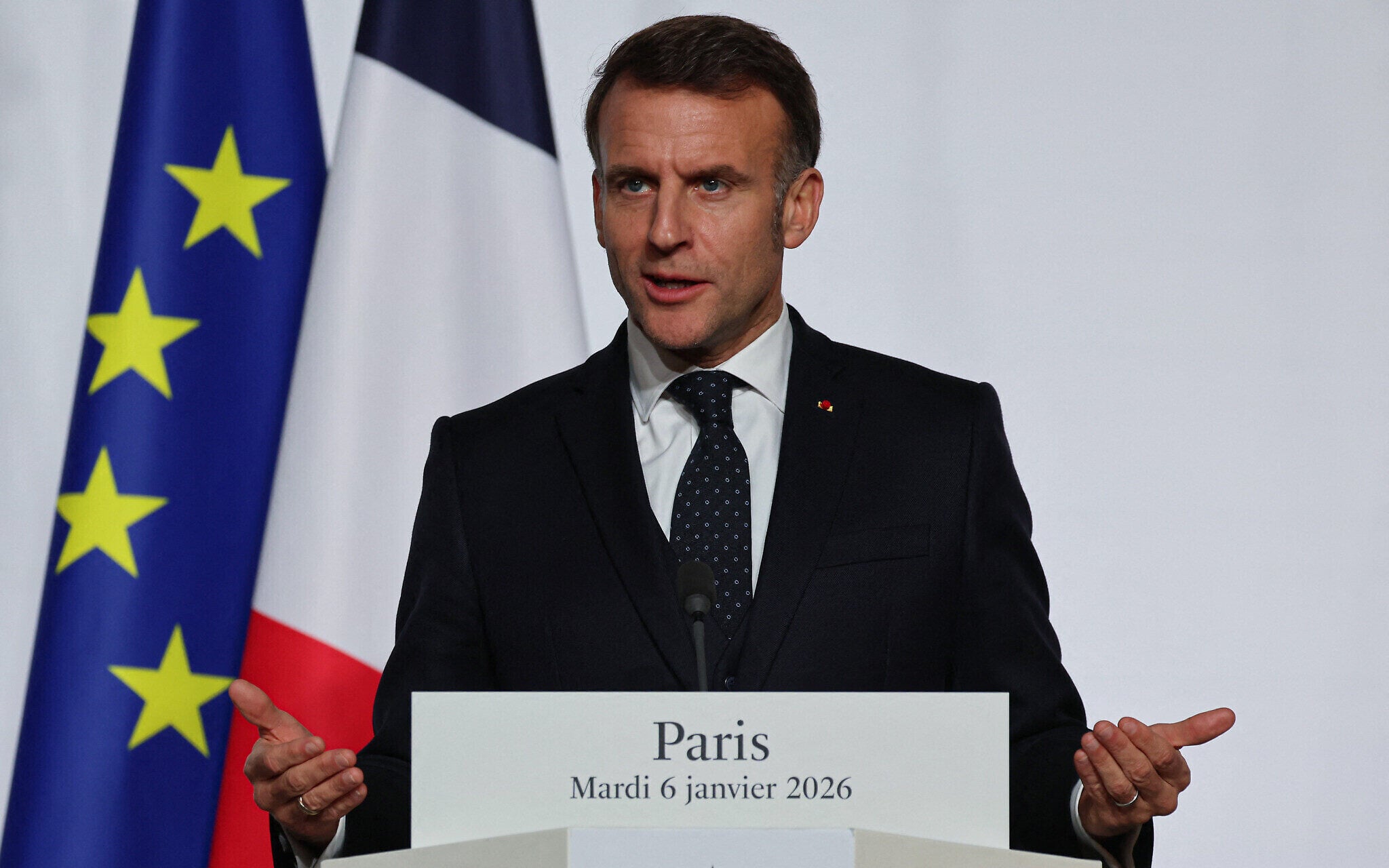
France's President Emmanuel Macron delivers a press conference upon the signing of the declaration on deploying a post-ceasefire force in Ukraine, at the Elysee Palace in Paris, January 6, 2026. (Ludovic MARIN / POOL / AFP)
French President Emmanuel Macron held separate meetings with leaders of Cyprus, Lebanon, Qatar, the United Arab Emirates, and the autonomous region of Kurdistan to discuss the situation in the Middle East, the Elysee says, without giving further details.
Iran will not ‘automatically’ fall after Khamenei’s death, shah’s widow says

The Shah of Iran Mohammad Reza Pahlavi and wife Empress Farah Pahlavi of Iran during a visit to Aswan, Egypt in 1979. (AP Photo/Bill Foley)
The killing of Iran’s supreme leader, Ali Khamenei, is “historically significant” but will not “automatically” lead to the fall of the Iranian system, the widow of the country’s last shah tells AFP in an interview Tuesday.
“The passing of a man — however central he may be to the architecture of power — does not automatically mean the end of a system,” says Farah Pahlavi, who has lived in exile in Paris since being driven out of Iran in the 1979 Islamic Revolution.
“What will be decisive,” she says, is “the ability of the Iranian people to unite around a peaceful, orderly and sovereign transition to a state governed by the rule of law,” which she adds her son Reza Pahlavi “is in the process of preparing.”
Israel preparing to gradually reopen airspace for repatriation, starting overnight Wednesday-Thursday
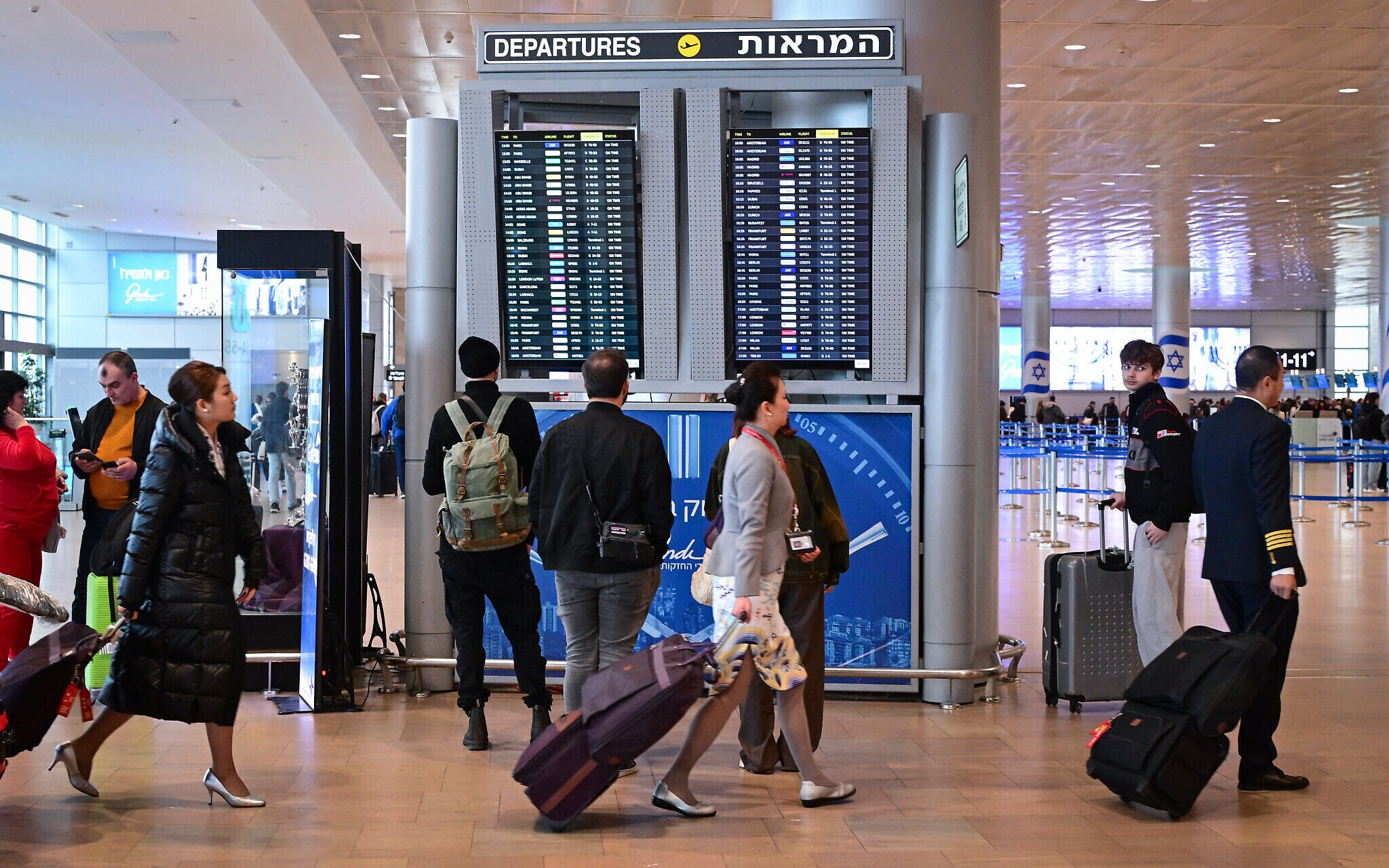
Illustrative: Travelers are seen at the Ben Gurion International airport near Tel Aviv, February 26, 2026. (Avshalom Sassoni/Flash90)
Israel is making preparations to gradually reopen the country’s airspace overnight Wednesday to Thursday to start flying back Israelis stranded abroad.
According to the emerging plan, Tel Aviv’s Ben Gurion Airport will operate 24 hours a day and will open in a controlled manner.
In the first phase, the entry of one passenger aircraft per hour will be approved. In the second phase, two will enter every hour, or one wide-body plane will enter, subject to security and operational conditions. The framework is still subject to final approvals.
Israel’s skies have been closed since the start of the joint US-Israel attack on Iran on Saturday morning.
Criminal investigation launched after IDF reservist kills two Palestinians in West Bank
A criminal investigation has been launched after an active-duty IDF reservist shot dead two Palestinians in the West Bank yesterday, the military says.
According to the IDF, troops had been dispatched to the village of Qaryut, near Nablus, following reports of a “confrontation” between Palestinians and settlers, which included stone-throwing.
The IDF says that it later received a report of two Palestinians killed by gunfire and several others wounded in the area.
The military says it conducted an immediate investigation into the incident, “during which it emerged that the shooter is an active-duty IDF reservist.”
The reservist is a member of one of the IDF’s so-called area defense forces, known by its Hebrew acronym Hagmar. Dozens of soldiers from such units, which comprise local settlers serving in reserve duty, have been dismissed for violations, including attacks on Palestinians.
Following the investigation, the IDF says it has taken away the soldier’s gun and launched a criminal probe into the case.
Iran says will hit all Mideast economic hubs if US-Israeli attacks persist
A general with Iran’s Islamic Revolutionary Guard Corps warns that continued US-Israeli attacks will see Iran conduct reprisals against “all economic centers” in the Middle East.
“We are saying to the enemy that if it decides to hit our main centers, we will hit all economic centers in the region,” says Ebrahim Jabbari.
“We have closed the Strait of Hormuz. Currently, the price of oil is above $80 and will soon reach $200,” he is quoted as saying by Iranian news agency ISNA, as Brent crude climbed above $85 for the first time since July 2024.
Iran has struck targets in Israel and across the Gulf following the start of US-Israeli airstrikes on Saturday.
EU starts helping evacuate citizens from the Middle East
The European Union has begun helping member countries Italy, Austria and Slovakia repatriate their citizens stranded due to the war in the Middle East, the bloc’s crisis management chief tells AFP.
Commissioner Hadja Lahbib says the three countries were the first so far to ask Brussels to assist in funding flights from the region.
Trump claims Iran running out of ammo but predicts it will ‘keep lobbing missiles for a while’
President Donald Trump speaks about the new ballroom construction before a Medal of Honor ceremony in the East Room of the White House, March 2, 2026, in Washington.(AP Photo/Mark Schiefelbein)
US President Donald Trump claims that Iran is running out of ammunition after over three days of war with the US.
Nonetheless, Trump tells Politico in a phone interview that Iran is still expected “keep lobbing missiles for a while.”
Trump’s claim about the Iranian missile stockpile comes after the Wall Street Journal reported that the US is the one running out of interceptors— something the president has fiercely denied.
“We have unlimited of the middle- and upper middle- ammunition and things. We save it and we build it,” he tells Politico.
“The defense companies are on a rapid tear to build the various things we need,” he adds to the US outlet. “They’re under emergency orders. We’re making it fast. But we have unlimited,”
Trump justifies the war by saying that Iran was on the verge of obtaining a nuclear weapon or of being capable of attacking the US.
After US strikes on Iran’s nuclear sites last year, Trump claimed to have completely destroyed Iran’s nuclear program. Intelligence assessments have separately refuted Trump’s claim that Iran is close to being able to produce a missile that can reach the US and say that Tehran is actually more than a decade away from that capacity.
Trump says he’s open to speaking with a reconfigured Iranian government if one emerges after much of its leadership was taken out in the opening strikes of the war.
“Forty-nine [senior Iranian leaders] were killed, don’t forget, so that goes pretty deep, right? New ones are emerging. A lot of people want the job. Some of them would be very good,” he says.
Israeli airstrike hits Lebanese city of Sidon — reports
Lebanese media reports an Israeli airstrike in the coastal city of Sidon.
The strike comes after the IDF issued an evacuation warning for a building in the city, which it said was used by Hezbollah.
تصاعد الدخان بعد غـ. ارات على مدينة صيدا جنوب لبنان. pic.twitter.com/sqfUD1z6e4
— فلسطين بوست (@PalpostN) March 3, 2026
Shots fired at Toronto synagogue; none injured

Illustration: Canadian police officers on horseback watch as the motorcade for President Joe Biden and first lady Jill Biden arrive, Thursday, March 23, 2023, in Ottawa, Canada. (AP/Andrew Harnik)
Police in Toronto say that shots were fired at a synagogue in the North York district of the Canadian city last night.
Police received a call about gunshots at the synagogue at around 10:50 p.m. and found damage to the building, CBC News reports.
Purim celebrations took place at the synagogue around two hours before the incident, the report says.
Toronto Mayor Olivia Chow says the attack targeted the city’s Temple Emanu-El Synagogue.
Canada has seen a surge in antisemitism in recent years and synagogues have been targeted repeatedly, including with similar past instances of gunfire.
US embassy in Lebanon says it will remain closed until further notice
The United States embassy in Beirut says it will remain closed until further notice, as Israel continued its strikes on Lebanon in retaliation for Hezbollah’s rocket launches amid the US-Israeli strikes in Iran.
“Due to ongoing regional tensions, US Embassy Beirut will be closed until further notice,” the embassy posts on X, a day after it renewed its call for citizens to leave Lebanon immediately.
Britain sends helicopters with counter-drone tech to Cyprus, deploys naval vessel

Britain's Prime Minister Keir Starmer delivers a speech at Horntye Park Sports Complex, in St Leonards-on-Sea, southeast England, February 5, 2026. (Peter Nicholls / POOL / AFP)
British Prime Minister Keir Starmer says the UK is sending helicopters with counter-drone capabilities to Cyprus, and is deploying the air defense destroyer naval vessel HMS Dragon to the region, amid US-Israeli strikes on Iran and Iranian strikes on Israel and across the region.
No radioactive leakage recorded at Natanz nuclear site hit in US-Israeli strikes — Iranian reports
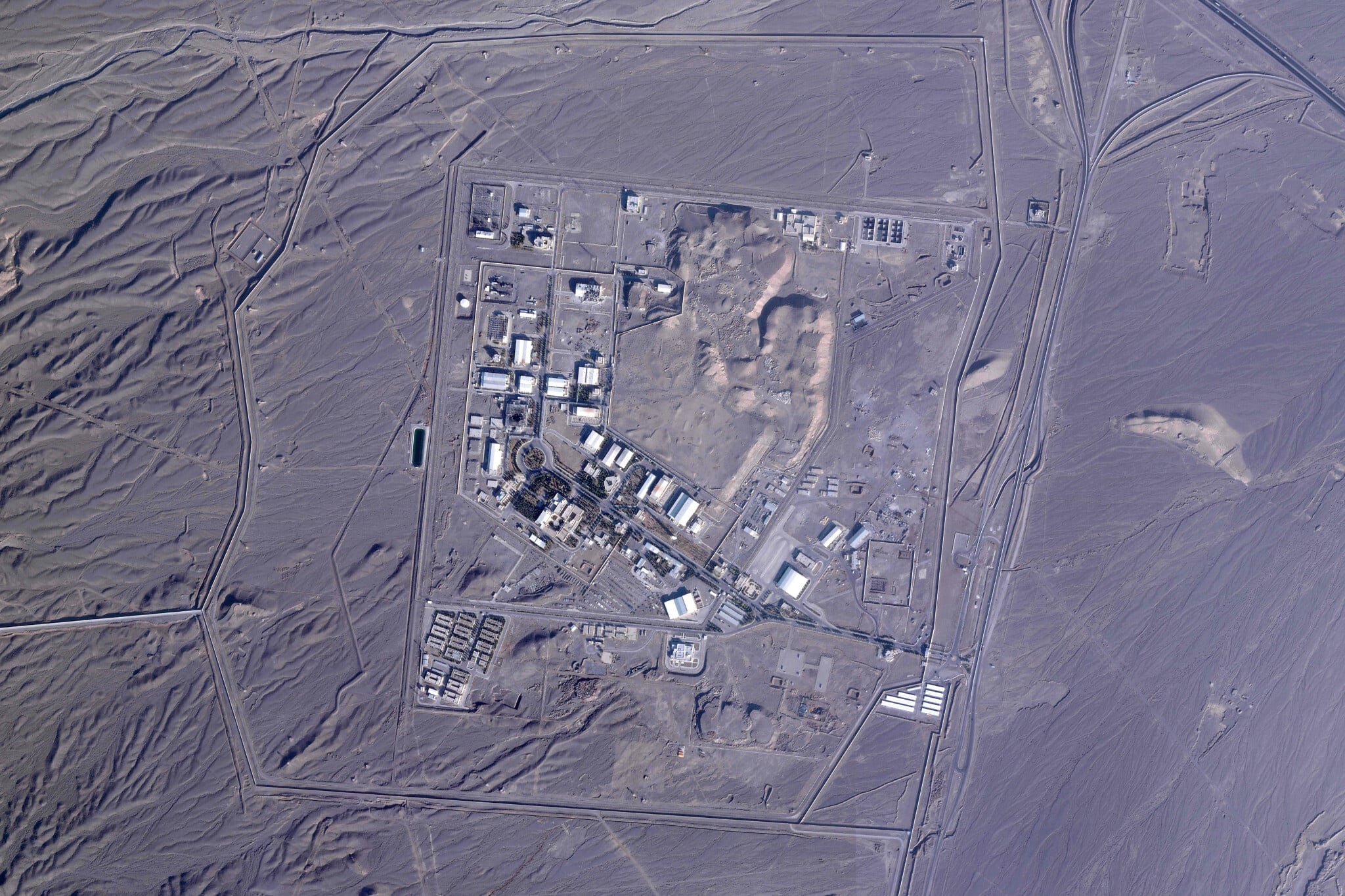
This satellite image from Planet Labs PBC shows Iran's Natanz nuclear enrichment site on Dec. 3, 2025. (Planet Labs PBC via AP)
No radioactive leakage has been recorded at the Natanz nuclear facility after US and Israeli strikes, Iranian media reports.
Iran’s ambassador to the UN nuclear watchdog said yesterday that the facility had been struck.
The US also struck the Natanz facility during the June Israel-Iran war.
WATCH: Trump holds press conference with Germany’s Merz amid war in Iran
US President Donald Trump is holding a press conference at the White House with German Chancellor Friedrich Merz amid the conflict with Iran. Watch their remarks live here:
US military says has struck over 1,700 targets in Iran operation
The United States military has carried out strikes against more than 1,700 targets in Iran, US Central Command says.
In a fact sheet, US Central Command says the strikes, which started on Saturday, have targeted Iranian Navy ships, submarines, and anti-ship missile sites along with command and control centers.
Trump says Iran’s navy, air force and air defenses have been ‘knocked out’

US President Donald Trump meets with German Chancellor Friedrich Merz in the Oval Office at the White House, March 3, 2026, in Washington, DC. (AP/Mark Schiefelbein)
WASHINGTON — US President Donald Trump claims Iran’s navy, air force and air defenses have been “knocked out.”
“They have no navy. It’s been knocked out. They have no air force. It’s been knocked out. They have no air detection. That’s been knocked out. Their radar’s been knocked out. Just about everything’s been knocked out. So we’ll see how we do,” Trump says while hosting German Chancellor Merz in the Oval Office.
Trump denies Israel dragged US into war with Iranian ‘lunatics,’ who he felt ‘were going to attack first’
US President Donald Trump meets with German Chancellor Friedrich Merz in the Oval Office at the White House, March 3, 2026, in Washington, DC. (AP Photo/Mark Schiefelbein)
WASHINGTON — US President Donald Trump denies that Israel dragged the US into war with Iran, insisting that if anything, the opposite could be true and that he felt Iran was going to attack first.
Trump was asked by a reporter in the Oval Office, “Did Israel force your hand to launch these strikes against Iran? Did Netanyahu pull the United States into this war?”
“No, I might have forced their hands. You see, we were having negotiations with these lunatics, and it was my opinion that they [the Iranians] were going to attack first,” Trump claims in response, during a press conference with German Chancellor Friedrich Merz.
Pentagon briefers on Sunday reportedly told Congress that the US did not have intelligence that Iran was planning a preemptive strike against the US.
“They were going to attack. If we didn’t do it, they were going to attack first. I felt strongly about that,” Trump says of Iran.
“So if anything, I might have forced Israel’s hand,” he adds. “But Israel was ready, and we were ready.”
Trump: ‘Worst case’ in Iran would be new leader ‘who’s as bad as’ Khamenei; warns Iranians against street protests

US President Donald Trump speaks during a meeting with German Chancellor Friedrich Merz in the Oval Office at the White House, Tuesday, March 3, 2026, in Washington. (AP/Mark Schiefelbein)
WASHINGTON — US President Donald Trump says the worst-case scenario in Iran would be someone taking over the country who is just as bad as the current regime.
“I guess the worst case would be — we do this, and then somebody takes over who’s as bad as the previous person… That could happen,” Trump says in response to a question from reporters in the Oval Office during a press conference with German Chancellor Friedrich Merz.
“We’d like to see somebody in there that’s going to bring it back for the people,” Trump adds.
He warns against Iranians taking to the streets while the bombing is ongoing.
Asked about Reza Pahlavi, the son of the late exiled former Iranian shah, Trump says that he seems like a nice guy but that someone currently living in Iran would probably be a more suitable candidate to take over the country.
Trump: US didn’t prepare to evacuate Americans from Mideast ‘because it happened all very quickly’

US President Donald Trump speaks during a meeting with German Chancellor Friedrich Merz in the Oval Office at the White House, March 3, 2026, in Washington. (AP/Mark Schiefelbein)
WASHINGTON — Asked why plans weren’t in place to evacuate Americans from the Middle East amid the conflict with Iran, US President Donald Trump responds, “Well, because it happened all very quickly.”
He makes the remarks during an Oval Office press conference with German Chancellor Friedrich Merz.
In an unprecedented measure, the US State Department called on all Americans to leave over a dozen countries in the Middle East on Monday, even though no evacuation flights have been offered by the US government. The State Department is urging Americans to take commercial flights out of the region, even though much of its airspace is closed.
Trump claims that Iran was going to attack Israel and the US, had the IDF and US military not hit first.
Pentagon briefers on Sunday reportedly told Congress that the US did not have intelligence that Iran was planning a preemptive strike against the US.
Trump says it’s possible that oil prices will climb for a “little while” but that they’ll go back down.
Hezbollah takes responsibility for rocket fire on Golan Heights
Hezbollah takes responsibility for this afternoon’s rocket fire on the Golan Heights.
In a statement, the terror group says it targeted an Israeli army base in response to the “criminal Israeli aggression that targeted dozens of Lebanese cities and towns, including the southern suburbs of Beirut.”
Hezbollah has fired dozens of rockets and several drones at northern Israel today. One rocket hit a home in a border community, injuring one.
IDF issues evacuation order for buildings in Lebanon’s Tyre
The IDF issues an evacuation warning for buildings in the Lebanese coastal city of Tyre, ahead of airstrikes against Hezbollah infrastructure.
“The IDF will, in the near future, strike Hezbollah military infrastructure in light of its prohibited attempts to rebuild its activities in the area,” says spokesman Col. Avichay Adraee.
Civilians in the area are instructed to distance themselves at least 300 meters (328 yards) from the building.
#عاجل ‼️ انذار عاجل لسكان لبنان وتحديدًا سكان مدينة صور
????سيهاجم جيش الدفاع على المدى الزمني القريب بنى تحتية عسكرية لحزب الله في ضوء محاولاته المحظورة لاعادة اعمار أنشطته في المنطقة
????نحث سكان المبنييْن المحدديْن بالأحمر في الخريطتيْن المرفقتيْن والمباني المجاورة لهما: انتم… pic.twitter.com/yqS5U3SWDH— افيخاي ادرعي (@AvichayAdraee) March 3, 2026
Trump claims death toll from crackdown on anti-regime protests in Iran is ‘much more’ than 35,000
WASHINGTON — US President Donald Trump claims the death toll in Iran’s crackdown on protesters is “much more” than 35,000 after putting the number at 32,000 last week.
He says those imposing the crackdown used machine guns to mow down protesters.
Trump makes the claim in the Oval Office during a press conference with German Chancellor Friedrich Merz.
Lebanese army reportedly arrests 12 armed members of Hezbollah
Lebanese broadcaster LBCI reports that the Lebanese army arrested 12 armed Hezbollah members at one of its checkpoints today.
Their arrest comes after Lebanese Prime Minister Nawaf Salam declared the Iran-backed terror group’s military operations “illegal acts” following its recent attacks on Israel amid the US-Israeli strikes on Iran.
Loud explosions said heard across Doha, Dubai, Abu Dhabi
Loud explosions are heard across the cities of Doha, Dubai and Abu Dhabi, according to AFP reporters and residents, as Iran pressed a campaign of missile and drone barrages across the Gulf.
Journalists hear loud explosions reverberating in the Qatari capital and in Dubai in the United Arab Emirates, while two residents tell AFP they heard explosions in the UAE capital of Abu Dhabi.
The reported strikes come amid the US-Israeli campaign against the Iranian regime.
UAE has strategic air defense reserves, its Defense Ministry says
The United Arab Emirates has strategic reserves of air defense systems capable of countering aerial threats for a prolonged period, a Defense Ministry spokesperson says, as the US-Israel war against Iran escalates, including with fire on the UAE.
The spokesperson adds that the UAE will not accept any infringement on its sovereignty or the safety of its territory.
Transportation Ministry okays plan to gradually reopen airspace starting overnight Wednesday-Thursday

Transportation Minister Miri Regev attends a ceremony marking the beginning of construction of the Israel Railways line from Kiryat Shmona, in the northern Israeli city of Kiryat Shmona, August 18, 2025. (Ayal Margolin/ Flash90)
Transportation Minister Miri Regev approves a gradual reopening plan of Israel’s airspace overnight Wednesday to Thursday to help bring home tens of thousands of Israelis stranded abroad.
“Our mission is to bring back Israelis safely,” Regev says at a press conference. “Our plan is subject to security developments.”
Regev says the plan entails being “able to return about 10,000 passengers a day.”
No passengers will be allowed on the planes that leave Ben Gurion Airport, which will be designated for the repatriation of Israelis abroad, to prevent crowding at the terminal and to reduce risks.
Under the proposed plan, Ben Gurion Airport will operate 24 hours a day and will open in a controlled manner. In the first 24 hours, the entry of one passenger aircraft per hour carrying about 200 passengers will be allowed. After that, the plan allows two planes, or one wide-body plane, every hour, if security and operational conditions permit.
Israel Airports Authority CEO Sharon Kedmi estimates that it will take between one week to 10 days to repatriate Israelis stranded abroad, assuming no changes in security developments.
IDF chief praises civilian home front’s resilience in visit with troops
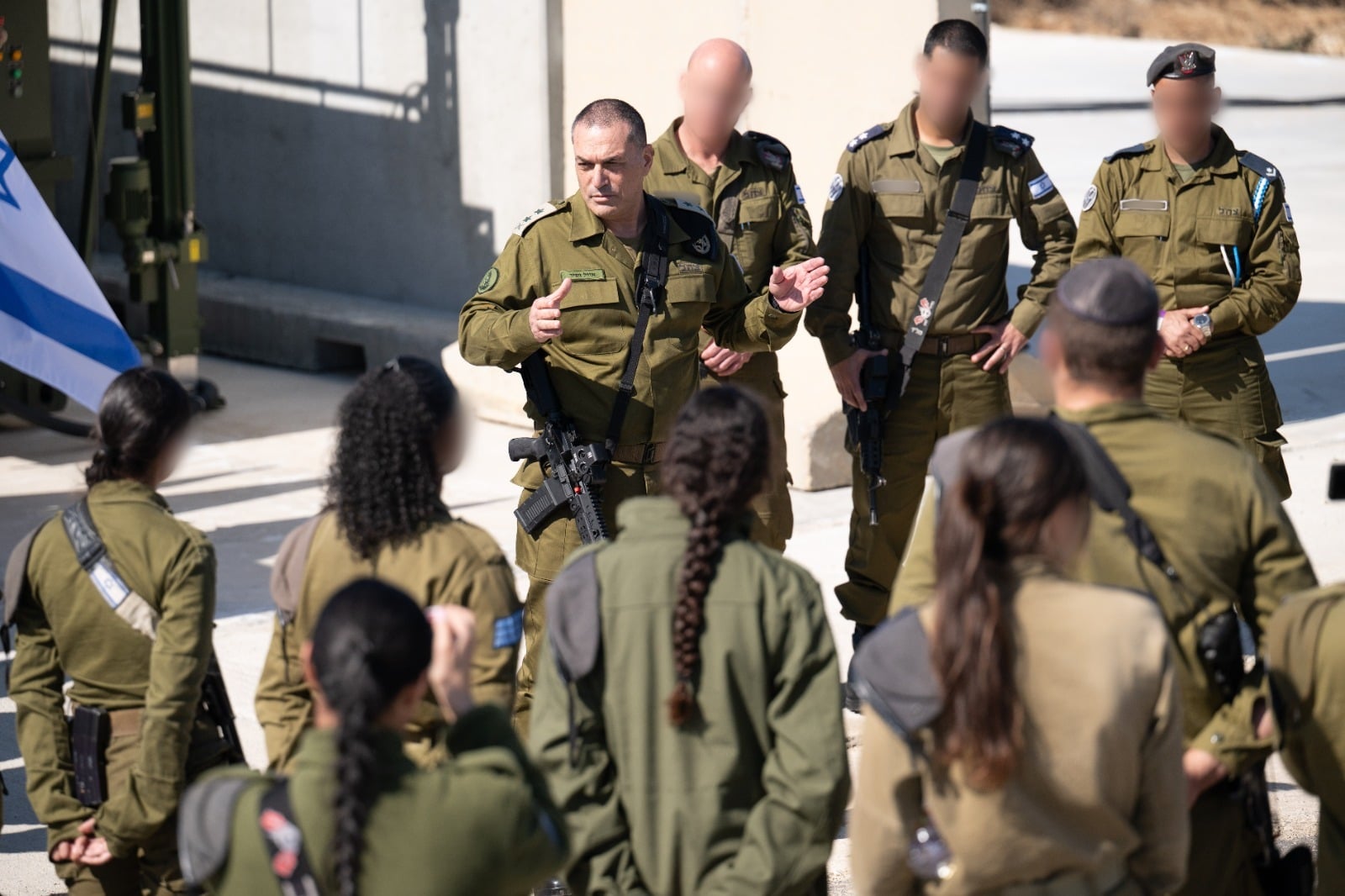
IDF Chief of Staff Lt. Gen. Eyal Zamir speaks to troops of the 947th Air Defense Battalion at an airbase, March 3, 2026. (Israel Defense Forces)
IDF Chief of Staff Lt. Gen. Eyal Zamir visited an air defense battalion today, telling troops that the home front’s resilience “gives us endurance” amid the ongoing conflict with Iran.
“Our civilian home front is very strong. It is resilient; it gives us backing, it gives us endurance. The people of the country understand what we are fighting for, and in that sense, the resilience of the home front is a very central component in this campaign,” Zamir says to soldiers of the 947th Air Defense Battalion, which operates the short-range Iron Dome system.
Zamir says that the IDF is “operating in two arenas simultaneously.”
“We are operating in Iran, and we are operating against Hezbollah in Lebanon. These are two major enemies of ours, and they have much in common. It is one axis, the Shiite axis, the Iranian axis, with all its proxies, and at this very moment, we are acting to remove threats from the citizens of the State of Israel,” he says. Hezbollah is backed by Iran.
“Our fighter jets are bombing over the skies of Tehran. We are hunting launchers there; some of the launchers you are supposed to deal with, we are now hunting them with UAVs and fighter jets in order to reduce the threats to our home front,” Zamir says.
He says that “Hezbollah made a very serious mistake” by attacking Israel and joining the conflict. “We prepared for this, and now we are striking it with very great force. We are determined to remove this Hezbollah threat, and we will not stop until this organization is disarmed.”
US State Department is helping almost 500 Americans seeking to evacuate from Israel, official tells ToI
WASHINGTON — A US State Department official tells The Times of Israel that the department is currently in direct contact with nearly 500 American citizens to help evacuate them out of Israel.
“Hundreds of American citizens have left Israel since the start of the conflict. Over the last few days, the State Department has assisted over 130 American citizens depart Israel, with an additional 100 American citizens expected to depart today,” the official says in a statement.
American citizens needing assistance should call +1-202-501-4444 and register in the State Department Smart Traveler Enrollment Program for updates, the department says.
Yesterday, the US called on Americans to immediately leave over a dozen countries in the region, urging them to use commercial means to do, even though much of the airspace has been closed.
In addition US Assistant Secretary of State for Global Public Affairs Dylan Johnson says the US is “actively securing military aircraft and charter flights for American citizens who wish to leave the Middle East.”
“We’ve been in direct contact with nearly 3,000 Americans abroad,” he says.
Yes, the State Department is actively securing military aircraft and charter flights for American citizens who wish to leave the Middle East.
We've been in direct contact with nearly 3,000 Americans abroad. American citizens should call 1-202-501-4444 for assistance with… https://t.co/Fj9qcvljoC
— Dylan Johnson (@ASDylanJohnson) March 3, 2026
Sirens sound in Tel Aviv, northern Israel amid Hezbollah rocket fire
Sirens sound in Tel Aviv, across central Israel and parts of the north following long-range rocket fire from Lebanon.
It marks the first long-range attack by Hezbollah since the start of the current conflict.
Top IRGC commander, responsible for Lebanon, killed in Tehran strike — IDF
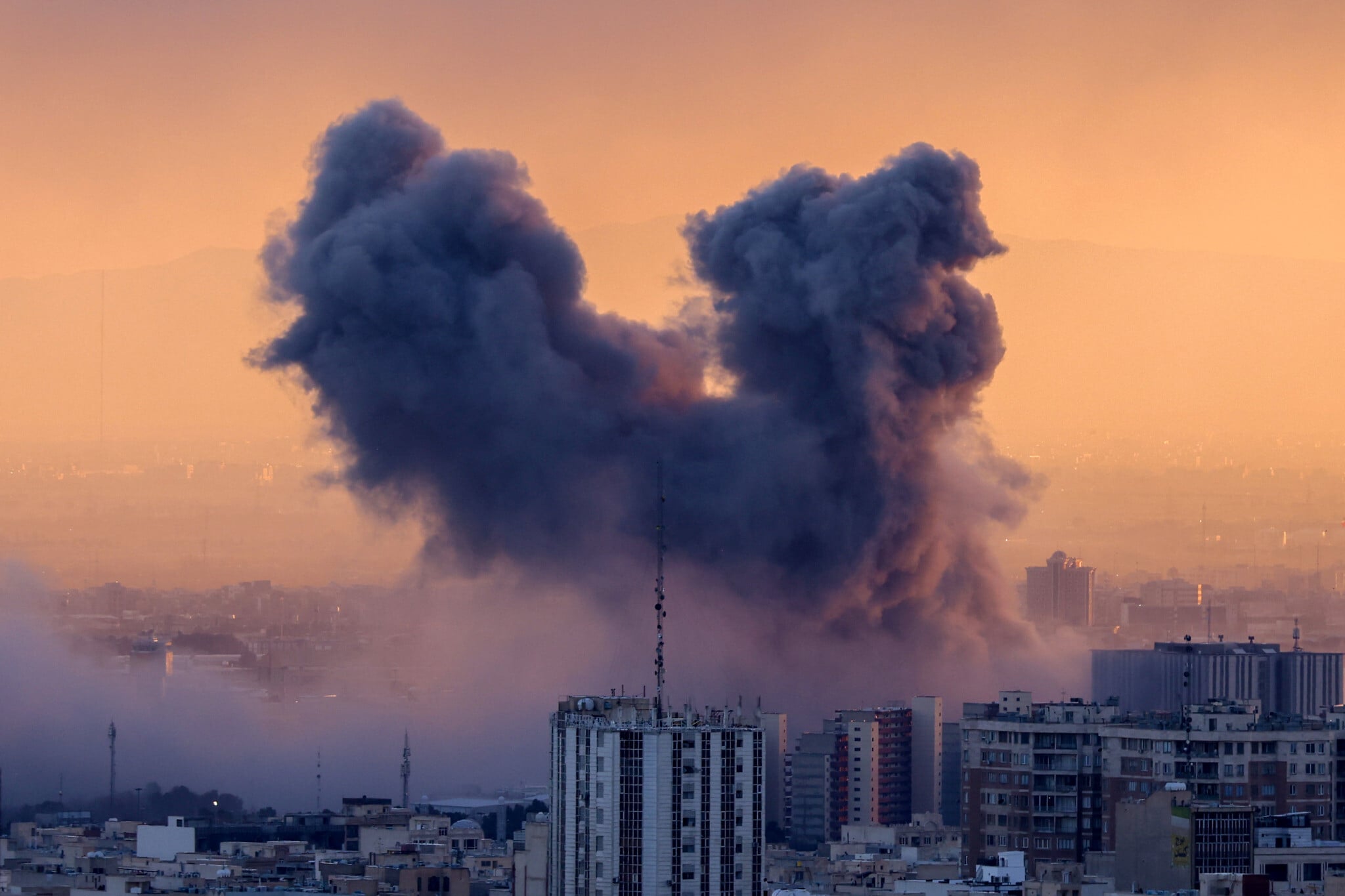
A plume of smoke rises after a strike on the Iranian capital Tehran, on March 3, 2026. (ATTA KENARE / AFP)
Daoud Alizadeh, the acting commander of the Lebanon Corps in Iran’s Islamic Revolutionary Guard Corps’ Quds Force, was killed in an Israeli airstrike in Tehran earlier today, the IDF announces.
Alizadeh had taken responsibility for the IRGC Quds Force’s Lebanon Corps from Mohammad Reza Zahedi, who was killed in an Israeli strike on Damascus in April 2024, making him “the highest-ranking Iranian commander responsible for Lebanon,” according to the military.
The IDF says the Lebanon Corps “connects the Hezbollah terror organization and the Iranian terror regime, supports Hezbollah force buildup, and functions as the connection between senior IRGC personnel and Hezbollah leadership.”
Alizadeh recently “pushed Hezbollah to advance terror activity against the State of Israel,” the IDF adds.
IDF says Hezbollah launched three rockets at Tel Aviv and Haifa; no injuries reported
Three rockets were launched from Lebanon toward Tel Aviv and the Haifa area, the IDF says, in the first long-range Hezbollah attack amid the current conflict.
Two of the rockets were intercepted by air defenses, while one hit an open area, according to the military.
There are no immediate reports of injuries in the attack.
IDF threatens Iranian officials in Lebanon, warning them to leave the country within 24 hours
The Israeli military issues an unusual threat against Iranian regime officials in Lebanon, warning that they will be targeted if they do not leave the country within 24 hours.
“The IDF warns representatives of the Iranian terror regime who are still in Lebanon to leave immediately before being targeted,” says army spokesman Col. Avichay Adraee.
“The IDF warns that it will not tolerate any presence of representatives of the Iranian terror regime in Lebanon and will grant regime representatives currently in Lebanon 24 hours to leave the country. After that, there will be no safe place for representatives of the Iranian regime in Lebanon, and the IDF will target them wherever they are found,” he says.
Explosions said heard in Iraqi Kurdistan capital of Erbil
Loud bangs are heard in Erbil, the capital of Iraq’s northern Kurdistan region, which hosts US bases, according to AFP journalists.
Explosions are heard mostly near Erbil airport, which hosts US-led coalition troops, an AFP journalist says.
Since the start of the US-Israel campaign against Iran, drones have repeatedly been intercepted over Erbil, which is also home to a major US consulate complex.
US ‘totally stupid’ to attack Iran during talks, Iranian UN ambassador says
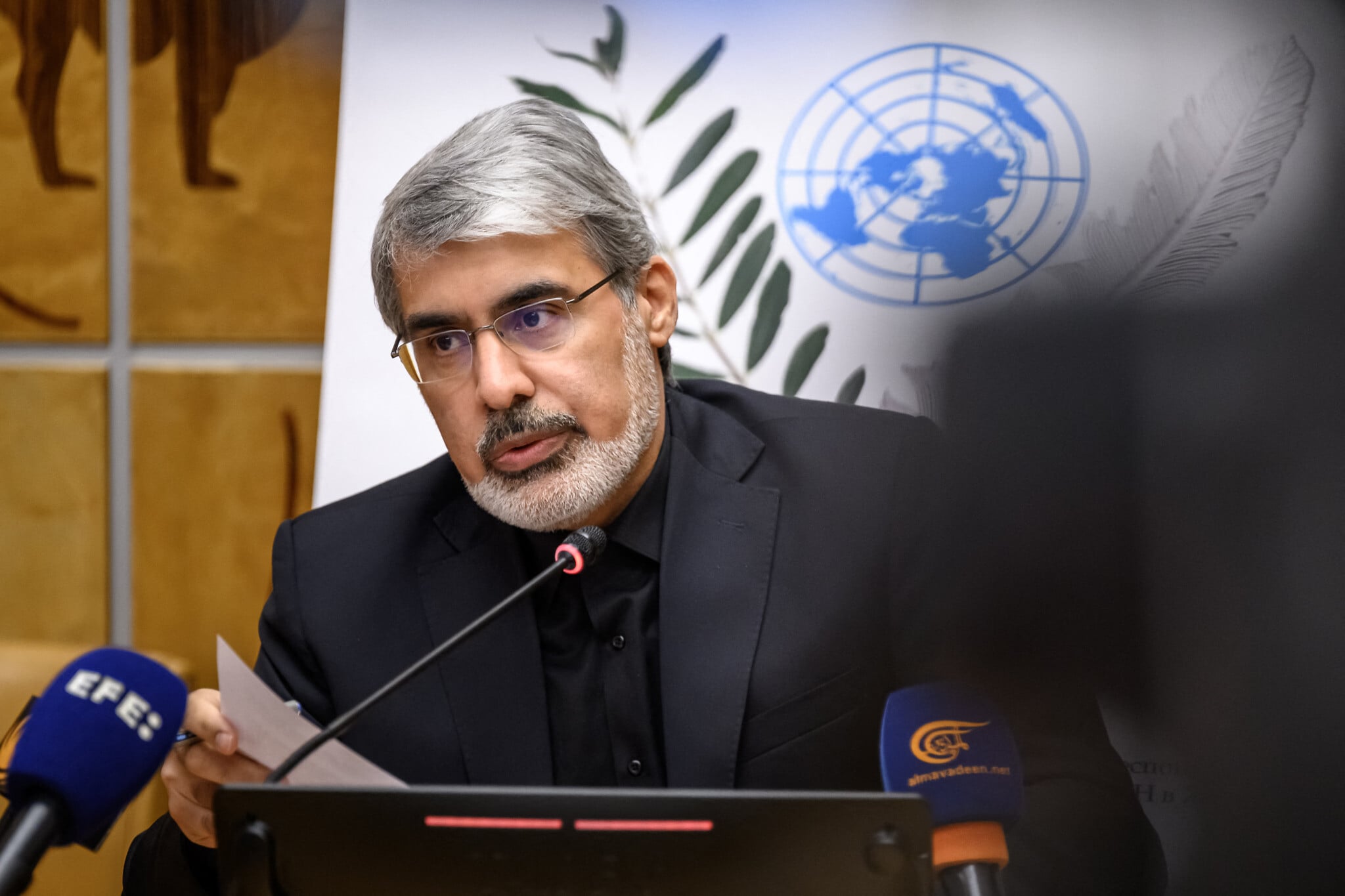
Iran's ambassador to the United Nations in Geneva, Ali Bahreini, holds a press conference at the UN Offices in Geneva on March 3, 2026. (Fabrice COFFRINI / AFP)
The United States made a “totally stupid decision” to attack Iran while in negotiations, and betrayed Gulf nations by trashing their diplomatic efforts, Tehran’s UN ambassador says.
Ali Bahreini, Iran’s ambassador in Geneva, insists Tehran had no problem with its neighbors, but could not let US bases in the Gulf be used as launchpads for attacks on Iran. Iran has launched strikes across the Gulf.
“War was not our option. War was imposed on Iran,” Bahreini tells UN correspondents. “Nobody should expect Iran to show restraint in front of aggression.”
“We will continue our defense until the point that this aggression is stopped,” he said.
Bahreini says Prime Minister Benjamin Netanyahu had convinced US President Donald Trump to destroy diplomacy and attack Iran, with strikes starting on Saturday.
“It was a totally stupid decision. They will know in the future how stupid this decision has been. Both of them will understand, because Iran will firmly determine the situation and the destiny of this war,” he says. “All our neighbors are now disappointed with the betrayal of the United States because everybody was working for diplomacy, particularly Oman. The US betrayed everybody.”
Regarding Iran’s strikes in the Gulf, he says, “I cannot accept labelling what we are doing as reprisal. What we are doing is a kind of self-defense.”
He says Iran’s operations were “exclusively” against US military targets, and says “there has been a very serious order given to our military forces not to make any harm to civilians.”
Report: Council of 88 clerics choosing new supreme leader weren’t present in IDF strike, only those counting vote
Footage of the Israeli strike on a building in the Iranian city of Qom where a body was set to choose Iran's new supreme leader on March 3, 2026. (Screenshot: X; used in accordance with Clause 27a of the Copyright Law)
The full 88-member clerical body responsible for appointing Iran’s next supreme leader was not present when Israel struck the country’s Assembly of Experts building earlier today, Channel 12 reports, without citing sources.
The strike took place in Qom, south of Tehran. The report says each member had voted separately, and only a limited group of people responsible for counting the vote were present in the building when it was hit.
The clarification comes after Iranian media reported that the “American-Zionist criminals” attacked the Assembly of Experts building. Footage aired by local outlets showed significant damage to the structure.
Report: Israel would not have attacked Iran without Trump’s green light, Israeli official says; PM and Trump spoke 15 times in past two months
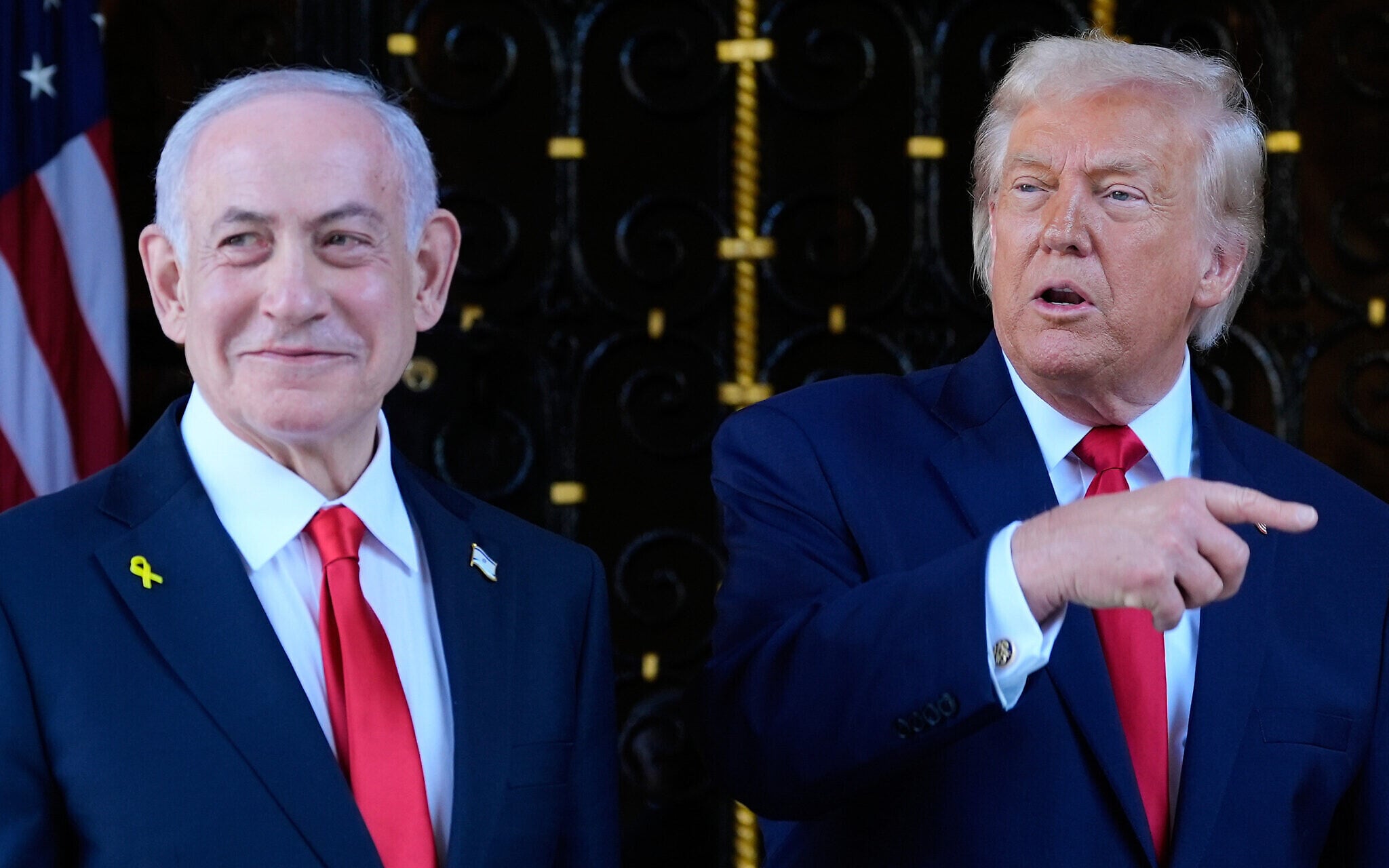
US President Donald Trump (right) speaks to reporters as he greets Prime Minister Benjamin Netanyahu at his Mar-a-Lago club, December 29, 2025, in Palm Beach, Florida. (AP/Alex Brandon)
Israel would not have attacked Iran if US President Donald Trump had not approved the joint US-Israel attacks that were launched on Saturday, a senior Israeli official tells Channel 12 news.
The comments come soon after Trump told reporters at the White House that Israel did not drag the US into the war.
“The coordination between the two countries was very deep,” the unnamed official says, according to the network. “If Trump had not given the green light, we would not have acted.”
Channel 12 reporter Barak Ravid also says that Trump and Prime Minister Benjamin Netanyahu spoke some 15 times in the two months before the attacks were launched.
Briefly chronicling the lead-up to the attack, he says that Trump and Netanyahu spoke on Monday, February 23, and that Netanyahu suggested Saturday as the day to launch, because intelligence information showed that Supreme Leader Ali Khamenei would be meeting with key colleagues in a known location that day.
Trump said he would consider this but was waiting to see if the last-ditch nuclear negotiations with Iran would remain deadlocked, according to the report.
On Thursday, the CIA confirmed the intelligence on Khamenei’s expected location, and hours later, the negotiations in Geneva indeed collapsed. Trump then decided to go ahead with the opening strikes on Saturday morning, in which Khamenei was indeed eliminated.
Sirens warn of suspected drone infiltration in north
Sirens warning of a suspected drone infiltration sound in the Upper Galilee.
The alerts are activated in several communities near the Lebanon border.
Hezbollah has launched several drones at Israel today.
Lebanon’s Al-Jama’a al-Islamiyya says IDF destroyed its HQ in Sidon
Hezbollah ally Al-Jama’a al-Islamiyya says its command center in Sidon was targeted by Israel this evening, after the IDF told people to flee the area within 300 meters (328 yards) of a building in the coastal Lebanese city.
Despite the IDF evacuation order, the Lebanese terror organization, whose name means Islamic Group, claims its Sidon command center was struck and destroyed by IDF fighter jets “with no prior warning.”
The group claims the targeted center was “a known political center located in a residential area,” and calls the targeting of the building a “war crime.”
كاميرات المراقبة توثق لحظة استهداف مركز الجماعة الإسلامية في مدينة صيدا اللبنانية#القاهرة_الإخبارية #إسرائيل #إيران #لبنان pic.twitter.com/dDX8abcpzS
— القاهرة الإخبارية – AlQahera News (@Alqaheranewstv) March 3, 2026
سقوط عدد من الجرحى في الغارة الإسرائيلية التي استهدفت مقر الجماعة الإسلامية في صيدا pic.twitter.com/zOalel9AMY
— جريدة الأخبار – Al-Akhbar (@AlakhbarNews) March 3, 2026
IDF says Air Force destroyed secretive Iranian nuclear site near Tehran
The Israeli Air Force destroyed a secretive Iranian nuclear site on the outskirts of Tehran earlier today, the military says.
In a press conference, IDF Spokesman Brig. Gen. Effie Defrin says at the partially-underground facility, called “Minzadehei,” a group of nuclear scientists “worked secretly to develop capabilities required for nuclear weapons.”
According to the IDF, after June 2025’s 12-day war between Israel and Iran, during which Iranian nuclear sites were targeted, Iran “did not halt its military nuclear activity and continued to develop the capabilities required for nuclear weapons, while transferring infrastructure to an underground site protected from aerial attack.”
The IDF says it monitored the Iranian nuclear scientists’ activities and “located their new place of operation at this site, enabling a precise strike on the secret compound.”
???? NUCLEAR WEAPONS DEVELOPMENT SITE STRUCK
The covert ‘Minzadehei’ compound was used by a group of nuclear scientists who operated to develop a key component for nuclear weapons.
Using intelligence, the IDF tracked the activities at this new location, removing a key component… pic.twitter.com/xwXQud49gN
— Israel Defense Forces (@IDF) March 3, 2026
IDF says it has dropped over 4,000 bombs on Iran since Saturday, same number used in entire 12-day June war
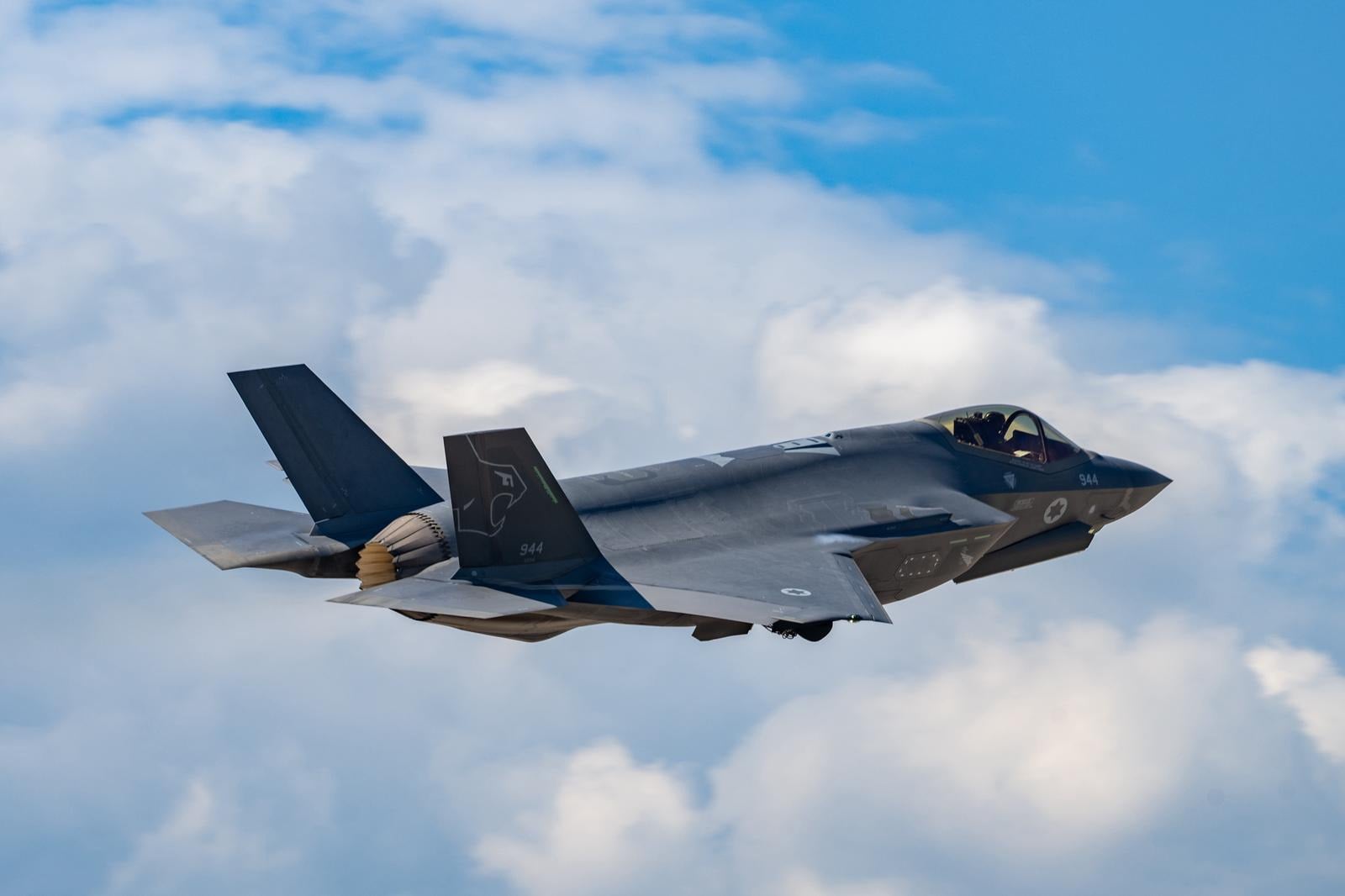
An Israeli Air Force F-35I fighter jet takes off from an airbase in Israel for strikes in Iran, in a handout photo published on March 3, 2026. (Israel Defense Forces)
The Israeli Air Force has dropped over 4,000 bombs in strikes on Iran since the start of the campaign which began four days ago, IDF Spokesman Brig. Gen. Effie Defrin says in a press conference.
“Today we crossed the amount of munitions that the IDF dropped during the entire Operation Rising Lion,” Defrin says, referring to the 12-day war between the countries in June 2025, when some 4,000 bombs were also used.
He also says fighter jets have carried out 1,600 sorties since the start of the conflict.
After Qom strike, Israeli envoy says Iranian council selecting new leader likely ‘won’t be available’ to meet again
Israeli Ambassador to the United States Yechiel Leiter says there is a “very good chance” that Iran’s 88-member clerical body responsible for appointing the country’s next supreme leader won’t be able to meet further after Israel struck Iran’s Assembly of Experts building in Qom earlier today.
While stressing that he was not yet sure of the results of the strike, Leiter tells CNN in an interview that “there’s a very good chance that the electors will not be readily available for any further meetings.”
I told @wolfblitzer and @PamelaBrownCNN on @cnn: We struck in an area of a meeting to appoint a new supreme leader, and there's a very good chance that the electors won't be readily available for any further meetings.@POTUS has made a very important decision in taking the lead… pic.twitter.com/Z3nxznPLZO
— Ambassador Yechiel (Michael) Leiter (@yechielleiter) March 3, 2026
“We struck in an area where the electors were meeting to appoint a new supreme leader, somebody who would be in charge of spreading death and mayhem both in Iran and outside of Iran,” he says.
Leiter’s remarks come as Channel 12 reports that the clerical body itself was not present at the building when the strike took place, and that it hit a limited group of people in the building who were responsible for counting the vote.
Turkey says Iran’s indiscriminate attacks on Gulf states ‘incredibly wrong strategy’
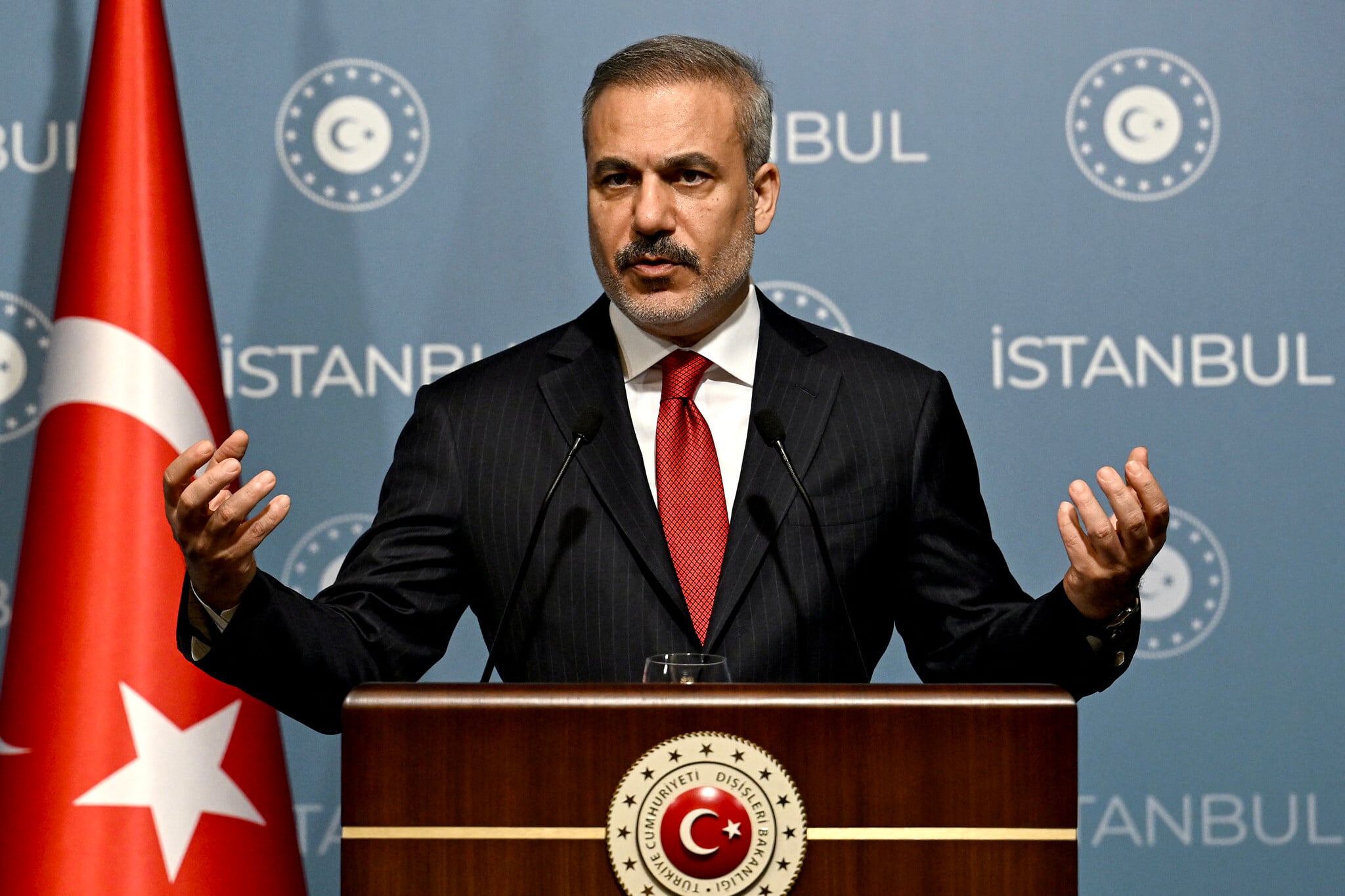
Turkish Foreign Minister Hakan Fidan gestures as he speaks during a press conference after a meeting with his counterparts from Saudi Arabia, Qatar, the United Arab Emirates, Jordan, Pakistan and Indonesia in Istanbul on November 3, 2025. (Ozan KOSE / AFP)
Turkish Foreign Minister Hakan Fidan says Iran’s strategy of attacking Gulf states in retaliation for US and Israeli attacks against it is an “incredibly wrong strategy” and increases instability in the region.
“Iran’s indiscriminate bombing of all these places is an incredibly wrong strategy,” he tells state broadcaster TRT Haber, adding that Tehran is using a strategy of “if I drown, I’ll drown the region as well.”
Fidan says countries attacked by Iran may not be able to remain silent if the strikes continue, and that the risk of the conflict widening further is worrying.
Trump says US will cut all trade with Spain after its refusal to let bases be used for Iran strikes

US President Donald Trump gestures as he boards Air Force One before departing Palm Beach International Airport in West Palm Beach, Florida, on March 1, 2026, on his way back to Washington, DC. (Mandel NGAN / AFP)
US President Donald Trump says the United States would cut off all trade with Spain after it refused to let the US military use its bases for missions linked to strikes on Iran.
“Spain has been terrible,” Trump tells reporters during a meeting with German Chancellor Friedrich Merz in the Oval Office, adding that he told Treasury Secretary Scott Bessent to “cut off all dealings” with Spain.
“We’re going to cut off all trade with Spain. We don’t want anything to do with Spain,” he adds.
Trump’s comments come after the US relocated 15 aircraft, including refuelling tankers, from the Rota and Moron military bases in southern Spain after the country’s Socialist leadership said it would not allow them to be used to attack Iran.
Spanish Foreign Minister Jose Manuel Albares said Spain would not allow its military bases to be used because the offensive was not covered by its agreement with the United States or in accordance with the Charter of the United Nations.
Ties between Spain and the United States have been strained over issues including migration and Spain’s refusal to commit to increasing the share of its spending on defense to 5 percent of its GDP, as most other European countries have done.
Spain’s Prime Minister Pedro Sanchez, one of a dwindling number of left-leaning voices in Europe, previously refused to let vessels transporting weapons to Israel dock in Spain.
He also wrote an op-ed in the New York Times in which he said “MAGA-style leaders” were fooling the public on the supposed evils of migration, in a reference to the pro-Trump movement.
Israeli airstrikes have struck 300 Iranian missile launchers during war — IDF
The IDF says Israeli airstrikes have struck 300 Iranian missile launchers since the start of the current conflict.
“As part of the offensive effort, the Air Force continues to launch continuous waves of strikes against the Iranian regime’s ballistic missile arrays and [air] defense systems,” the military says in a statement.
The military says Israeli Air Force fighter jets and drones have been carrying out a “systematic, round-the-clock hunt” of Iran’s missile launchers and caches of ballistic missiles to reduce the rate of fire on Israel.
The IDF says Israeli airstrikes have taken out 300 Iranian missile launchers since the start of the current conflict.
"As part of the offensive effort, the air force continues to launch continuous waves of strikes against the Iranian regime's ballistic missile arrays and [air]… pic.twitter.com/62xy3luzuE
— Emanuel (Mannie) Fabian (@manniefabian) March 3, 2026
US CENTCOM posts footage of airstrike on Iranian drones
The US Central Command publishes footage showing an American airstrike against Iranian drones.
“The Iranian regime’s killer drones have been a menace in the Middle East for years. These drones are no longer a tolerable risk,” CENTCOM says.
The Iranian regime's killer drones have been a menace in the Middle East for years. These drones are no longer a tolerable risk. pic.twitter.com/76yhDKI6OW
— U.S. Central Command (@CENTCOM) March 3, 2026
Khamenei to be buried in holy city of Mashhad — Iranian reports
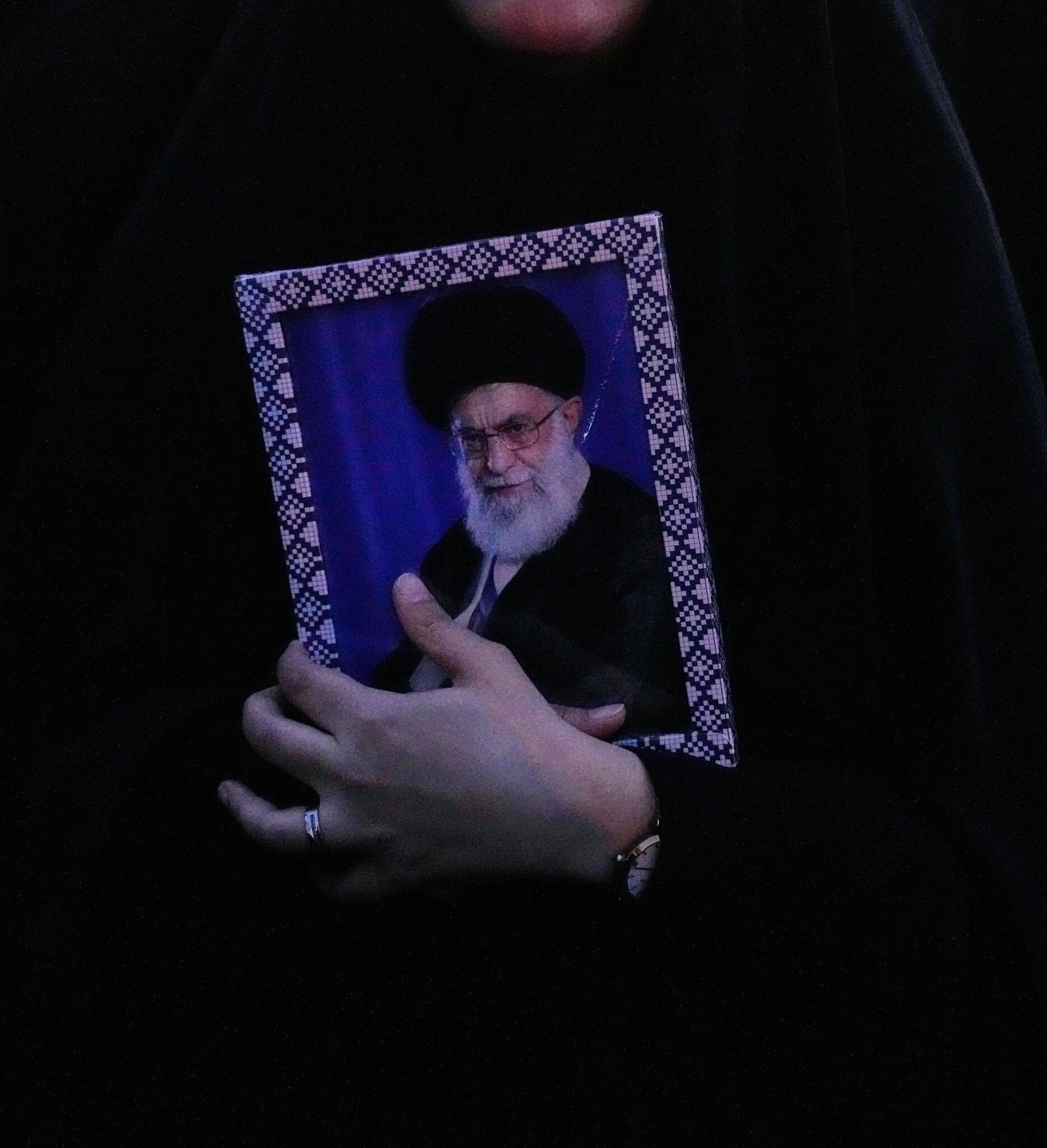
A government supporter holds a picture of the Iranian Supreme Leader Ayatollah Ali Khamenei during a gathering after state TV officially announced the death of Khamenei, in Tehran, Iran, March 1, 2026. (AP/Vahid Salemi)
Iran’s late supreme leader Ayatollah Ali Khamenei, killed Saturday in US-Israeli strikes, will be buried in the holy city of Mashhad, the Fars news agency says.
Khamenei, who died at 86 after leading the regime for 36 years, was originally from Mashhad, Iran’s second-largest city, where his father is buried at the Imam Reza shrine.
No date for the burial is disclosed.
Iran says it has not yet used ‘all our advanced weapons’ — report
Iran is ready for a long war against the United States and Israel and has so far not used its most advanced weapons, its Defense Ministry says.
“We have the capacity to resist and to continue an offensive defense longer than what [the enemy] has planned for this imposed war,” ministry spokesman Reza Talaei-Nik is quoted as saying by the official IRNA news agency.
“We do not intend to deploy all our advanced weapons and equipment in the first days,” he adds.
‘Not Churchill’: Trump ups criticism of Starmer over Iran strikes, says UK-US bond ‘not like it used to be’
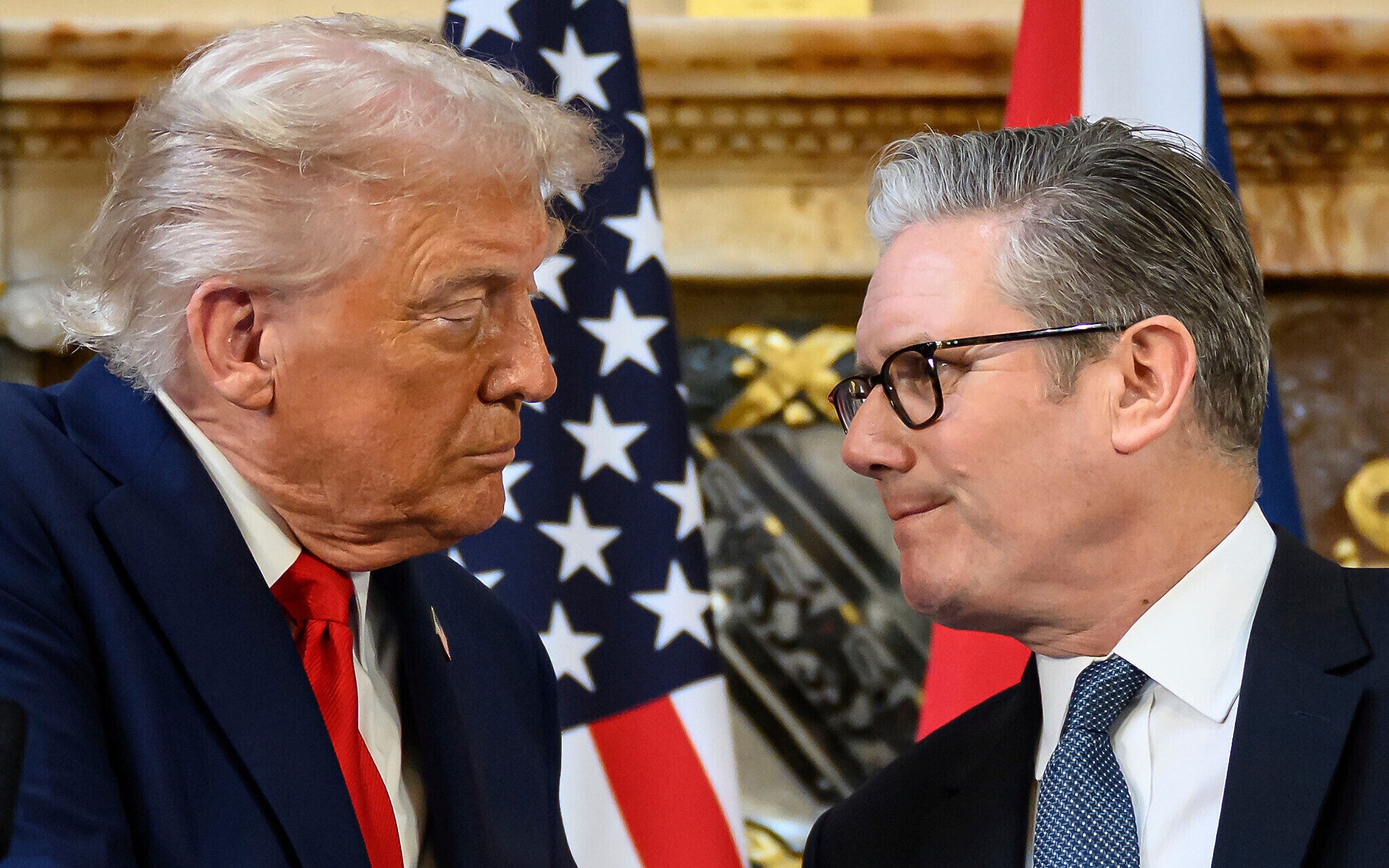
US President Donald Trump, left, and British Prime Minister Keir Starmer look at each other as they shake hands during a press conference at Chequers near Aylesbury, England, September 18, 2025. (Leon Neal/Pool Photo via AP)
US President Donald Trump steps up his criticism of UK Prime Minister Keir Starmer for not initially permitting American warplanes to use UK bases to strike Iran, saying, “This is not Winston Churchill that we’re dealing with.”
Trump says the historical relationship between the United States and Britain is “not like it used to be,” amid a diplomatic dispute over US-Israeli strikes on Iran.
“The UK has been very, very uncooperative,” he says while seated next to German Chancellor Friedrich Merz at the White House.
“I’m not happy with the UK,” he adds. “It’s taken three, four days for us to work out where we can land.”
Starmer — who told parliament yesterday that his government “does not believe in regime change from the skies” — has drawn Trump’s wrath by initially refusing to have any role in Washington’s war with Iran.
Starmer later agreed to a US request to use two British military bases for a “specific and limited defensive purpose.”
But the episode angered Trump, who earlier told British daily tabloid The Sun, “This was the most solid relationship of all. And now we have very strong relationships with other countries in Europe”, singling out France and Germany.
The so-called special relationship between the World War II allies is largely built on long-standing defense cooperation and intelligence sharing.
Any potential military action in the Middle East, however, is politically sensitive in the UK following former UK prime minister Tony Blair’s disastrous support for the US-led invasion of Iraq in 2003.
Trump’s comments to the Sun came before Starmer announced earlier today that he was sending helicopters with counter-drone capabilities and the warship HMS Dragon to bolster Cyprus’ defenses, as part of its “defensive operations.”
The move came after a British Royal Air Force (RAF) base on the eastern Mediterranean island was attacked early yesterday by Iranian-made drones, one of which hit the runway, according to officials.
France sending aircraft carrier to Mediterranean, says Macron

French President Emmanuel Macron speaks to students during an event about the LaFayette scholarship program, in New York City, on September 23, 2025. (Ludovic MARIN / AFP)
French President Emmanuel Macron says France is sending an aircraft carrier to the Mediterranean in response to the widening conflict in the Middle East amid US-Israeli airstrikes on Iran.
“I have ordered the aircraft carrier Charles de Gaulle, its air assets, and its escort of frigates to set course for the Mediterranean,” he says in a televised speech.
Hamas, Islamic Jihad haven’t heard from handlers in IRGC since start of Iran war — report
Iran’s Islamic Revolutionary Guards Corps officers who are responsible for contact with Hamas and Palestinian Islamic Jihad have reportedly failed to make contact with the terror groups since the US and Israel launched a bombing campaign on the Iranian regime on Saturday.
Sources from the groups are cited by the Arabic-language UK newspaper Asharq al-Awsat, saying it’s unclear whether the IRGC officers responsible for Palestinian affairs have been assassinated.
According to the outlet, the IRGC officers in question are usually in continuous contact with first- and second-tier commanders of Hamas, PIJ and other Iran-backed Palestinian factions.
“Usually, messages are encrypted, electronically or otherwise. But since the beginning of this war, no messages have been received,” the outlet quotes its sources as saying.
The sources quoted by Asharq al-Awsat say that among the missing IRGC Palestinian Affairs officers are two unnamed commanders who were appointed to replace IRGC Palestinian division chief Saeed Izadi, who was killed by Israel during the 12-day Israel-Iran war in June.
Separately, Asharq al-Awsat cites PIJ sources as saying that the group’s Lebanon military chief, Adham al-Othman, was staying at a Hezbollah safe house with several of that terror group’s operatives when he was killed in an IDF airstrike early yesterday in Beirut’s southern Dahiyeh district, a Hezbollah stronghold.
Israel partially evacuates UAE embassy staff after 2 attempted Iranian terror attacks — official
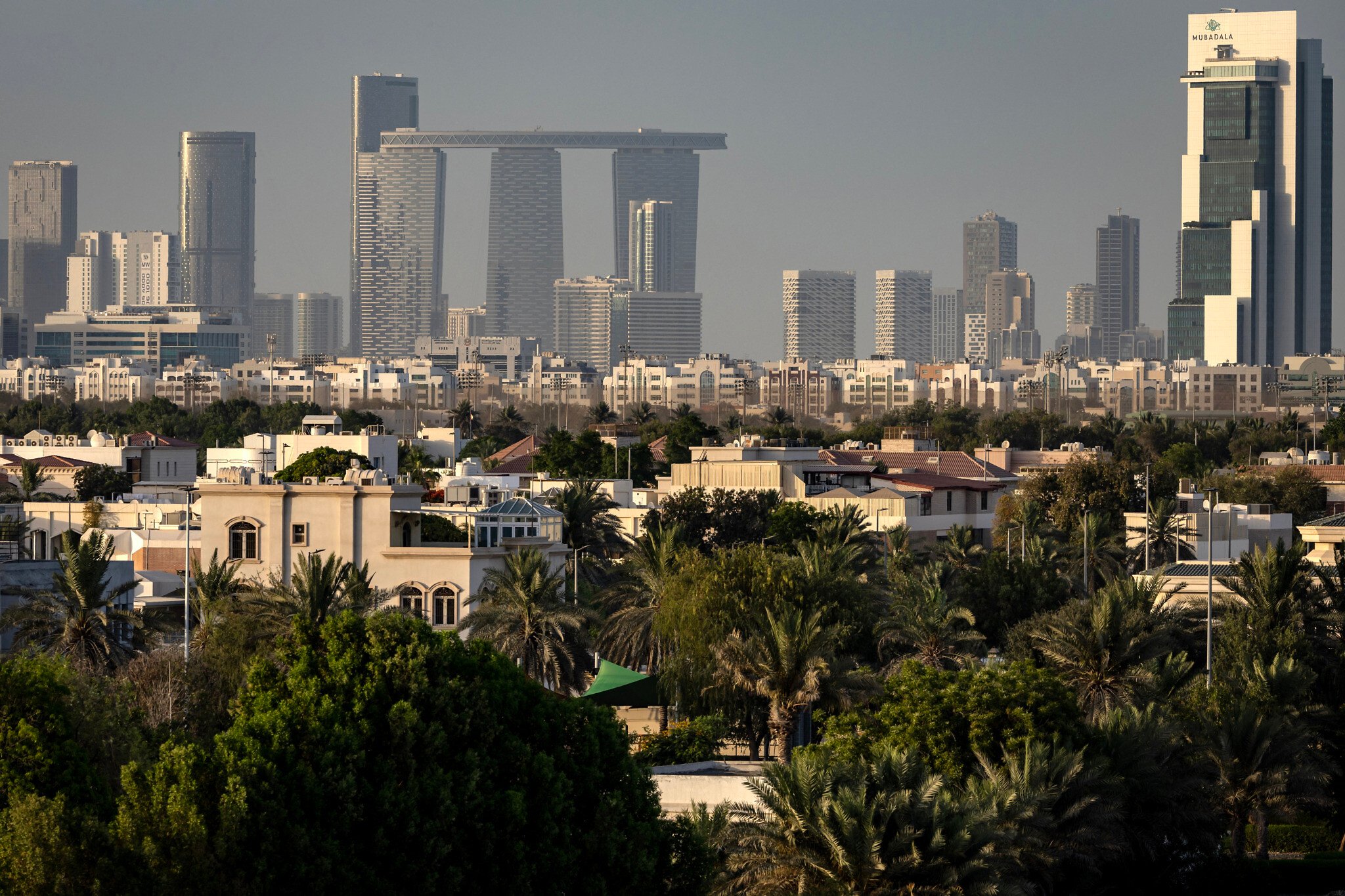
This picture shows a view of the Abu Dhabi skyline on May 14, 2025. (FADEL SENNA / AFP)
Israel conducted a covert extraction of part of its embassy staff in the United Arab Emirates today after two Iranian terror plots targeting the diplomatic team were foiled in recent days, an Israeli official tells The Times of Israel, confirming Hebrew media reports.
Responding to a request for comment on the reports, the Foreign Ministry confirms the evacuation and states that “in light of concrete threats against Israeli missions in the UAE, and at the request of security authorities, non-essential staff were evacuated from the United Arab Emirates.”
“In both Abu Dhabi and Dubai, diplomatic teams remain in place to ensure the continued and uninterrupted handling of diplomatic and consular affairs,” the ministry adds.
The Israeli official who spoke to The Times of Israel confirms that the threats in question were Iranian terror plots.
A senior Israeli official told Channel 12 this evening that the two attacks were part of “a specific effort to hunt the Israeli diplomats” and “were already underway.”
Thousands of Israelis reportedly remain in the UAE, including tourists whose flights were canceled, Israeli residents, and Israelis holding foreign citizenship, all of whom are said to be seeking immediate assistance from Emirati and Israeli authorities to exit the country amid the heightened tensions with Iran.
The Foreign Ministry does not immediately respond to a request for comment on any steps being taken to assist with their evacuation.
Authorities put out limited fire in vicinity of US consulate in Dubai after drone strike — media office
Authorities have put out a limited fire in the vicinity of the US consulate in Dubai due to a drone strike, with no injuries reported, Dubai’s media office says.
Syria sends thousands of troops to Lebanon border, sources say
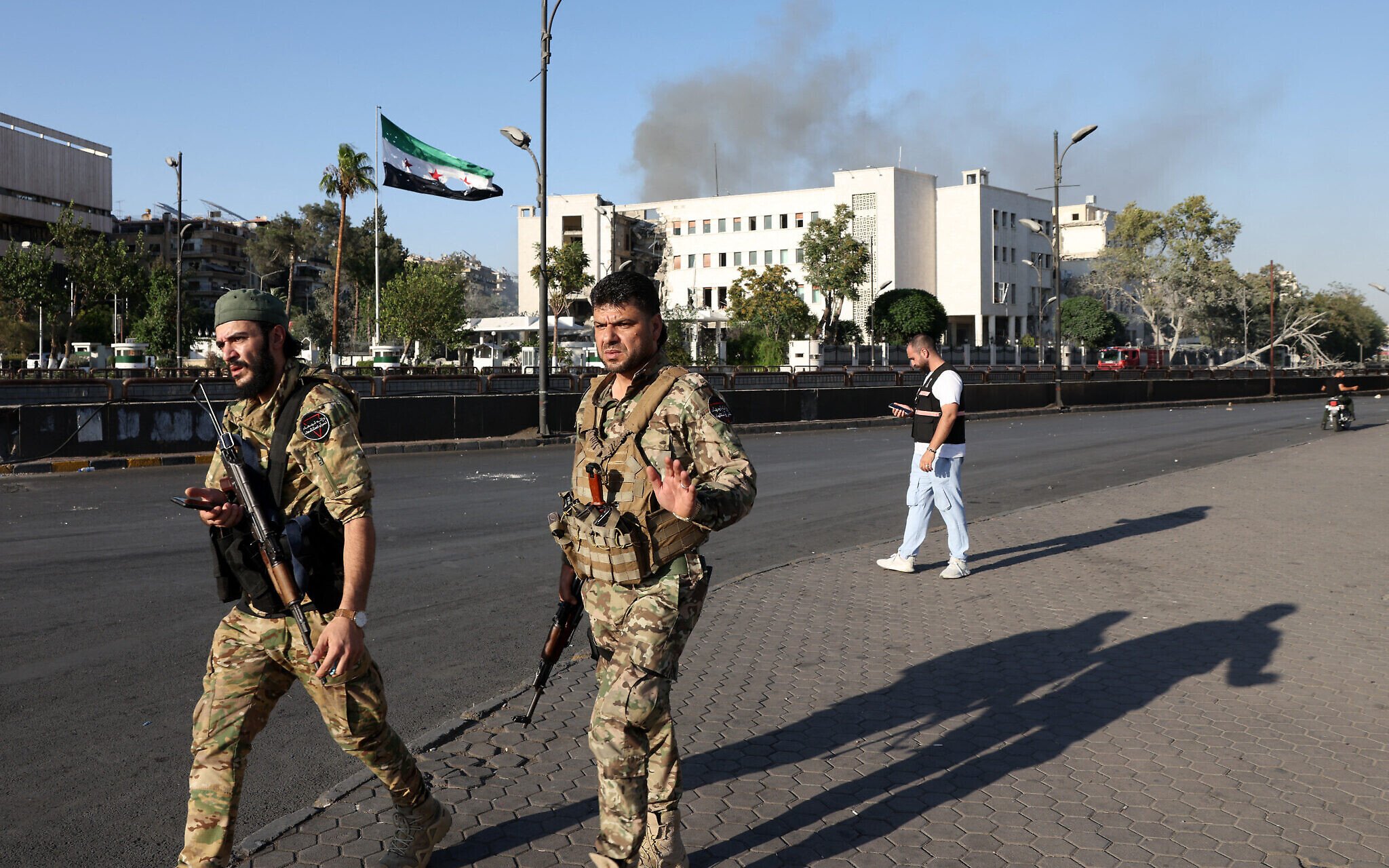
Syrian security forces stand guard in front of the heavily damaged Syrian army and Defense Ministry headquarters complex in Damascus, following Israeli strikes on July 16, 2025. (Bakr ALkasem / AFP)
Syria has reinforced its border with Lebanon with rocket units and thousands of troops, eight Syrian and Lebanese sources say, as conflict spreads in the region, including between Israel and the Hezbollah terror group in Lebanon.
The sources include five Syrian military officers, a Syrian security official and two Lebanese security officials who spoke on condition of anonymity.
The Syrian officers say the Syrian reinforcement operation began in February but sped up in recent days. The Syrian and Lebanese armed forces do not immediately respond to requests for comment.
The Syrian officers, including a senior member of the military, say the move is aimed at preventing arms and drugs smuggling as well as blocking Hezbollah or other terrorists from infiltrating Syria.
A Syrian officer tells Reuters that military formations from several Syrian army divisions have expanded their presence along the border in the western Homs countryside and south of Tartus.
The reinforcements include infantry units, armored vehicles and short-range Grad and Katyusha rocket launchers, the official says.
The Syrian security official says Damascus has no plans for military action against any neighboring country.
“But Syria is prepared to deal with any security threat to itself or its partners,” he says.
The move has fueled concern among some European and Lebanese officials over a possible incursion.
The Syrian military officers vehemently deny any such plans, saying Syria wants balanced relations with its neighbor after decades of strained ties linked to Syria’s outsized influence in Lebanon and Hezbollah’s support for the former government of ousted Syrian President Bashar al-Assad during a 14-year civil war.
Syria had troops stationed in Lebanon from 1976 until 2005, including during Lebanon’s civil war that ended in 1990.
A senior Lebanese security official says Syrian authorities told Beirut that Syria’s deployment of rocket launchers along the mountains that form Lebanon’s eastern border with Syria is a “defensive measure against any action or attack that Hezbollah might launch against Syria.”
US arranging charter flights from UAE, Saudi Arabia, Jordan for citizens
The US State Department says it is facilitating charter flights from the UAE, Saudi Arabia and Jordan for citizens who wish to leave.
Trump says US navy could escort tankers through Strait of Hormuz
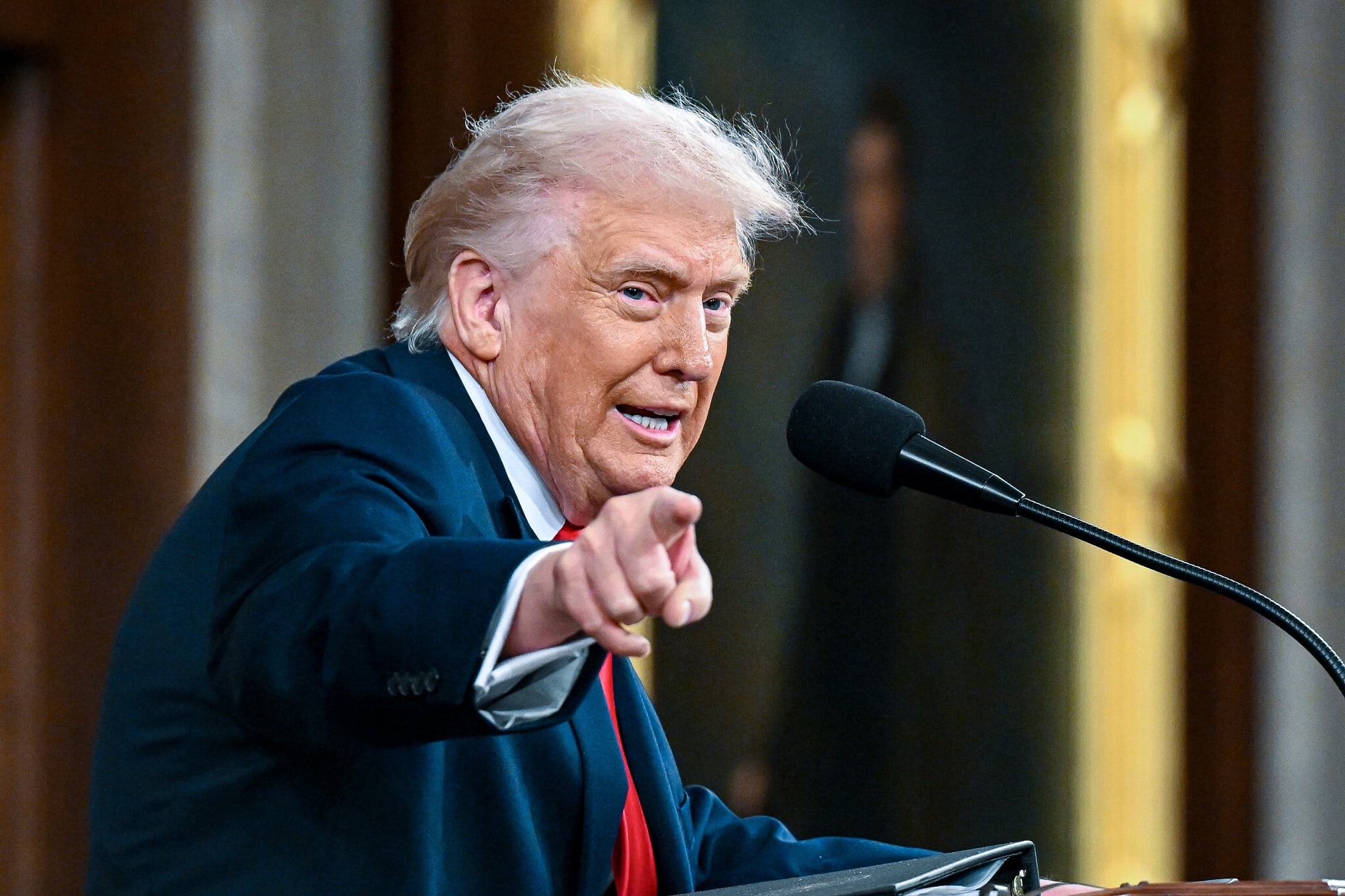
US President Donald Trump delivers the State of the Union address to a joint session of Congress in the House chamber at the US Capitol in Washington, Tuesday, Feb. 24, 2026. (Kenny Holston/The New York Times via AP, Pool)
US President Donald Trump says the US navy will escort oil tankers through the Strait of Hormuz if needed amid the war with Iran, and orders his government to provide insurance for shipping.
“If necessary, the United States Navy will begin escorting tankers through the Strait of Hormuz, as soon as possible. No matter what, the United States will ensure the FREE FLOW of ENERGY to the WORLD,” Trump said on his Truth Social platform.
Sirens warn of suspected drone infiltration in north
Sirens warning of a suspected drone infiltration sound in the Western Galilee.
The alerts are activated in several communities near the Lebanon border.
Hezbollah has launched several drones at northern Israel today, according to the IDF.
US banks on high alert for cyberattacks as Iran war escalates

Financial data is displayed on the floor at the New York Stock Exchange in New York, March 2, 2026. (AP/Seth Wenig)
The US financial services industry is on heightened alert for potential cyberattacks amid the unfolding war in Iran, with firms stepping up monitoring for threats that often rise during periods of geopolitical conflict, say executives and analysts.
The conflict has stoked concerns over the potential for Iran-linked cyberattacks on US financial services operations.
Cybersecurity has long been a top priority for the financial services industry, which operates critical US infrastructure, including payments, clearing and settlement systems, as well as trading platforms and Treasury markets, making it a top target of cyberattacks, according to industry data.
According to a US intelligence assessment that Reuters reported yesterday, Iran-aligned “hacktivists” could conduct low-level cyberattacks against US networks, such as distributed denial-of-service attacks (DDoS), whereby hostile actors overwhelm a targeted server with a flood of internet traffic.
Credit rating agency Morningstar DBRS says the most significant risks to global banks and asset managers are likely to be indirect, including sustained higher oil prices and shocks to borrowers, but warns that cyber risks may also rise.
“Iran could increase its cyberattacks against Western entities, including banks,” the credit rating agency says.
US investment bank Lazard’s geopolitical advisory team also this week flags cyber risks, noting that Iran has demonstrated a willingness to deploy cyber capabilities against commercial targets, including financial systems.
New missile salvo from Iran detected, sirens expected to sound
After a lull of some seven hours, a new launch of ballistic missiles from Iran has been detected by the IDF.
Sirens are expected to sound in central Israel in the coming minutes.
Air Force has shot down more than 100 drones launched at Israel from Iran since war began — IDF
The Israeli Air Force has shot down more than 100 drones launched at Israel from Iran since the start of the conflict, according to the military.
The IDF releases footage showing some of the interceptions carried out by IAF fighter jets and helicopters.
״בביצוע, קיבלתי, אלפא״; חיל-האוויר ממשיך ליירט כלי טיס בלתי מאוישים ששוגרו מאיראן:
מערכי ההגנה האווירית והבקרה עם מטוסי ומסוקי הקרב של חיל-האוויר, יירטו בהצלחה מתחילת המבצע יותר מ-100 כלי טיס בלתי מאויישים ששוגרו מאיראן לשטח מדינת ישראל. pic.twitter.com/34LCqUTD1H
— Israeli Air Force (@IAFsite) March 3, 2026
IDF issues evacuation order in southern Lebanon villages ahead of strikes on Hezbollah
The IDF issues evacuation warnings for buildings in the southern Lebanon villages of Kfar Jouz, Harouf, and Kfour — in the Nabatieh area — ahead of airstrikes against Hezbollah infrastructure.
“The IDF will, in the near future, strike Hezbollah military infrastructure in light of its prohibited attempts to rebuild its activities in the area,” says spokesman Col. Avichay Adraee.
Civilians in the area are instructed to distance themselves at least 300 meters (328 yards) from the buildings.
عاجل ‼️ إنذار عاجل إلى سكان جنوب لبنان وتحديدًا في القرى التالية:
????كفر جوز
????حاروف
????الكفور⭕️سيهاجم جيش الدفاع على المدى الزمني القريب ومن جديد بنى تحتية عسكرية تابعة لحزب الله الإرهابي في القرى وذلك للتعامل مع محاولاته المحظورة لإعادة إعمار أنشطته فيها
⭕️نحث سكان المجمعات… pic.twitter.com/pdSajQ6mzJ
— افيخاي ادرعي (@AvichayAdraee) March 3, 2026
Missile warning sirens sound in central Israel
Sirens sound in central Israel amid an Iranian ballistic missile attack, the fifth salvo today.
The IDF says it is working to shoot down the projectiles.
UAE says it was exposed to over 1,000 attacks from Iran
The United Arab Emirates says it has been exposed to over 1,000 attacks since Iran launched strikes in the region in response to US-Israeli attacks, according to an Emirati Foreign Ministry statement.
The ministry says it has not taken any decision to change its defensive stance toward Iran’s attacks, but reserves the right to defend itself.
No injuries reported from latest Iranian missile fire — medics
There are no reports of injuries following Iran’s latest ballistic missile fire on central Israel, medics say.
The IDF Home Front Command says civilians in areas where sirens sounded can now leave bomb shelters, but should still remain close to them.
IDF says Air Force completed wave of strikes on around 60 Hezbollah targets
The Israeli Air Force completed a wave of strikes against some 60 Hezbollah targets across southern Lebanon a short while ago, the military says.
According to the IDF, the strikes targeted weapon depots, missile launchers, command centers, and other infrastructure belonging to the Lebanese terror group.
The military says it also struck several “central” sites belonging to Hezbollah and the Hamas terror group in Sidon and Tyre.
“The infrastructure sites were used by the terror organizations to advance and carry out various terror attacks against IDF troops and Israeli civilians,” the IDF says.
Before carrying out the strikes, the IDF issued evacuation warnings for Lebanese civilians in the area.
חיל-האוויר תקף כ-60 מטרות של ארגון הטרור חיזבאללה, בהן מחסני אמצעי לחימה, מפקדות, משגרים ותשתיות טרור נוספות
בין המטרות שהותקפו מחסני אמצעי לחימה, משגרים, מפקדות ומספר תשתיות מרכזיות של ארגוני הטרור חיזבאללה וחמאס במרחבים צור וצידון שבלבנון. תשתיות אלו שימשו את ארגוני הטרור… pic.twitter.com/VMuFordohz
— Israeli Air Force (@IAFsite) March 3, 2026
Sirens expected as another launch of missiles from Iran detected
Shortly after telling civilians they can leave bomb shelters, the IDF has detected another launch of ballistic missiles from Iran.
Sirens are expected to sound in central Israel in the coming minutes.
Missile sirens sounding in Tel Aviv, central Israel
Sirens sound in Tel Aviv and other areas of central Israel amid an Iranian ballistic missile attack.
Civilians in areas where sirens are sounding are instructed to enter bomb shelters until further notice, as the IDF says it is working to shoot down the projectiles.
Germany’s Merz says US-Israeli strikes in Iran ‘not without risk’

German Chancellor Friedrich Merz gives a statement at Siemens Energy plant in Hangzhou, in eastern China's Zhejiang Province on February 26, 2026. (Jade Gao / AFP)
German Chancellor Friedrich Merz casts doubt on whether US and Israeli strikes will spark political change in Iran, saying the plan was not without risk.
“This plan is not without risk, and we would also have to bear the consequences,” he tells reporters after meeting US President Donald Trump in Washington.
Neither Israel nor the United States has asked Germany to get involved in the conflict, he says, adding he had explained to Trump that any such action would require formal German parliamentary approval.
Woman, 32, lightly injured by shrapnel from Iranian missile attack — medics
A 32-year-old woman was lightly injured in Iran’s latest ballistic missile attack on central Israel, medics say.
Magen David Adom says the woman sustained a shrapnel injury.
Police say officers are responding to reports of missile fragment impacts in several areas in central Israel.
Meanwhile, the IDF Home Front Command says civilians in areas where sirens sounded can now leave bomb shelters, but should still remain close to them.
Rubio attempts to clarify claim that US decided on Iran strike because it believed Israeli attack was coming
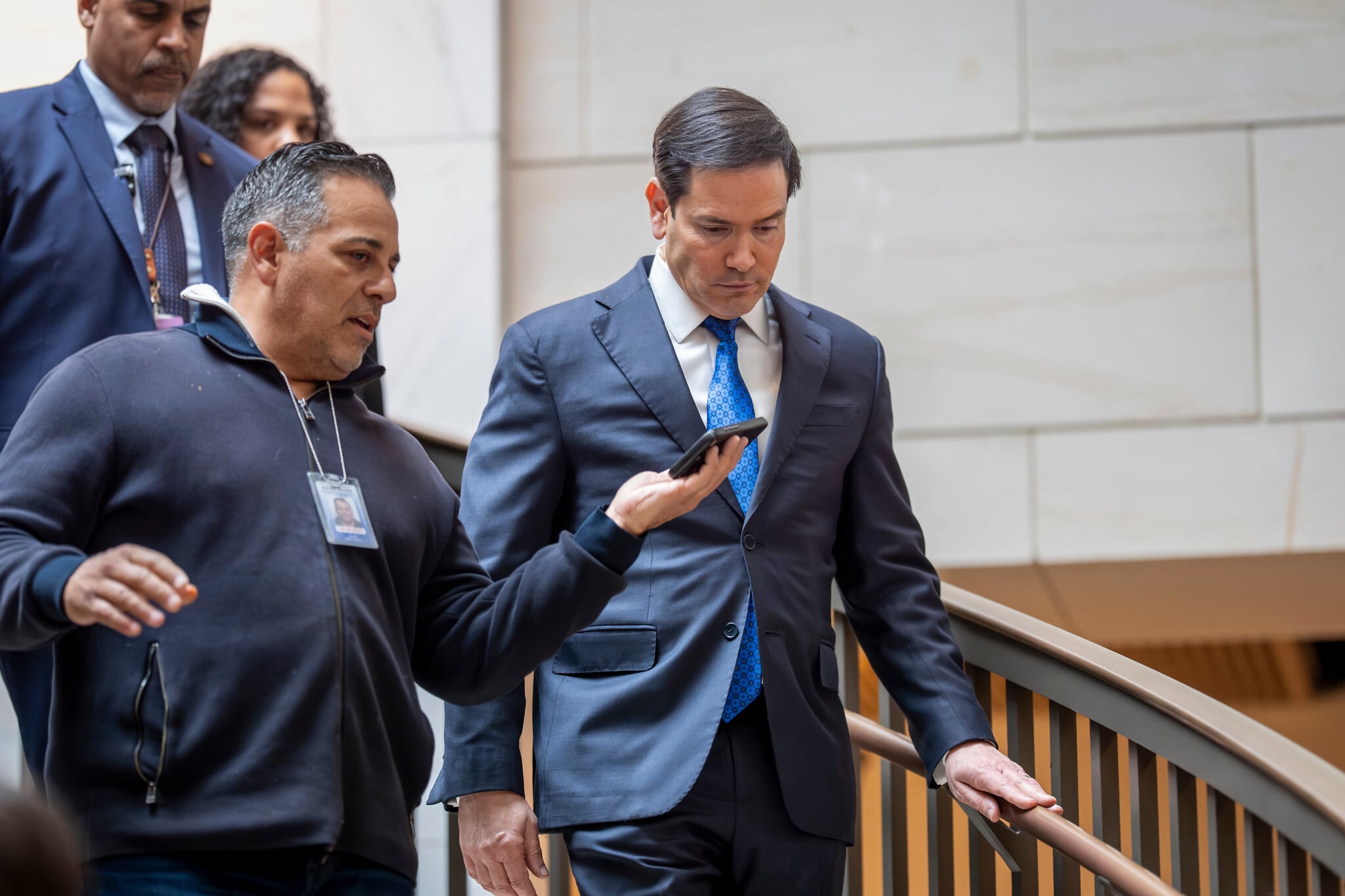
US Secretary of State Marco Rubio arrives to update lawmakers on Iran at a secure room in the basement of the Capitol in Washington, DC, March 3, 2026. (AP/J. Scott Applewhite)
WASHINGTON — US Secretary of State Marco Rubio tries to clarify remarks he made yesterday when he said the US launched its operation against Iran on Saturday because it believed an Israeli preemptive strike would lead the Islamic Republic to target American assets in the region.
Rubio says US President Donald Trump had decided anyway to strike Iran, and that he was only speaking yesterday to why the decision was made to launch on that particular day.
“I told you this had to happen anyway, the president made a decision,” Rubio says in remarks to reporters before briefing Congress on the operation, carried out in partnership with Israel. “And the decision he made was that Iran was not going to be allowed to hide behind its ballistic missile program, that Iran was not going to be allowed to hide behind its ability to conduct these attacks.”
Speaking to reporters earlier in the day in the Oval Office, Trump also denied that Israel dragged the US into the war with Iran.
Rubio confirms that an Iranian drone struck a parking lot adjacent to the US consulate in Dubai earlier Tuesday and that all American personnel are accounted for.
He adds, using slang referencing the late Chinese nationalist leader Chiang Kai-shek, that the US and Israel are going to “unleash chiang” on the Iranian regime in the coming “hours and days.”
“You’re going to really begin to perceive a change in the scope and in the intensity of these attacks as the two most powerful air forces in the world take apart this terroristic regime,” Rubio says.
Rocket barrage launched from Lebanon at northern Israel, headed for open areas
A barrage of rockets was launched from Lebanon at the Galilee Panhandle area a short while ago, according to the IDF.
No sirens sounded in any towns as the rockets were headed for open areas.
Qatar says it has arrested two cells affiliated with Iran’s Revolutionary Guards
Qatar’s state security apparatus says it has arrested two cells affiliated with the Iranian Revolutionary Guards Corps in the country, the Qatari state news agency reports.
Drone strike kills Hezbollah operative who fired anti-tank missile at troops — IDF
A Hezbollah operative who fired an anti-tank missile at Israeli troops earlier today in southern Lebanon was killed in a drone strike, the military says.
According to the IDF, the anti-tank guided missile attack caused no damage or injuries. Hezbollah claimed in a statement to have targeted an IDF tank.
A short while later, an Israeli Air Force drone struck and killed the operative, alongside other members of the terror group who were with him, near the village of Arnoun, the army says.
בסגירת מעגל מהירה: חיל-האוויר חיסל מחבל ששיגר טיל נ"ט לעבר כוח צה"ל בדרום לבנון
מוקדם יותר היום (ג'), מחבל מארגון הטרור חיזבאללה שיגר טיל נ"ט לעבר כוח צה"ל בדרום לבנון, לא נגרם נזק ולא היו נפגעים.
זמן קצר לאחר מכן, חיל-האוויר תקף וחיסל את המחבל לצד מחבלים נוספים במרחב ארנון… pic.twitter.com/xfWs2uhNXx
— Israeli Air Force (@IAFsite) March 3, 2026
Iranian missile hits US base at Al-Udeid, no casualties — Qatari Defense Ministry
An Iranian ballistic missile hit the United States’ military base at Al-Udeid today, Qatar’s Defense Ministry says, as Tehran struck targets across the Gulf in retaliation for US-Israeli attacks.
The ministry says Qatar was targeted by two missiles, adding, “Air defense systems successfully intercepted one of the missiles, while the second missile struck Al-Udeid Qatari Base without causing any casualties.”
Epstein estate’s $35 million settlement with accusers wins preliminary judge approval
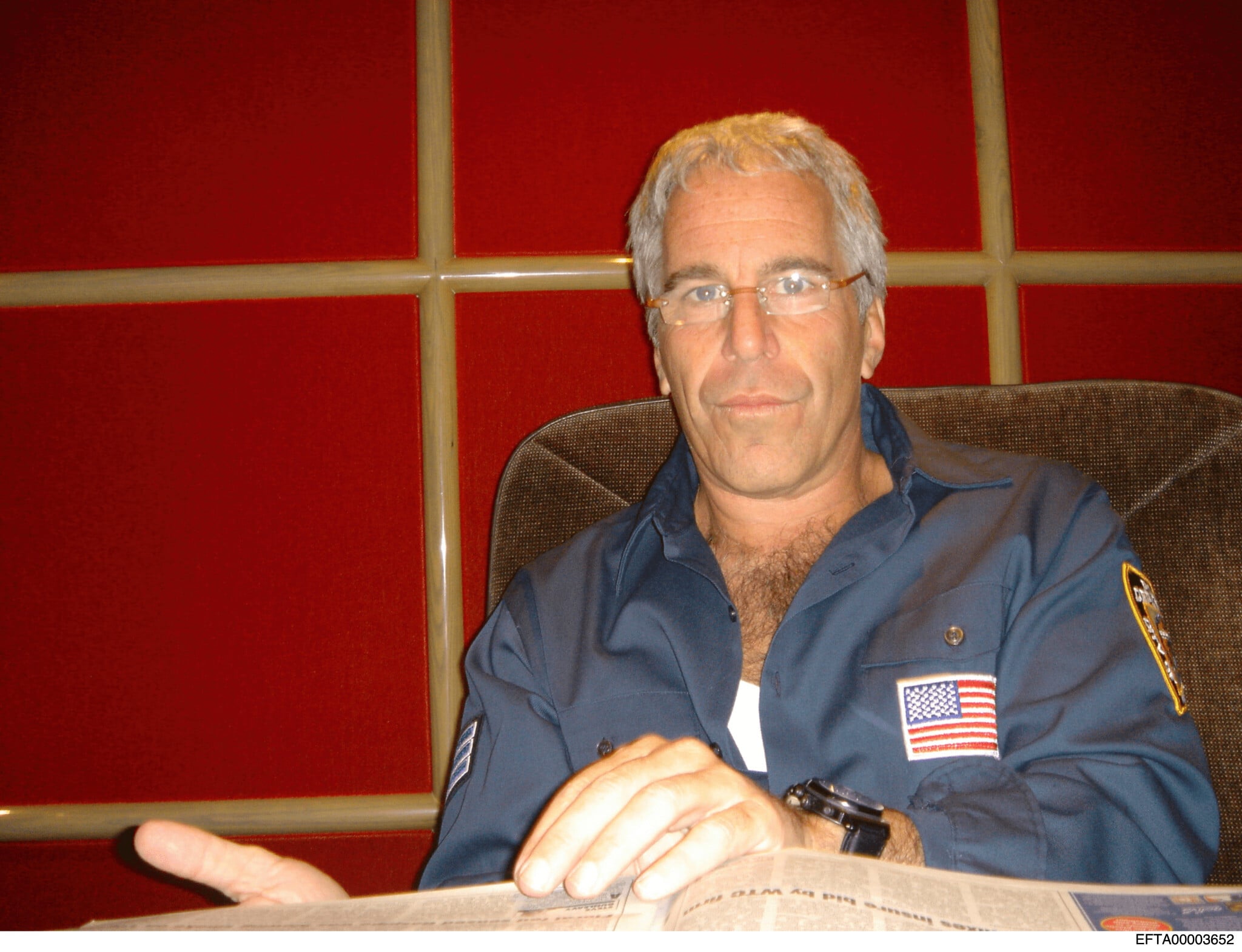
This undated photo released by the US Department of Justice shows Jeffrey Epstein. (US Department of Justice via AP)
A US judge grants preliminary approval to an agreement for Jeffrey Epstein’s estate to pay as much as $35 million to resolve a class action lawsuit that accused two of the disgraced financier’s advisers of aiding and abetting his sex trafficking of young women and teenage girls.
Boies Schiller Flexner, a law firm representing Epstein victims, announced the settlement on February 19. Today, Manhattan-based US District Judge Arun Subramanian says the agreement appears fair. The judge schedules a hearing for September 16 to consider granting final approval.
The deal would bring an end to a 2024 lawsuit filed against Epstein’s former personal lawyer Darren Indyke and former accountant Richard Kahn, who are co-executors of Epstein’s estate.
Epstein’s estate previously set up a restitution fund that paid out $121 million to victims. The estate also paid $49 million in additional settlements to victims.
Daniel Weiner, a lawyer for Indyke and Kahn, says neither man admitted wrongdoing or conceded misconduct as part of the settlement.
“Because they did nothing wrong, the co-executors were prepared to fight the claims against them through to trial, but agreed to mediate and settle this lawsuit in order to achieve finality as to any potential claims against the Epstein Estate,” Weiner says in a statement.
Sigrid McCawley, a lawyer who brought the case, says in a statement, “We are pleased we could take another step forward on that long road for the survivors and provide some sort of justice.”
Epstein died in a New York jail in August 2019. His death was ruled a suicide.
In the 2024 lawsuit, lawyers at Boies Schiller Flexner said Indyke and Kahn helped Epstein create a complex web of corporations and bank accounts that let him hide his abuses and pay victims and recruiters. Indyke and Kahn were “richly compensated” for their work, the lawsuit said.
The Boies law firm previously helped obtain $365 million of settlements with JPMorgan Chase and Deutsche Bank after accusing them of missing red flags about Epstein, once a lucrative client.


read more: