

Live Now
 Add ToI as a Preferred Source on Google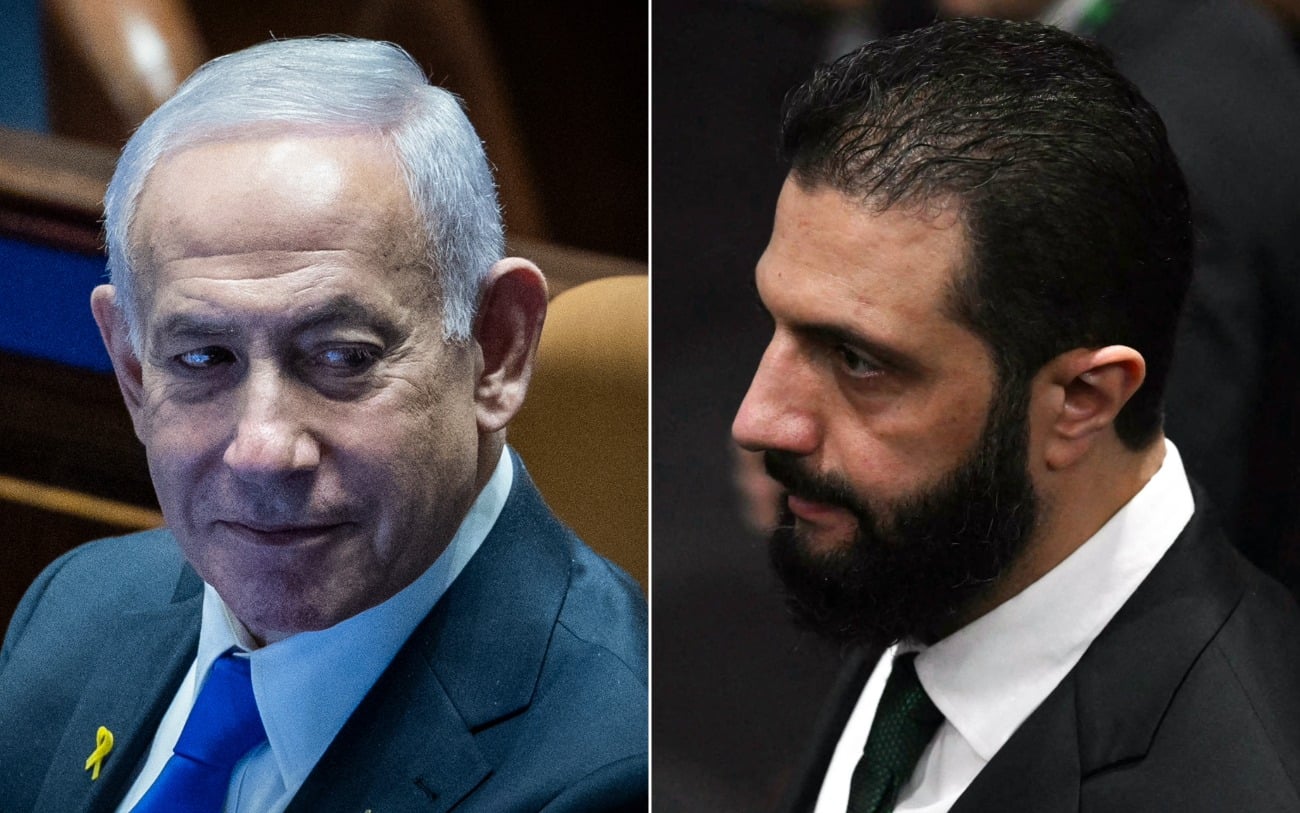



Key updates
School roof collapse in Pakistan kills at least 35 and injures more than 50

Rescue workers carry an injured boy after rescuing him from the rubble of a roof collapse at a private school, in Peshawar, Pakistan, October 15, 2026. (AP Photo/Muhammad Zubair)
The roof of a private school collapsed in the northwestern Pakistani city of Peshawar, killing at least 34 children and a teacher and injuring more than 50 other people in the deadliest incident of its kind in the country, authorities and a hospital official say.
The children killed or injured at Al-Khair school were between 6 and 12 years old, while the oldest was 14, Lady Reading Hospital spokesperson Mohammad Asim says. Some of the injured were in critical condition, he adds. The hospital declares an emergency as medical staff treated the wounded.
Hours after the collapse in Peshawar, the capital of Khyber Pakhtunkhwa province, emergency services spokesperson Bilal Faizi says that everyone trapped beneath the rubble had been pulled out and crews had cleared debris.
He tells The Associated Press that the roofs of two classrooms collapsed when second- and third-grade children were in them with their teachers. Faizi says ambulances and disaster management personnel arrived from a nearby facility within five minutes of being alerted.
Nearly 100 rescuers eventually joined the operation, he said. Panicked, grieving parents were trying to help when crews arrived, Faizi says. He credits the rapid evacuation with saving at least 40 lives. More than a dozen children suffered minor injuries, he says.
Building collapses are common in Pakistan, where construction standards are often poorly enforced. Many structures are built with substandard materials, and safety regulations are frequently ignored to reduce costs.
Reports: Settlers set fire to Palestinian car in southern West Bank; no injuries reported
Palestinian media outlets report that settlers set fire to a Palestinian car parked near a house in the area of as-Samu, in the South Hebron Hills.
There are no reports of injuries.
????مستوطنون حرقوا مركبة المواطن محمود الدغامين واعتدوا على منزله في منطقة واد اجحيش ببلدة السموع جنوب الخليل. pic.twitter.com/6sBgVXF3Wb
— شبكة يافا الإخبارية (@yaffa_ps) October 15, 2026
US feds investigate letters with ‘suspicious substances’ sent to congressional, election offices

An FBI seal is displayed on a podium before a news conference at the field office in Portland, Oregon, January 16, 2025. (AP Photo/Jenny Kane)
US Federal authorities are investigating letters with “suspicious substances” that have been mailed to congressional and election offices nationwide.
Authorities are urging recipients to treat the letters as “potentially hazardous.”
The Senate was informed of the investigation by a message from the Senate Sergeant at Arms, obtained by The Associated Press.
The mailings come just three weeks before the US midterm elections on November 3 and are reminiscent of a similar threat in 2023, when several election offices received envelopes containing the powerful opioid fentanyl.
In the US Congress, the situation appears isolated to the Senate, but the House was monitoring, according to a person familiar with the matter who was not authorized to discuss the investigation publicly.
Mailed packages containing a powdery substance led to the evacuation this week of election offices in at least two states, Louisiana and Oklahoma. The Ohio secretary of state says the Postal Service intercepted a package containing a white powder intended for its office and notes that similar mailings had been sent to election officials in multiple states.
The National Association of Secretaries of State and the National Association of State Election Directors issue a joint statement condemning what they say are threats against election staff.
“Those who administer our elections should never fear for their safety while carrying out their essential duties,” they say in their statement.
Inflation declined more than expected in Israel in September, data shows

Illustrative — photo of the new 100 Israeli Shekel bill. December 31, 2017. (Nati Shohat/Flash90)
Consumer prices retreated slightly more than expected in September, led by declines in the costs of foreign travel, hotel stays, and petrol prices, data released by the Central Bureau of Statistics shows.
On a monthly basis, the consumer price index (CPI), a measure of inflation that tracks the average cost of household goods, fell in September by 0.5 percent, compared to analysts’ expectations for a decline of between 0.3% to 0.4%.
The monthly reading takes annual inflation over the past 12 months to 1.6%. The inflation rate is well within the government’s annual target range of between 1% and 3%.
In September, drops were seen in the prices of culture and entertainment, which fell 2.7%, transportation costs retreated 2.5%, and clothing and footwear fell 0.9%. Expenses for travel abroad dropped by 14%, hotel stays by 14.2%, and petrol by 2.2%.
These were offset by an increase in the cost of fresh vegetables, which rose by 6.6%, while education services increased by 0.8%, and rents were up by 0.4%.
Rents on lease renewals jumped 2.4% in September, and rents on new leases surged 5.3%.
Turkey floats earlier 2028 vote that would clear way for Erdogan to run again

Turkey's President Recep Tayyip Erdogan at a press conference after the conclusion of the G20 Leaders' Summit at the Nasrec Expo Centre in Johannesburg, South Africa, November 23, 2025. (Marco Longari / AFP)
Turkey will probably hold its 2028 elections earlier than expected, a presidential adviser says, a move which would allow President Recep Tayyip Erdogan to sidestep constitutional limits and run again for office.
The next presidential and parliamentary votes are currently scheduled to take place in May that year. “It is now almost clear that the 2028 elections would be held in March or April,” Erdogan’s adviser, Mehmet Ucum, tells reporters in Ankara.
Ucum does not spell out what that means for the president’s plans. But it is the closest a senior figure has come to publicly backing a proposal floated by Erdogan’s allies to reschedule the vote to let him run one more time.
Erdogan has ruled Turkey for nearly 23 years, first as prime minister and then as president.
A 2017 referendum brought in a new executive presidency system that allowed Erdogan to be re-elected as president two more times in 2018 and 2023.
Though that new system set a two-term limit, the constitution would allow him to run again if parliament calls an election early, before he has served the whole of his last five-year term.
Turkey’s opposition has also called for an early vote — but say they want it to give them a chance to challenge Erdogan’s economic policies rather than to give him another chance to run.
“Reducing the issue to ‘how can we get Tayyip Erdogan re-elected as president’ is, from our point of view, simply unacceptable,” main opposition leader Ozgur Ozel said last week.
Houthi attack on presidential palace in Yemen’s Aden kills 4 — government sources
At least four people were killed and 10 more wounded in a Houthi missile attack on the presidential palace in Yemen’s Aden, which also serves as the internationally recognized government’s headquarters, three government military sources tell AFP.
The Iran-backed Houthis are fighting a Saudi-led coalition that supports the internationally recognized government.
Media affiliated with the Iran-backed Houthis said earlier that the group attacked a “headquarters of military operations” at the Al-Maashiq Palace in Aden, the southern city that is the government’s interim capital.
Record number of medical students begin academic year — Health Ministry

Medical students at the Technion's American medical program get hands-on experience in a lab in August 2022. (Technion)
A record 1,649 students began medical studies in Israel this year, up about 14 percent from last year’s 1,448 enrolled students, the Health Ministry announces.
The surge follows data showing that some 1,370 Israeli physicians left the country for at least 12 months between 2023 and 2025, according to a recent Tel Aviv University study, raising widespread concern about a deepening brain drain in the national healthcare system.
In total, the number of medical students in Israel has jumped about 82% since 2021 following a joint initiative by the Health Ministry, the Council for Higher Education, the Planning and Budgeting Committee, and medical schools.
Based on current cohorts, the total number of medical students is projected to reach approximately 1,700 by 2030, more than double the 820 in 2020.
The Health Ministry and the Finance Ministry have also allocated NIS 230 million ($74 million) toward training programs in hospitals and in the healthcare professions.
“An 82% increase in the number of medical students over five years will have a significant impact on strengthening the healthcare system,” says Health Ministry Director-General Moshe Bar Siman-Tov. “Alongside expanding training, for the first time we are advancing a long-term national plan for the distribution of physicians around the country.”
The goal is to ensure a sufficient number of physicians and other healthcare professionals to meet the population’s needs and help narrow gaps in access to medical care across the country, the ministry says.
ToI poll: Eisenkot opens up big lead on Netanyahu, but both blocs short of majority
Opposition frontrunner Gadi Eisenkot’s Yashar party has opened up a significant lead over Prime Minister Benjamin Netanyahu’s Likud, but neither camp is projected to win a majority in the Knesset, according to a new poll by The Times of Israel’s sister site, Zman Yisrael.
The poll also notably shows Ofer Winter’s right-wing People of Israel party falling short of entering the Knesset.
Polls have predicted a deadlock in the October 27 election between the presumed pro- and anti-Netanyahu camps for months. Today’s poll shows the bloc of Jewish-led parties opposing the premier with 54 seats, compared to 49 for the pro-Netanyahu bloc, both short of a 61-seat majority in the 120-seat Knesset.
Arab parties would win 13, while the Reservists, a nonaligned party, would sneak in with four. The split between the pro- and anti-Netanyahu blocs last week was 55-51.
The biggest change in today’s poll is that it shows Yashar winning 26 seats compared to 20 for Likud. Last week, the gap was 24 to 20.
Coming in third in today’s poll is former prime minister Naftali Bennett’s opposition B’yachad party with 11, followed by the hawkish opposition Yisrael Beytenu with nine.
Next are four parties with eight seats each: Shas and United Torah Judaism, both of which support Netanyahu; the left-wing Democrats; and the Arab-led Joint List.
Then come two far-right, pro-Netanyahu parties: Otzma Yehudit with seven and Religious Zionism with six.
The Arab-led, historically Islamist Ra’am would win five, followed by the Reservists with four.
Two parties would fall short of the 3.25% of votes needed to enter the Knesset: People of Israel, with 2.8%, and the centrist Blue and White, with 1.2%.
People of Israel has hovered around the threshold in recent weeks, meaning that it is uncertain whether it will receive enough votes to enter the Knesset, while no recent poll has shown Blue and White coming close to winning seats.
The poll was conducted on October 14 and 15 by Yossi Tatika of Tatika Research & Media in collaboration with the Adgenda panel, and surveyed a total sample of 500 respondents with a margin of error of ±4.4%.
While horse-race polls are an almost daily occurrence in Israel in the months leading up to elections and are not seen as overly reliable, taken together, the surveys can often serve as a general gauge of the political climate and where the vote may be headed.
Key Update
Suspected Palestinian arms dealer nabbed in Jenin commando raid — IDF
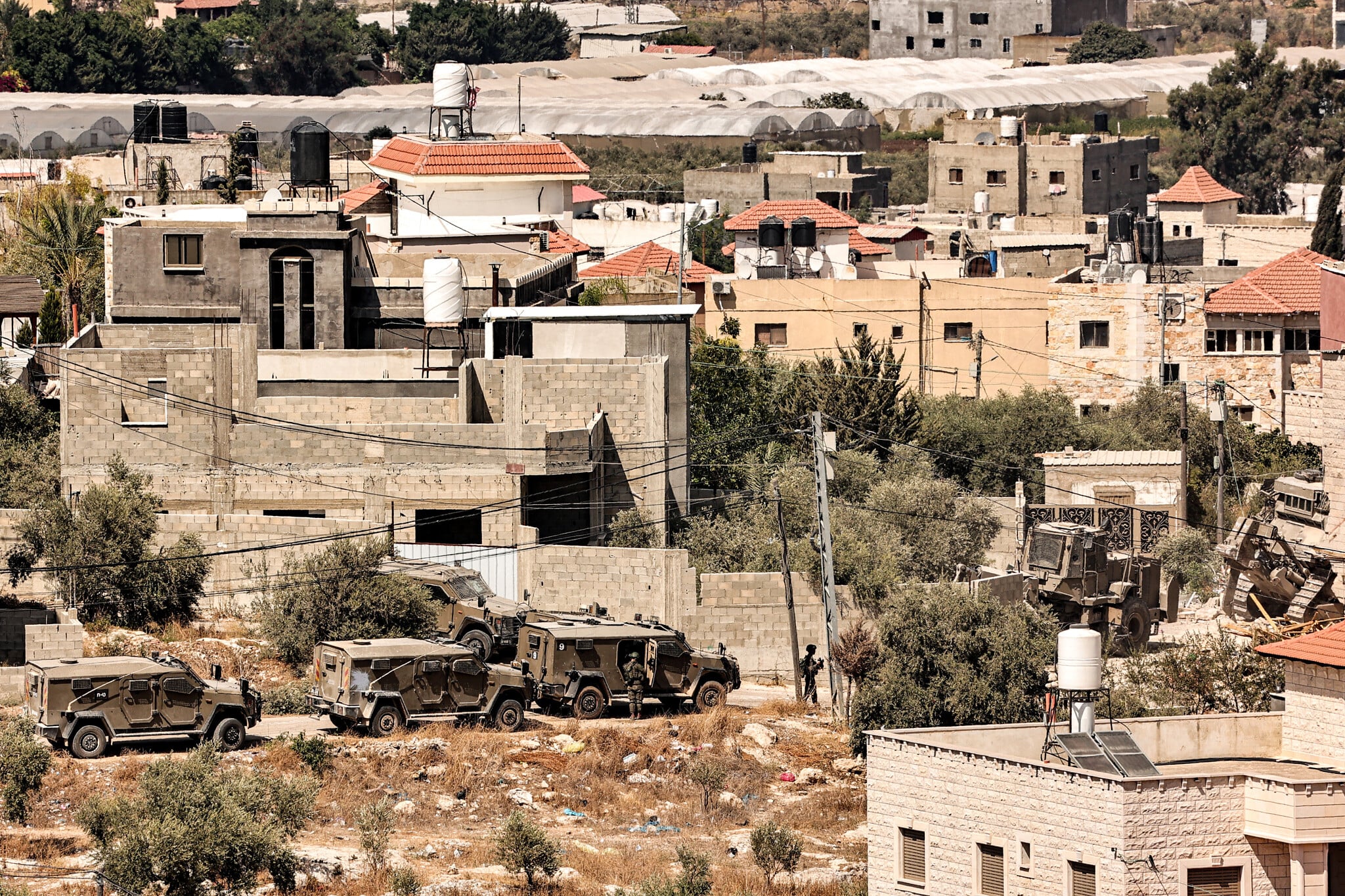
Illustrative: Israeli military vehicles deploy during a house demolition operation in the Palestinian village of Kafr Dan, west of Jenin in the West Bank, on September 3, 2024. (Photo by Zain JAAFAR / AFP)
An alleged Palestinian arms dealer was captured by Israeli commandos during a raid in the West Bank city of Jenin this morning, the military says.
Troops of the Duvdevan Commando Unit raided Jenin, following intelligence provided by the Shin Bet, and captured an unnamed Palestinian who the military says was a member of a former terror network in the area.
“The terrorist served as a key weapons dealer and acted to procure and transfer weapons to the terror network,” the IDF says.
Israeli firm used online ads to run vast spy operation, researchers say

Illustrative: A person types on a laptop keyboard, June 19, 2017. (AP/Elise Amendola/File)
Israeli digital advertising agency Discover-Tech spied on internet users through a sprawling network of online ads that it used to track targets and help hack their devices, two research groups say.
Its services gave Israel’s Candiru — a spyware company blacklisted by the US government — as well as other Israeli surveillance firms access to advertising platforms run by Google, Comcast, Russia’s Yandex and others, according to separate reports from Canadian cyber watchdog group Citizen Lab and New York advertising security firm Confiant.
The reports show how the online advertising business, long a subject of privacy concerns, can also serve as a channel for sweeping espionage campaigns.
“The way online advertising works today is a systemic security threat,” Wolfie Cristl, a senior researcher at Citizen Lab, tells Reuters. “For states, the private sector, civil society and everyone else alike.”
Discover-Tech’s online ads — often for ordinary products such as phones or earpods — reached more than 120,000 websites and 75,000 apps through its various partnerships, Citizen Lab says.
Users who visited sites or used apps with the malicious ads could be identified and tracked by Discover-Tech, which would sometimes also try to extract phone numbers from some smartphone users, the researchers say. Ads only needed to load on a website for the spying to occur.
Some ads would be used to help plant spyware from Candiru on users’ devices, both research groups say, though Confiant said that ads it tied to Candiru were a tiny fraction of Discover-Tech’s overall volume.
Discover-Tech, which was founded in 2020, does not return messages left via its contact form. A LinkedIn message and emails sent to its chief executive, Dekel Boni, are not returned.
Reuters’ attempts to reach Candiru’s owners are not successful. The US Commerce Department blacklisted Candiru in 2021 for allegedly supplying spyware that was used to maliciously target government officials, journalists, activists and academics.


read more: