

Live Now
 Add ToI as a Preferred Source on Google

Key updates
How double envelope votes work, and their potential impact on the political landscape
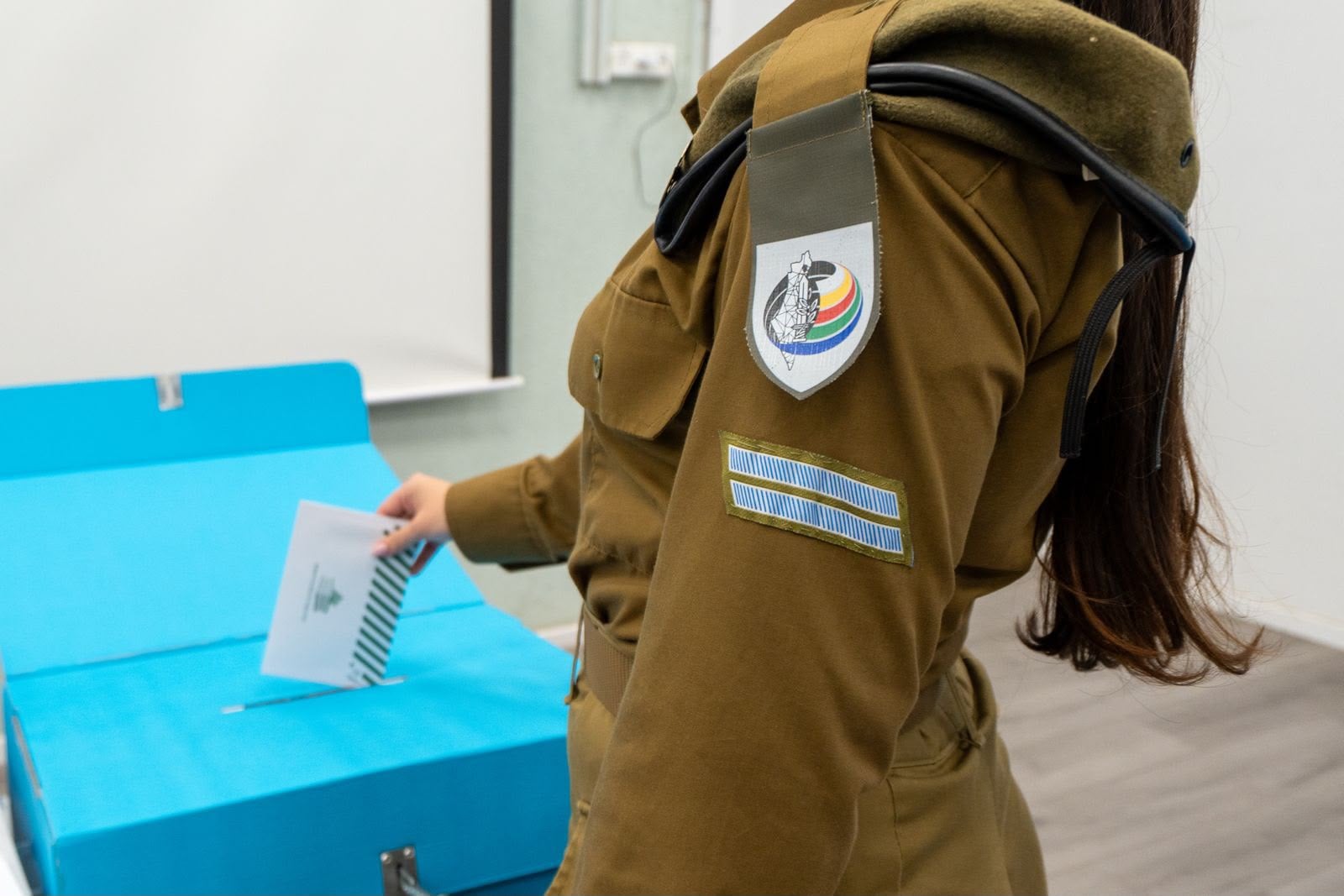
An IDF soldier votes in Israel's national election at a General Staff Supply Center base, October 27, 2026. (Israel Defense Forces)
While the majority of ballots are expected to be counted today, the so-called double envelope votes may not be fully tallied until Friday.
According to reports, the Central Elections Committee estimates that there are around 600,000 double envelopes, a significant increase from the 2022 election.
With each seat thought to be worth around 40,000 votes, these absentee ballots could have a significant impact on the final political landscape.
The votes within those envelopes, the majority of which come from soldiers in the Israel Defense Forces, have traditionally skewed away from the Arab and Haredi parties.
Due to the large number of reservists serving, hailing from across the political spectrum, it is a little harder to predict the impact those votes could have this year.
The Globes financial daily notes that the Arab parties could see a fall in the number of seats they hold when the final double envelope tally comes in.
The so-called double envelopes also include votes from prisoners, medical personnel, those with medical conditions, and Israeli representatives in missions abroad.
Acting CEC director Dean Livne has said that because of the overall high turnout, there could be more absentee ballots that initially anticipated, leading to delays in completing the counting.
Key Update
With over 76% of ballots counted, pro-Netanyahu bloc at 54 seats; Eisenkot-led bloc at 47, Arab parties increase to 19
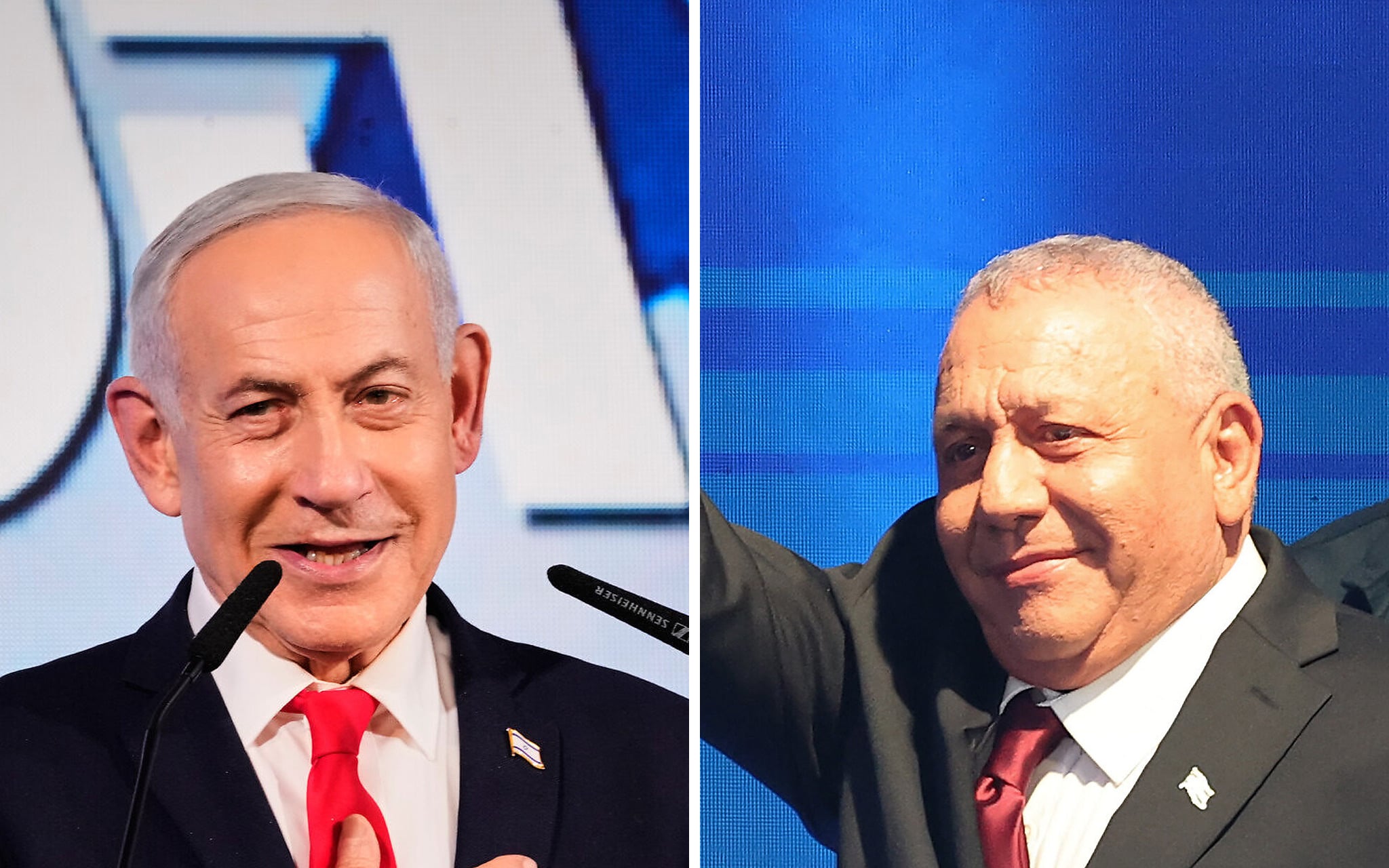
With 76.8% of ballot boxes counted as of 10:58 a.m., partial results published by the Central Elections Committee give 54 seats to the bloc led by Prime Minister Benjamin Netanyahu, and 47 seats to the bloc led by Yashar’s Gadi Eisenkot.
The Arab-led parties — the Joint List and Ra’am — rise to 19 seats.
Parties currently below the 3.25% threshold: Reservists (2.6%), People of Israel (1.7%), Charedi Public (0.2%).
The results are partial and will change as counting continues. Votes cast in double envelopes, including those of soldiers, are counted later.
Key Update
Qatari mediators presented Iran with new deal to end the war, official says
Qatari mediators presented Iran with a new draft deal on Sunday to end the war, which Tehran is considering and expected to send a response to by the end of the week, an official briefed on the negotiations says.
There were concerns ahead of Sunday’s meeting in Tehran that Israeli Prime Minister Benjamin Netanyahu could resume attacks on the Islamic Republic this week, the official adds.
The Wall Street Journal reported today that the US has informed several unspecified Gulf Arab countries to be ready for a short yet intensive military offensive following the American midterm elections, set to be held November 3.
Tel Aviv stock exchange slumps amid political uncertainty
Shares on the Tel Aviv Stock Exchange drop and the shekel weakens as initial election results point to a political deadlock over the formation of the next government and the potential direction of future economic policy.
The Tel Aviv Stock Exchange’s TA-125 benchmark index slumps 1.7 percent and the TA-35 index of blue-chip companies slips 1.5%. The TA-90 index, which tracks the shares with the highest capitalization not included in the TA-35 index, falls 3%. The TA-Insurance index declines 4.1%.
The shekel weakens 1% against the dollar and is trading around NIS 3.0843 per dollar.
“There is political uncertainty as investors are awaiting finalized election results and for now there is no clear direction over the structure of the next government,” Ronen Menahem, chief markets economist for the Mizrahi Tefahot Bank, tells The Times of Israel. “Investors will be looking for a stable coalition which will be able to drive fiscal policy and make budgetary priorities that support economic growth.”
Key Update
Hebron municipality: Some 5,000 residents still impacted by ongoing IDF operation in city
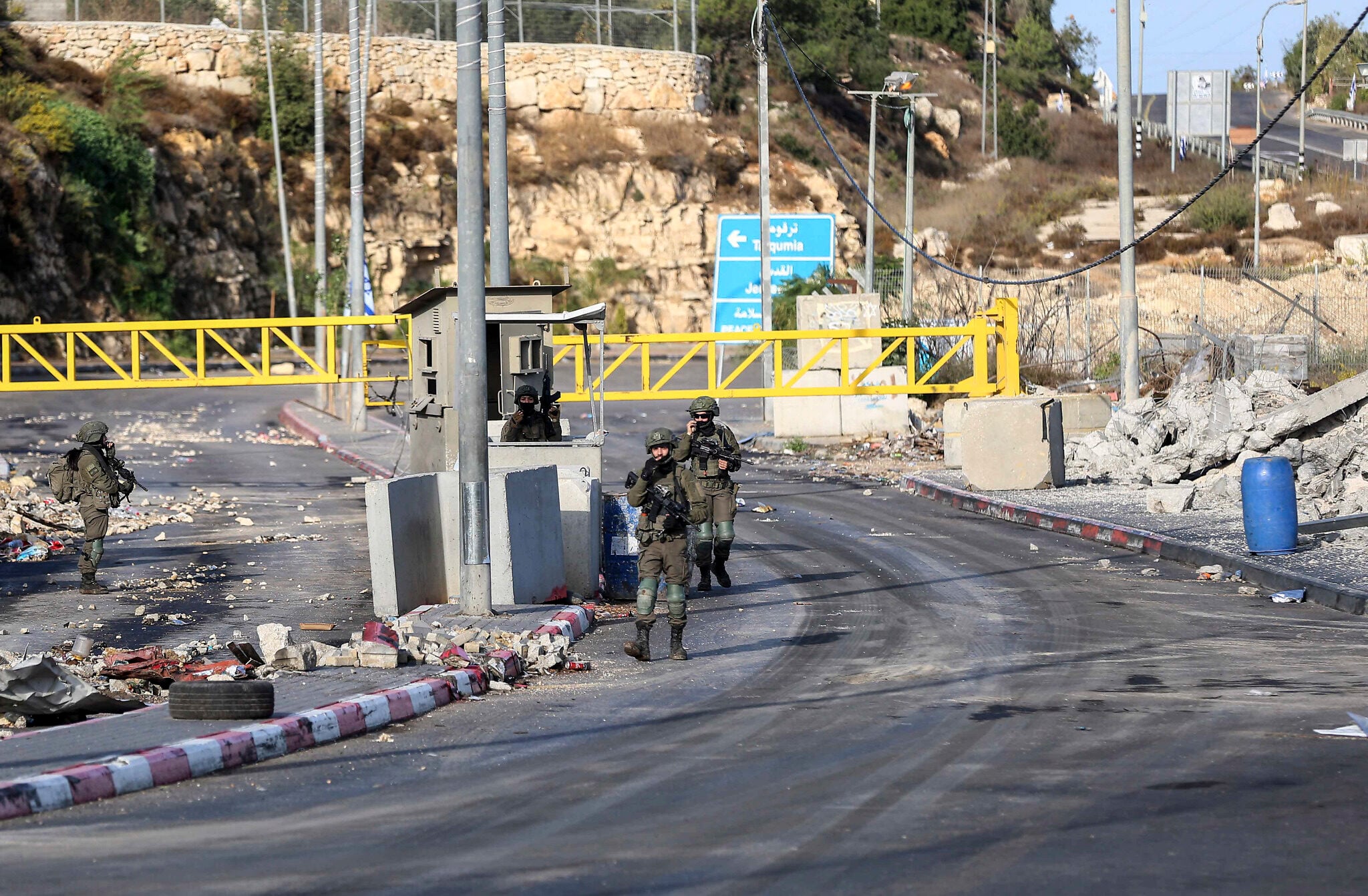
Israeli soldiers guard a checkpoint at the entrance to the West Bank city of Hebron, following a shooting attack in the area several days earlier, October 28, 2026. (Wisam Hashlamoun/Flash90)
The Hebron municipality says the IDF is continuing its operation in the city for a sixth consecutive day, following Friday’s shooting attack at the entrance to Hebron in which Palestinian gunmen killed two IDF soldiers.
According to a statement by the municipality cited by the Palestinian news agency WAFA, some 780 families, comprising around 5,000 people, have either been evacuated from their homes or remain trapped inside them due to the operation, which includes house searches and the closure of neighborhoods across the city.
In the attack on Friday, Hebron residents Mohammad Jaaba and Firas Jaaba opened fire on a checkpoint at the northern exit to the West Bank city, killing Staff Sgt. Ron Yonatan Roytman and Sgt. Yuval Shai Svilem and wounding three other soldiers. Both gunmen were shot dead by troops.
With 72% of ballots counted, Netanyahu-led bloc at 54 seats; Arab parties strengthen to 18
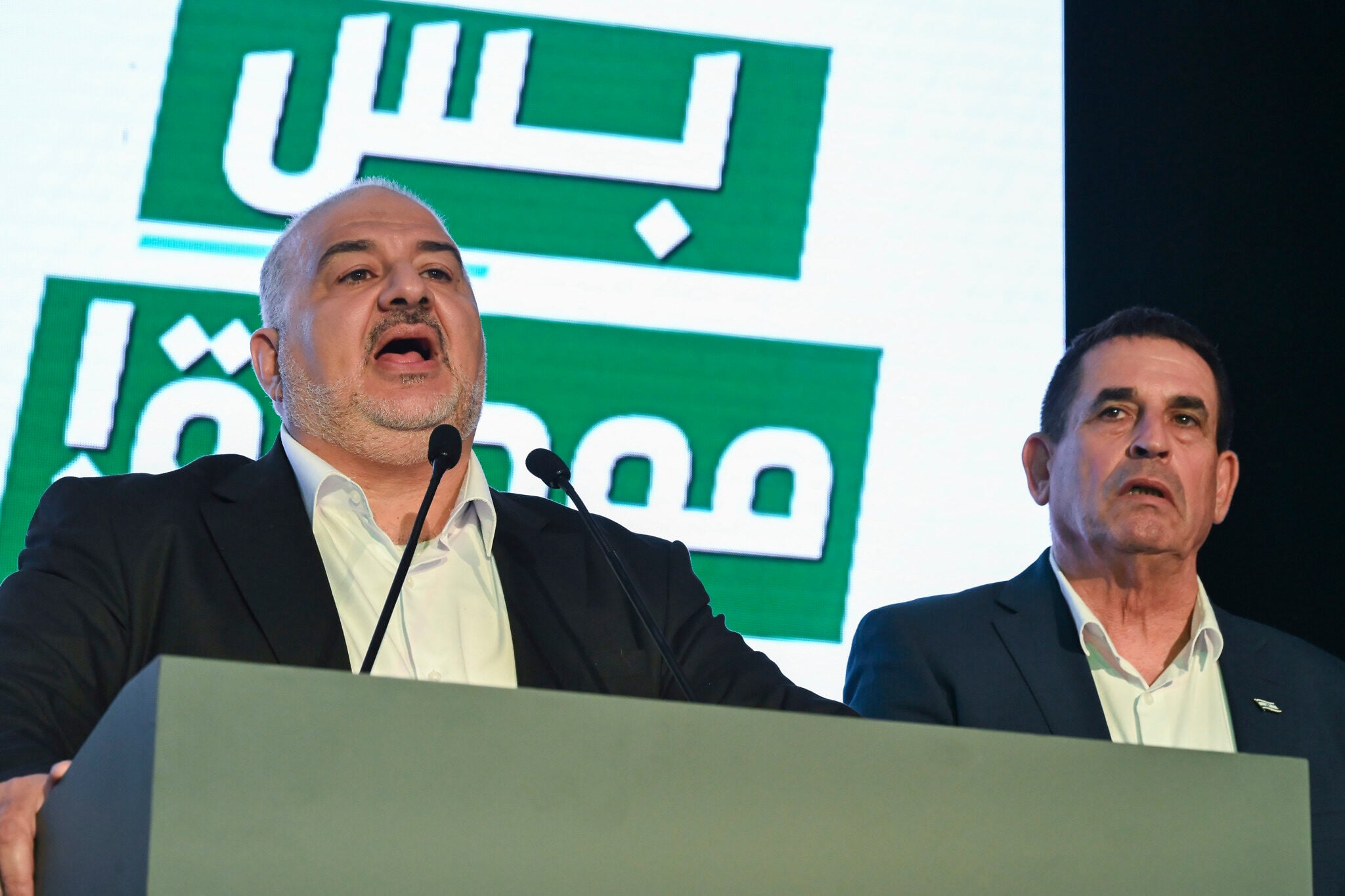
Ra'am chair Mansour Abbas (L) stands alongside Yoav Segalovitz stage following the release of exit poll results in the northern Israeli city of Sakhnin, October 27, 2026. (Michael Giladi/Flash90)
With 72.4% of ballot boxes counted as of 10:03 a.m., partial results published by the Central Elections Committee give the pro-Netanyahu bloc 54 seats and the Eisenkot-led bloc 48.
The Arab parties are at 18 seats after Ra’am sees a gain of two.
Parties currently below the 3.25% threshold: Reservists (2.7%), People of Israel (1.7%), Charedi Public (0.2%).
The results are partial and will change as counting continues. Votes cast in double envelopes, including those of soldiers, are counted later.
Golan calls for bloc to unite with Arab parties: ‘We have a majority of 65 seats. We must stop being afraid’
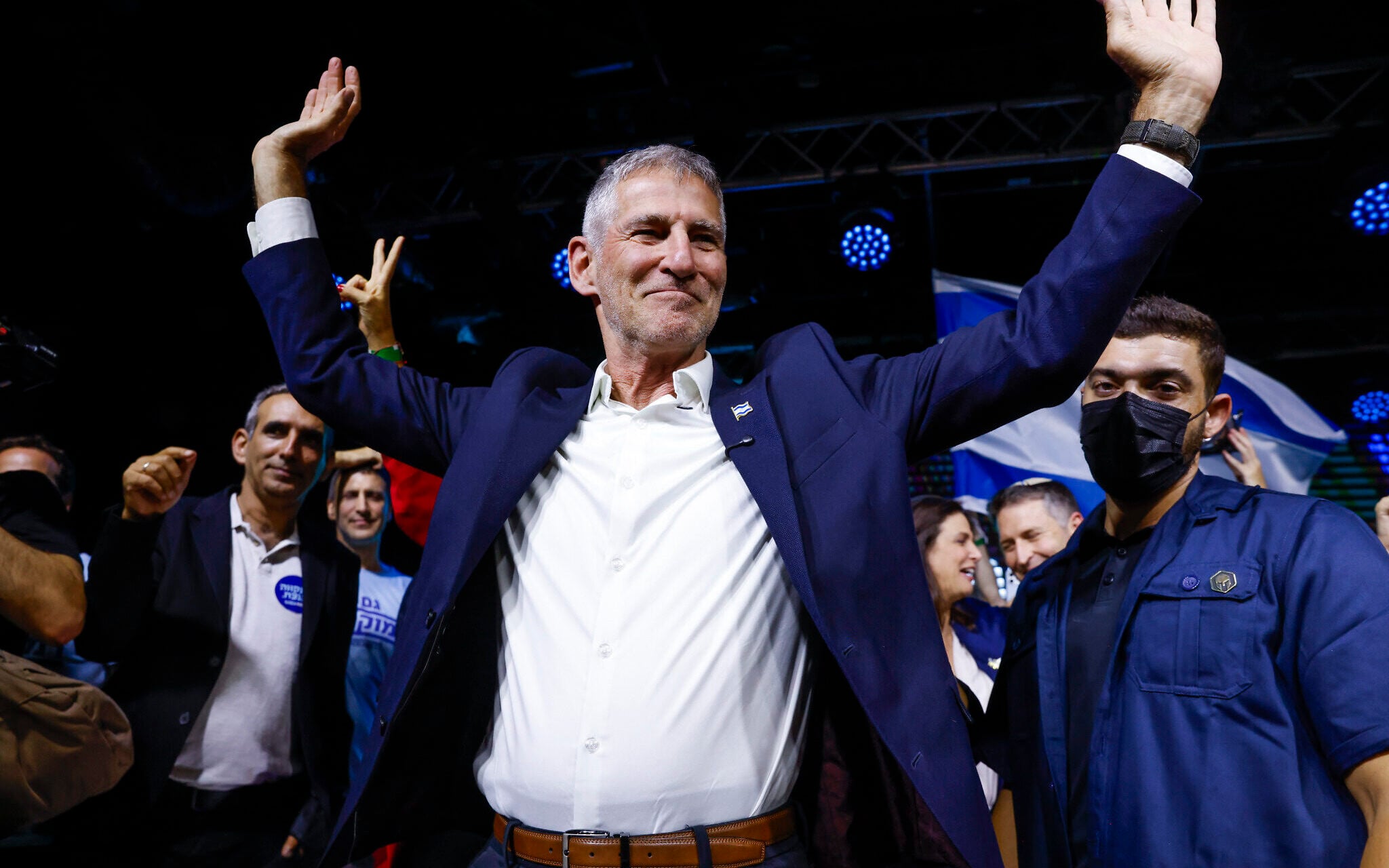
Democrats party chairman Yair Golan and members of his party celebrate at the party’s election headquarters in Tel Aviv, following the release of exit poll results on election night, October 27, 2026. (Yehoshua Yosef/Flash90)
Democrats leader Yair Golan calls for the parties in the bloc led by Yashar’s Gadi Eisenkot to partner with the Arab parties and form a government, noting it would have a majority of seats.
“Netanyahu lost. I know how to count to 120. 65 is more than 55. That’s how Israeli democracy works. Period,” Golan writes on X.
“The reality must teach us one resounding lesson: We have no future here if we don’t stop being afraid. And if we don’t stop with the racism. We must no longer accept Netanyahu’s racist division between Jewish votes and Arab votes,” he says.
“And now let’s talk about Zionism. In Netanyahu’s bloc sit 16 Knesset members from non-Zionist Haredi parties, who promote mass draft evasion while our children are fighting and dying,” writes the former IDF deputy chief.
“If Netanyahu insists on counting only a Zionist majority, let him first subtract from his own bloc the 16 Knesset members from the non-Zionist Haredi parties. They won’t preach to us about Zionism,” he says.
“The change bloc has a Zionist majority: 49 against 39. The change bloc has an Israeli majority: 65 against 55,” Golan says.
“We have a majority. We have responsibility. And we have an opportunity to form a government of change in partnership with Israel’s Arab citizens. A government that will serve all Israeli citizens. Now we need courage. It takes leadership. It takes stopping the fear and starting to act,” he says.
Amid the ongoing count, Netanyahu’s bloc has 56 seats, Eisenkot’s has 48, and the Arab parties are at 16 seats.
Key Update
Shekel weakens against dollar amid apparent inconclusive election result
The shekel weakens against the US dollar after Israel’s inconclusive election result and amid political uncertainty over the establishment of the next government.
The shekel depreciates 0.7 percent to NIS 3.0765 per dollar in morning trading in Tel Aviv.
The local currency hit a three-week high on Tuesday as investors bet on a definitive outcome of the election that would remove political uncertainty and lead to the formation of stable coalition government.
Foreign Ministry: No embassy staff injured in attempted terror attack on Belgrade embassy; incident under investigation
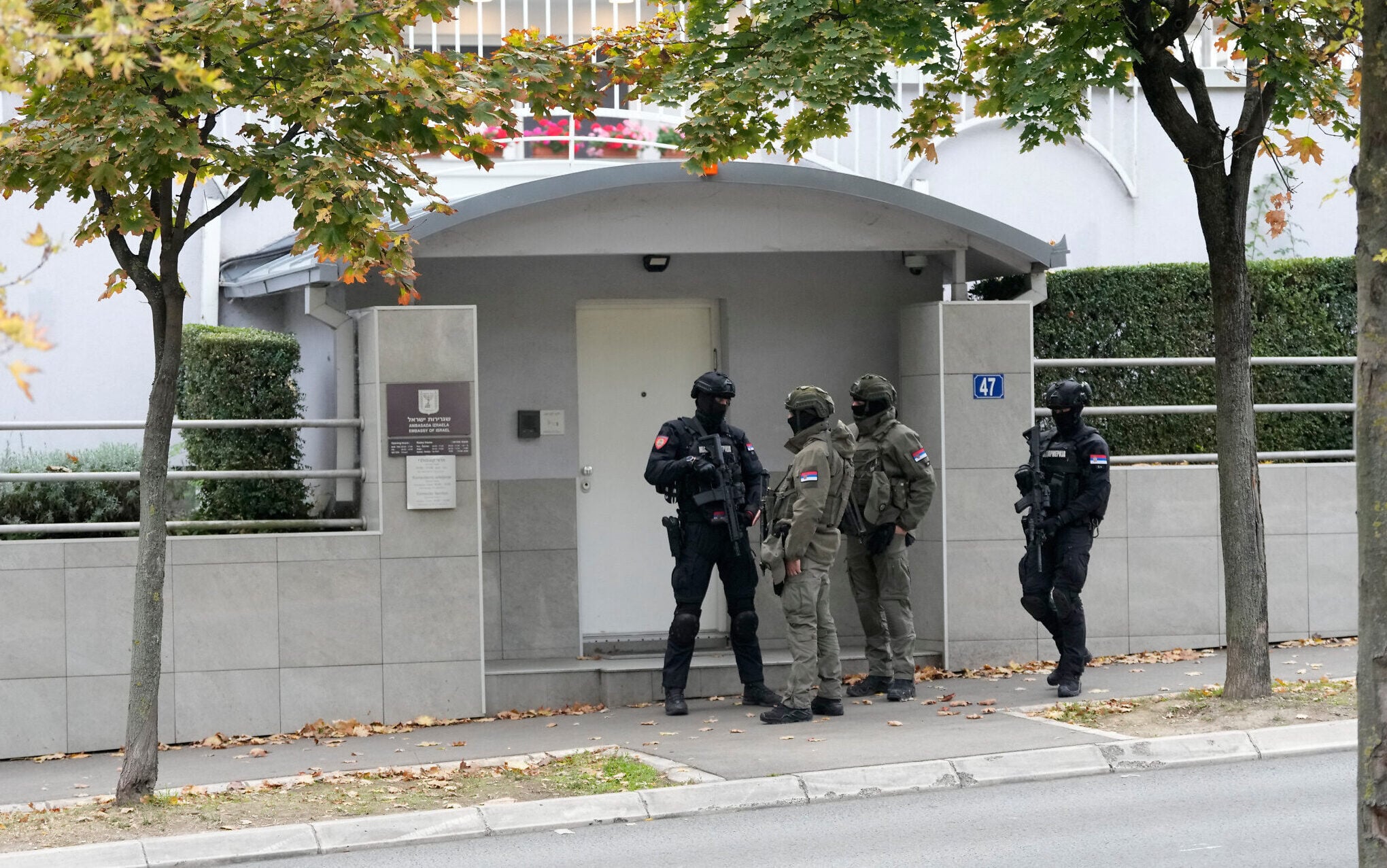
Serbian gendarmes guard the Israeli Embassy after an unidentified assailant attacked a guard with knives in Belgrade, Serbia, October 28, 2026. (AP Photo/Darko Vojinovic)
The Foreign Ministry confirms reports of an attempted terrorist attack near the Israeli embassy in Belgrade.
“The attacker was neutralized by local police, and no embassy staff members were injured. The embassy was closed at the time, during the nighttime hours. The incident is under investigation by the relevant authorities,” the ministry says.
Serbian police said that an unidentified assailant attacked a guard with knives outside the Israeli Embassy in Belgrade and was killed just after midnight. The guard was lightly wounded.
Interior Minister Ivica Dacic said that police were treating the incident as a “terrorist attack.”
With over 66% of ballots counted, Netanyahu-led bloc at 56 seats
With 66.2% of ballot boxes counted as of 9:20 a.m., partial results published by the Central Elections Committee give 56 seats to the bloc led by Prime Minister Benjamin Netanyahu, and 48 seats to the bloc led by Yashar’s Gadi Eisenkot.
The Arab parties, which also oppose Netanyahu, are at 16 seats.
Sixty-one seats are required for a majority.
Parties currently below the 3.25% threshold: Reservists (2.7%), People of Israel (1.6%), Charedi Public (0.2%).
The results are partial and will change as counting continues. Votes cast in double envelopes, including those of soldiers, are counted later.

read more: