

NAZA’s claims about IDF conduct in Gaza are grave. So are the film’s journalistic flaws
The documentary draws on 24 alleged whistleblowers, but the explosive allegations, assembled to serve a narrative that Israel paid no heed to civilian deaths, suffer from questionable sourcing and deficient investigative rigor


 Add ToI as a Preferred Source on Google
Yuval Abraham and Rachel Szor’s “NAZA” is presented as a narrative documentary centered on allegations that Israel intentionally killed tens of thousands of civilians in the Gaza Strip using artificial intelligence, among a slew of other war crimes.
The 80-minute film, produced by the British newspaper The Guardian, does not, however, include key elements typically associated with investigative journalism, including independent verification of testimony or contextual information. The filmmakers did not give the subject of the allegations — in this case, the Israel Defense Forces — an opportunity to respond before publication, a standard practice.
Some of the allegations made in the film correspond to claims previously reported by Abraham in +972 Magazine, Local Call and The Guardian. The Israeli military has disputed some of Abraham’s reporting, saying it lacks “fundamental military understanding.”
On Thursday, the filmmakers, who have faced heavy criticism in their home country of Israel, held a screening in Tel Aviv for local journalists, including from The Times of Israel, though they themselves were not present.
Some Israeli reporters said they had requested to view the film, which is only in limited release, but were not invited to the screening. Abraham has said the film will be available for free online within about a month.
“NAZA” combines an emotionally charged, moody-style documentary with limited elements of a journalistic investigation. The film draws on material from Abraham’s previously published journalistic investigations, even if it does not make that explicit in the documentary itself.
The film tries to present its allegations as factual claims, but omits verification and context, and raises questions about its sourcing.
Its allegations concern the Israeli military’s conduct in the Gaza Strip during the war, including the apparent methods by which the army carries out surveillance on Palestinians, how it purportedly generates targets for strikes, and how Israel knows how many civilians are expected to die in a given attack.
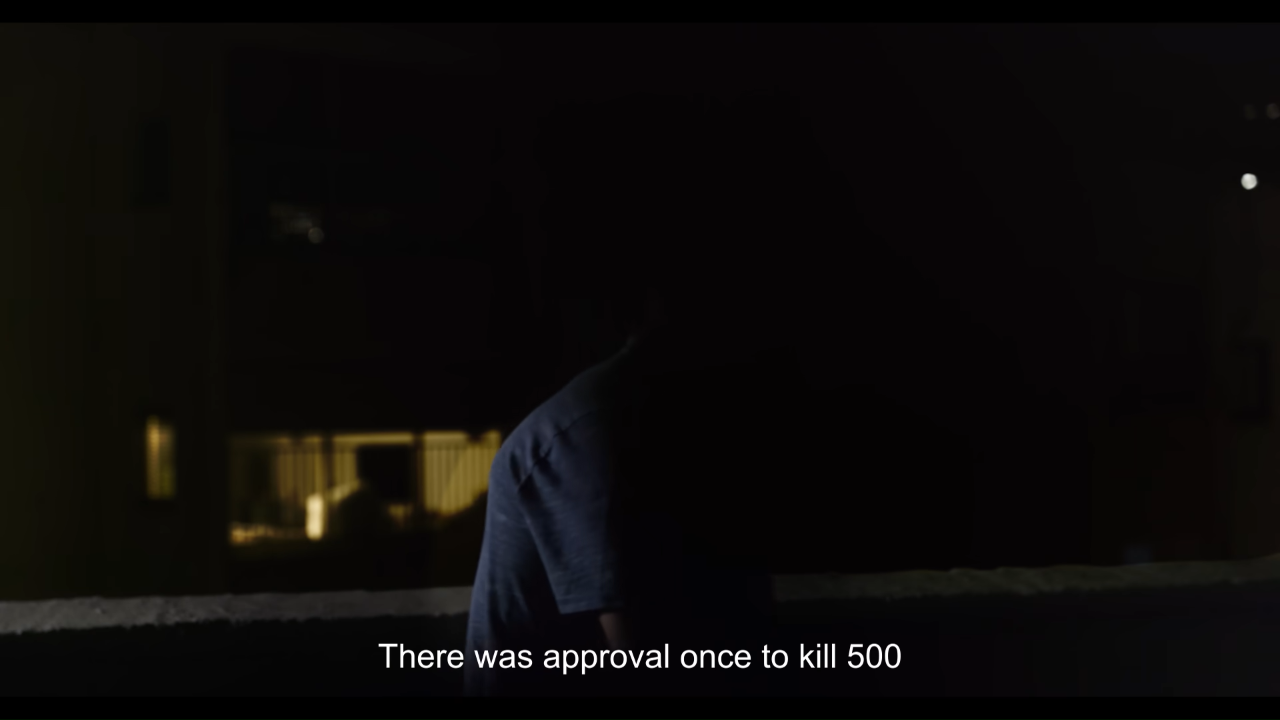
The documentary’s title “NAZA” — a Hebrew acronym for collateral damage — points to what initially appeared to be one of its main subjects: an allegation that the military planned a strike against a single Hamas operative in which 500 civilian deaths were anticipated.
Aside from one interviewee making the claim, the film provides no supporting information for the allegation.
The documentary also addresses other matters, such as the killing of Palestinians in “no-go zones” in the Strip, and the razing of entire neighborhoods by ground troops, along with Israel’s alleged efforts to thwart complaints by Palestinians at The Hague.
At one point, the film includes an old clip of Prime Minister Benjamin Netanyahu discussing his book “Terrorism: How the West Can Win.” In the clip, Netanyahu defines terrorism as “the systematic targeting of civilians for political goals.” The statement is juxtaposed with allegations about Israel’s conduct in Gaza; the implication is clear.
The film features interviews with 24 people identified by the filmmakers as “Israeli soldiers involved in the remote mass killing of Palestinian civilians in Gaza,” who spoke on condition that their identities be protected.
The number of interviewees could give the allegations additional weight were they all corroborative. But the testimonies, contrary to the filmmakers’ claims, cover a variety of different subjects.
One whistleblower describes an artificial intelligence system used to identify Hamas operatives; another describes comrades allegedly burning homes in the Gaza Strip; and another discusses alleged efforts by Netanyahu to thwart Palestinian diplomatic efforts.
The film generally does not provide information about speakers that identifies their proximity to the subjects they discuss, which would establish them as authorities while protecting their anonymity. For most, no age, pseudonym, or military role is provided, and because the interviewees are anonymized and their voices digitally altered to protect their identities, it makes it difficult at times to distinguish between speakers as the film cuts between interviews.
The film’s subtitles also contain apparent translation issues, including adding words not present in the spoken testimony. For example, a soldier’s comment that “Ahmad and his entire family” are in a home, is subtitled as “Ahmad and his entire family will die.” A speaker’s claim that “There was an approval of, like, 500 for a single person,” becomes the more definitive “There was approval once to kill 500 for one human target” in the subtitles.

In some cases, the interviewees’ roles can be inferred from their answers. One appears to have worked as a developer of the machine-learning system described as identifying Hamas members, while another appears to have served in Gaza in a combat or combat-support role.
But it remains difficult to determine whether particular claims — such as the military’s alleged use of artificial intelligence to systematically target civilians in the Gaza Strip — are supported by multiple independent testimonies, or by interviewees who were directly involved in the matters they describe.
‘Lavender’ and ‘Where’s Daddy?’
At least one interviewee describes an Israeli military data analysis system known as “Lavender,” saying that it identifies Hamas members by looking at their cellphone behavior, with a 15% margin of error. (Abraham’s previous reporting in Local Call in April 2024 put Lavender’s margin of error at 10%.)
The interviewee claims that the machine-learning-based Lavender system identified 60,000–70,000 phone numbers as belonging to Hamas members and “certainly” recommended targeting thousands of Palestinians who were not actually members of the group.
During the conversation, the interviewee also claims that, in one case, an elderly woman and her family were killed in a strike based on Lavender’s analysis. The film does not provide a date, location, second source, or independent verification for the incident.
The Israel Defense Forces has acknowledged the existence of Lavender but denies that it provides “a list of confirmed military operatives eligible to attack.”
According to the IDF, Lavender is a “general-purpose database that organizes and cross-references layers of several existing intelligence sources” and is used “as a technical tool to help efficiently organize and connect data points relating to operatives in terror organizations in the Gaza Strip.”
The military has said Lavender is used to complement existing processes for identifying terror operatives and distinguishing them from civilians, and that the “inclusion of a person in the database cannot be solely relied upon to identify him as a terrorist who can be targeted.”
Lavender does not generate strike orders or new intelligence, and its output is not the “sole basis for determining targets eligible to strike, regardless of how accurate they are,” according to the IDF.
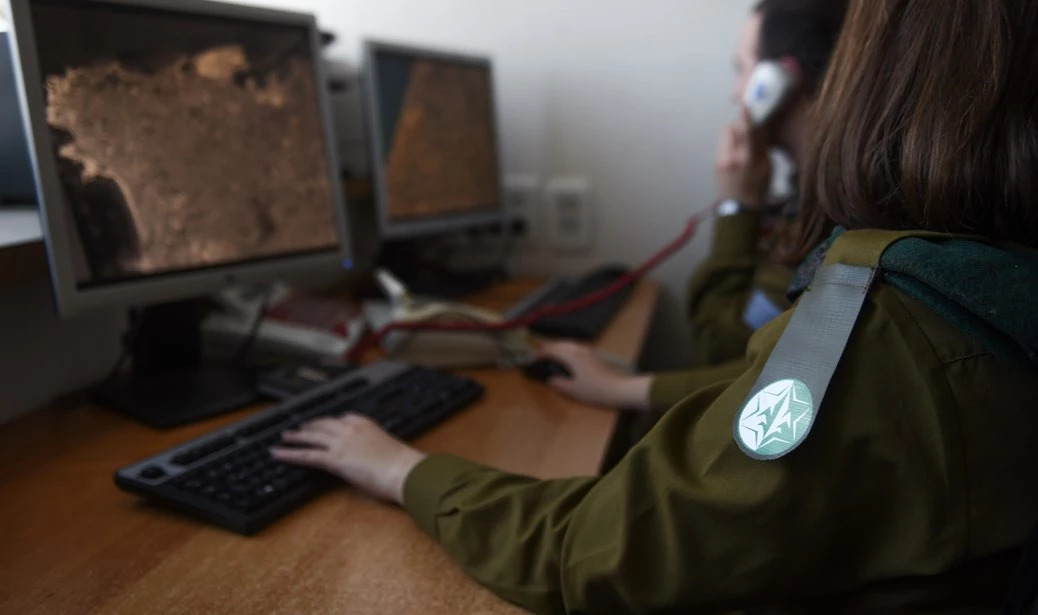
Another mechanism mentioned in the film is “Where’s Daddy?,” which is described as identifying when Hamas members arrive home so that strikes can be carried out against them. The film does not clearly explain whether it is a system or a protocol.
One of the interviewees says the IDF prefers to attack terror operatives in their homes at night because they are easier to locate there than during combat, and because there is a greater chance of killing them, even though civilians may also be killed in the process.
Another interviewee claims that a series of strikes one night targeted several Hamas company commanders in one of the group’s battalions while they were believed to be at home with their families. According to the interviewee, the Hamas members’ families were killed, but the commanders survived because they were out fighting and not at home.
The film does not provide further details, including when the alleged strikes took place.
Missing details, context
Along with the claim about a readiness to kill up to 500 civilians in a strike, another interviewee recalls a strike in which up to 200 civilian deaths were expected, allegedly in an attack targeting a senior Hamas officer. The interviewee claims that the military bombed an entire neighborhood for the single target.
The film does not provide additional details that would allow the claims to be independently assessed, such as a date of the alleged strike or the name of the Hamas target.
During the course of the war, there were several strikes that exacted high death tolls, according to Gazan health authorities, though no single strike is known to have killed hundreds of people.
The documentary reports that 73,000 people in Gaza were killed during the war, though it does not mention that the figure comes from the Hamas-run Health Ministry in Gaza, which does not distinguish between combatants and civilians in its overall death toll.
The Israeli military believes that Hamas’s overall toll is largely accurate, with senior IDF officials estimating that two to three civilians were killed for every dead terror operative.
Based on those estimates, around 50,000 Palestinian civilians would have been killed in Gaza during the war, though the film leaves that figure out, apparently since it is based on IDF estimate.
The film does not provide comparative context on civilian-to-combatant ratios in other conflicts, and no legal experts are interviewed who could provide context regarding the rules governing anticipated civilian harm and the principles of distinction and proportionality under the laws of war.
According to the Israeli military, any planned strike includes an assessment of expected collateral damage before authorization, calculated using “all reasonably available information, in order to achieve the most accurate assessment possible.”
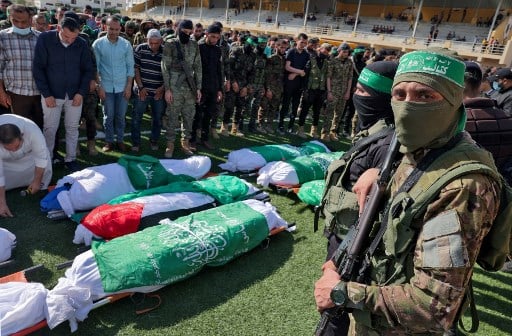
The IDF has also said that “operational commanders are those who approve strikes, not intelligence analysts, and certainly not technological tools,” and that the targeting procedures “do not permit carrying out strikes on a category basis, without conducting individual assessments per strike.”
The allegation of 500 anticipated civilian deaths for a strike targeting a Hamas commander does not appear in Abraham’s previously published investigations.
However, it is featured in the NAZA trailer, to which the IDF responded by denying the claim as “completely false.” The army “never planned, approved, or carried out a strike in Gaza in which 500 civilians or anything near that number were anticipated to be killed,” the IDF said.
What is mentioned both in Abraham’s previous reporting and in the film is authorization for strikes on low-ranking Hamas operatives in which up to 20 civilian deaths are anticipated. There are tens of thousands of low-ranking operatives in the military wing, so the implication is that tens of thousands of Gazan civilians could have been killed.
What the film fails to mention is the military’s contention that such authorizations were in place for a single month and not the duration of the war.
Israeli military officials have acknowledged that the IDF loosened some of its rules of engagement in the wake of the October 7, 2023, Hamas attack, allowing strikes that risked more civilian casualties than had previously been permitted.
A 2024 New York Times investigation reported that, as the October 7 attack was ongoing, the military granted mid-ranking officers authority to target low-ranking Hamas fighters and allowed them to approve strikes that risked killing up to 20 civilians.
The military tightened the rules of engagement again on November 5, 2023, requiring officers to seek special permission for strikes against low-ranking terror operatives that could endanger more than 10 civilians. By January 2024, nearly all deadly strikes in Gaza required special permission, although some continued to receive approval by top officers when the anticipated number of civilian casualties reached double digits.
Because it is pursuing a specific narrative, the film often leaves out context that does not fit its thesis — even context that would not necessarily strengthen Israel’s position.
The film mentions the destruction of neighborhoods and the movement of much of Gaza’s population southward but provides limited explanation of those developments. One interviewee says the Mawasi area in southern Gaza reached “300% occupancy” at one point during the war, without explaining why.
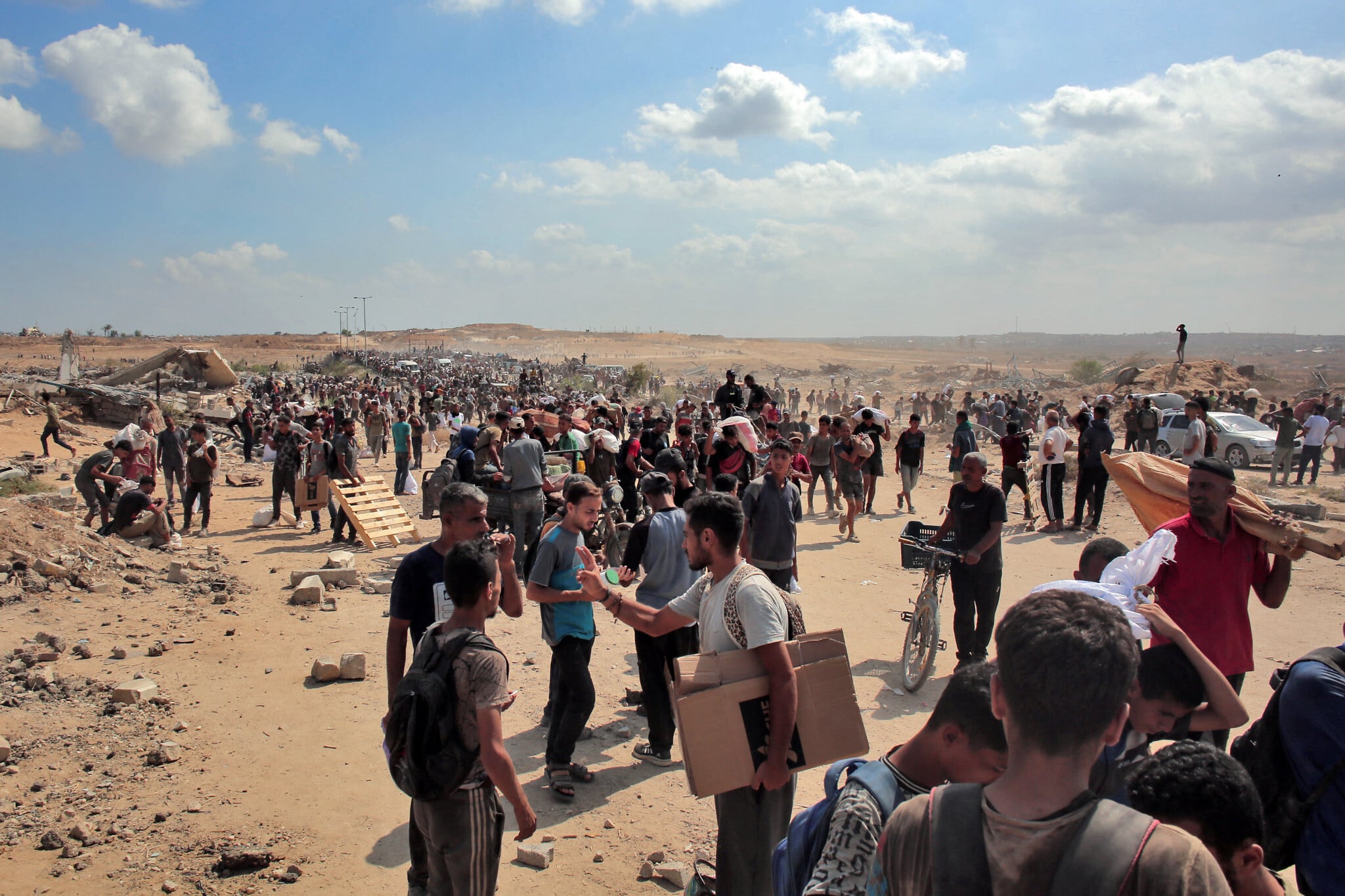
Another section addresses shooting incidents near Gaza Humanitarian Foundation food distribution points, but at no point does it identify the organization by name. It only presents testimony from soldiers who said they shot at Gazans who had strayed from designated routes while traveling to obtain food.
The omitted context could have affected how viewers understood the incidents, regardless of whether it supported or contradicted Israel’s position.
Serving a narrative
Discussed in some detail during the opening minutes of the film is the Hamas massacre of October 7, 2023, during which thousands of Hamas-led terrorists invaded southern Israel, killing 1,200 people — mostly civilians — and abducting 251 to Gaza.
The discussion focuses largely on the experience of Israeli society during and after the attack and on interviewees’ descriptions of how they felt Hamas had “beaten” Israel. It examines the idea that the belief that there were “no innocents in Gaza” became widespread in Israel after October 7 and within parts of the military, including the Intelligence Corps, influencing soldiers’ actions.
The idea that everyone was infected with this type of thinking comes through in the film’s stereotyping of Intelligence Corps soldiers as “elitist” left-wingers who allegedly still participated in war crimes.
Another example comes in the film’s final section, which focuses on a unit described as “Bibi’s department” and its alleged efforts to pursue Palestinians who filed cases at The Hague against Israel.

The section presents allegations that Israel is seeking to stymie Palestinian diplomatic efforts at Netanyahu’s direction.
“We are thwarting peace,” one interviewee says.
The film does not clearly establish whether the unit is part of the military and provides few details about its structure or role.
What context the film does provide comes in the form of a discussion of colonialism that seems to have little connection to the film’s allegations about the conduct of the Gaza war.
The section discusses the founding of Tel Aviv, where it was filmed, challenging the description of the city as having “sprung from the sand” and linking its establishment to the displacement of Palestinians from the area in 1948.
An old house in Jaffa is shown, identified as the only Palestinian home to have survived from that period.

Some of today’s Gazans were indeed displaced from the Tel Aviv area during Israel’s War of Independence, but the majority originated from southern parts of Mandatory Palestine, largely within 40 kilometers of the Strip, according to UN documents.
What any of this has to do with Israel’s policy of assessing the number of civilian casualties in strikes against Hamas in Gaza is unclear.
Other sections draw comparisons between life in Israel and the war in Gaza, putting a dark tinge on Israelis’ simple desire to survive and thrive. One sequence shows construction work in Tel Aviv before cutting to a discussion of demolitions in the Strip.
At another point, a soldier argues that, just as the Nazis “lived with what they did,” Israelis can carry out bombings and then continue with their daily lives.
A couple of scenes later, the film shows Israelis standing still, marking Holocaust Remembrance Day.








The Times of Israel Community.