

US carries out ‘defensive’ strikes on Iran’s Qeshm island in Strait of Hormuz
Officials say ‘limited’ strikes not resumption of war, targeted Iranians ‘using surface-to-air missiles against US assets’; Iranian official says deal with US still out of reach
 Add ToI as a Preferred Source on Google
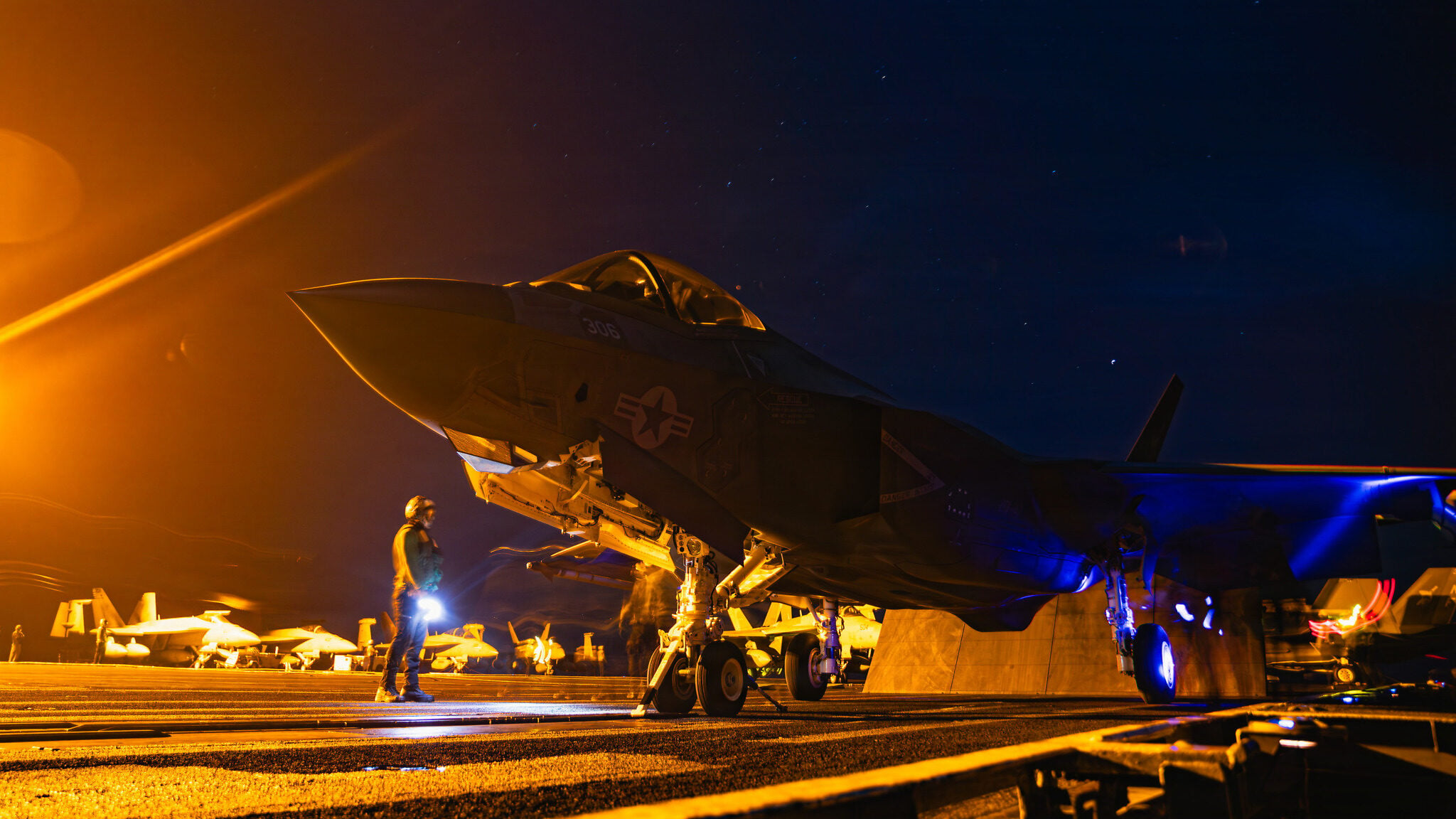
The US carried out strikes on Iran’s Qeshm Island in the Strait of Hormuz, an American official said late Monday on the eve of crucial midterm elections, which US President Donald Trump has signaled could mark the start of resumed war with Iran.
The strikes, first reported by The Wall Street Journal, appeared to be limited and were not a resumption of major combat operations, the official said, speaking on the condition of anonymity.
Another official said the strikes were defensive measures against Iranians “using surface-to-air missiles against US assets.”
The Pentagon referred a request for comment to the US Central Command, which oversees American forces in the Middle East. CENTCOM did not respond to requests for comment.
Earlier on Monday, Iranian state media outlet IRNA reported several explosions on Qeshm Island.
The Journal reported that the attack was the latest in a series of strikes carried out by the US in recent weeks.
Fox News, citing officials, said the strikes were defensive and carried out in response to Iran firing at a US aircraft.
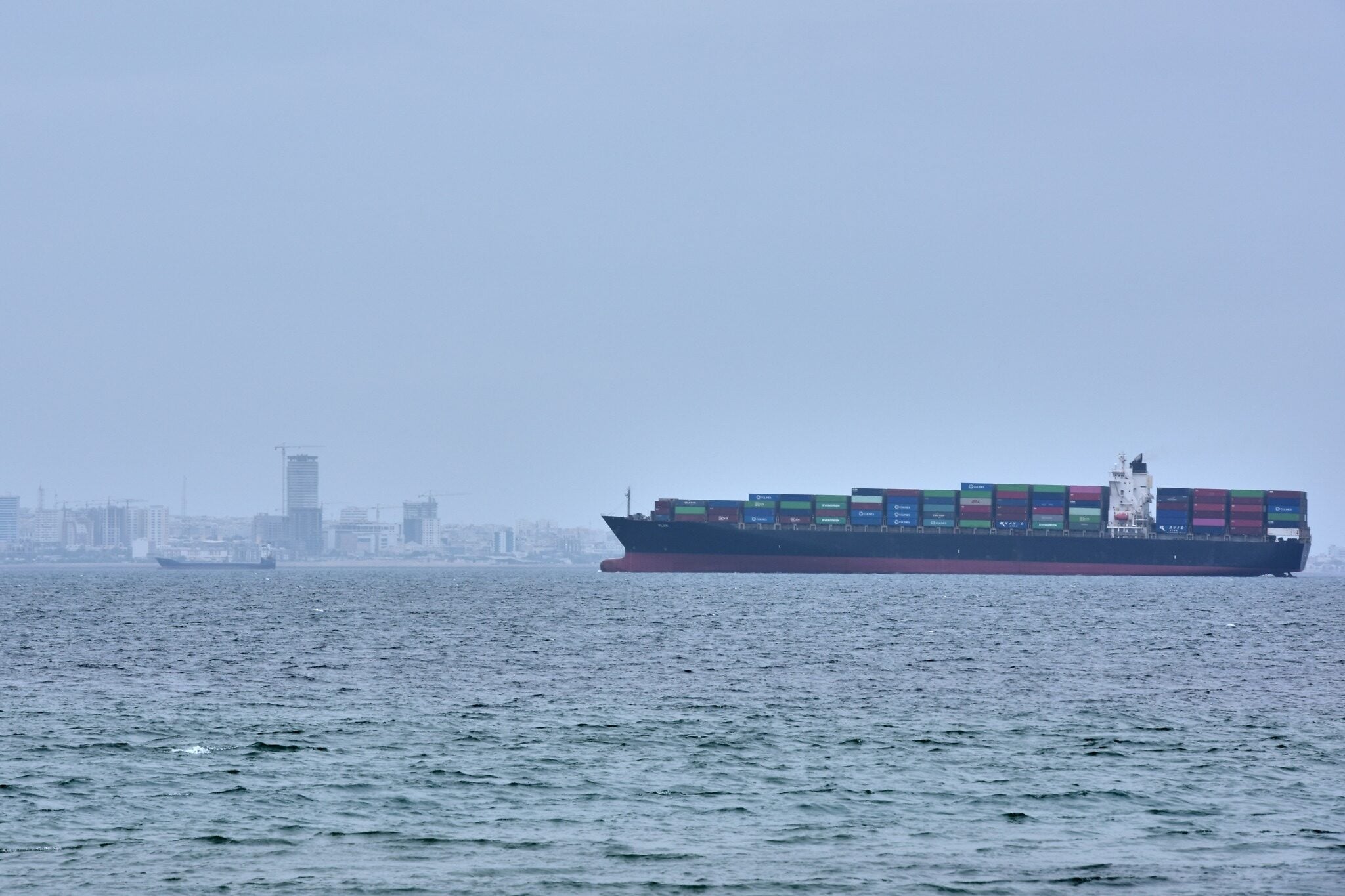
Additionally, a vessel transiting the strait was struck by an “unknown projectile” that left a hole in the vessel, the United Kingdom Maritime Trade Operations center said Monday. All crew members were reported safe, the agency said.
Iran has claimed attacks on vessels it says took unauthorized routes, while saying other vessels have been struck by mines it laid in the early days of the war. The US military denies the naval mines claims, saying that all internationally recognized routes have been cleared of mines by US forces.
‘Ball is now in America’s court’
In recent weeks, Trump has hinted at renewing attacks on Iran after the US midterm elections on Tuesday, with reports saying Prime Minister Benjamin Netanyahu has been pushing him to resume large scale strikes against Iran.
On Monday, the US leader indicated he might be thinking otherwise. “Iran wants a settlement, as soon as possible,” he posted on his Truth Social Platform.
Iranian Foreign Minister Abbas Araghchi, meanwhile, said indirect talks were taking place. “Given the sensitivity and gravity of the current situation, consultations and deliberations are very intensive,” Araghchi told state media.
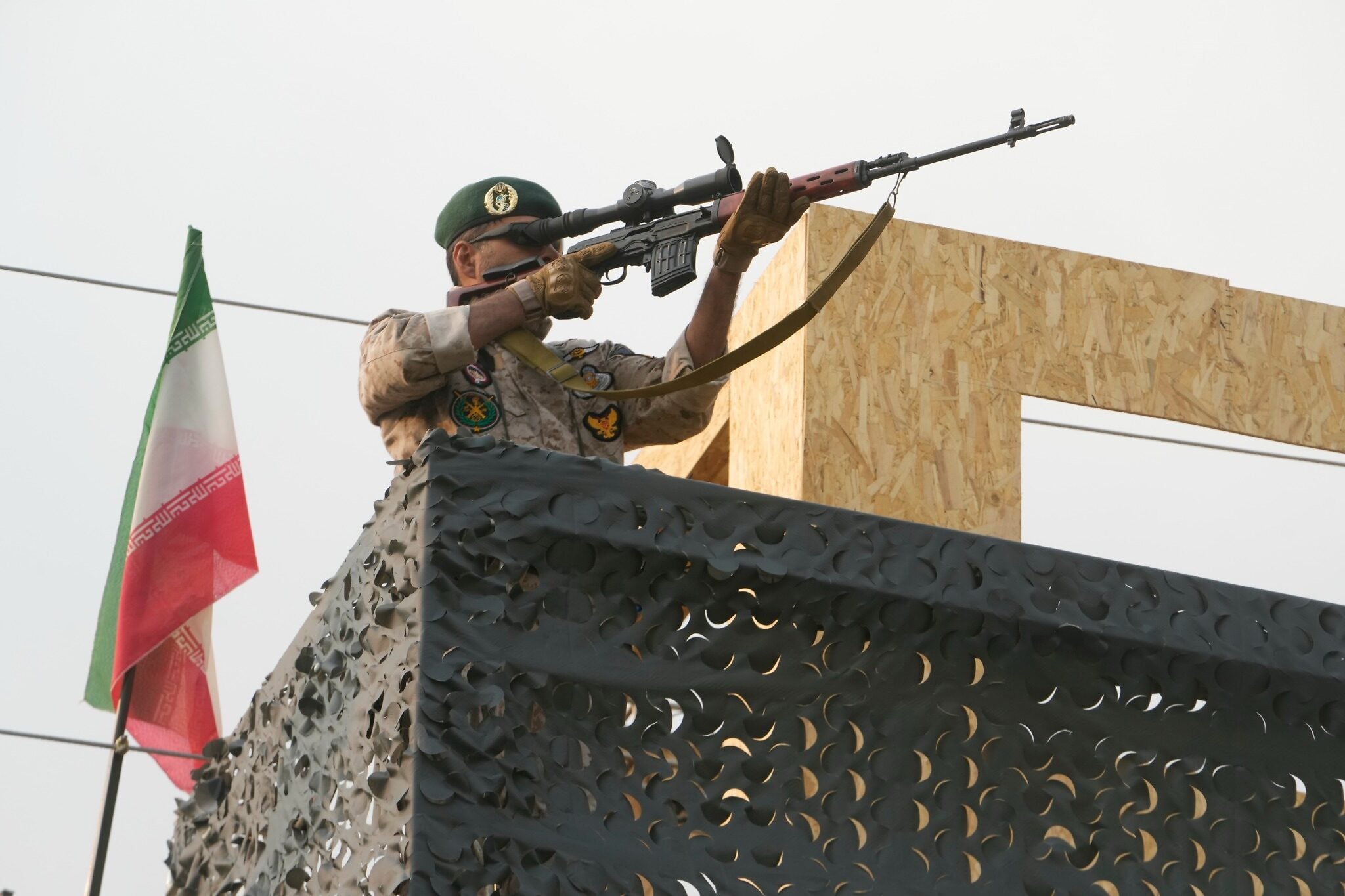
On Tuesday, Mohammad Bagher Ghalibaf, who has been Tehran’s chief negotiator in talks with the US, said that while Iran was ready for war it had given Washington a “rational response.”
“The ball is now in America’s court to prevent war,” he said.
A senior Iranian official told Reuters that the sides were still far from reaching a deal to end the war.
“Mediators are working hard to narrow gaps between Tehran and Washington,” the Iranian official said, after Qatari mediators traveled to Tehran on Monday night for talks on a version of the draft US-Iran deal that has been under negotiation for the past eight days.
“Tehran’s conditions must be met if the US wants Hormuz reopened,” the Iranian official cautioned, adding that nuclear talks could only start afterwards and that Tehran would not accept Washington’s “excessive demands.”
Oil prices had plunged by more than seven percent on Monday on optimism over a possible end to the eight-month-old conflict.
US Vice President JD Vance said both he and Trump were optimistic about securing an agreement.
“We’ve certainly made some progress. We’ll see if we can make some more,” Vance told reporters on Monday.
China also called for a return to diplomacy, while Iran’s security chief discussed the conflict with Russian President Vladimir Putin.
Last week, the Axios news outlet reported that Vance had sent a letter to Iranian national security chief Mohsen Rezaei about possible new talks, marking the highest-level move in months.
Iran’s First Vice President Mohammad Reza Aref said the messages received from Washington were “an acknowledgement of our victory.”
A senior Iranian official said that Tehran was ready to reopen Hormuz, a key route for global oil and gas supplies, within two days but only if Washington agreed to its long-standing list of demands.
In September, Iran proposed a seven-day plan to reopen the strait, with demands including ending the war on all fronts, unfreezing Iranian assets, lifting oil sanctions and ending its counter-blockade of Iranian ports.
“The possibility of implementing this plan in two days is another indication of Iran’s good-faith approach,” Tehran’s foreign ministry spokesman Esmaeil Baqaei told reporters at a briefing.
October saw the most attacks on commercial ships in the Strait of Hormuz since March, as Iran has tried to ramp up economic pressure on the US to get it to lift its blockade.
The mood was grim Monday at the Manama Dialogue, an annual security summit in Bahrain organized by the International Institute for Strategic Studies.
United Arab Emirates presidential adviser Anwar Gargash told attendees the US and Iranian stances were far apart, and “if these positions are not bridged, then we have to worry about the worst.”
Gulf nations have spent billions of dollars to boost their defense capabilities since the war began. Egypt’s Foreign Minister Badr Abdelatty told the gathering in Bahrain that the next escalation “will be more dangerous, more destructive, and it will lead to nowhere.”
China will send a special envoy to Iran, Oman and Saudi Arabia in early to mid-November, Foreign Ministry spokesperson Mao Ning told reporters Monday.
Iran unveils huge billboard with threat against Trump’s life
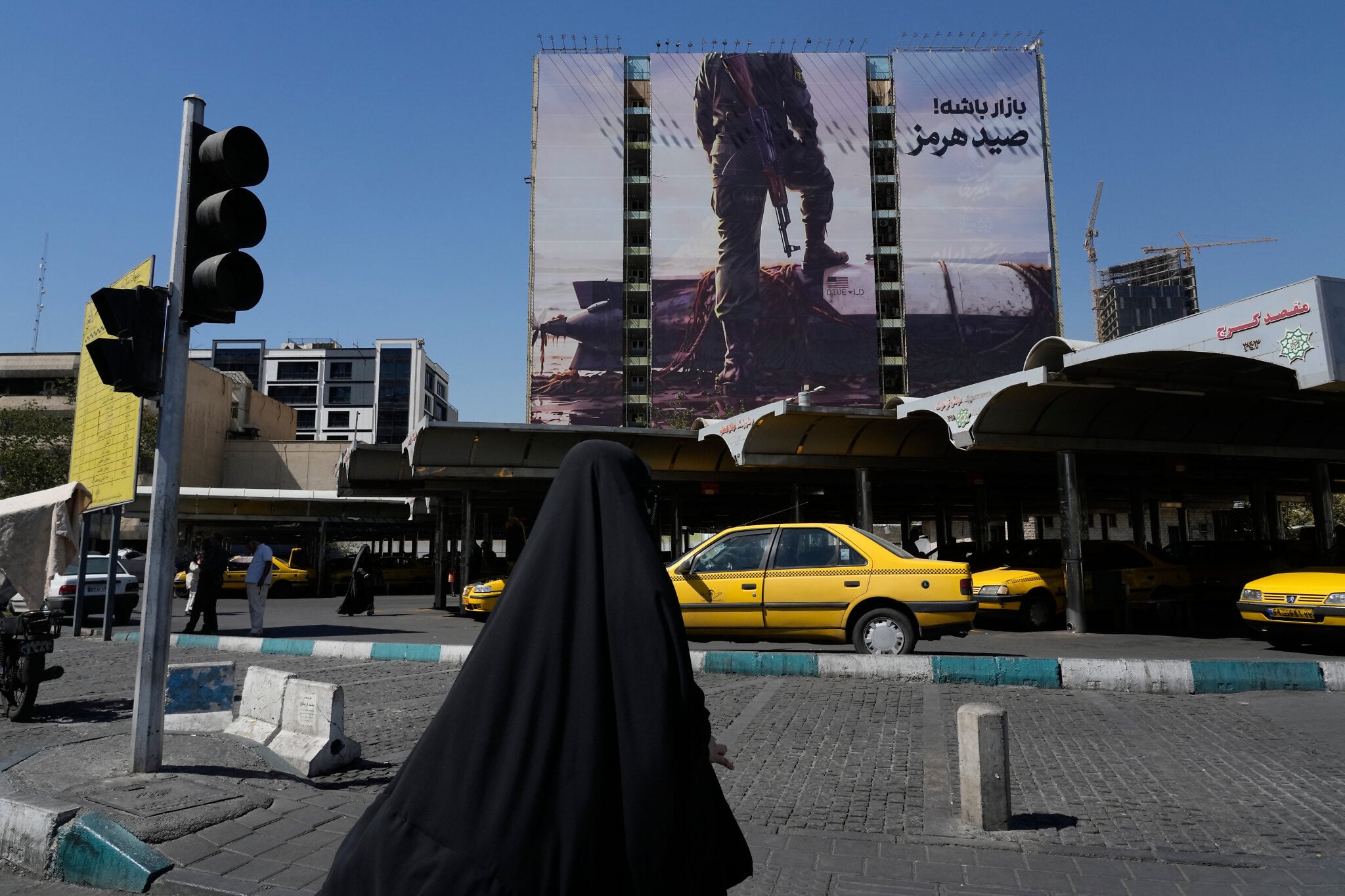
Meanwhile, in Tehran, the regime unveiled a massive billboard and banners pledging to kill Trump, bringing to a new level the official rhetoric displayed in the capital.
“We will kill Trump,” read the billboard towering over the busy Enghelab Square in Tehran, which depicted the US president behind bars with his head bowed.
Another billboard nearby showed Trump along with Vance, special envoy Steve Witkoff, and Netanyahu with bloodied faces and ragged suits against the background of worn-out Israeli and US flags.
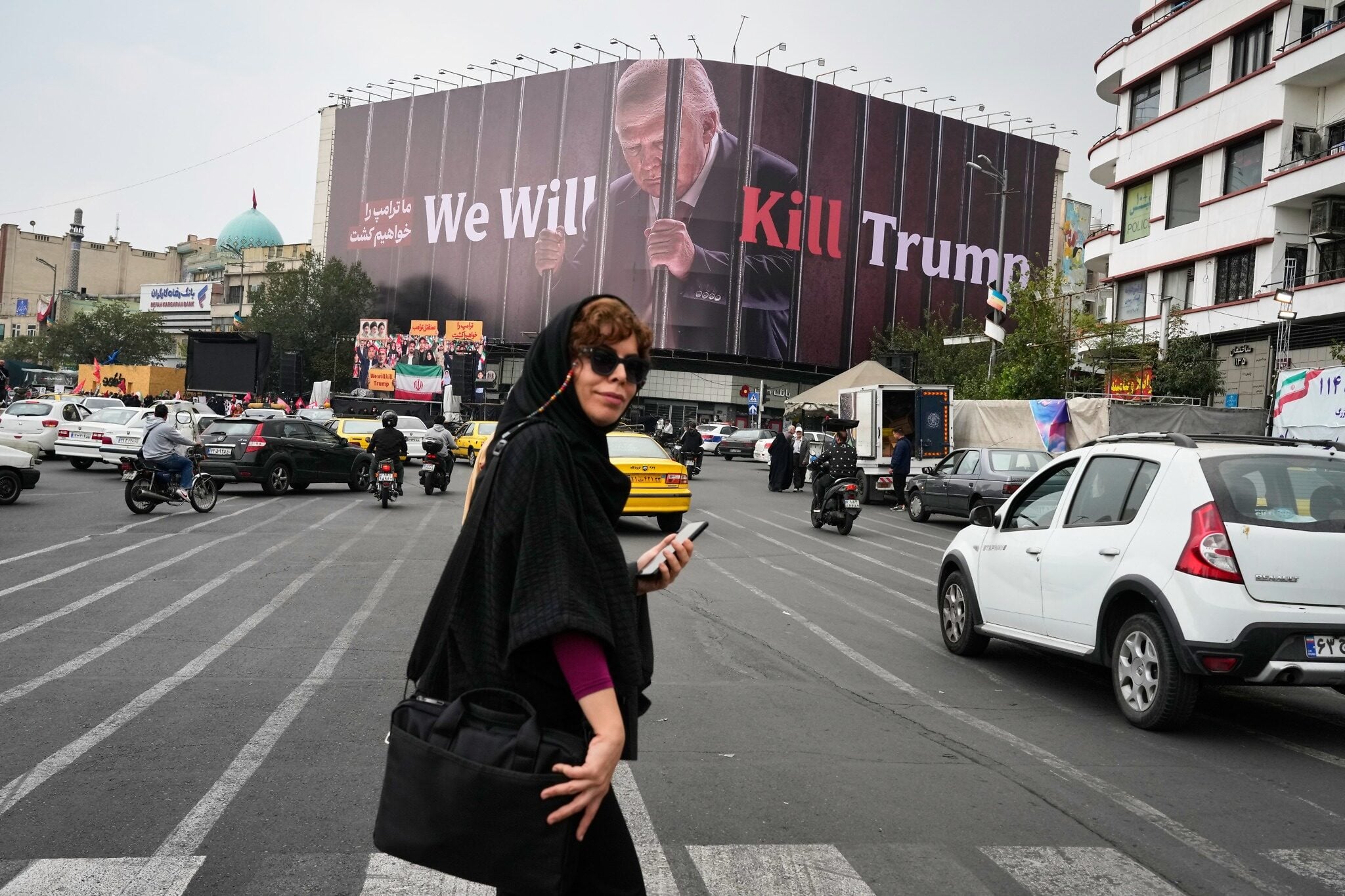
Dozens of people gathered in the square waving red flags and carrying banners reading: “There will be blood” while calling for revenge for slain supreme leader Ayatollah Ali Khamenei, who was killed in US-Israeli attacks on February 28, triggering the war.
New designs of billboards and displays mocking and vowing revenge against Trump and boasting of victory over the United States in the war have frequently been set up around Tehran.
In the busy Tajrish Square in northern Tehran, an open-air exhibition featured paintings of Trump, including one showing him with his face bloodied lying on the ground as a foot presses down on his head.
Another depicted a bomb obscuring his face.
Nearby, a life-sized replica of a jail cell has remained on display, with an actor impersonating Trump spending the day inside. An adjacent screen showed images of the damage caused by US strikes on Iran.
State-sponsored billboards and murals have been a fixture of Iran’s public spaces since the 1979 Islamic Revolution, used to honor allies, celebrate military figures and send political messages to adversaries, particularly the United States and Israel.


The Times of Israel Community.